
The Ultimate South Tyrol
Travel Guide
Discover Italy’s Most Fascinating Region
Updated:
February 18, 2026
|
Where the Alps Meet La Dolce Vita
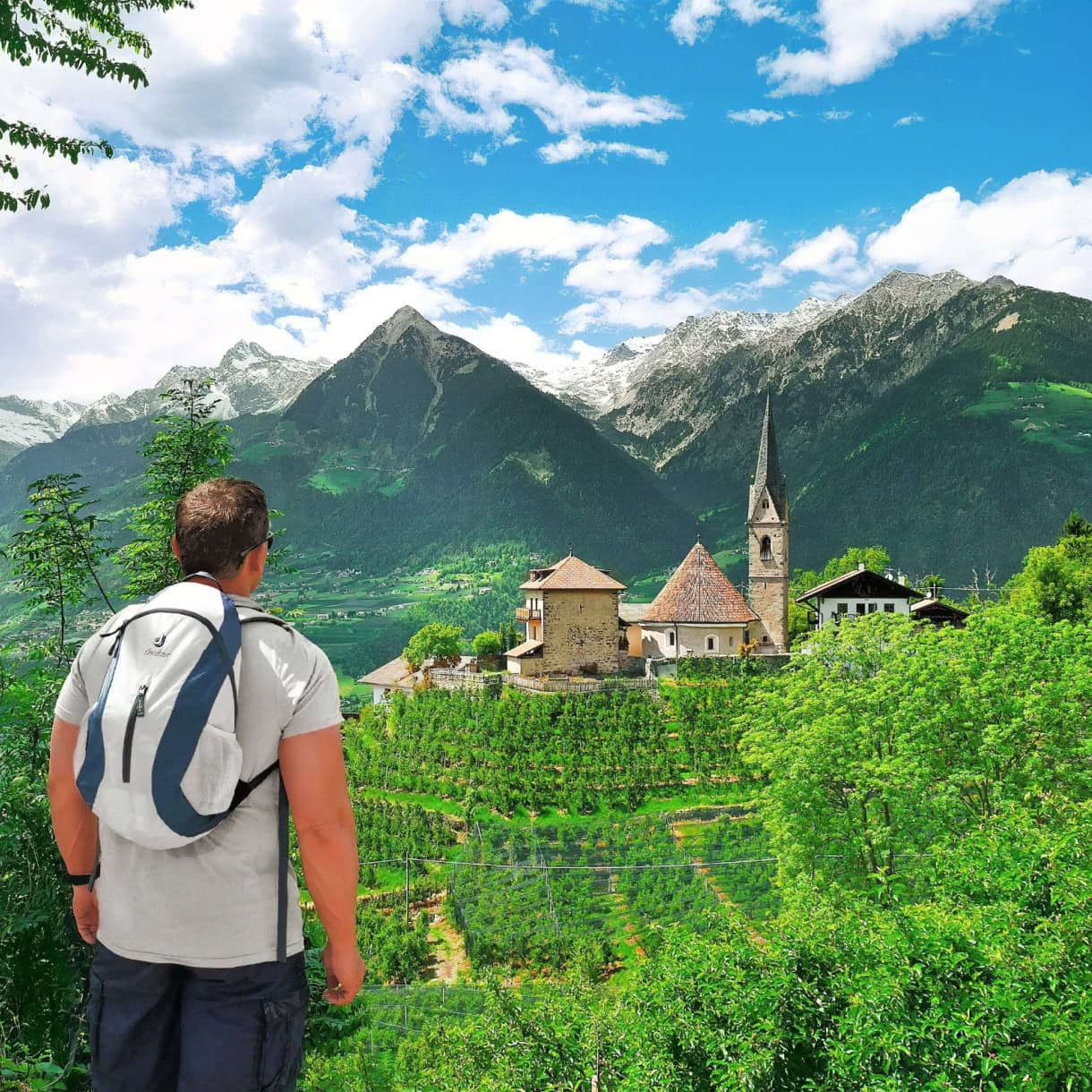
South Tyrol isn’t Italy as you know it. It’s something else entirely: a sliver of the Alps where cultures, climates, cuisines, and scenery mingle in a way that’s both enthralling and bewildering.
This is a place where mountain huts serve Michelin-level cuisine, where conversations slip between German, Italian, and Ladin in the span of a sentence, and where the landscape runs from saw-toothed Dolomite peaks to Mediterranean orchards in a single glance.
Everything surprises in South Tyrol. From castle ruins perched where they have no right to be, to alpine dairy farms tucked above palm-lined promenades, this region constantly rewrites your expectations.
Over the past 11 years, we’ve explored South Tyrol from end to end —hiking its mountains, strolling its vineyards, browsing its markets, and tasting its seasons. And we’ve loved every moment.
In this guide, we’ll help you choose the right region, pick a smart base (or two), and understand how to get around without wasting your trip in transit. This travel guide is everything we wish we had when we first set out to understand this remarkable destination.
Where is South Tyrol?
(And Why It’s So Different from the Rest of Italy)
South Tyrol — also known as Südtirol or Alto Adige — is the northernmost province of Italy. Tucked between Trentino to the south and Austria to the north, it sits in a sun-blessed stretch of northern Italy often called the Sunnyside of the Alps, a nickname that captures both its climate and its character.
Together with Trentino, South Tyrol forms one of Italy’s five autonomous regions: Trentino-Alto Adige/Südtirol.
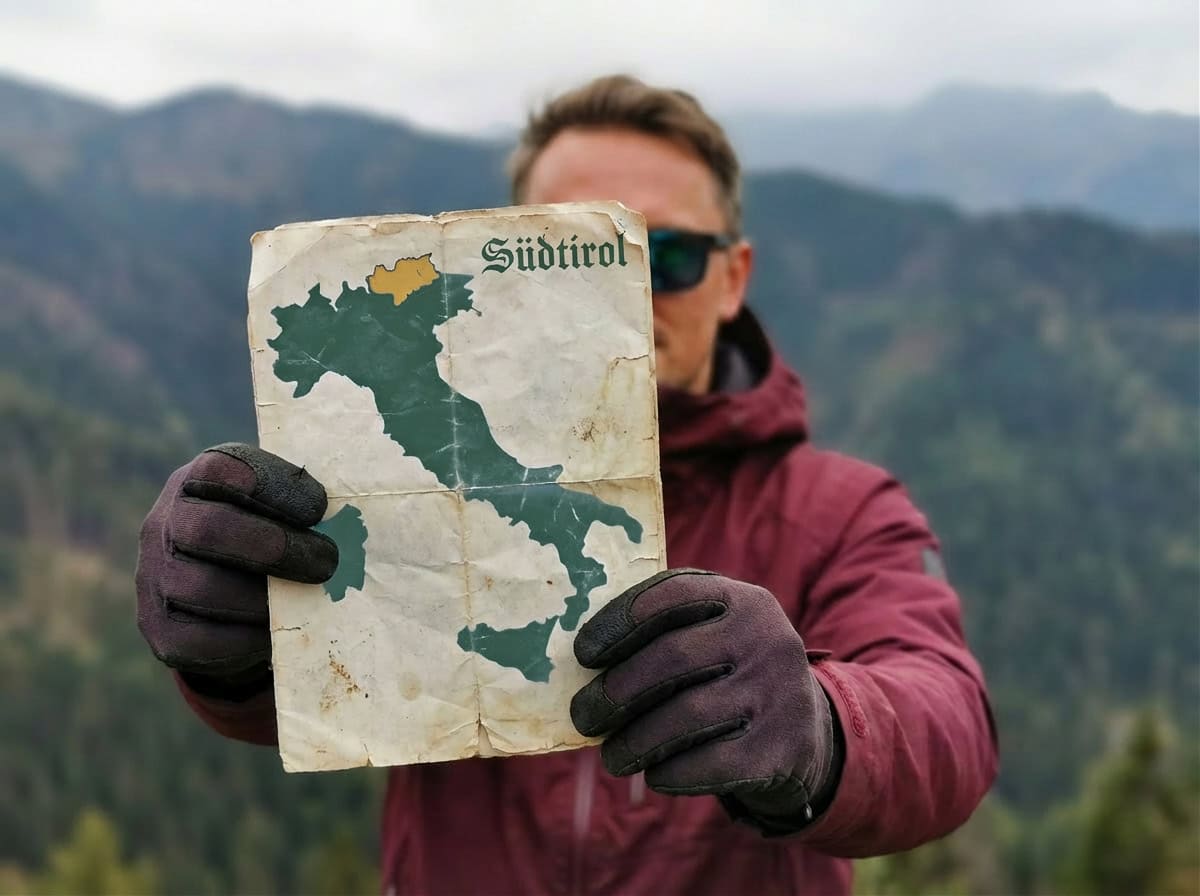
But this isn’t just a bureaucratic label. It’s a lived reality. South Tyrol doesn’t just feel different from the rest of Italy. It operates differently. Here, amid mind-bending mountain beauty, you can experience la dolce vita (Italy’s “sweet life”) and Gemütlichkeit (cozy, comfort) all at once.
More than 60% of South Tyrol’s population speaks German as their first language. Italian comes in second. And in five valleys scattered throughout the region, a fourth language persists: Ladin, an ancient Rhaeto-Romance dialect that’s been spoken in these mountains for over 1,500 years.
📌 Good to Know: South Tyrol’s German is often spoken in Tyrolean dialect, which can sound very different from textbook German and changes by valley, even by village. Standard German still works, and English is common in tourist areas and has been taught in schools since the 1990s.
South Tyrol vs. the Dolomites (What’s the Difference)
Before we dive deeper into South Tyrol, let’s clear up one of the most common misconceptions we come across: South Tyrol is not the Dolomites. The Dolomites are not South Tyrol. They overlap. Treating them as interchangeable is like going to a symphony and only listening to the violins.
The Dolomites are a mountain range in northeastern Italy, part of the Alps, yet utterly distinct. They spill across several provinces, including South Tyrol. But South Tyrol is a province, not a mountain range, and it holds far more than the Dolomites alone: 13 mountain groups, from the Ortler Alps to the Zillertal Alps, and over 400 peaks topping 10,000 feet (3,000 m). The Dolomites? Just 18.
This geographic diversity is exactly what makes South Tyrol so rewarding to explore. One bend in the road takes you to crumbling castles perched above a mountain of grapevines; the next, to sunlit alpine pastures and glacier-cloaked summits. It’s this variety — both cultural and topographical — that sets South Tyrol apart from any other destination in the Alps.
A Collision of Worlds
South Tyrol was part of the Austro-Hungarian Empire until 1919, when it was annexed by Italy as part of the Treaty of Saint-Germain following World War I. This abrupt shift in borders reshaped daily life, language, and identity in ways that are still felt today.
In the century since, South Tyrol has charted its own course within Italy. The region has its own government, its own flag, its own education system, and its own fiercely protected identity.
And we can tell you firsthand that this identity runs deep. You see it in the food, the architecture, the customs, the music, and the rare commitment to quality. Most of all, you feel it in the unmistakable pride locals carry.
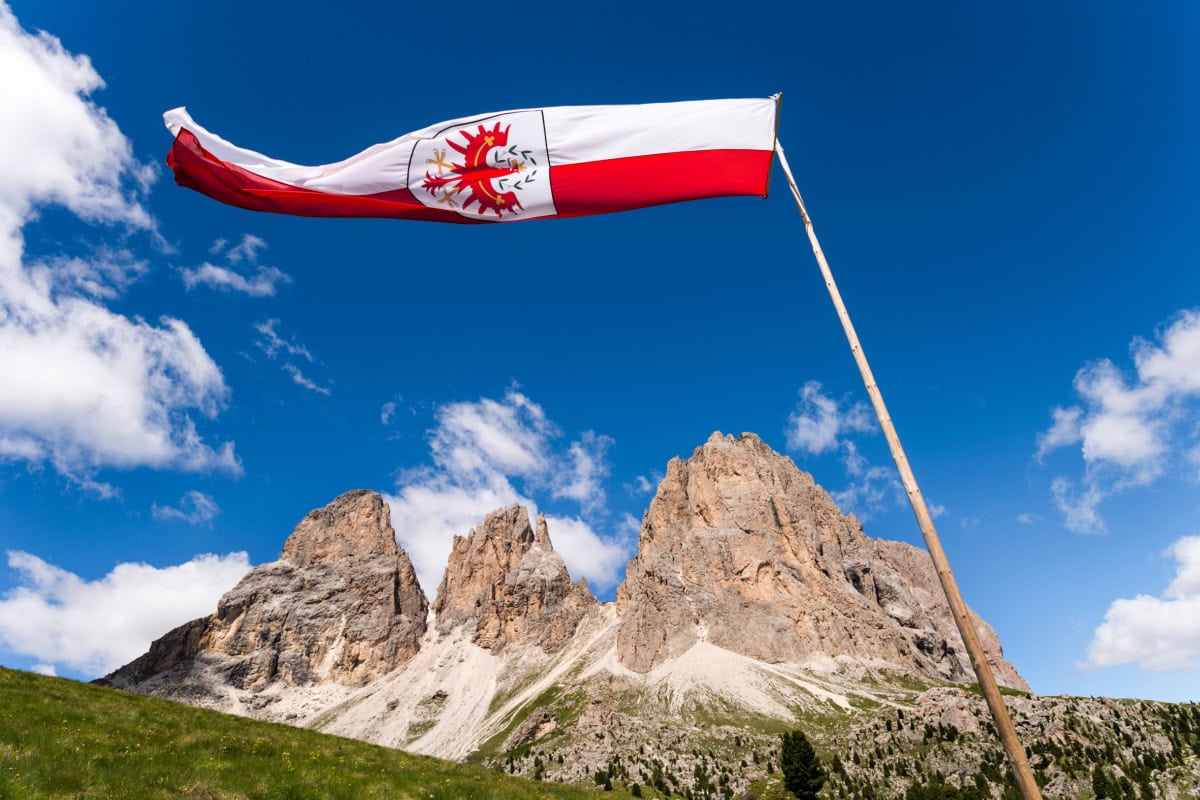
Mountain farmers, herders, and artisans still don the iconic blue apron, a centuries-old symbol of rural Tyrolean life. Portraits of Andreas Hofer, the 19th-century Tyrolean freedom fighter executed by Napoleon’s forces, hang in schools and taverns alike. And high above the huts, crimson flags bearing the Tyrolean eagle snap in the wind like a middle finger to forgetfulness.
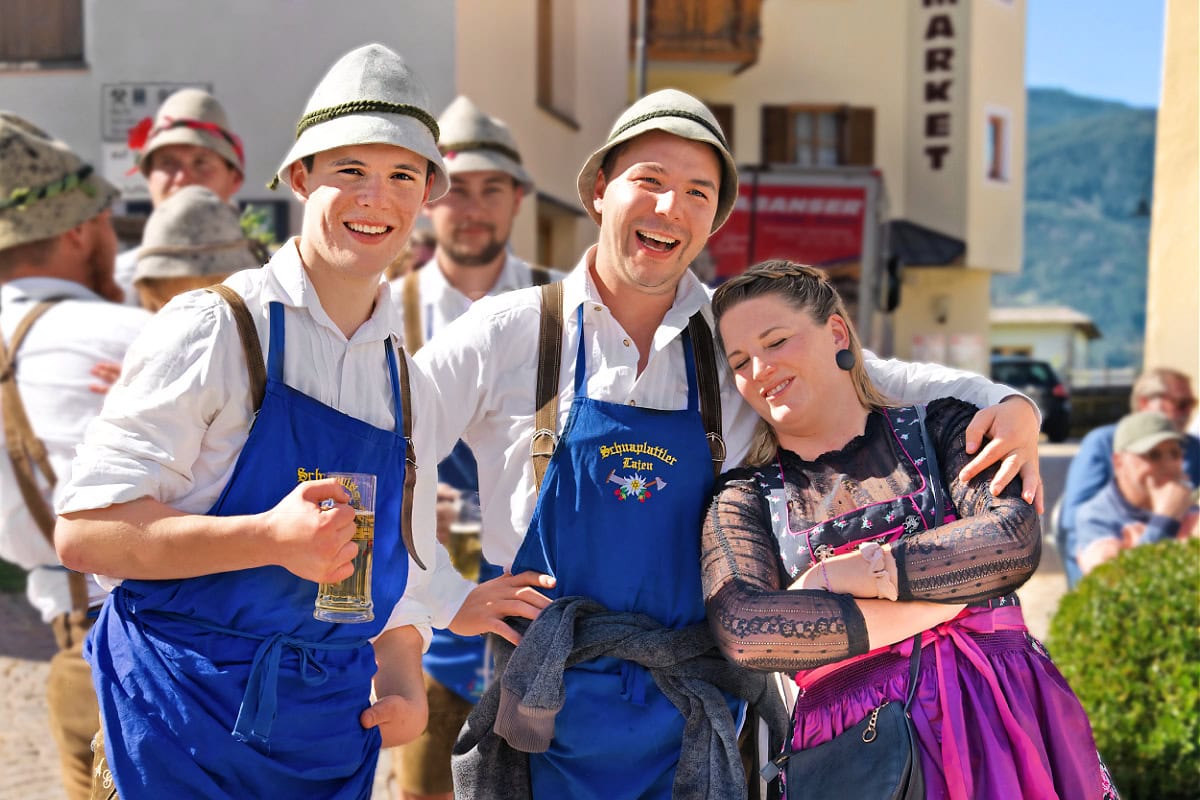
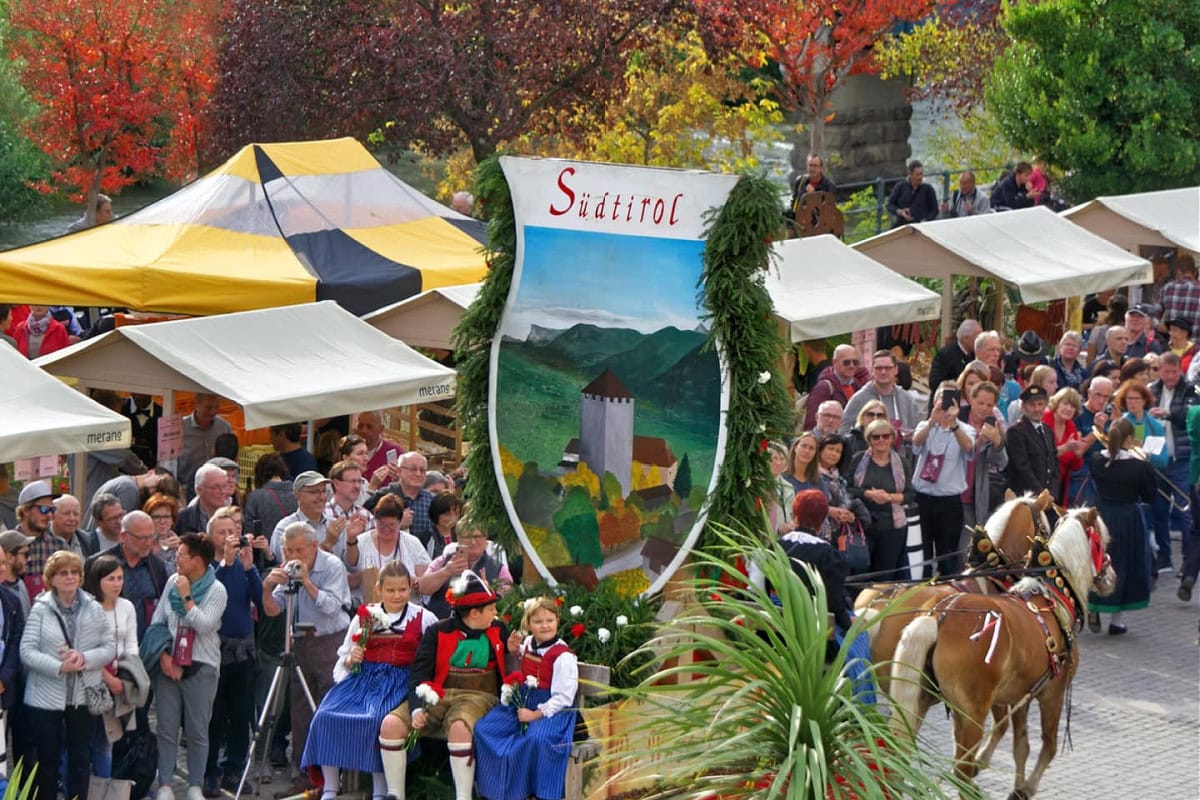
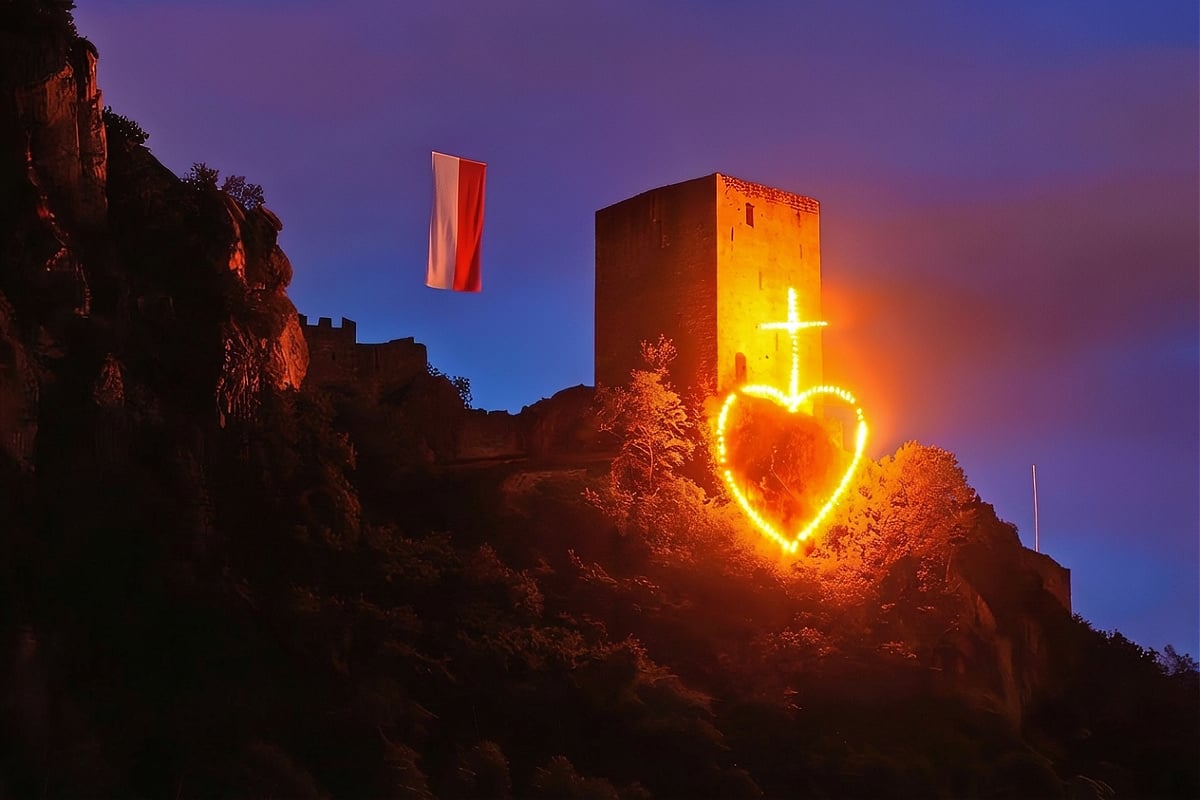
Cultural groups keep the spirit alive, too. Traditional music ensembles like Musiga San Martin de Tor keep age-old Ladin and Tyrolean melodies alive from valley to peak. And then there’s the Südtiroler Schützenbund (South Tyrolean Riflemen’s Association). With nearly 5,000 active members, the Schützen aren’t some costumed reenactment society. They’re devoted cultural guardians, preserving their homeland and its long-standing traditions. Not as performance. As responsibility.
Each June, that sense of responsibility ignites into something you can see for miles: the Sacred Heart fires. On the Sunday after the Feast of the Sacred Heart, bonfires blaze across ridgelines and summits in the shapes of hearts, crosses, and the Tyrolean eagle itself. What began as a wartime vow has endured as an annual act of remembrance. It’s a moving reminder that identity here outlasts borders, no matter how often the map is redrawn.
A Collision of Landscapes
Beyond the extraordinary cultural diversity, what also sets South Tyrol apart from Italy is its staggering ecological diversity. This is where Alpine and Mediterranean climates don’t just coexist. They collide. It’s a dazzling spectacle few places on Earth can match.
Nowhere else in the Alps does such dramatic contrast unfold so rapidly as in the southern and western reaches of South Tyrol. Here, the mountains begin with a breezy, almost tropical demeanor that gradually becomes more Alpine as you gain elevation.
You can wake up in lush valleys where palm trees sway, apple orchards flourish, and vineyards rise like leafy tides toward cliff-clinging castles — then spend the afternoon hiking beneath ancient glaciers and snow-pummeled peaks.
All in a single day. All within the same region.
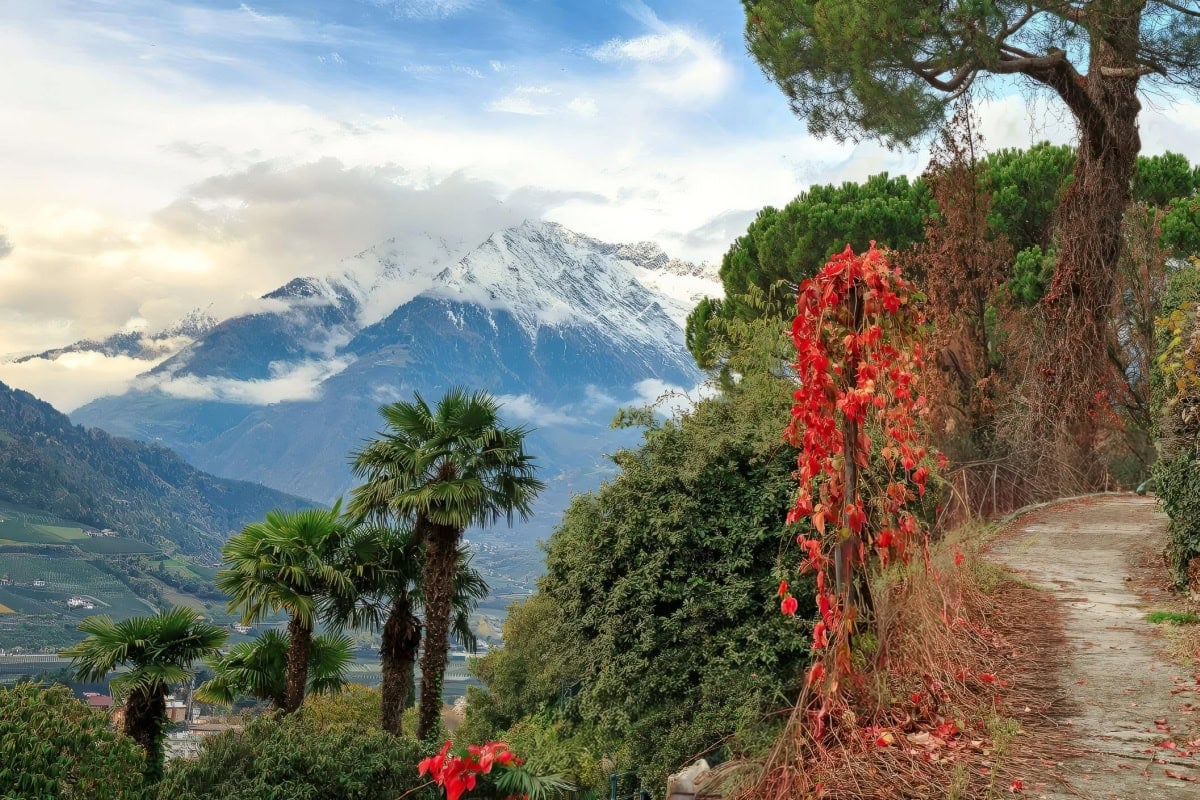
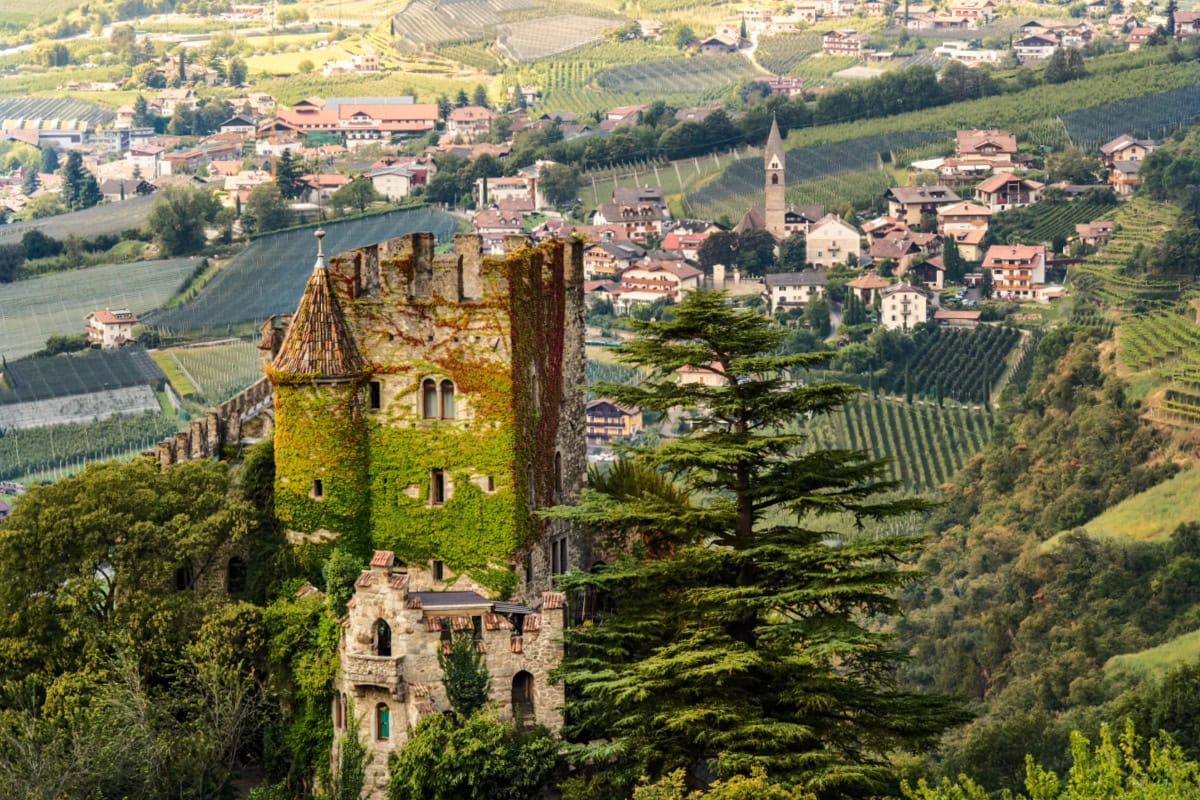
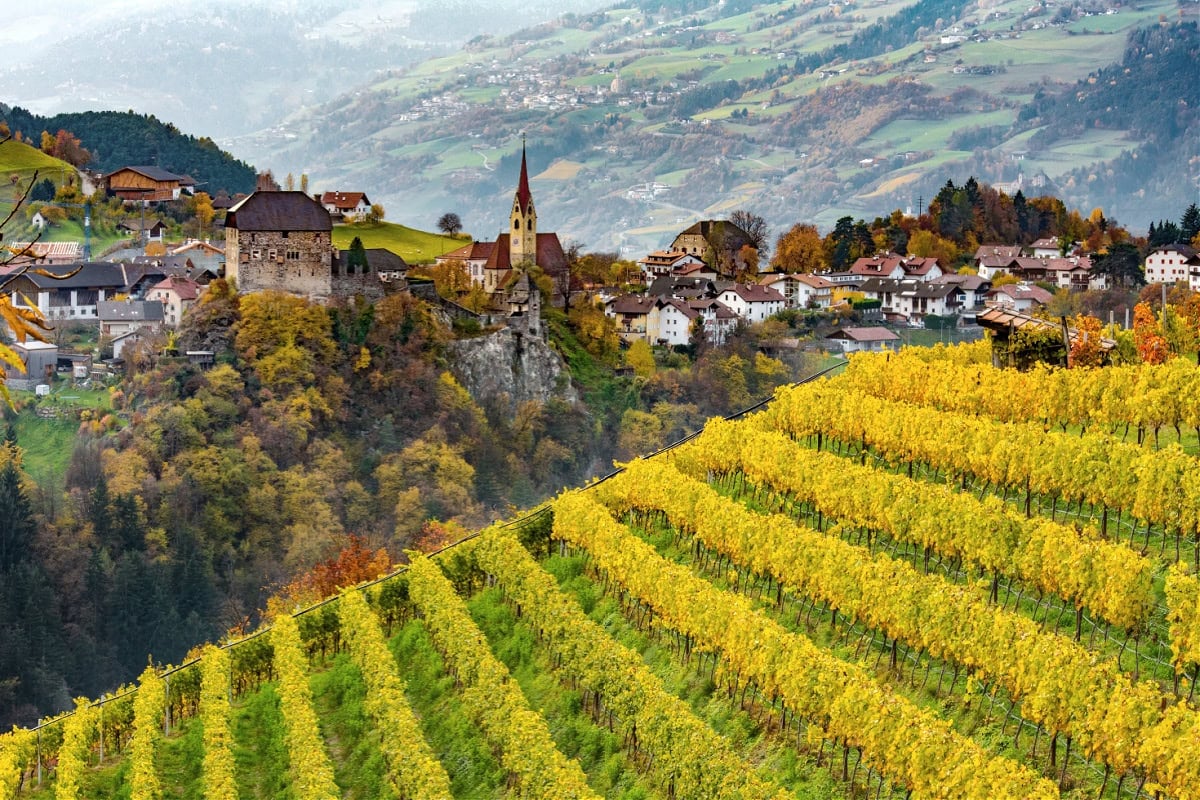
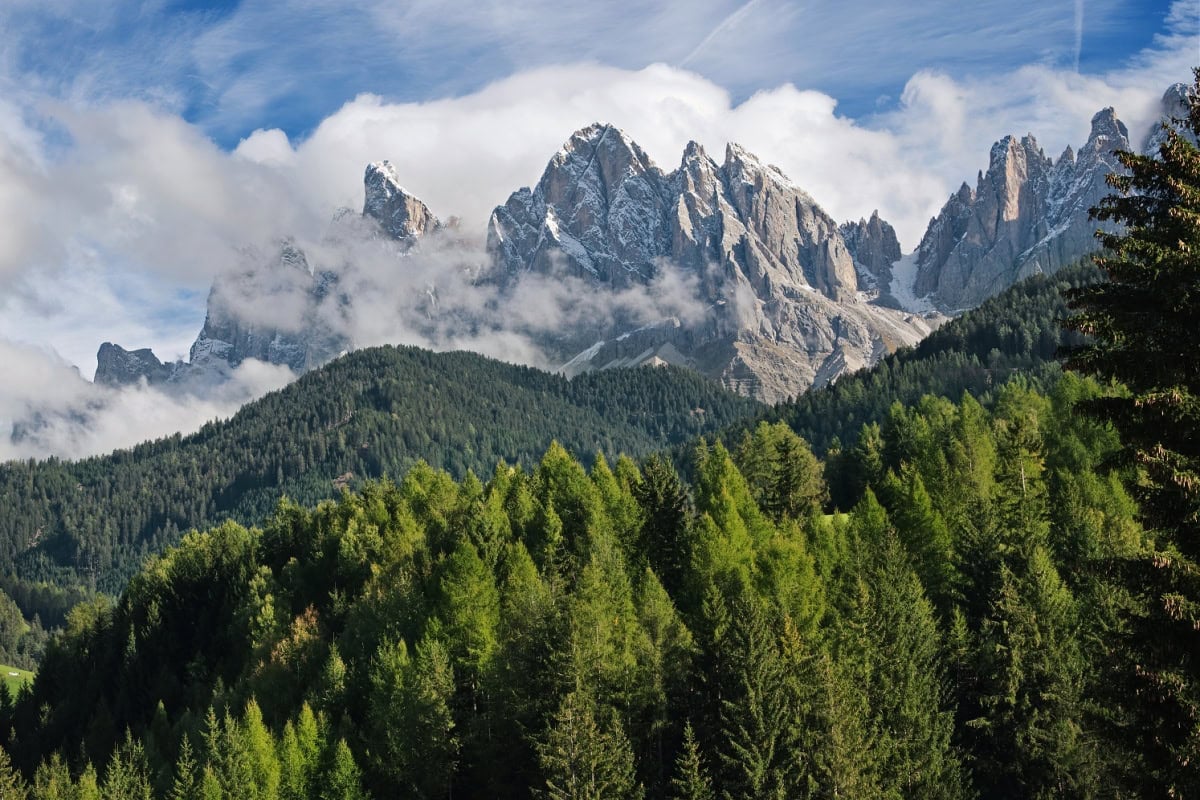
Venture east of the Etsch (Adige) River, and the landscape shifts once again. The Mediterranean mood gives way to something more primal: the Dolomites.
These limestone massifs erupt skyward in wild, improbable configurations — redefining the very meaning of Alpine. But it’s not just their frantic geometry that astonishes. It’s their posture.
South Tyrol’s Dolomites rise like sculptures on pedestals, towering above sleepy meadows and shadowed forests. This unique topography invites admiration from every angle and creates a constant optical drama that never fails to drop our jaws. From one side, a peak may seem to caress the heavens; from another, it looks as though it might tear them apart.
A Collision of Flavors
South Tyrol eats at the crossroads of cultures. Italian, Tyrolean, German, and Ladin traditions all claim a seat at the table. And they often share the same plate. You might begin with a bowl of barley soup that could have been ladled from a pot in the Austrian Alps, follow it with pasta as precise as anything in Bologna, and finish with apple strudel whose recipe predates your great-grandmother.
What strikes us most about eating here isn’t any single dish. It’s the seriousness with which food is treated. Farm-to-table isn’t a marketing phrase in South Tyrol; it’s simply how kitchens have operated for generations. The region formally trademarked its culinary identity in 1976, becoming the first in Europe to do so.
The results show up on every plate: Knödel and Schlutzkrapfen in rustic mountain huts, Speck and aged cheeses on wooden boards at farm taverns, pastries so good they’d hold their own in Vienna, and some of the best pasta and pizza we’ve eaten in Italy.
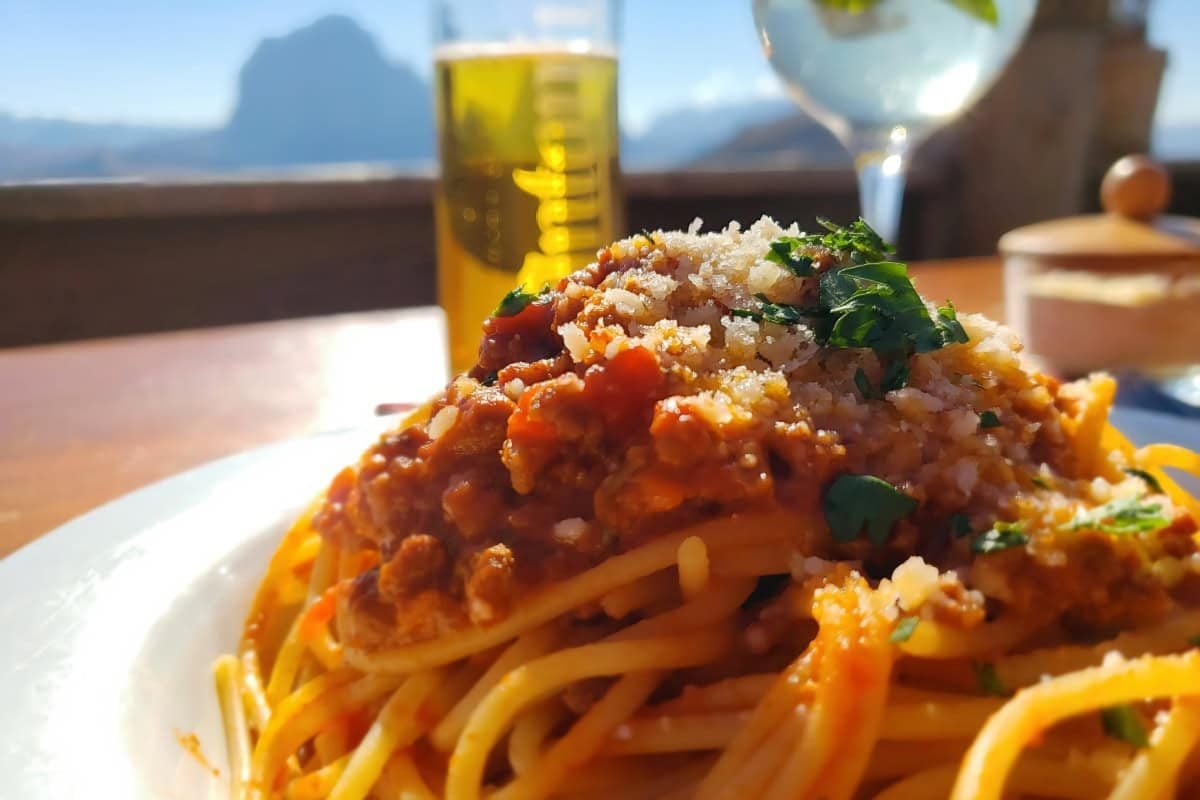
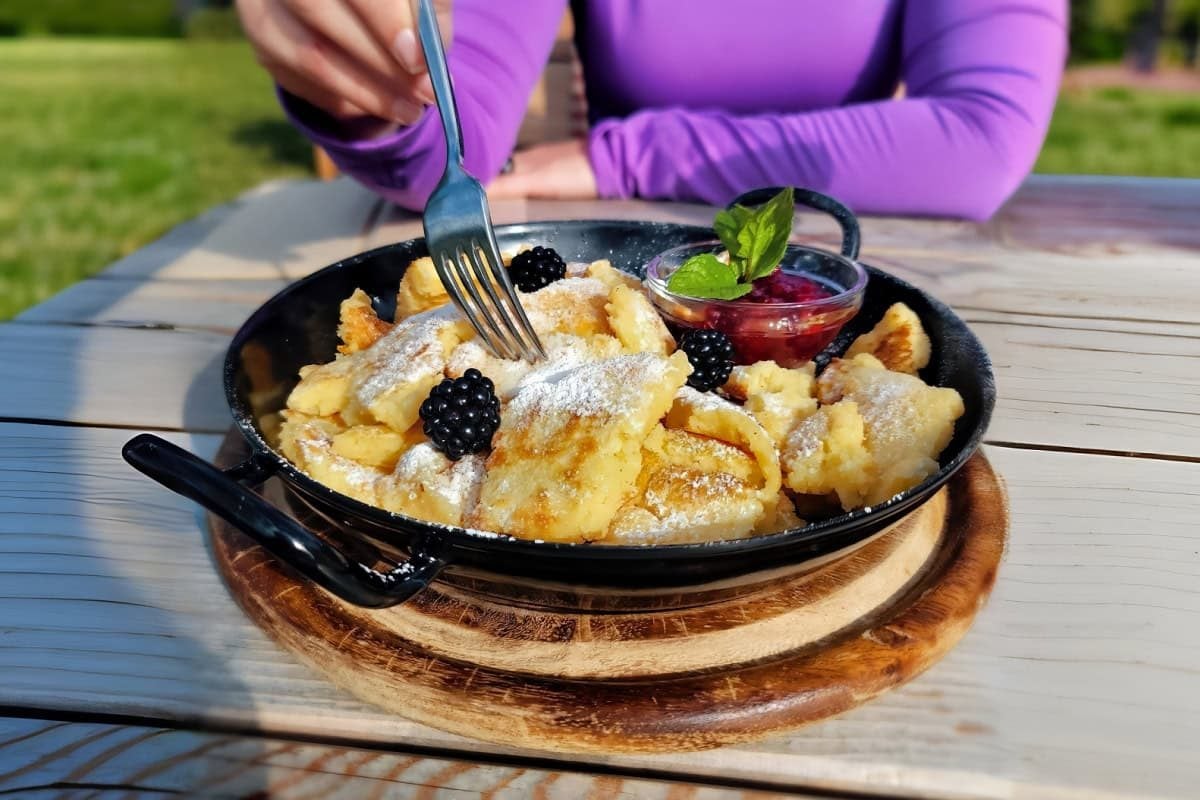
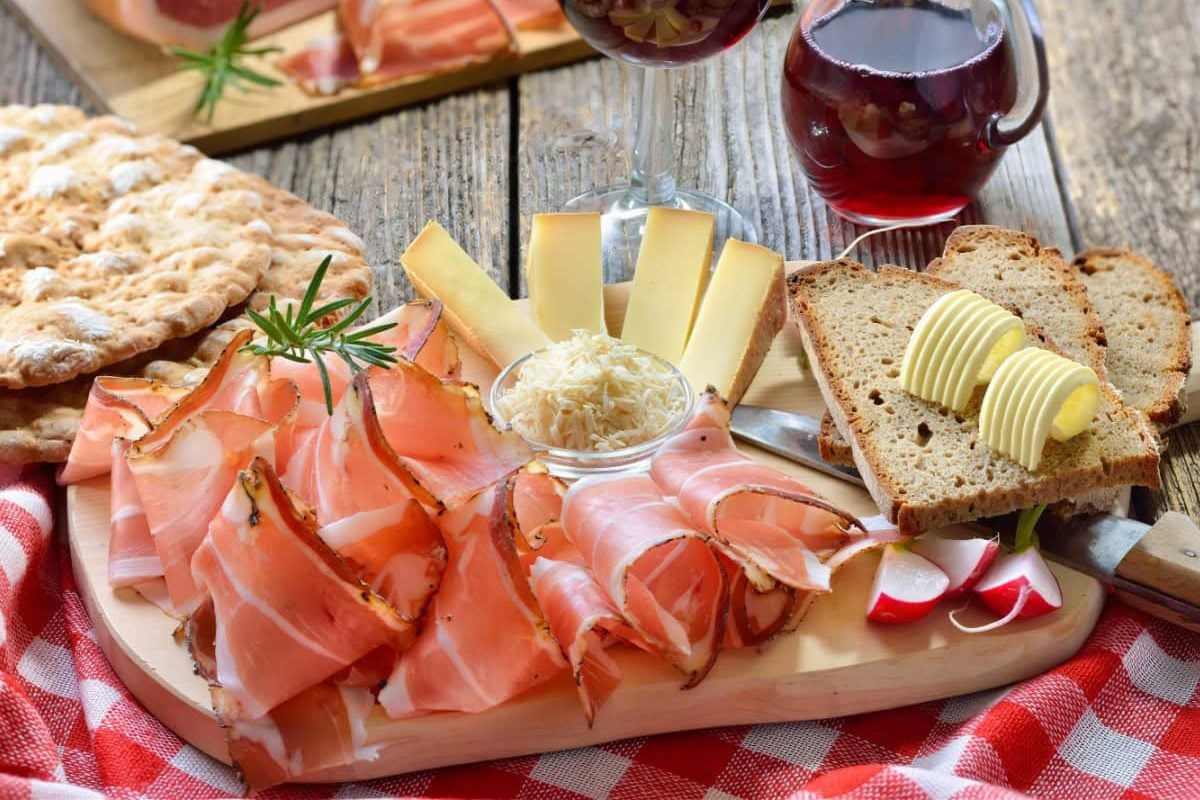
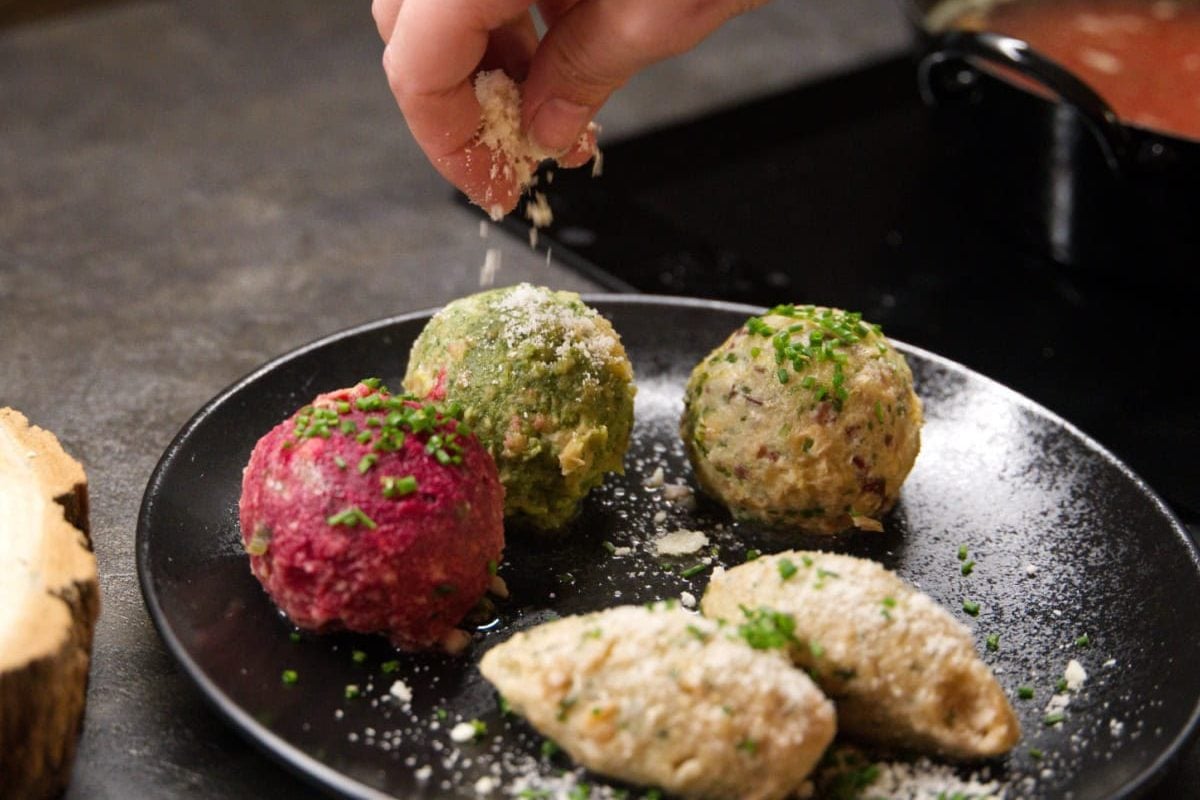
In fact, South Tyrol is often trumpeted as Italy’s gourmet star. More Michelin-starred restaurants reside here than anywhere else in the country.
One of the best ways to discover the gastronomy of South Tyrol is to dine at member restaurants of the Sudtiroler Gasthaus group. This association preserves the unique culture of hospitality and quality that sets South Tyrolean restaurants apart.
📌 Good to Know: South Tyrolean cuisine is deeply seasonal. For example, spring brings prized white asparagus (Spargel) from Terlano, celebrated with dedicated menus across the region from mid-April through June. Summer means fresh berries and mountain cheeses at their peak. And autumn delivers the grand finale: harvest festivals, roasted chestnuts, new wine, and the beloved Törggelen tradition.
Ready to Start Planning Your Trip?
Our 175+ page trip planning guide covers everything: when to go, where to stay, what to hike, and how to avoid the crowds. Packed with insider tips from 11+ years of exploring.
Get the Trip PlannerExploring South Tyrol: Where to Go & What to Do
On a generic map, South Tyrol looks simple enough. In reality, it’s anything but. We often describe it as a land that packs an entire continent into a single province.
This isn’t a place you “cover.” It’s a vertical labyrinth: sculpted by 13 major mountain groups that rise like fortress walls between more than 40 distinctive valleys, each with its own microclimates, traditions, and culinary obsessions.
With its patchwork of holiday regions, soaring mountain groups, and a web of valleys branching off the province’s three main arteries, South Tyrol can feel impossible to untangle. Add 10,000 miles (16,000+ km) of hiking trails crisscrossing its peaks, seven nature parks and 800 castles, and it’s no wonder travelers often don’t know where to begin.
But here’s what we’ve learned after years of wandering its slopes and villages: the reward is in the unraveling. Every twist reveals something new, and the deeper you go, the richer it gets.
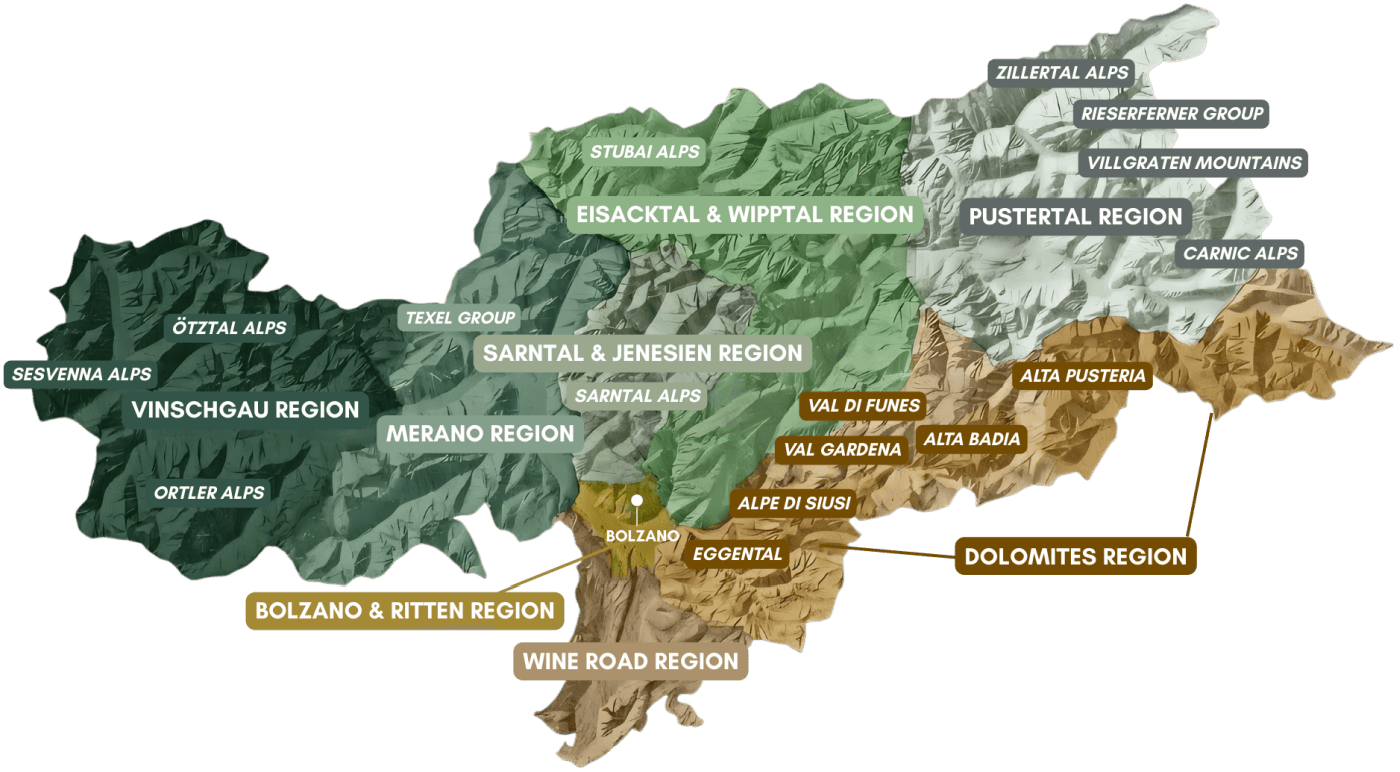
Each valley has cultivated its own character. Each mountain group offers something the others don’t. And the distances between dramatically different landscapes? Often measured in minutes, not hours.
The key to planning your trip isn’t memorizing every valley name or mountain range. It’s understanding the broad strokes. Think of it as a choose-your-own-adventure story, only here, the chapters are written in rock, forest, and vineyard. Once you know the kind of story you want to step into, you can choose where to anchor your visit based on what moves you most.
To make that easier, we’ve mapped South Tyrol into eight loosely defined regions:
🧭 Pro Planning Tip: Even if you intend to spend your entire holiday visiting the Dolomites, it pays to familiarize yourself with the sights and activities in South Tyrol’s other regions. If the weather spoils your plans in the Dolomites, you’ll be glad to have backup options. We’ve learned it’s the secret to an unforgettable trip.
The South Tyrolean Dolomites: Key Regions
The iconic heart of the South Tyrolean Alps
Best for: Dramatic alpine scenery • World-class mountain hiking & biking • Legendary ski terrain • Classic mountain hut culture • Via ferrata
When most travelers picture South Tyrol, they’re picturing this: the pale limestone towers of the Dolomites thundering above flower-dotted meadows and timber-framed villages. This is the landscape that earned UNESCO World Heritage status, and the stage where the region’s hiking and skiing culture reaches its peak.
The Dolomite regions of South Tyrol span the eastern third of the province, each one a self-contained mountain world pressed beneath some of the most photographed peaks on Earth.
Val Gardena / Gröden / Gherdëina
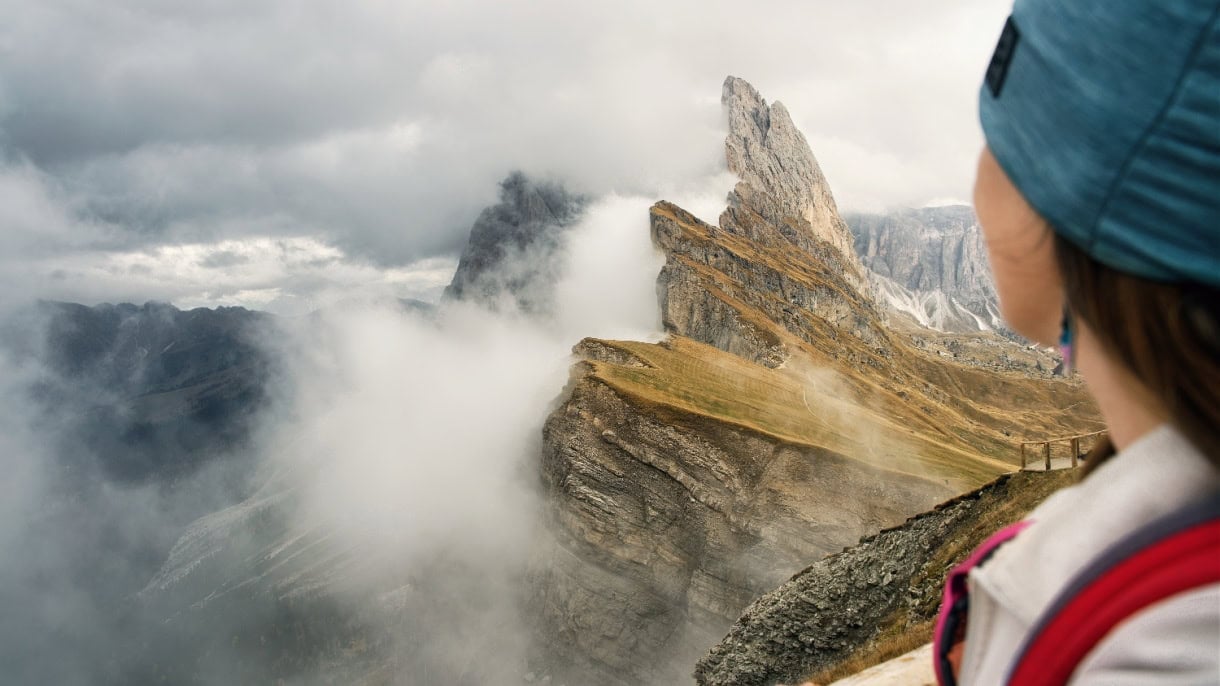
Val Gardena is arguably the most famous region. It’s a long, Ladin-influenced valley situated amid the Geisler (Odle) Group, Sassolungo (Langkofel) Group, Alpe di Siusi (Seiser Alm) and the Sella Group.
Here, you’ll find a vast lift network offering easy access to destinations like Seceda, Resciesa and Alpe di Siusi. The valley also boasts a rich woodcarving tradition, and some of the Dolomites’ longest hiking seasons.
Alta Badia / Val Badia / Gadertal
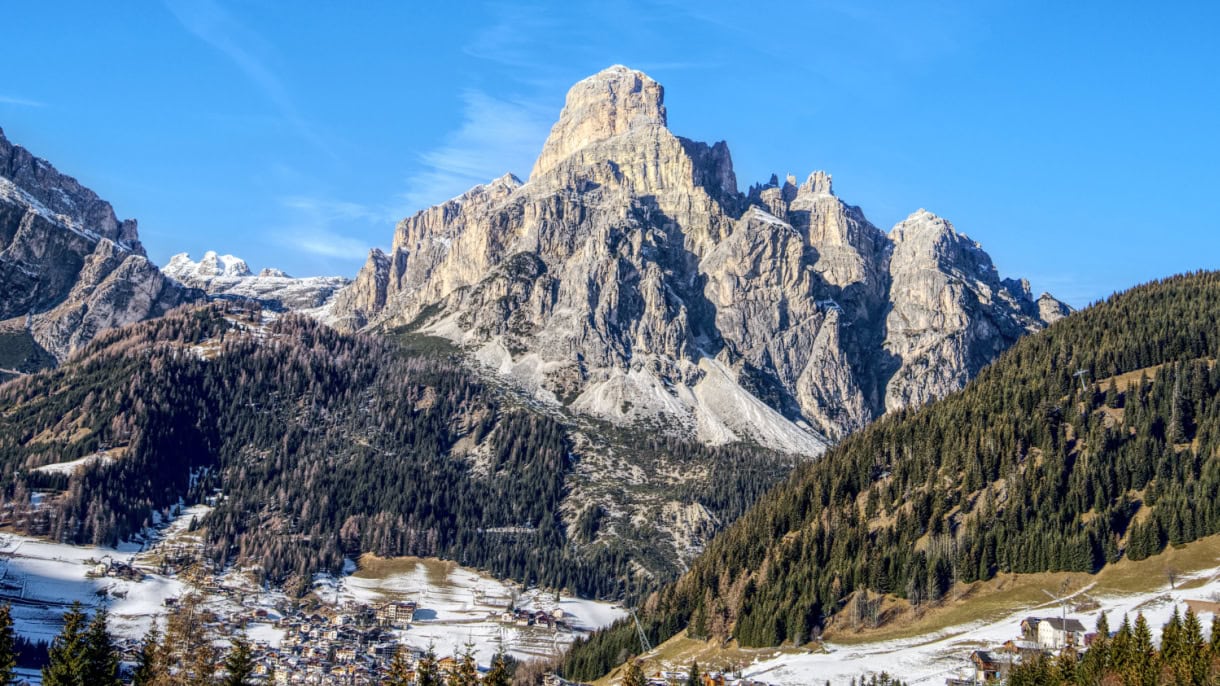
Alta Badia, just over the Gardena Pass, shares the same Ladin roots as Val Gardena. Set between the Puez-Odle Nature Park and the Fanes-Senes-Braies Nature Park, it’s framed by hulking massifs like Sassongher, Sas dla Crusc, Piz Boè, and Conturines.
Alta Badia is where you’ll find a number of quaint mountain villages seemingly lost in time. La Val (Wengen) is one such gem and serves as an ideal base for hikes. So much so, it earned the distinction of becoming Europe’s first official “hiking village”.
Alpe di Siusi / Seiser Alm
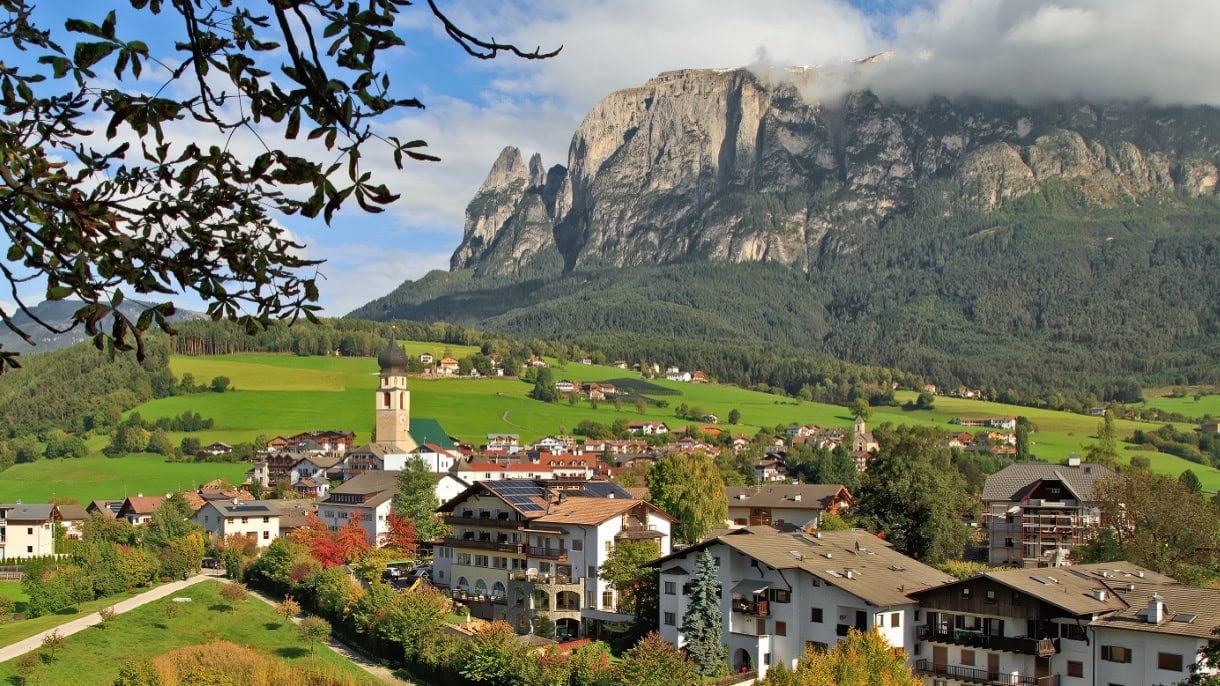
The Alpe di Siusi region is among the most unique in the Dolomites. You get the full grandeur of heavyweights like Sassolungo, Sasso Piatto (Plattkofel), the Schlern (Sciliar), and the Denti di Terrarossa (Rosszahnscharte) with a rare bonus: Europe’s largest alpine plateau. Known as Alpe di Siusi / Seiser Alm, this rolling meadowland delivers everything from easy strolls and bike rides on Bullaccia (Puflatsch) to hut-to-hut days that end at some of the Dolomites’ best rifugios.
Eggental / Val d’Ega
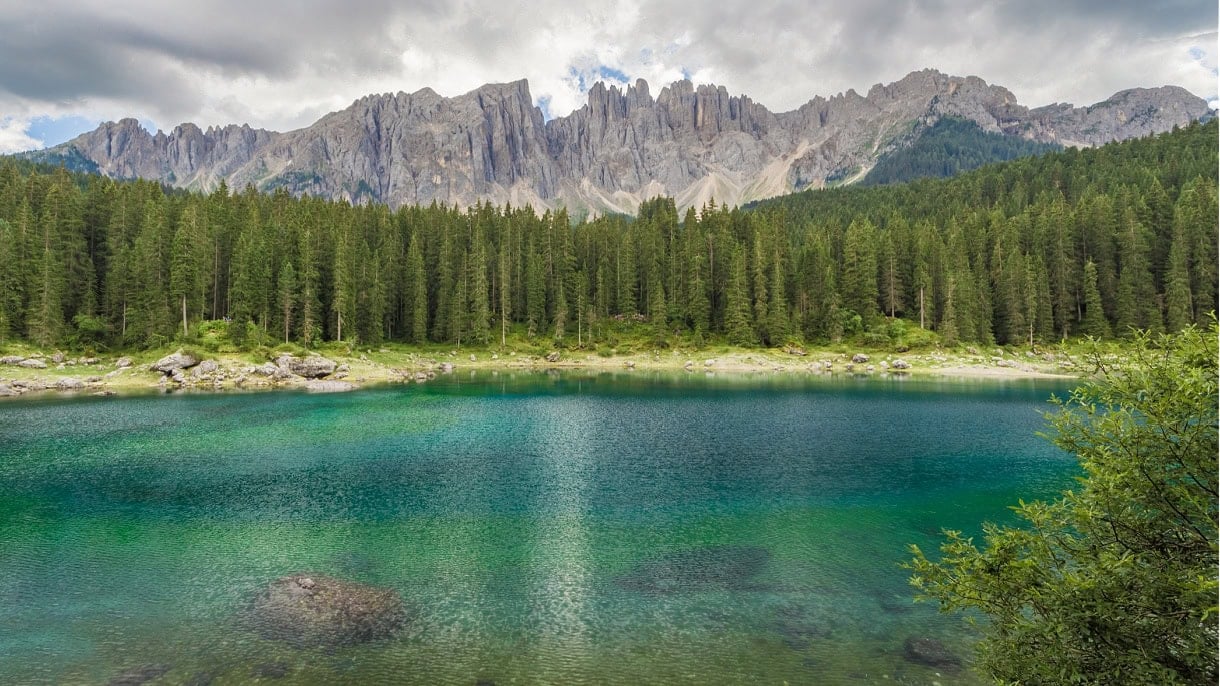
Eggental, tucked just southeast of Bolzano (Bozen), is one of South Tyrol’s — and the Dolomites — most underrated corners. Anchored by the Rosengarten (Catinaccio) and Latemar massifs, it offers a quieter Dolomite escape with pristine forests, countless waterfalls, and far fewer crowds.
Eggental also lays claim to one of most beautiful lakes in the Dolomites: Lago di Carezza. This alpine gem is known as the “Lake of Rainbows” thanks to its ever-shifting colors, which dance across the surface like brushstrokes. Every time we walk its shoreline, it feels like nature is repainting the scene.
Alta Pusteria / Hochpustertal
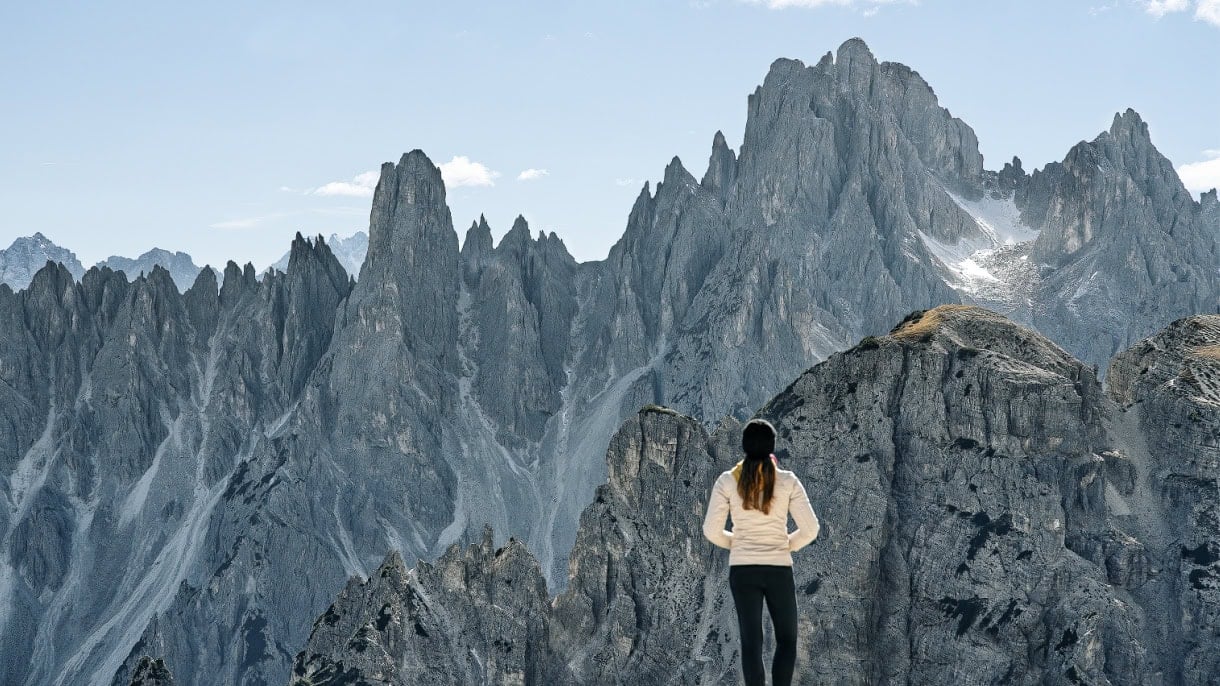
Alta Pusteria is the far-eastern stretch of South Tyrol where the Dolomites put on their biggest show, pressed right up against the Austrian border and packed with icons. This is Tre Cime di Lavaredo territory, alongside the sharp silhouettes of Cadini di Misurina, the pastures of Prato Piazza (Plätzwiese) and a trio of knockout lakes: Lago di Braies (Pragser Wildsee), Lago di Landro (Dürrensee), and Lago di Dobbiacco (Toblacher See).
It’s also home to the sweeping Val Fiscalina (Fischleintal), a meadow-and-forest valley that pulls you straight into the heart of the Sexten Dolomites.
Val di Funes / Villnöss
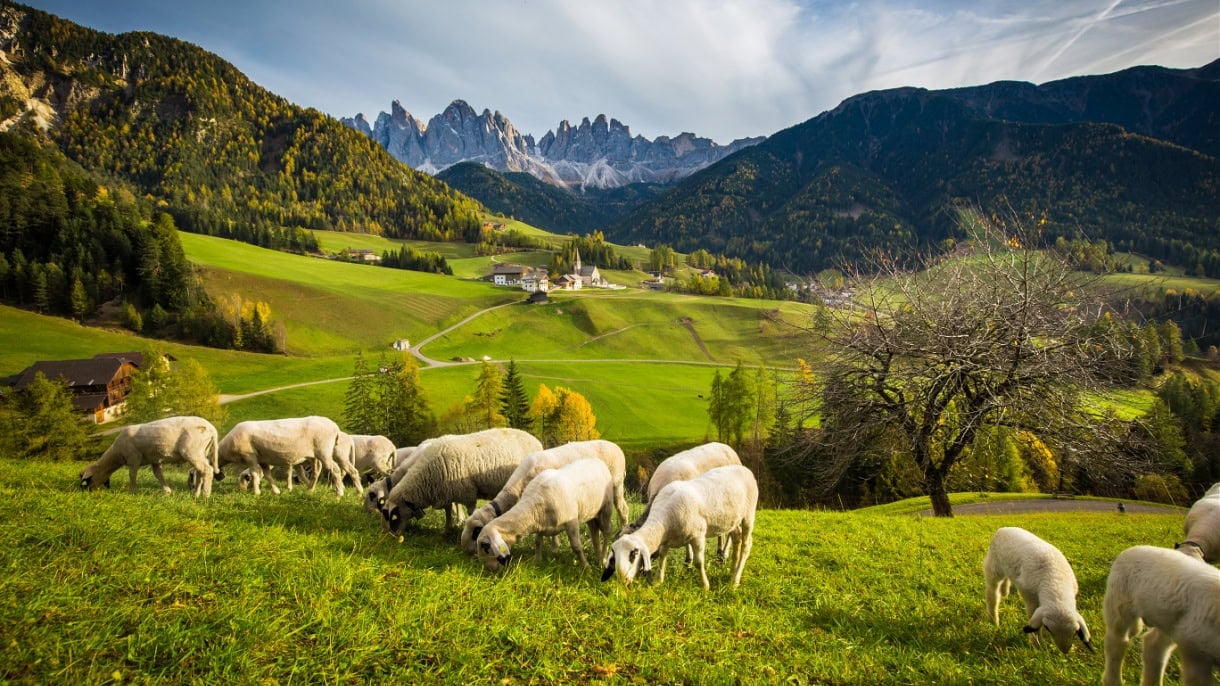
Val di Funes is the Dolomites at their most storybook: pocket-sized villages, pastureland dotted with old farmsteads, and the Geisler massif storming up behind it all like a stone wall. Set between the Eisacktal (Valle Isarco) and the Puez-Odle Nature Park, it’s famous for its chapel-and-peaks postcard views.
But what keeps us coming back to Val di Funes is the calm that settles in once the day-trippers leave. It’s the kind of stillness that feels borrowed from another century. Here, farm stays still outnumber hotels and the best days are slow ones on trails like the Adolf Munkel Trail.
Want the Full Dolomites Playbook?
If the Dolomites are your main event, our dedicated guide breaks down the practical details that matter most: where to base yourself, how to time your days, and how to make the most of each region without wasting hours in transit.
Explore the Dolomites GuideThe Merano (Meran) Region
The art of contrast: peaks, palms, and a thousand years of wonder
Best for: Alpine adventure with a Mediterranean twist • Orchard-to-vineyard mountain trails • Castles & history • World-class spa culture
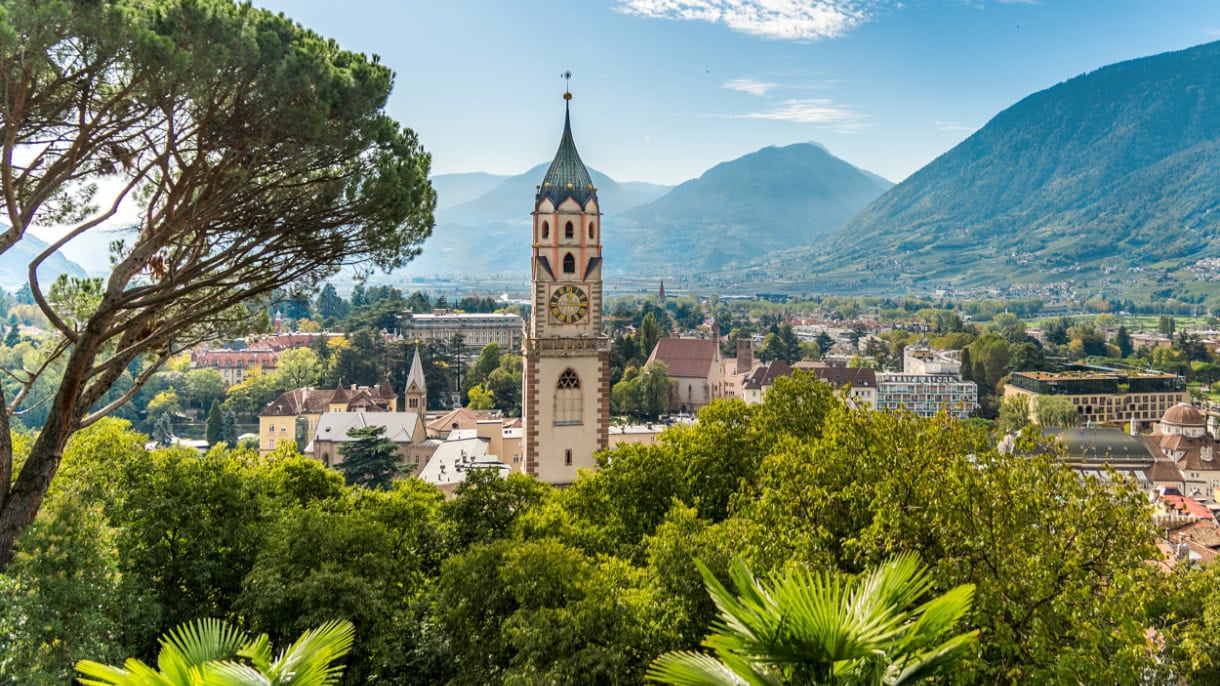
When we first arrived in the Merano Region (also known as the Burggrafenamt district) after visiting the Dolomites, it felt like we jumped into another country. Once you cross the Etsch River, just beyond Bolzano, everything shifts.
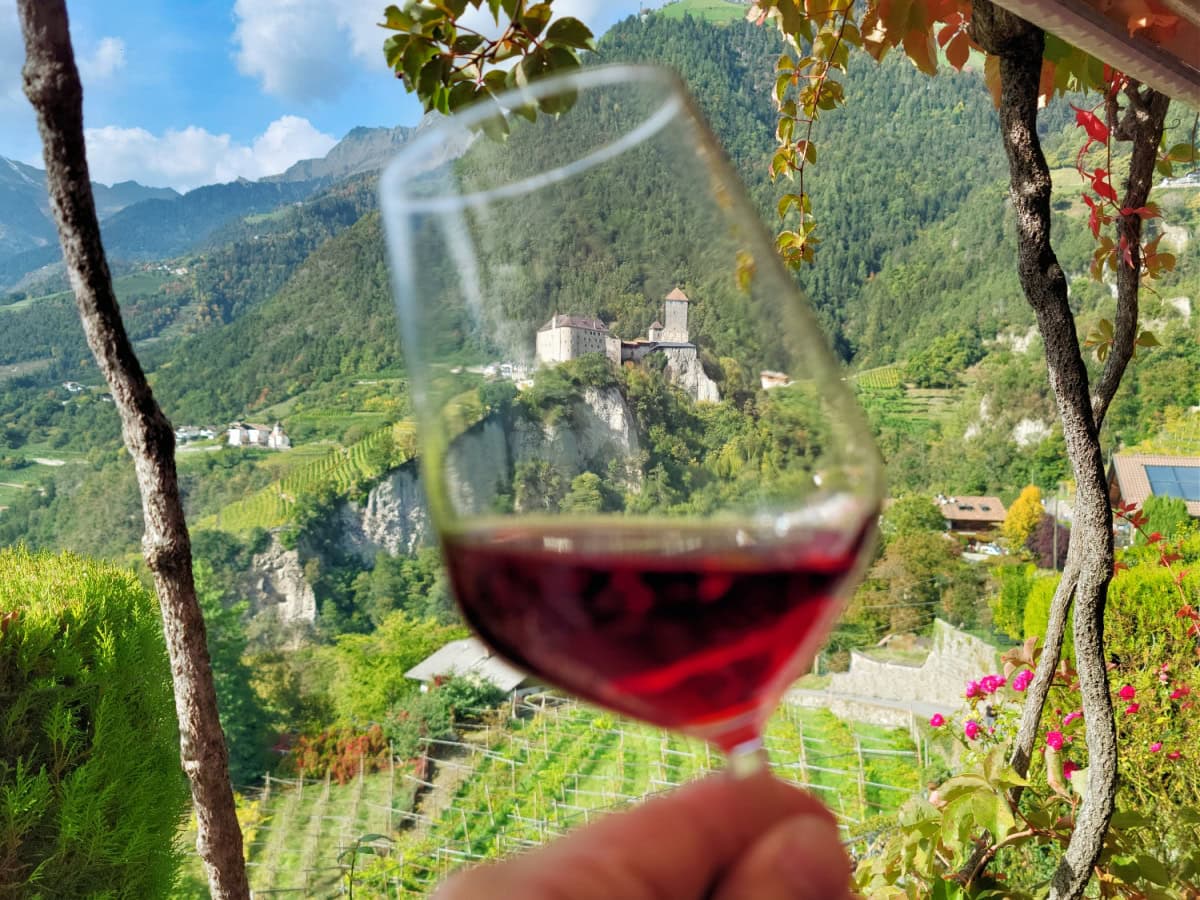
The spires of the Dolomites fade behind you, and the silver-fired summits of the Texel Alps rise ahead, towering above swaying palms, slender cypresses, and sun-warmed olive trees. A medieval air pervades the mountains, where castles cling to improbable perches above a cascading medley of vineyards, orchards, and stone-lined trails.
At the heart of it all is Merano: South Tyrol’s most elegant curveball. Once the preferred winter retreat of Austrian nobility, Merano still carries that belle-époque charm. You’ll find it in the palm-drenched promenades, the Art Nouveau architecture, and the legendary thermal spas that have drawn wellness seekers for over a century.
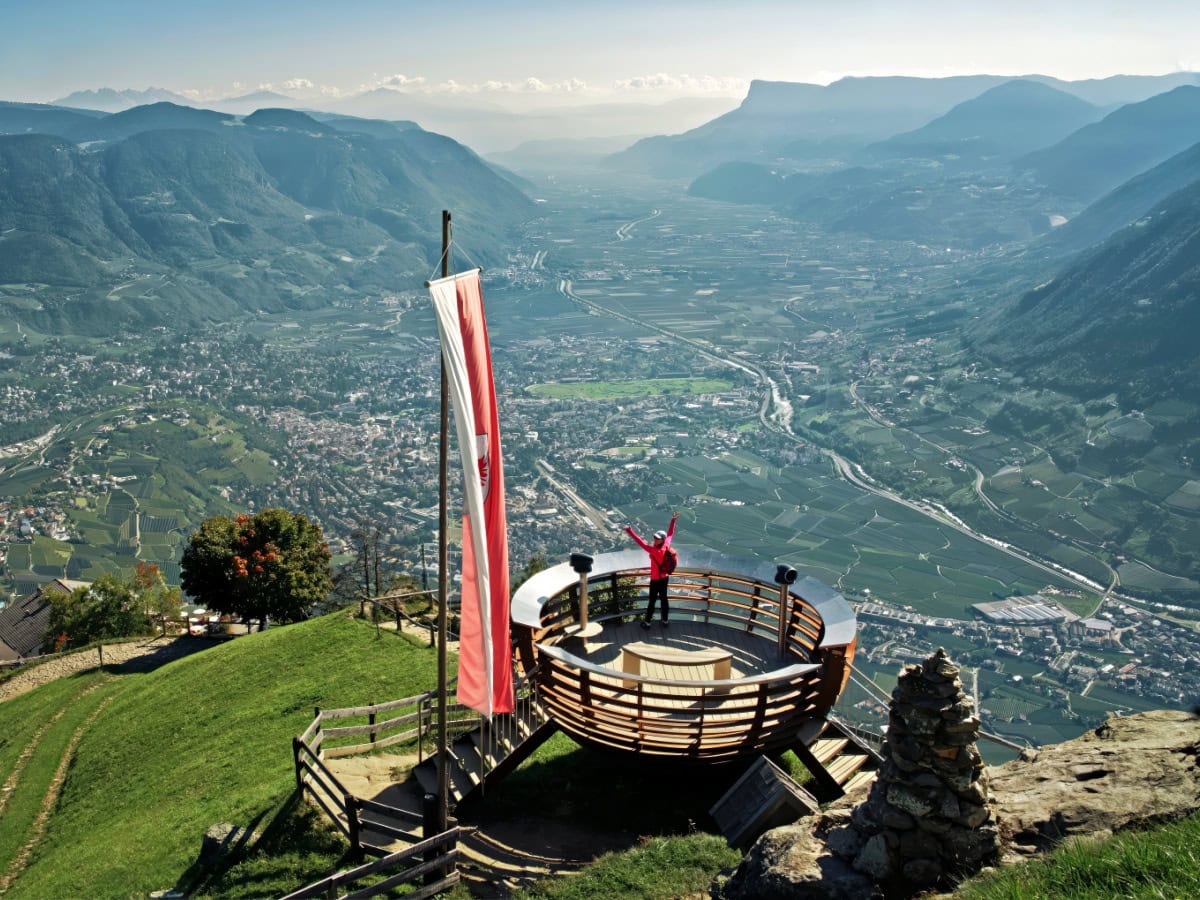
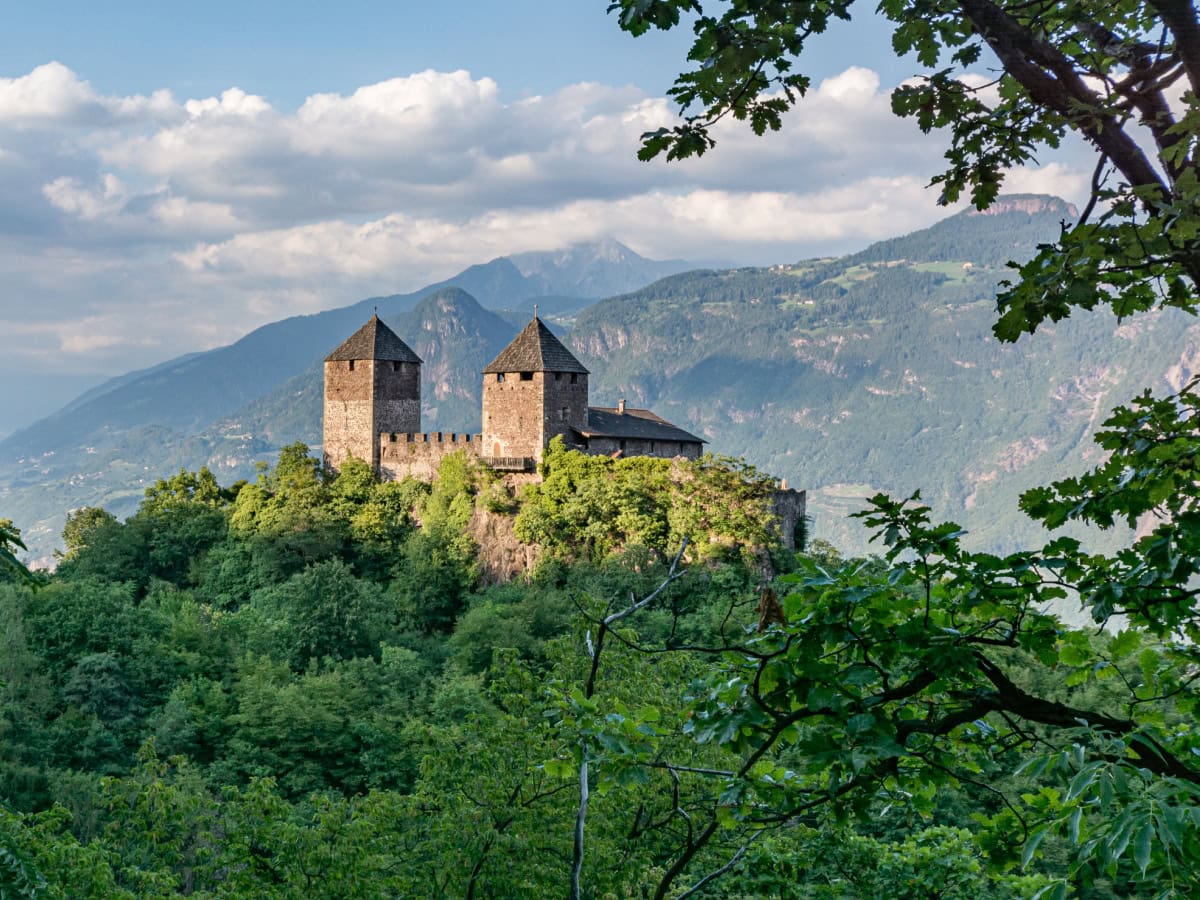
But Merano isn’t just nostalgia. The town pulses with a modern rhythm. You’ll find arcaded shops, open-air markets, streetside cafes, and botanical gardens like Trauttmansdorff. It’s especially alive during the Merano Grape Festival, when the streets fill with music, traditional dress, and the scent of roasted chestnuts and wine.
Surrounding Merano are a constellation of sun-kissed villages: Algund (Lagundo), Schenna (Scena), Dorf Tirol (Tirolo), Lana. Each offer historic splendor paired with striking Alpine-Mediterranean beauty. In fact, some of our favorite hikes in all of South Tyrol begin here.
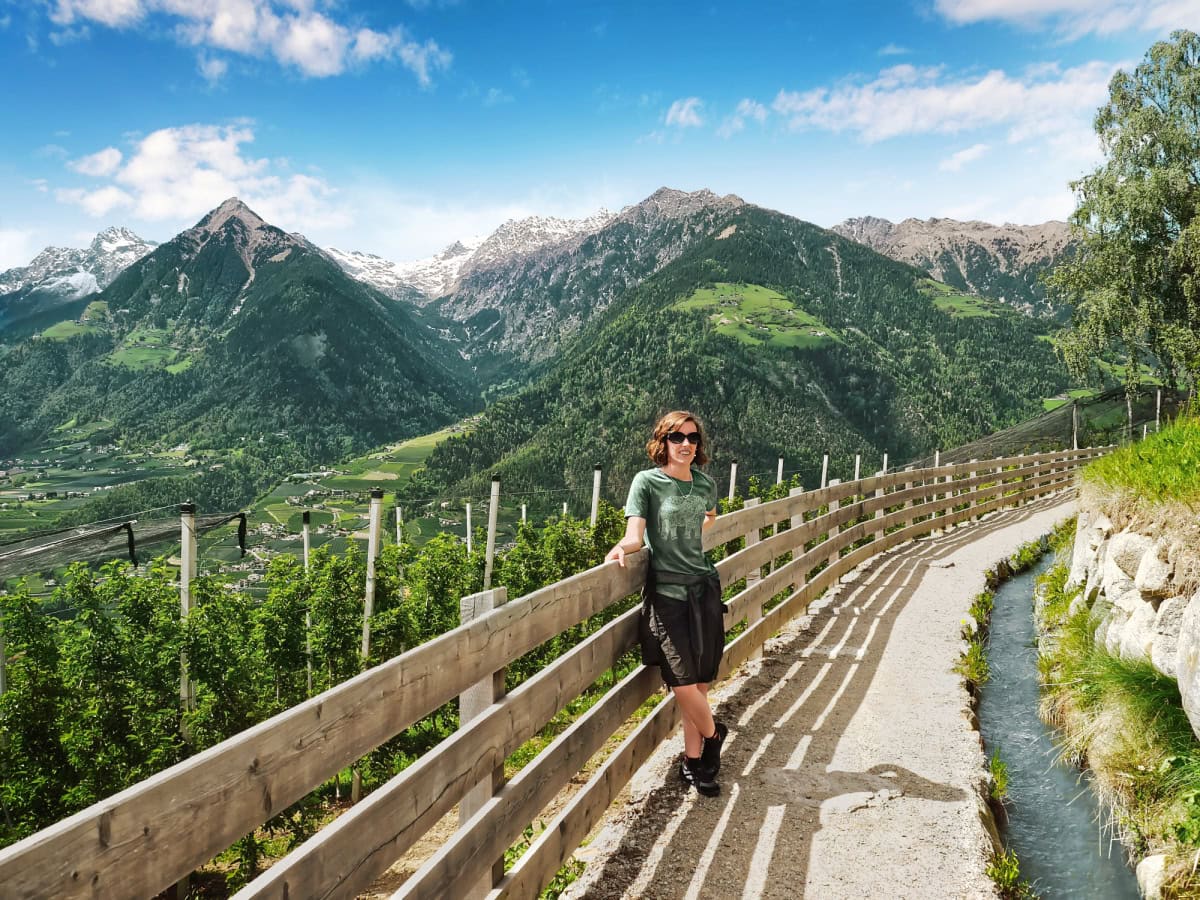
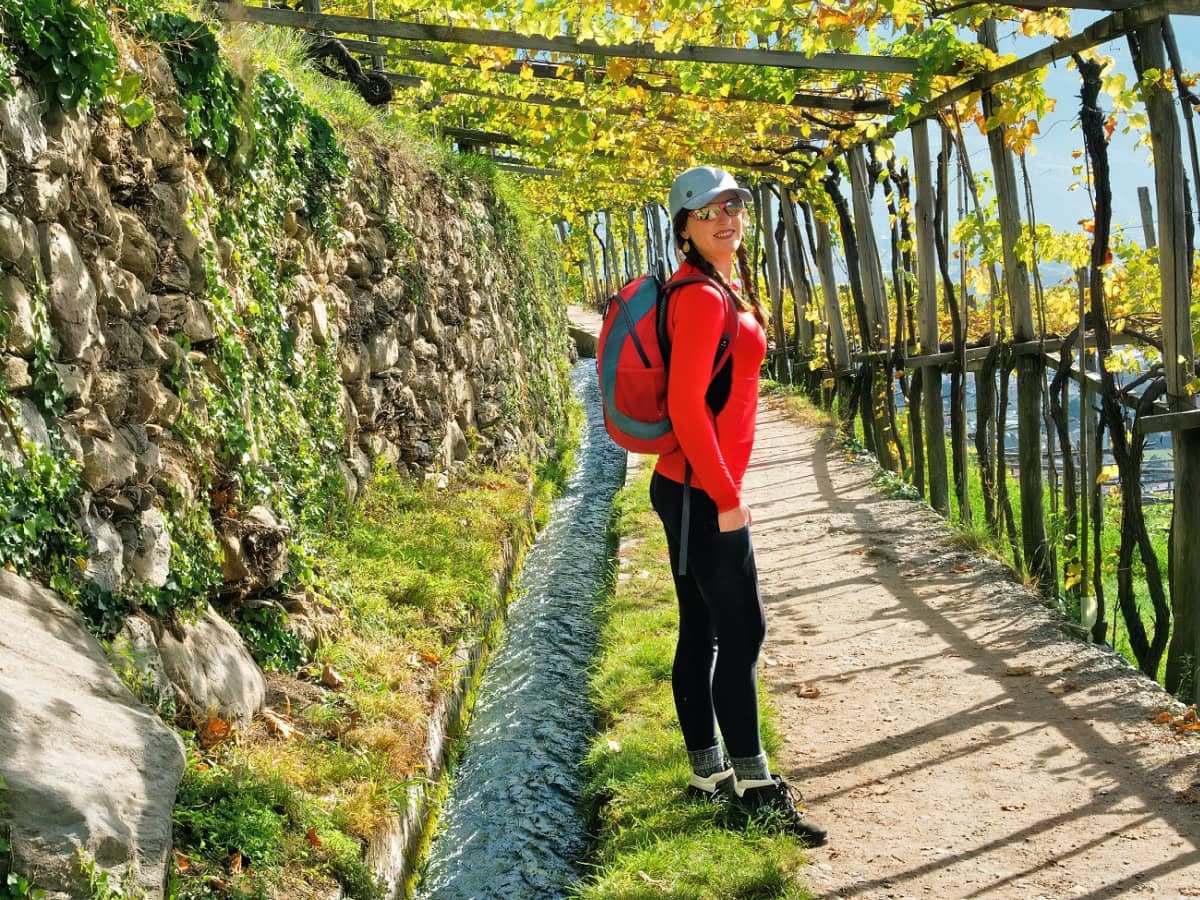
From these villages, you can step directly onto the Waalweg trails: peaceful footpaths that follow ancient irrigation channels and wind for miles through meadows, forests, vineyards, orchards — passing wayside shrines, churches, and castles along the way. With every step, the soul-mending gurgle of flowing water keeps you company.
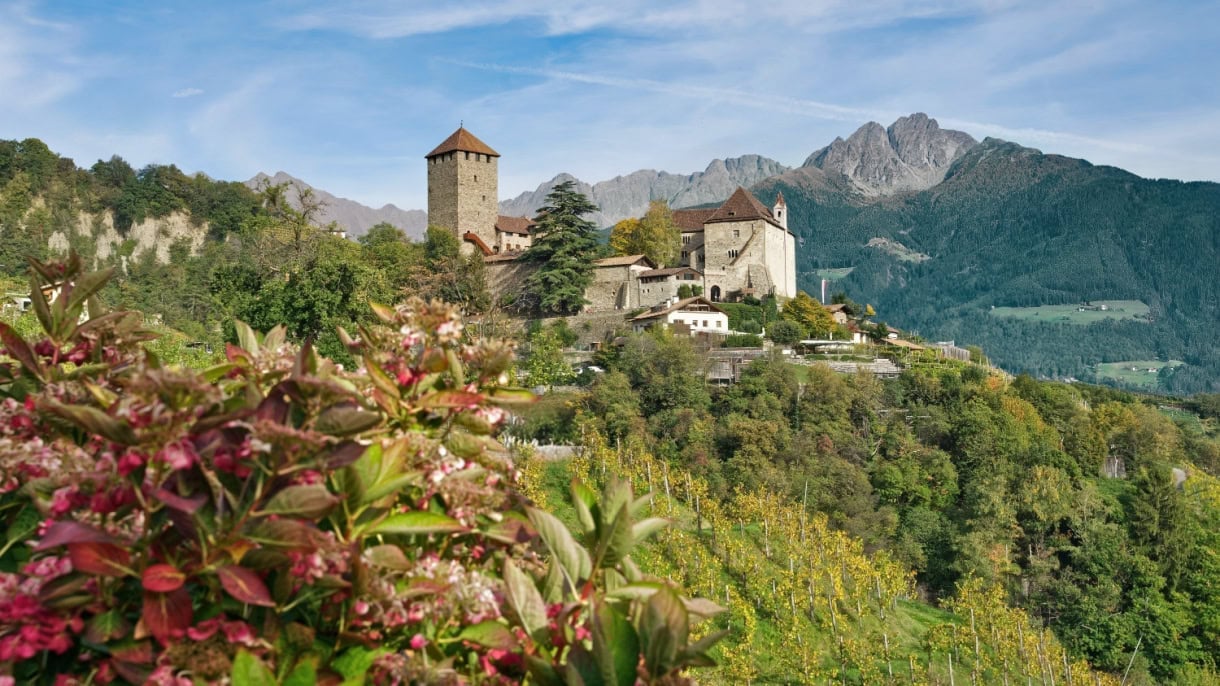
Head north of Merano and you can hike the Meraner Höhenweg (Merano High Mountain Trail), which is in the Texel Group Nature Park — South Tyrol’s largest nature park covering more than 33,000 hectares. Further north is Passeiertal (Val Passiria), a rugged valley of steep pastures, rushing rivers, and timeworn hamlets. It’s also the birthplace of Andreas Hofer, the Tyrolean freedom fighter whose remarkable life story is preserved at his former farmhouse in St. Leonhard.
To the southwest of Merano lies Ultental (Val d’Ultimo). This remote side valley disappears into the folds of the Ortler Alps. Time slows down here to crawl. Which is why you’ll encounter 2,000-year-old larch trees watching over alpine pastures peppered with historic farmsteads that seem drawn by hand.
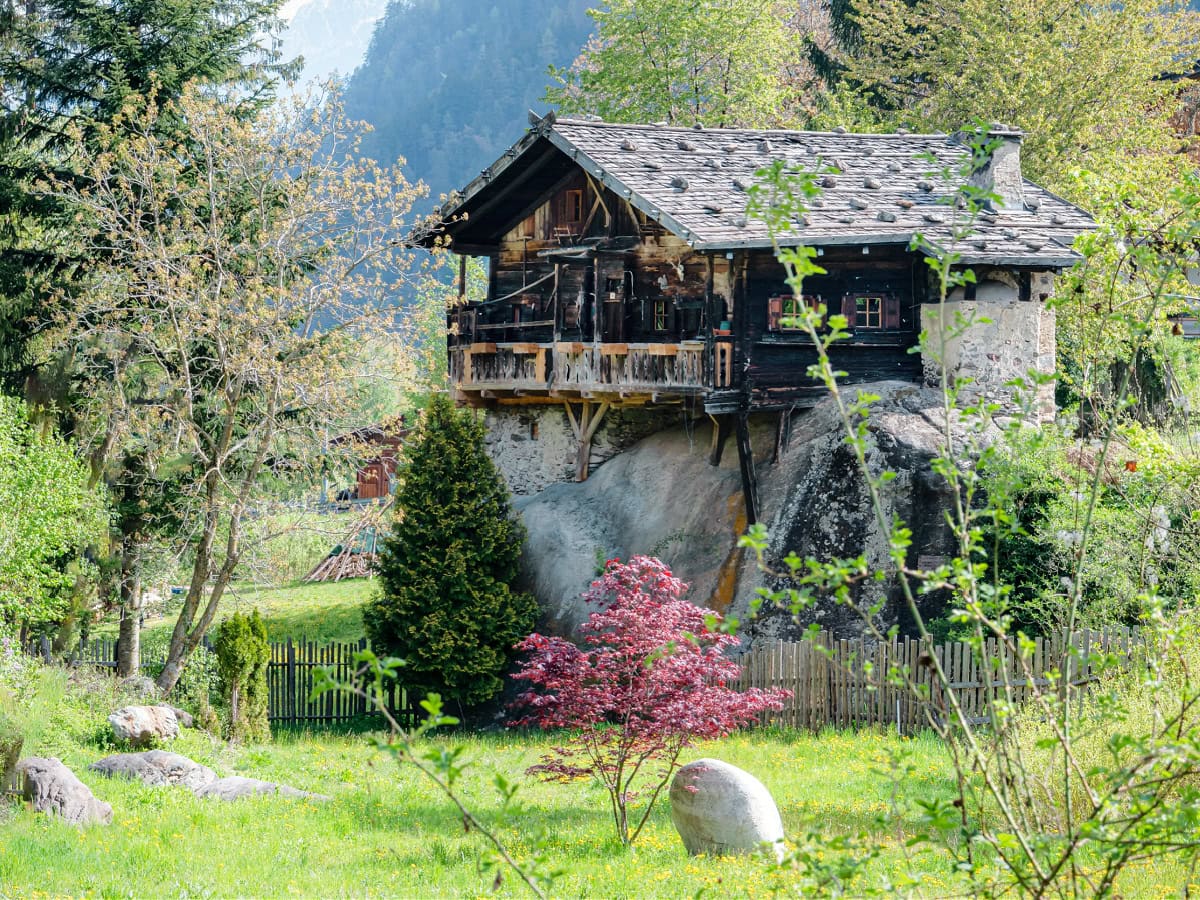
It’s one of South Tyrol’s most hidden and authentic corners, and home to Häusl am Stein (The House on the Rock), one of the luckiest buildings in the Alps. Perched on a boulder exposed by a great flood in 1882, this lone house survived while every other around it was swept away. Built by chance, spared by nature. A real-life legend in stone.
The Vinschgau (Val Venosta) Region
Sun, stone, and snow: South Tyrol’s spirited western frontier
Best for: High-alpine adventure • Orchard-to-vineyard mountain trails • Castles & history • Alpine lakes • World-class biking
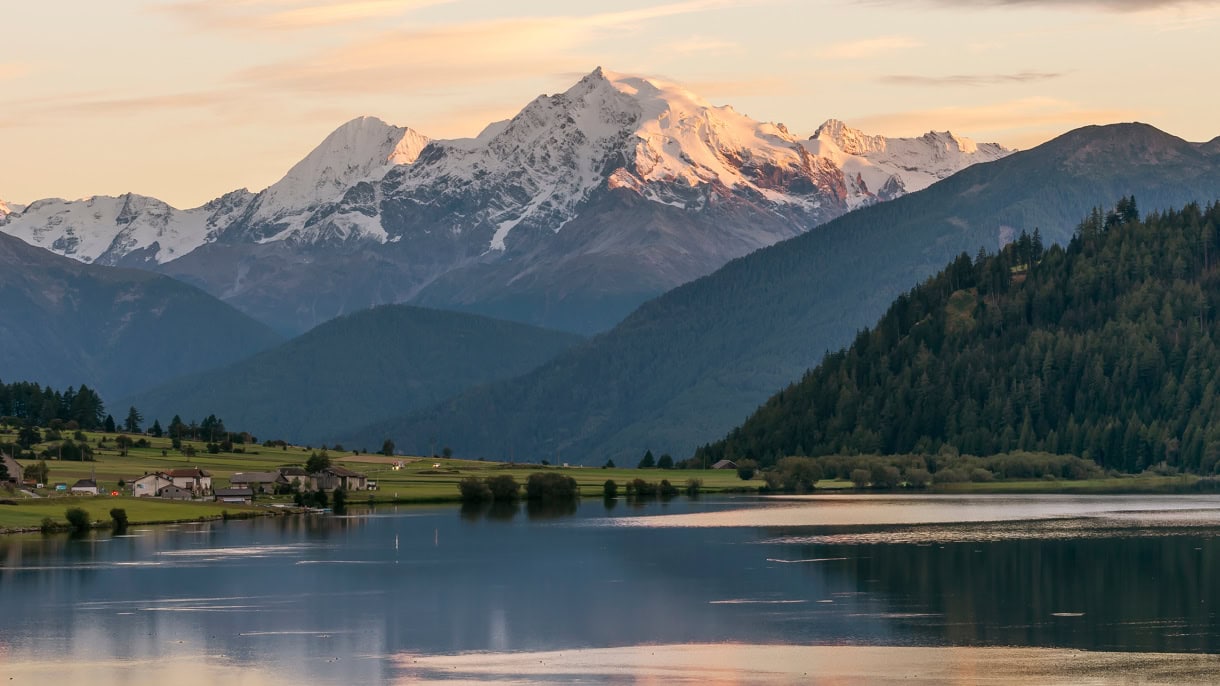
The Vinschgau Region is South Tyrol at its most beautiful extremes. This broad mountain basin runs from just beyond Merano to the Swiss and Austrian borders. It’s a landscape so distinct, so dramatically carved, that we’ve come to see it as its own universe in the Alps.
Here, nature paints in bold contrasts. One brushstroke desolate, the next lush. In some stretches, the land evokes sun-scorched Spain more than Austria. But venture into the side valleys and you’ll find yourself beneath the highest peaks in South Tyrol, where glaciers crack and groan above flower-strewn meadows.
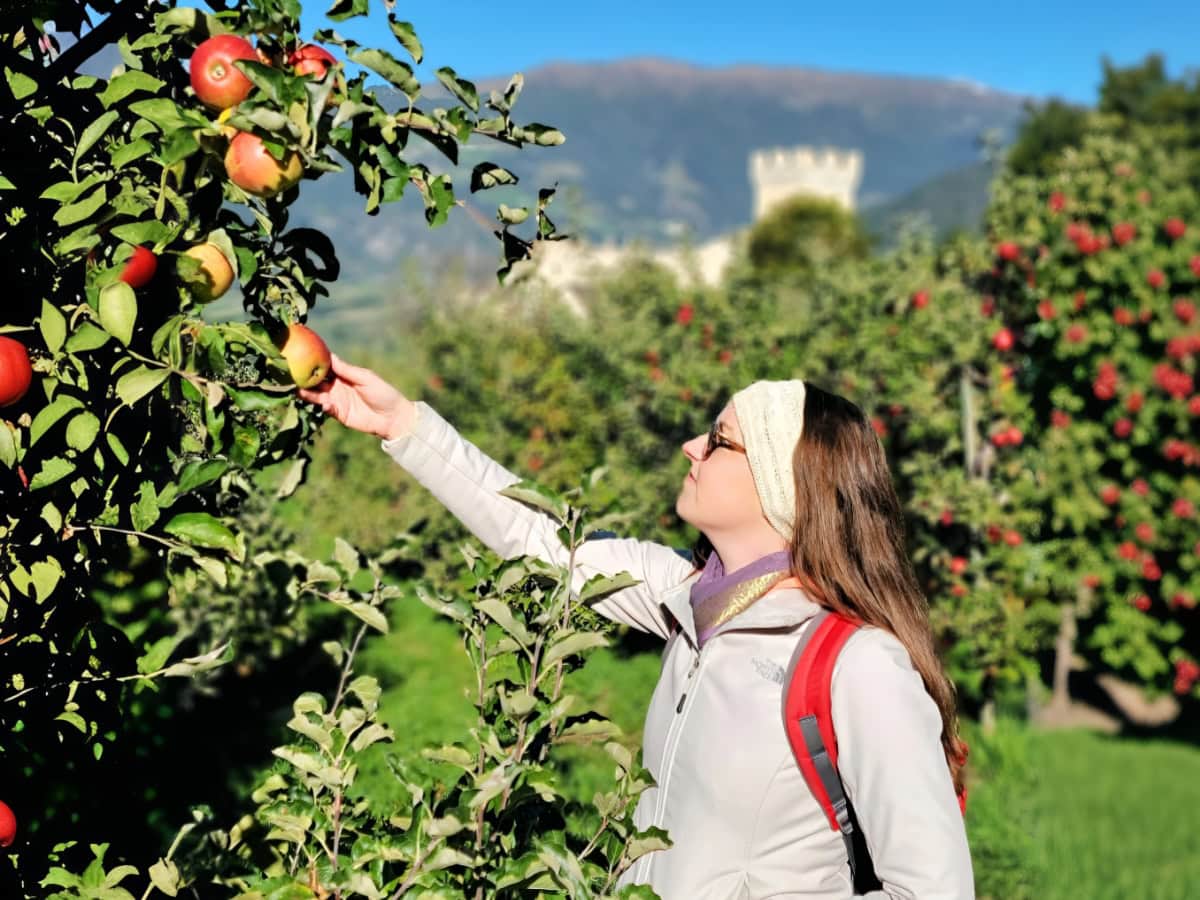
At the valley’s heart, apple, apricot, and pear orchards blanket the slopes with bursts of color. And vineyards climb right beside them in crisp, tidy rows, chasing the sun like ivy on stone. This Eden-like pocket grows most of South Tyrol’s famous produce.
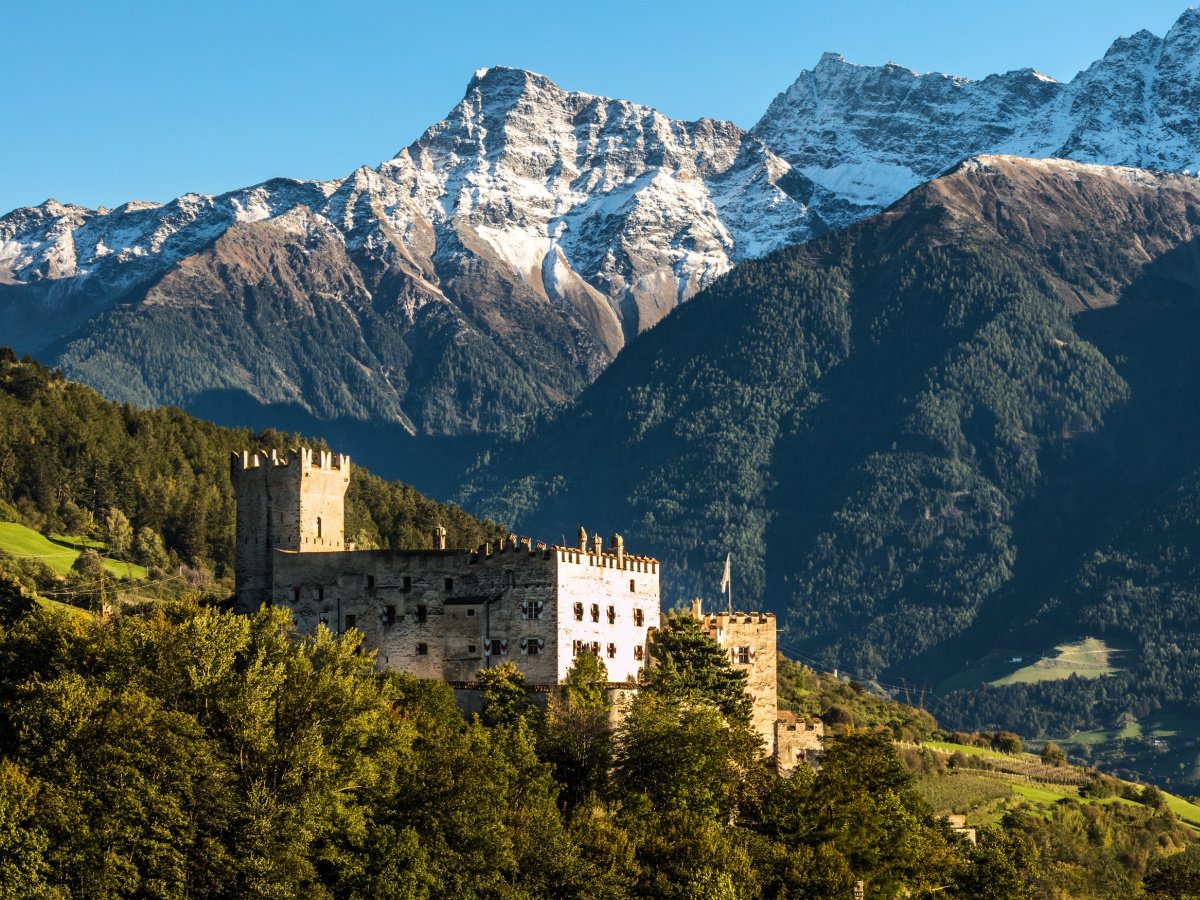
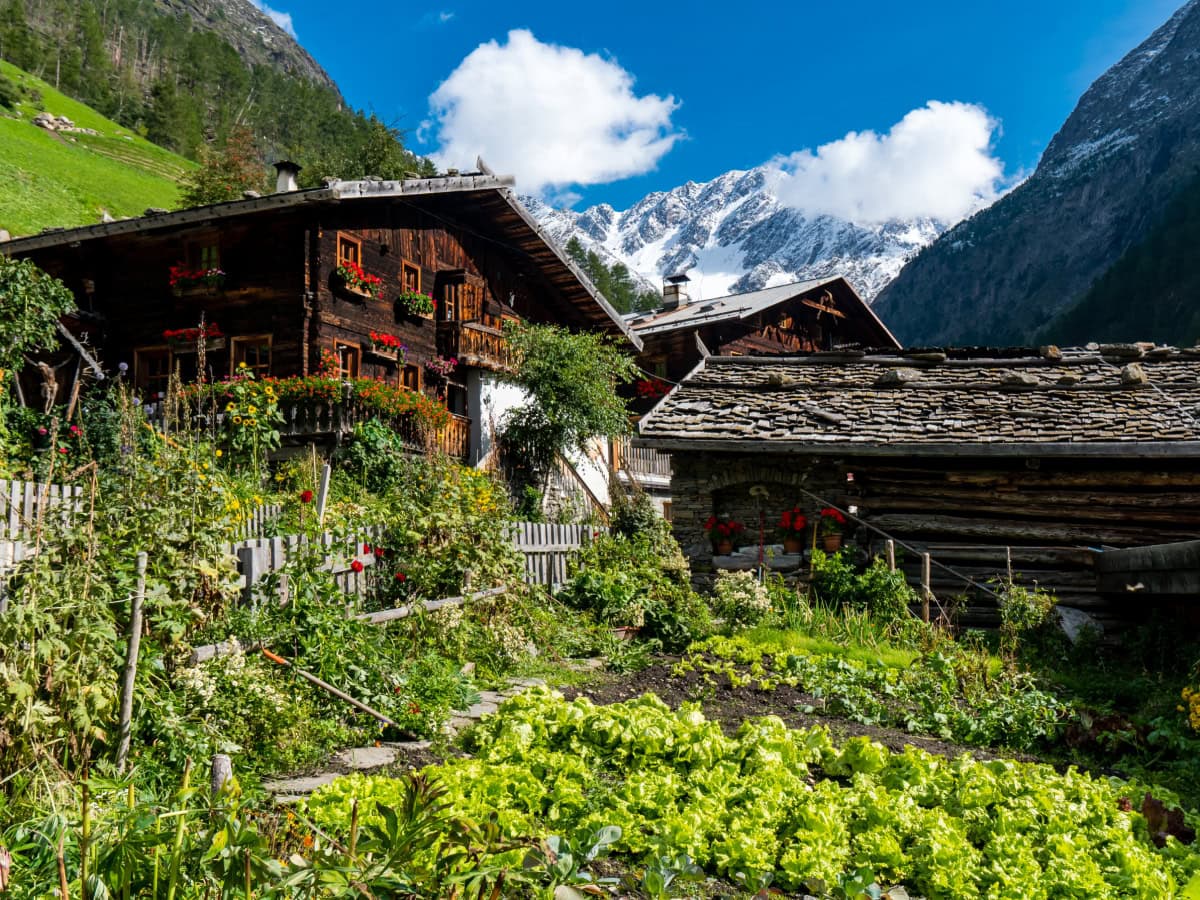
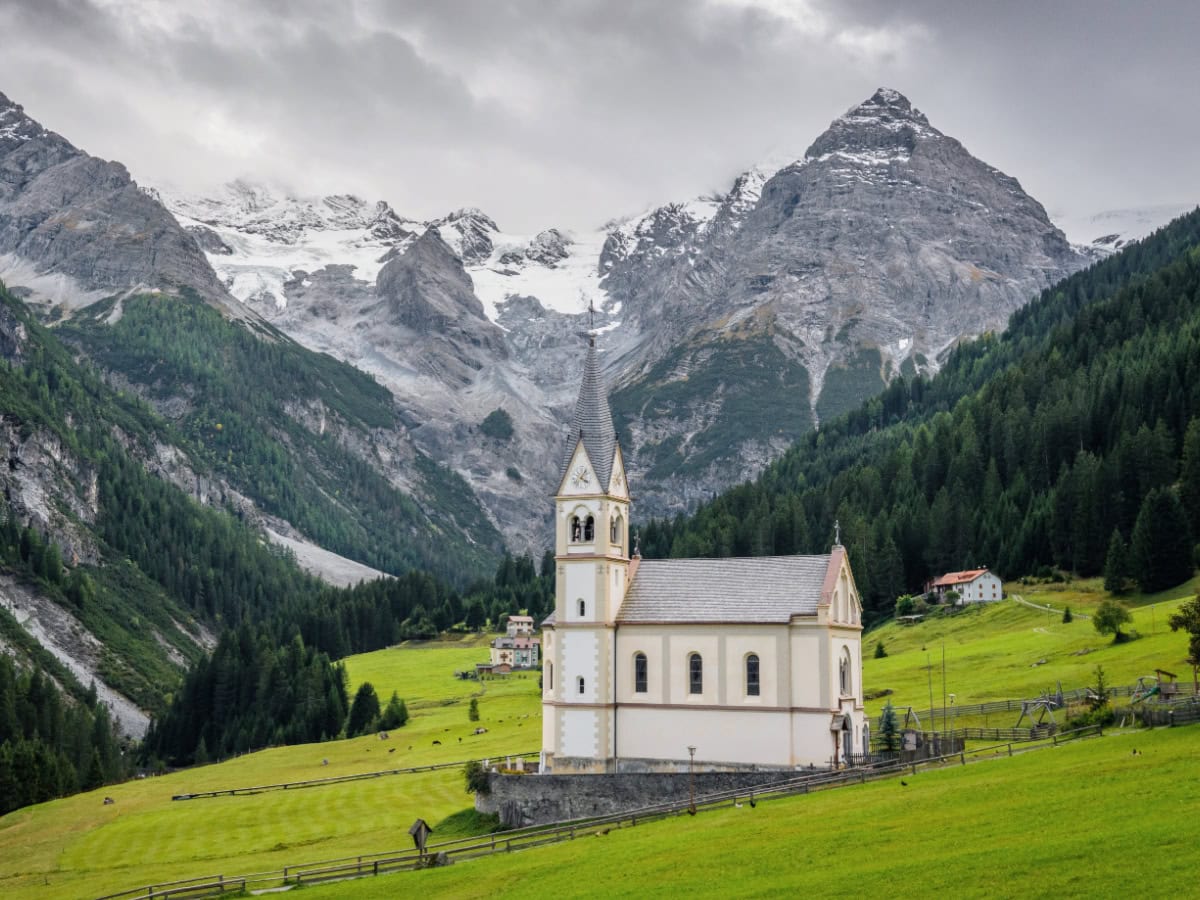
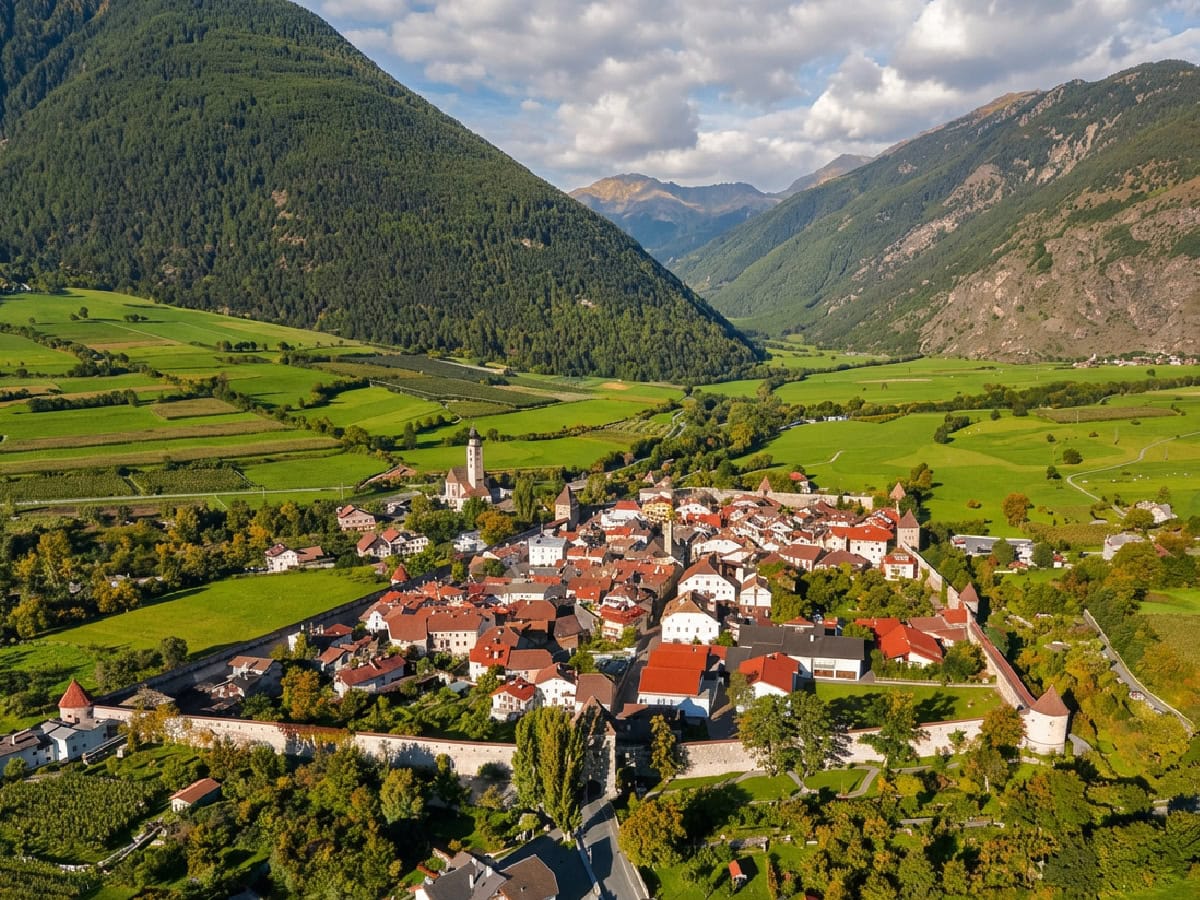
But Vinschgau’s beauty isn’t just natural; it’s also deeply historical. Once a prized corridor between northern and southern Europe, its valley walls have borne witness to Celtic invaders, Roman legions, Germanic tribes, and medieval crusaders.
Their stories remain in ruins, roads, and mountain-kept castles, some in a perpetual state of crumble, others like Schloss Churburg, carefully preserved. One of the region’s most profound sites is Marienberg Abbey, the highest Benedictine monastery in Europe, where faith and silence have endured for over 900 years.
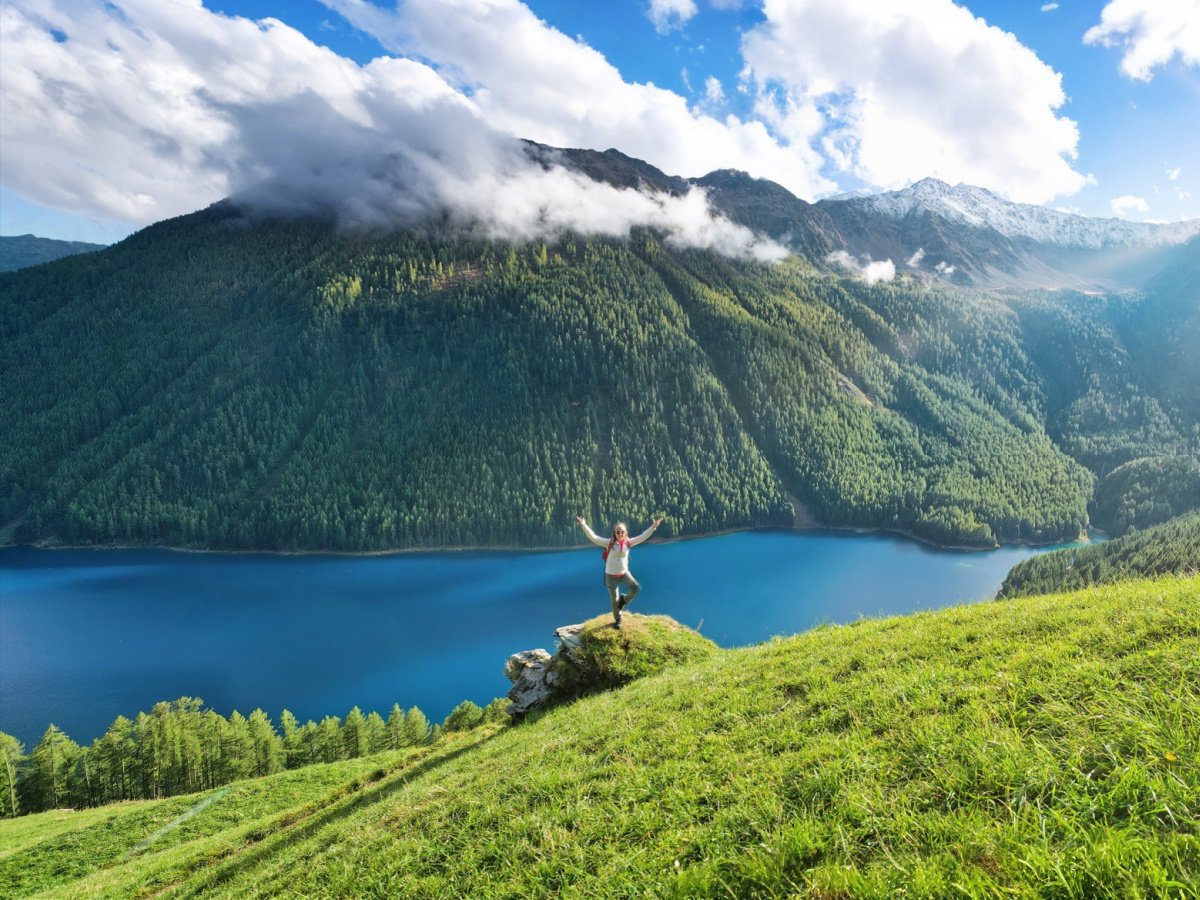
Climb northwest into Schnalstal (Val Senales) and the terrain turns pure alpine. Here, you’ll find Lago di Vernago (Vernagt-Stausee), a piercing blue lake sitting beneath some of the highest farms in South Tyrol. And beyond these pastoral outposts is the site where Ötzi the Iceman — Europe’s oldest natural mummy — was discovered in 1991.
A must-do when here is riding the Schnalstal Glacier Cable Car to Iceman Ötzi Peak where an observation platform overlooks his place of rest for more than 5,000 years.
Tucked beneath South Tyrol’s tallest mountain, Ortler, you’ll find the walled village of Glurns (Glorenza). The smallest community in South Tyrol, Glurns is completely encircled by its original medieval walls. Its cobbled streets and arcaded buildings feel plucked straight from a fairytale.
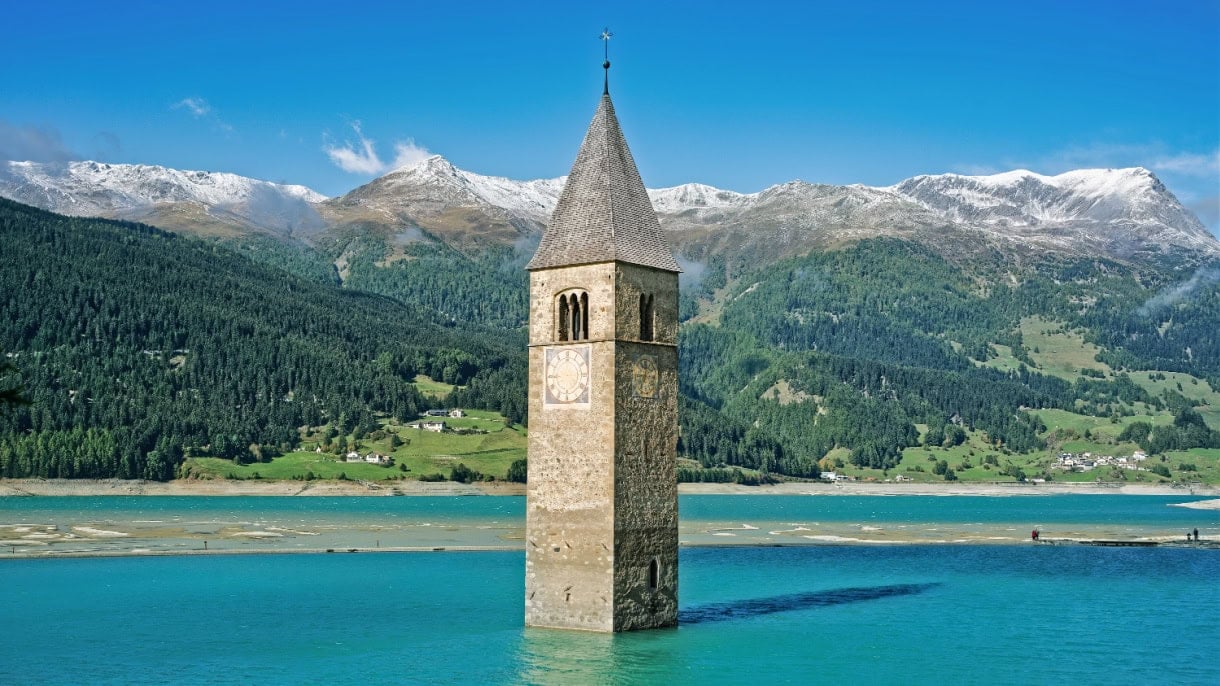
At the Vinschgau’s northwestern edge, the haunting beauty of Lago di Resia (Reschensee) takes hold. A lone church steeple juts from the lake’s surface — the only remaining trace of Curon (Graun), a village sacrificed in the 1950s to make way for a hydroelectric project. The surreal sight has become one of South Tyrol’s most photographed landmarks.
And in Vinschgau, you’ll also find the iconic Stelvio Pass (Stilfser Joch), one of the highest and most dramatic drives in the Alps. With 48 cliff-clinging switchbacks winding to 9,045 feet (2,757 m), this road is a pilgrimage for drivers, cyclists, and thrill-seekers alike.
The Sarntal & Jenesien Region
(Val Sarentino & San Genesio)
Ancient pines and larches, stone-stacked mysteries, and South Tyrol’s sunniest souls
Best for: Escaping the tourist circuit • Traditional culture • Peaceful trails
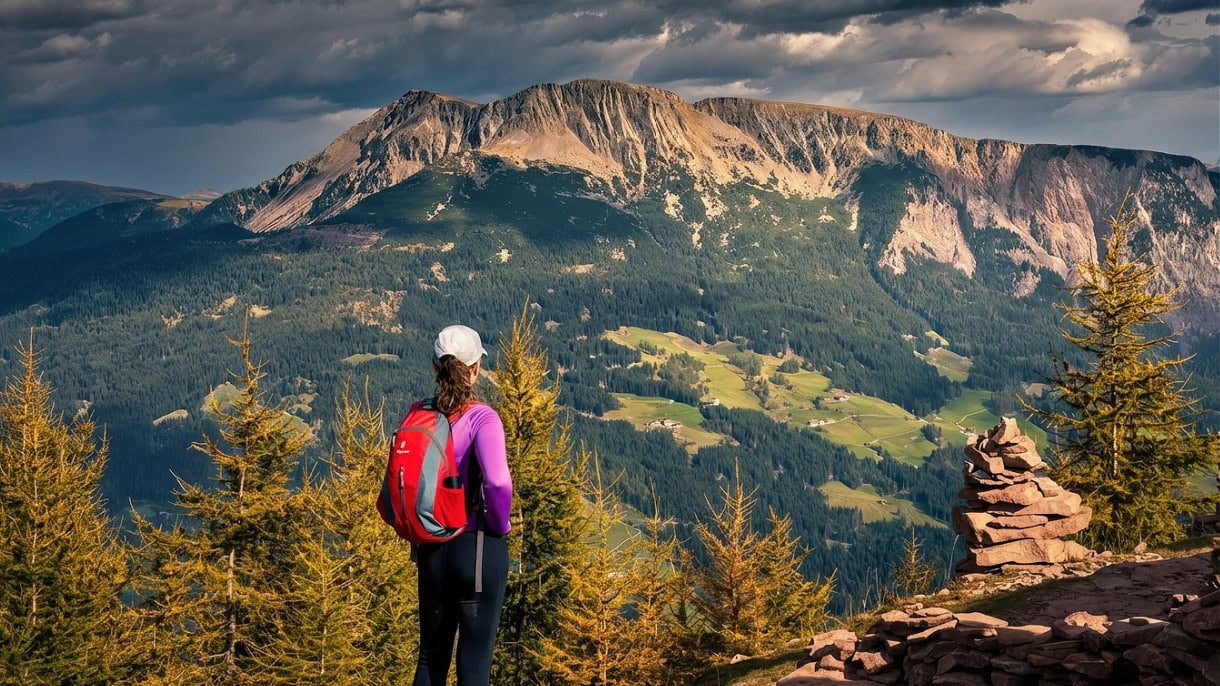
Just minutes from Bolzano, yet worlds apart in spirit, the Sarntal region is where South Tyrol keeps its quietest secrets. Encircled by the Sarntal Alps — the only mountain group located entirely within South Tyrol — this horseshoe-shaped realm remains fiercely itself.
For centuries, a treacherous gorge and snow-blocked mountain passes kept Sarntal sealed from outside influence. That isolation still shows today, in the way traditional life endures, especially in the precious handicrafts you’ll find here.
In Sarnthein, the valley’s anchor village, locals still don hand-stitched Tracht embroidered with peacock quills — a rare craft known as Federkielstickerei that we haven’t seen practiced anywhere else. In Sarntal, you’ll also spot Sarner Toppar everywhere: traditional felt slippers made from local sheep’s wool. We bought our pairs at Sarnthein’s Christmas market, and there isn’t a morning they don’t keep our feet happily warm.
Beyond its handicraft, Sarntal is also famous for its mountain pine (Sarner Latsche), a hardy alpine pine whose resinous scent has long been used in local wellness traditions. Companies like Trehs and Eschgfeller distill the pine into oils and body-care products, where the aroma and warmth are said to help you unwind, ease tension, and feel clearer-breathing after a big day outdoors.
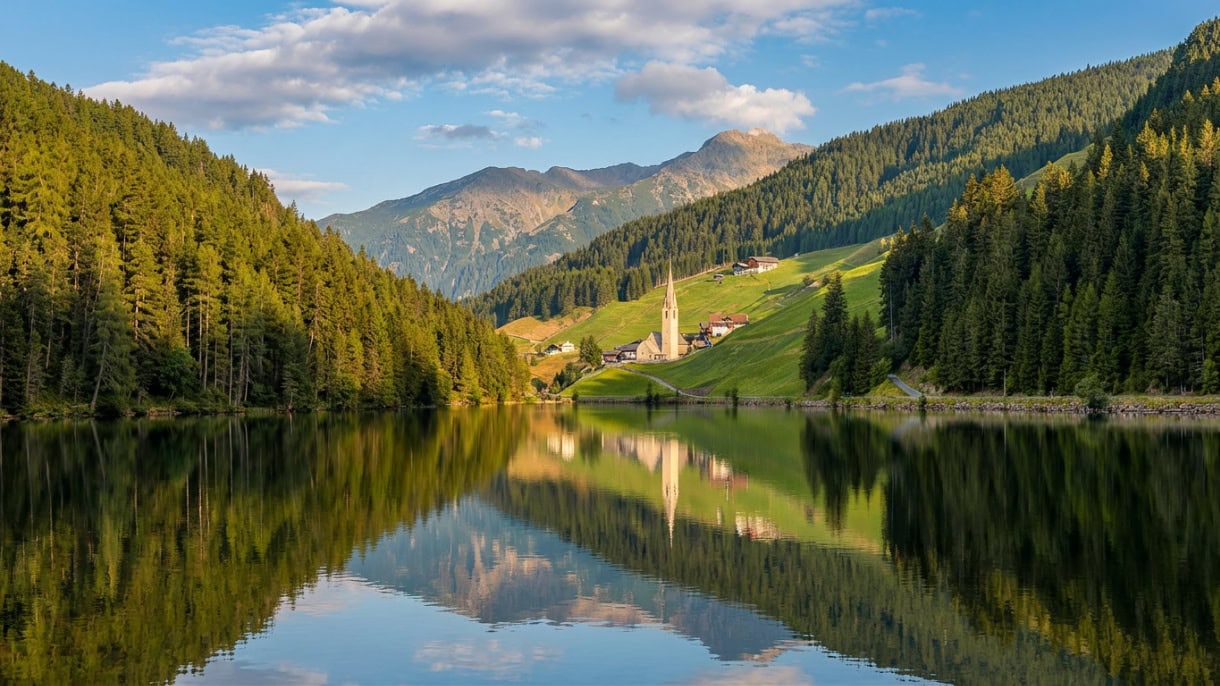
For those craving time on the trail, Sarntal delivers soul-soothing landscapes far from the crowds. One of the valley’s most tranquil spots is Durnholzer See (Lake Valdurna) — a glimmering emerald basin tucked beneath forested slopes. A gentle path circles the shoreline, offering reflections of alpine peaks and leading to St. Nicholas Church, where Gothic frescoes from 1430 still color the walls with centuries-old devotion.
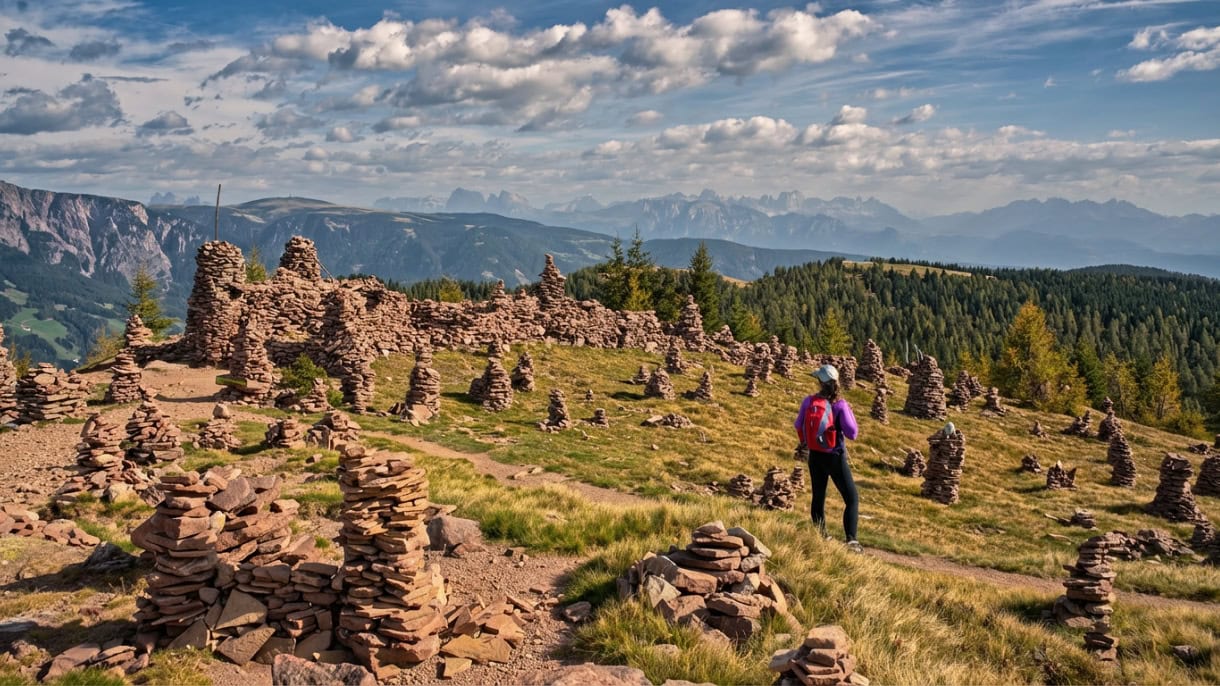
For a higher-altitude journey into Sarntal’s soul, make the trek to one of South Tyrol’s most mystifying landmarks: the Stoanerne Mandln (Stone Men). These enigmatic stone cairns, stacked in human-like shapes across the windswept Tschögglberg Plateau above Auen (Avigna), are cloaked in local legend.
Some say they mark an ancient cult site; others believe witches once danced here under full moons. Whatever their origin, the place left us in awe. The hike up is unforgettable, and once there, you’re met with panoramic views and a strange, otherworldly calm that is hard to define.
📌 Good to Know: If you’d like to experience Sarntal at its most festive, plan your visit around Sarner Kirchtag, held each year on the third weekend of September in Sarnthein. This is South Tyrol’s largest folk festival, a colorful gathering where locals don traditional Sarner Tracht embroidered with rare peacock quills, parade through the village, and celebrate with music, dancing, and regional specialties.
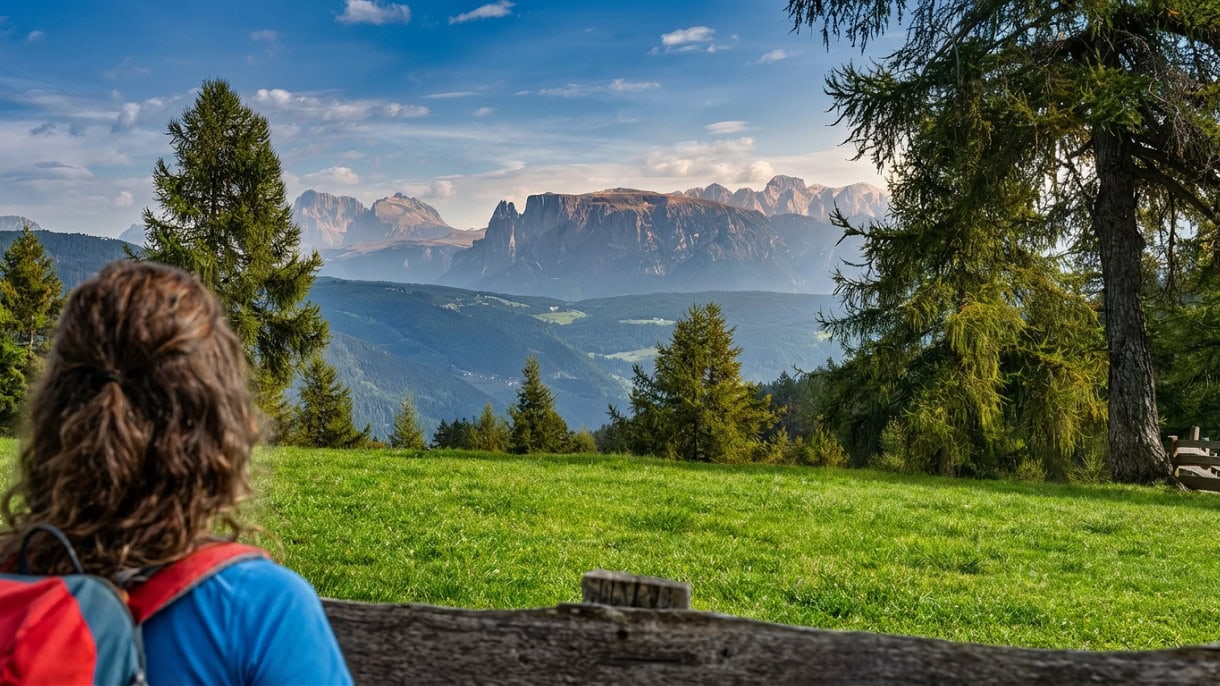
Just over the ridge from Sarntal, you’ll find Jenesien, South Tyrol’s sunniest village. Perched high above Bolzano on the southwestern edge of the Tschögglberg Plateau, it is geographically distinct from Sarntal but shares the same wild highland spirit.
Jenesien is hiking country at its most relaxed: easygoing trails, family-friendly themed paths, and cozy huts serving dumplings, speck, and mountain pine schnapps. The crown jewel of it all is the Salten (Salto), Europe’s highest larch plateau, perfect for exploring on foot, by bike, or even horseback.
Here, we wandered beneath centuries-old larches to the Romanesque chapel of St. Jakob in Lafenn, where panoramic views stretch from the glacier-draped Ötztal Alps to the jagged skyline of the Dolomites. Just beside the chapel, Gasthaus Langfenn welcomes hikers with hearty fare and sweeping vistas.
🧭 Pro Planning Tip: If you’re visiting South Tyrol in autumn, don’t miss this hike. The larch forests ignite in golden hues, transforming the plateau into a living painting. Even better, it’s Törggelen season, the time when local farmers open their rustic taverns for roasted chestnuts, new wine, and the kind of warmth that makes strangers feel like lifelong friends.
The Bolzano + Ritten (Bozen & Renon) Region
Where time runs deep, wine runs smooth, and escape is only a cable car away.
Best for: Architecture and history lovers • Wine and cafe culture • Plateau getaways
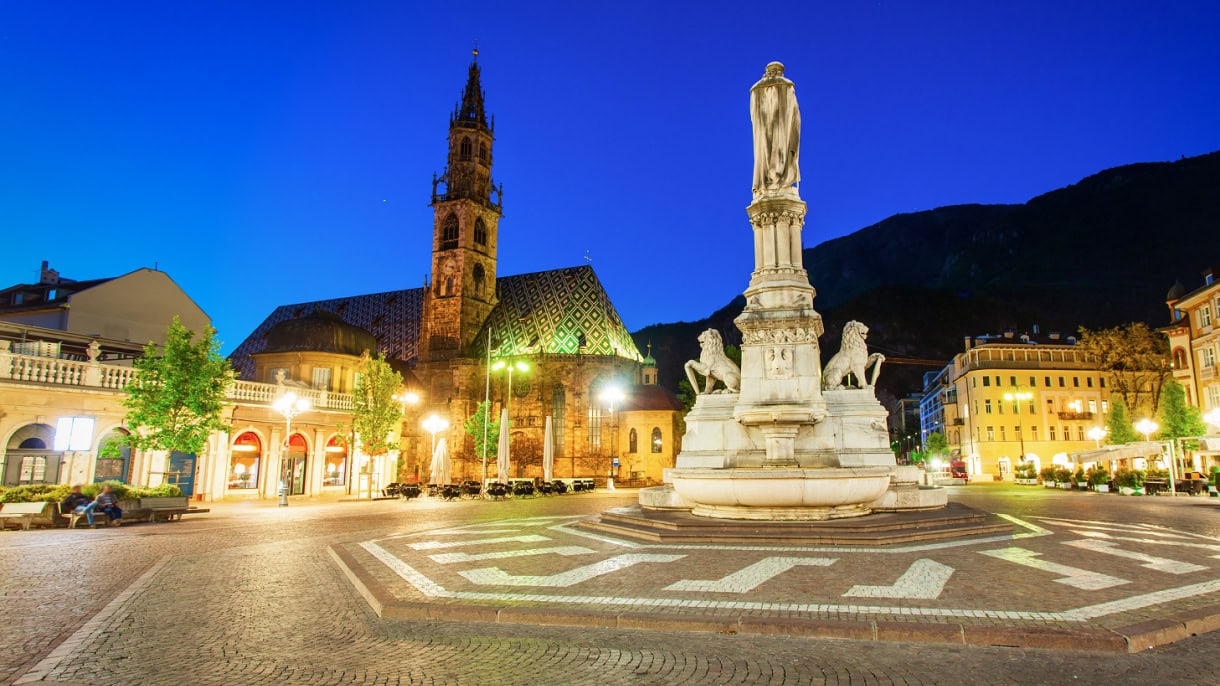
With the snow-crowned Dolomites beckoning from beyond vine-draped hillsides, you may be tempted to breeze through Bolzano on your way to higher ground. Resist this impulse. South Tyrol’s vibrant capital rewards those who visit with a seductive collision of cultures, a history that predates ancient Rome by millennia, and a quality of life that consistently ranks among Italy’s finest.
We’ve come to see Bolzano as a museum with a beating heart; not frozen behind glass, but pulsing through its streets. Its historic core feels like an open-air exhibit, where stories swirl amid the arcades, frescoes, and Gothic spires.
Waltherplatz (Piazza Walther), the city’s main square, centers around a marble statue of poet Walther von der Vogelweide, watching over cappuccino-and-wine sipping locals and flower stalls. Just beyond, Via dei Portici (Laubengasse) invites slow wandering beneath pastel facades and vaulted arcades where merchants have traded since the 12th century.
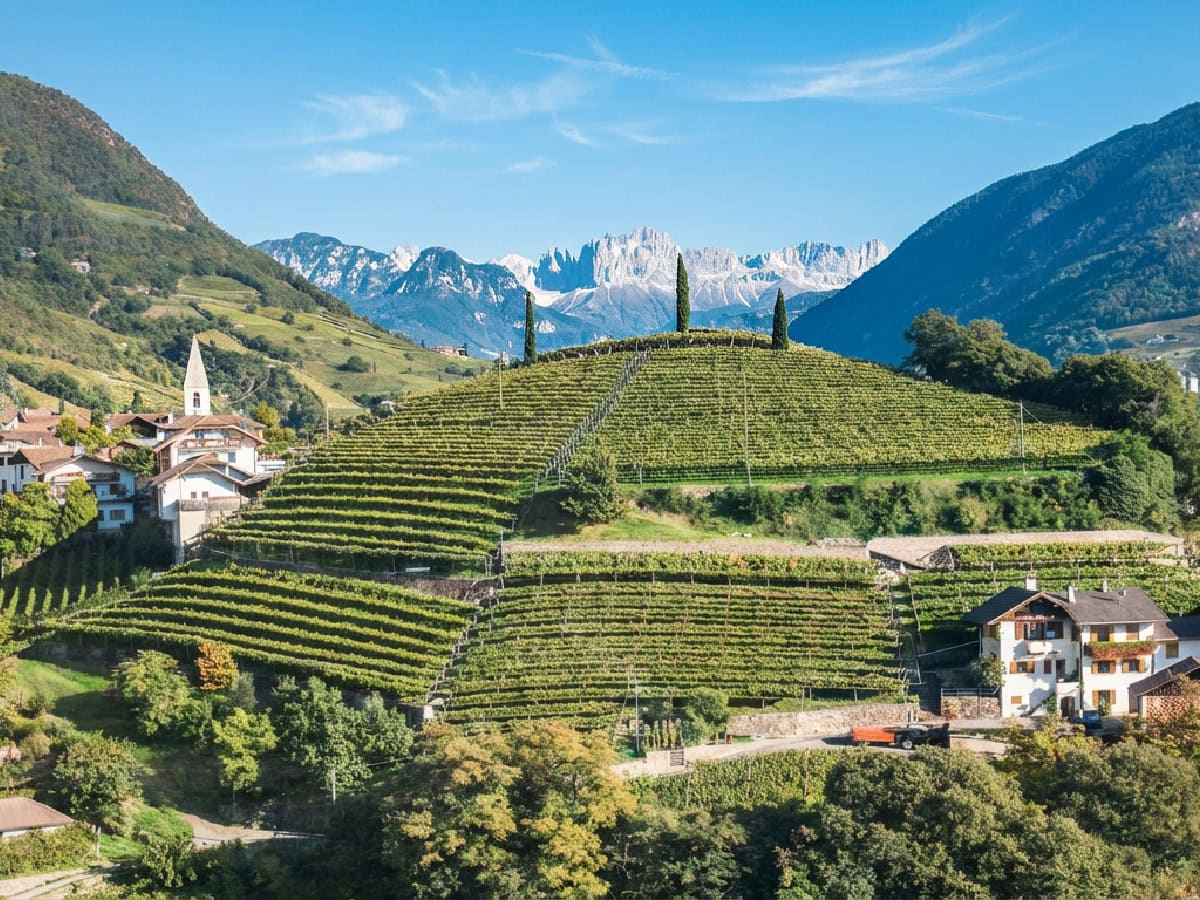
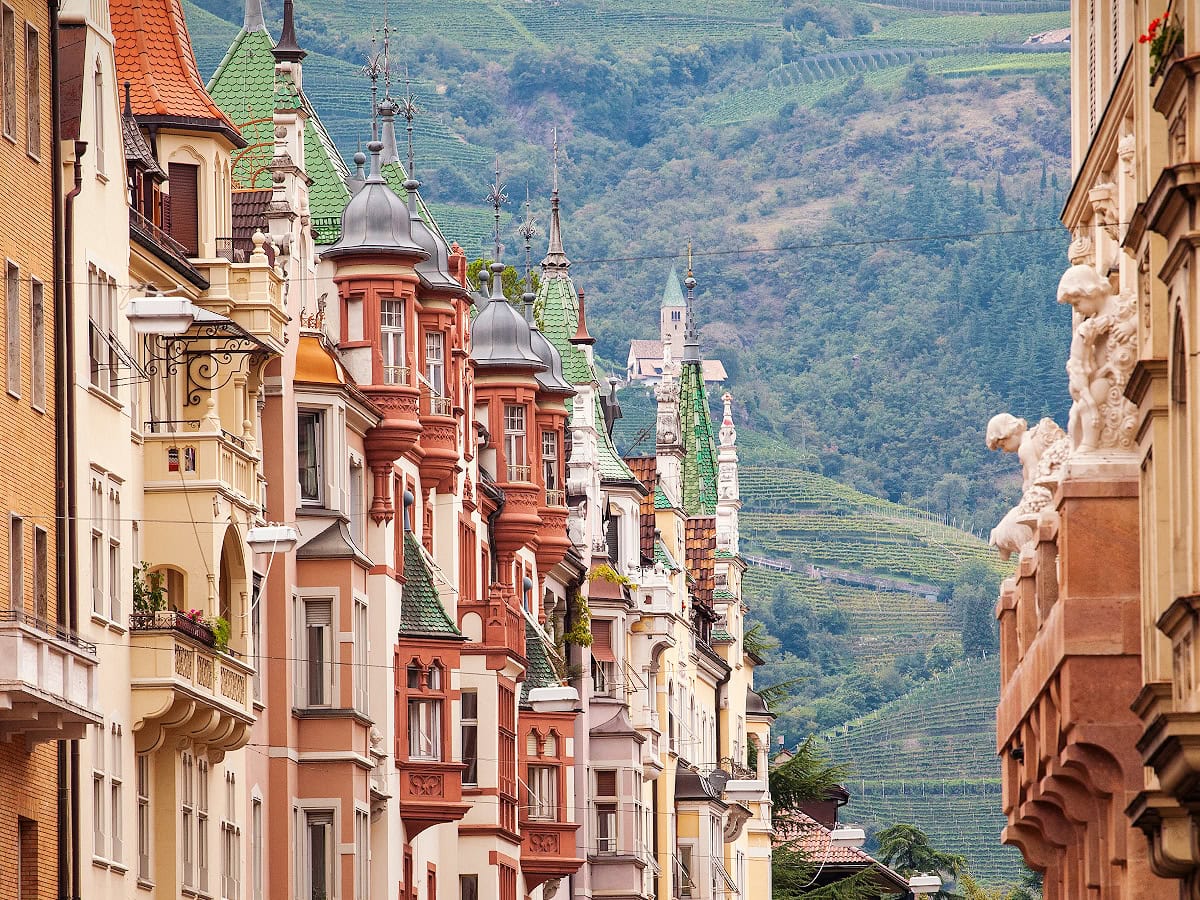
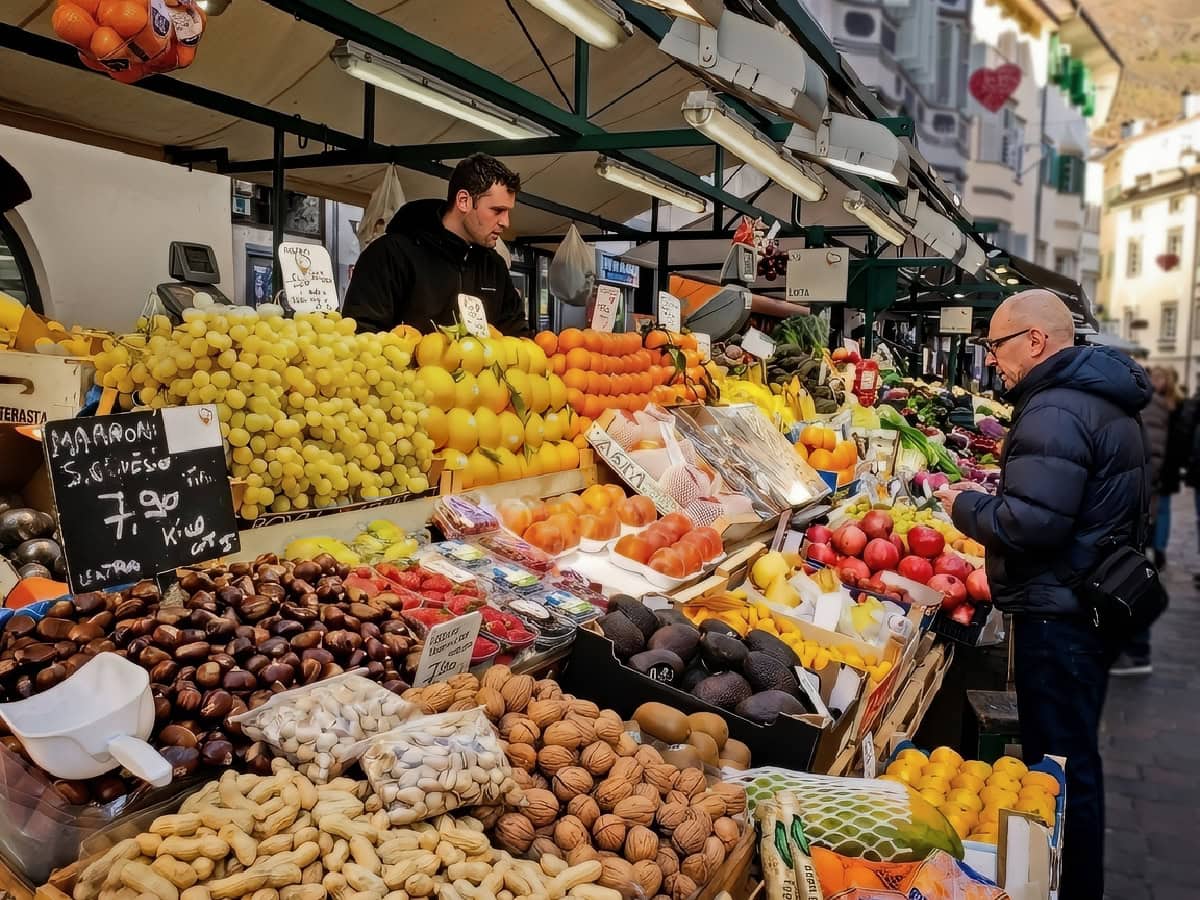
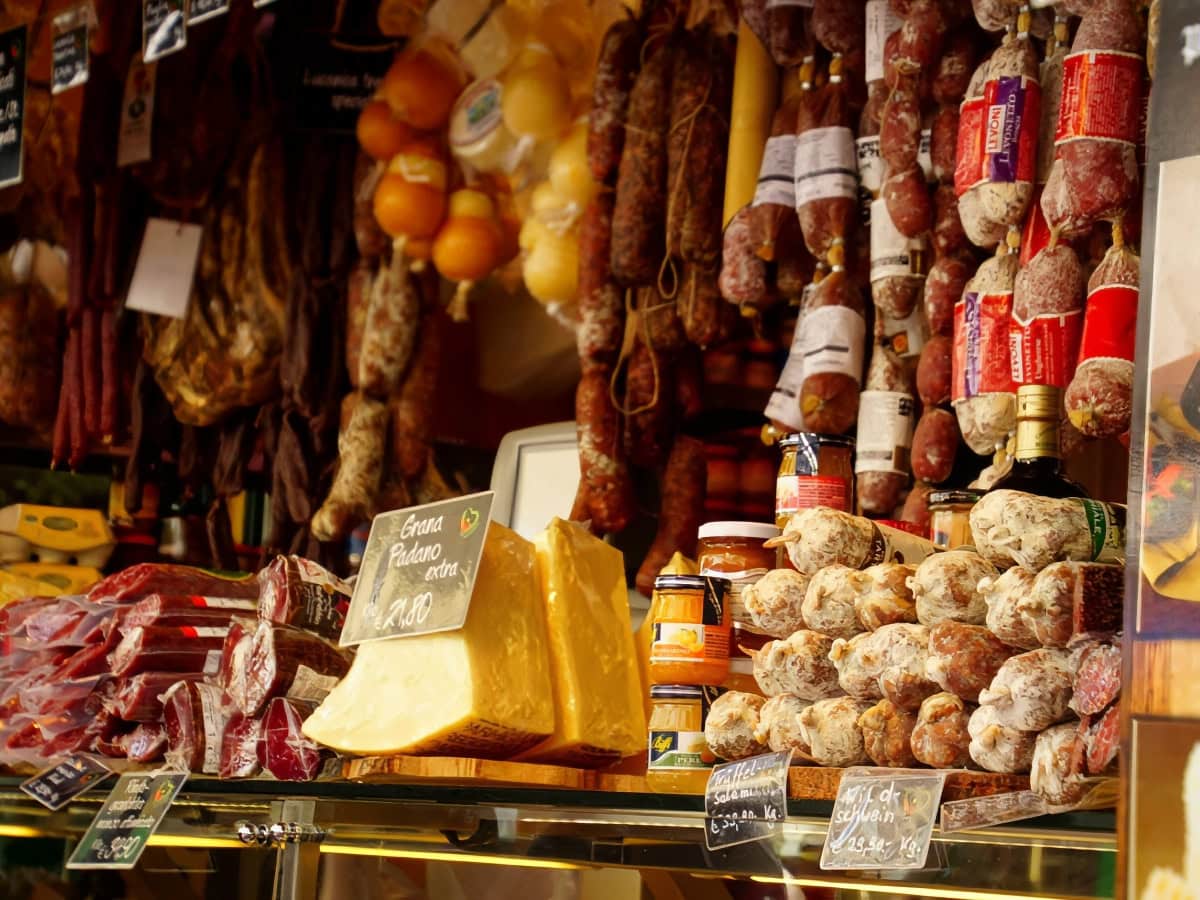
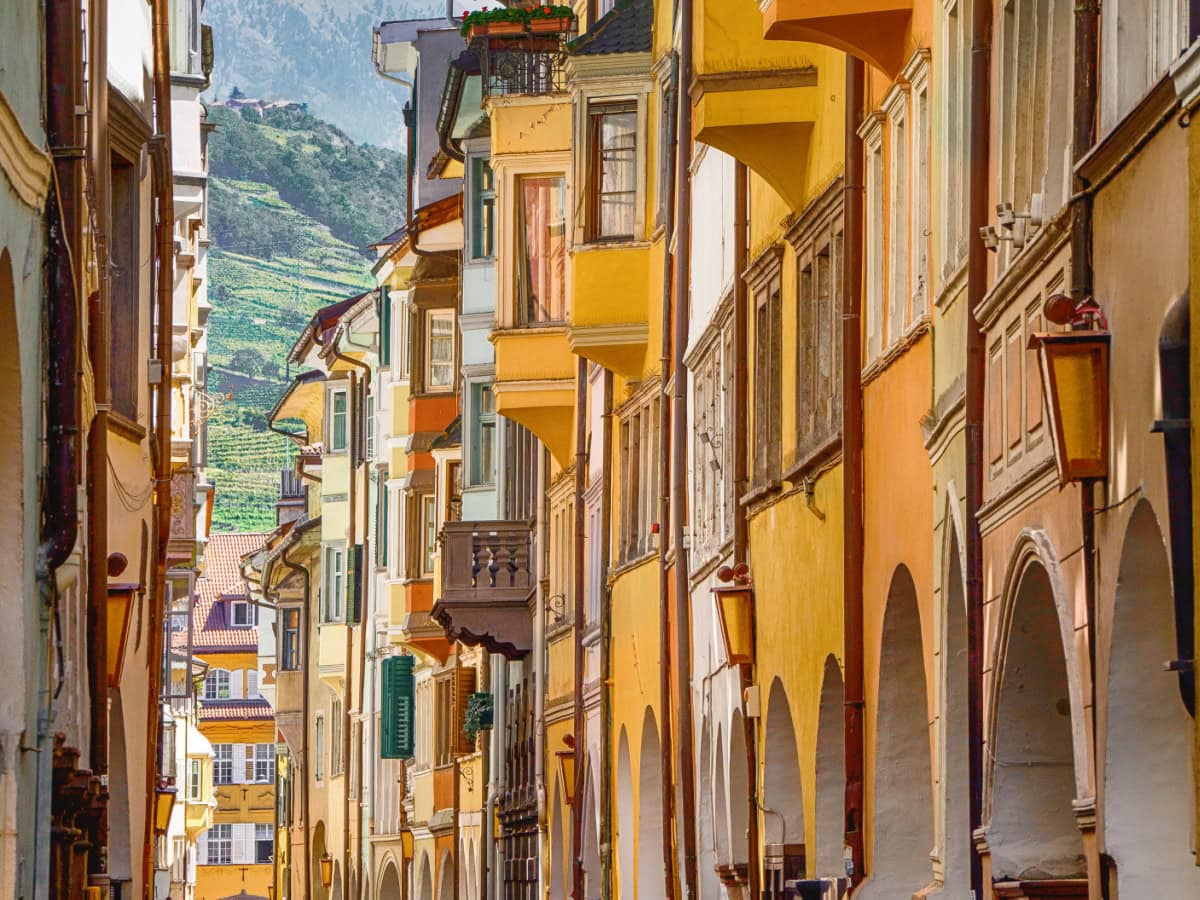
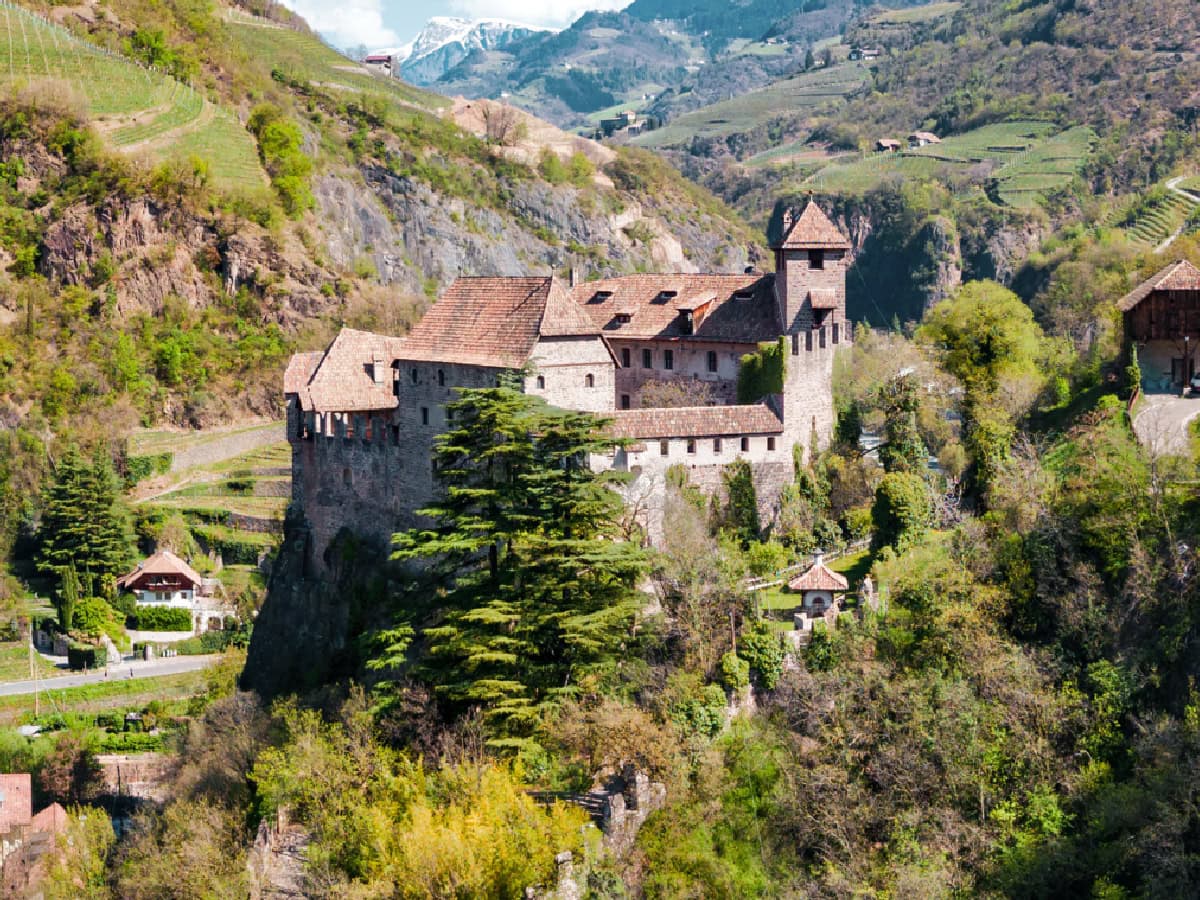
The farther you walk, the deeper time seems to run. You’ll feel it most at the South Tyrol Museum of Archaeology, where a 5,300-year-old murder victim all but stares you down. Ötzi the Iceman, pulled from a melting glacier in 1991, still bears the arrowhead that killed him. His gear, tattoos, and story are displayed with such intimacy it borders on haunting. It’s easily one of the most gripping museums we’ve ever experienced.
Not far away, Schloss Runkelstein (Castel Roncolo) guards the mouth of the Sarntal Valley. While most castles focus on battles and saints, this one tells a different story: love, leisure, courtly gossip. Its 14th-century frescoes reveal medieval life in full color, from hunting parties to forbidden romance.
Need a little higher perspective? So did Reinhold Messner, the world’s most legendary mountaineer. His Messner Mountain Museum Firmian, set in the ruins of a 10th-century fortress, explores our relationship with peaks through art, myth, and memory. Not in the mood for contemplation? Come for the views. They sweep across the valley toward the Schlern massif, the unmistakable symbol of South Tyrol.
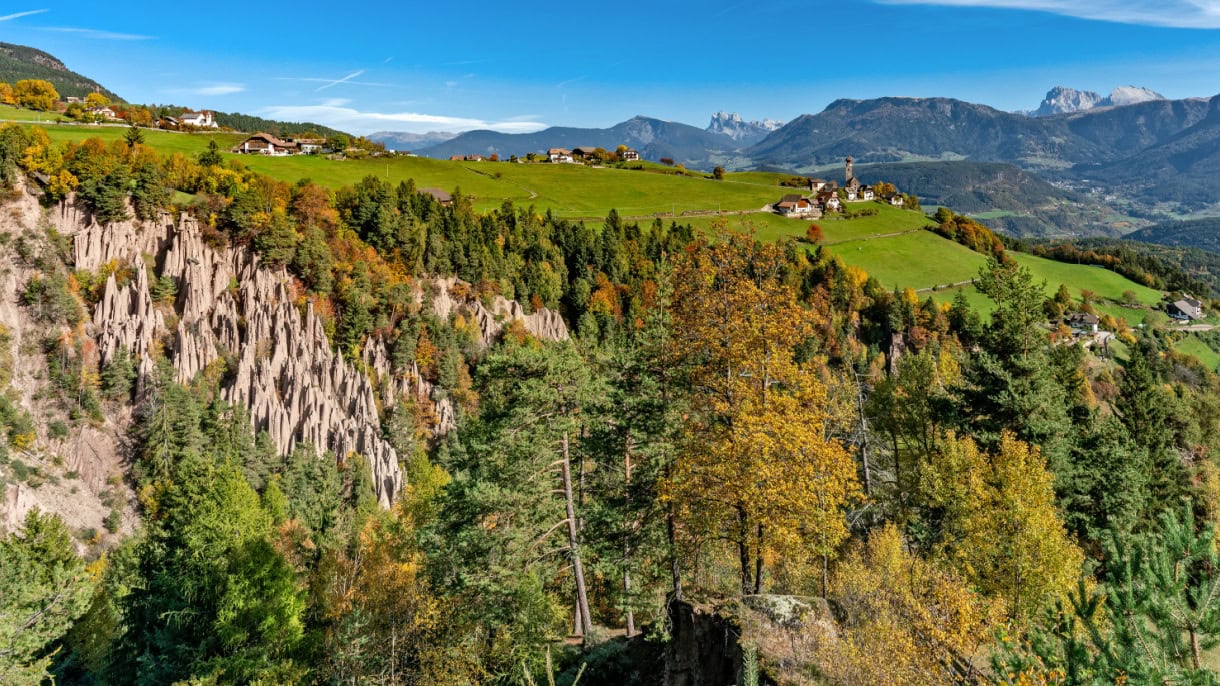
If the cobblestones wear you down, you can embark on hikes in the wine hills surrounding the city or take advantage of Bolzano’s secret escape plan. In just twelve minutes, a cable car lifts you from the bustle to the sun-soaked Ritten plateau, where the air turns crisp, the horizon stretches wide, and scenic trails fan out in every direction.
We fell hard for Ritten on our first visit. Its hilltop villages radiate charm, and the views from this lofty perch — across the vine-laced valleys to the spires of the Dolomites — are nothing short of cinematic.
One trail we can’t recommend enough? The easy hike to the Earth Pyramids from the village of Lengmoos (Longomoso). These surreal clay towers are capped with boulders that look like the work of some ancient sorcery. Shaped by 25,000 years of erosion, the formations are among the most otherworldly natural wonders in all of South Tyrol.
⇒ Want to go deeper? Dive into our Bolzano Travel Guide, packed with practical tips, local insights, and everything you need to plan a deeper, more meaningful visit.
The Eisacktal (Valle Isarco) & Wipptal Region
The valley of trails, wine, castles, and chestnuts
Best for: Hiking with Dolomite views • Medieval towns & villages • Castles & cloisters • Törggelen & farm-to-table feasts • Wine adventures
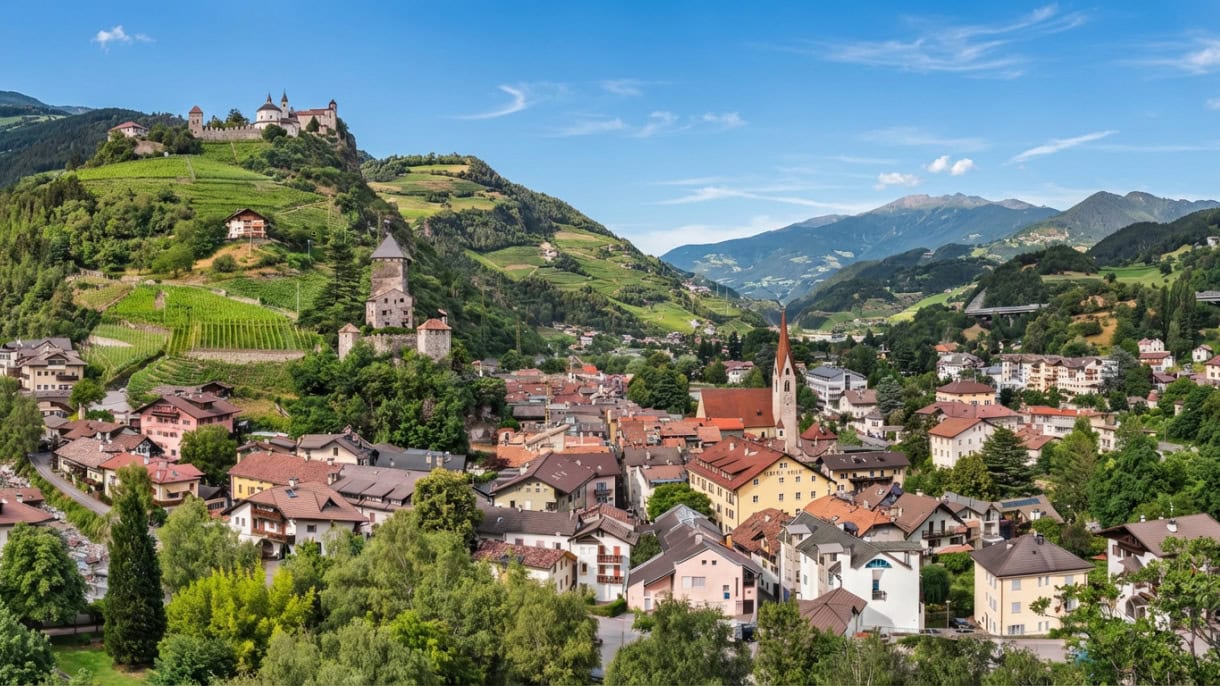
If you’re after the ultimate blend of rugged adventure and rich culture (without the crowds), set your sights on South Tyrol’s Eisacktal and Wipptal region. This central corridor stretches north from Bolzano to the Austrian border, threading through mountainside vineyards, forested slopes, and storybook towns with the Dolomites always just beyond the horizon.
We recommend starting by exploring Klausen (Chiusa), one of our favorite South Tyrolean villages. Set along the Eisack river beneath steep cliffs, this walkable wonder is delightfully medieval. Picture narrow cobblestone avenues, pastel-painted dwellings and riverside promenades. It is known as the “City of Artists” for its concentration of artisan workshops and small galleries.
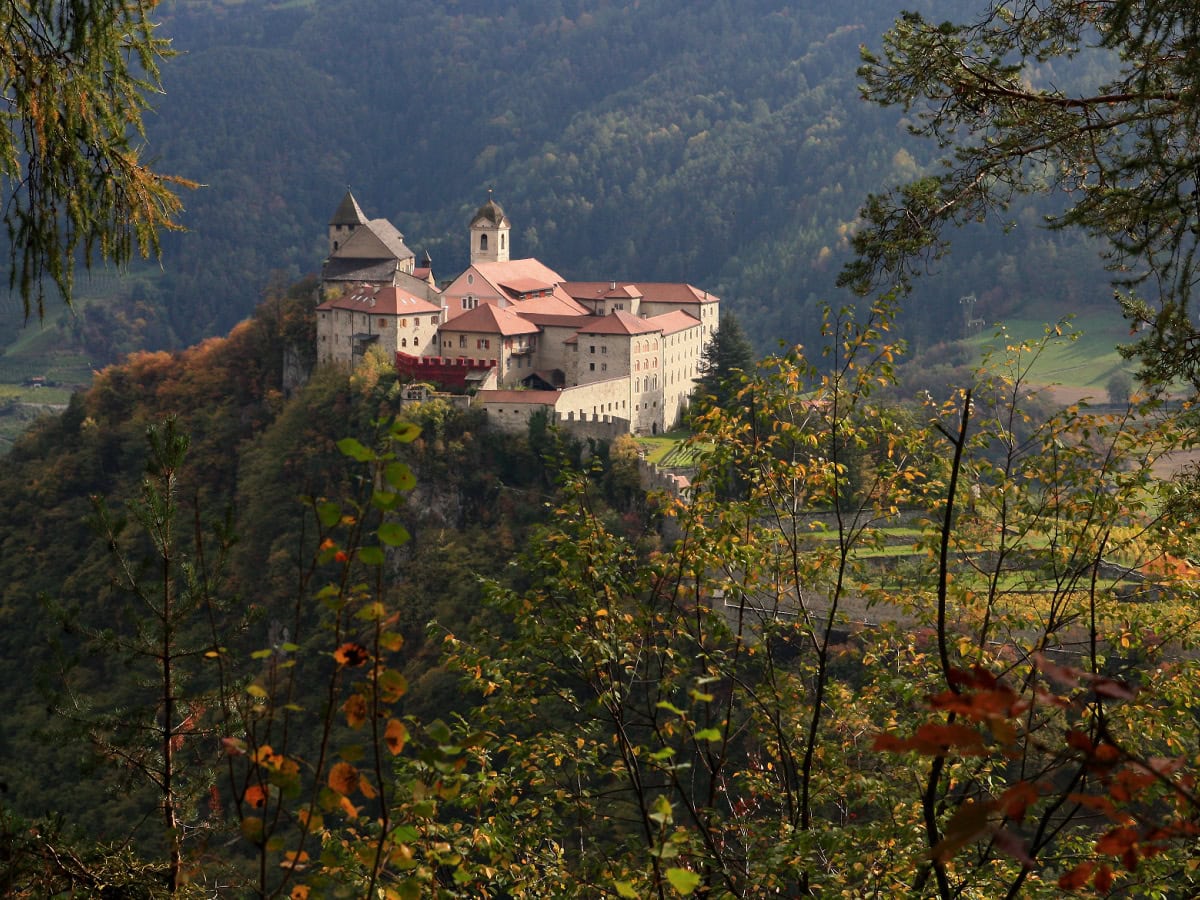
Towering above the town, you’ll spot the ancient Sabiona Monastery. It clings to a rocky spine and is among the oldest pilgrimage sites in the Alps. You can visit the monastery by taking an historic stone staircase from the heart of Klausen. The ascent is gorgeous. The path carries you through terraced vineyards and forested slopes with panoramic views across the Eisacktal.
Above the storybook lanes of Klausen rises Villanders (Villandro), a village of golden slopes and storied farms. It’s here the Keschtnweg (Chestnut Trail) begins its gentle climb, threading through groves of ancient chestnut trees and orchards all the way to the Ritten Plateau. Dotted along the route are Buschenschanks (rustic farm taverns) and local wineries, where you can savor traditional dishes and Eisacktal’s distinct white wines.
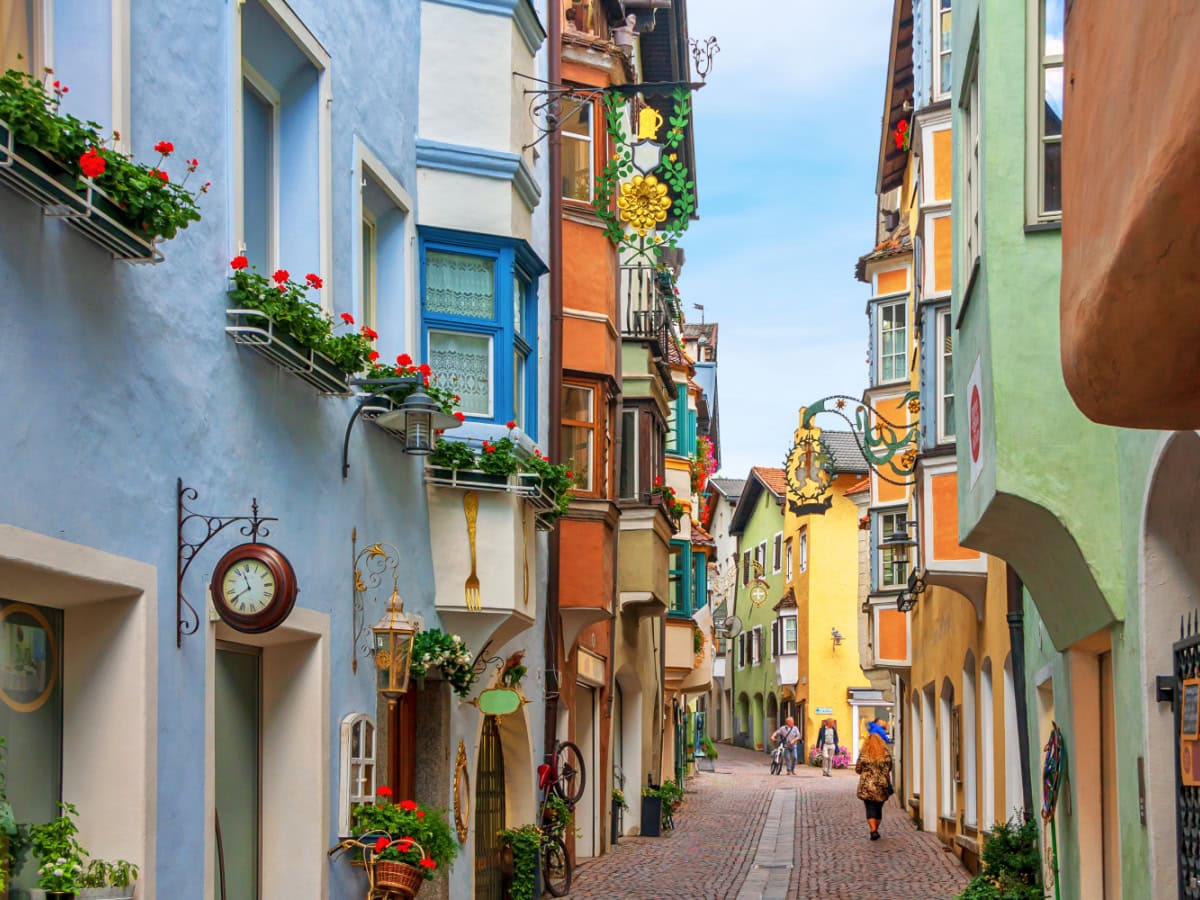
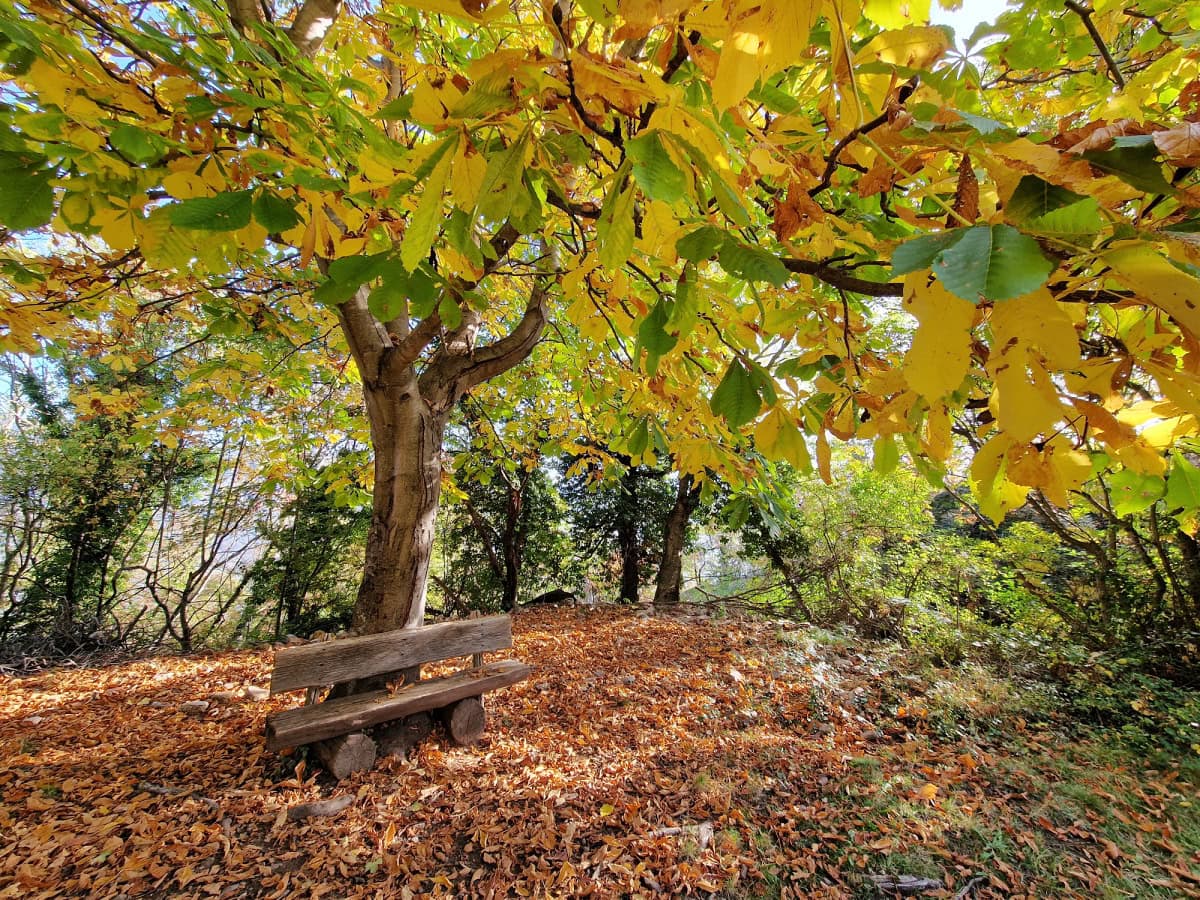
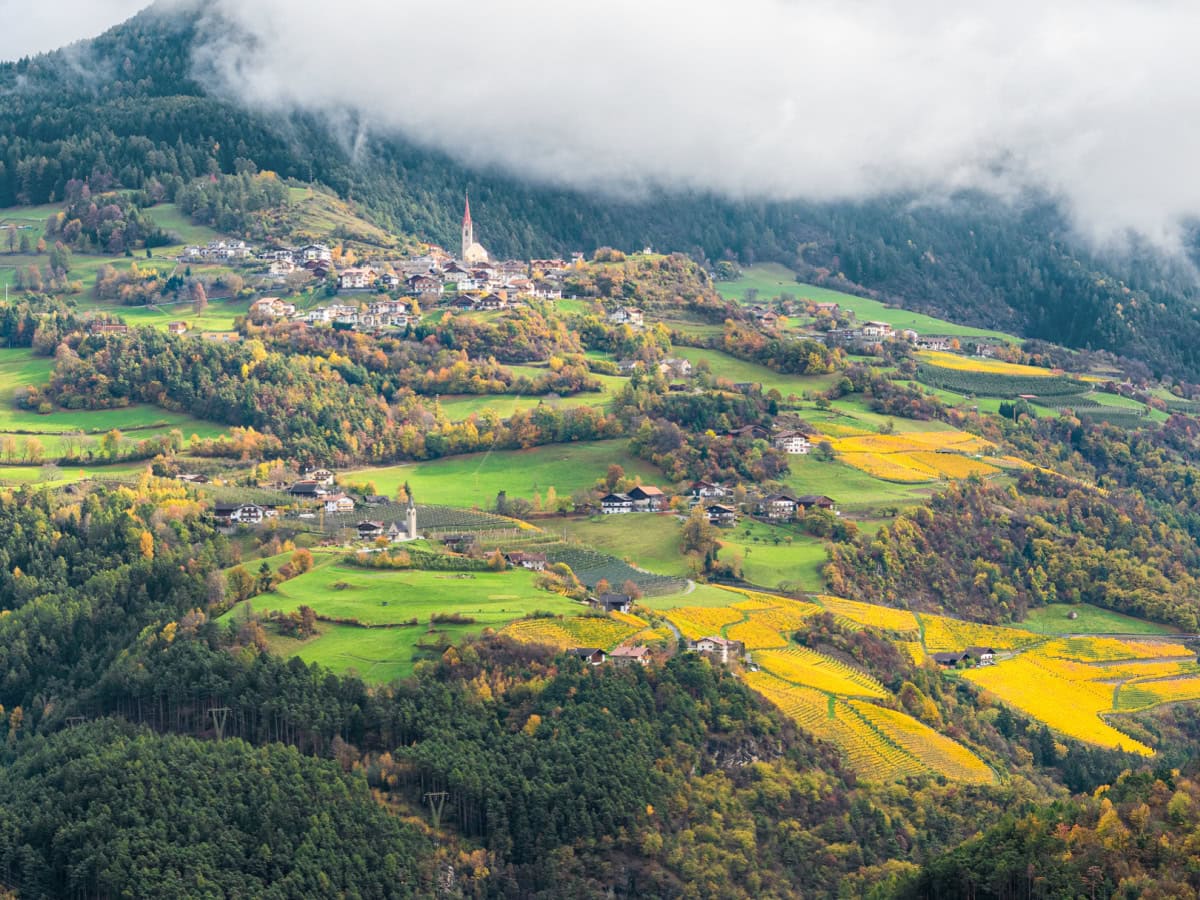
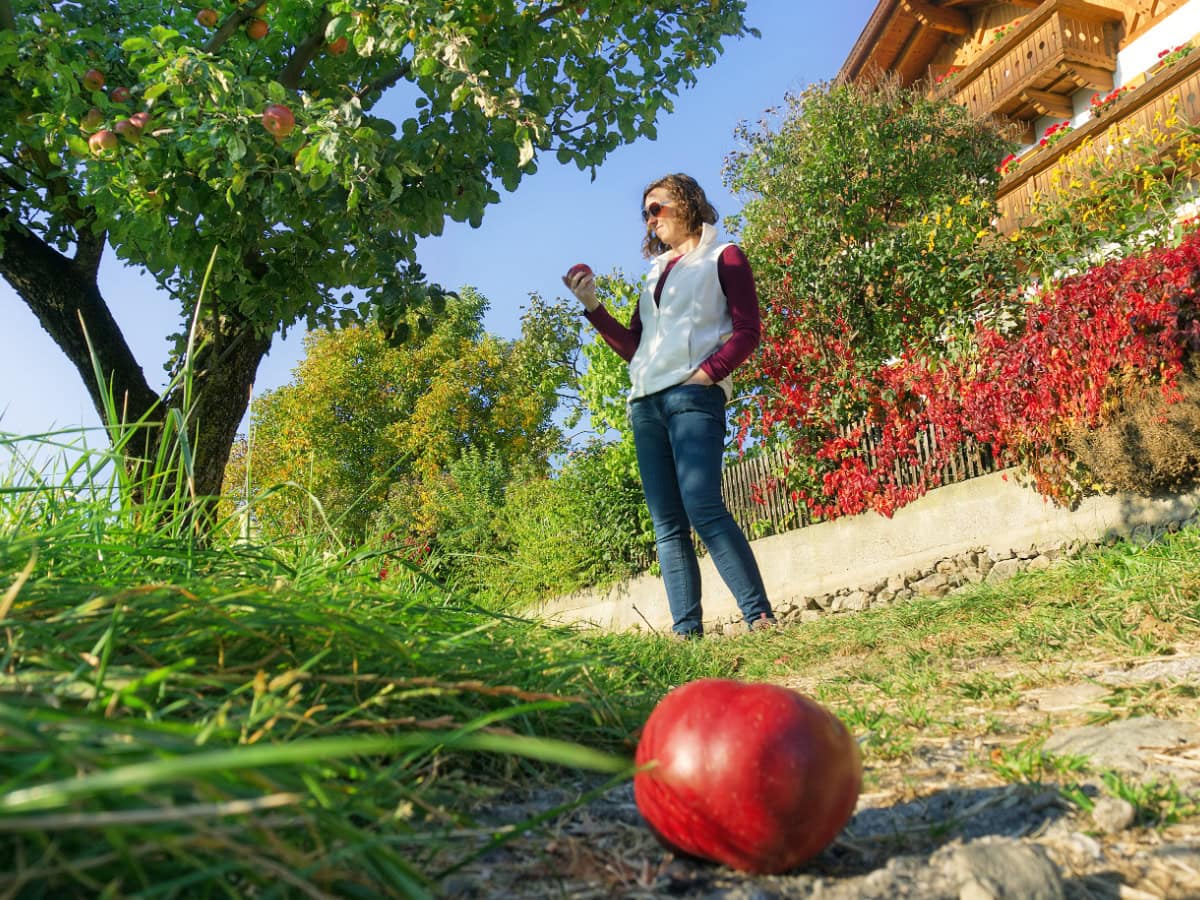
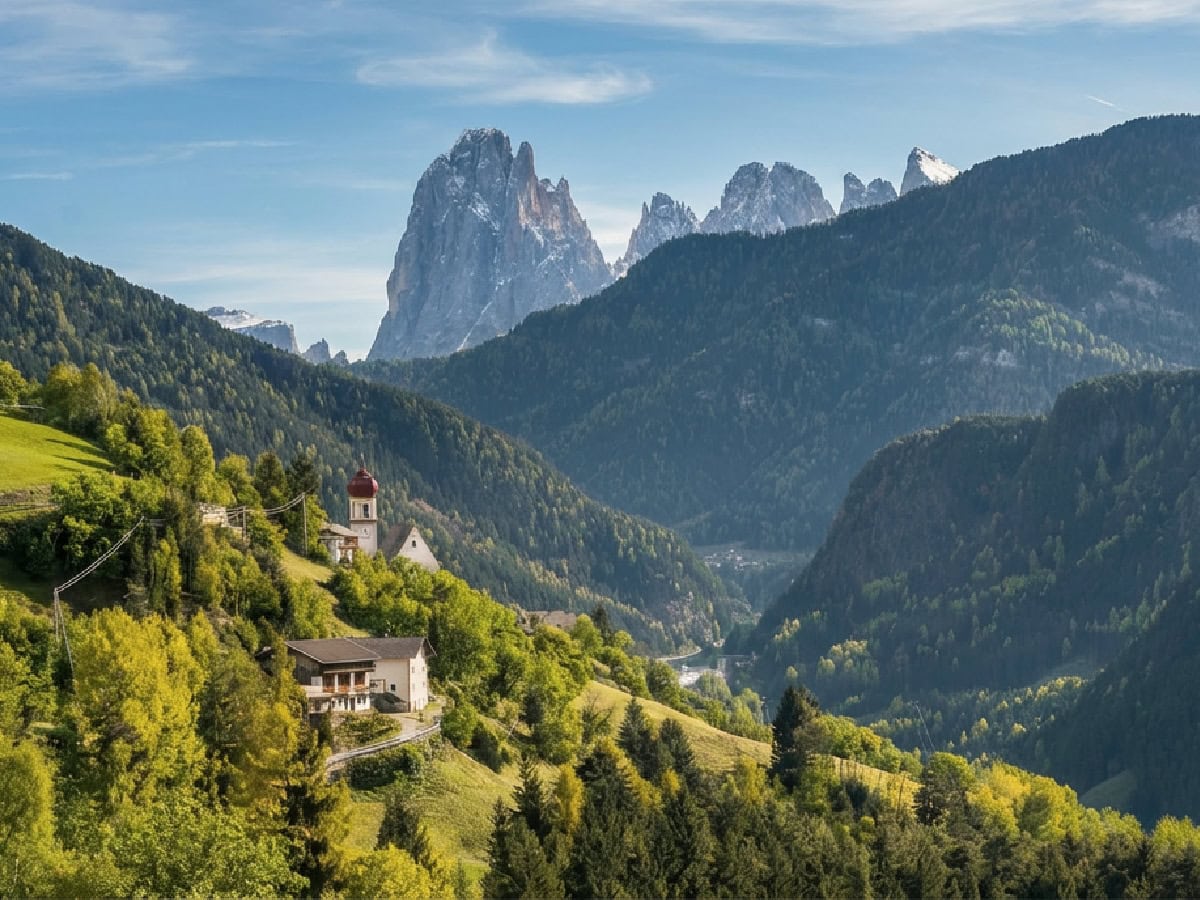
Across the river, running toward Val Gardena, is another village we adore. Lajen (Laion) sits on a sunny balcony with the Schlern and Sassolungo massifs watching from afar. This is where the centuries-old tradition called Törggelen was born. Each autumn, the village also hosts one of the region’s most iconic Almabtrieb celebrations.
📌 Good to Know: Looking for a quieter base to explore the Dolomites? Consider staying in Lajen. In less than 30 minutes, you can reach the heart of Val Gardena or Alpe di Siusi and then return to peaceful mountain calm.
The cultural heart of the region is Brixen (Bressanone), South Tyrol’s oldest town. Its baroque cathedral, frescoed arcades, and tile-clad roofs strike a perfect balance between Alpine tradition and Italian elegance. Come winter, the historic center turns festive with our favorite Christmas market in the region. Set beneath the cathedral, it’s quaint, glowing, and utterly enchanting.
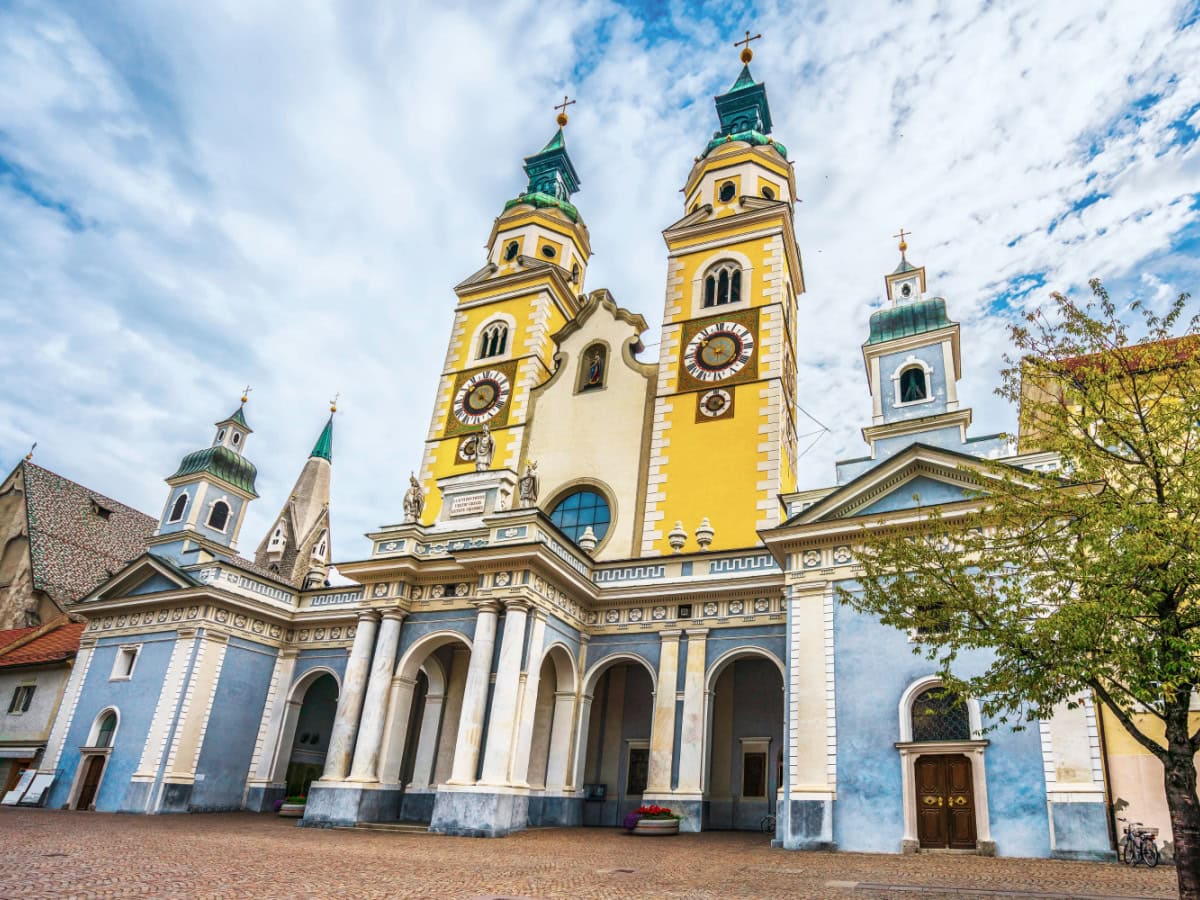
Just outside of Brixen stands the awe-inspiring Abbey of Novacella (Kloster Neustift) — one of Europe’s most significant monastic complexes and home to one of the oldest wineries in the world. Founded in 1142 by Augustinian monks, the abbey is a masterpiece of sacred architecture.
It holds a sprawling historic library that will either excite or terrify you depending on your relationship with books. You can join a guided tour through its ornate halls and cloisters (which we highly recommend), or simply stop by the cellar to sample their renowned white wines.
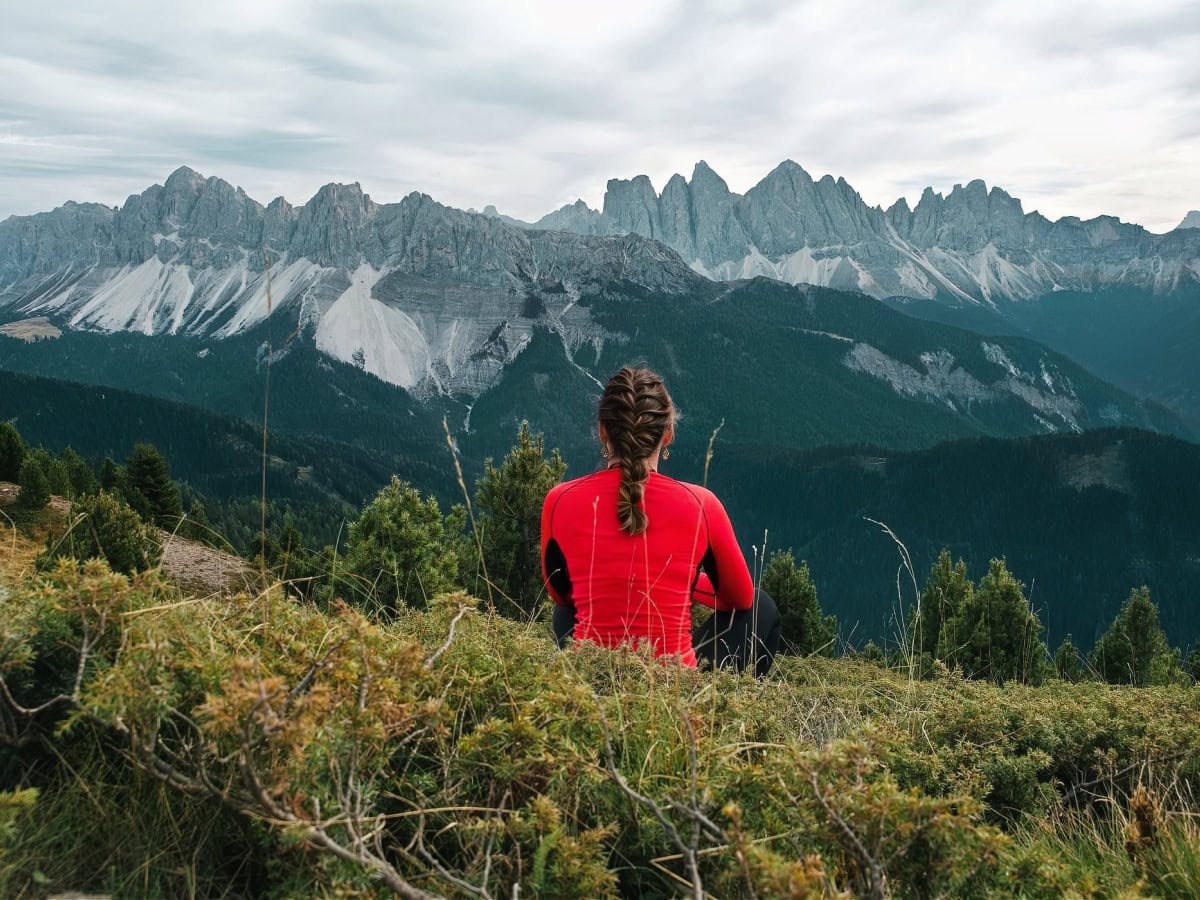
Above Brixen rises Plose, a sun-drenched mountain beloved for summer hikes, bike trails, and winter slopes. The first time we hiked here, we were stunned by just how much of the Dolomites you can see. It felt like the whole range had unfolded just for us.
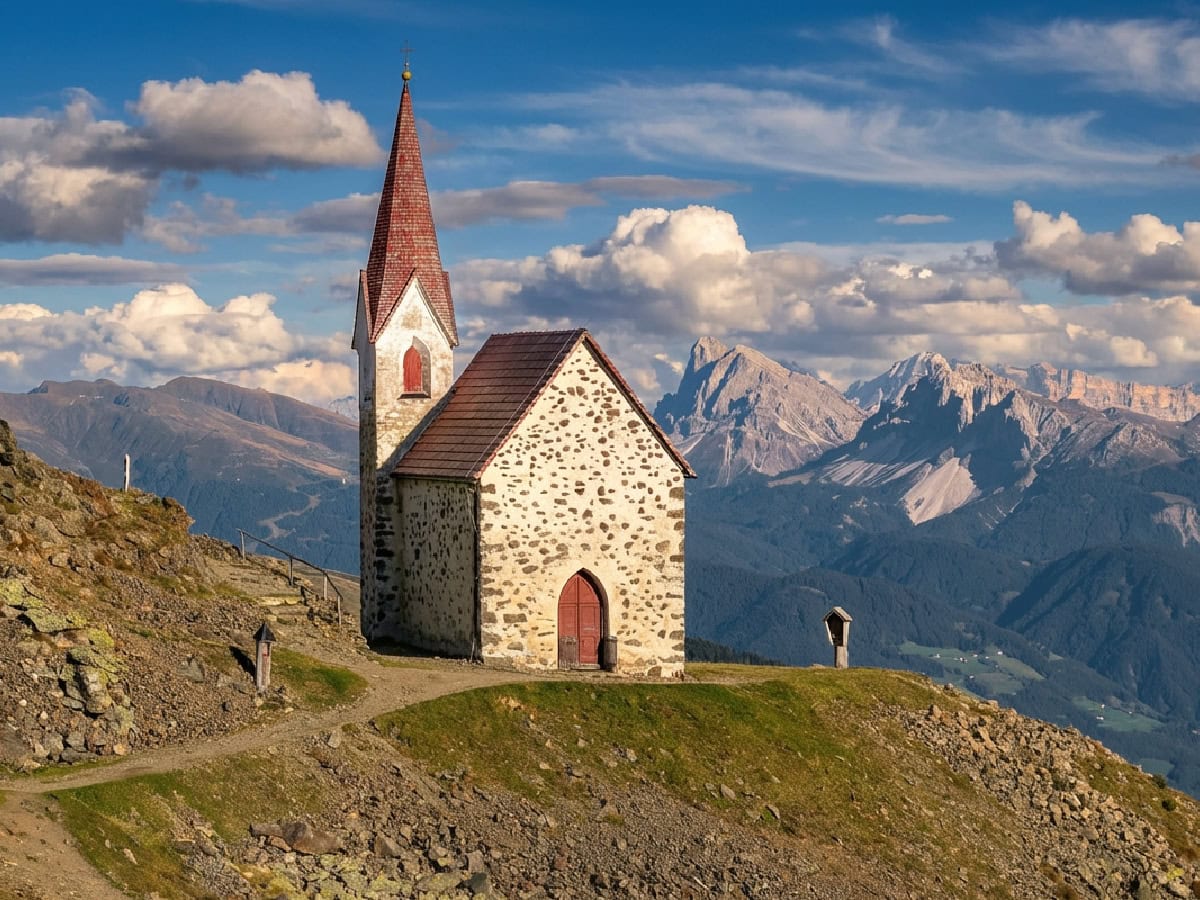
To the west of Brixen, you’ll find Latzfonser Kreuz, the highest pilgrimage church in Europe. It’s perched on the edge of Sarntal Alps at 7,545 ft (2,300 m). The hike to this soul-stirring place is not easy, yet Holy Mass is still held every Sunday at the church during the months of July, August, September and the first two weekends in October.
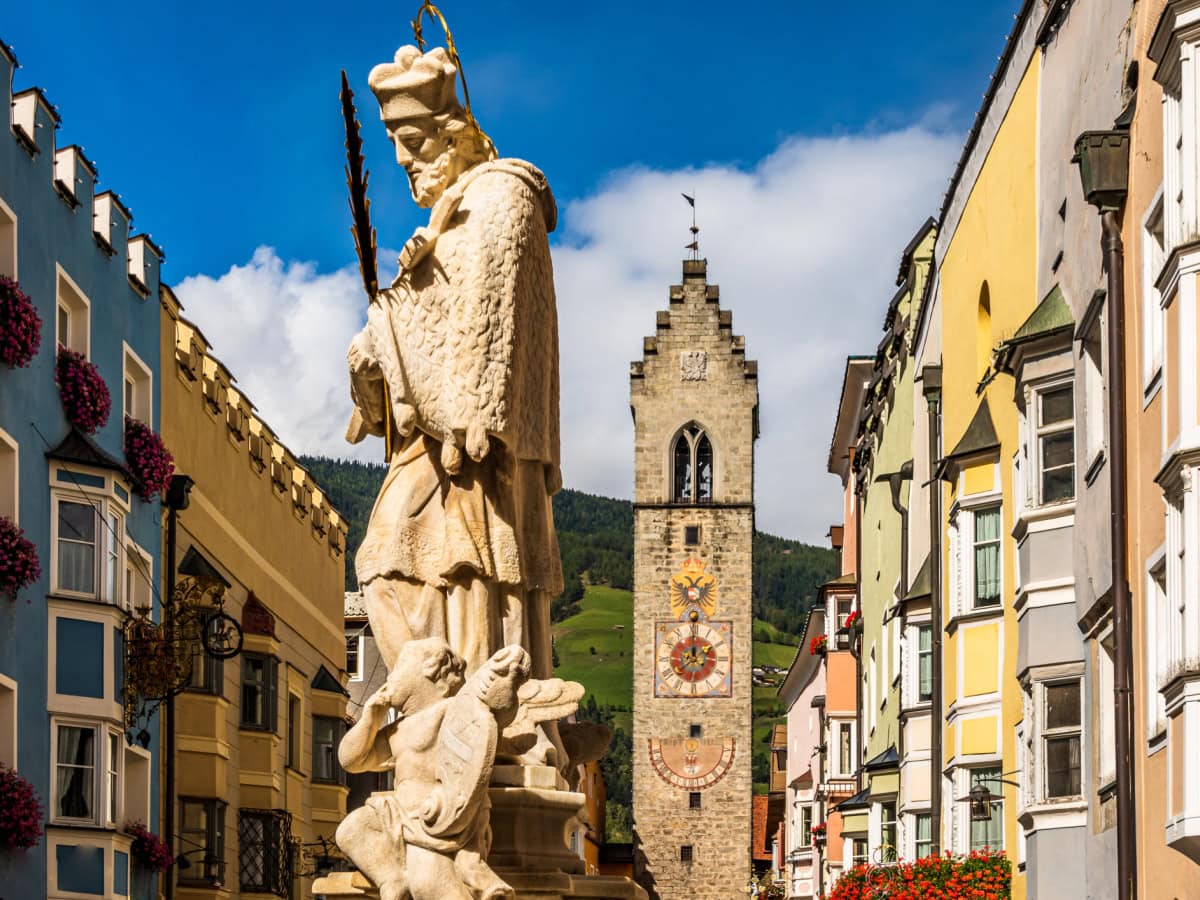
Venture north of Brixen and you’ll enter the folds of the Wipptal, a lesser-traveled valley that winds into the Stubai Alps as it climbs toward the Brenner Pass. At its crown sits Sterzing (Vipiteno) — a medieval jewel with one of the most photogenic main streets in South Tyrol.
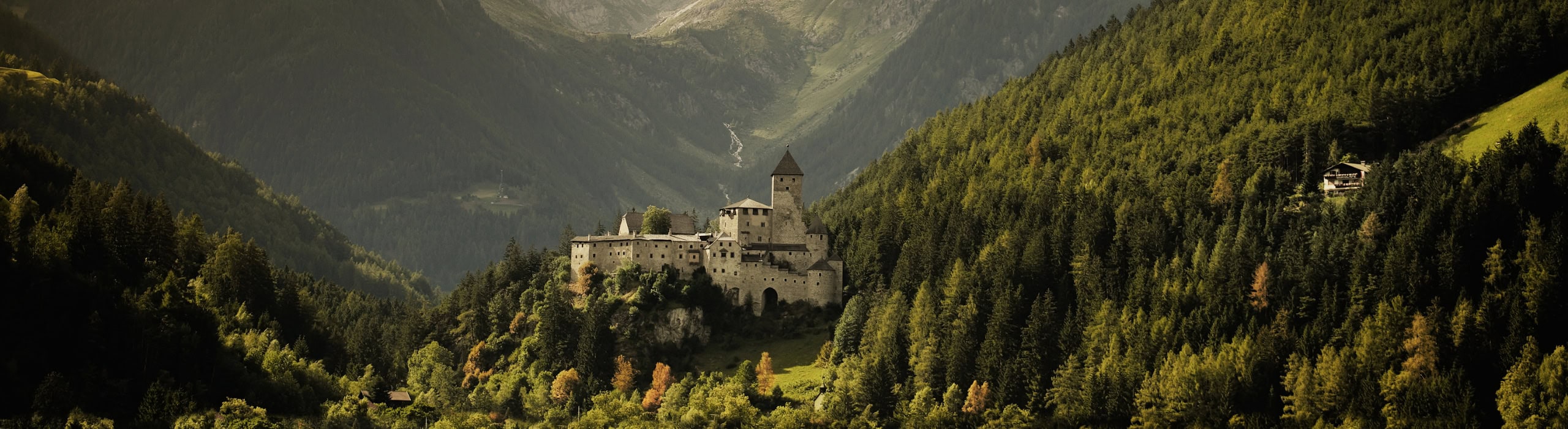
Just across the valley rises Burg Reifenstein (Castel Tasso), one of the region’s best-preserved castles and among the few medieval strongholds never conquered by flame, flood, or foe.
🧭 Pro Planning Tip: If you’re visiting from late September through early November, this is the Törggelen capital of South Tyrol. Book ahead at popular Buschenschanks in Lajen, Villanders, Feldthurns, and Barbian to enjoy this harvest ritual at its most authentic.
The Pustertal (Val Pusteria) Region
Peaks, glaciers and valleys: South Tyrol’s wild and welcoming eastern frontier
Best for: Off-the-beaten-path adventures • Peaceful towns, villages & valleys • Alpine heritage
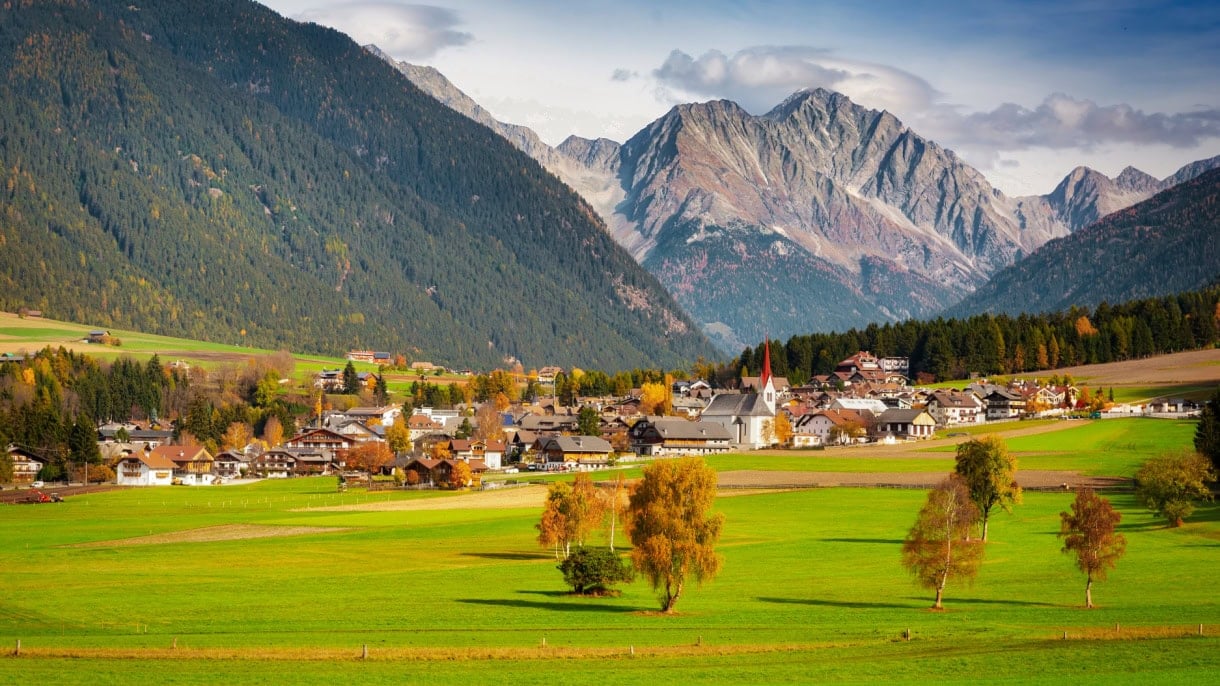
Tucked between the Dolomites to the south and Austria to the north, the Pustertal region is South Tyrol’s quintessential Alpine stronghold. Think soaring peaks, gleaming glaciers, dark spruce forests, and deep green valleys where churchbells and cowbells echoe from ridge to ridge. It’s both wonderfully rugged and poetically pastoral in equal measure.
The region is home to some of South Tyrol’s most awe-inspiring mountain groups, including the Zillertal Alps, the Rieserferner Group (Vedrette di Ries), the Durreck Group, and the fringe of the Villgraten Mountains. Valleys like the Tauferer Ahrntal, Antholzertal, Gsiesertal, and Pfunderertal offer access to pristine alpine wilderness without the crowds.
Anchoring it all is the Rieserferner-Ahrn Nature Park, which boasts more glaciers than any other nature park in South Tyrol. It connects across the border to Austria’s Zillertaler Hauptkamm protected area. Together, these two reserves form the largest contiguous nature sanctuary in Europe, spanning an impressive 1,703 square miles (2,741 km²).
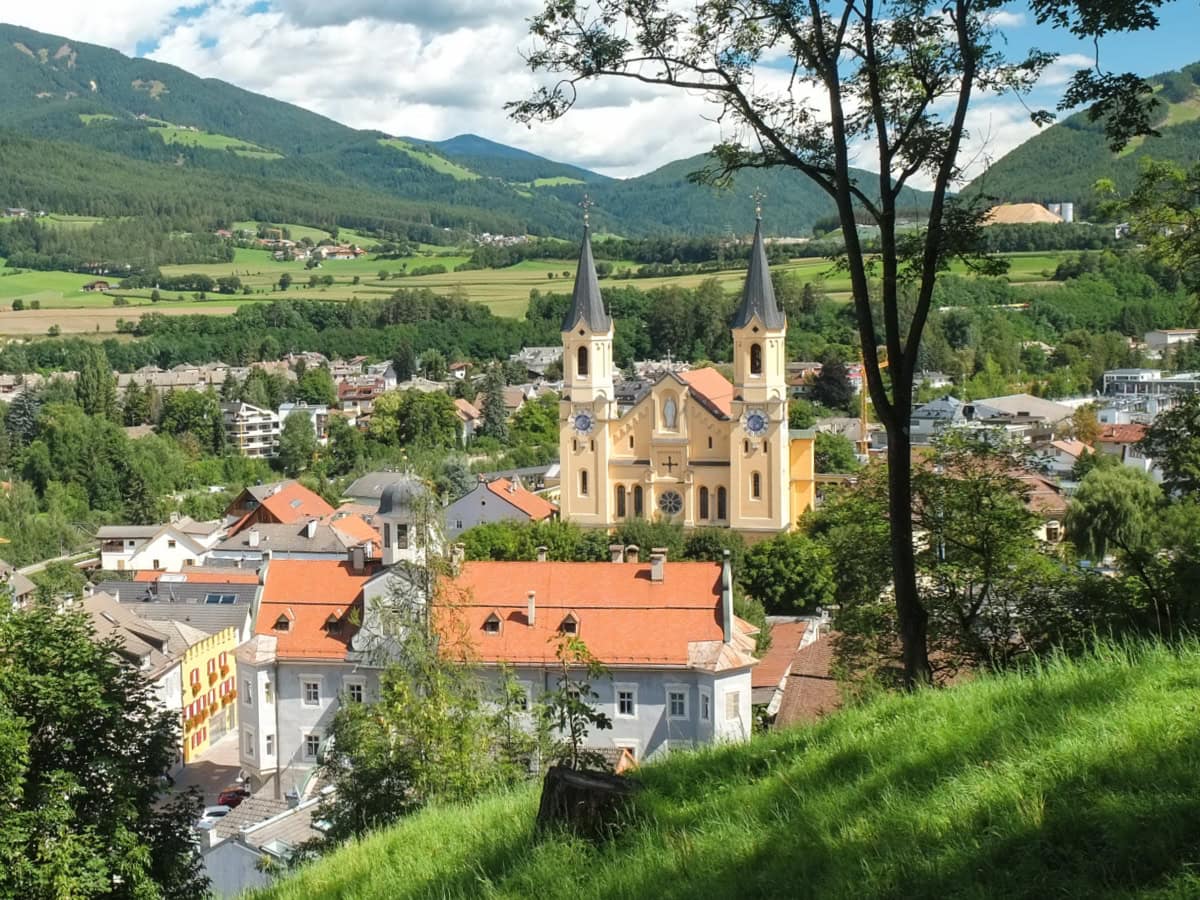
The largest town in Pustertal is Bruneck (Brunico), a lively hub where tradition and modernity hold hands. Its cobbled old town is rich with charm, framed by frescoed buildings and shopfronts that glow with South Tyrolean character. Above the town sits Bruneck Castle, now home to one of Reinhold Messner’s mountaineering museums: MMM Ripa.
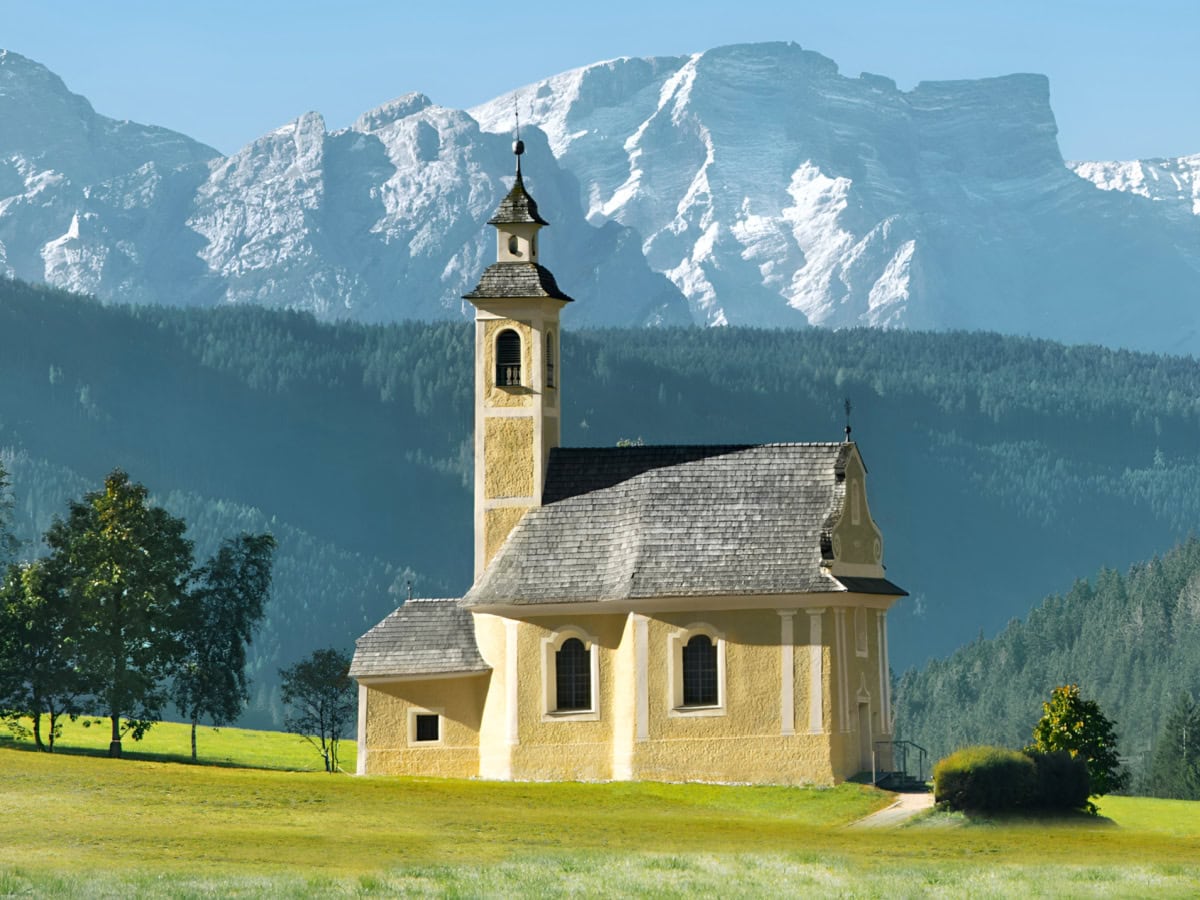
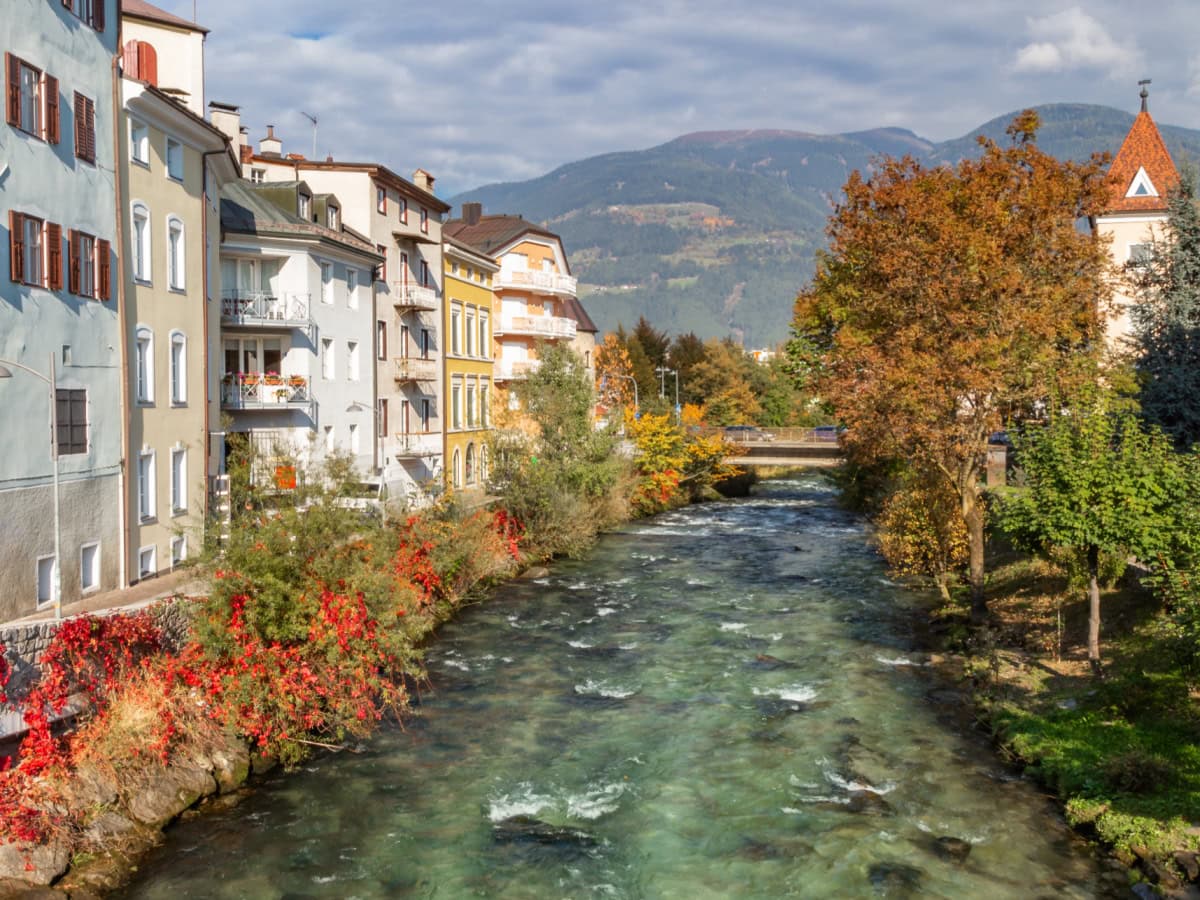
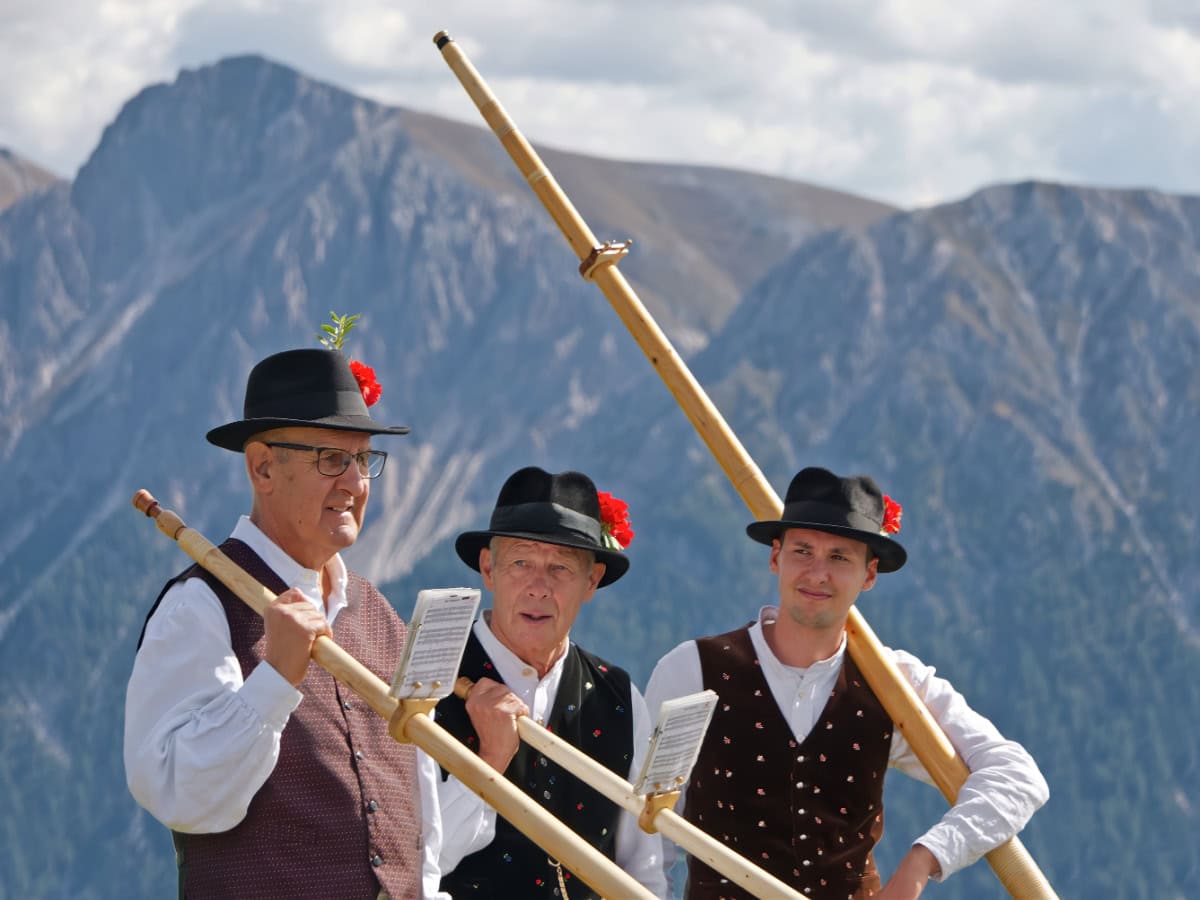
Hidden in a forest near the castle is the Soldiers’ Cemetery — a hilltop memorial we discovered by chance on our first visit. The stillness here was haunting. Rows of handmade grave markers, crafted from branches and logs, honor the fallen from both World Wars with a reverence that speaks louder than any monument of stone.
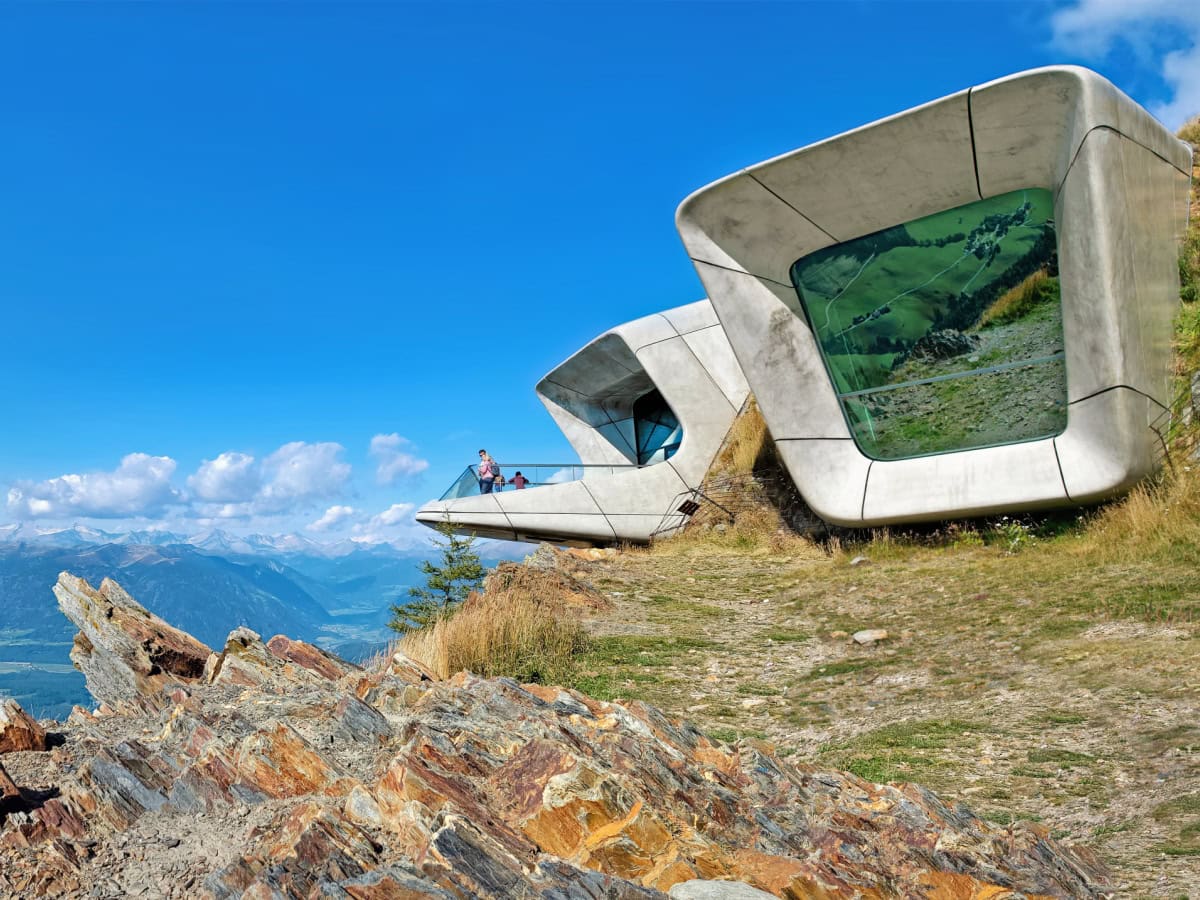
Just south of Bruneck rises Kronplatz (Plan de Corones), South Tyrol’s most advanced ski area and a major hiking and biking haven once summer settles on the summit. On the mountain, you’ll also find the striking LUMEN Museum of Mountain Photography and the Messner Mountain Museum Corones — a bold, cliff-embedded exhibit that left a lasting impression on us. We wandered its cavernous halls, drawn into the riveting history of mountaineering.
📌 Good to Know: If you’re visiting in autumn, don’t miss Speckfest. It’s a heartfelt celebration of South Tyrol’s most beloved specialty and is held on Kronplatz at the end of September. The festival is a full-senses experience featuring live folk music, alpine traditions, and stalls overflowing with regional delicacies.
Northeast of Bruneck lies Gsiesertal (Val di Casies) — a peaceful side valley that remains in a different century. Life here is paced by the rhythm of the land. That’s probably why our hikes in this hidden corner of South Tyrol have always felt more like meditation than mileage.
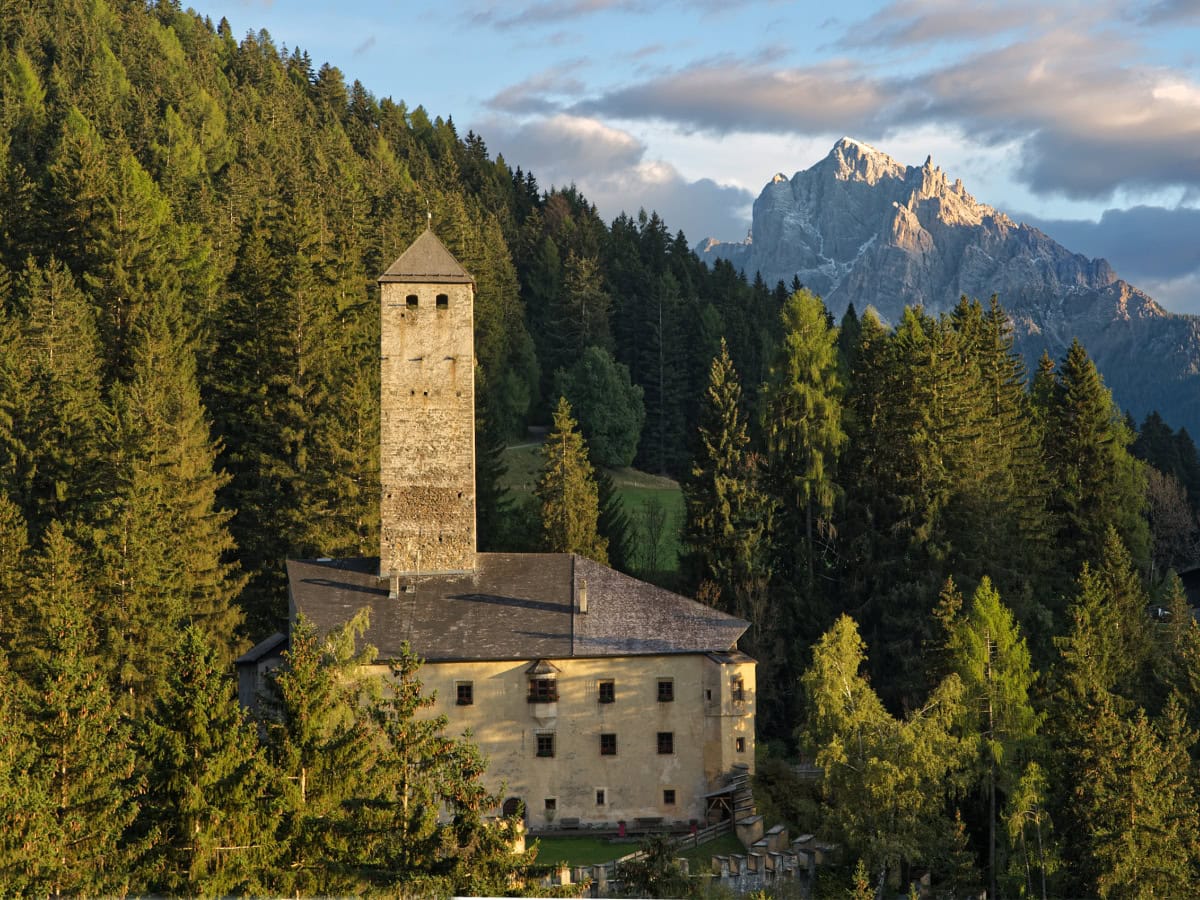
Nearby, the tiny village of Tesido (Taisten) offers one of the area’s most striking panoramas: Schloss Welsperg (Castel Welsperg) perched above the town of Welsberg (Monguelfo), with the crimson-hued Croda Rossa (Hohe Gaisl) towering in the distance — a giant of the Braies Dolomites within Fanes-Sennes-Braies Nature Park.
Just beyond, the road winds into Antholzertal (Valle di Anterselva), another unsung gem of the region. If you’re seeking the serenity of an alpine lake without the crowds of Lago di Braies, this is the place. At its heart lies Lago di Anterselva (Antholzer See), a pristine emerald lake cradled by pine forests and dramatic peaks.
Continue north and you’ll reach Campo Tures (Sand in Taufers), where you can’t miss the mighty Burg Taufers roaring from a rocky perch above the village. It’s one of those castles you see in a photo and instantly know you have to visit.
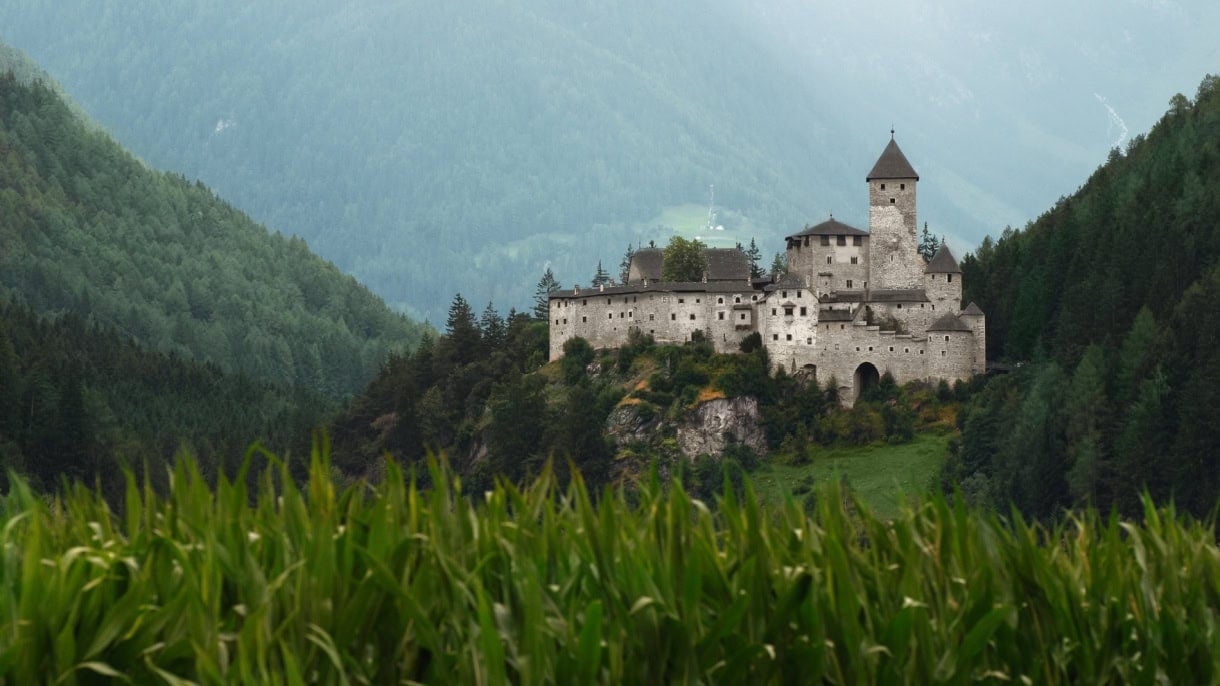
When we finally stepped through its gates, it didn’t disappoint. We wandered through dimly lit halls, climbed weathered towers, and took in sweeping views of the valley below. Somewhere between the armory and the chapel, we half-expected to hear the clink of spurs or the faint whisper of a ghost retelling stories of Tyrolean life in the highlands.
🧭 Pro Planning Tip: Like Eisacktal, the Pustertal region offers quiet, well-connected bases just beyond the Dolomites. Staying here puts you within 30–45 minutes of iconic Alta Pusteria destinations like Lago di Braies, Prato Piazza, and Tre Cime, while letting you return each evening to a calmer, more local pace of life.
The Wine Road (Südtiroler Weinstraße) Region
Where vines climb castle-dotted hillsides, and the good life is poured by the glass
Best for: Wine lovers • Boutique stays • Vineyard hiking & biking • Castle & history buffs
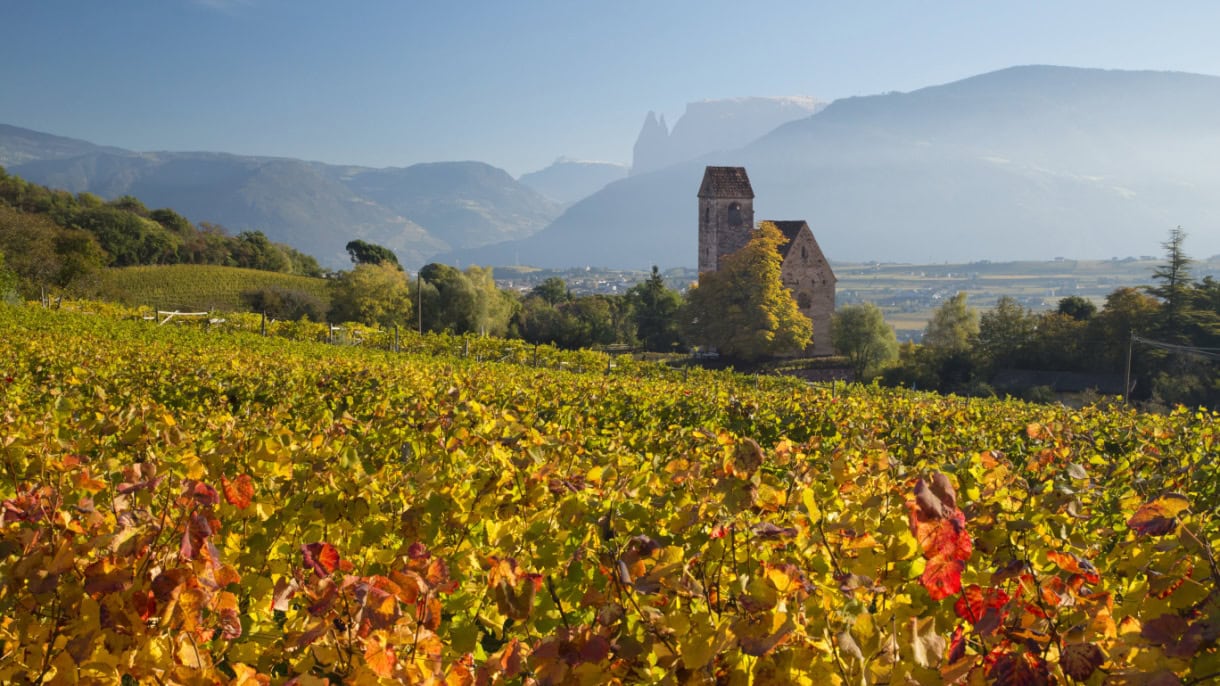
South Tyrol’s Wine Road is far more than just a scenic route. It’s a culture-soaked journey through thousands of years of winemaking history, linking together the region’s past and present one slopside vineyard at a time. Beginning in Nals (Nalles) just south of Merano and stretching past Bolzano through South Tyrol’s Unterland to Salurn (Salorno), this 93-mile (150 km) route connects 16 wine villages and over 100 wine producers.
This is Italy’s oldest wine road, but its roots reach far deeper. As early as the 5th century BC, the Rhaetians, a mountain-dwelling people, were cultivating vines along these sunny slopes. Today, that ancient tradition continues in a rare coexistence of cutting‑edge wineries, centuries‑old farmsteads, and even castles that continue to make wine.
What makes the Wine Road such a rewarding place to explore is this rich blend of old and new. You can visit sleek, design-forward wineries like Cantina Tramin, Elena Walch, Kellerei Kurtatsch, or Kellerei Bozen, where bold architecture rivals the wines for your attention — and then step into storybook estates like Tieffenbrunner, J. Hofstätter, or Alois Lageder in the lovely heart of Margreid (Magrè), where ivy-covered walls and courtyards transport you to another era.
We’re especially drawn to the smaller, family-run estates like Weingut Donà, Ferruccio Carlotto and Pfitscher where tastings feel more like being welcomed into someone’s home than walking into a showroom. These are places where the winemaker is often the one pouring your glass, eager to share the story of their land, their vines, and their way of life.
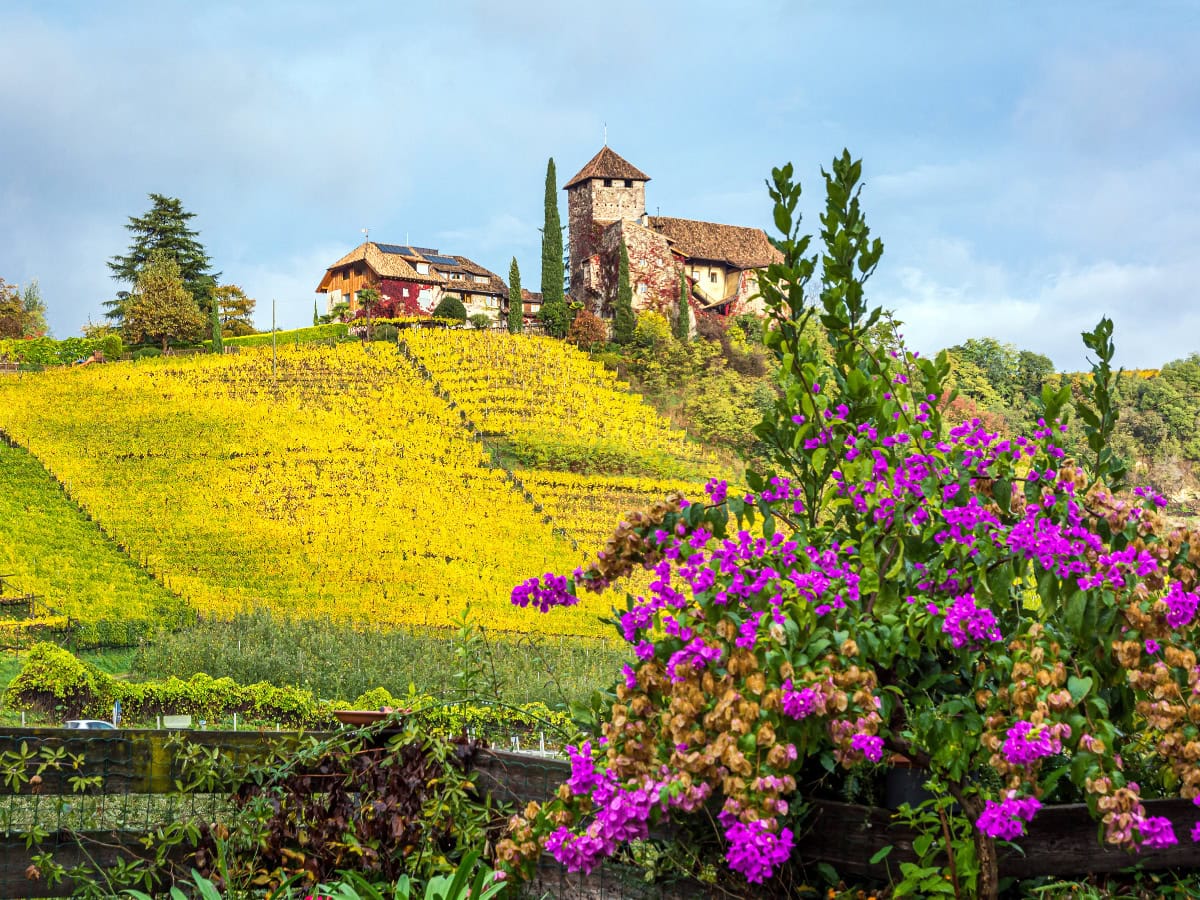
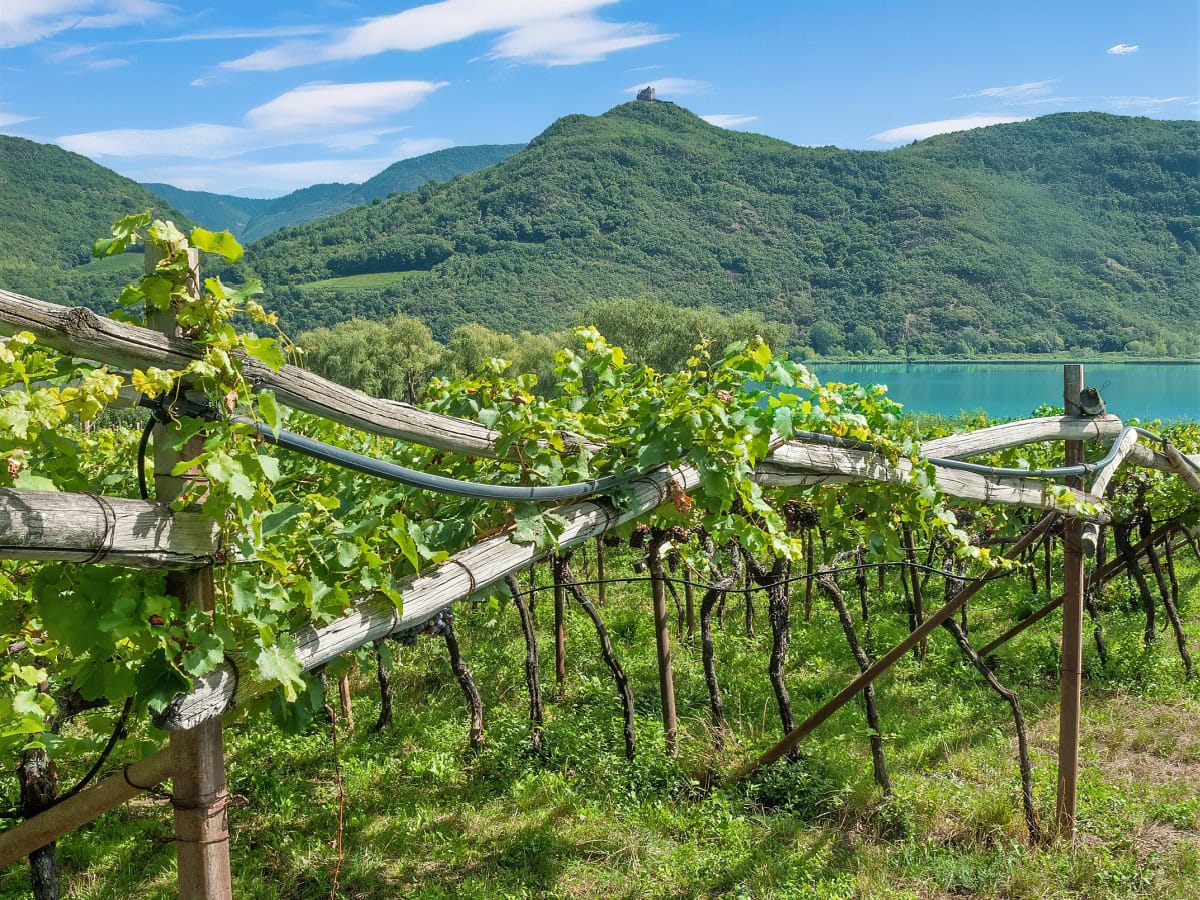
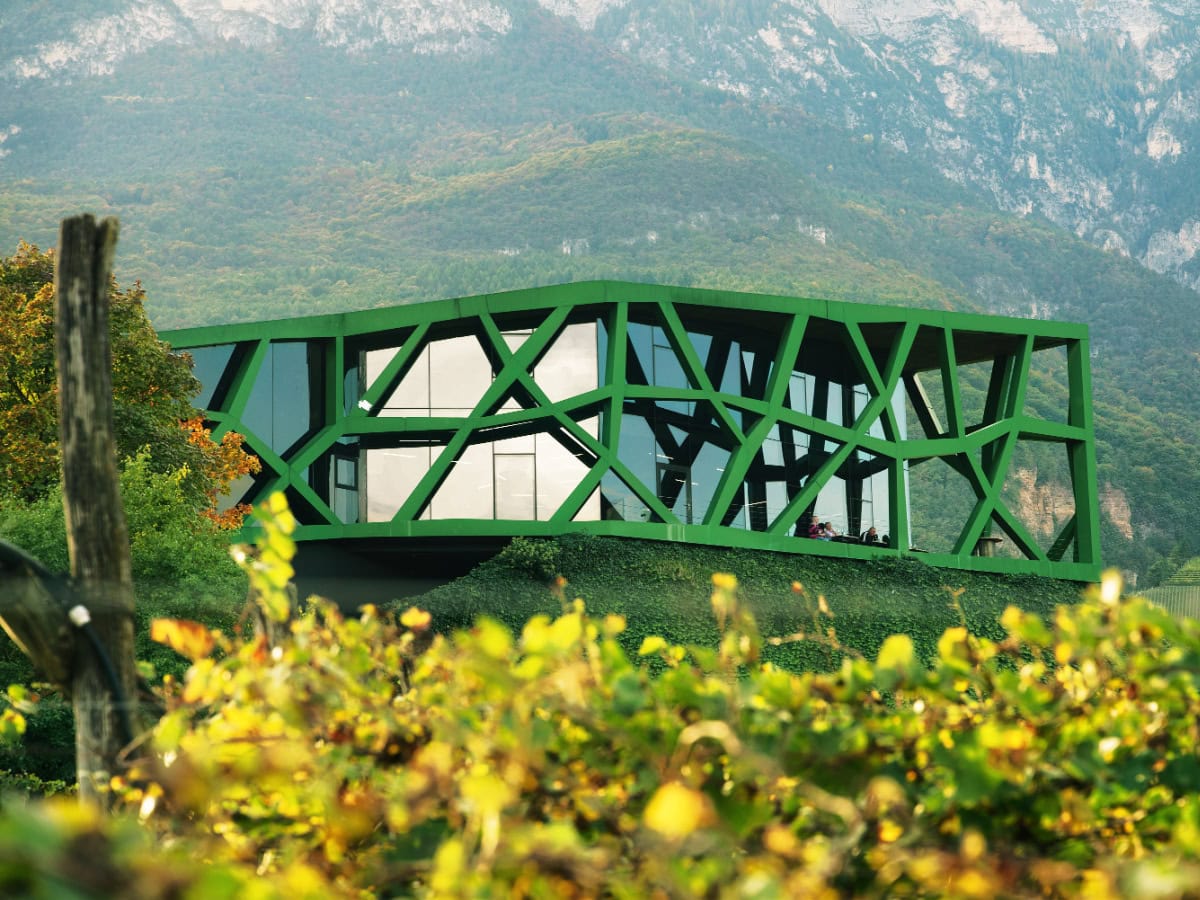
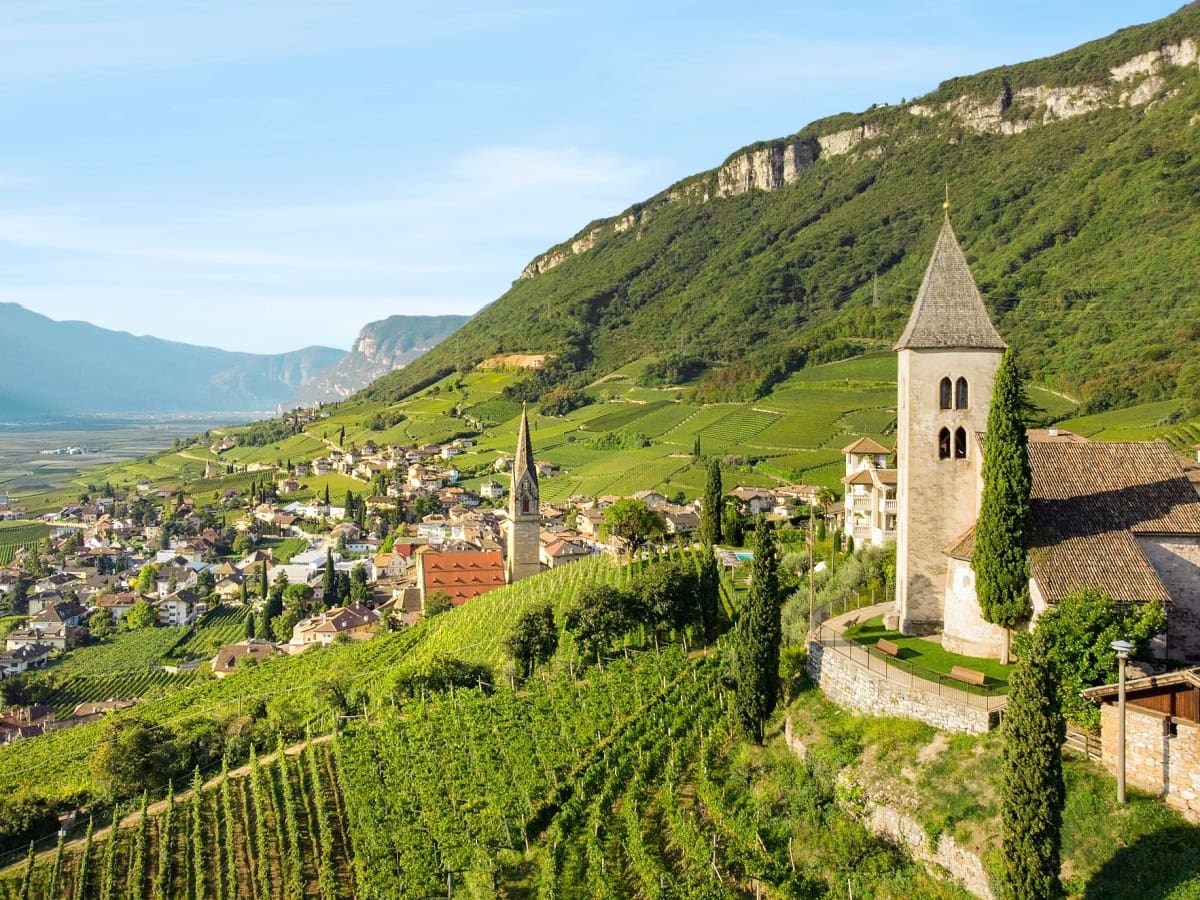
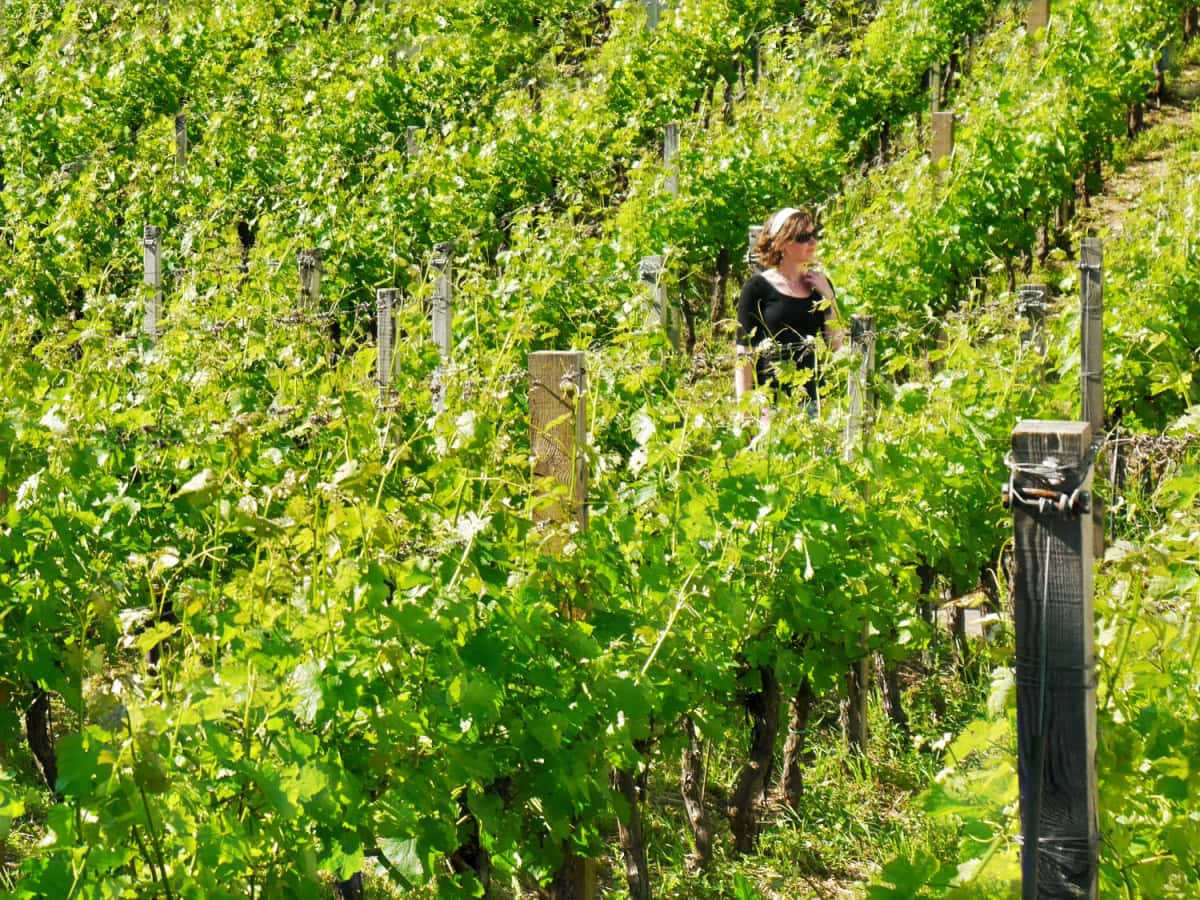
Of course, you don’t need to be a wine enthusiast to love this region. The Wine Road invites everyone: history buffs, slow travelers, bikers, hikers. The hillsides here are stitched with chapels, castles, and villa-lined lanes that feel untouched by time. You can pedal or stroll between wine villages such as Tramin (Termeno), Kaltern (Caldaro), and Eppan (Appiano), follow scenic trails into vine-covered slopes, or simply sit lakeside at a café along Lago di Caldaro — the warmest lake in the Alps.
For those craving a bit of elevation (and a good story), we recommend hiking to Castel Hocheppan. Perched high above the valley, this fortress rewards the climb with sweeping views and a 13th-century chapel housing frescoes that gave us a glimpse of medieval life paired with a good chuckle.
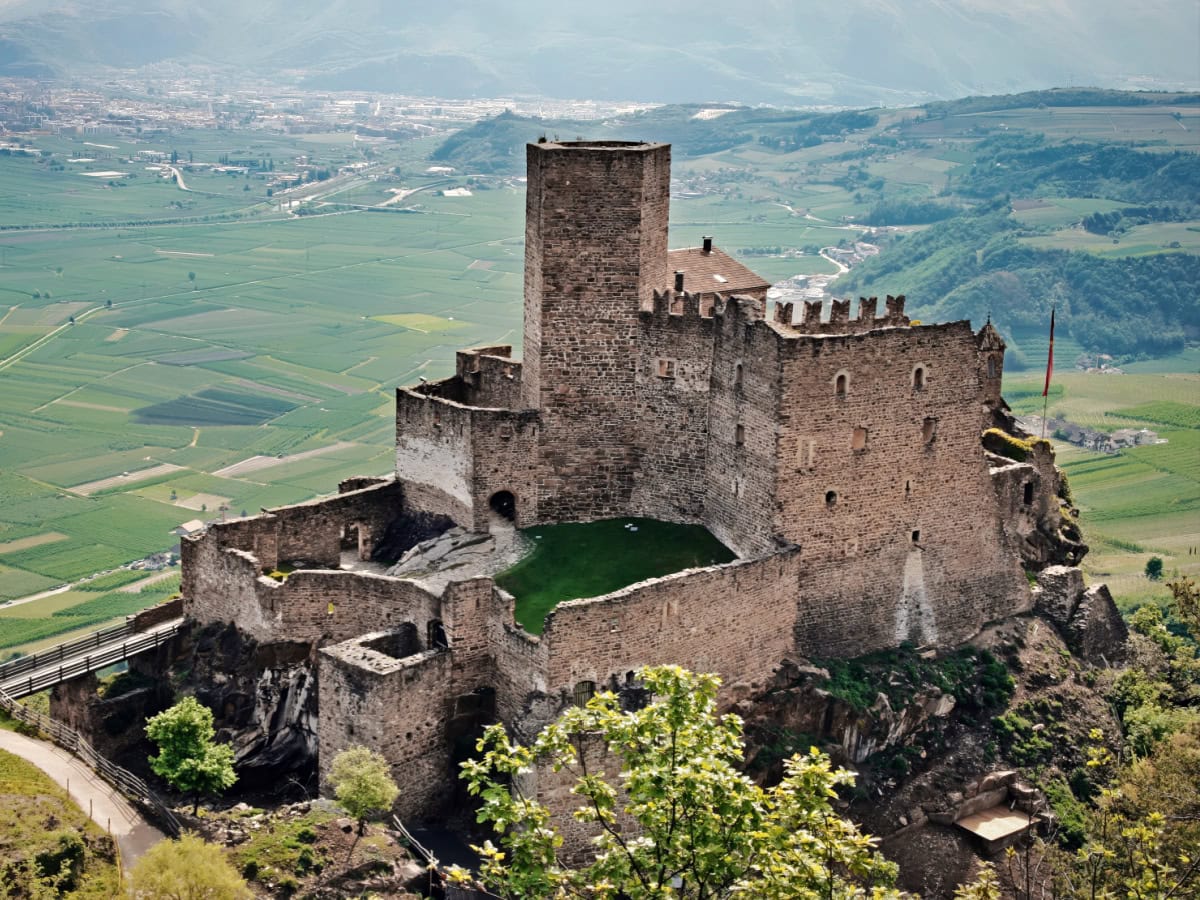
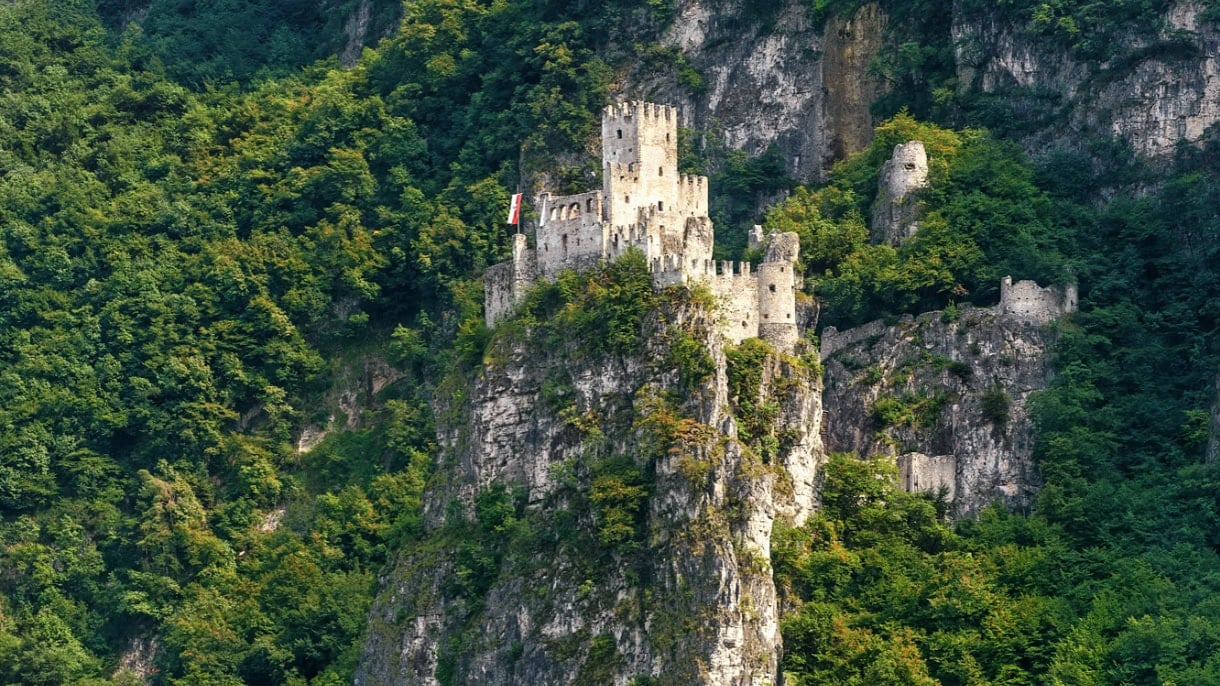
Further south, another worthwhile hike leads to the ruins of Schloss Haderburg (Castel Salorno), dramatically perched on a cliff above South Tyrol’s southernmost village. This was once the last Alpine outpost before entering the Italian-speaking world. You can still dine in the open-air courtyard and gaze northward from the ramparts, imagining the days when legionnaires kept watch for Germanic invaders racing toward the gates of Rome.
📌 Good to Know: After visiting the castle, stop by Amalia Pernter 1896 in Salurn. Set in a historic manor, it’s home to the last lederhosen makers in South Tyrol — the Ventura brothers — who still handcraft traditional garments using 19th-century techniques. The space blends cultural museum, artisan studio, dining and wine tasting all in one.
And then there’s Castel Katzenzungen near Prissian (Prissiano), home to what is believed to be the oldest grapevine in the world. Affectionately called “the old lady” by the castle’s caretakers, this vine is estimated to be over 350 years old and still produces a small quantity of a rare white wine known as Versoaln.
The Wine Road region is also rich in festivals. From cobblestone alley tastings to seasonal harvest parades, the calendar here is full of celebrations that pull locals and visitors into the fold. We most recently attended the Last of the Grapes Festival in Girlan, where the season wrapped with music, wine, and children proudly serving fresh juice from the final grape pressing. It was simple, joyful, and full of heart.
🧭 Pro Planning Tip: For the full experience, we recommend staying right on the Wine Road itself. You have a variety of accommodation options to pick fromn from wellness escapes, castle stays and boutique wineries like Weingut Donà.
When to Visit South Tyrol
South Tyrol doesn’t follow a single calendar. It follows several at once. Each valley, each elevation, each tradition can seem to operate on its own clock. This is what makes timing your visit both exciting and complex.
For travelers visiting only the Dolomites, timing is usually straightforward: you plan around trail access, lift schedules, and when the huts are open. Those logistics still matter in South Tyrol, especially if the Dolomites are part of your itinerary. But once you branch into the province’s other regions, timing becomes more personal.
Timing for Hiking, Valley Walks & Cultural Exploration
Optimal window: April through November
South Tyrol’s regions beyond the Dolomites offer exceptional opportunities for hiking, leisurely walks, and cultural discovery across a long and varied season. The Eisacktal region, the hills and valleys surrounding Merano, the Wine Road, and stretches of the Vinschgau and Pustertal corridors all shine with trails, traditions, and landscapes that invite exploration from spring well into late autumn.
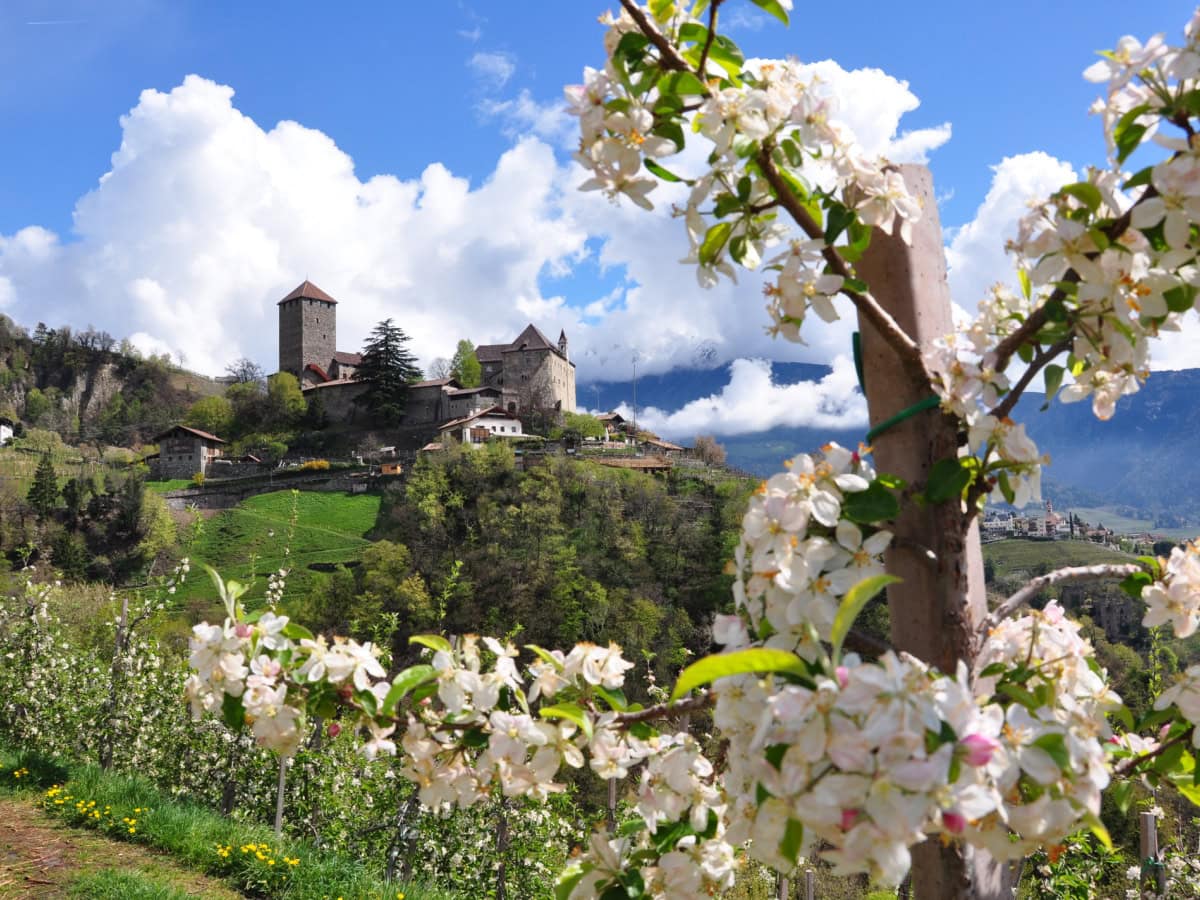
Spring (April–June): Spring awakens the slopes and valleys with apple and cherry blossoms especially around Merano and Vinschgau. The Waalwegs, ancient irrigation channel trails, are at their most magical during this period, winding through orchards heavy with bloom. The air is crisp and the entire countryside feels like it’s been brushed with a fresh coat of paint.
Summer (June–September): Summer brings South Tyrol’s longest days and the most reliable weather, making it ideal for hiking and biking. It’s also peak travel season, especially in areas that double as gateways to the Dolomites. If you’re visiting in summer, we recommend doing so in mid-June and mid-September to enjoy fewer crowds and a more relaxed pace.
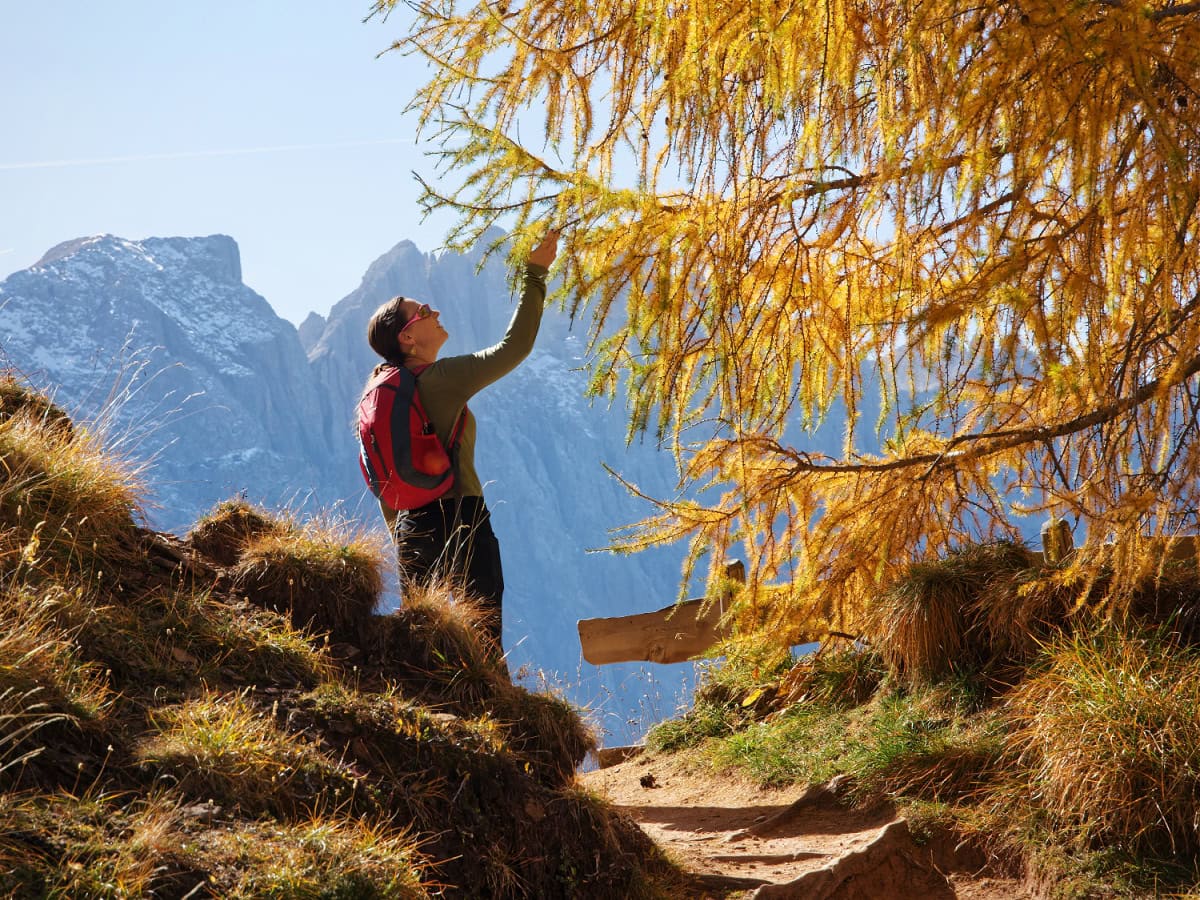
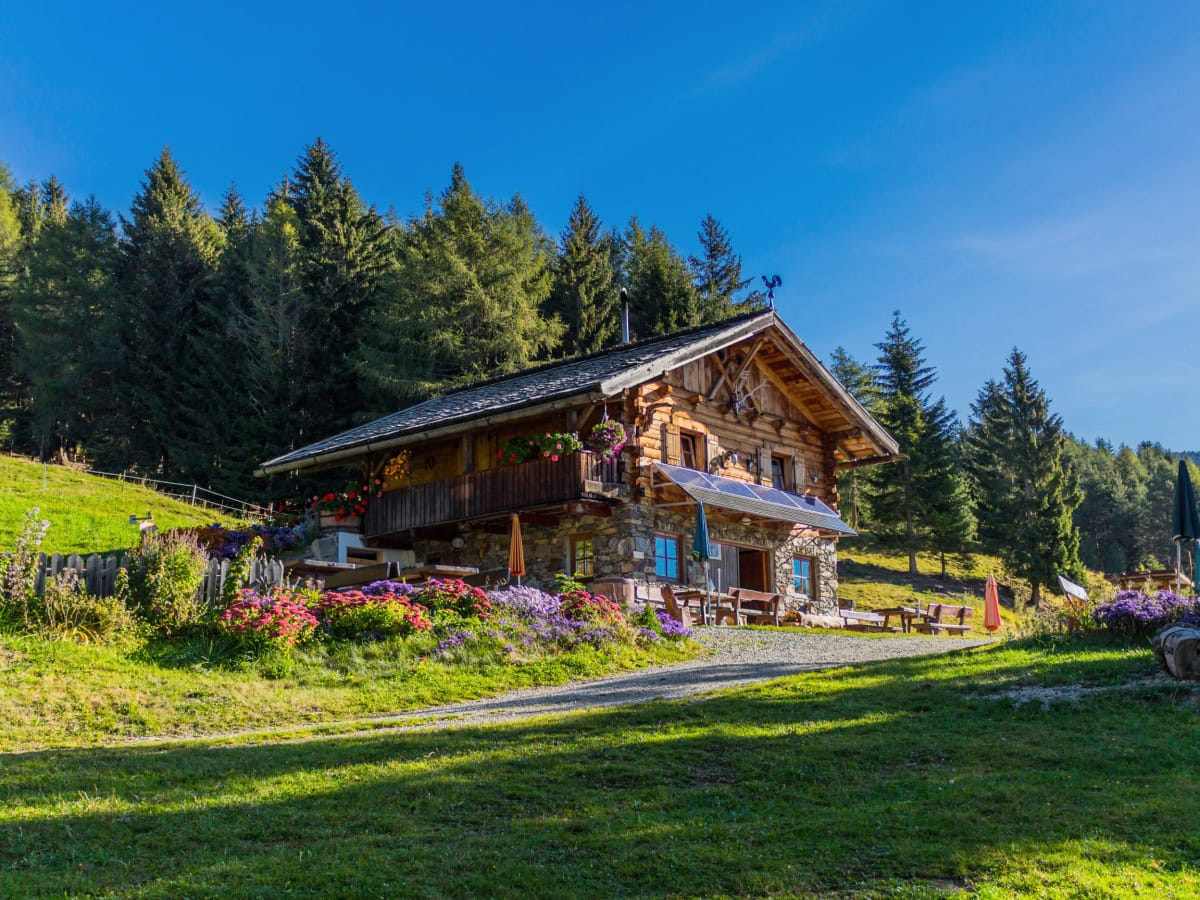
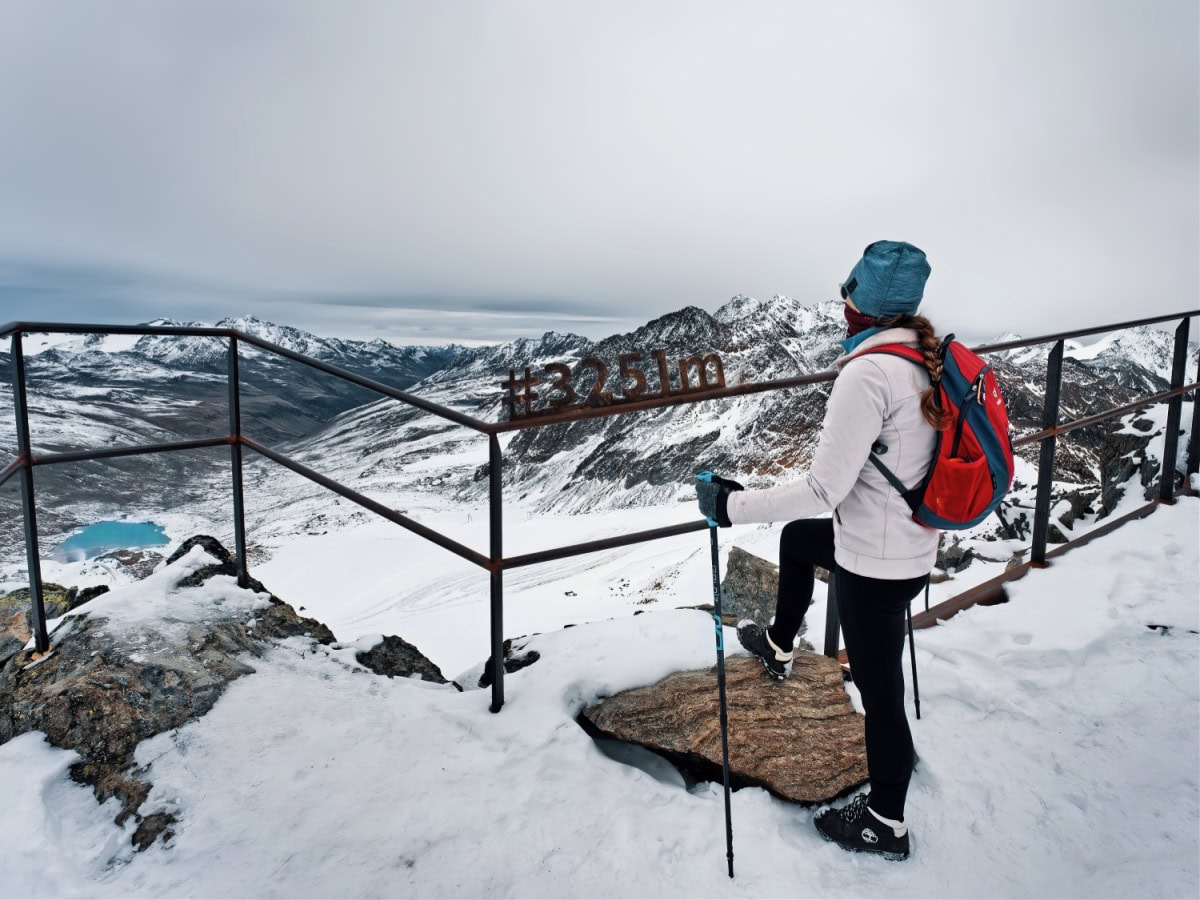
Autumn (September–November): By late September, autumn begins transforming the South Tyrol into a medley of color. Vineyards along turn amber and crimson, chestnut groves begin to drop their bounty, and larch forests at higher elevations — like the Salten plateau — ignite into gold. This is our favorite time to explore. The combination of natural beauty, ideal hiking weather, and a full calendar of festivals such as Almabtrieb creates the perfect blend of culture and outdoor adventure.
Winter (December–March): Naturally, winter in South Tyrol shifts the focus of outdoor adventure toward skiing. That said, many lower valley trails remain accessible, and snowshoeing or winter hiking in higher elevations can be rewarding for those seeking quieter paths. However, unless your trip includes skiing, a wellness retreat, a visit to the region’s Christmas markets, or you simply love the serenity of the mountains in winter, we don’t generally recommend this season for exploring South Tyrol on foot.
Ready to Start Planning Your Trip?
Our 175+ page trip planning guide covers everything: when to go, where to stay, what to hike, and how to avoid the crowds. Packed with insider tips from 11+ years of exploring.
Get the Trip PlannerTiming for Wine & Culinary Experiences
Peak season: Late August through November
South Tyrol’s wine and food culture reaches its crescendo in autumn. The grape harvest begins in late August in the warmer Wine Road vineyards and continues into October in higher-elevation sites. Wineries buzz, cellars open for tastings, and the whole region takes on that harvest-season cheer.
The apple harvest follows a similar arc. Vinschgau and the valleys around Merano become fragrant with ripe fruit from late August through October. Even the hikes feel different this time of year. We think of them as aromatherapy on a trail, with sweet scents drifting through crisp alpine air.
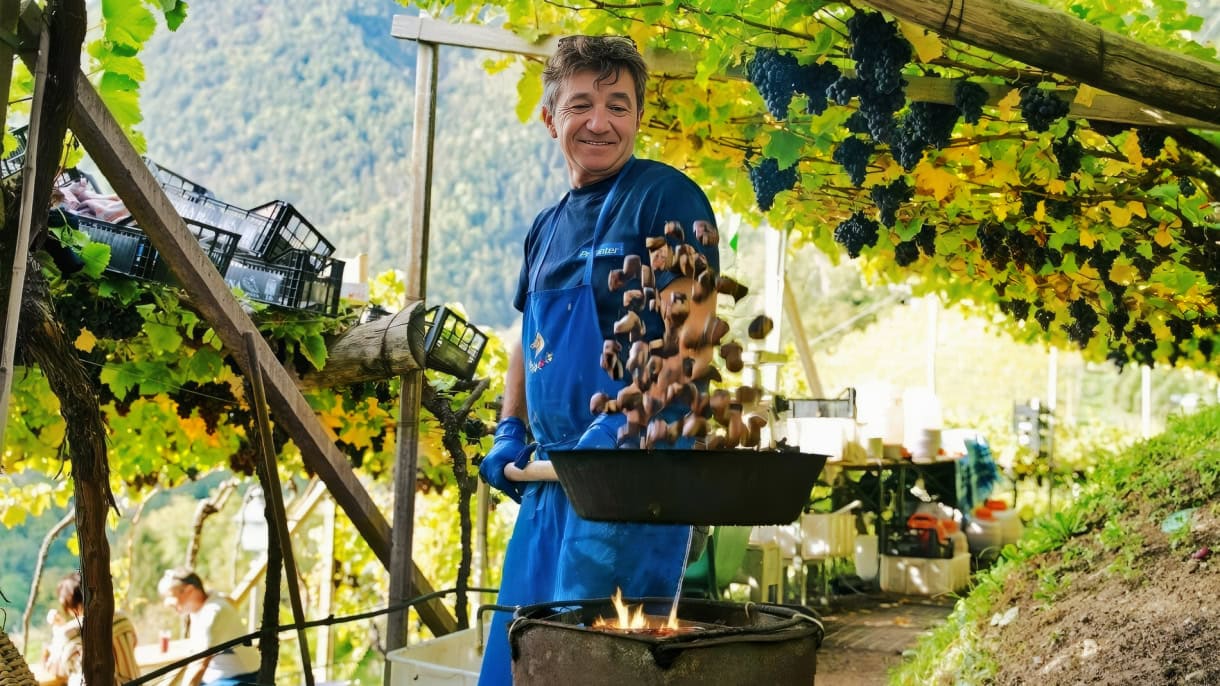
But the true culinary highlight is Törggelen season (late September through mid-November). This centuries-old harvest tradition sees farmers open their Buschenschanks to serve new wine, roasted chestnuts, and hearty dishes plus desserts. It’s an experience we consider essential and one that often requires reservations.
If you want to build your trip around the harvest atmosphere, this is also when South Tyrol’s food and wine events hit their stride. Events like the Merano Grape Festival, Speckfest, and Brixen’s Bread & Strudel Market fill the calendar, alongside winery tastings and traditional Törggelen meals.
Timing for Christmas Markets & Festivals
Christmas markets: Late November through January 6
South Tyrol doesn’t treat Christmas like a spectacle. It honors it as a tradition. The markets here aren’t hyper-commercialized pop-ups covered in plastic snow and garland. They’re part of daily life. Every detail feels considered, from hand-hewn wooden stalls to fresh pine boughs placed where their scent catches you by surprise.
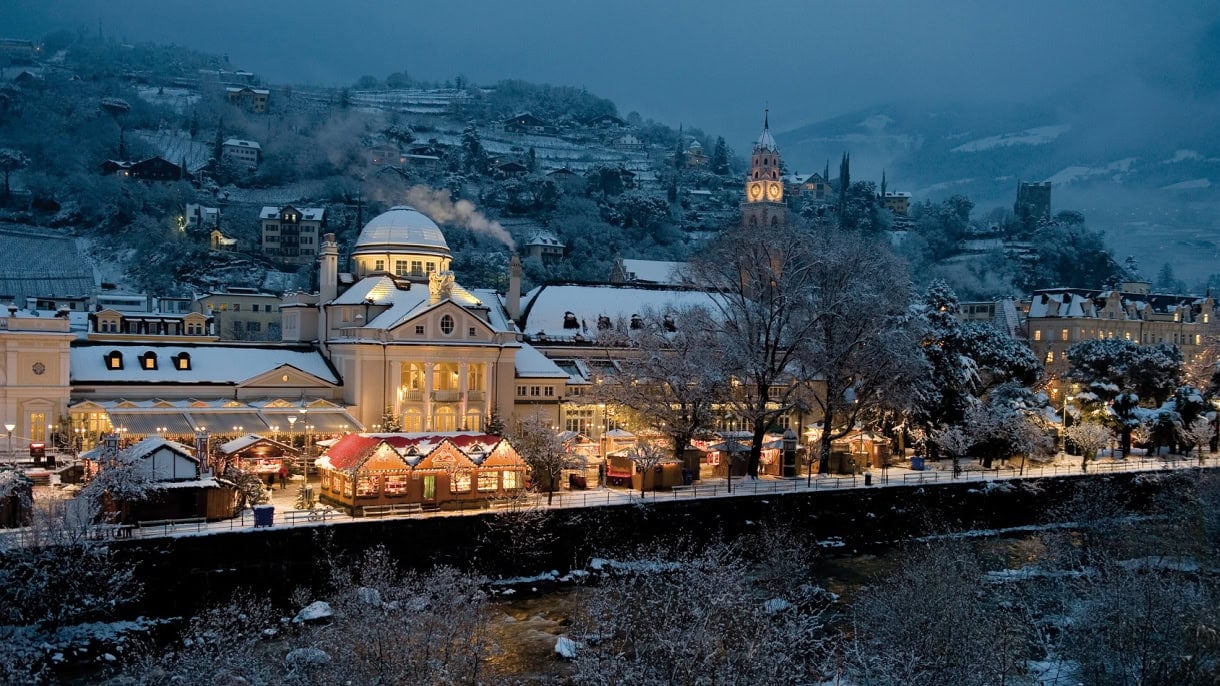
Bolzano’s market may be the largest, but it still feels intimate, framed by a Gothic cathedral and laced with the scents of the season. Merano wraps its festivities around the town’s river promenade, where twinkling lights shimmer on the water and create a scene as romantic as it is festive. And in Brixen, our personal favorite, you’ll find the market tucked into a medieval square beneath the cathedral, a setting so picturesque it belongs inside a snow globe.
But not all of South Tyrol’s Christmas traditions are sweet and sparkling. In early December, things take a darker, wilder turn with the arrival of Krampus: the horned, fur-clad enforcer of Alpine folklore who accompanies St. Nicholas. During Krampuslauf parades, these eerie figures charge through village streets in packs, cracking whips, rattling chains, and sending both children and adults scurrying with a thrill of ancient fear. It’s chaotic. It’s primal. And a blast.
One Province. Four Seasons. A Hundred Reasons to Celebrate.
South Tyrol’s calendar doesn’t end when the last mug of Glühwein is drained. If anything, it just changes costumes. Around here, every season brings its own reason to gather, feast, and celebrate. From centuries-old rituals to modern-day festivals, South Tyroleans know how to mark the passage of time with style, spirit, and plenty of local flavor.
⇒ Want to go deeper? We’ve compiled the most interesting events and traditions in our South Tyrol + Dolomites Travel Guide, complete with local tips, dates, and everything you need to plan around these unforgettable experiences.
Timing for the Dolomites (Quick Note)
If the Dolomites are the main reason you’re coming, your timing is more constrained than most of South Tyrol. In general, the high-mountain season runs roughly from mid-June into early October, with July and August offering the widest access and the biggest crowds. For more detailed advice on when to visit the Dolomites, head to our Dolomites Travel Guide.
Shoulder Seasons: Calm, Color, and Caveats
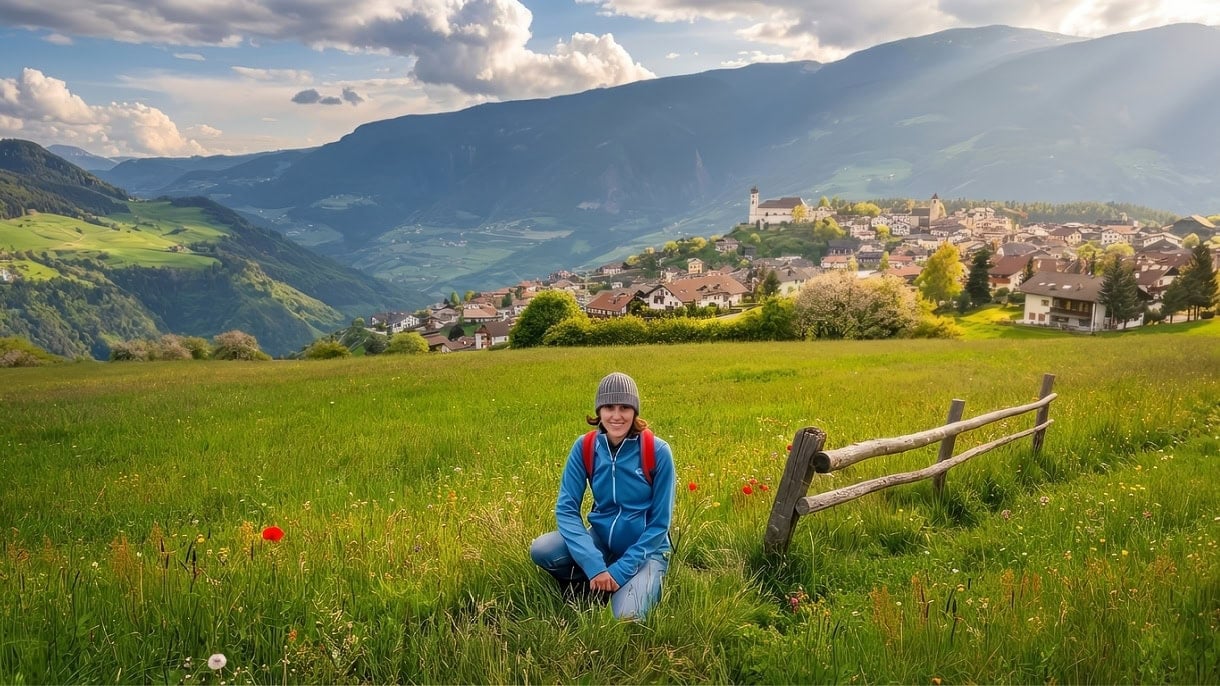
If you have the flexibility, we recommend planning your trip for the shoulder seasons: late May to early June, or mid‑to‑late September into early October. This is when South Tyrol feels less like a destination and more like a place people genuinely live. Crowds thin, prices ease, and you’ll have far more space on the trails, in villages, and at many of the region’s most memorable sights.
But shoulder seasons aren’t a free upgrade. They come with tradeoffs you need to plan around:
- Some things are simply closed. Hotels, restaurants, and lifts often take breaks beginning in the middle of October through November and again in April through the end of May.
- Weather gets moodier. Spring can swing from sunshine to sleet. Autumn brings earlier sunsets and the possibility of snow. You’ll still have great days, but you need a willingness to pivot when conditions shift.
- High-alpine access can be limited. If hiking in the Dolomites is a priority, shoulder seasons can feel like a tightrope: June may still have lingering snow on high trails, and October can shut things down early depending on conditions.
The payoff? If you can accept the tradeoffs and a little uncertainty, shoulder season South Tyrol feels less like tourism and more like discovery. It’s ideal for those who embrace slow travel and shun a checklist mindset.
Where to Stay in South Tyrol: Choosing Your Base
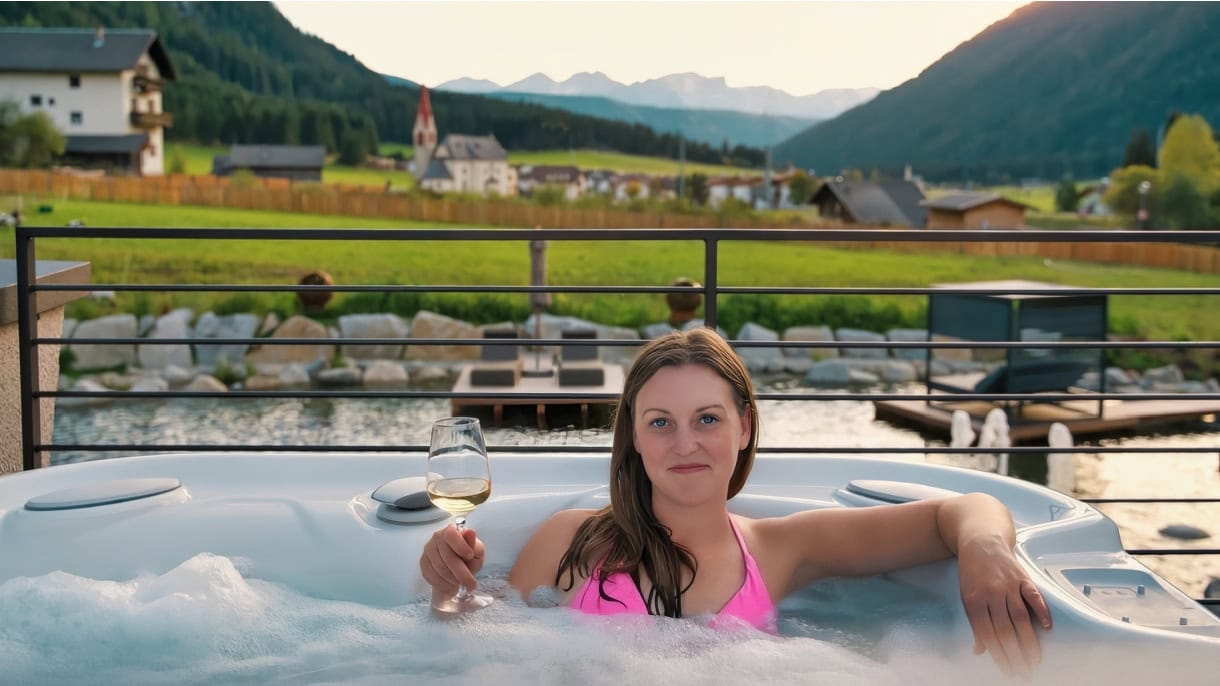
South Tyrol isn’t the kind of place you breeze through. It’s the kind of place that rewards lingering. The longer, the better. But with dozens of valleys and mountain groups, and more picturesque villages than you can count, the question becomes: where should you stay to make the most of your time here?
The answer depends on how you travel. If you want a single home base for day trips, you’ll want to prioritize accessibility — ideally staying somewhere central with reliable road or public transport connections. If you’re here to slow down, unplug, and soak in the atmosphere of a single region, you may prefer settling in one valley to explore it deeply. South Tyrol is compact, but not fast; travel times between regions can stretch, especially on winding mountain roads.
We recommend thinking about South Tyrol not just as a destination, but as a collection of the distinct regions we highlighted earlier. By taking that approach, choosing your base becomes less about finding the “best” place and more about matching your kind of trip to the right corner of the map.
How Many Bases Do You Need
3–4 nights? Pick one base. Choose a region that matches your top priority and explore it thoroughly. With this little time, moving around will cost you more than it gives back.
5–7 nights? Two bases opens the door to experiecing South Tyrol’s Alpine and Mediterranean spectrum. A popular combo pairs the Dolomites with a second stay in Merano, along the Wine Road, or in the sun-soaked Vinschgau
8–10 nights? Now you can get creative. Add a stay in a quiet, lesser-known valley (Sarntal, Gsiesertal, or Ultental) or expand your time in the Dolomites to explore multiple mountain areas like Val Gardena, Alta Pusteria, or Alpe di Siusi.
Not Sure Where to Base Yourself?
Choosing the right valleys — and the right balance between them — can make or break your trip. Our planning services match your priorities, pace, and travel style to a personalized itinerary built from 11+ years of on-the-ground experience.
Explore Trip PlanningGetting to South Tyrol & Traveling Around
South Tyrol doesn’t have a single front door. It has several. And which one you choose depends on where you’re coming from, where you plan to stay, and whether you’re renting a car.
Nearest Airports
South Tyrol is easily reached via several international airports. Your best option depends on flight availability, timing, and which part of the region you’re basing yourself in:
- Bolzano | Bozen (BZO) – South Tyrol’s only airport, served by SkyAlps with direct flights from cities like Rome, Berlin, Düsseldorf, and London Gatwick. If the schedule works, it’s the most convenient choice—especially for reaching Bolzano, Merano, the Wine Road, or nearby mountain regions.
- Innsbruck (INN) – Located just across the Austrian border, Innsbruck offers quick access to northern South Tyrol and the Eisacktal/Wipptal region.
- Verona (VRN) – Often overlooked, but an efficient option for central or western South Tyrol, including Merano and the Vinschgau Valley.
- Venice Marco Polo (VCE) – A solid all-around choice with broad international connections. Expect a longer but scenic drive into the province (around 3 hours to Bolzano).
- Munich (MUC) – Ideal if you’re coming from North America or further abroad. From here, it’s a roughly 3.5-hour drive to most parts of South Tyrol.
- Milan Malpensa (MXP), Milan Linate (LIN), or Bergamo (BGY) – Further out (3.5–4.5 hours), but worth checking for cheaper flights or better schedules.
Arriving by Train or Bus
South Tyrol is exceptionally well connected by rail. Trains from across Italy, Austria, and Germany stop at Bolzano, Brixen, and Franzensfeste (Fortezza) — the region’s major rail hubs. From there, you can continue by:
- Regional train to places like Merano, Bruneck, or Mals (Malles)
- Public bus to smaller towns and mountain villages
📌 Good to Know: If you prefer to avoid trains, you’ll also find direct long-distance buses from many airports (like Innsbruck, Verona, and Venice) into major South Tyrolean towns.
Finding the Best Rail + Bus Connections
Use platforms like Omio or Trainline. Both let you search by destination and travel dates to find the best connections by train or long-distance bus.
Car or No Car?
Renting a car gives you the most freedom to explore South Tyrol’s diverse valleys, scenic drives, and remote gems. If you want to mix wine villages with mountain passes and detour on a whim, driving is the way to go.
We always prefer renting a car and have found the best rental deals through Discover Cars. That said, it’s also entirely possible to explore the region car-free. South Tyrol’s public transportation system is exceptional and widespread if that is your preference.
📌 Good to Know: Most accommodations include a Südtirol Guest Pass, which lets you ride public buses and regional trains for free.
⇒ Related Reading: How to Easily & Safely Drive in Italy
Planning Smarter: What We’ve Learned
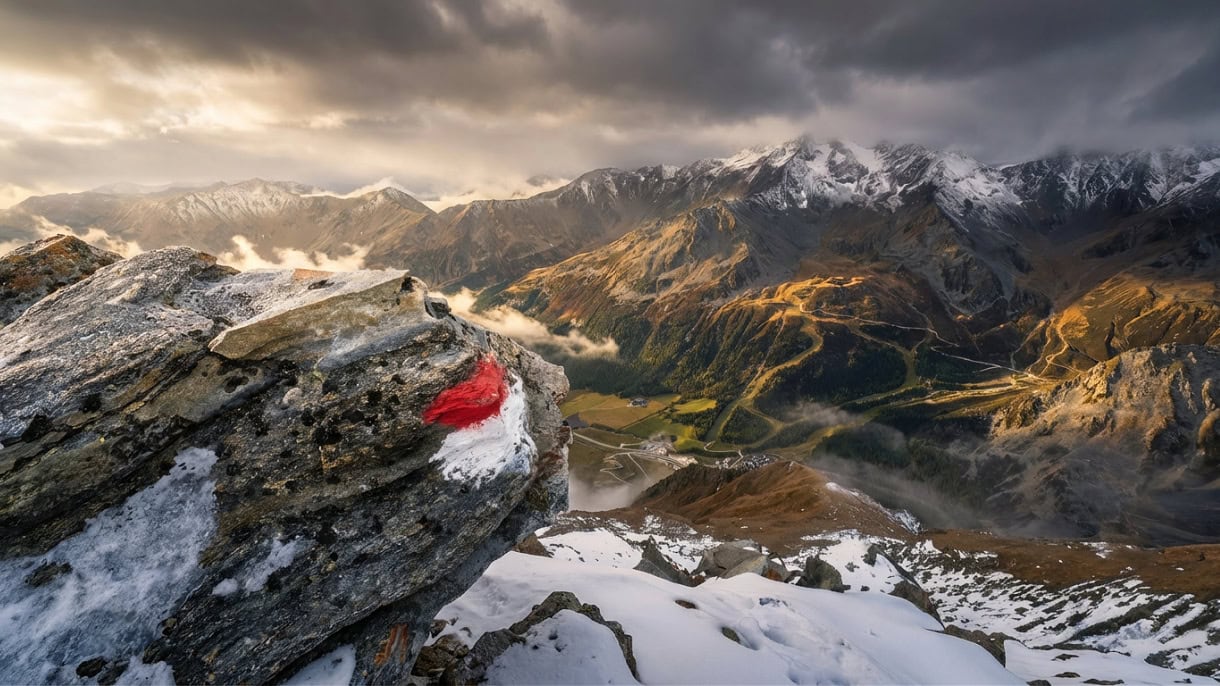
South Tyrol rewards thoughtful planning. It also punishes the opposite. Over more than a decade of exploring this province, we’ve made our share of missteps and watched plenty of other travelers make theirs. Here’s what we wish someone had told us at the start.
Treating South Tyrol as “just the Dolomites.” The Dolomites are spectacular, but they’re only part of the story. Visitors who never venture beyond the limestone spires miss the palm-lined promenades of Merano, the castle-dotted vineyards of the Wine Road, and the glacier-backed solitude of the Vinschgau. If your itinerary only includes famous peaks, you’re admiring the crown and ignoring the kingdom.
Underestimating the cultural dimension. This isn’t a place you simply look at. It’s a place you experience through conversation, food, and local customs. Rushing from viewpoint to viewpoint without sitting down at a Buschenschank, wandering a village market, or learning a few words of German leaves the richest layers of South Tyrol unexplored.
Ignoring seasonal factors. South Tyrol’s calendar isn’t just about weather; it’s about what’s open, what’s harvested, and what’s celebrated. Arriving in late October expecting Törggelen without a reservation? You’ll likely be turned away. Visiting in May expecting all the mountain huts to be open? Many won’t be. 🧭 Pro Planning Tip: If the Dolomites are your primary destination, check out our Dolomites Travel Guide for additional timing tips.
Overpacking your days. The valleys may look close on a map, but mountain roads take time. A day that includes Merano, the Stelvio Pass, and a wine tasting in Kaltern isn’t ambitious, it’s foolish. South Tyrol reveals itself slowly. Build in margin. Embrace slow travel. The best moments often arrive unscheduled.
Skipping the Wine Road because you’re “not a wine person.” The Südtiroler Weinstraße isn’t just for wine lovers. It’s one of the most beautiful and historically layered corridors in Italy. You don’t need to taste a single glass to fall for it.
Not having a Plan B for weather. Mountain weather is fickle. But here’s South Tyrol’s secret advantage: the province’s dramatic geographic diversity means bad weather in one region can mean sunshine in another. A soggy morning in Alta Badia might be a perfect afternoon along the Wine Road or in the palm-lined streets of Merano. Take the time to make list of an enticing alternatives such as a castle visit or a winery tour. Flexibility isn’t defeat. It’s how you discover corners of South Tyrol you might have otherwise missed.
Overlooking the local language. German is the main language spoken throughout most of South Tyrol, with Italian also widely used and officially recognized. Even learning a few basic phrases in either language can go a long way. Locals genuinely appreciate the effort. It shows respect for the place and its culture.
Not learning the trail system before you go. Before your first adventure in the mountains, be sure you understand how trails are marked and graded. Routes are numbered and color-coded. Learn the system before you venture into the wilderness.
Ready to Experience South Tyrol for Yourself?
Whether you want a custom itinerary built around your interests or prefer to chart your own course, we’re here to help you discover this extraordinary province on your own terms.
Trip Planning Services
South Tyrol’s patchwork of valleys, cultures, and seasons should inspire you, not overwhelm you. Let us handle the details so you can focus on what really matters: the wonder and the beauty.
Learn MoreTrip Planning Guide
Prefer to plan it yourself? Grab our detailed self-guided ebook with maps, tips, and top recommendations to help you confidently plan your perfect trip.
Get the Guide