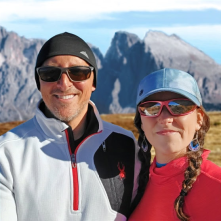
A Dolomites winter is full of magic that transcends far beyond the ski slopes. And with the Milan Cortina 2026 Winter Olympics set to showcase these peaks to the world, there’s never been a better time to uncover the unforgettable experiences that await when the snow begins to fall.
When winter wraps its wonder around the Dolomites, the region turns into something extraordinary. And we’re not just talking about carving turns on the slopes.
The first time we experienced a Dolomites winter, we expected snow-draped beauty and twinkling lights. What we didn’t expect was just how much there is to do without strapping ourselves to two sleek strips of carbon fiber — and making the sign of the cross before bombing downhill. From frost-kissed valleys to firelit village markets, winter here isn’t just a season; it’s an entirely different way of seeing the mountains.
We believe winter in the Dolomites deserves more than a fleeting visit. More than the adrenaline of a downhill run or the style parade at the chairlift. Though if your idea of adventure is €400 ski goggles and a duck-lipped chalet selfie, you do you.
But for the rest of us? The ones craving splendor, story, and a little soul?
This list is for you.
1. Winter Hiking & Snowshoeing on Alpe di Siusi
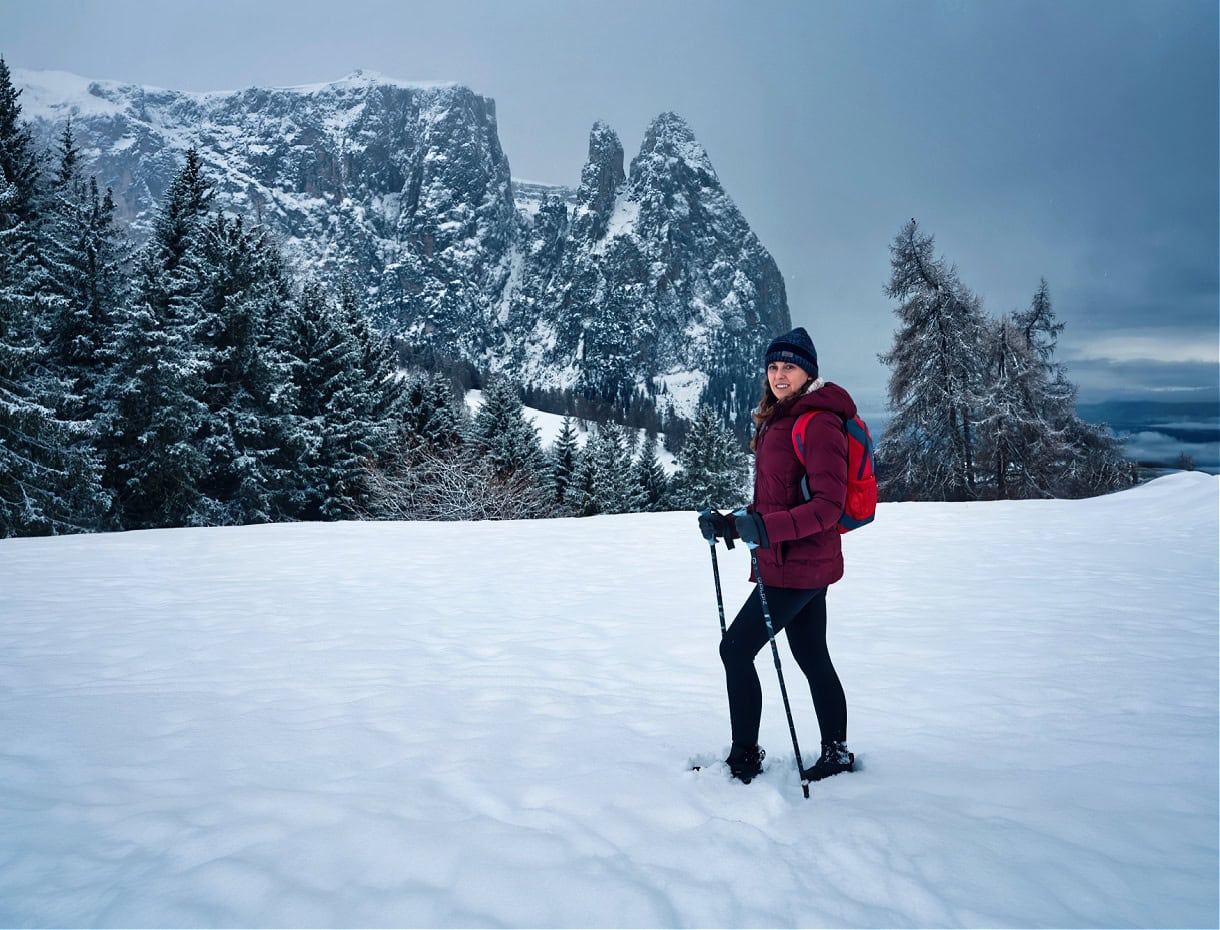
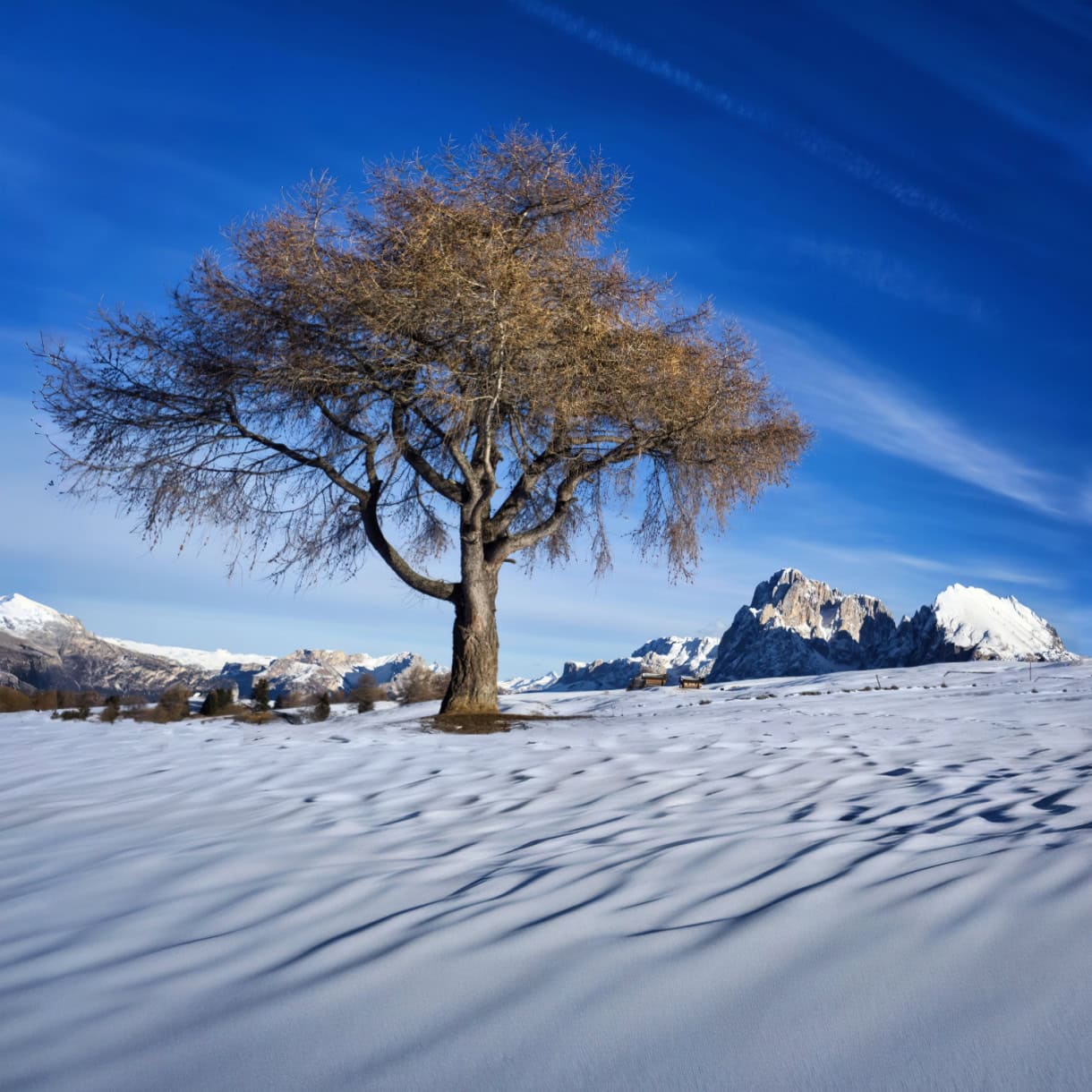
Europe’s largest high-alpine pasture becomes an eye-popping snow globe in winter. Alpe di Siusi (Seiser Alm) offers nearly 40 miles (60 km) of marked winter trails where the Sassolungo and Schlern massifs rise like icy cathedrals against the Tyrolean sky.
The terrain here favors first-timers and seasoned trekkers alike. Trails like the Hans & Paula Steger path or the stretch from Compatsch to Saltria serve up a blizzard of cinematic views. We’ve hiked here in sunlight sharp as broken glass and under skies so gray they felt hungover. And no matter the weather, we always find that particular alpine stillness that feels like meditation.
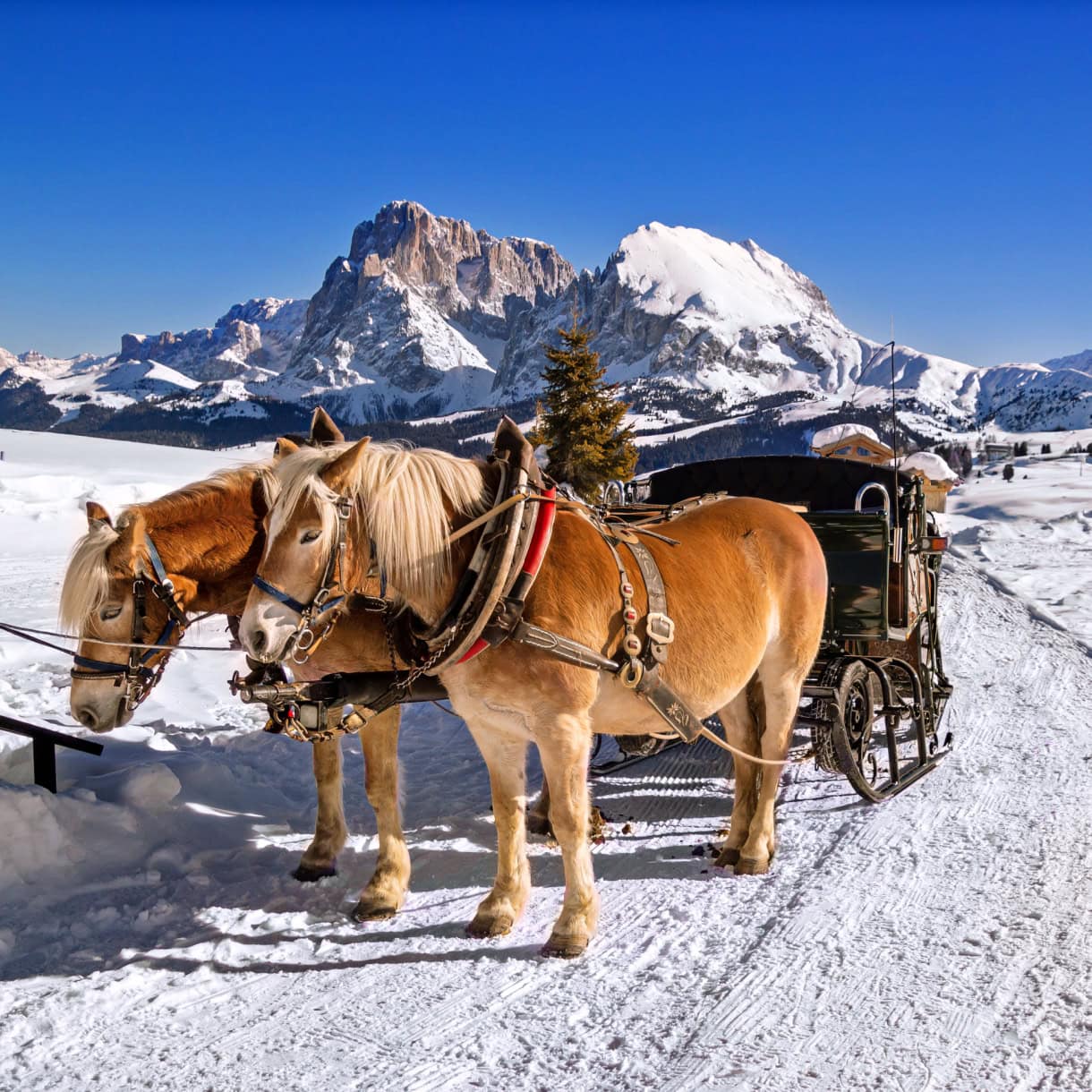
If you’ve had too much mulled wine or simply do not feel up to a snowy trek, another lovely winter option is the horse-drawn sleigh ride. Wrapped in warm blankets, you’ll glide through snow-covered meadows to the sound of bells and hooves.
Cap your visit at huts like Malga Schgaguler Schwaige, Gostner Schwaige or Malga Sanon, where you can warm your hands around steaming hot chocolate and watch the flurries settle around you.
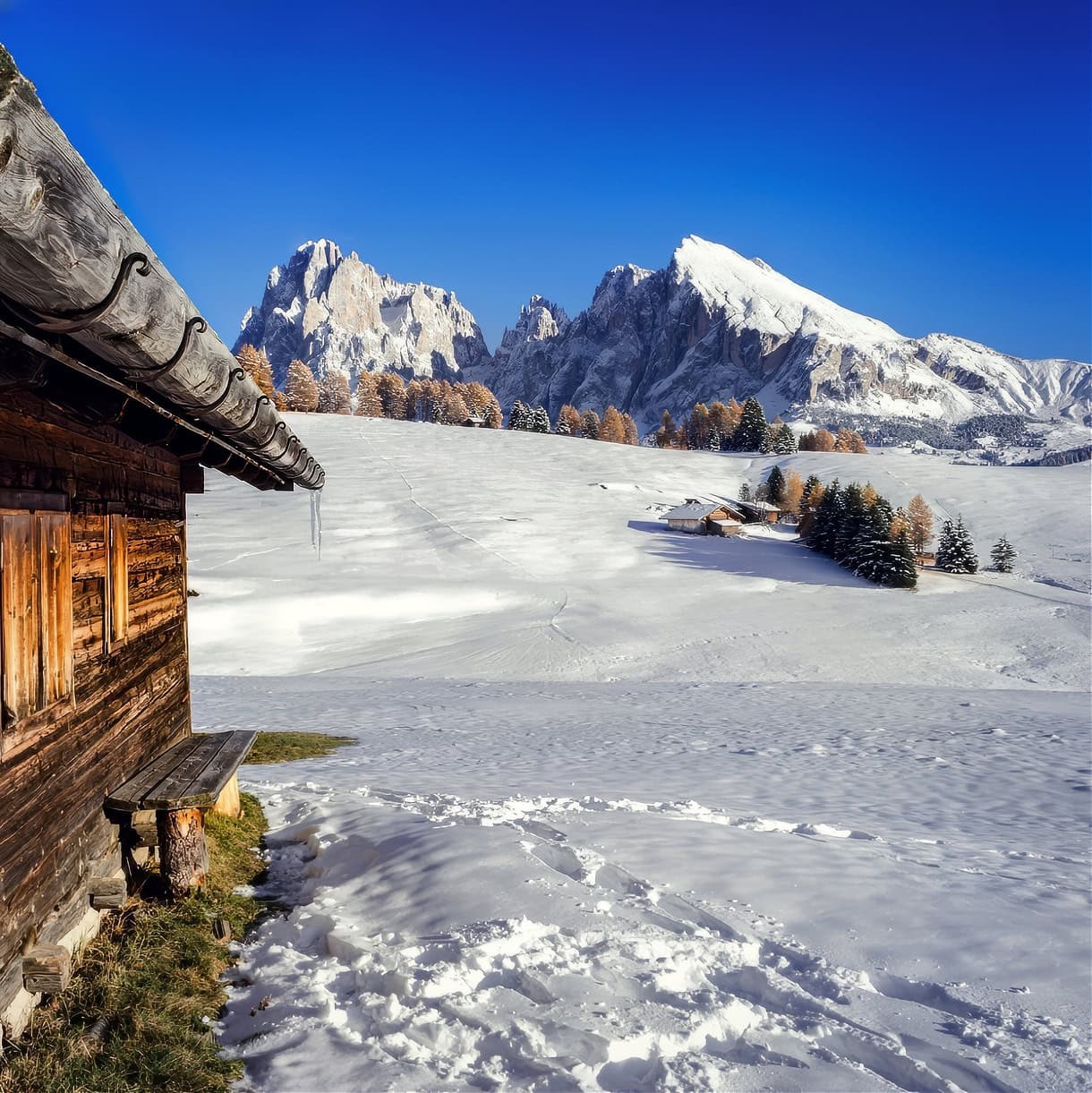
❄️ Good to Know: Arrive early morning for the best light and smallest crowds. The cable car from Siusi and Ortisei make accessing Alpe di Siusi effortless even in deep winter. You can also drive to Compatsch if you’d like and park on the plateau.
🧭 Accommodation Recommendation: If you want to wake up in this winter wonderland, consider booking a stay at Hotel Ritsch. It’s perched in the heart of Alpe di Siusi making it the perfect choice for experiencing the charm of the Dolomites in winter.
🧣 Tip: Snowshoes and poles are available for rent from local sports shops. For winter hiking in the Dolomites, we highly recommend packing crampons that you can slip over your boots.
⇒ See our complete Alpe di Siusi guide for more information on how to visit.
2. The Fairy-Tale Lake: Lago di Braies
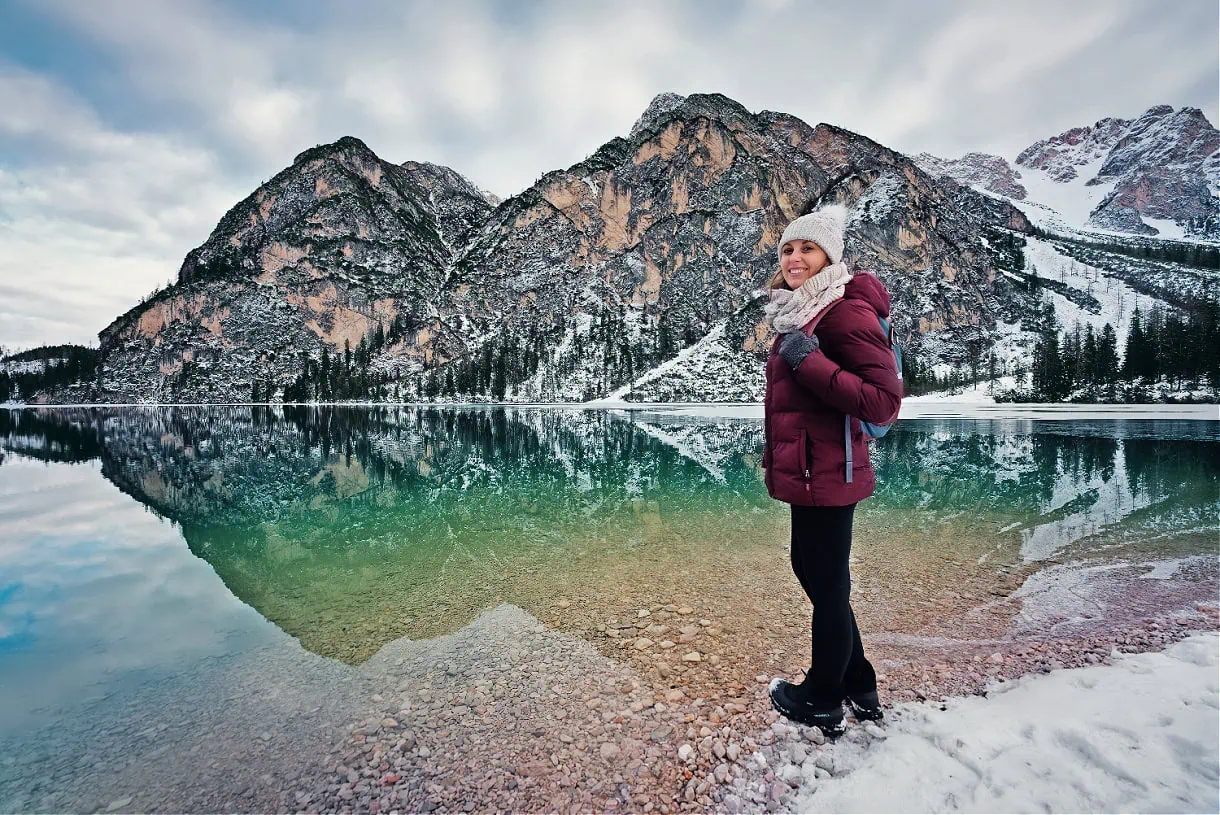
In winter, Lago di Braies (Pragser Wildsee) creates scenes so perfect they feel almost unreal. Often cited as one of the most beautiful lakes in the Dolomites, it is an essential stop for photographers, casual hikers and winter romantics like us. Despite its fame, Lago di Braies maintains surprising tranquility in winter.
A mostly flat 2.2-mile (3.5 km) loop circles the lake, offering multiple vantage points of surrounding mountains including Seekofel summit (also known as Croda del Becco). We’ve only walked the western side of the lake in winter, but the entire trail is generally accessible with snow boots or crampons, though you can also enjoy it with snowshoes after a heavy snowfall.
While walking on the frozen surface is sometimes possible, we recommend always checking posted safety signs. As you can see in our photos, the lake does not always freeze entirely over especially early in the winter season. Stick to the official trails unless guided otherwise.
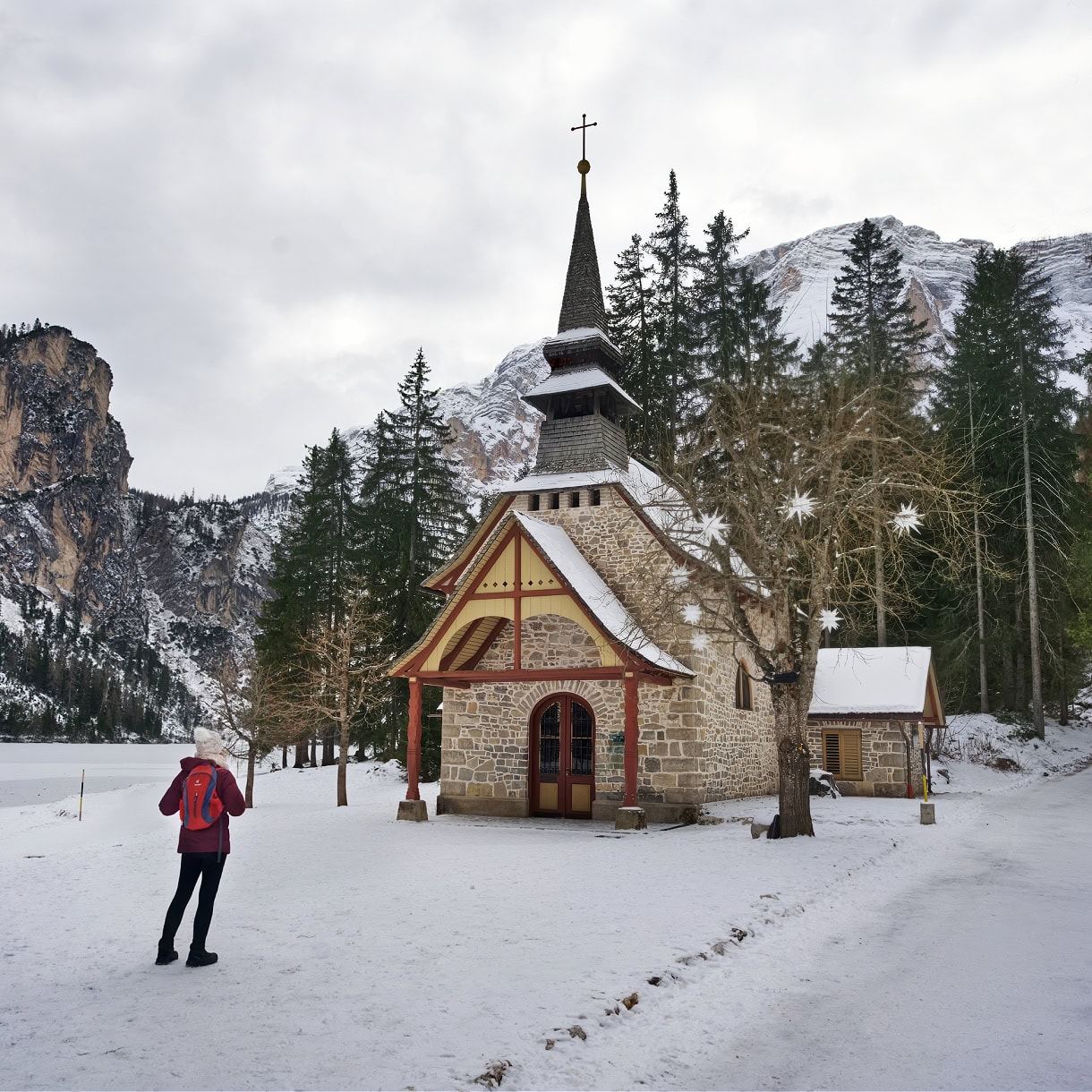
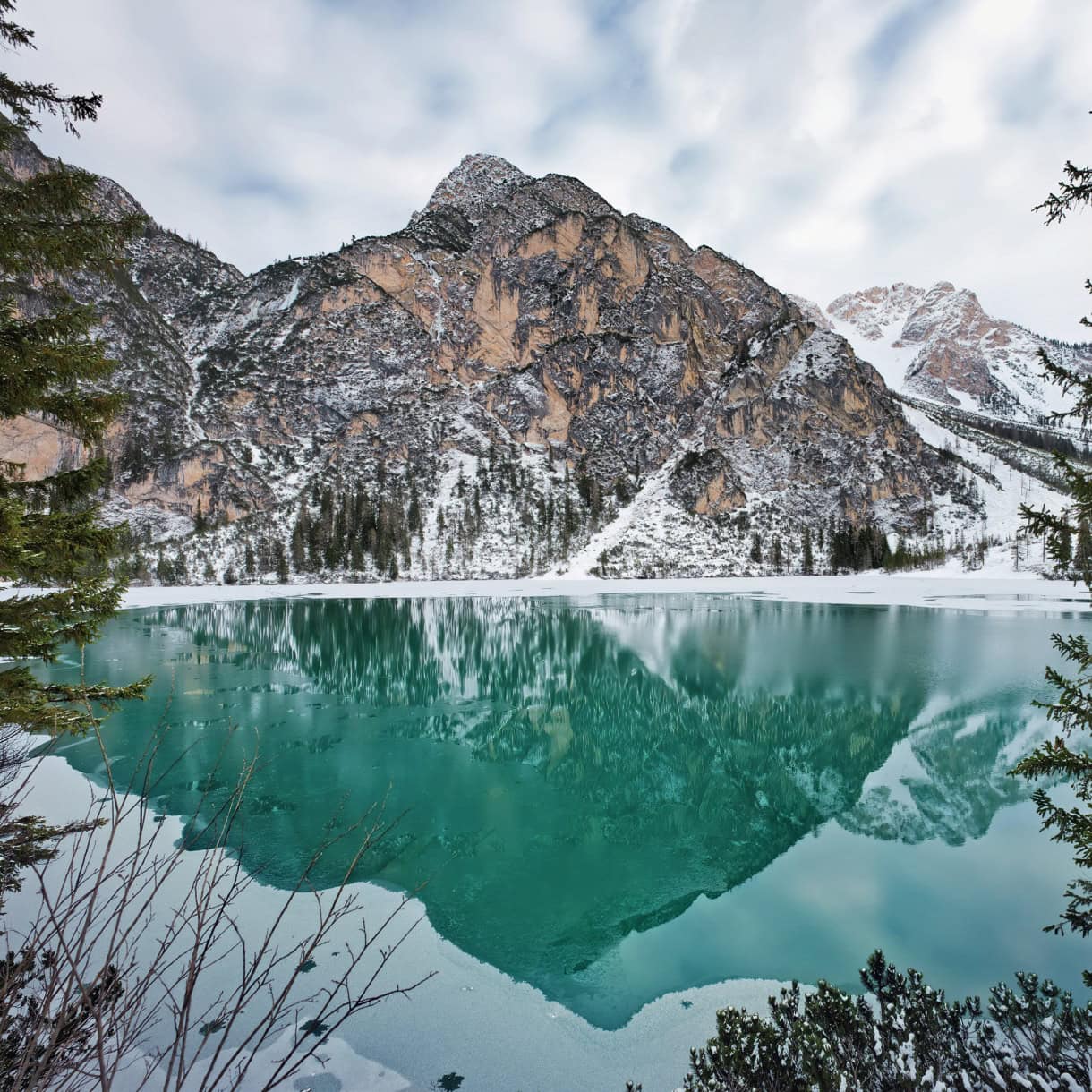
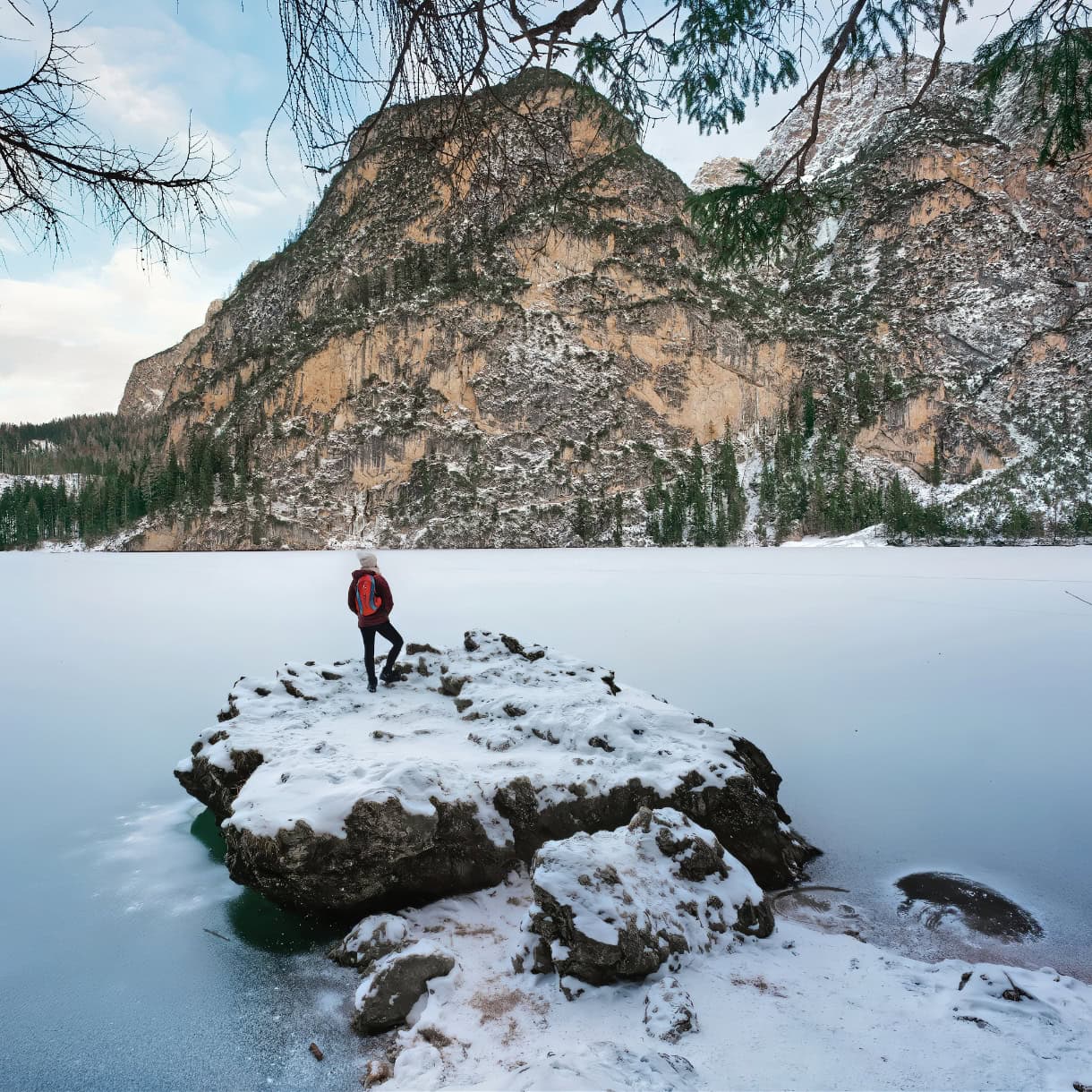
❄️ Good to Know: The lake sees far fewer visitors in winter than summer. Take advantage of this seasonal secret. Visit early morning or weekdays for a more intimate experience. By the way, You can also visit several other dazzling Dolomites lakes in winter such as Lago di Dobbiaco, Lago di Misurina, Lago di Carezza and Lago di Landro.
⇒ See our complete Lago di Braies guide for more information on how to visit.
3. Deep Valley Tranquility: Val Fiscalina
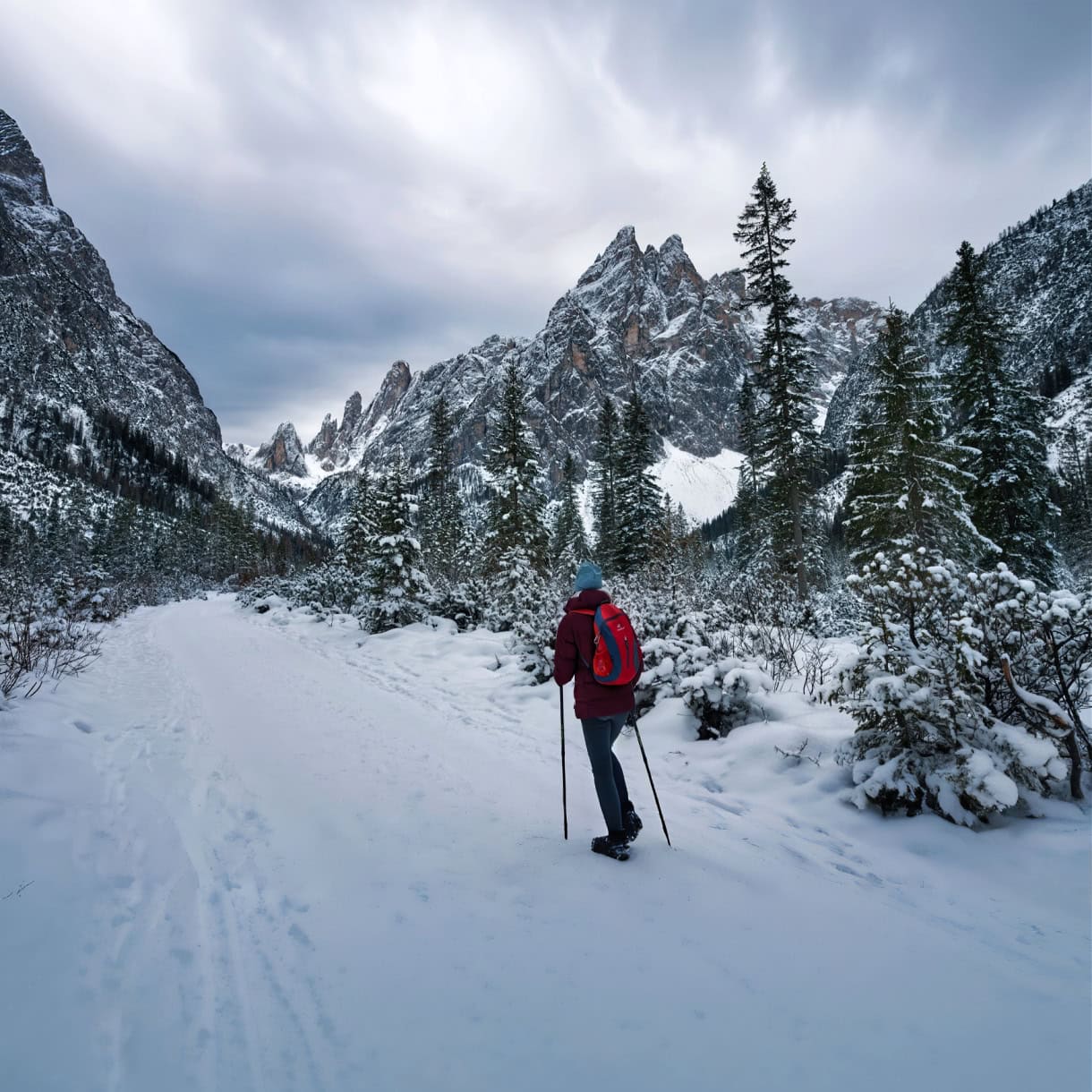
Val Fiscalina (Fischleintal) is easily one of the most beauitful serene valleys we’ve visited in the Dolomites. Tucked within the Drei Zinnen Nature Park near Sexten (Sesto), this 2.8-mile (4.5 km) valley stretches beneath dramatic peaks like Zwölferkofel (Croda dei Toni) and Einserkofel (Cima Una), framed by snow-covered larch forests and slices of alpine pastures.
The main trail through the valley is well-groomed and relatively flat, suitable for all fitness levels. It’s also part of a popular cross-country skiing route, so winter hikers and snowshoers should stay on designated paths. For deeper immersion, you can rent snowshoes in Sexten and venture into permitted areas of untouched snowfields.
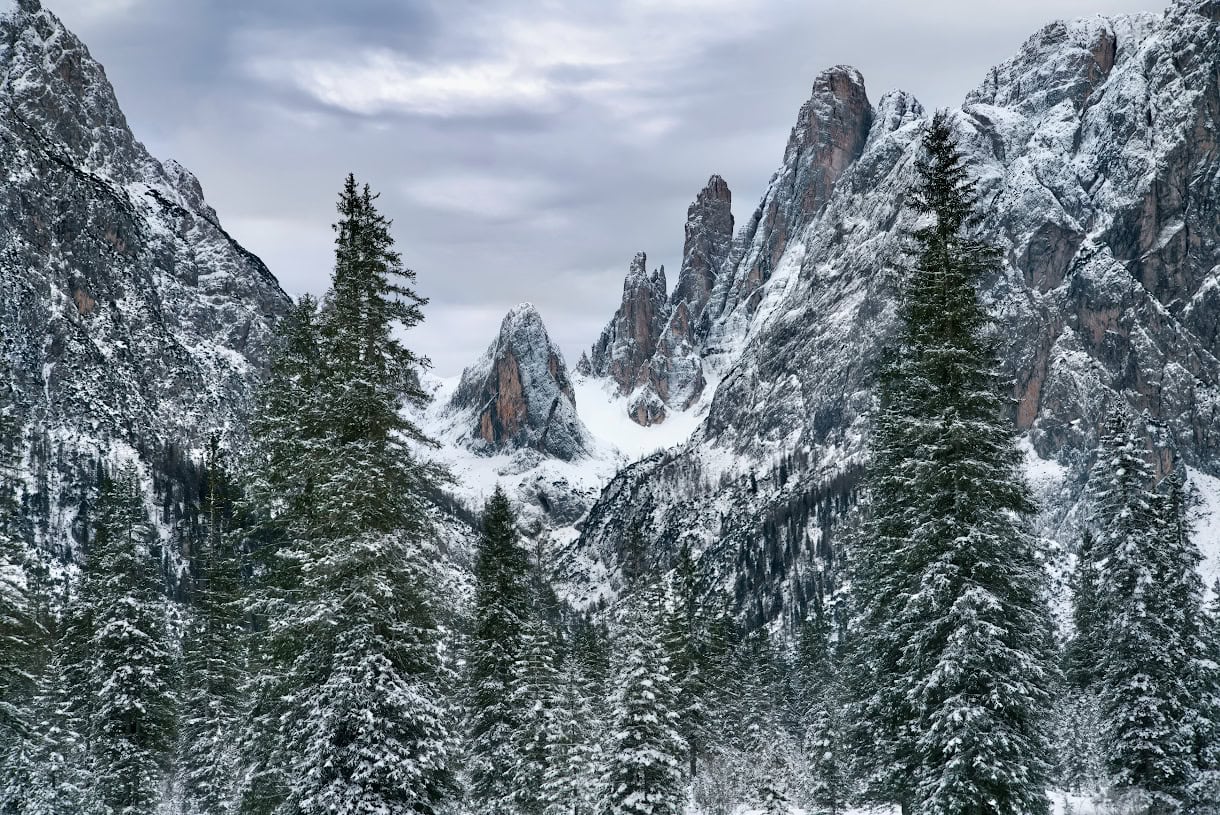
The highlight of the valley is reaching Talschlusshütte (Rifugio Fondovalle), a cozy mountain hut open in winter that serves traditional South Tyrolean fare. Warm yourself by the stove with barley soup or speck dumplings while watching snowflakes drift outside the window.
❄️ Good to Know: If you are visiting here before Christmas, consider packing a lunch as the Talschlusshütte closes around October 20 and does not reopen until the last week of December.
⇒ See our complete Val Fiscalina guide for more information on how to visit.
4. Snow-Meadow Splendor: Prato Piazza
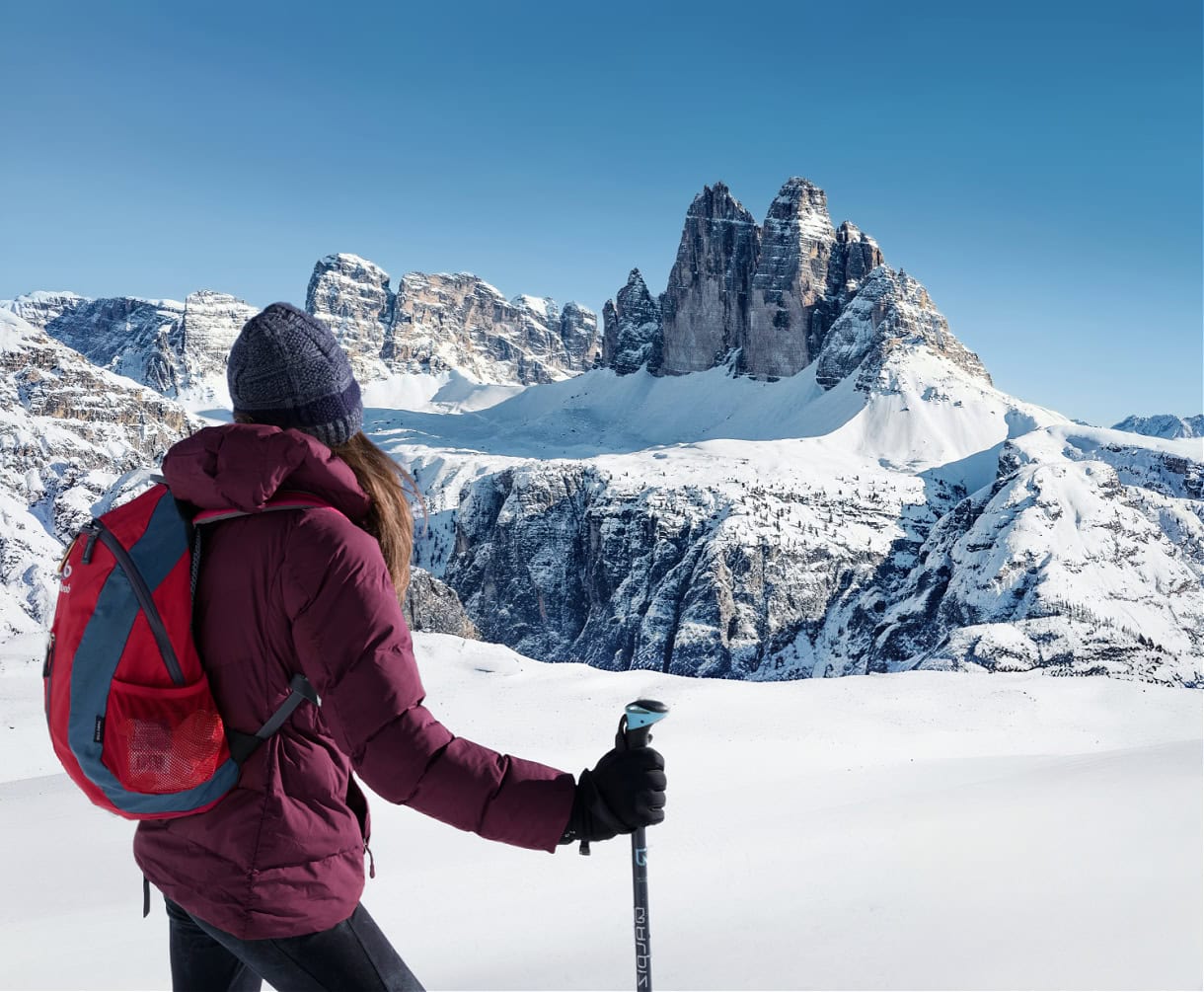
Prato Piazza (Plätzwiese), located within the Fanes-Sennes-Braies Nature Park, is a high-alpine plateau that becomes a beaming white canvas at 6,500+ feet (2,000+ m). The plateau itself lies between Dürrenstein (Mount Picco di Vallandro) to the northeast and the striking rock formations of Croda Rossa d’Ampezzo (Hohe Gaisl) to the southwest. A winter hike here stuns with wide-open panoramas of Monte Cristallo, Tofane, and Cadini di Misurina.
The plateau is easily accessible by car or winter shuttle from the Ponticello parking lot. Once there, choose from various marked winter trails. For example, you can take a route up to Monte Specie and be rewarded rewards you with sweeping views of The Three Peaks and the Sexten Dolomites.
Prato Piazza is especially known for its quietude. No lifts, no crowds… just the sound of snow underfoot and occasional alpine birds. The terrain is ideal for beginners thanks to gentle undulations, and snowshoe rentals are available in nearby Niederdorf (Villabassa) or Toblach (Dobbiaco).

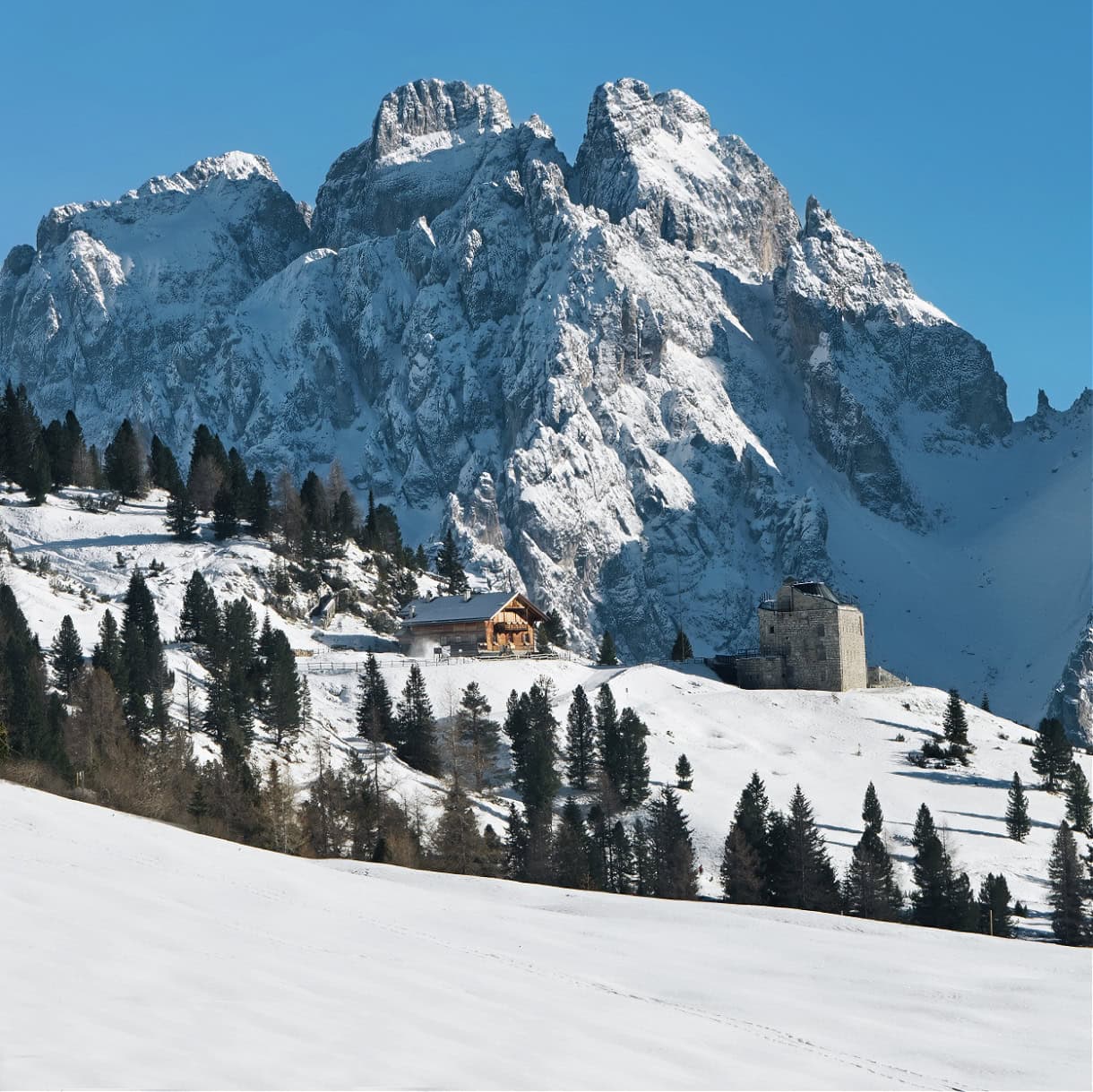

After visiting the plateau, we recommend stopping at Rifugio Prato Piazza (Berggasthof Plätzwiese) for warm drinks or a hearty meal. With its big-sky feel and soft snow-scapes, Prato Piazza offers one of the most peaceful ways to absorb the essence of the Dolomites in winter.
⇒ See our complete Prato Piazza guide for more information on how to visit.
5. Visit the “Terrace of the Dolomites”
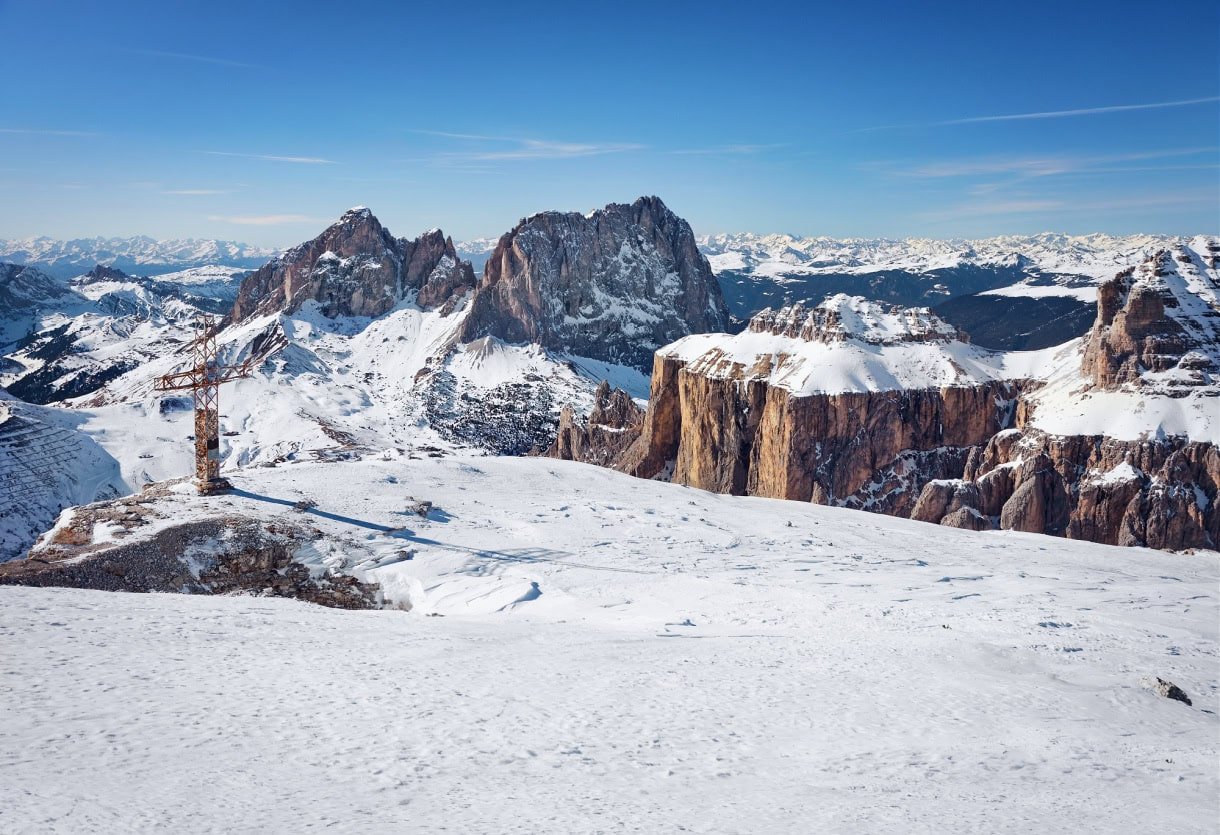
Looking for a winter high that doesn’t involve skis or snowshoes? Step aboard the Sass Pordoi cable car and soar to one of the most awe-inspiring viewpoints in the Dolomites: the Terrazza delle Dolomiti, or “Terrace of the Dolomites.” In just four minutes, you’ll ascend over 9,600 ft (2,950 m) to a panoramic plateau that feels like the roof of the Alps.
From this vantage point, the world drops away. When we stood here our jaws damn near froze open. You get to soak in some of the mightiest stone giants of the range including Sassolungo, Sasso Piatto, Marmolada, Tofane, and even the Geisler in the distance. It’s a full 360° of jagged glory.
You don’t need to summit anything to feel like a mountaineer here. After consuming the views (and maybe a hundred photos later), consume a meal at Rifugio Maria, perched right on the edge of the cliff. Their mountain-born Ladin cuisine and homemade Schlutzkrapfen taste even better with clouds drifting below your feet.
❄️ Good to Know: The Sass Pordoi cable car departs from Passo Pordoi, easily reachable by car. Check the forecast and webcam before going — visibility is everything up here. In the winter season, the lift operates from late December to early April.
🧣 Tip: Even if it’s sunny at valley level, temperatures can drop dramatically at the top. Bring gloves, sunglasses, and an extra layer so you can linger longer without losing feeling in your fingers.
⇒ You might also like: 8 Must-Try Desserts in South Tyrol & the Dolomites
6. Wintry Rush: Snowmobiling in the Dolomites
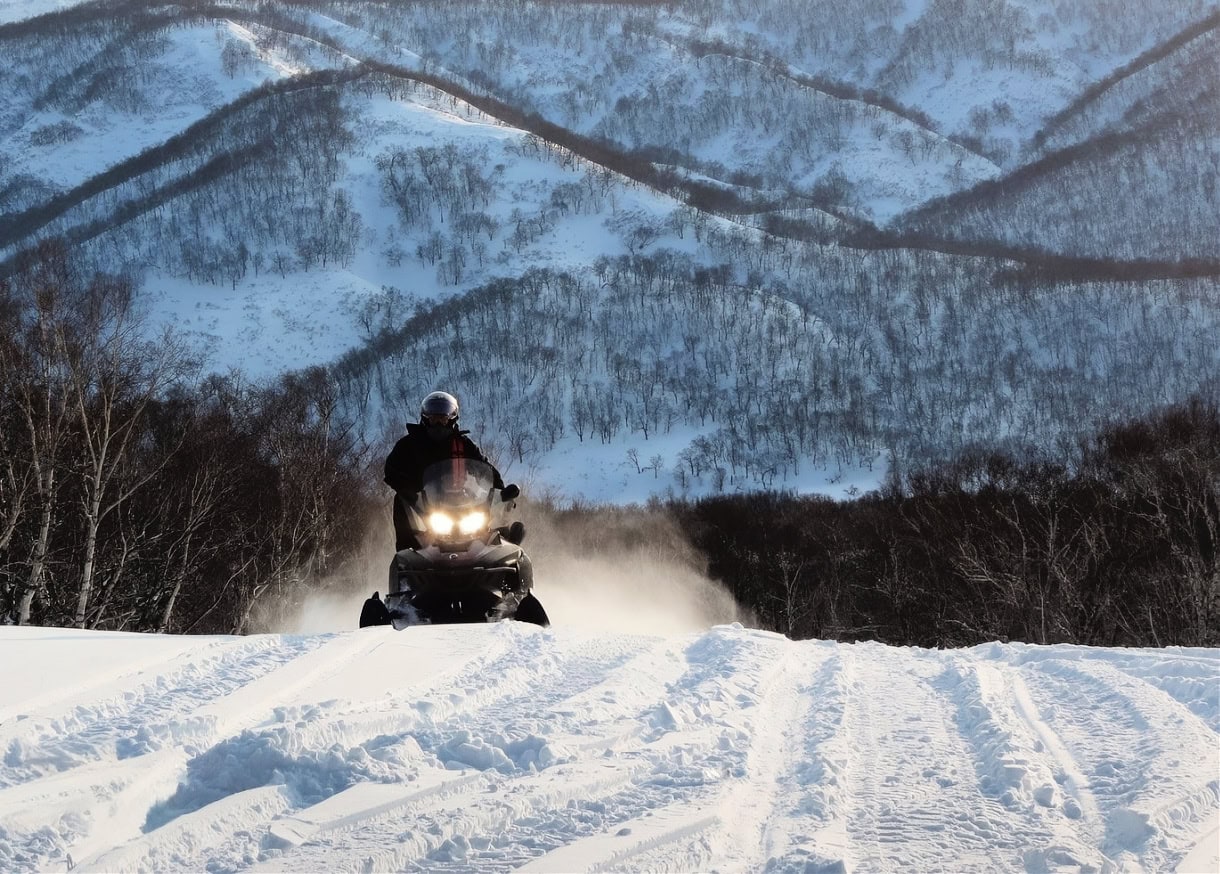
If winter hiking or snowshoeing feel a little too tame for your taste, consider racing through the Dolomites on a snowmobile. Few experiences deliver such a jolt of alpine exhilaration. You’ll roar across high-mountain plateaus as the engine’s growl echoes off ice-capped peaks — part adrenaline, part awe — a fast-moving glimpse into landscapes most travelers only see from afar.
Guided tours typically last around 90 minutes to half a day and include safety instructions, helmets, and time for photos along the route. Typically, you’ll ride in pairs, switching between driver and passenger as you weave through frosted forests and open snowfields beneath the Dolomites.
❄️ Good to Know: Several outfits in the Dolomites offer snowmobile tours. For example, you can book the Laggio di Cadore Snowmobile Tour, which departs near Malga Casera Razzo and ventures through pristine mountain terrain with an experienced guide. It’s a scenic, high-energy alternative for travelers seeking winter thrills without skis. While we haven’t taken the ride ourselves yet, it looks like a blast. See details and availability ↗
⇒ You might also like: Dolomites Slow Travel Guide: Experience More Awe, Less Chaos
7. Take Flight: Hot-Air Ballooning in the Dolomites
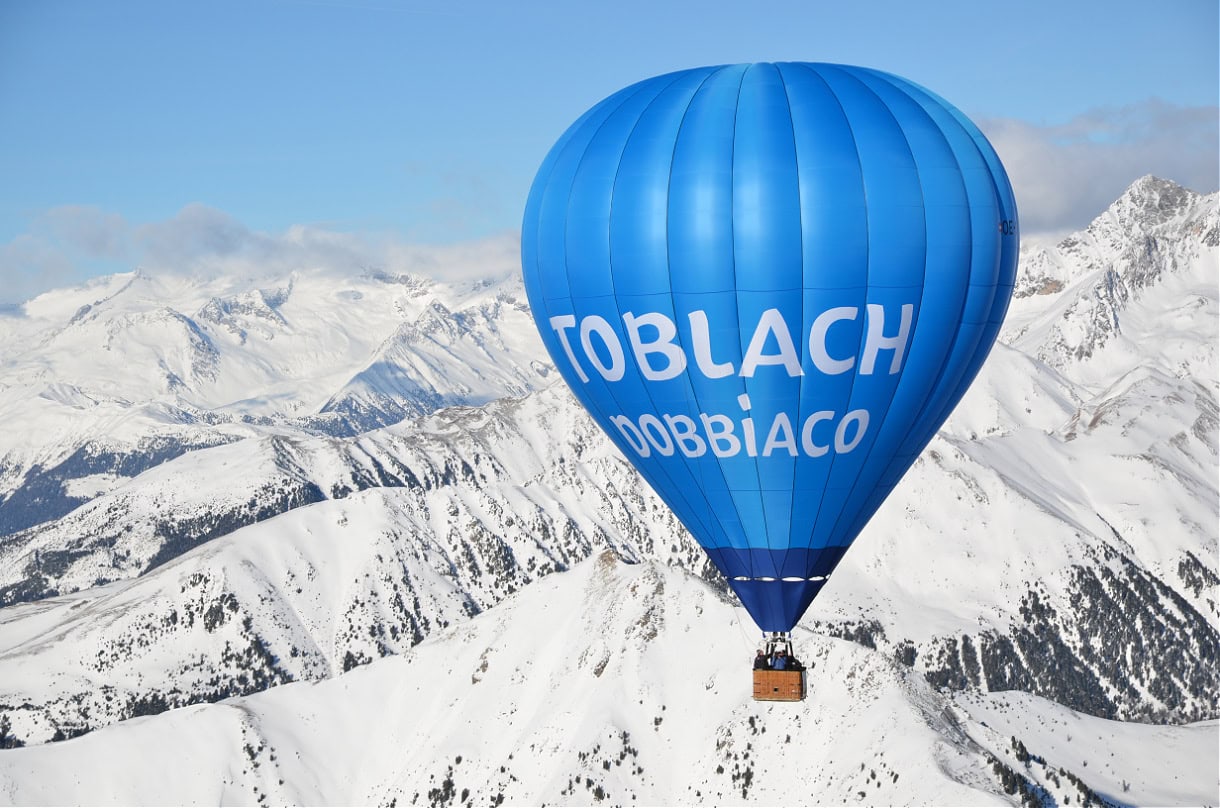
For a truly unforgettable perspective of the Dolomites in winter, take to the sky in a hot-air balloon. While we haven’t had the chance to hop into a basket ourselves yet, the thought of soaring above snow-draped peaks, gliding with the wind on a crystal clear morning, has to be one of the most breathtaking ways to witness the slivered landscape.
A handful of local operators offer hot-air balloon flights in the Dolomites, typically launching at first light, when conditions are calmest and the world below is just beginning to wake. Common flight paths include panoramic views over Tre Cime di Lavaredo (Drei Zinnen), Val di Landro, and Kronplatz (Plan de Corones). Imagine drifting quietly above the Three Peaks, camera in hand, as the sun cracks over the horizon and paints the landscape in gold.
Most balloon rides last between 60–90 minutes, ending with a gentle landing, a celebratory toast, and a moment to marvel at where you’ve just been. Prices range from €290 to €1600 per person, depending on the type of flight and whether it’s shared or private.
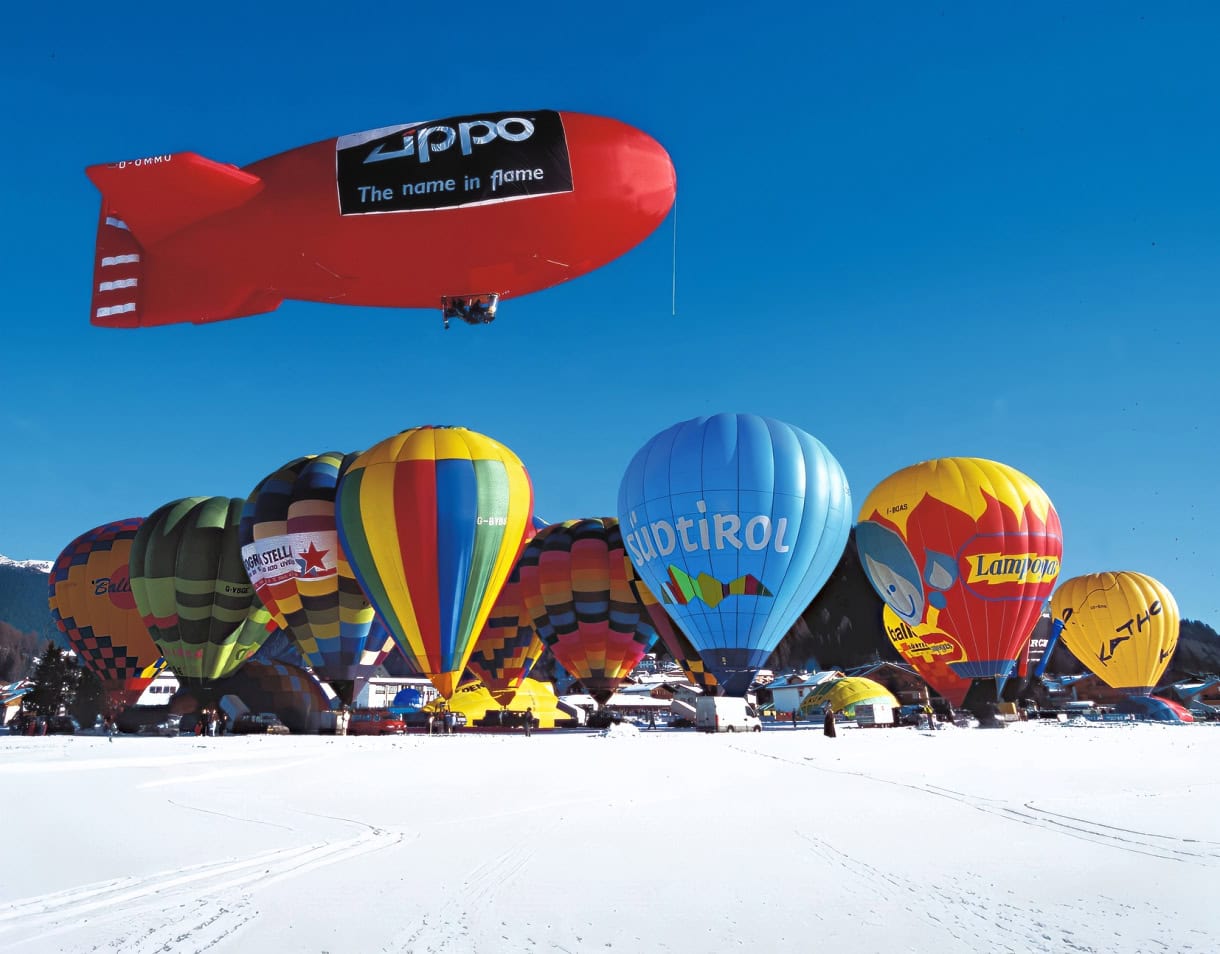
❄️ Good to Know: Each January, Toblach hosts the Dolomiti Balloon Festival — an event where colorful hot-air balloons lift gently into frosty morning air, offering stunning views of snow-blanketed mountains. The festival typically lasts a week and includes both competitive flights and scenic public rides. Availability is limited, so advance booking is essential.
➡️ Want help booking a winter balloon ride in the Dolomites? We can help you include it in a custom itinerary. Contact us here to get started.
8. Slopeside Thrills: Tobogganing for All Ages
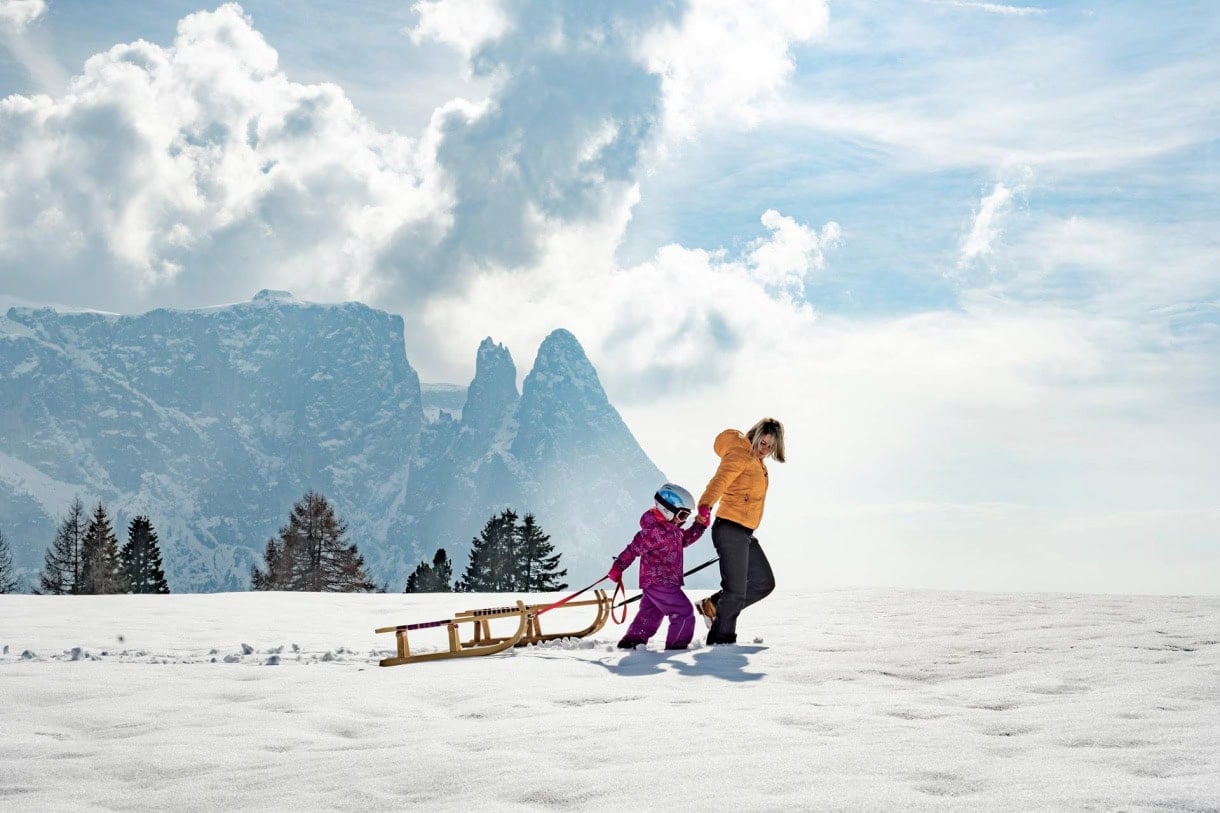
The Dolomites are home to some of Europe’s most scenic and exhilarating toboggan runs, with over 60 designated sledding routes across South Tyrol alone. Options range from gentle beginner slopes to thrilling high-speed descents suitable for families, couples, and anyone seeking light-hearted alpine fun. This winter “sport” requires no technical skills and promises huge grins all around.
Many of the runs are accessible by gondolas, chairlifts, or winter hiking paths. Sleds can be rented on-site, and helmets are strongly encouraged. Schnapp flasks are optional.😁
Among the most popular runs is the 3.5-mile (6 km) trail from Resciesa (Raschötz), starting at the top of the funicular and winding through forested trails with stunning views including the peaks of Seceda. Another classic is the trail from the Monte Baranci ski area above San Candido (Innichen), where you can even sled under floodlights for a cool evening ride. Near Alpe di Siusi, you can hit several runs including from Bullaccia (Puflatsch) where the view of Sassolungo and Schlern never leave your sight.
❄️ Good to Know: If you’re looking for a less crowded tobbogan experience, visit Val di Funes. It boasts several scenic runs, which descend through peaceful woods with dramatic views of the iconic Geisler peaks. And if you’re craving a serene escape, head to Monte Cavallo in Sterzing (Vipiteno). This mountain offers something genuinely unique: Italy’s longest illuminated toboggan run. The 6+ mile (10 km) route begins at the top of the Monte Cavallo cable car and carves all the way down into the valley.
9. Howling Fun: Dog Sledding In the Dolomites
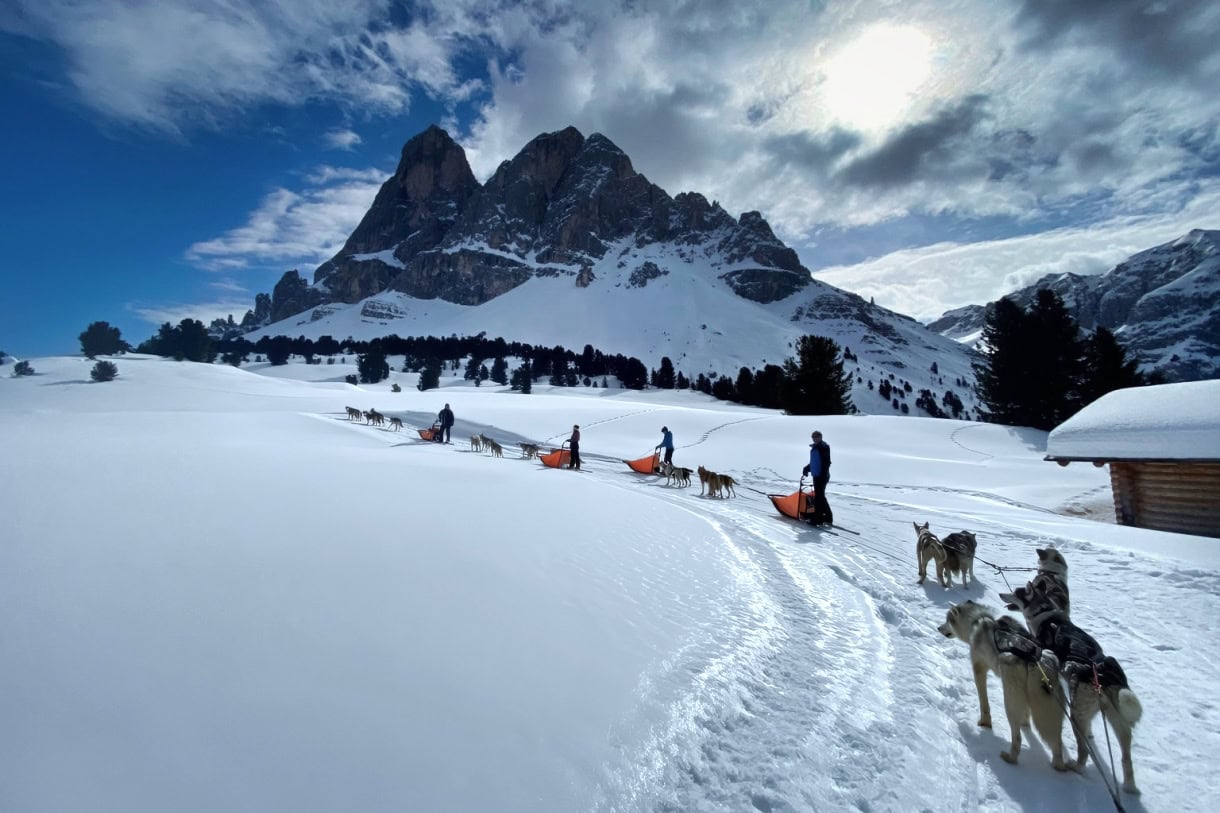
There’s something timeless about traveling by sled pulled by huskies. It’s just you, the snow-filled scenery, and the rhythmic patter of paws on packed snow.
Sleddog experiences in the Dolomites run from mid-December through March, depending on snow conditions. You can choose between guided rides — where you sit in the sled as a musher leads — or learn the basics of driving your own team under expert supervision. Either way, you’ll glide through pristine forests and open meadows with stunning peak views rising above.
One of the most reputable providers is Husky Adventures (500+ stellar reviews) in Würzjoch (Passo delle Erbe), offering beginner-friendly experiences including kennel visits, training, and rides suitable for adults and children in the Puez‑Odle Nature Park beneath the mighty Peitlerkofel (Sass de Putia). Bookings should be made well in advance, especially around holidays.
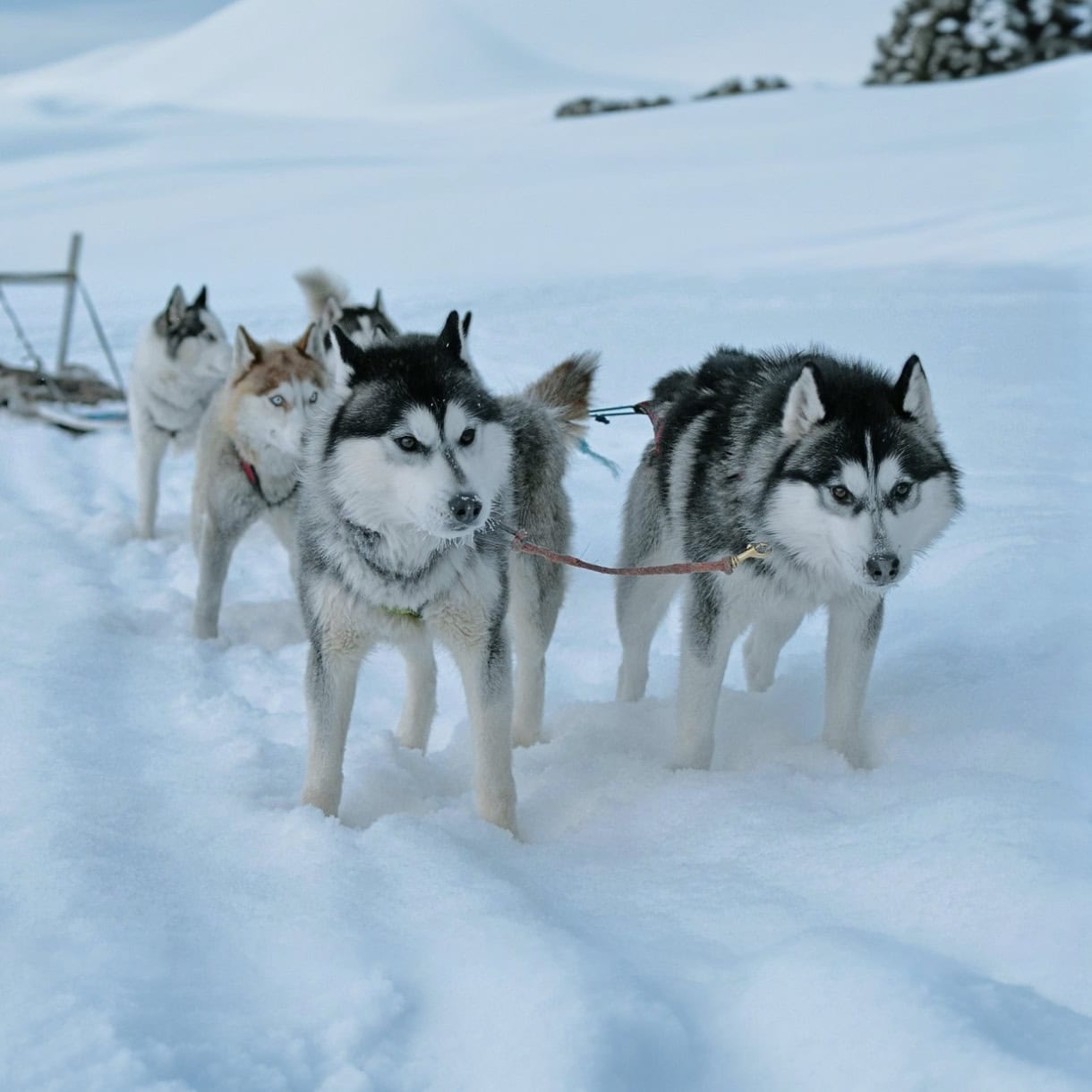
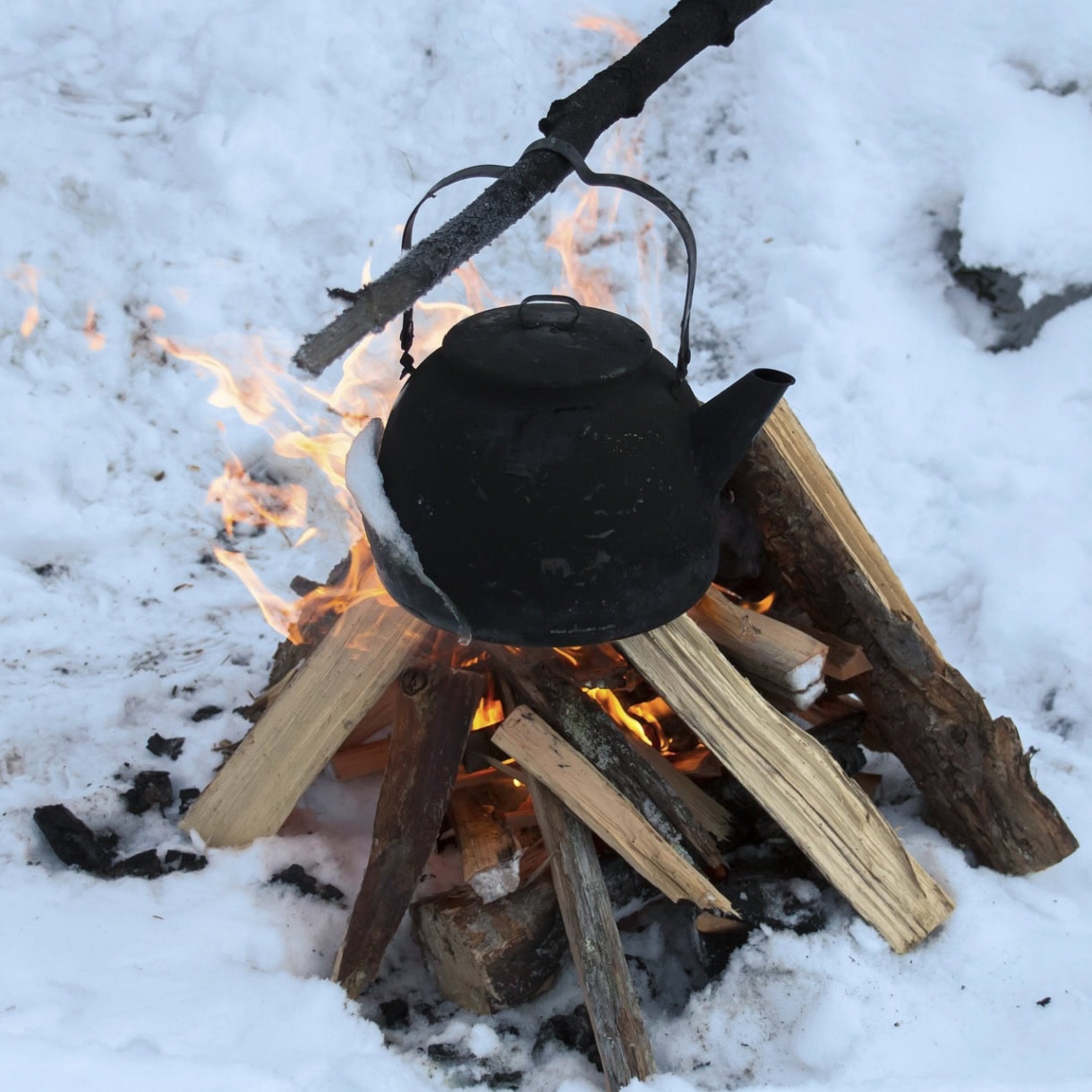
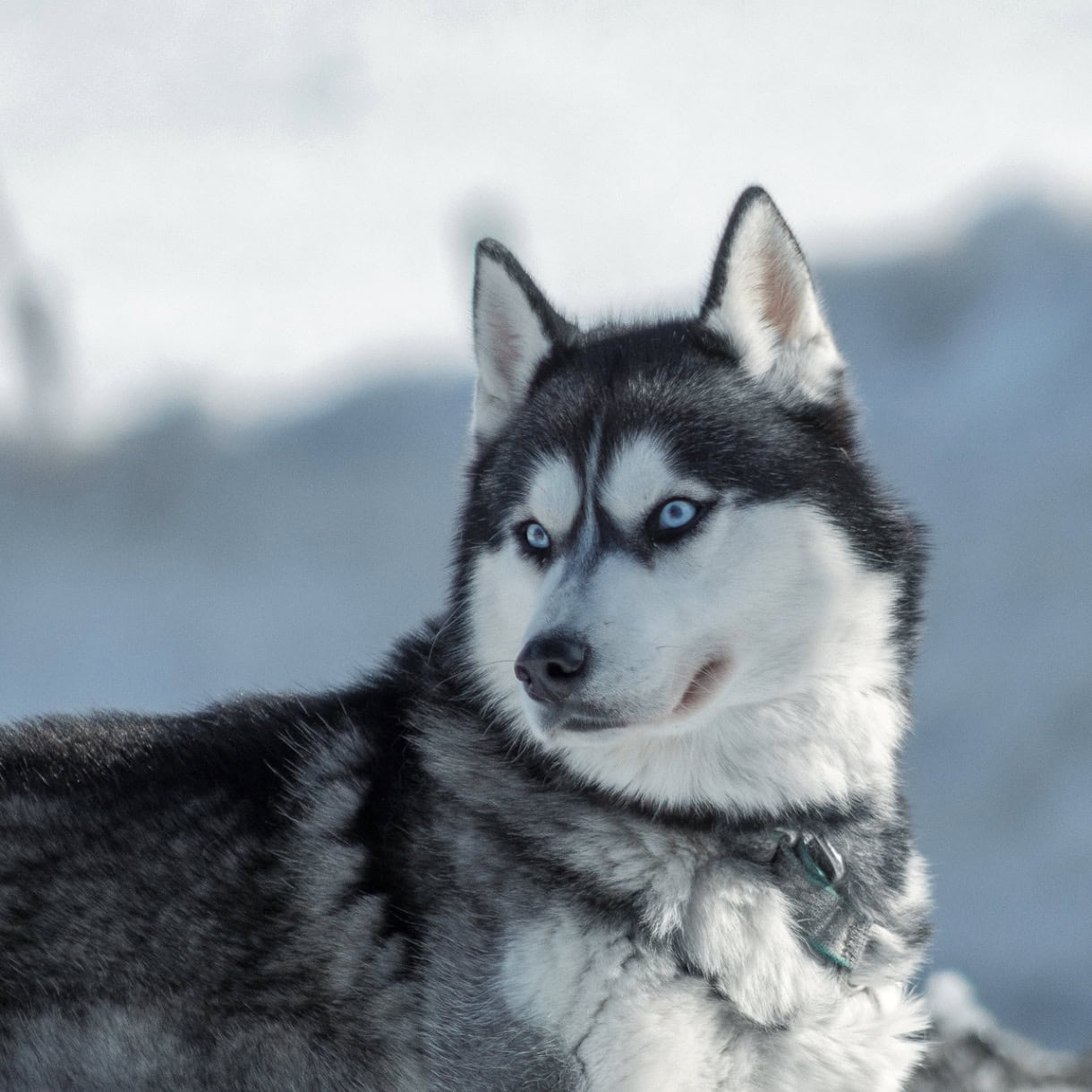
❄️ Good to Know: As animal lovers and adventure seekers, dog sledding creates a spirited bond with the landscape unlike anything else we’ve experienced. You connect with the mountains in the oldest way possible. For thousands of years, people journeyed like this: wrapped in snow, guided by animals, in sacred communion with the wild.
⇒ You might also like: The Best Hikes in the Dolomites
10. Wellness Retreats Amid The Snowy Peaks
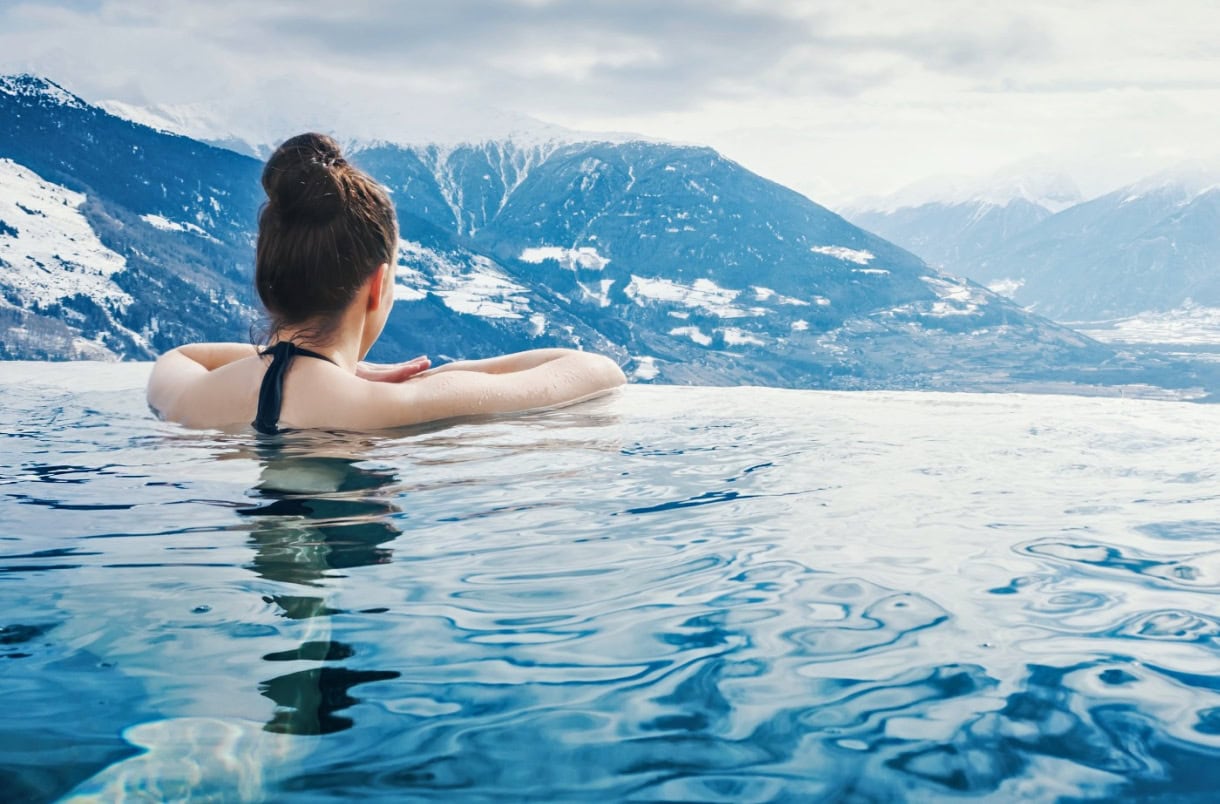
For travelers seeking equal parts serenity and alpine splendor, the Dolomites in winter offer world-class wellness retreats. We can tell you first hand, these aren’t your average hotel spas. They’re immersive sanctuaries where mind, body, soul and mountain come together in novel ways.
Picture this: you’ve just finished snowshoeing a high plateau or wandering through a Christmas market aglow with lantern light. You step out of a Finnish sauna and into a steaming indoor-outdoor thermal pool. Steam curls into the crisp mountain air, pine trees bow under snow, and jagged peaks shimmer in the distance.
Beyond the amenities, many of the region’s spa hotels offer expansive treatments — from forest-infused aromatherapy sessions to traditional hay baths that melt away slope-induced aches. These alpine resorts don’t just pamper, they ground you in the landscape, with wellness rituals rooted in the herbs, minerals, and healing traditions of the mountains themselves.
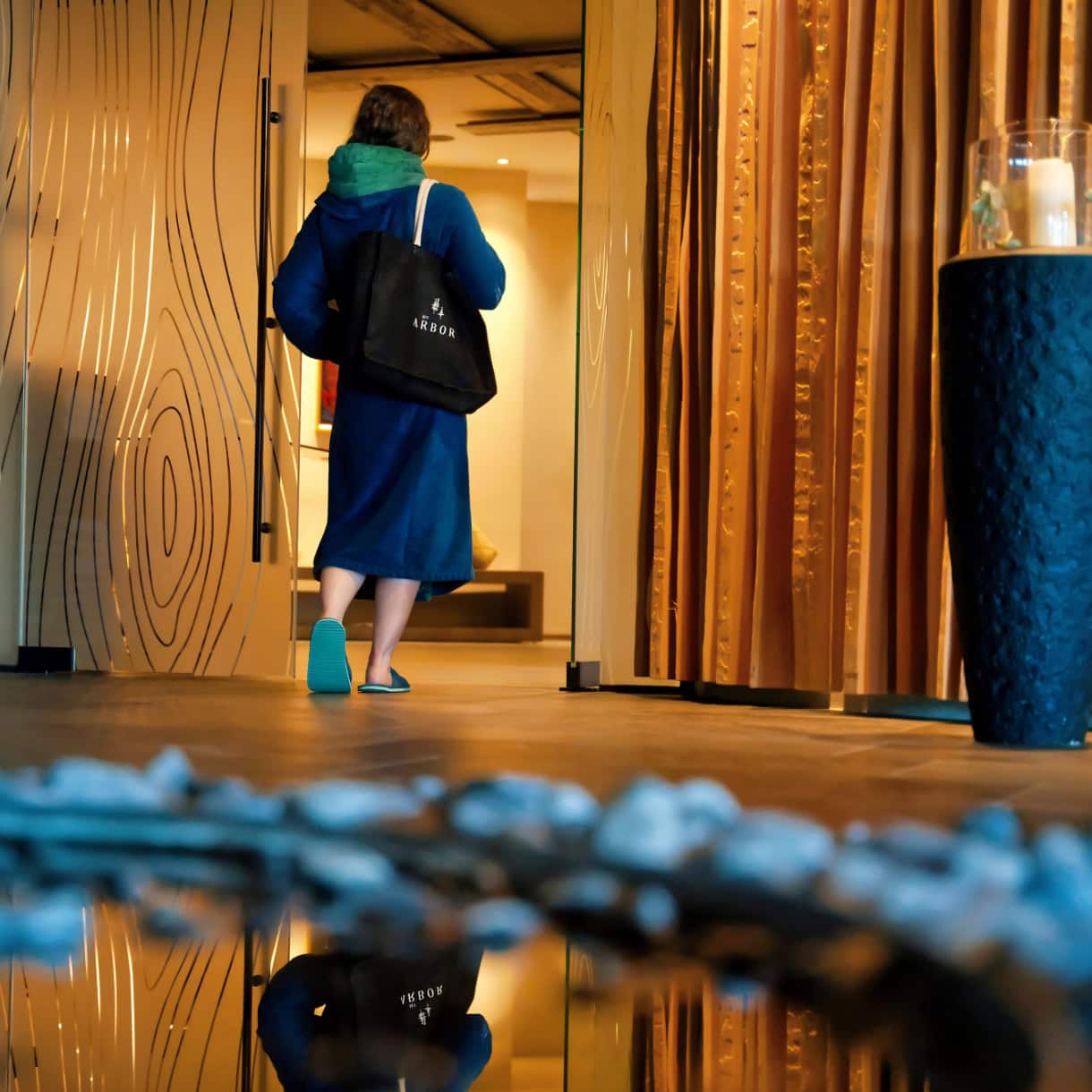
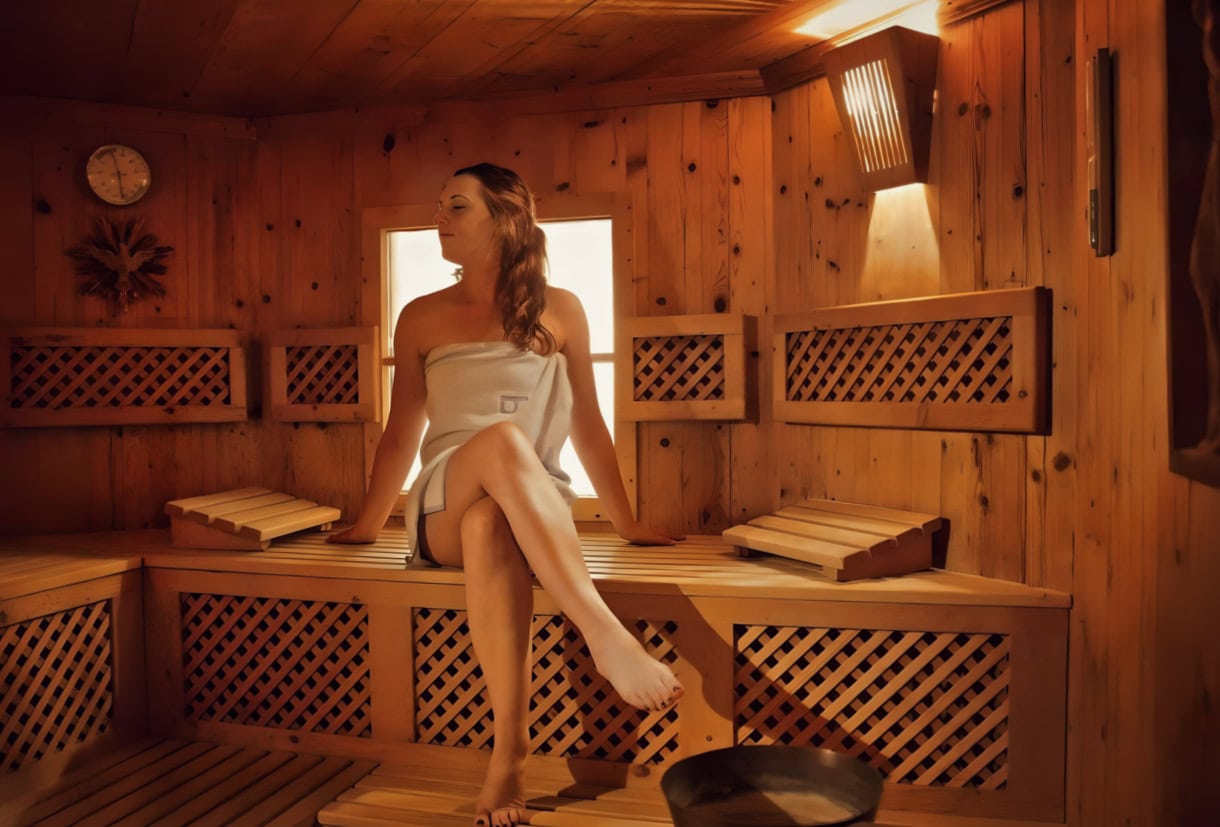
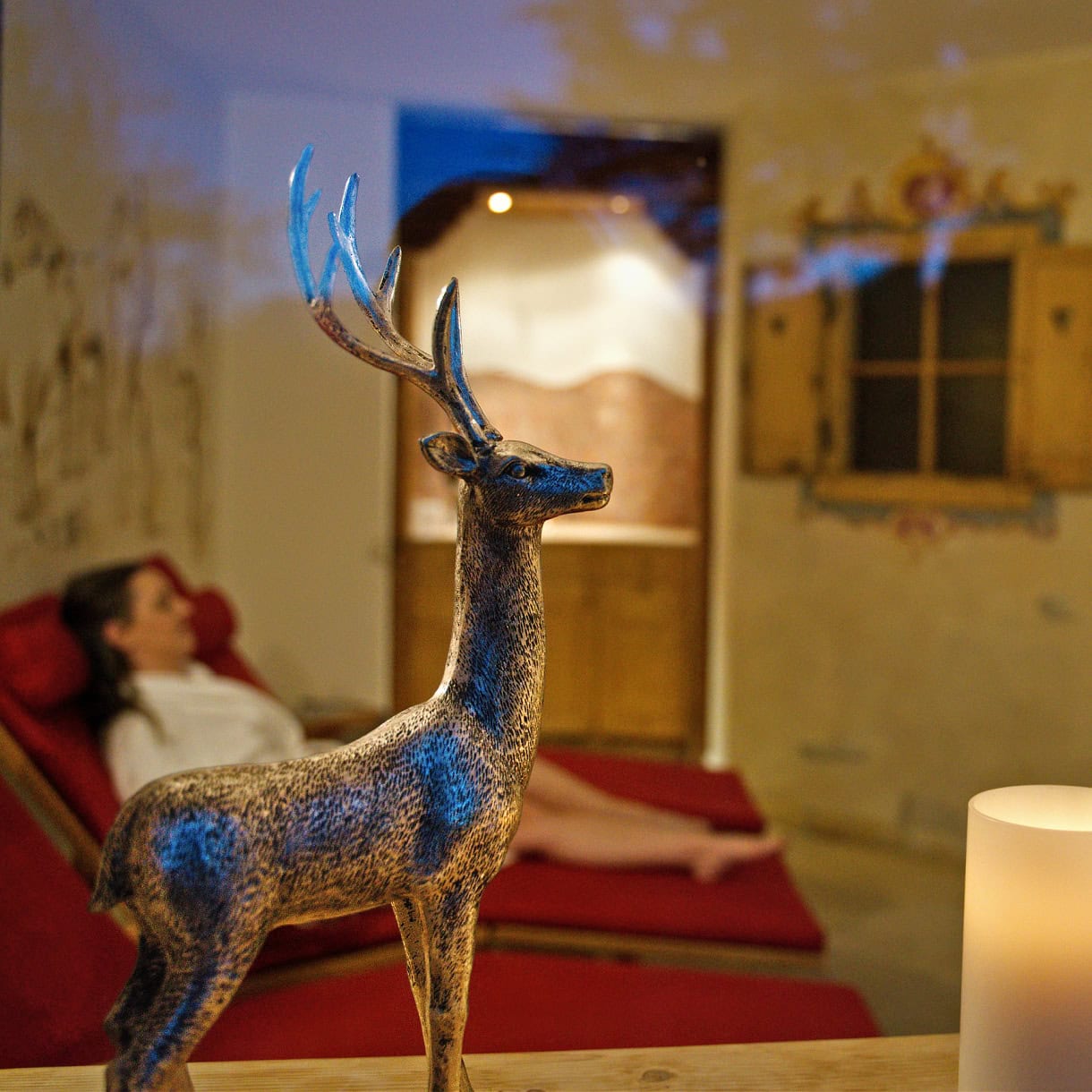
❄️ Good to Know: Reserve spa time early during peak winter months to ensure you can secure an appointment. They fill up fast. Also, be aware that in many wellness areas and pool facilities throughout the Dolomites, it’s not uncommon to encounter guests enjoying the amenities sans swimsuit. This practice is rooted in German-speaking spa culture and reflects a long-standing tradition of wellness and body acceptance.
That said, it can catch you off guard if you’re not expecting it.
Bottom Line: You can choose the “when in Rome” route or wear a robe/towel/bathing suit. It is your vacation so do what makes you the most comfortable.
➡️Check out our accommodation reviews to find a wellness resort that may appeal to you.
11. Encounter the Ancient: Meet Ötzi the Iceman

Is there anything more winter than coming face to face with a guy who’s been frozen in ice for over 5,000 years? Welcome to the South Tyrol Museum of Archaeology in Bolzano — home of Ötzi the Iceman, the world’s most famous corpse with better hiking gear than most tourists.
Discovered high in the Ötztal Alps, Ötzi was murdered (yes, really) around 3300 BC and then perfectly preserved by ice until two hikers stumbled across him in 1991. Today, he lies in a specially chilled chamber, while the rest of the museum takes you on a fascinating journey through his tools, tattoos, last meal, and the Copper Age world he walked through before someone stuck an arrow in his back.
It’s clinical, eerie, and completely riveting. We found it the kind of place where history feels personal. The exhibits are thorough without being dry, with just enough CSI drama to keep even non-history lovers glued. Plus, it’s indoors and heated, a welcome shift after days of crunching through snowdrifts.

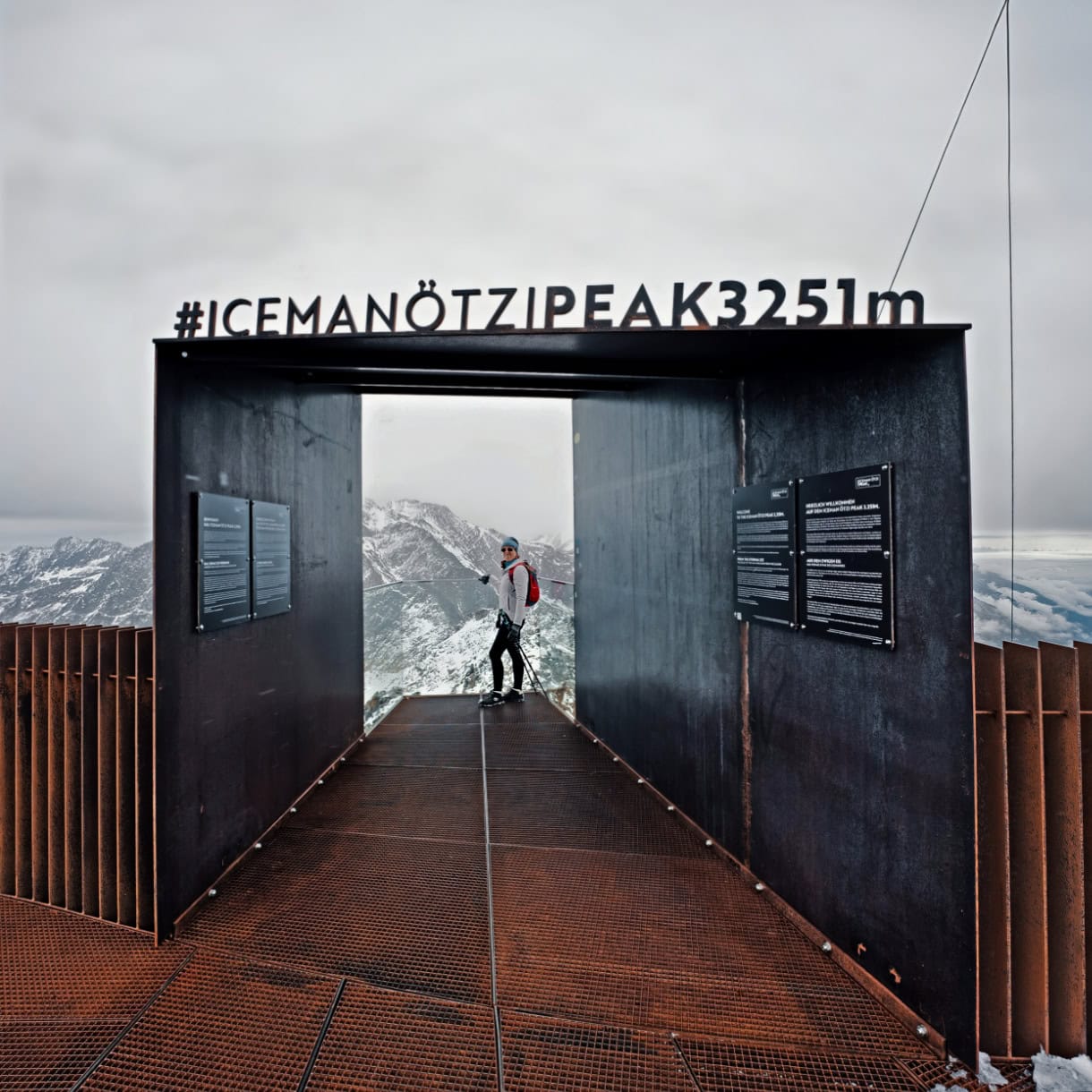

❄️ Good to Know: In addition to touring the museum, consider making time to visit Iceman Ötzi Peak — arguably the most historic summit in the Alps. From this 10,666 ft (3,251 m) high vantage point, you can peer out over the rugged expanse where Ötzi was discovered, frozen in time for more than 5,000 years.
The cable car to the summit is located in Kurzras (Maso Corto), which is located just over an hour north of Bolzano in South Tyrol’s Val Venosta (Vinschgau) region.
⇒ You might also like: Discover the Sunken Bell Tower of Curon
12. Wander the Christmas Markets

If you’re visiting the Dolomites during the holiday season, you’re in for something truly special. Many villages and towns come alive with Christmas markets, handcrafted nativity scenes, and ancient alpine traditions such as Krampuslauf.
Bolzano Christmas Market
Bolzano hosts perhaps the most iconic Christmas market in the region. Here, over 90 stalls spread across Piazza Walther and neighboring streets, offering everything from Glühwein and roasted chestnuts to locally-crafted wood carvings and Christmas ornaments.
What distinguishes the Bolzano Christmas Market is the backdrop — the Dolomites tower above the old town rooftops, giving this urban market an unmistakably alpine character. If possible, we recommend visiting on weekday evenings to avoid larger crowds that arrive during the weekends.
Brixen Christmas Market
The Brixen Christmas Market unfolds beneath the twin bell towers of the town’s magnificent cathedral. The historic setting makes it our favorite market in South Tyrol. Around 30-40 wooden stalls fill Piazza Duomo and surrounding alleys with regional treasures: hand-painted glass globes, hand-woven felt slippers, local speck and chestnuts.
What makes Brixen exceptional is the niche light-and-music show projected onto the Bishop’s Palace courtyard. It’s a relatively short show, but absolutely dazzling. The kind of sophisticated winter entertainment that elevates the market beyond typical festive fare.
Village Christmas Markets
For a more small-town vibe, consider visiting the village markets in Castelrotto, Ortisei, and San Candido. These smaller markets give you the sense of discovering a hidden Dolomites winter gem rather than attending a major event.
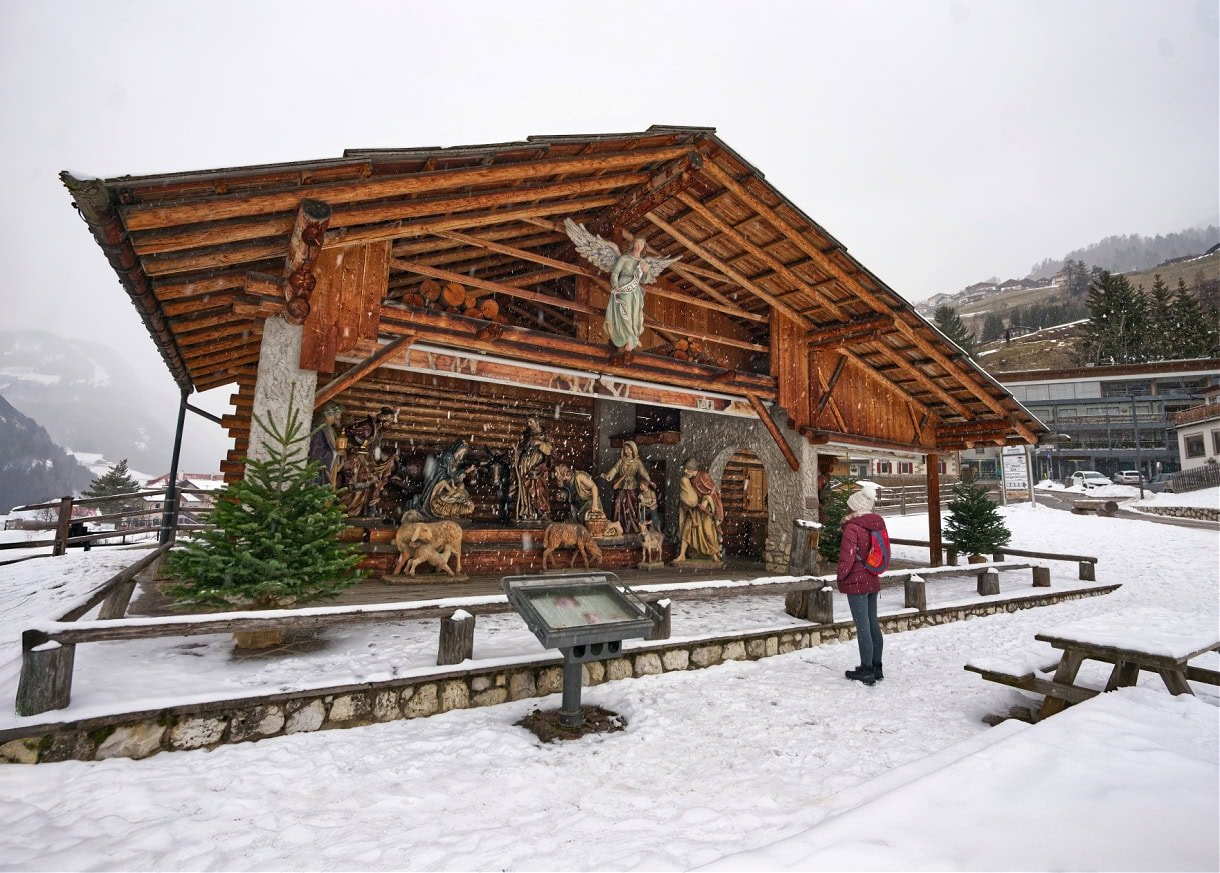
While in Val Gardena, we also recommend stopping by Santa Cristina to see the world’s largest hand-carved nativity scene. It’s free to view and especially poignant during the holidays. We admired it a snowy day in December and will never forget watching the flakes settle around the figures.
❄️ Good to Know: The Christmas markets typically run from late November through early January, while the Krampus events take place in early December.
⇒ Discover additional Christmas Markets in South Tyrol to add to your itinerary.
Planning Your Dolomites Winter Escape
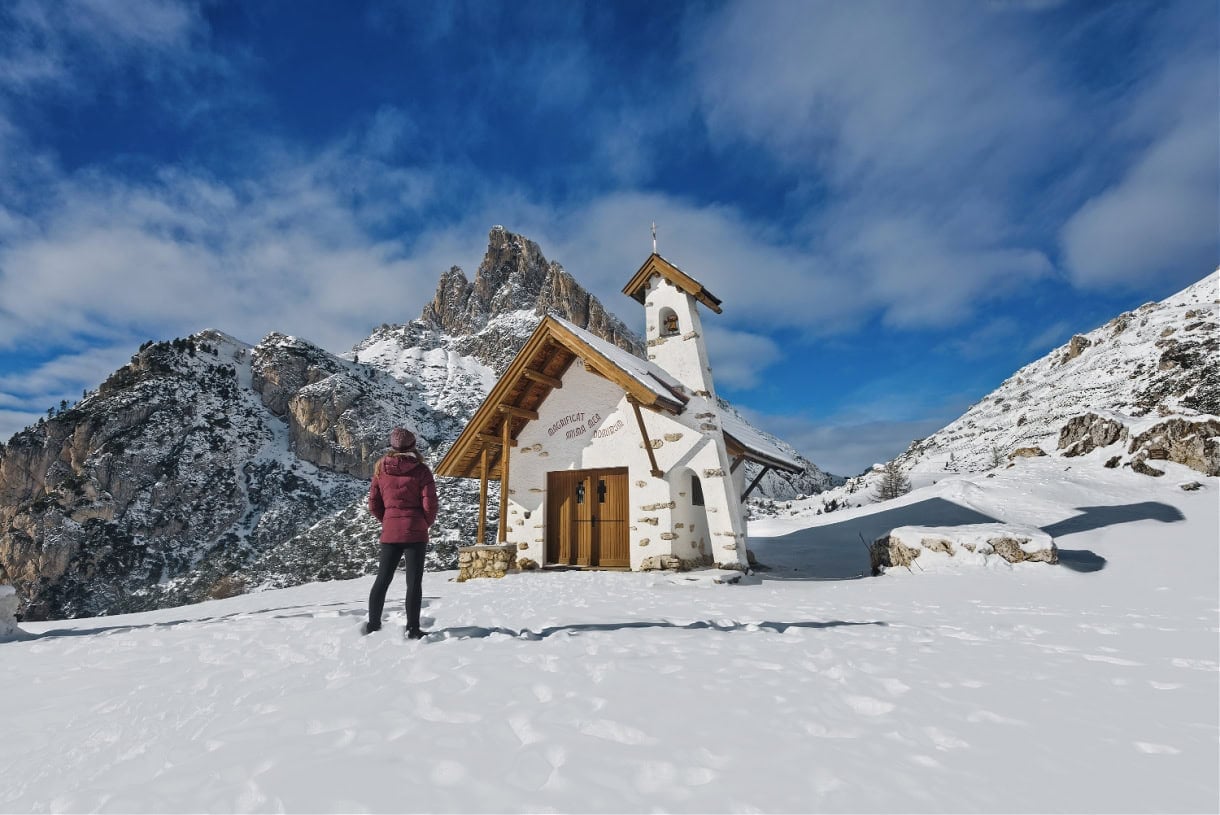
The Dolomites in winter reveal themselves slowly, rewarding travelers who trade rush for rhythm. Whether you’re drawn to Christmas market glow, the silence of high-alpine plateaus, or the thrill of dog sledding through ancient forests, each experience builds on the last.
This is winter travel at its finest. The cold air will sharpen your senses, the warm huts will welcome you home, and every snow-covered peak will tickle your inner mountaineer. The ski slopes may draw the crowds, but these 12 experiences prove that the real magic of the Dolomites in winter lies in the moments between.
As the world turns its eyes to Cortina d’Ampezzo and the Dolomites for the 2026 Winter Olympics, now’s the perfect time to discover the alpine beauty, cultural depth, and off-slope adventures that most will miss.
Best time to visit: December through February for full winter atmosphere, though March offers excellent conditions with longer days. January through March often offers the best combination of reliable snow conditions and clearer skies.
Getting there: Bolzano serves as a central hub with good transport connections. Renting a car and driving in Italy provides maximum flexibility for exploring remote valleys and villages.
What to pack: Layered clothing, quality snow boots, crampons and poles for icy trails, sunglasses (snow glare is intense), and a good thermos for those scenic viewpoint pauses.
Save & Pin for Later
Grab the free guide, then follow for weekly South Tyrol + Dolomites travel tips.
25 Things to Know Before Visiting the Dolomites
Join 18,000+ travelers. No spam, ever.