Italy is full of scenic surprises, but none will evoke a deeper, more lasting awe than the soaring peaks and storybook charm of South Tyrol. Dive in below to find out why this hidden gem belongs on your travel list.
Italy’s tourist trail is well-worn. Rome’s ancient ruins, Florence’s Renaissance grandeur, the Amalfi Coast’s cliffside glamour, Venice’s maze of canals. These places earned their fame. But they’ve also earned their crowds.
If you’re searching for Italy off the beaten path, the kind of place that surprises you at every turn, the real discoveries lie elsewhere. Matera’s ancient cave dwellings. Puglia’s whitewashed villages and wild coastline. The rolling hills of Le Marche, often called “Tuscany without the tourists.”
But there’s one Italy hidden gem that stands apart from all of them. Tucked in the far north, pressed against Austria, is a place that rewrites everything you thought you knew about Italy: South Tyrol.
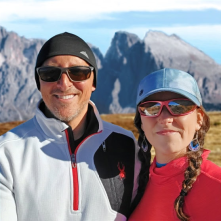
Franz Kafka called South Tyrol “the most beautiful land” he had ever seen. We’ve spent eleven years testing that claim, hiking its peaks, wandering its vineyards, sitting in its mountain huts as afternoon light turned the Dolomites to gold. And we keep coming back to the same conclusion: he was right.
South Tyrol — also known as Südtirol or Alto Adige — isn’t Italy as you know it. It’s something stranger and more wonderful: a sliver of the Alps where German, Italian, and ancient Ladin cultures have been colliding for centuries, where palm trees grow in the shadow of glaciers, and where a single meal might begin with Austrian barley soup and end with pasta that rivals Bologna’s best.
This is a place that doesn’t just surprise you. It rewrites your expectations entirely.
If you’re weighing whether this hidden gem of Italy deserves a spot on your travel list, here are eight reasons we think it belongs at the top. And once you’re convinced, our complete South Tyrol Travel Guide will help you plan every detail.
1. Spellbinding Mountain Scenery
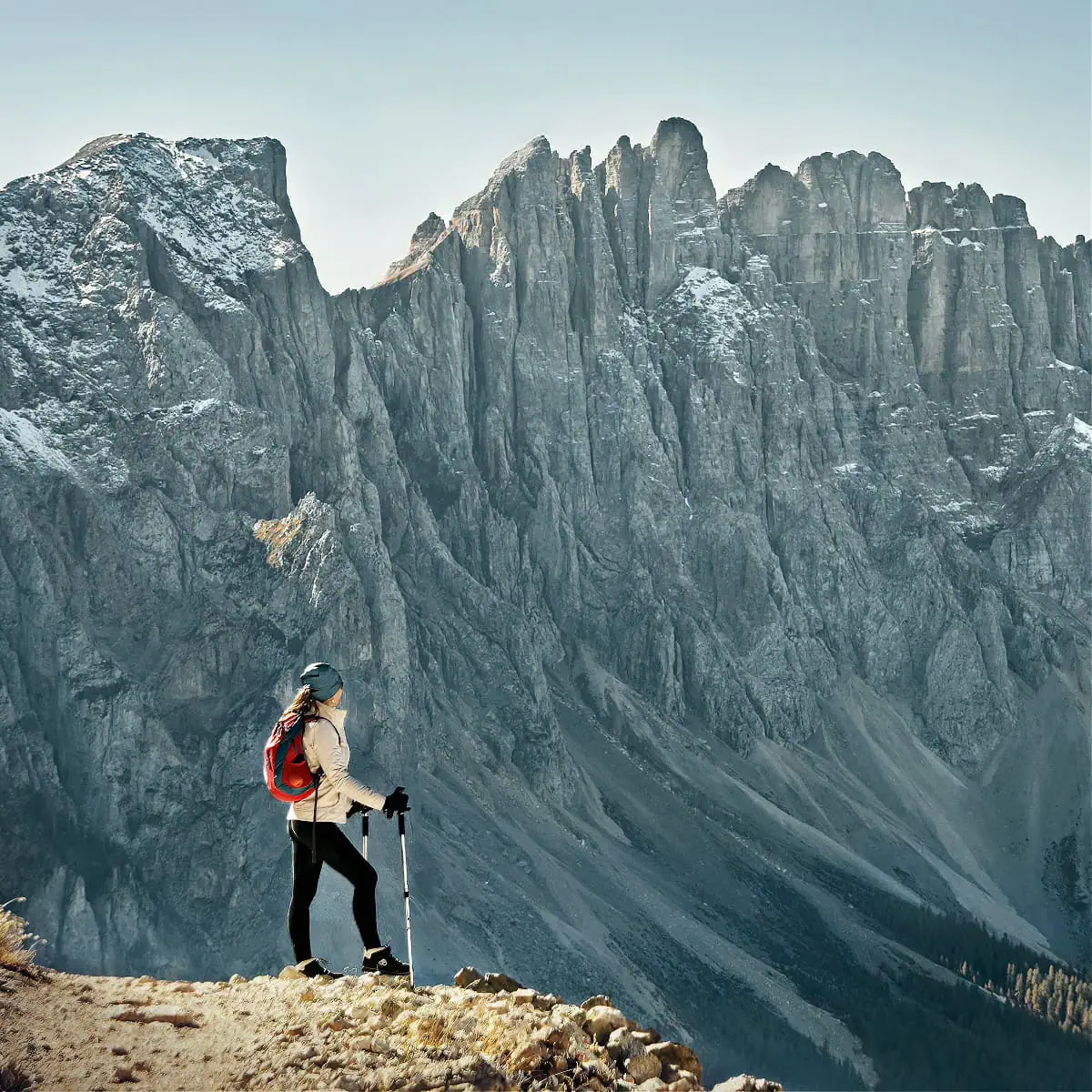
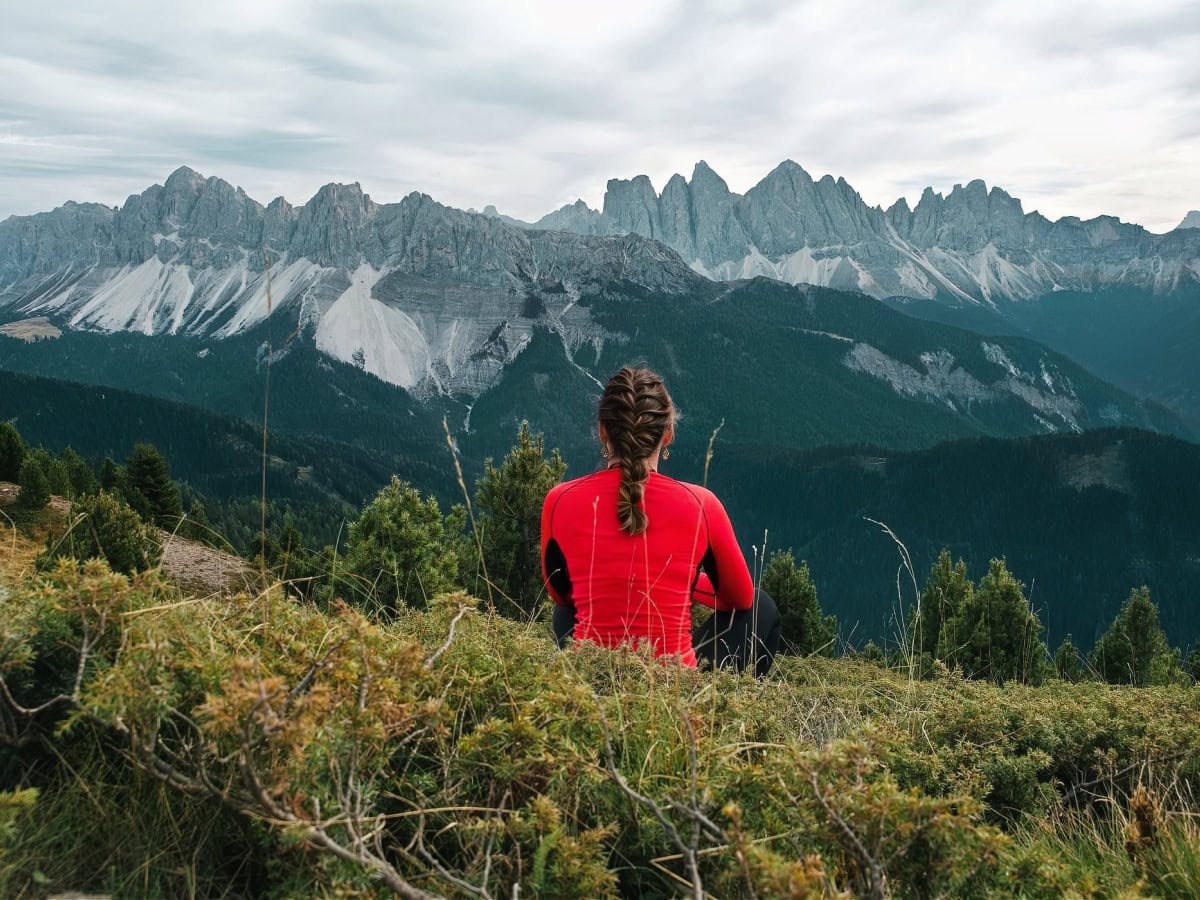
The only proper way to begin discussing South Tyrol is with its most lofty characteristic: mountains. They don’t just surround you; they confront you. Some peaks gleam with romance, others like the Dolomites, shatter the sky with spires so jagged they look forged to pierce the heavens.
The Dolomites defy alpine convention. Entirely. They’re the rebels of the mountain world — erupting from green meadows in wild, almost hellish configurations. These pale limestone empires seem less like geology and more like savage volcanic eruptions suspended in time. What’s remarkable is their origin: the Dolomites are children of the sea, a prehistoric coral reef thrust skyward when continents collided 250 million years ago.

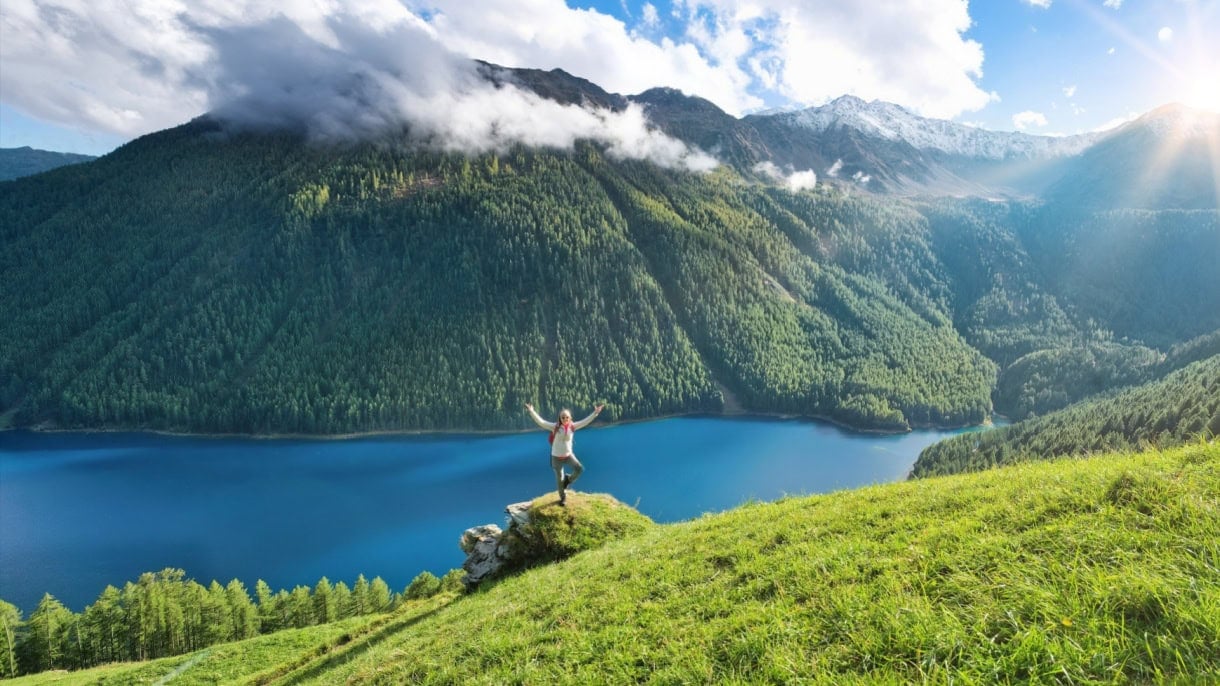
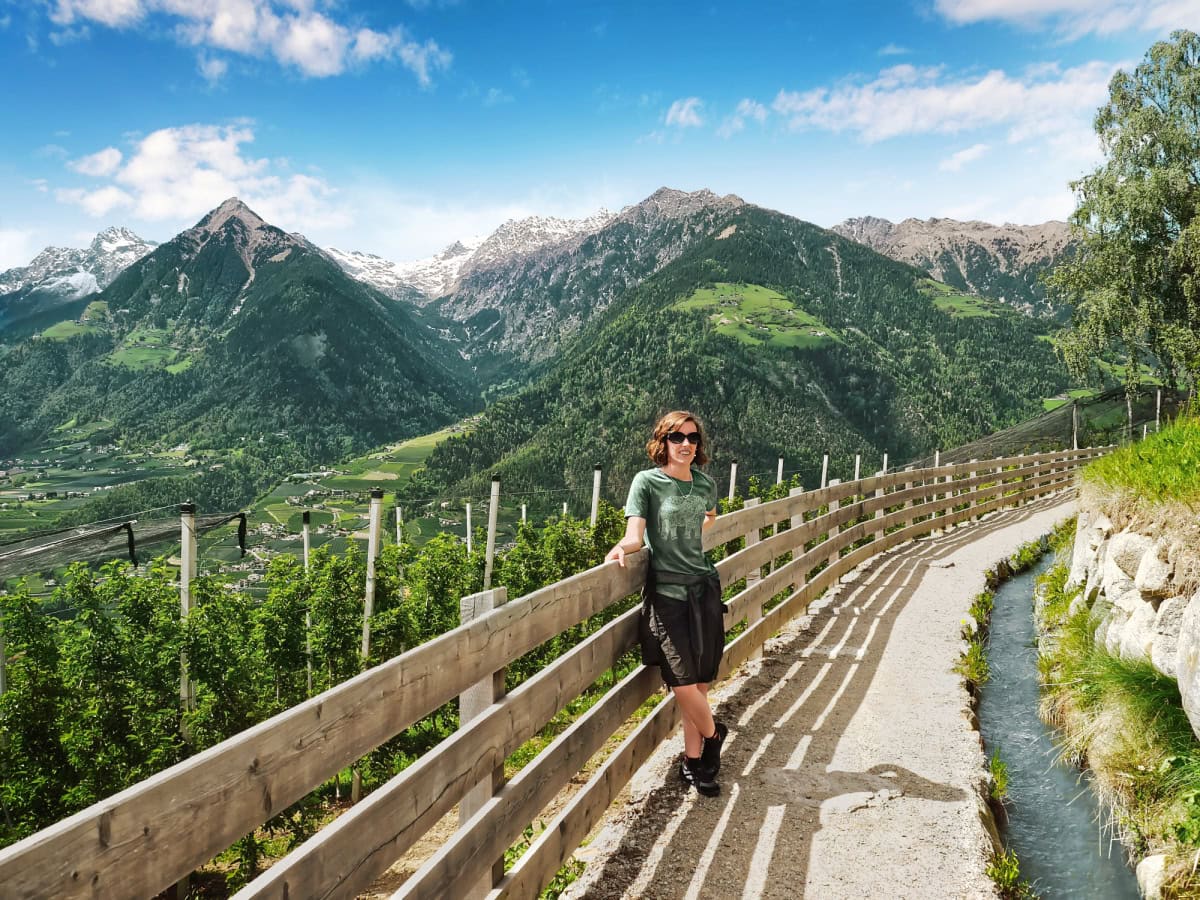
But the Dolomites are only one chapter of South Tyrol’s mountain story. Head west and the landscape leans Mediterranean. Here, palm trees sway beside orchards and vineyards, all set against a backdrop of castle ruins, noble villas, and silver-fired summits. This corner of the Alps basks in 300 days of sunshine a year, casting the mountains in a light that feels eternal.
Few places on Earth offer this kind of visual whiplash. We’ve stood in snow-dusted silence at 10,000+ feet (3,000 m), then driven 30 minutes to sip wine beneath cypresses and sun-soaked castle walls. A trip here is like experiencing two different vacations in one location. Something you won’t find elsewhere on Italy’s crowded tourist trail.
2. Boundless Adventure at Your Speed
South Tyrol doesn’t demand you be an athlete. It simply asks that you show up.
With over 10,000 miles (16,000+ km) of trails threading through the province, every turn in South Tyrol reveals your next adrenaline rush or moment of zen. On any given day you can roam cow-happy prairies hugged by ancient forests, trek toward glacier-capped summits, or wander a Waalweg — one of the ancient irrigation paths that wind through orchards and vineyards, the soft gurgle of snowmelt keeping you company with every step.


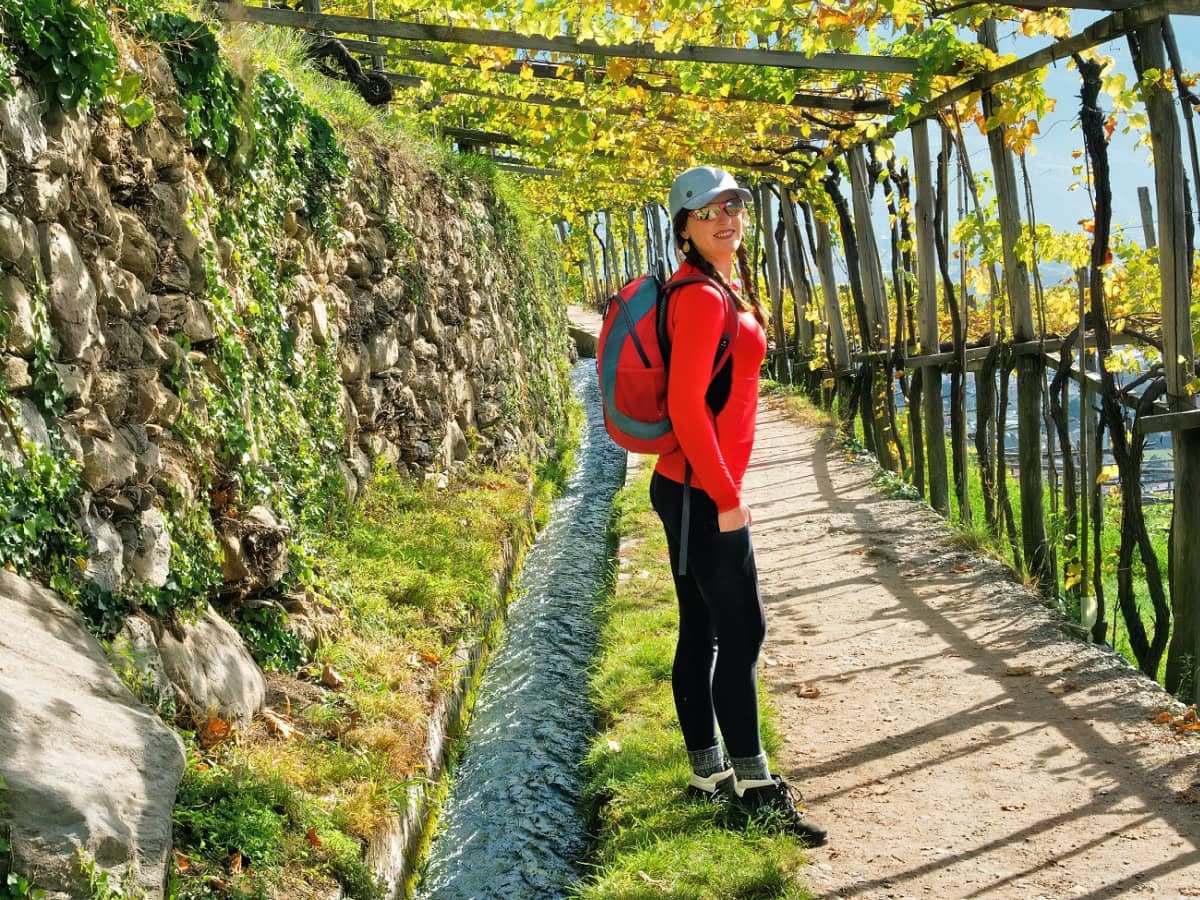
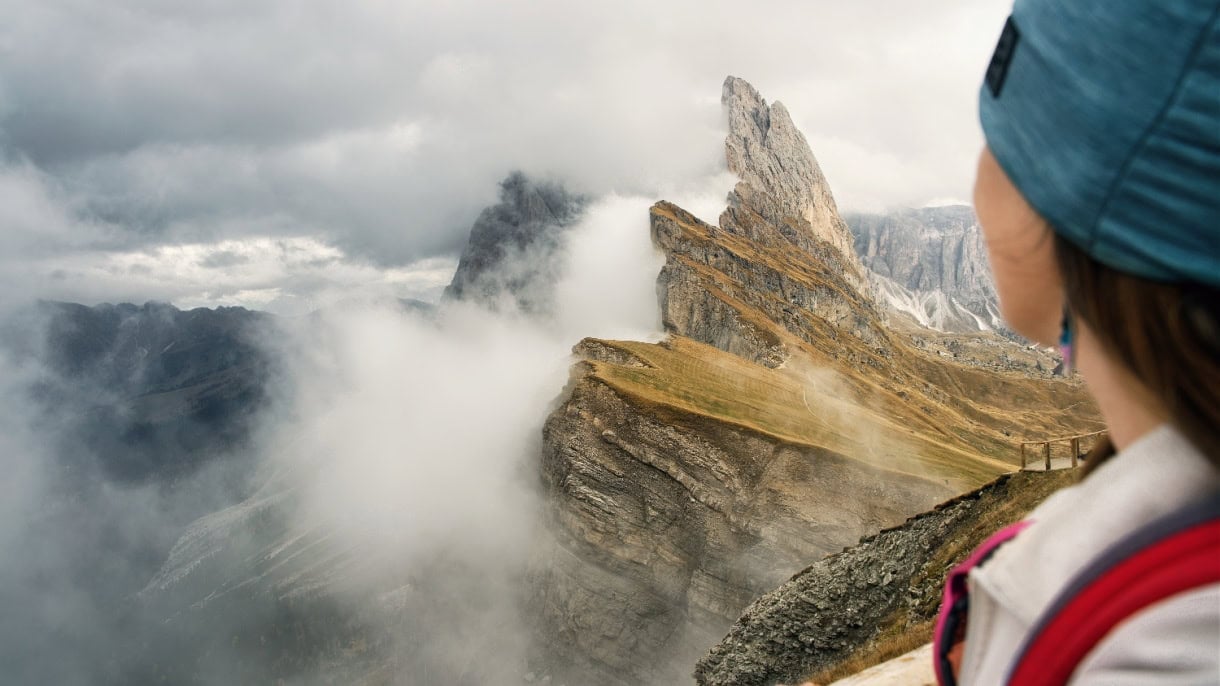
You don’t have to be a mountaineer to feel like one in South Tyrol. Thanks to a sophisticated network of lift systems, the region’s astounding variety is accessible to all ages and experience levels. We regularly share trails with travelers in their seventies and eighties, families with young children, and first-timers who’ve never set foot on a mountain.
And when the trail calls for a rest, South Tyrol delivers. Scattered across the peaks are rustic alpine huts called rifugios — sanctuaries where you can tuck into a hearty meal, sip local wine, and warm up with a shot of stone pine schnapps if the clouds roll in. In the Dolomites alone, over a thousand of these huts dot the landscape. Each one is a welcome pause in the wild.
3. Where Wellness Meets the Mountains
Eighty percent of South Tyrol is mountain. That fact alone is therapeutic to anyone dulled by city streets, fluorescent ceilings, and the relentless drone of modern life.
But the region takes wellness further than scenery. Tucked into valleys and perched on sunny plateaus, you’ll find retreats that have turned the landscape itself into medicine: mineral-rich springs, meadow-harvested herbs, pine-scented oils drawn from high-altitude forests. These aren’t spas bolted onto hotels as afterthoughts. They’re places designed around the idea that mountains can heal.


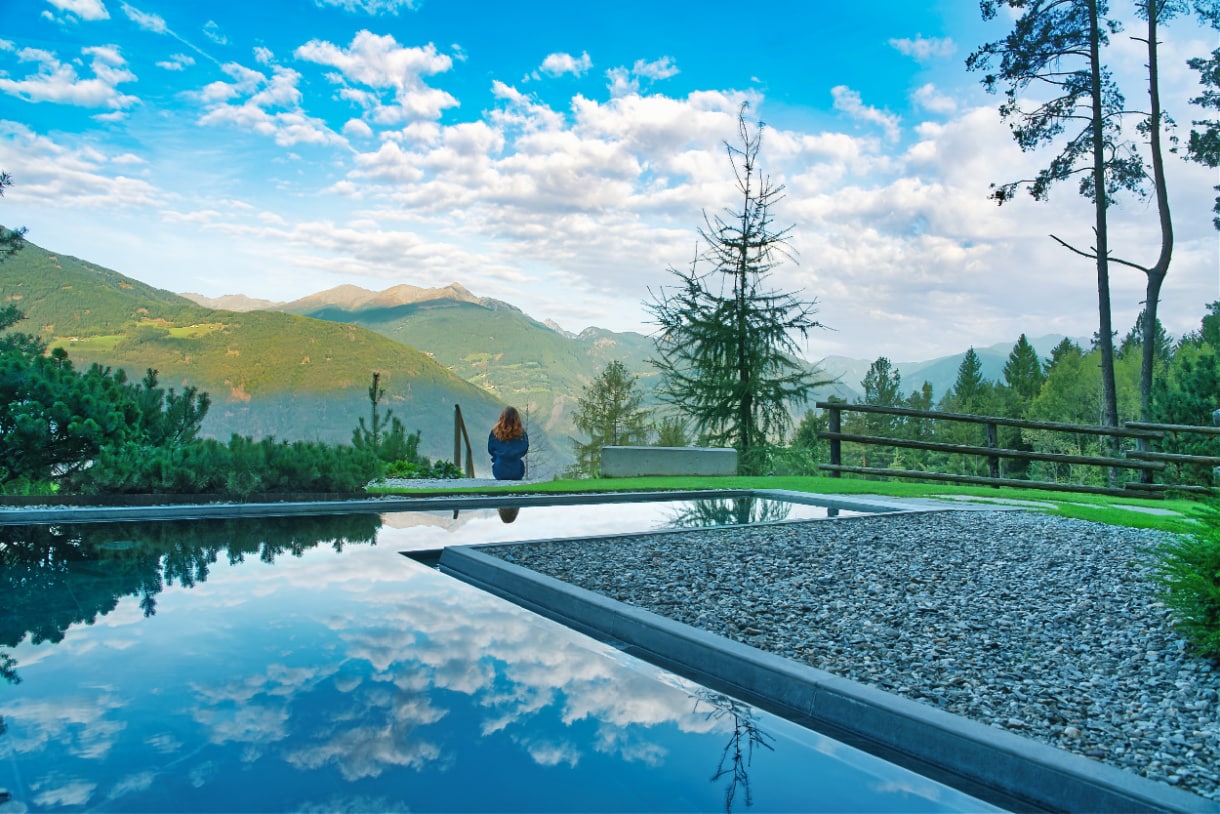
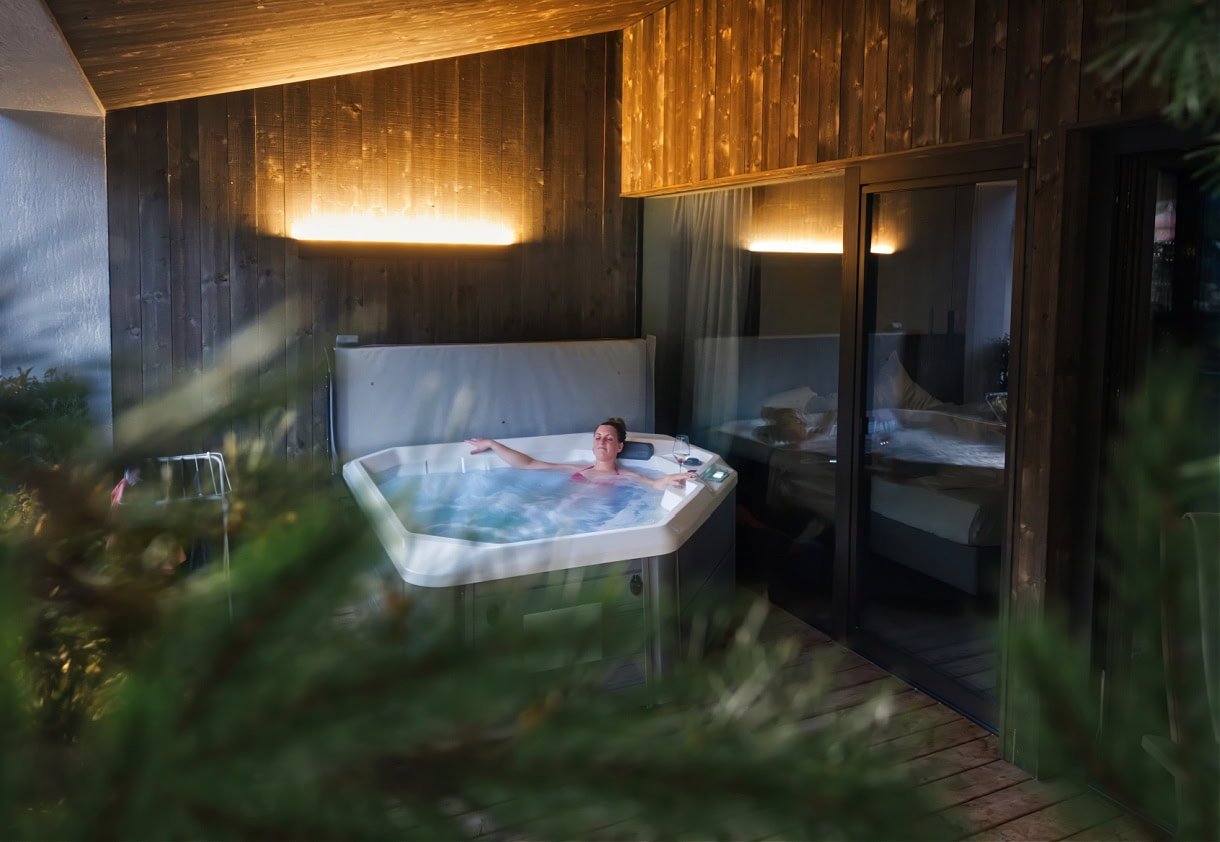
We’ve floated in salt-water infinity pools while watching clouds drift past the Dolomites. We’ve sat in steam saunas as snow fell outside. Once, at a Tyrolean hunting lodge, we even enjoyed a little lumberjack therapy — splitting logs in the crisp air until every thought beyond the next swing disappeared.
Whatever wellness ritual you prefer, you will come to relish the imaginative ways South Tyrolean accommodations reinvigorate the mind, body and spirit. You don’t just relax here. You recalibrate.
4. Storybook Splendor Around Every Bend
South Tyrol has more castles than any other region in Europe. Eight hundred of them, scattered across valleys and clinging to improbable cliffs. Some are restored to medieval perfection, others crumbling into vine-covered mystery.
For centuries, this was the corridor between northern and southern Europe. Roman legions marched through. Germanic tribes raided. Medieval crusaders passed on their way to distant wars. The fortresses they left behind now punctuate the landscape like exclamation points, each one a doorway into a different century.


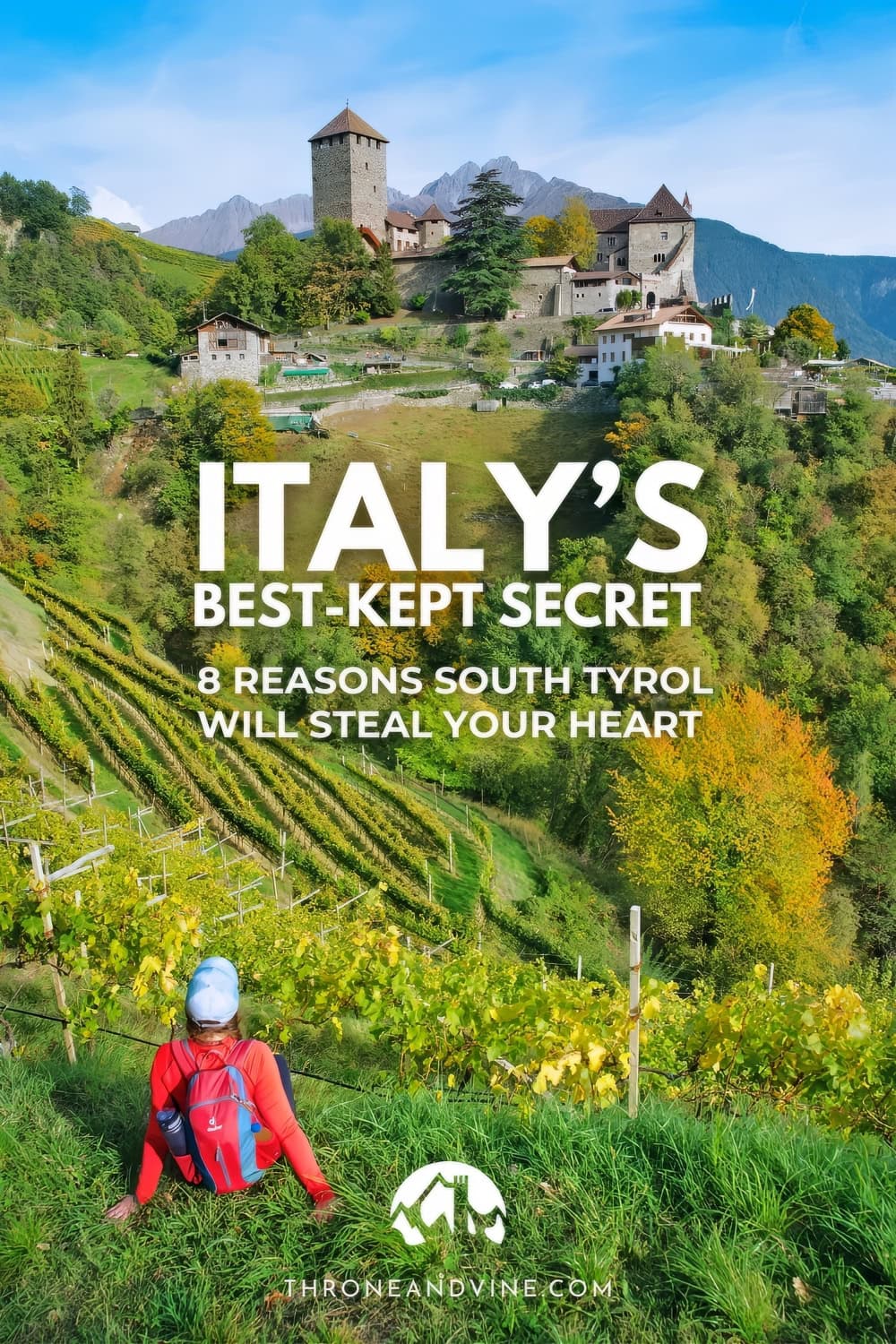
Some conjure childhood fairytales. Others brood with genuine menace, battlements still bristling after six hundred years. Tyrol Castle, the ancient seat of the counts who gave this entire region its name, watches over Merano and the Etsch Valley from a rocky perch that made it nearly impossible to conquer.
For us, walking through these strongholds never gets old. You climb worn stone steps, pass through gates designed to repel armies, and for a moment, the Middle Ages feel less like history than memory. It’s the kind of experience Italy’s crowded hotspots simply can’t offer.
5. Elevated Cuisine
For travelers seeking Italy off the beaten path, South Tyrol offers something no other region can match. It was the first region in Europe to trademark its cuisine. That was 1976, decades before farm-to-table became a marketing phrase everywhere else. Here, it’s simply how kitchens have always operated.
The result of four cultures sharing one table — German, Austrian, Italian, Ladin — is a menu that defies easy categorization. Dining here can feel like a journey through time and borders. For example, you could start with a Tyrolean dumpling born of centuries-old mountain kitchens, dive into pasta shaped with northern Italian discipline, and end with strudel that tastes like it wandered in from a Bavarian bakery.
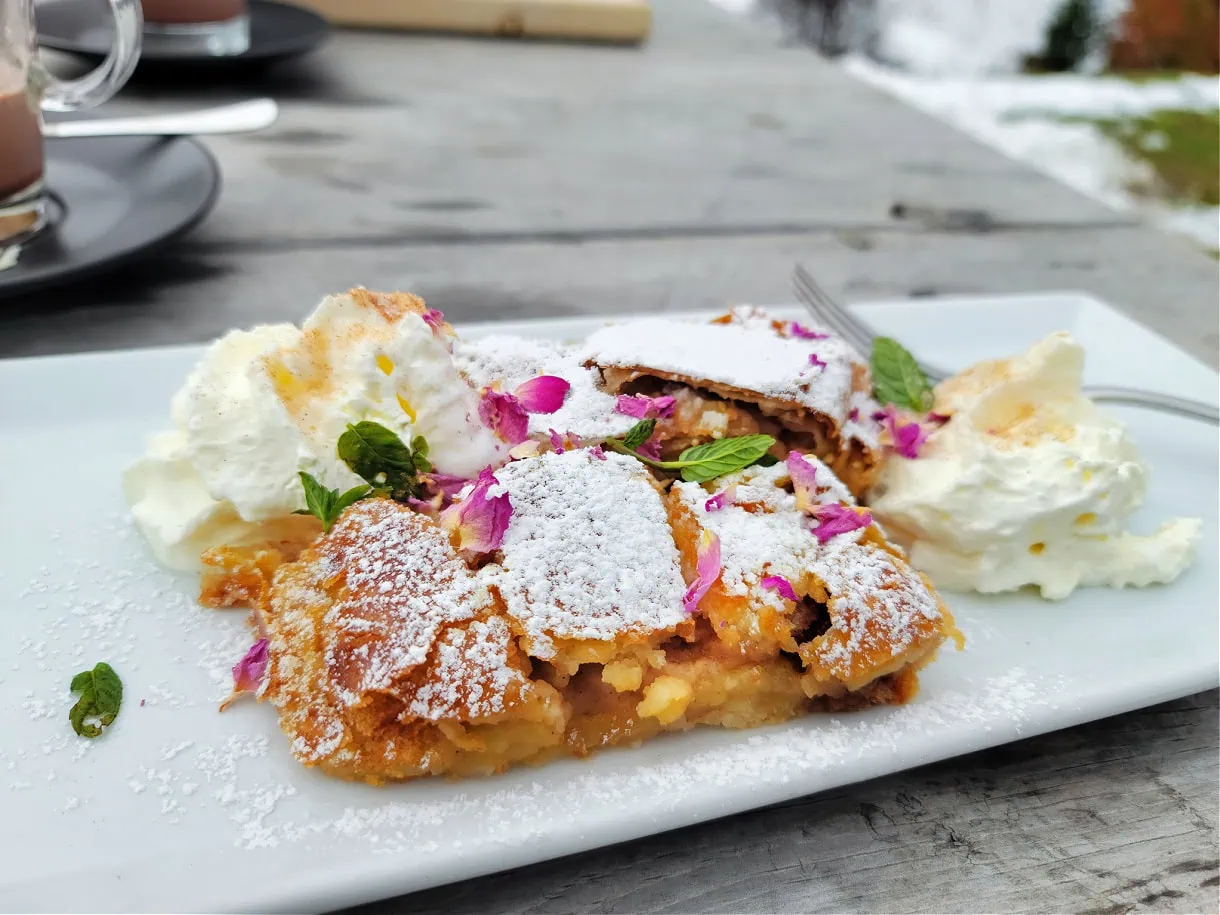


The region holds more Michelin stars per capita than anywhere else in Italy. Massimo Bottura, chef at the world’s top-rated restaurant, visits regularly for inspiration.
But what moves us most isn’t the fine dining. It’s the village taverns with flower-drowned balconies, the mountain huts serving venison tagliatelle at 8,000 feet, the wooden boards of speck and aged cheese paired with bread still warm from the oven. South Tyrol doesn’t just feed you. It reminds you what food is for.
6. Wine Country Unlike Any Other
For three thousand years, people have coaxed grapes from South Tyrol’s steep, sun-drenched slopes. The result is a wine culture that feels less like an industry and more like an inheritance.
Vineyards here don’t just sprawl across gentle hillsides. They climb as if they are trying to beat you to the summit. Terraced rows ascend toward mountain-perched castles, clinging to gradients that seem to defy agriculture. In every season, they look like living paintings hung on the mountainsides: pale green in spring, deep emerald in summer, burning amber and crimson when autumn arrives.
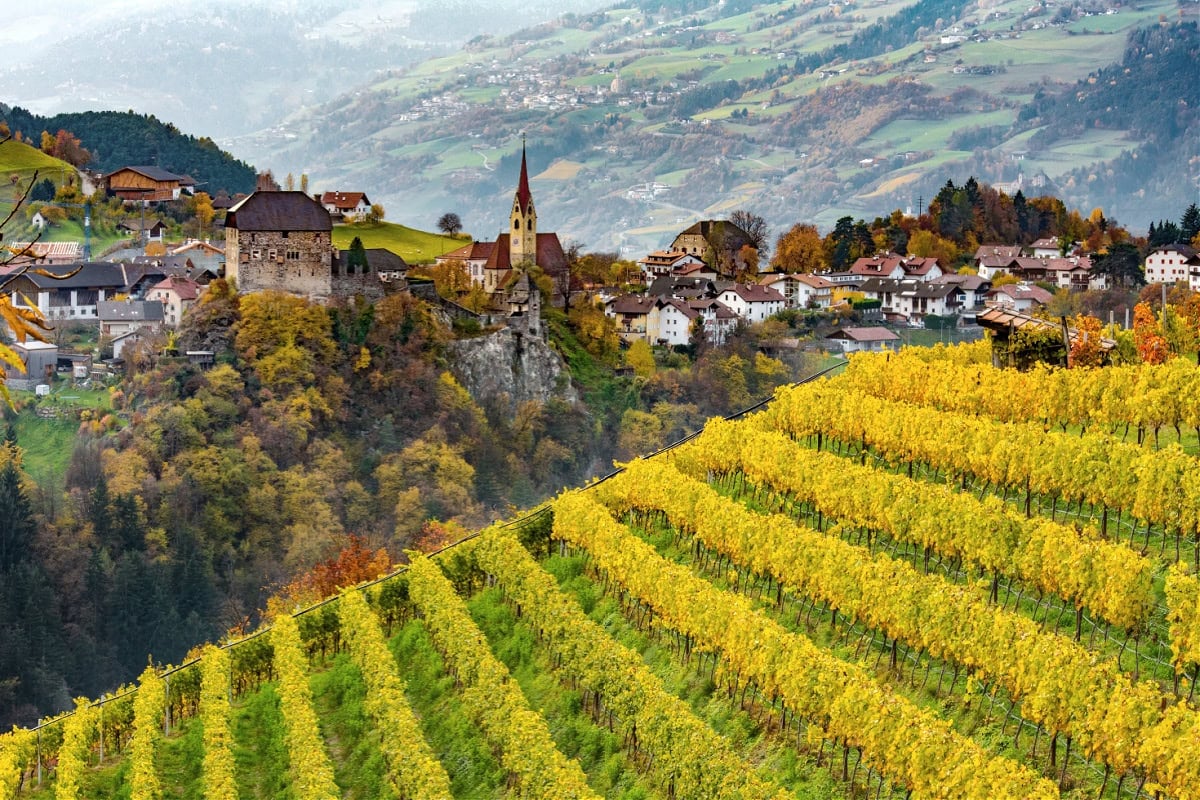

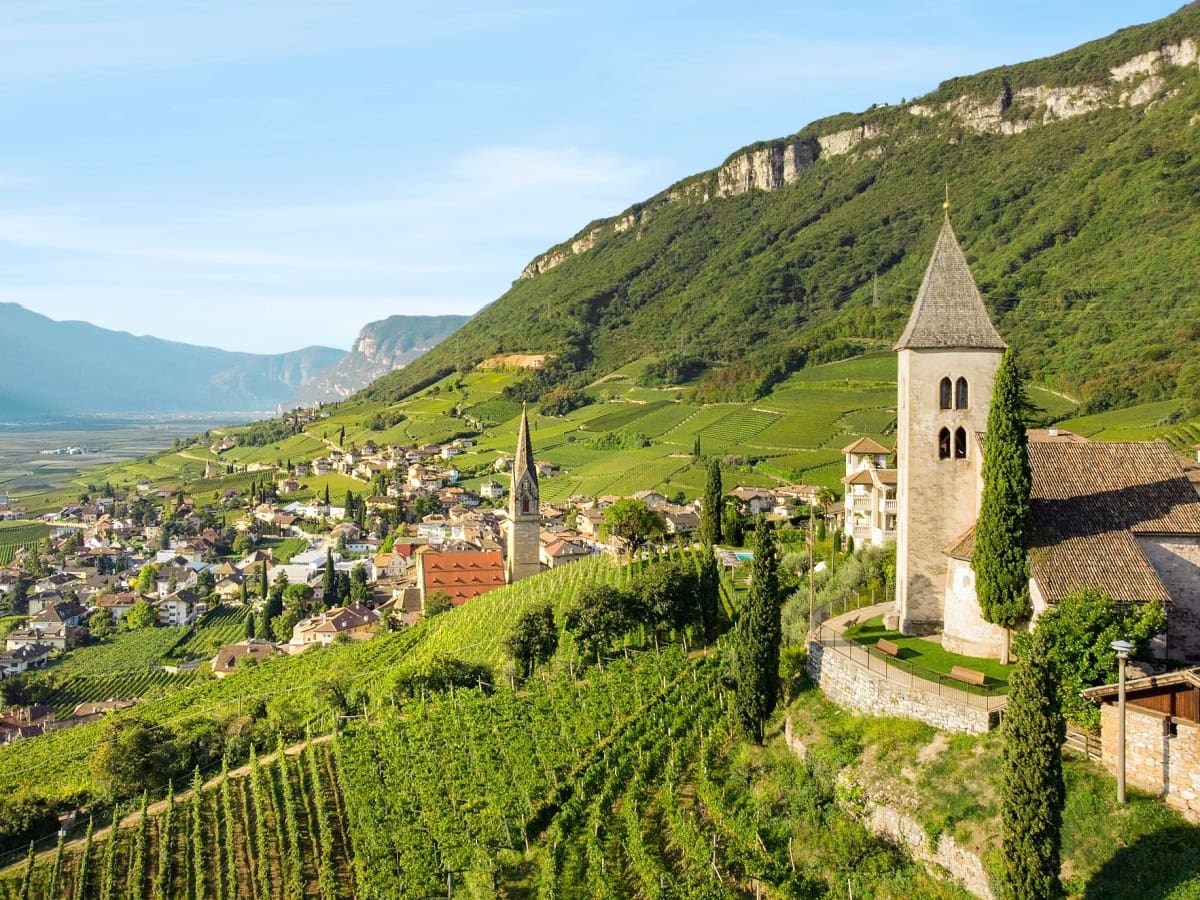


The wines themselves reflect the land’s extremes. High elevation means cool nights and sun-filled days, producing whites with mineral precision and reds with unexpected depth. Italy’s three top-rated Pinot Noirs come from South Tyrol. The Gewürztraminer rivals Alsace. And the South Tyrolean Wine Road — Italy’s oldest — threads through sixteen villages where you can taste your way from one family cellar to the next.
You don’t have to be a connoisseur to fall for this place. South Tyrol’s wine country is the kind that invites exploration on foot and bike. Countless trails run between the villages and vineyards all the way up to Bolzano and beyond.
7. Faith Woven Into the Landscape
No landmarks punctuate South Tyrol more than its sacred spaces. Churches, chapels, monasteries, and shrines appear everywhere: perched on hilltops, hidden in forests, rising from village squares where they’ve stood for nearly 1,000 years.
The craftsmanship floors us every time. Even the smallest roadside chapel might hold frescoes from the fifteenth century, wood carvings worn smooth by generations of hands, details that reveal how seriously beauty was taken here. The Abbey of Novacella near Brixen spans architectural styles from Romanesque to Baroque, and happens to be one of the oldest working wineries in the world.


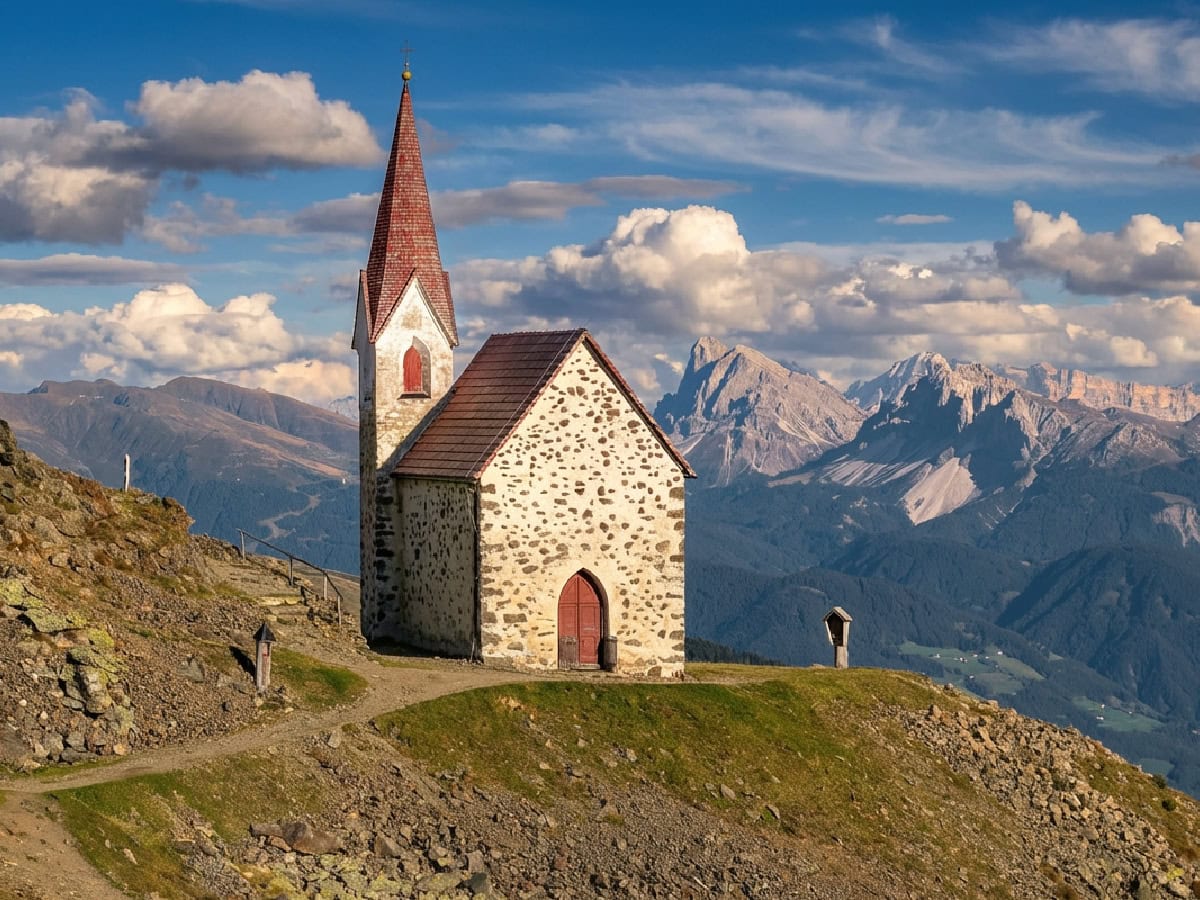
But what we love most are the wayside shrines. For centuries, South Tyroleans have built these small monuments along paths and at crossroads: a carved figure, a candle, sometimes fresh wildflowers left that morning. They appear without warning on hiking trails, offering a moment of stillness amid the climb.
Faith here isn’t separate from the landscape. It’s embedded in it. And while that alone does not make it different from the rest of Italy, the stillness does. No crowds. No tickets. Just a candle flickering in a chapel that’s stood for eight hundred years, waiting for whoever wanders by.
8. An Infectious Festive Spirit
South Tyroleans don’t need much excuse to gather, feast, and celebrate. The calendar here runs thick with festivals. Some heartwarming, others gloriously unhinged.
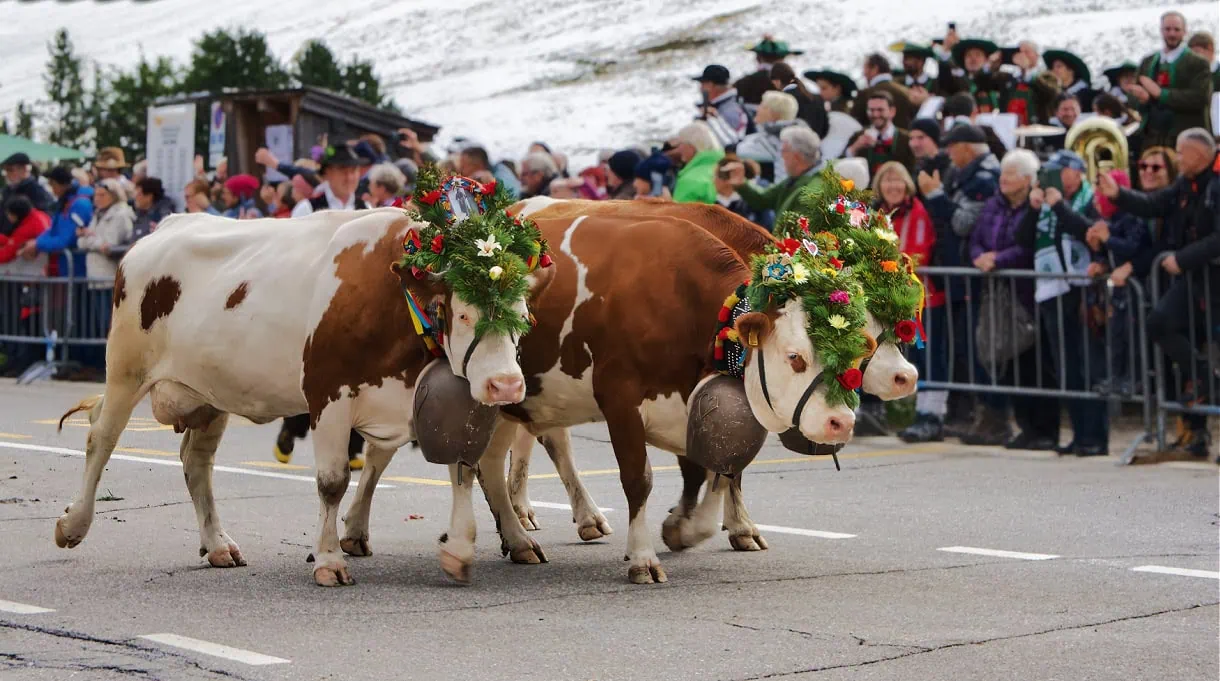
In autumn, the valleys come alive with harvest traditions. Törggelen draws locals and visitors to rustic farmhouse taverns for new wine, roasted chestnuts, and the kind of warmth that turns strangers into friends. At Almabtrieb festivals, flower-crowned cows parade down from summer pastures while brass bands play and entire villages turn out in traditional dress.
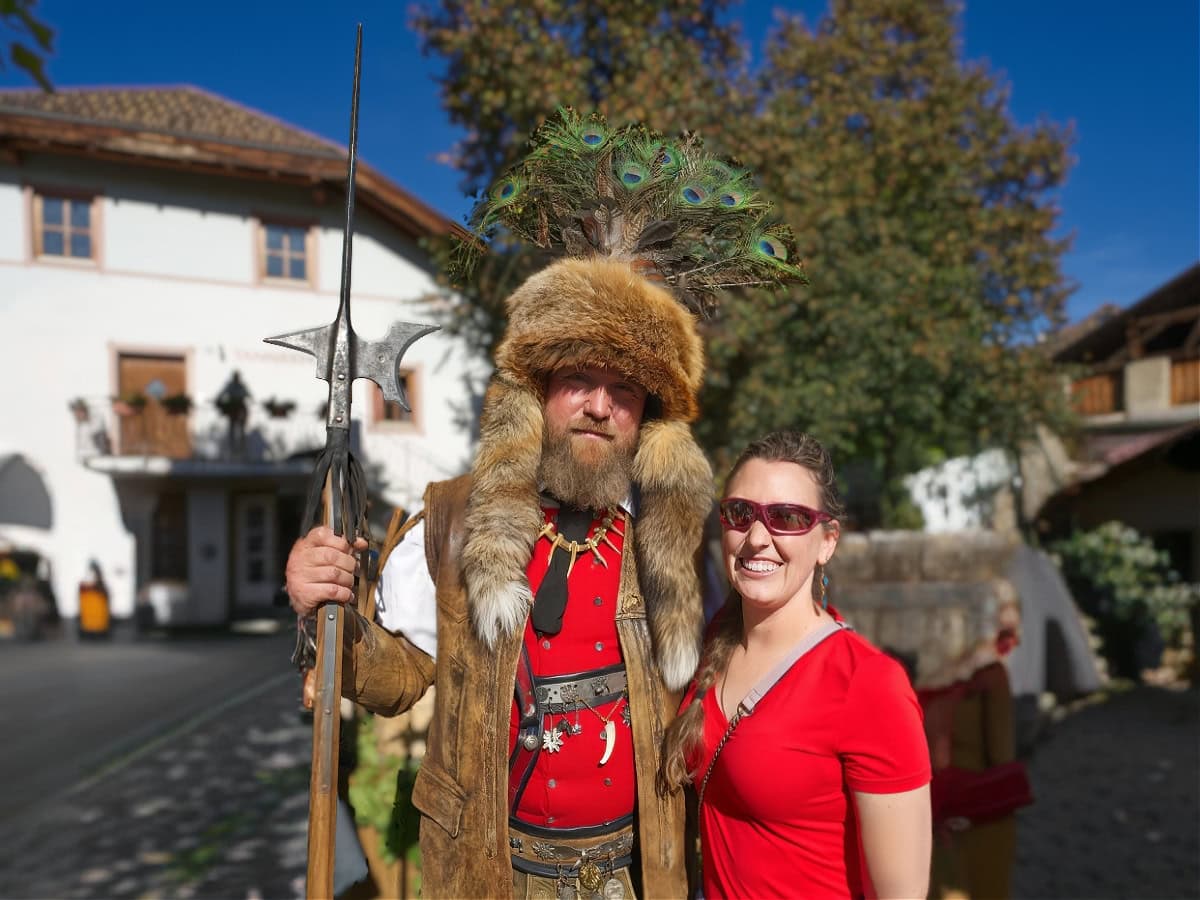



Then December arrives, and the region transforms. Christmas markets fill medieval squares with wooden stalls, Glühwein, and the scent of fresh pine. And just when things seem too cozy, the Krampus appear. During Krampuslauf parades, horned figures charge through cobblestone streets cracking whips and rattling chains. It’s an ancient Alpine ritual that’s equal parts terrifying and thrilling. We’ve run from our share of Krampus. It never stops being exhilarating.
Whether you’re clinking glasses at a grape festival, savoring a handful of roasted chestnuts between a hearty cheer, or dodging demons in the snow, South Tyrol’s festive spirit is impossible to resist.
Ready to Discover Italy’s Best Hidden Gem?
South Tyrol isn’t a place you breeze through. It’s a place that rewards lingering. The longer, the better. And once you’ve decided it belongs on your list, the next step is planning.
Our complete South Tyrol Travel Guide covers everything: when to visit, where to stay, how to choose between eight distinct regions, and the logistics of getting there and getting around. It’s the resource we wish we’d had when we first set out to understand this remarkable corner of Italy.
If you’re ready to leave the tourist trail behind and discover something extraordinary, South Tyrol is waiting.
Save & Pin for Later
Grab the free guide, then follow for weekly South Tyrol + Dolomites travel tips.
25 Things to Know Before Visiting the Dolomites
Join 18,000+ travelers. No spam, ever.