Goaslschnöllen is the art of whip cracking in South Tyrol and the Austrian Alps: long whips, serious rhythm, and a bang loud enough to bounce off the Dolomites. Discover how an ancient herder’s warning cry is now one of the loudest, proudest traditions in the Alps.
You smell it before you see it. The sweetness of fresh grass swaying under sun gives way to something colder. A damp, earthy scent carried down from the mountain.
You are alone up here. Have been alone since the snow let go of the alm in early summer and you walked the herd up from the valley. Your home is a larch log hut gone gray as bone. Your company is forty head of cattle, a dog with a torn ear, and the mountain.
The mountain has moods. Not all are pleasant.
An hour ago its towers stood sharp against a clean sky. Now a cloud has caught on the summit like cloth on a nail. It grows while you watch. Rising. Darkening. Spreading. The light goes the color of a bruise. Somewhere behind the ridge, thunder clears its throat. And then again.
You know what comes next, because every herder on this pasture knows. Hail thrown like gravel. Lightning hunting the tallest thing on open ground, and on open ground the tallest thing is a cow. Or you.
You count the cattle. They are scattered below the scree, still grazing. On the next pasture, the neighbor’s boy is working beyond a fold in the slope. Reaching him means half an hour’s walk across the ravine. Shouting means wasting your breath.
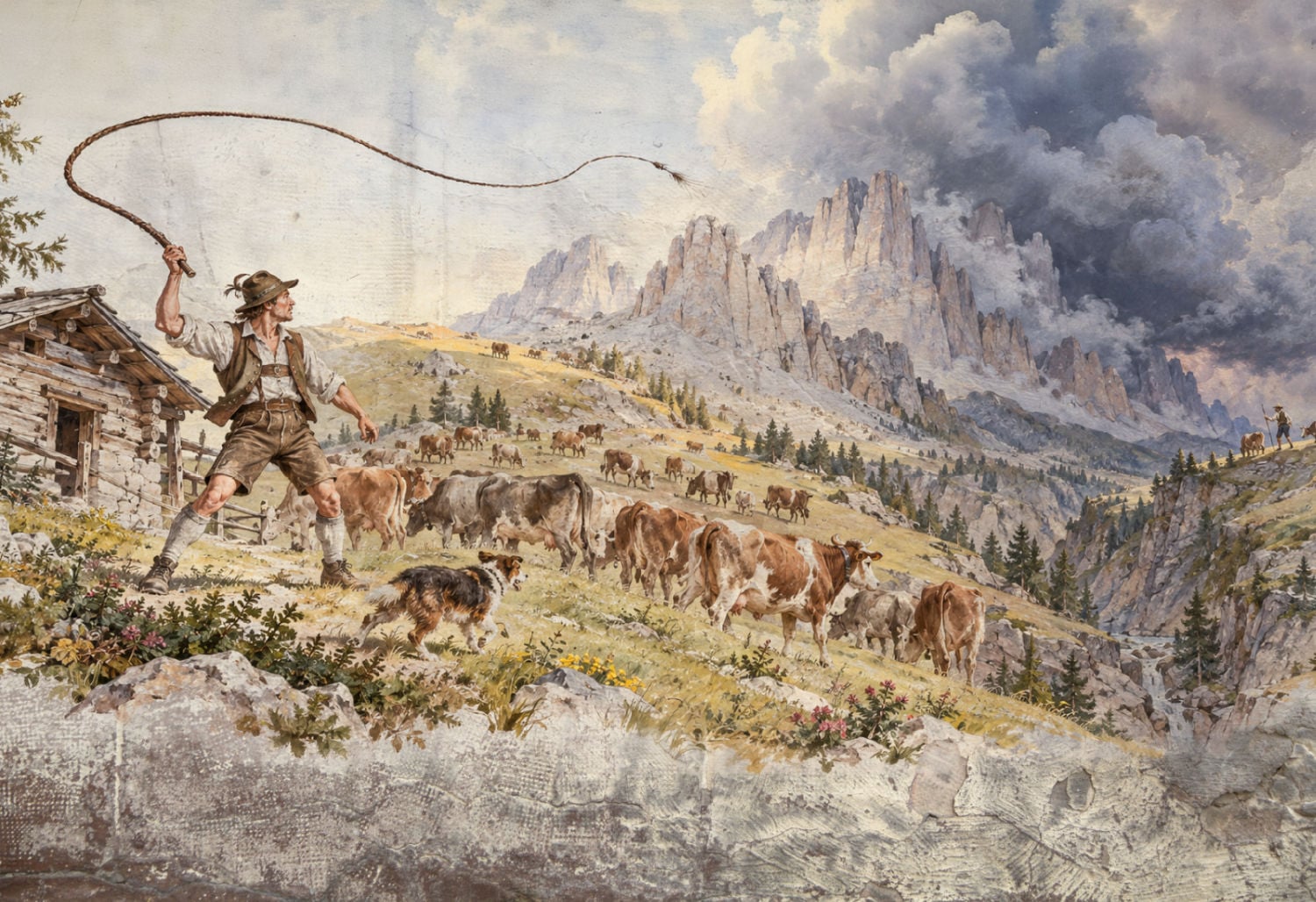
So you do what your father did, and his father before him. You take the Goassl from its peg beside the hut door.
The wooden handle settles into your palm. You step clear of the hut, plant your feet, and swing it over your head: once to find the weight, twice to build the speed. Then you drive the lash forward and snap it back.
The sound is not a slap. It is a gunshot. It cracks off the mountain’s wall and comes back doubled, then tripled, rolling down the valley in echoes.
You crack again. Forehand, backhand. Forehand, backhand. A rhythm everyone on these slopes knows the way they know church bells.
The cattle lift their heads as one. The dog is already running. And across the ravine, you hear an answer: crack, crack. The boy has heard. He knows what is coming. He turns to gather his herd.
No telephone. No radio. Just a length of braided leather firing off a warning: the mountain’s mood has turned. A form of communication used for centuries across the Alps.
Goaslschnöllen: From Alpine Warning to Village Tradition
In South Tyrol and across the Austrian Alps, the whip, or Goaßl (Goassl) in the local dialect, began as a herder’s tool.
It was a kind of ancient megaphone, carrying news between remote farms and high pastures: a crack to say all was well, a crack to call for help, a crack to warn of approaching danger, and on quieter days, a crack to call everyone in for lunch.
There was no universal whip language. The meaning of the cracks varied from valley to valley and farm to farm, and what signaled danger on one mountainside might mean the knödel is ready on the next.
We knew none of this when we first heard whip cracking years ago at an Almabtrieb festival in South Tyrol.
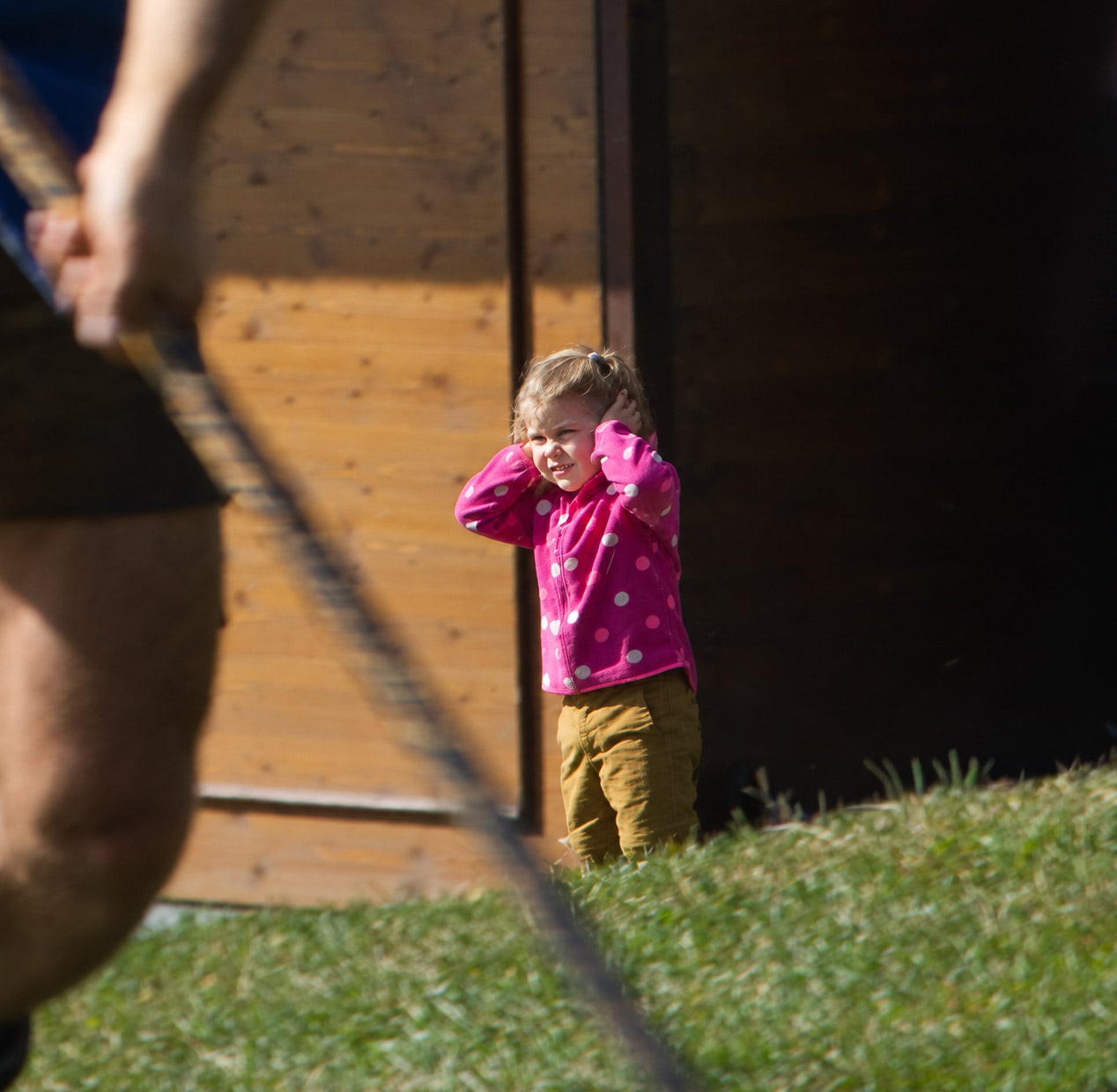
Our first thought was that a gunfight had broken out. Then we noticed a crowd gathering around the source of the noise, which seemed an unusually relaxed response to gunfire.
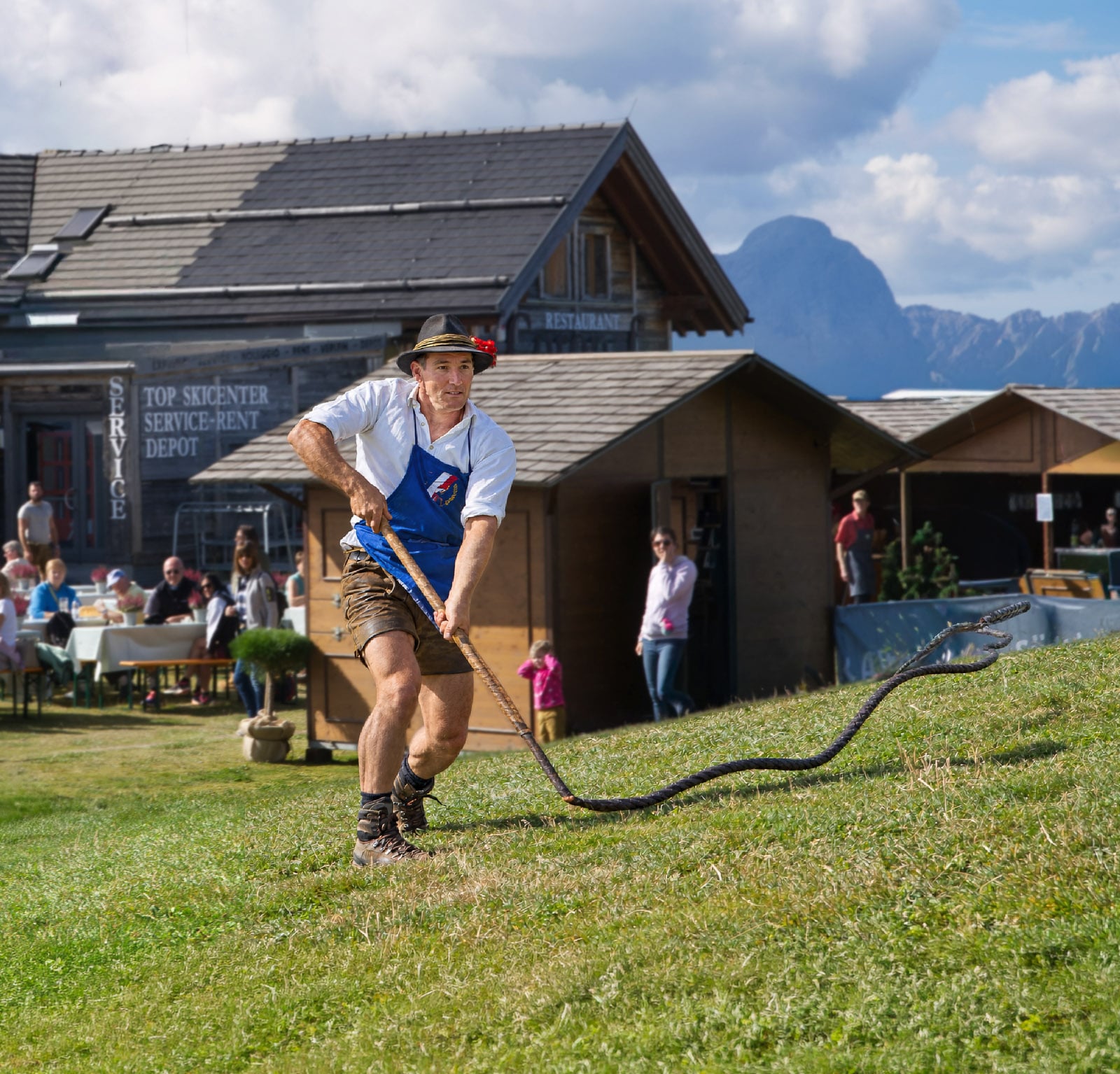
At its center were the Goaslschnöller, the whip crackers, sporting blue aprons, swinging their lashes overhead and sending sharp reports through the air. They cracked in unison, then in answer to one another, then in rhythms so tight you could have set a metronome by them. We were no longer looking for cover. We were looking for a better place to watch.
That moment and that festival taught us something we now pass on to every traveler: check the local events calendar before you plan your days. The cable car will get you up the mountain. A village festival will tell you something about the people who live beneath it.
RELATED READING
Alps & Dolomites 101: Your Guide to Europe’s Alpine Wonders →
What is Goaslschnöllen?
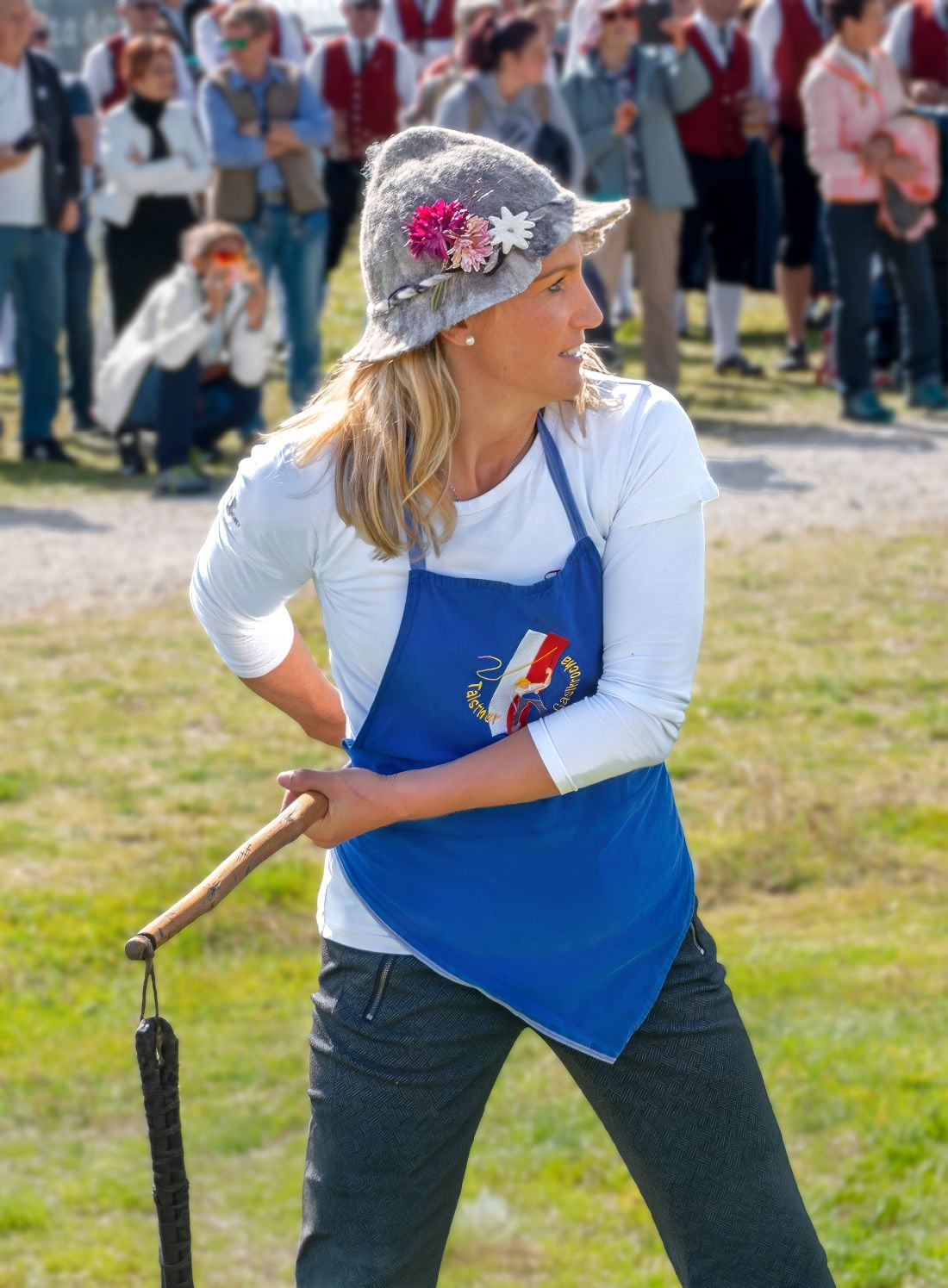
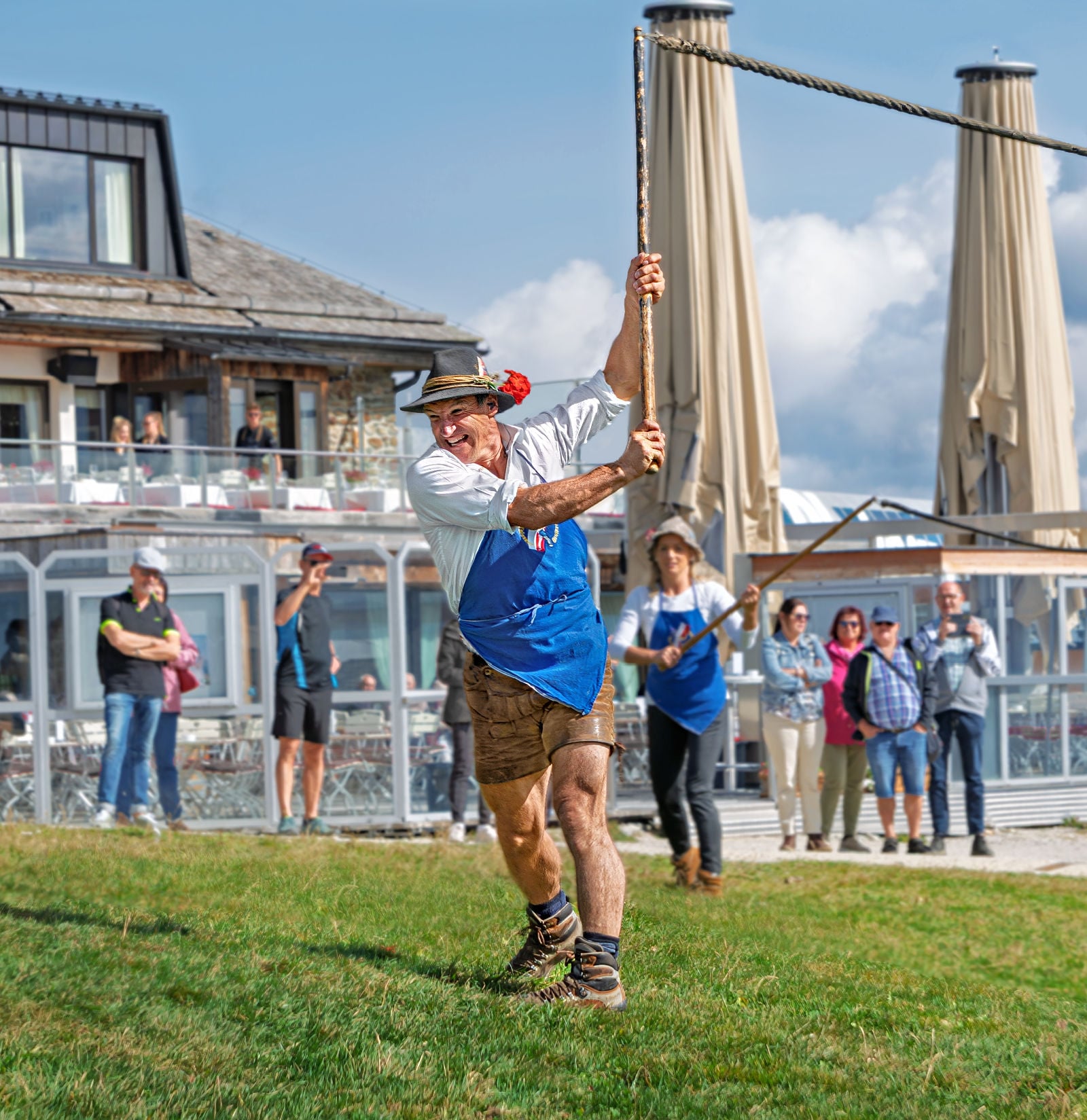
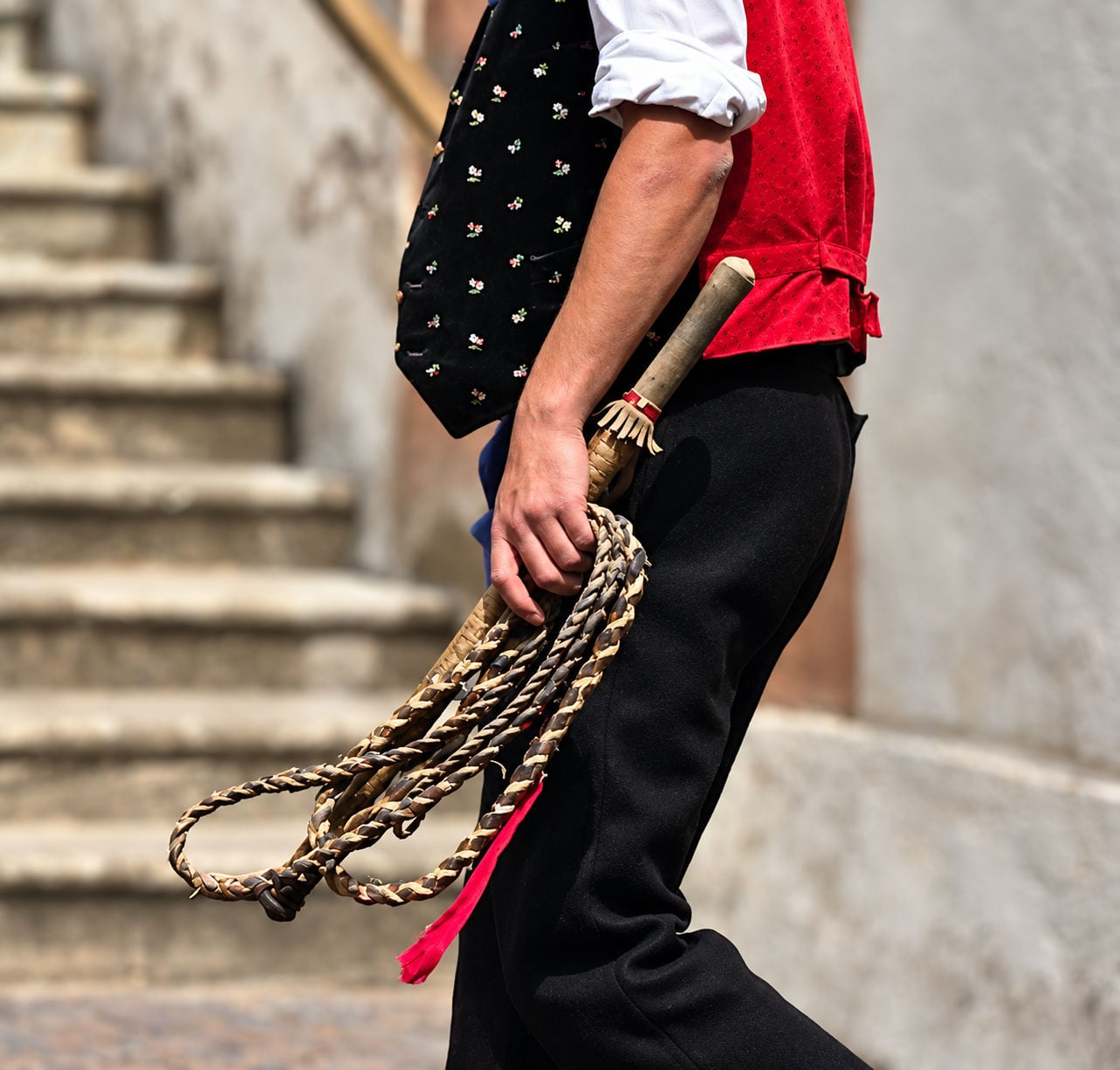
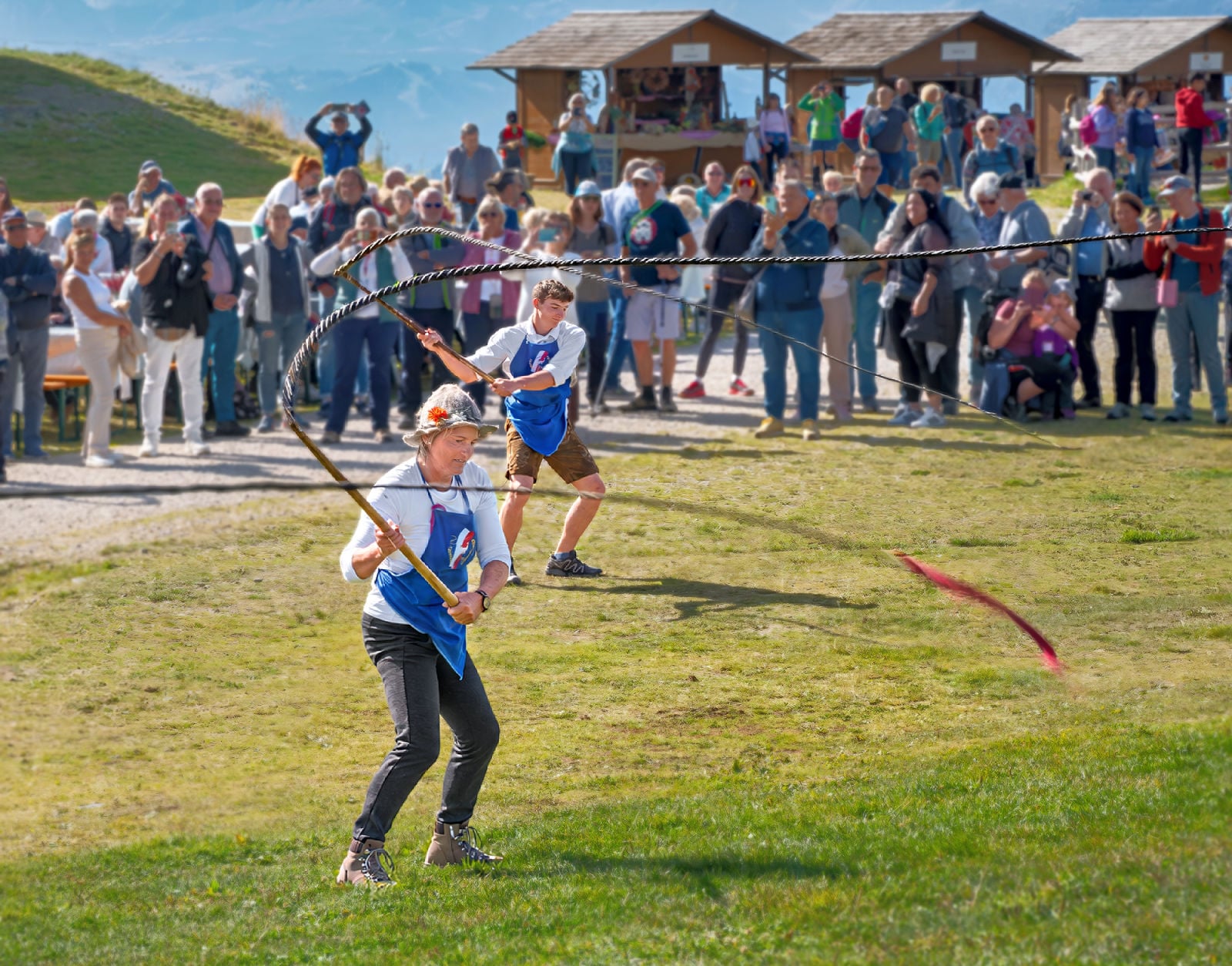
Goaslschnöllen is the Tyrolean art of cracking a long whip in rhythm, alone or in groups, loud enough to rattle windows. The word breaks down simply. The Goaßl is the whip, and schnöllen is dialect for making it snap. The person swinging it is a Goaslschnöller.
The spelling wanders from valley to valley. You’ll see Goasslschnöllen, Goaßlschnöllen and the clipped Goaslschnölln. Some South Tyrolean villages call it Gaslkrochn. Cross into Austria and Bavaria and it becomes Goaßlschnalzen, with the performers called Goaßlschnalzer. Same whip, same bang, different accent.
The whip itself has three parts: a short wooden handle, a long lash of braided leather or twisted hemp, and at the very tip a short piece of cord called the Schmitzl. The whole thing runs roughly 13 to 19 feet (4 to 6 meters). That little tip is where the magic happens.
What Makes the Whip Crack?
The crack you hear is a mini sonic boom. A skilled swing sends motion along the whip, accelerating its tip beyond the speed of sound and producing a shock wave. The whip acts a bit like a figure skater pulling in her arms to spin faster. The bang is the air itself breaking, not the whip hitting anything.
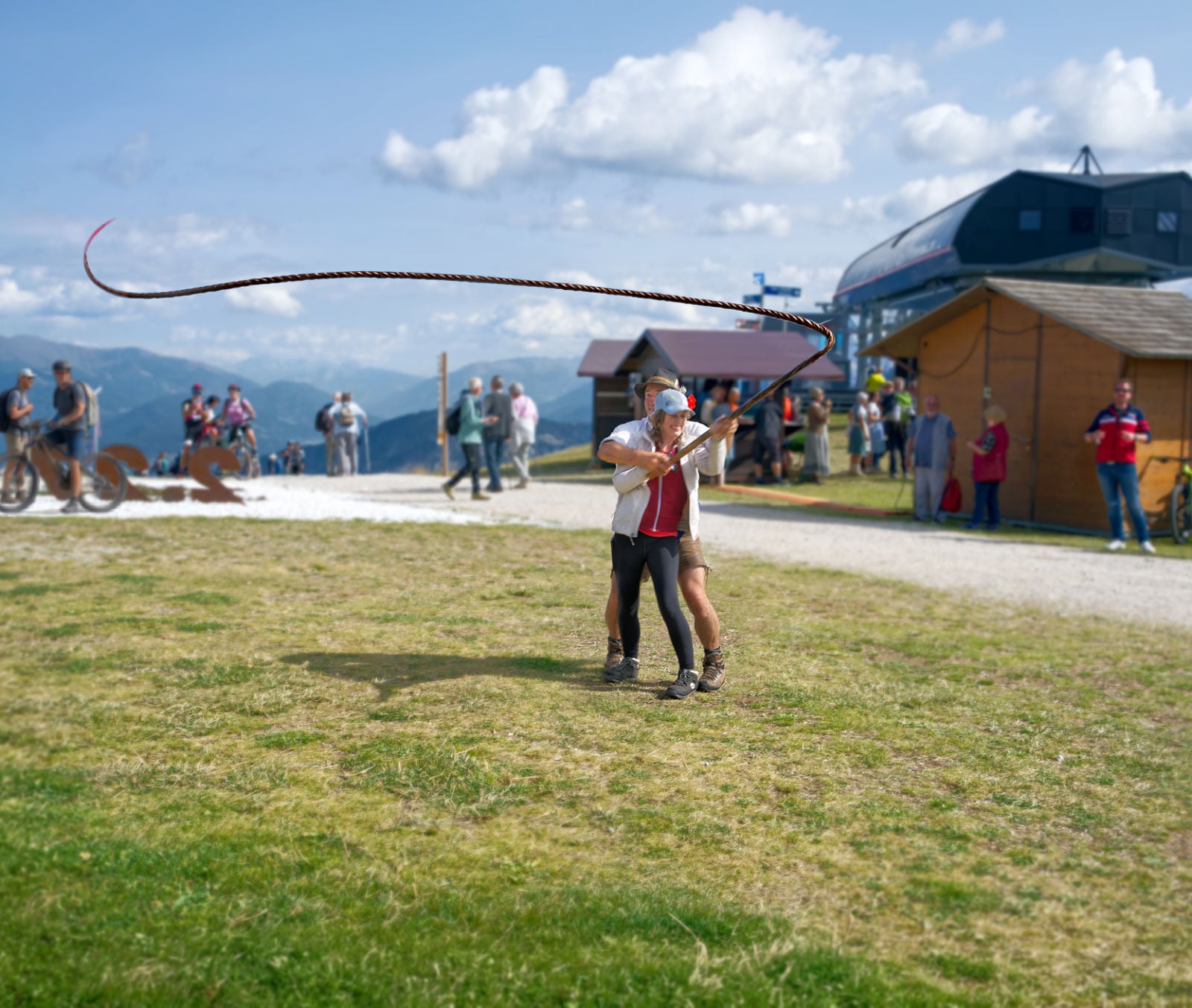
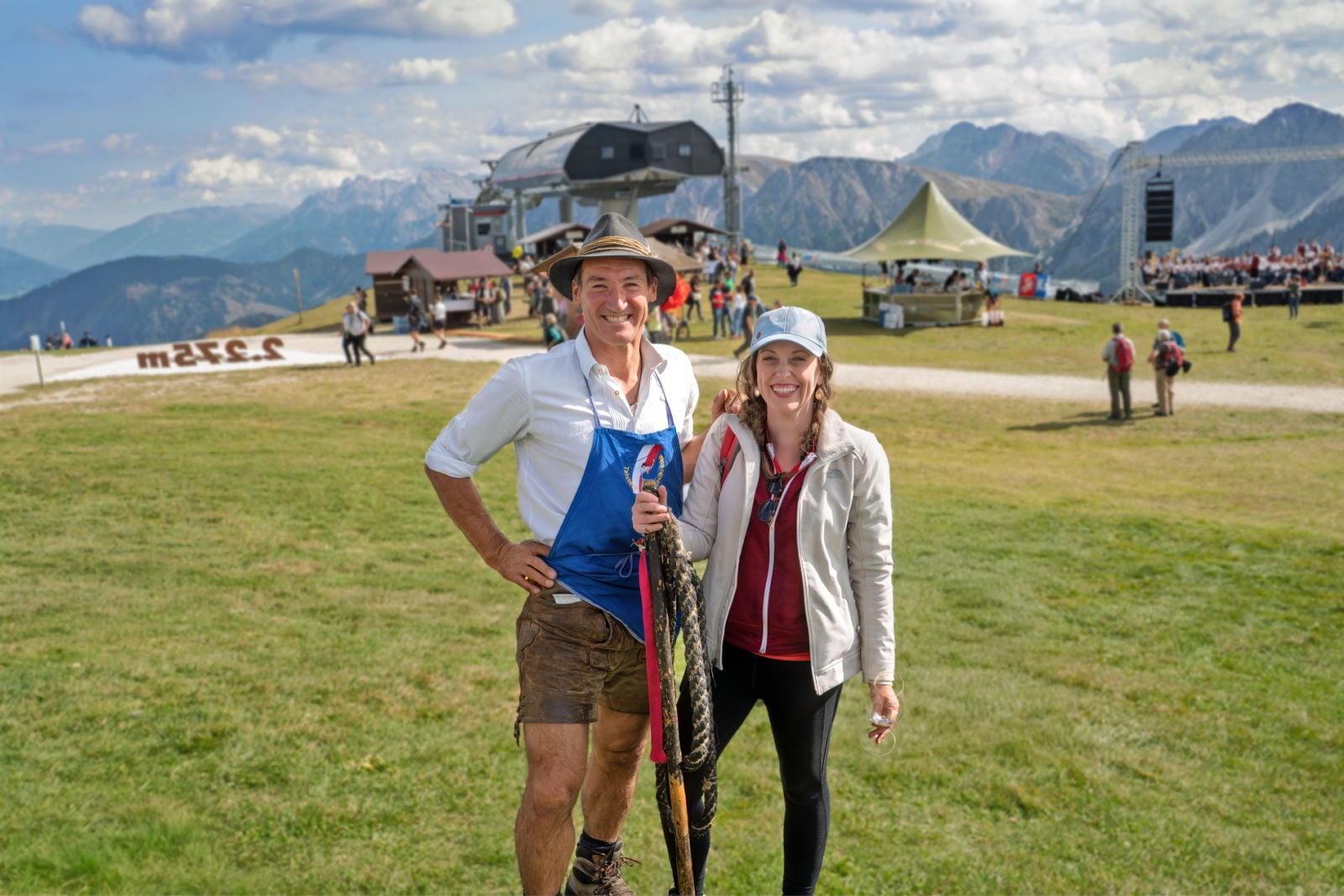
Anyone can hold a Goaßl. Making it speak takes timing, rhythm and, often, years of practice. It’s the difference between holding a fly rod and landing a perfect cast.
Kate can attest to this. She recently gave whip cracking her best shot at Speckfest on Kronplatz. A member of the Taistner Gaslkrocha, a group from Taisten , showed her how to swing the Goaßl before letting her swing for the summits. She swung, spun, and swung again. The whip answered with a limp swish and nothing more. She blamed the Weissburgunder.
RELATED READING
Krampus in the Alps: Meet the Wild Beasts of Christmas Lore →
Watching Goaslschnöllen in South Tyrol, the Dolomites & Austria

Kate’s whip may have stayed silent, but the tradition around her was anything but. Walk through a mountain festival in South Tyrol and the sound tells you the Goaßl never really retired. It simply changed jobs.
As telephones reached the farms and roads reached the high pastures, herders no longer needed a whip to talk across a ravine. The warning cracks, the all-is-well cracks and the lunch-is-ready cracks all fell quiet. The skill could easily have faded with the herders who used it.
Instead, locals held on to the sound. The crack that once carried warnings across the mountains became a way of celebrating them. Today, Goaslschnöllen is a point of pride in South Tyrol and Tyrol, passed from one generation to the next through village clubs like the Goaslschnöllerclub Passeier north of Merano, where young men and women train alongside veterans who have been cracking for decades.
Festivals, Kirchtags, & Almabtrieb
The most likely place to hear whip cracking is a village celebration: summer festivals, parades, farmers’ markets and, above all, the Almabtrieb, when the cattle come down from the high pastures wearing flowers and their biggest bells. The whip that once helped the herder bring the cattle in ahead of the storm now welcomes them home for the winter.
Kirchtag, the traditional parish fair, is another stronghold. In many South Tyrolean villages, a round of Kirchtagskrochen is as much a part of the celebration as the brass band and the beer tent. It tells the whole valley the party has started.
Across the border in Austria, you’ll find the same custom at the same kinds of gatherings. In the Alpbachtal, near our stay at Der Böglerhof, the Almabtrieb in Reith im Alpbachtal features Goaßlschnalzer alongside alphorn players, craft stalls and a parade of decorated cattle.
On the Trails in the Dolomites
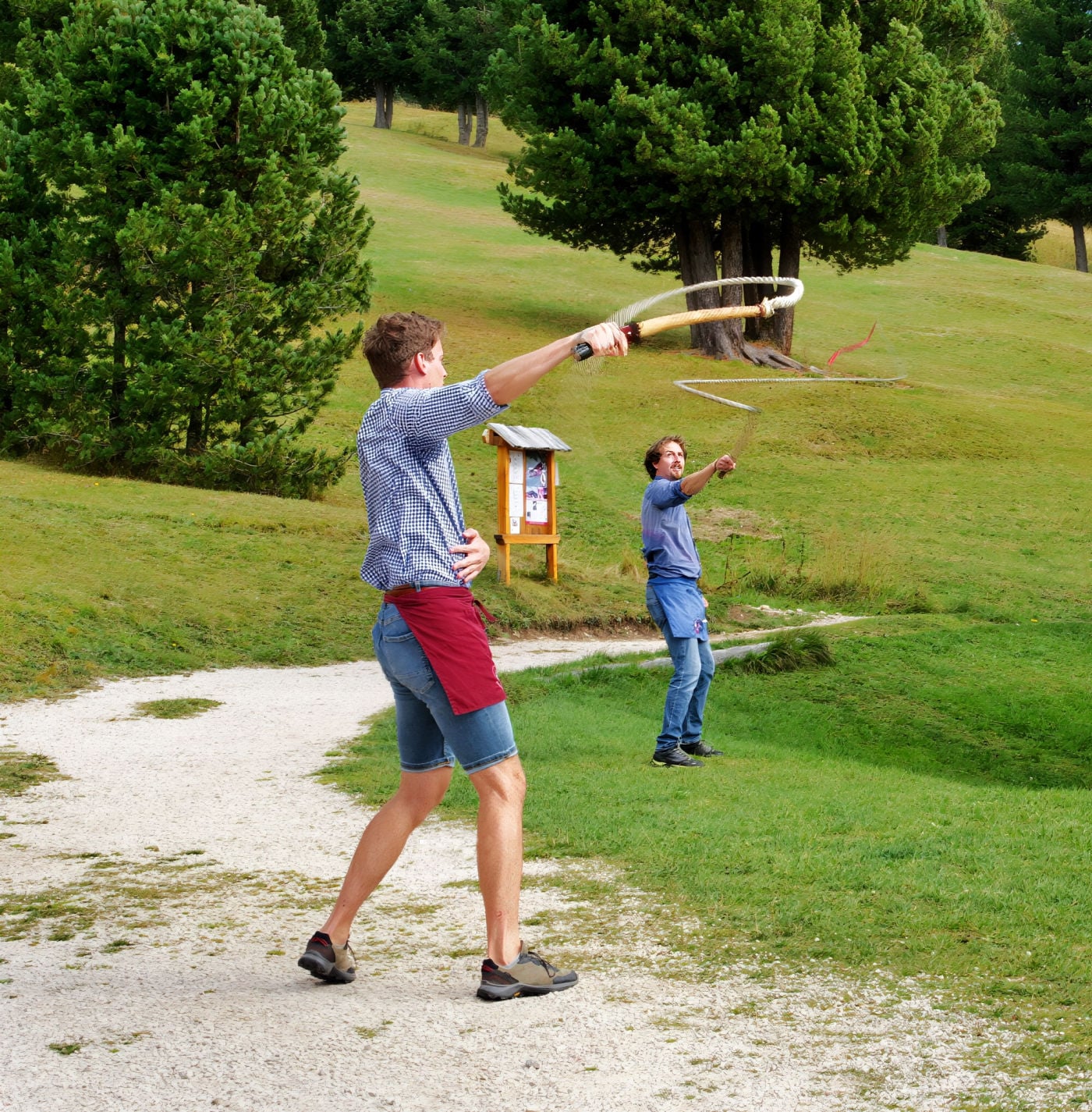
Sometimes you don’t need a festival at all. Hike to the right hut on the right day and you may find a few workers stepping onto the meadow with their whips while guests linger over a Marende and a glass of wine.
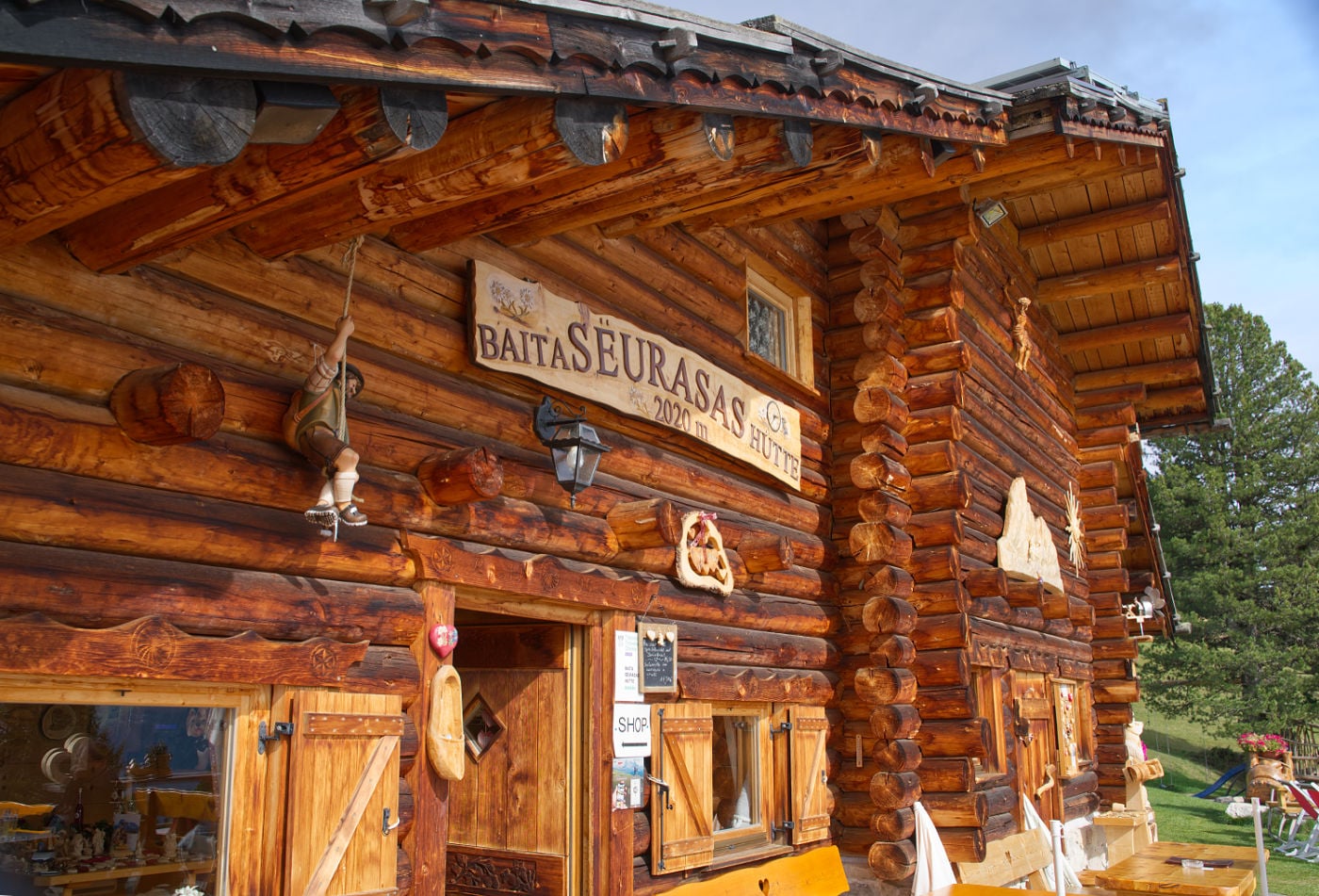
We found exactly that at Baita Seurasas Hütte while hiking down from Seceda. We were about to dive into a warm helping of Buchteln, our favorite South Tyrolean dessert, when the first crack split the afternoon. This time nobody looked for cover. We gathered around, forks still in hand, and watched the hut crew send echoes that surely reached Alpe di Siusi across the valley.
There’s no schedule for this kind of performance, and that’s part of the charm. Hearing the crack roll off the Dolomites from a hut terrace brings the tradition full circle, back to the high pastures where it began.
Goaslschnöllen Championships & Competitions
What began as a practical skill is now also a sport. Since 1985, whip cracking in South Tyrol has had fixed rules and an annual regional championship, the Landesmeisterschaft, organized by the Landesverband Südtiroler Goaslschnöller (South Tyrolean whip-cracking association).
Performers compete alone, in pairs and in groups. Judges score rhythm, volume, duration, posture and stamina, and every crack has to ring out equally loud on the forehand and the backhand. That’s a standard Kate can now fully appreciate. The association’s website also lists performances and events across the region.
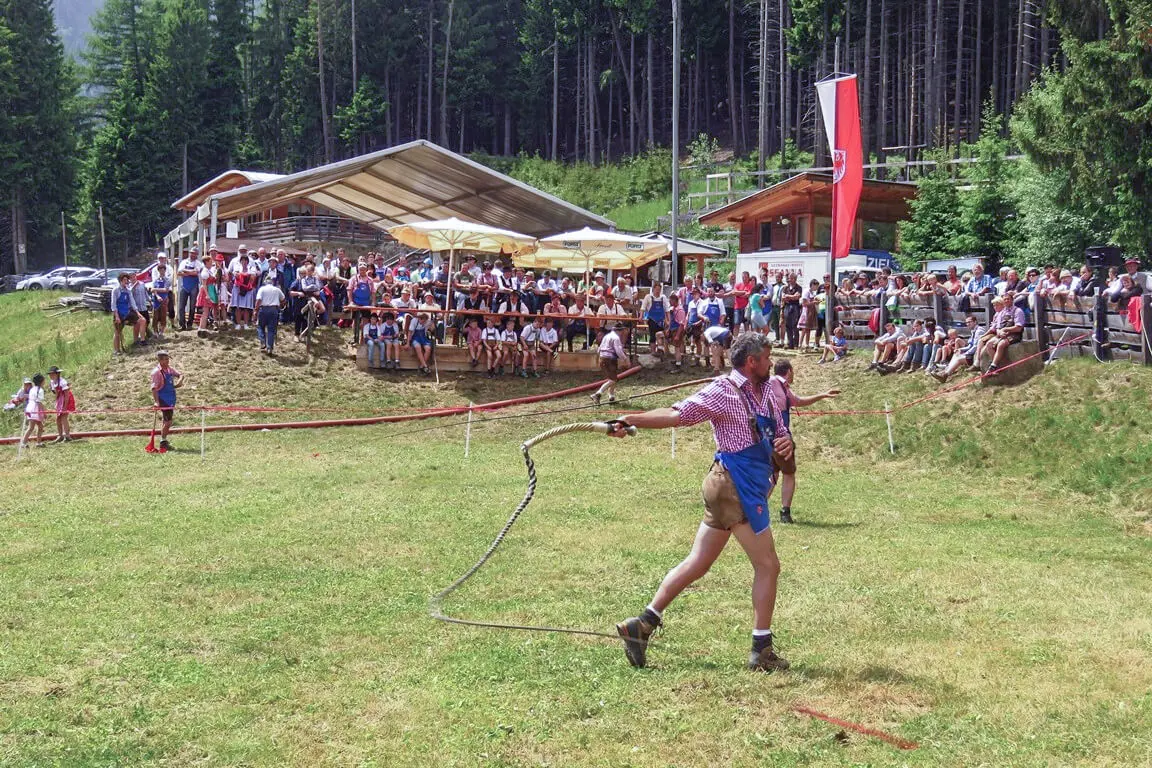
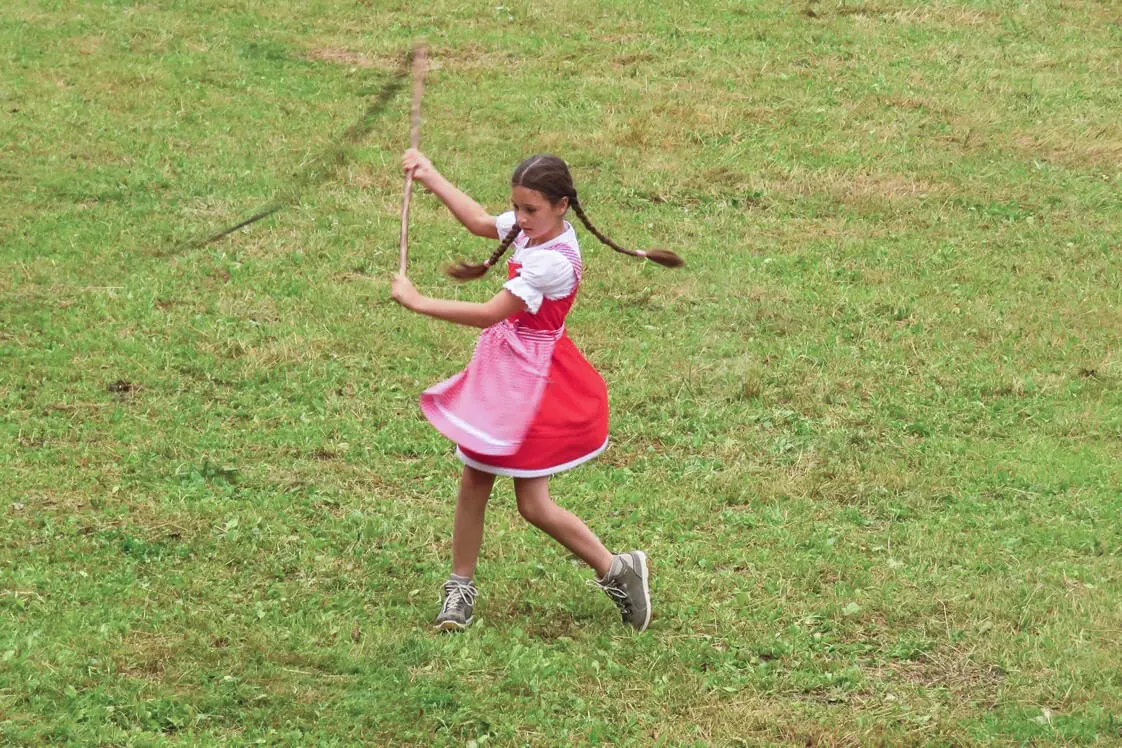
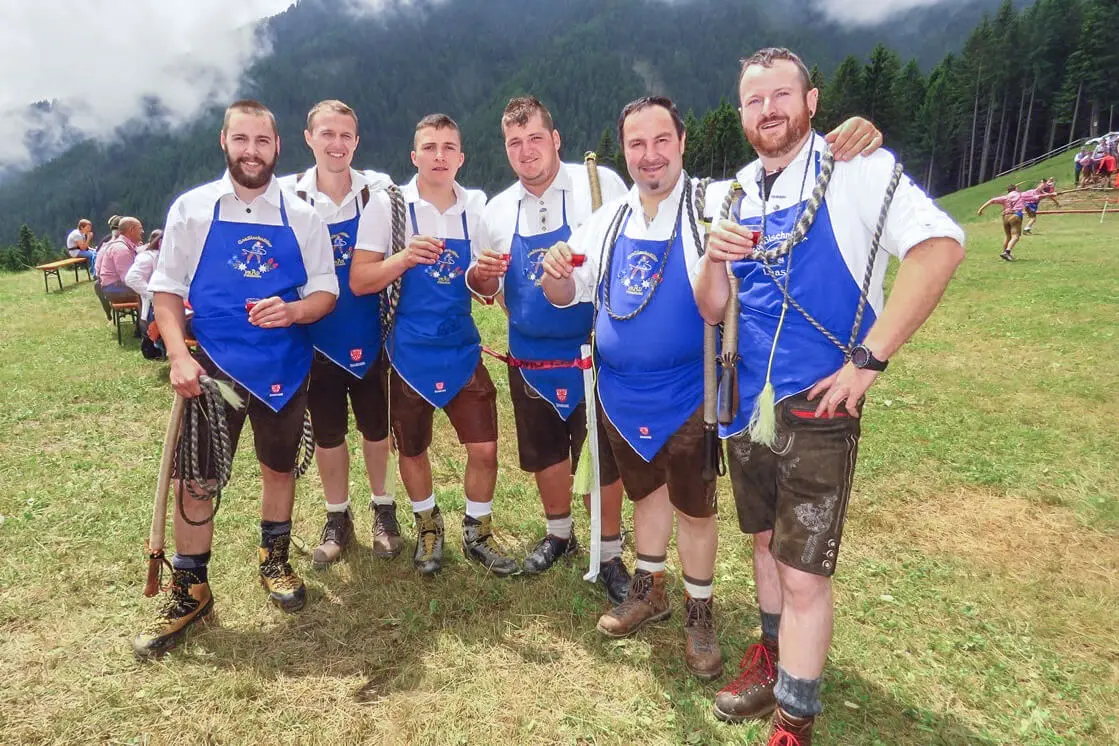
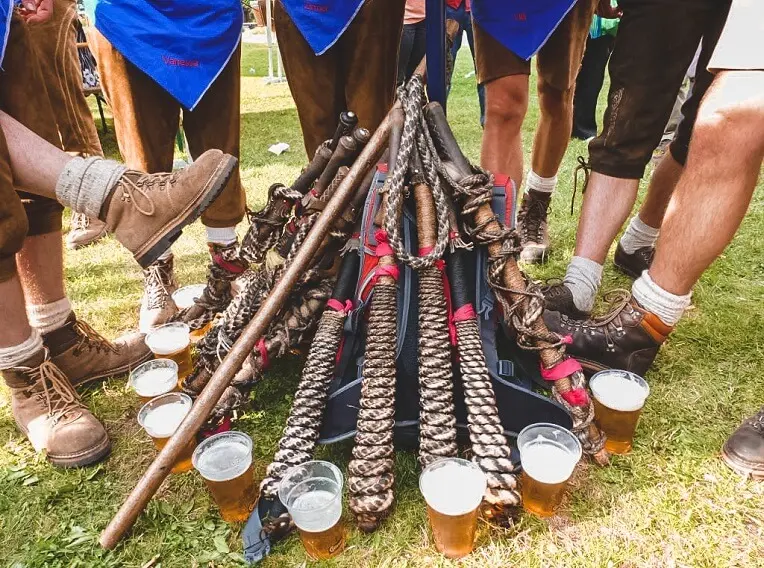
🏔️ Good to Know: The Landesmeisterschaft is usually held on a Saturday in mid-July, hosted by a different village each year. The 2026 championship took place in Tartsch in the Vinschgau (Val Venosta). Check the Landesverband Südtiroler Goaslschnöller event page for performances, valley championships and other whip-cracking events that may take place during your trip.
The competition doesn’t stop at the Brenner Pass. Whip crackers from North and South Tyrol have competed against one another at various events over the years, a reminder that the tradition is older than the border between them.
Near Salzburg, the winter tradition of Aperschnalzen has its own annual contest, the Rupertigau-Preisschnalzen. Teams from Salzburg and neighboring Bavaria compete while the judges listen without being allowed to see who is cracking. The winners are decided entirely by sound.