By autumn, South Tyrol’s wine growers have earned a drink. In the village of Girlan, you’re invited to join them. Discover the Last Load of Grapes Festival, where the final wagonload rolls through the village, fresh juice flows from a historic press, and a fur-and-feather-capped man sporting a spear ensures you wait your turn.
Every harvest has a final cartload. In the wine village of Girlan, they turn it into a party.
And why wouldn’t they? At first glance, South Tyrol looks like an impossible place to grow wine. It’s a mountain-riddled land, wedged between glaciers, forests and steep pastures where keeping a cow upright seems enough of an accomplishment.
But the vines don’t care about the odds. They’ve claimed their share of the sunny slopes — about 1 percent of Italy’s vineyard land — and made it count. They climb from the valley floor to nearly 3,280 feet (1,000 meters), warming in Mediterranean sun by day and cooling through Alpine nights. Around 20 grape varieties thrive here, many on small family plots. The growers haul their harvest to cooperative cellars and trust their neighbors to turn it into something worth drinking.
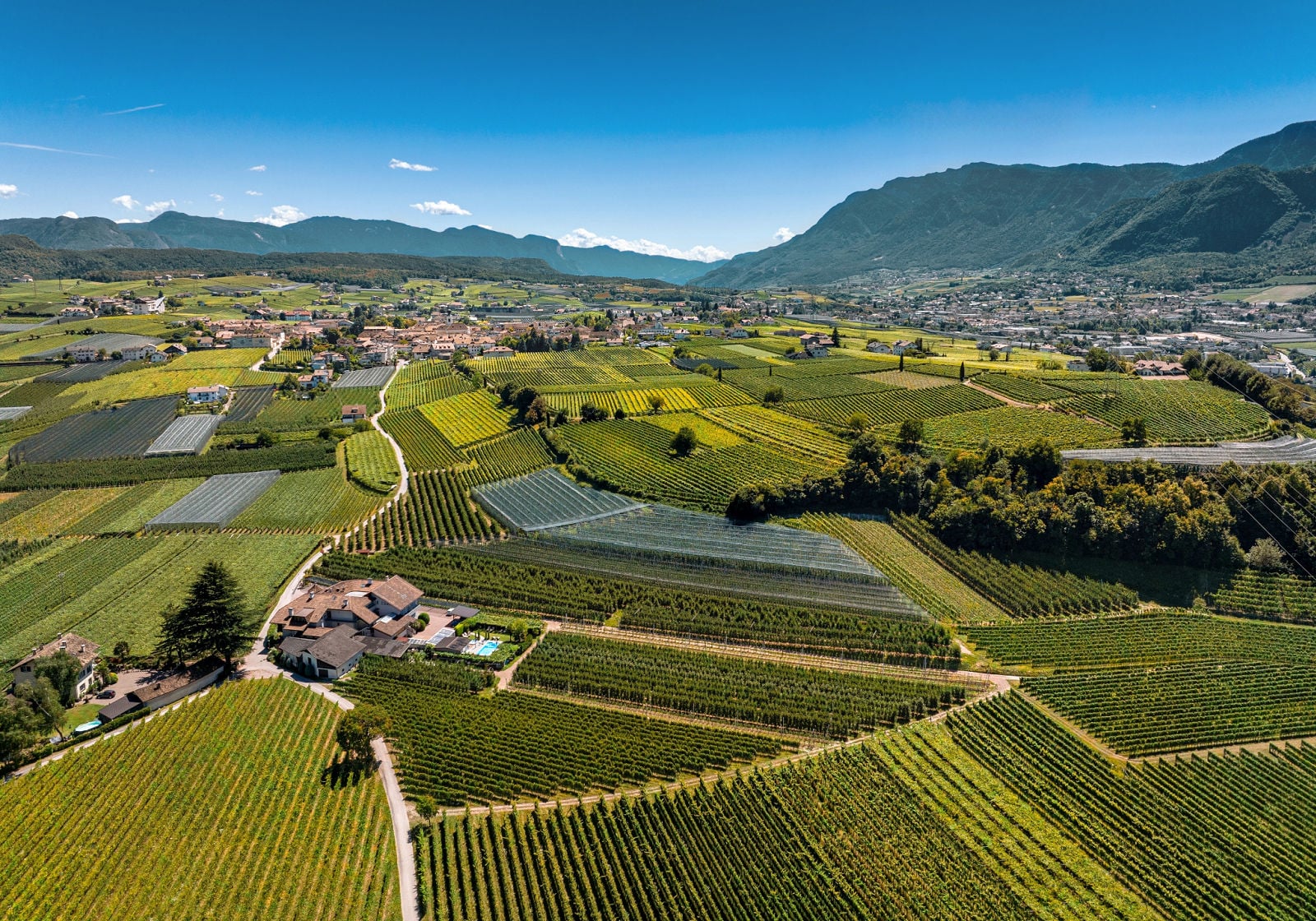
No corner of the region captures that better than Eppan (Appiano), the largest wine-growing municipality in South Tyrol, spread across the Überetsch (Oltradige) plateau just west of Bolzano along the South Tyrolean Wine Road. Here, you’ll find Girlan (Cornaiano), a 1,000 year-old village peppered with stone houses and romantic courtyards with a second life underground. Old wine cellars burrow beneath its streets. In fact, locals say the village was once bigger below ground than above. Apparently, the wine needed more room than the people.
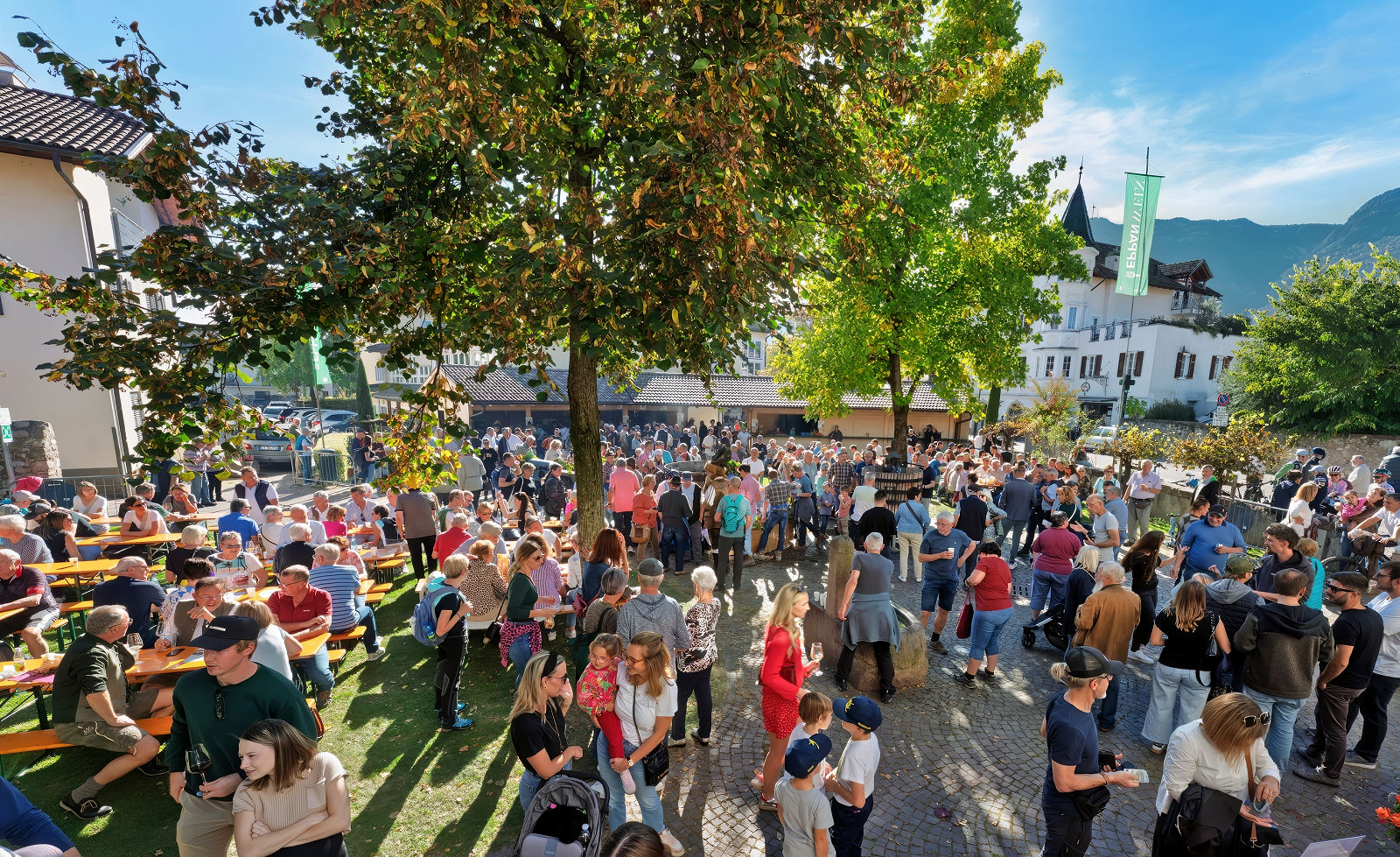
This is a village that lives by the harvest calendar. So when the last grapes come off the vines in autumn, Girlan makes an afternoon of it. Out comes the wagon, the band fires up, and the final load rolls through the village center. They call it the Last Load of Grapes (Die letzte Fuhre / L’ultimo carico d’uva), and we joined the celebration. Come for the procession. Leave the rest of your afternoon unbooked.
Vernatsch, Krapfen and Two and a Half Lederhosen
We could not have asked for a better day. The sky over the Überetsch was that deep, autumn blue you only get once the summer haze burns off, and the temperature was perfect for an outdoor celebration. The vineyards around the village had already been picked, their leaves turning gold and rust.
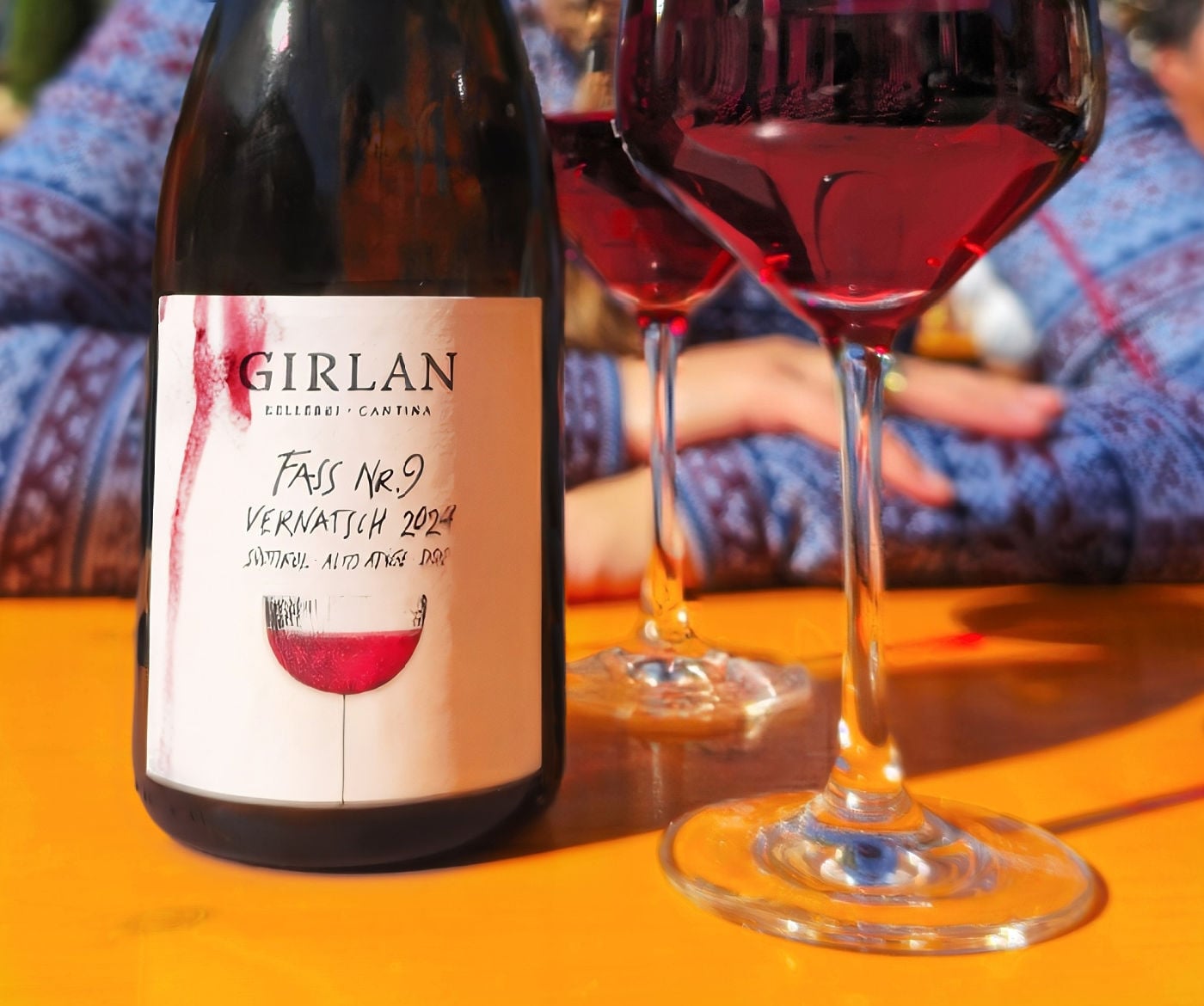
We arrived mid-day, took a seat at one of the long wooden tables set up for the festival, and did what you do in Girlan: ordered a bottle of Vernatsch from Kellerei Girlan. It was bright and easy, all cherry and almond, the kind of wine built for long afternoons rather than careful tasting notes. We split a krapfen, a fried pastry dusted in sugar and filled with jam, and within minutes we were trading toasts with the strangers beside us.
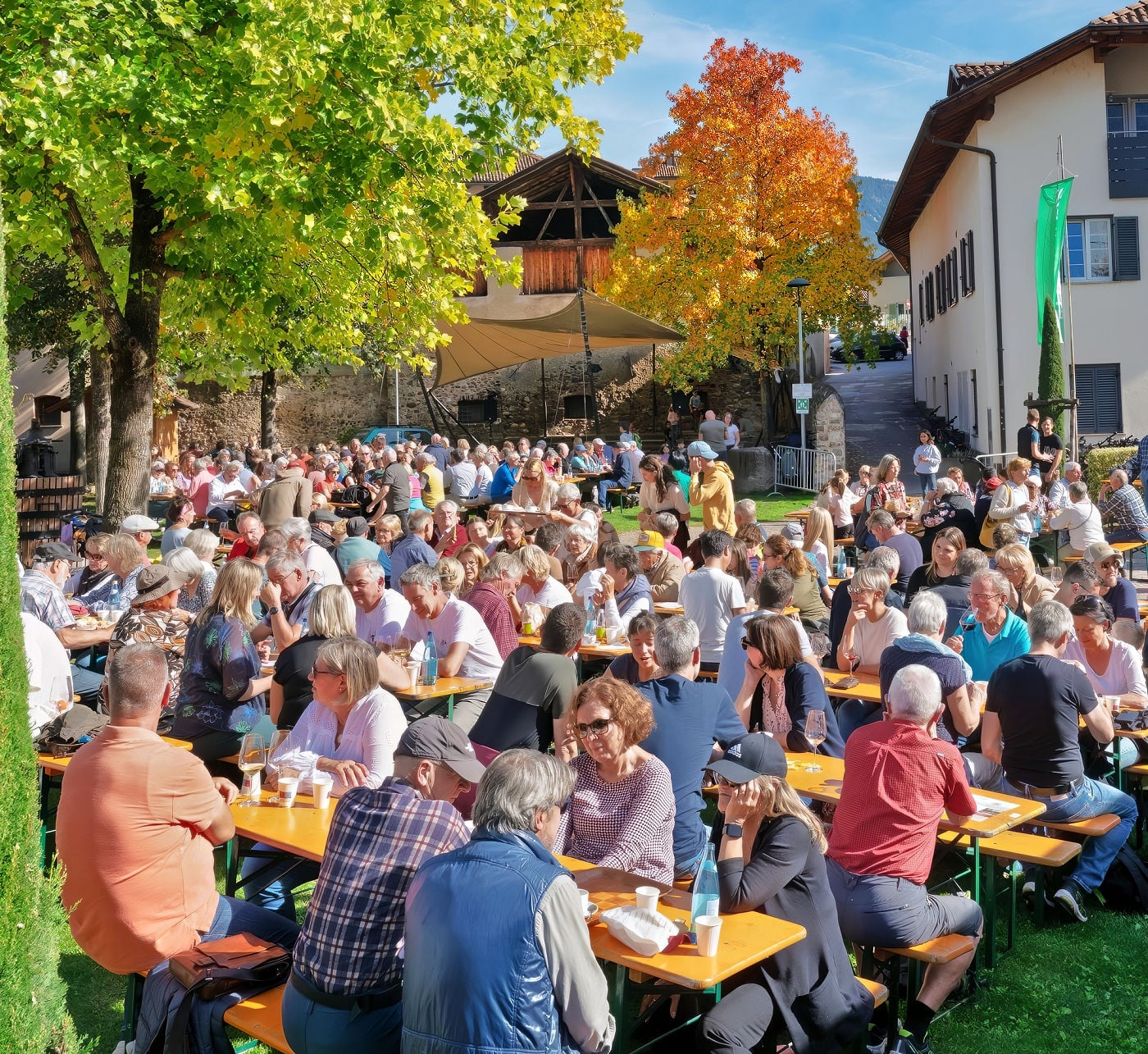
The soundtrack came courtesy of Zwoa a holb Lederhosn (“two and a half lederhosen”), a local duo who seemed determined to get every leg in the place moving. Their set swung from foot-stomping Schlager to Tyrolean folk tunes flavored with pop and rock. The whole setting felt a lot like a village-sized version of Törggelen, the autumn tradition of making the rounds to farmhouse taverns for new wine, chestnuts and hearty food.
The Last Grapes Arrive Under Guard
Not long after we polished off the bottle of Vernatsch, the music stopped, and the crowd began shuffling toward the cobblestone lane beside the festival grounds. We found a spot just in time to see the Saltner leading the procession.
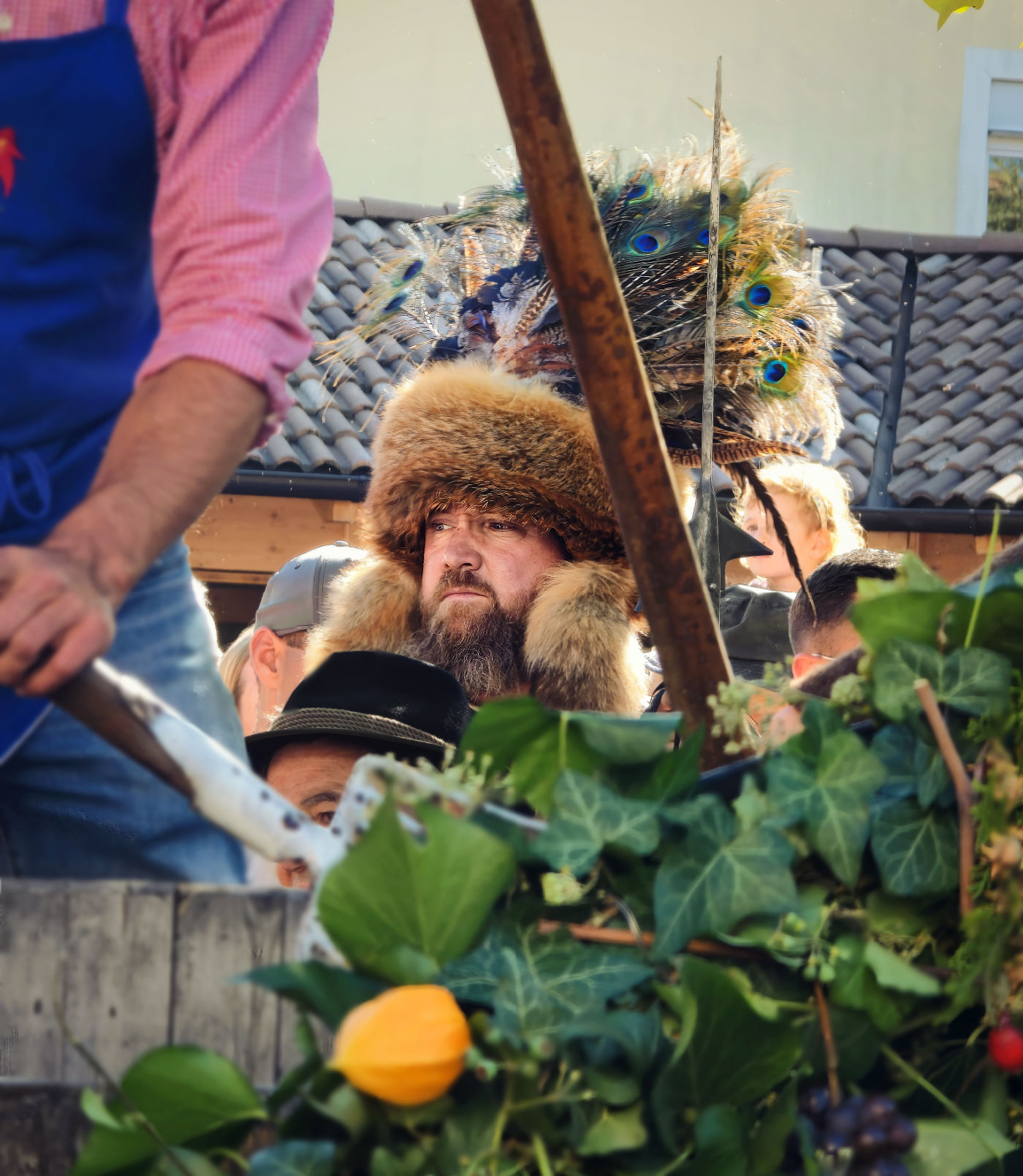
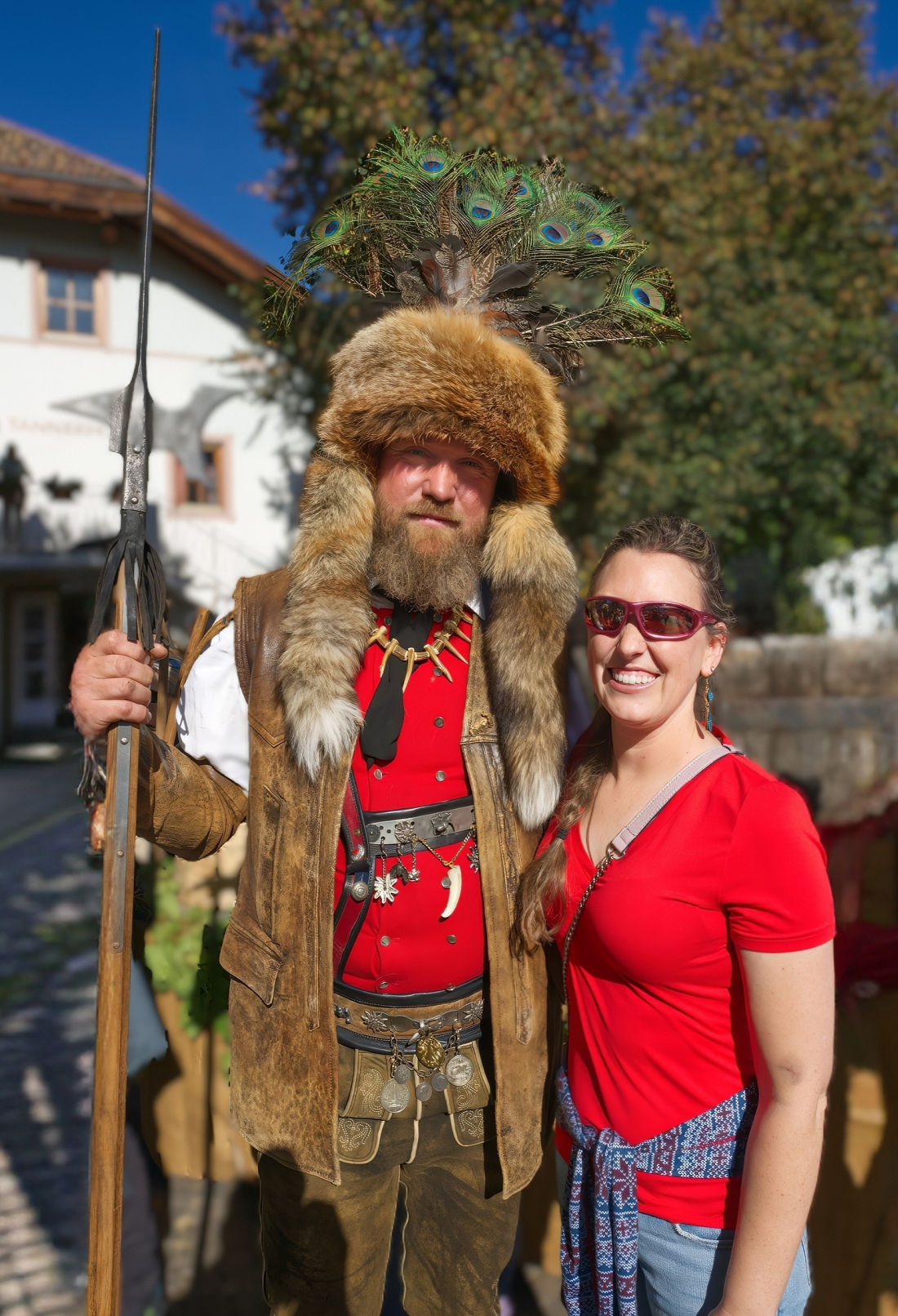
You don’t mistake him for anyone else. An absurd amount of peacock feathers rose from his thick fur hat, with long fox tails framing a face offering no welcome whatsoever. In his hand he carried a long spear-like halberd that suggested we should keep our hands where he could see them.
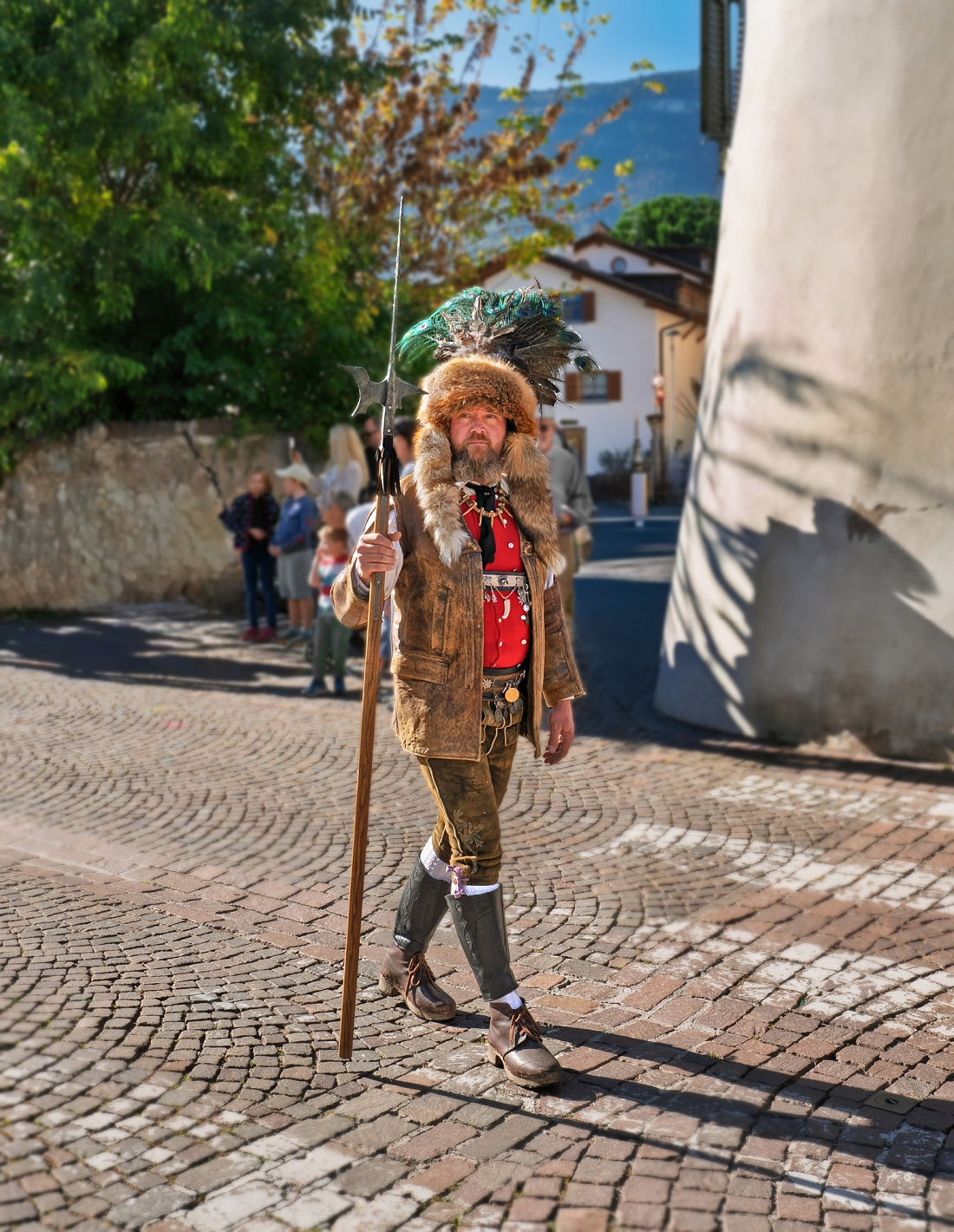
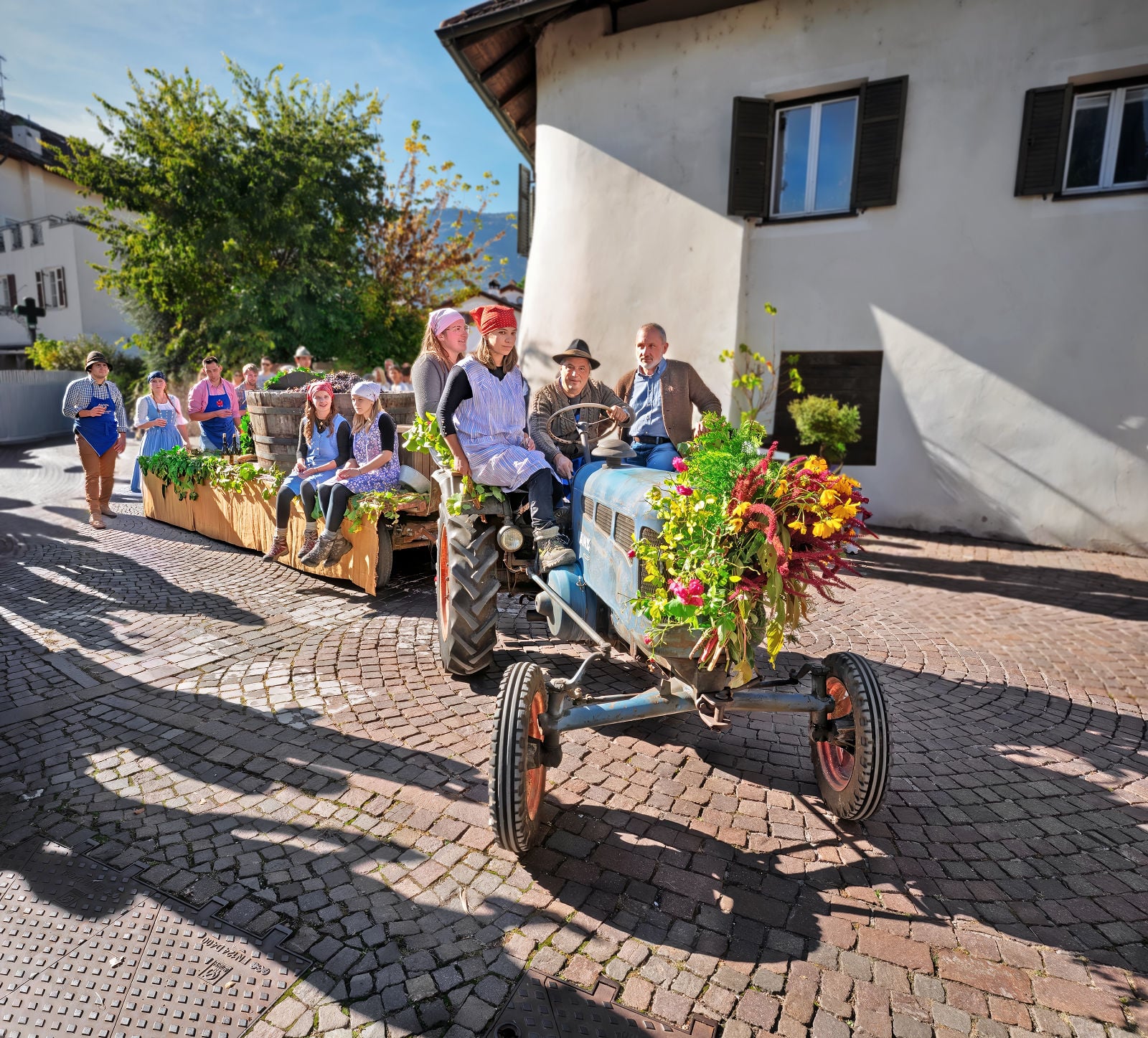
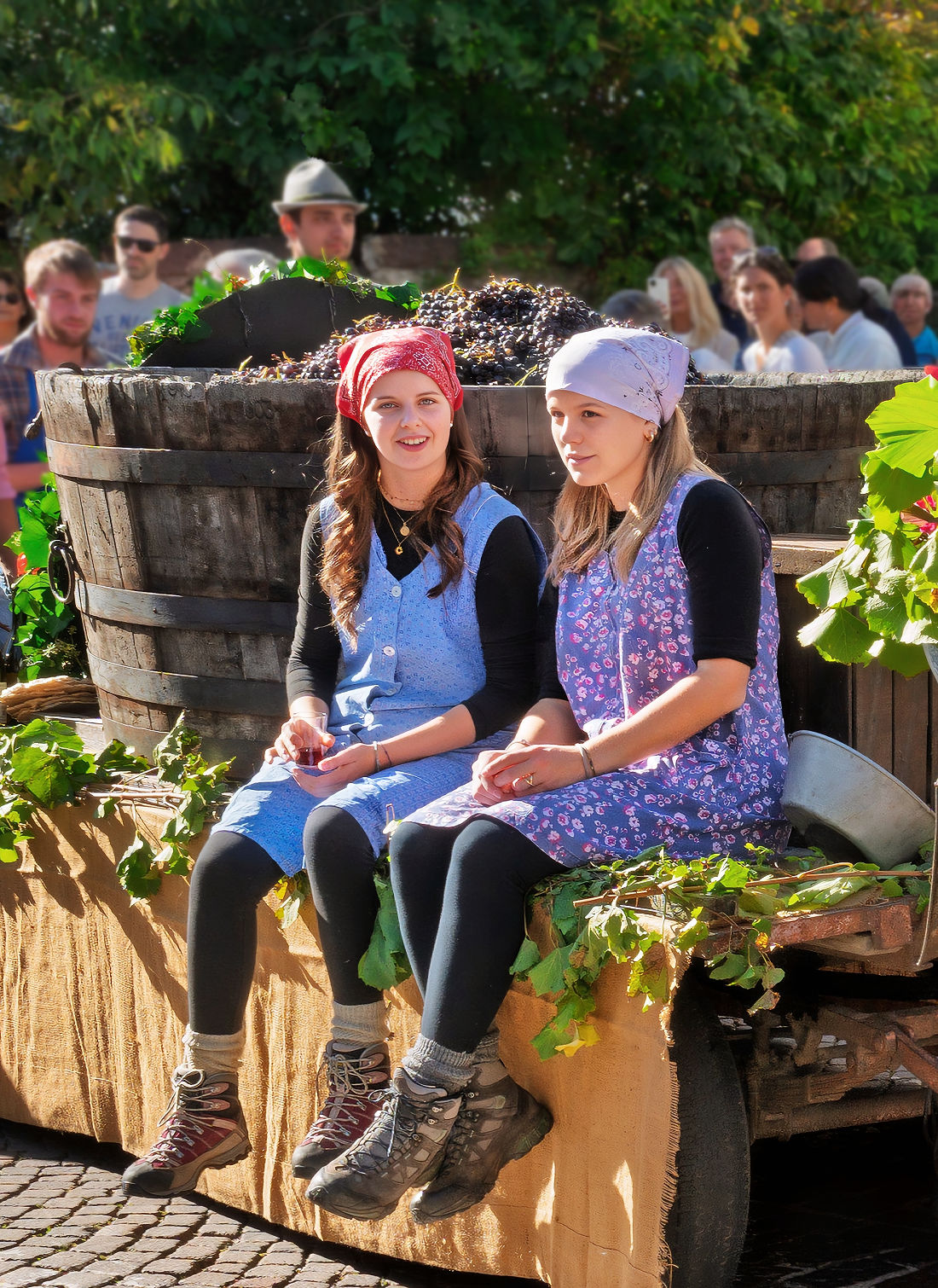
The costume is theatrical, but the role was deadly serious. For centuries the Saltner was the guardian of South Tyrol’s vineyards. In late summer, as the grapes began to ripen, the wine-growing communities appointed and swore in these watchmen to protect the crop until harvest. Grapes were a family’s income for the year, and the Saltner stood between that income and everything that threatened it: thieves, hungry passersby, birds and roaming animals.
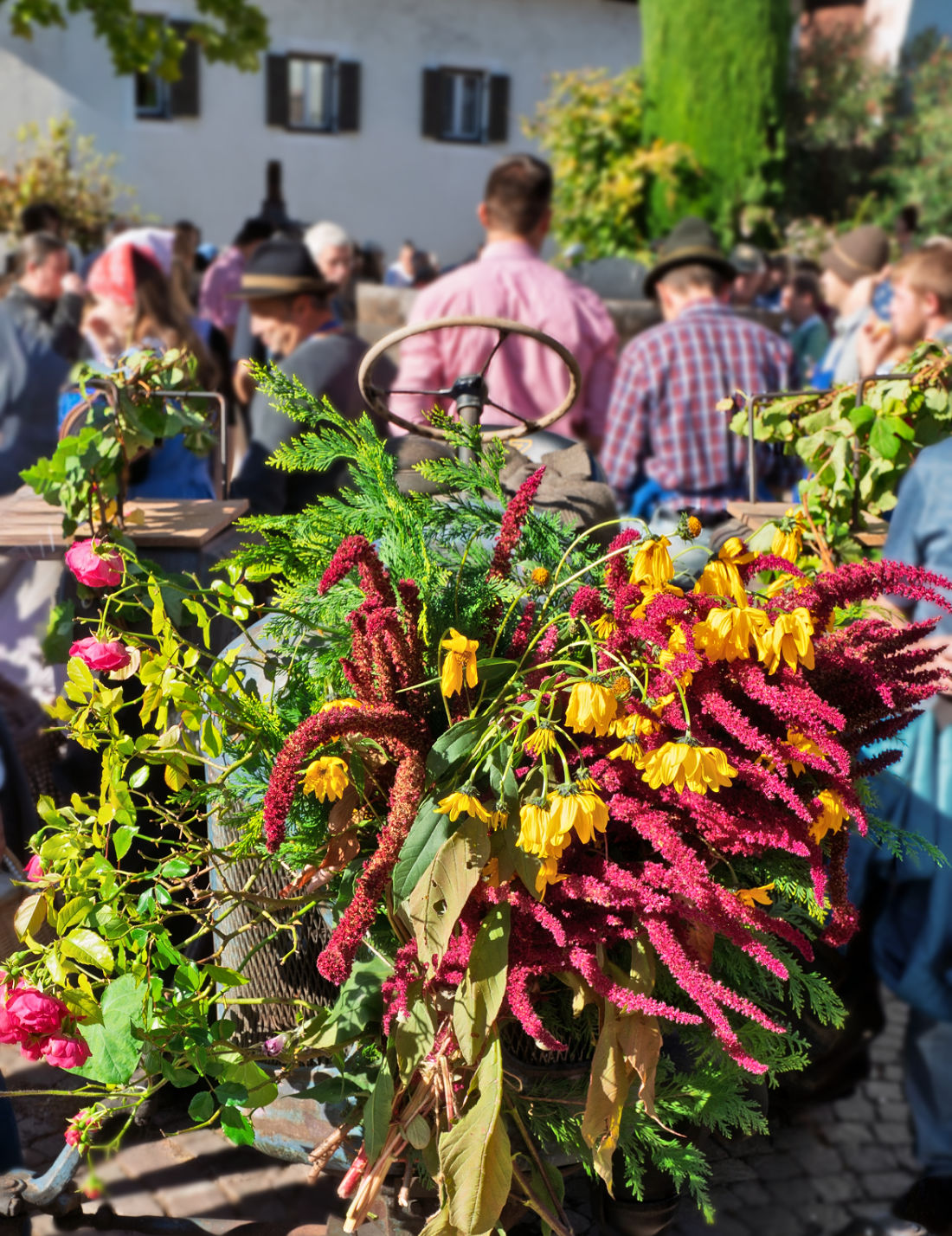
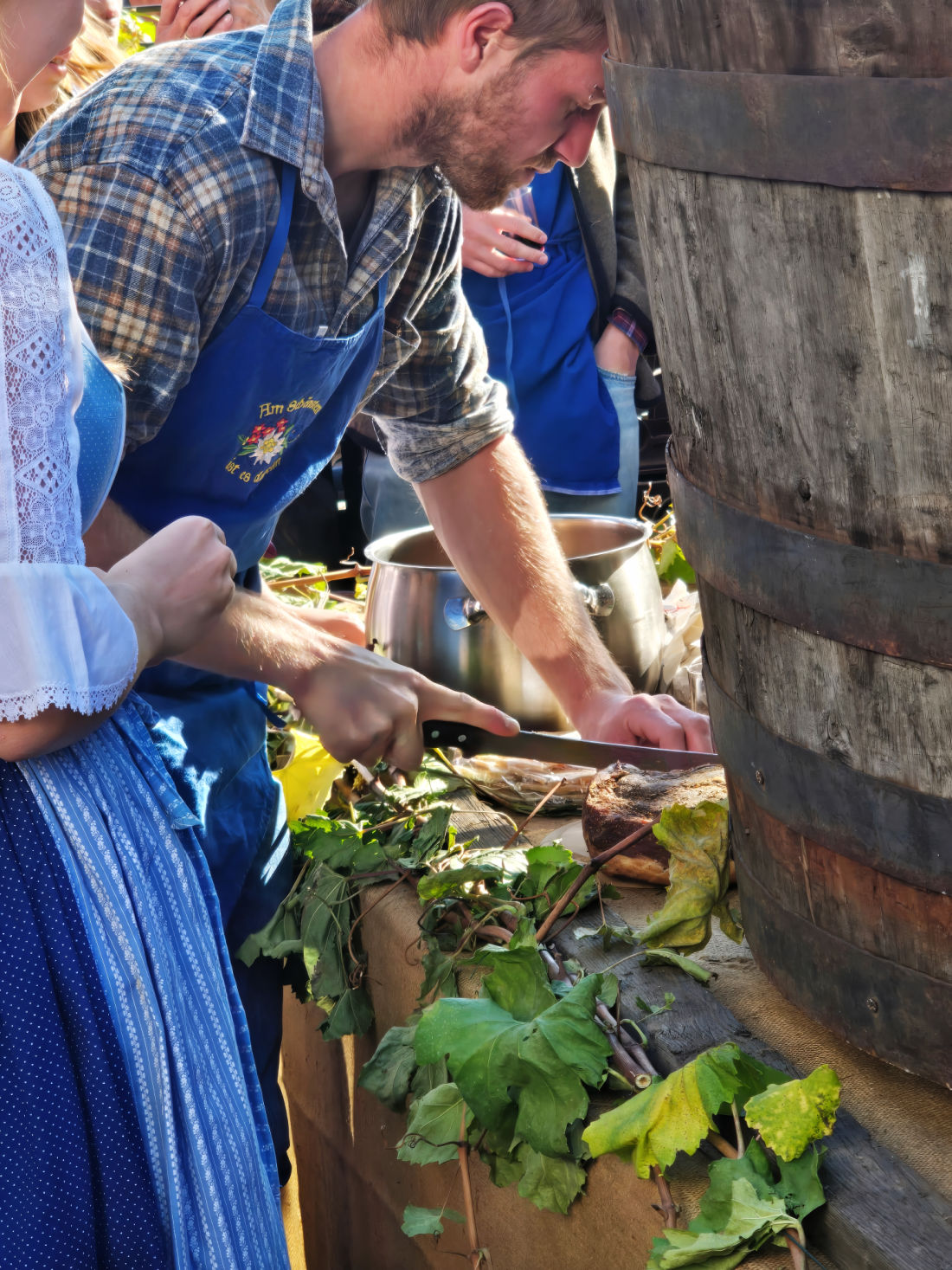
Behind him rolled the reason for all of it: a wagon loaded with the last grapes of the season, pulled by an old blue tractor. Fixed to its front was a gorgeous autumn harvest wreath. Vine branches draped the wagon, where women and girls rode beside the grapes with colorful kerchiefs tied over their hair. Men accompanied the load in traditional blue “Schurz” work aprons.
Pressed, Poured & Celebrated
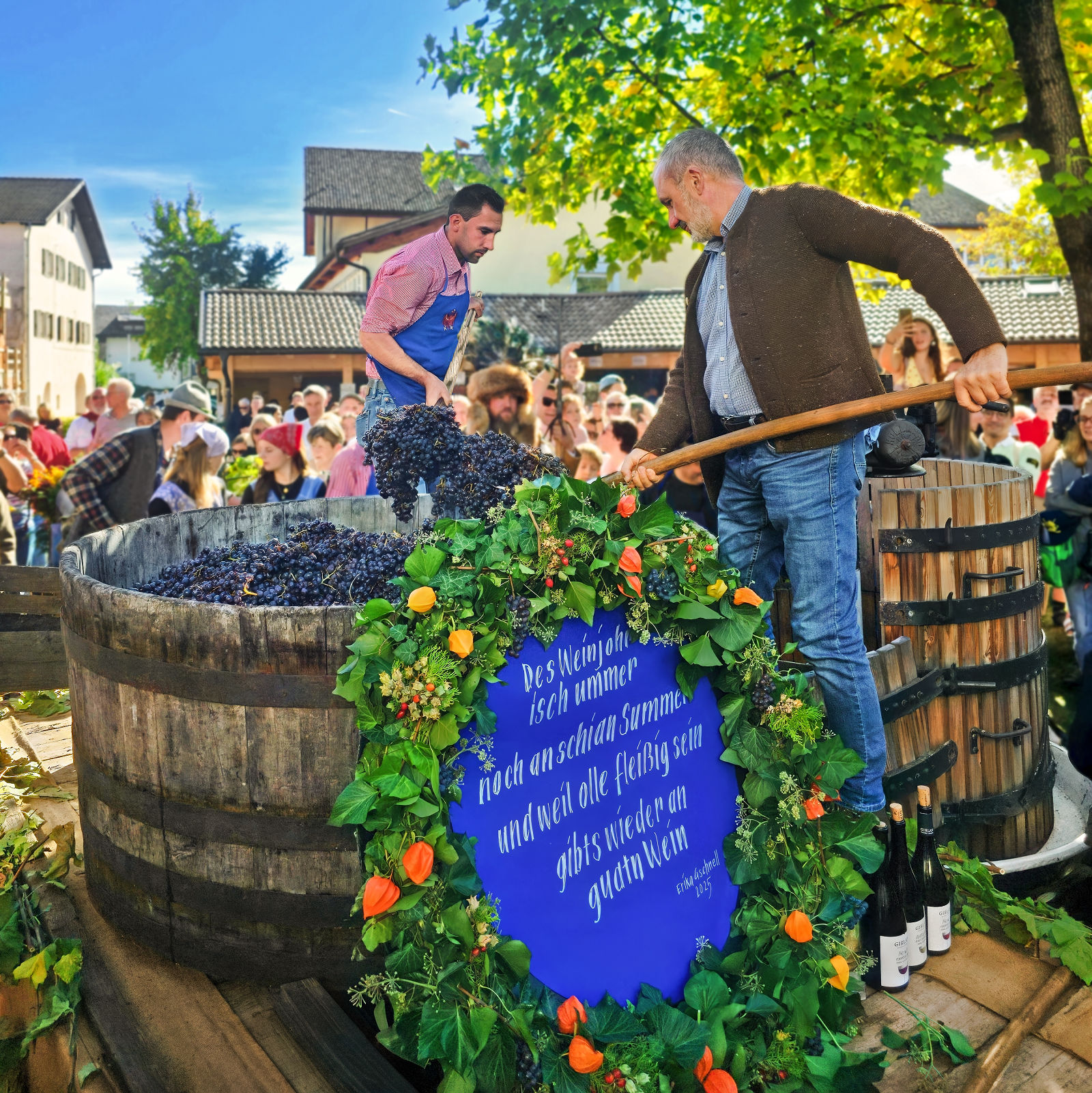
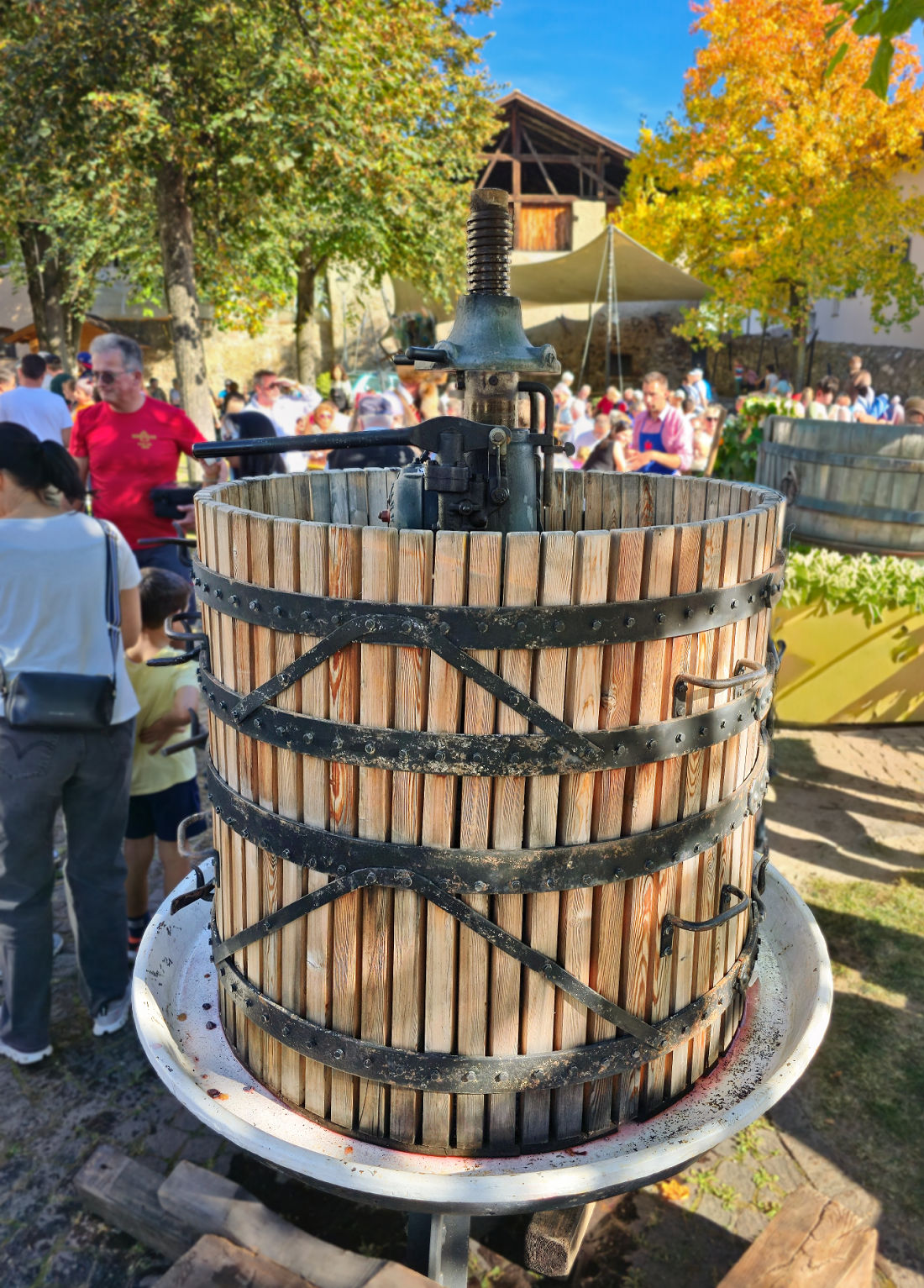
When the wagon reached the festival grounds, a historic wine press stood waiting. Locals call it a Torggl, the same root that gives Törggelen its name, and this one had clearly pressed a lot of harvests before ours.
Two local wine growers climbed up and began scooping the grapes from the wagon into the press. Then came the slow, steady work of turning it down, the wood creaking as juice began to run into the basin below. The crowd pressed in closer. The Saltner watched over it all with his arms crossed, as if one last grape might still try to escape.
What came out was the “new” wine: fresh grape must, sweet and cloudy, the very first taste of the vintage. And then the best part. It was poured out for everyone. Young and old lined up together, holding out cups. And for a moment the entire village was drinking the same harvest.
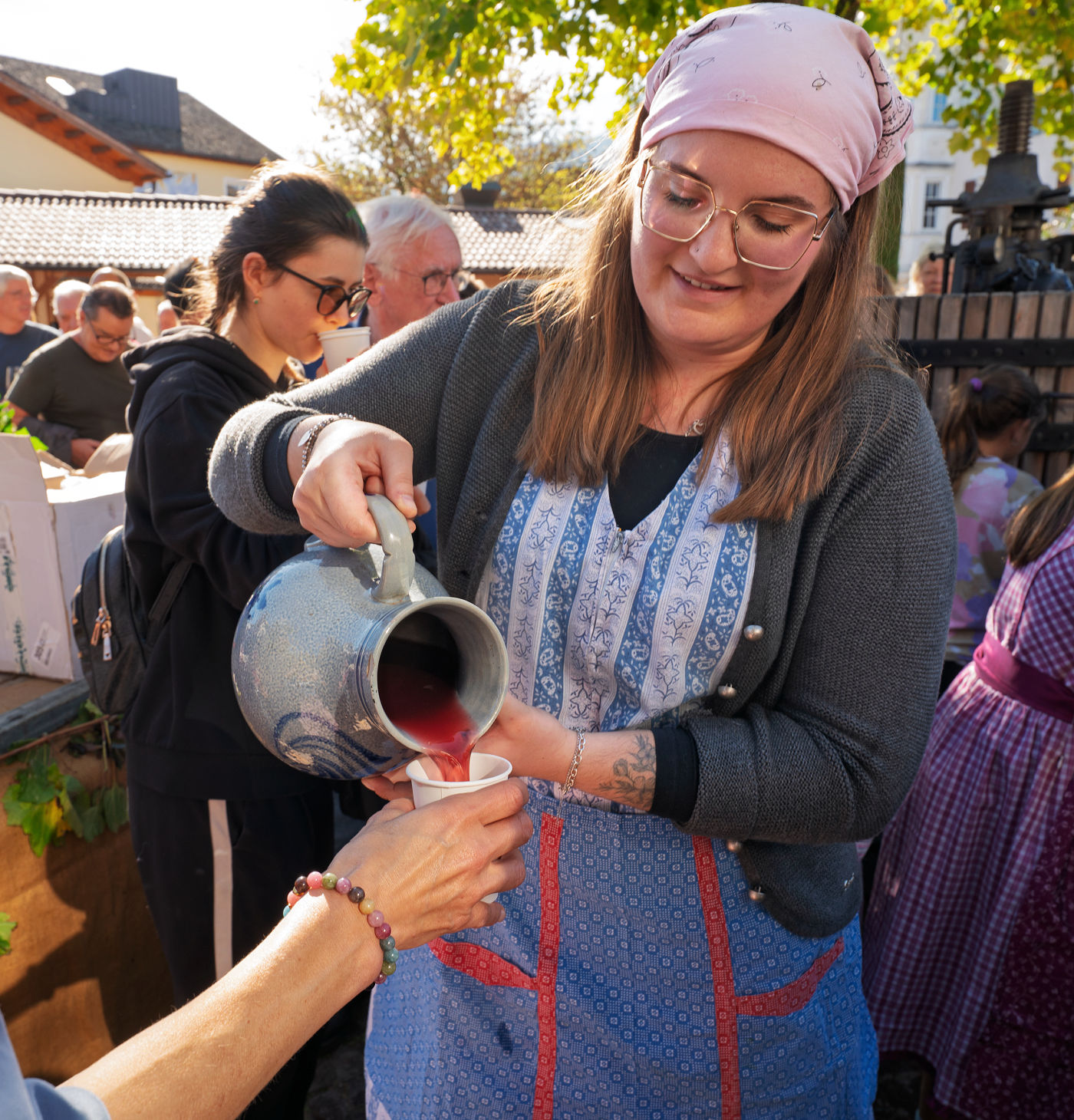
Of course we tasted it. We’d finished a bottle of wine before the grapes even arrived. Passing up the fresh juice would have been a peculiar moment to discover restraint.
However, more wine did eventually find our lips. So did the familiar business of staying longer than we’d intended. We’re quite good at planning other people’s afternoons in South Tyrol. Our own tend to get away from us.
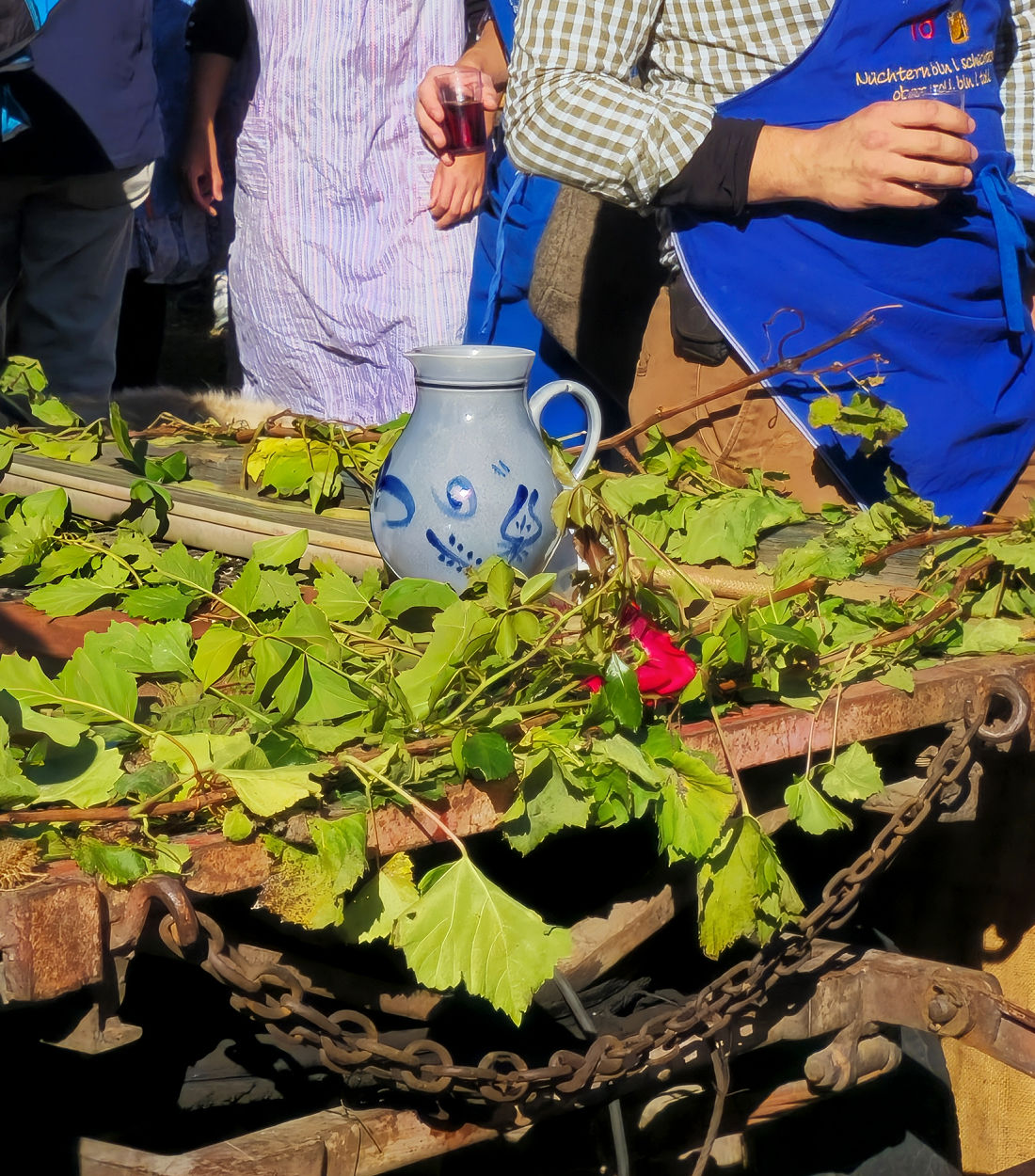
By the way, there’s a reason the last load arrives dressed for a party. Traditionally, wine growers decorated it with flowers, an Erntekranz (harvest wreath) and a Spruchtafel — a board bearing a saying or verse. The decorations celebrated a successful harvest, marking the moment when work gave way to celebration. The boards were then hung in the winery.
A new saying accompanies the load each year. The one pictured above reads: “The wine-growing year is over after a beautiful summer, and because everyone has worked hard, there’ll be good wine again.” A fitting tribute to the hands that turn a year in the vineyards into a glass at the table.
When It Happens and How to Attend
The Last Load of Grapes is held each year in mid-October, usually on a Saturday, once most of the harvest along the Wine Road is safely in the cellars. In 2026 it falls on Saturday, October 10, from roughly 10 AM to 4 PM.
- Where: The Tannerhof and church square in the center of Girlan, about 15 minutes by car from Bolzano.
- Schedule: Festivities begin late morning at the Tannerhof, local wineries offer cellar visits through the early afternoon, and the procession sets off around 2:30 PM. Arrive by early afternoon to claim a table before the parade.
- Cost and tickets: Entry is free and no registration is required. You pay for wine and food as you go.
- Getting there: Regional buses connect Bolzano with Eppan and Girlan. Parking in the village is tight on festival day, so public transport is the easier choice, especially if you plan to enjoy the wine.
- Where to stay: For a stay among the vineyards, consider Weingut Donà. With vines around you and the ruins of Hocheppan Castle above, this family-owned wine estate gives you good reason to linger in South Tyrol’s wine country.
- Before you go: Dates and times can shift slightly year to year, so confirm the program with Eppan’s tourist office before your trip.
If you’re visiting in autumn, leave time between the trails of the Dolomites for a village celebration. A shared table and a glass of wine can be just as rewarding as another summit.
Late September and early October bring the Almabtrieb, when garlanded cattle come down from the high pastures. Other fun autumn festivals include Speckfest on Kronplatz and the Bread & Strudel Market in Brixen. And the weekend after Girlan’s festival, Merano throws the region’s biggest harvest party at the Merano Grape Festival, with a parade featuring floats and bands from across South Tyrol.
The big festivals have their spectacle. Girlan has something quieter and harder to find: a village marking the end of its year’s work the way it always has, and inviting everyone to share the first glass.

Go beyond the stalls on a private South Tyrol food and wine tour with Franz Lageder, a certified South Tyrolean Gourmet Ambassador and former head sommelier at a 5-star hotel in the Dolomites. Franz will whisk you away to family-run wineries, historic cellars and artisan producers for a delicious journey into South Tyrol’s centuries-old culinary culture.
Explore Private Food & Wine Tours