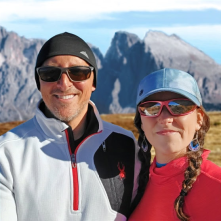
Der Böglerhof rises in the heart of Alpbach, where five centuries of history meet one of the finest spa resorts in the Tyrolean Alps. Here, beneath snow-crowned peaks and above a wine cellar older than most nations, we found the kind of family-run soul that no five-star rating can fully capture.
We’ll admit it: after years of exploring South Tyrol and the Dolomites, we thought we had a firm grip on the Alps. Then we drove into Alpbachtal.
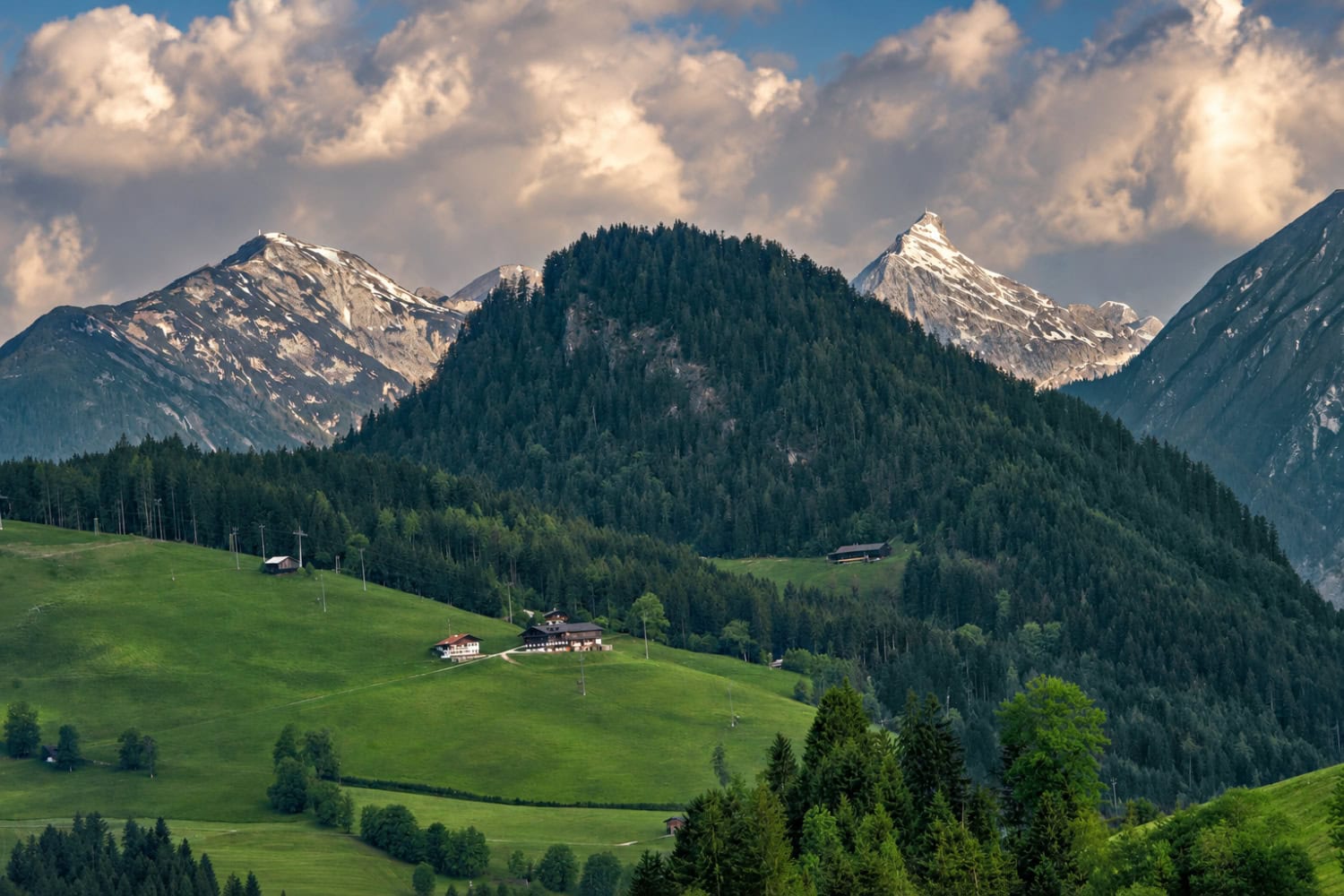
Less than two hours from Munich and under an hour from Innsbruck, the valley had somehow escaped every itinerary we had ever built. We arrived in late May to find winter still teasing the peaks, wildflowers flashing across the hillsides, and the entire valley lit up in a green so vivid it looked as though Ireland had leapt across the English Channel and landed in the Alps.
Farmers were already cutting the year’s first hay, perfuming the air with the sweet, earthy scent of grass, sunshine and hard work — the kind of aroma that instantly pulls a smile across your face.
By the time we reached Alpbach, the valley had already done most of the seducing.
But the wooing was far from over. Centuries-old timber houses stepped up the mountainside, balconies adorned with flowers, and lush pastures pressed in from every direction. At the village’s center, a church tower rose above the rooftops like an exclamation point on Alpbach’s claim to being Austria’s most beautiful village.
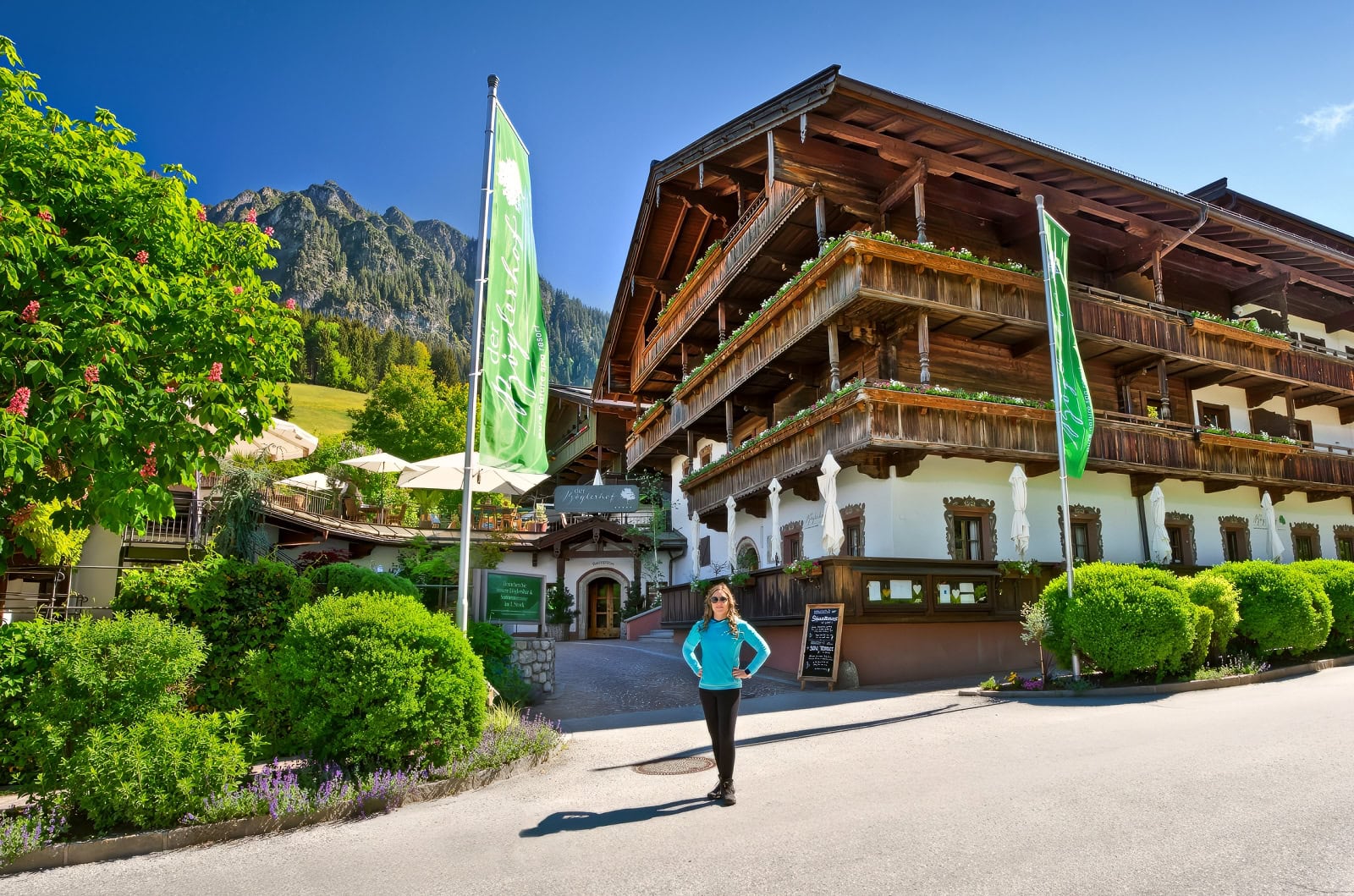
Just beyond it stood Der Böglerhof, a former farmhouse with nearly five centuries of history and the same family at its helm since 1933. For the next three days, we would be very happy to call it home.
The Art of Arrival
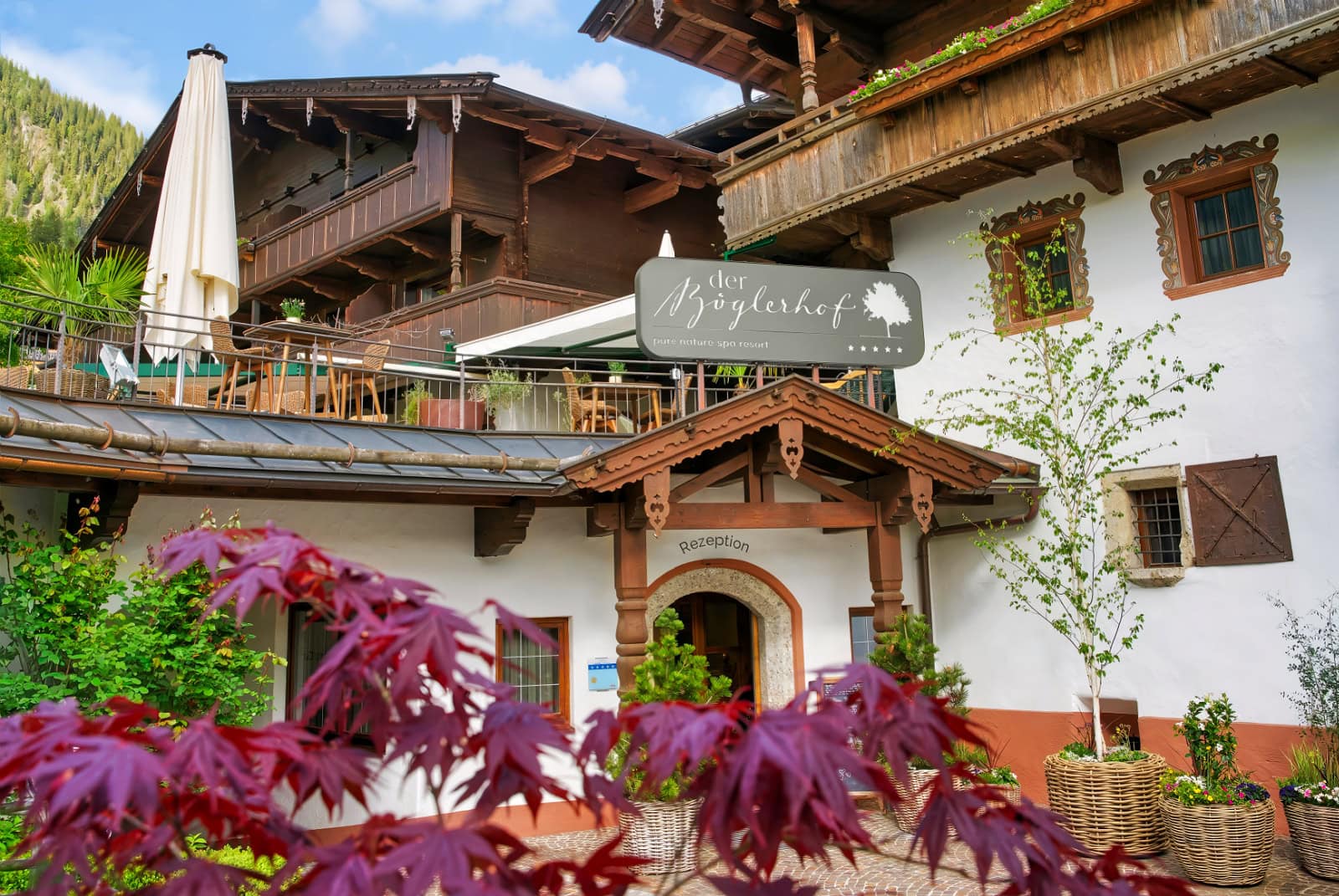
The Böglerhof announces itself the way a place with five centuries of Alpine history should: with character rather than spectacle. Timber, stone and greenery seem to rise together from the earth, making the property feel less like a hotel that was built and more like one the mountains slowly brought to life.
Before we even stepped inside, the Böglerhof made the welcome personal. A wood-framed chalkboard near the entrance displayed our names alongside those of the day’s other arriving guests. Soon, welcome drinks were in hand and we were settled beneath the late-afternoon sun on the terrace of Bögler’s Bar. Flowering trees framed the space, while inviting seating areas were tucked throughout the garden. There were enough tempting places to linger that we briefly considered abandoning the rest of the check-in process altogether.
Nearly every turn revealed another corner that seemed to be waiting for a book, a glass of wine or an hour with nowhere else to be.
Eventually, we pulled ourselves away for a brief tour, though “hotel” hardly captures the way the Böglerhof is arranged. The property unfolds across a collection of interconnected buildings that climb with the mountainside, giving it the feel of a small village tucked inside Alpbach itself. Hallways opened onto gardens. Terraces appeared where we least expected them. Nearly every turn revealed another corner that seemed to be waiting for a book, a glass of wine or an hour with nowhere else to be.
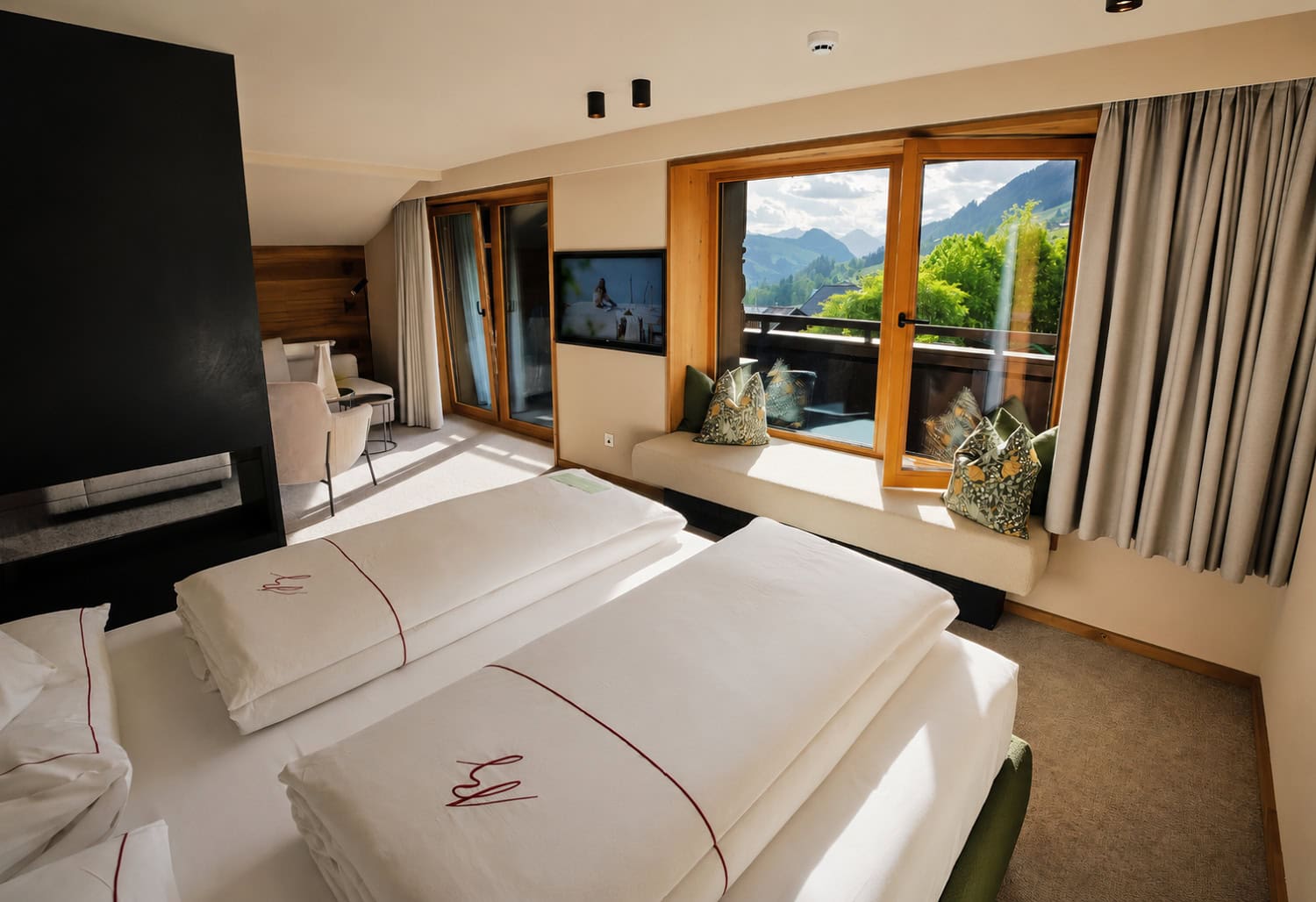
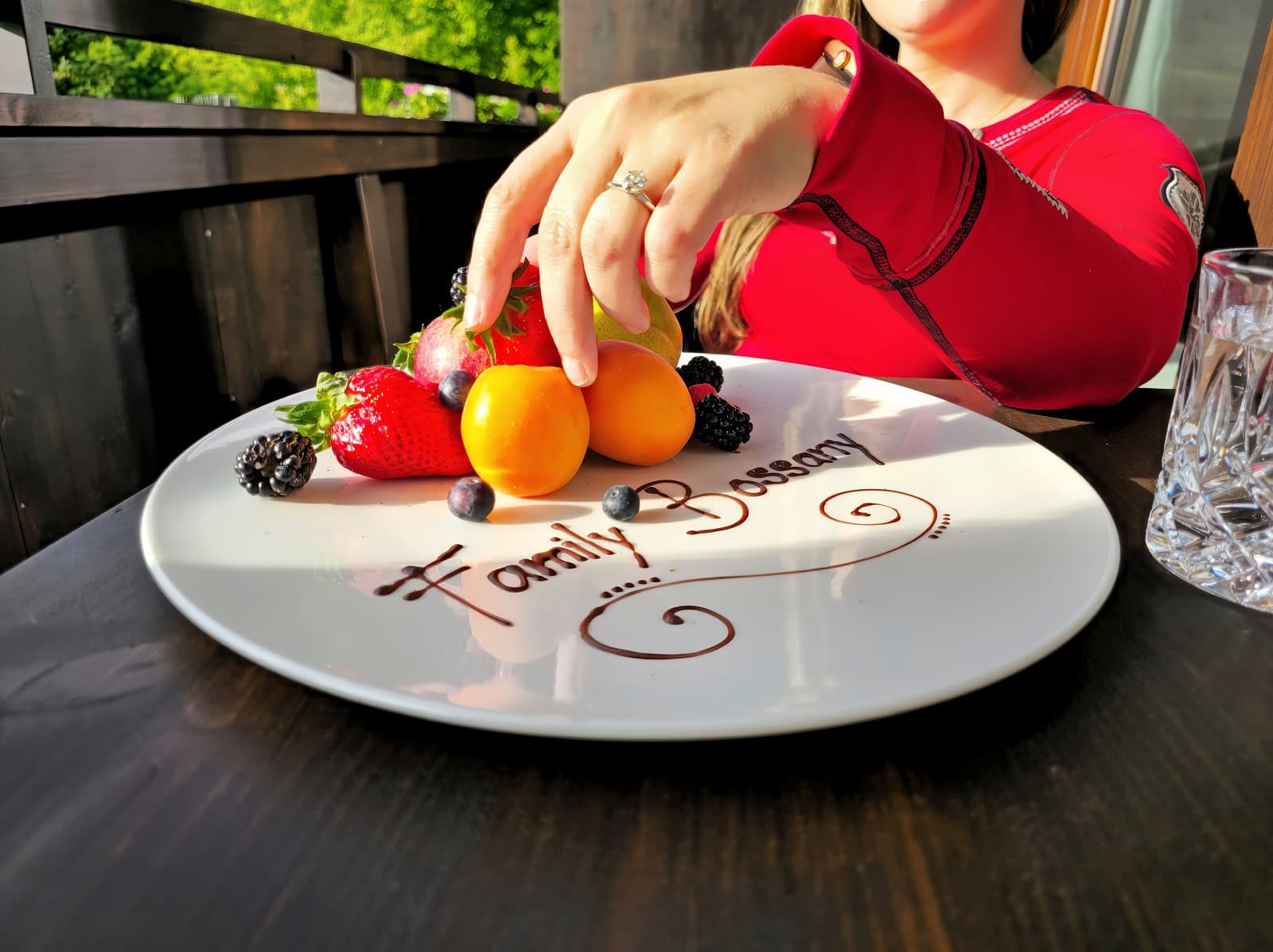
By the time we reached our room, the Nature Suite, we were already deciding which corners to explore first. Those plans were quickly postponed. A plate of fresh fruit waited inside with our name drizzled in chocolate, while beyond the balcony Alpbach stretched toward the Tux Alps and the peaks of the Rofan and Karwendel ranges. We carried the fruit outside, settled into the view and let the Böglerhof make its case for staying exactly where we were.
Inside Our Nature Suite
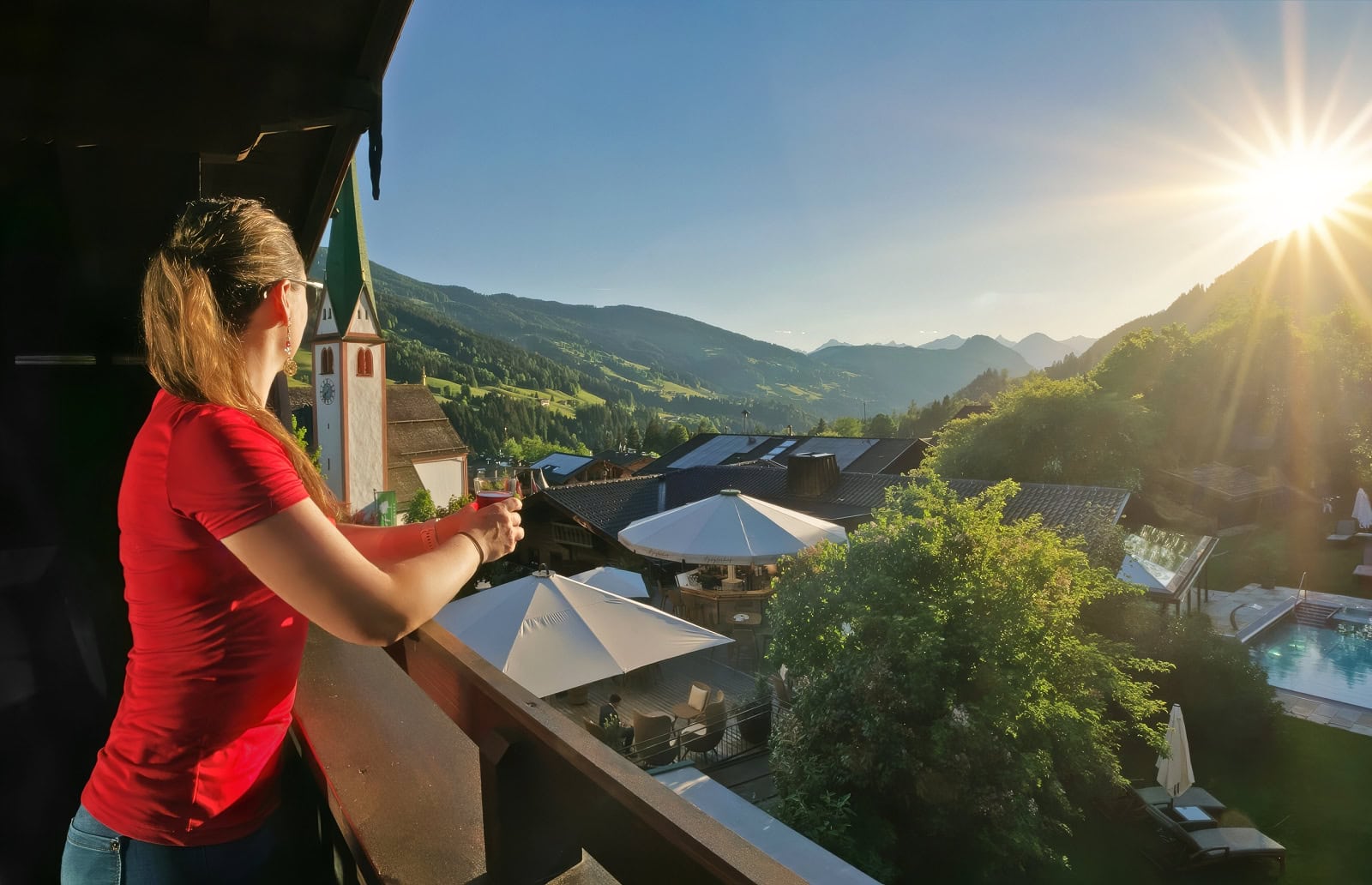
The view was the first thing to command our attention, but the suite gave us plenty of reasons to eventually turn around.
Light Swiss stone pine, natural fabrics and warm earth tones carried the Böglerhof’s surroundings indoors. The effect was calming and charming without leaning on Tyrolean clichés. There were no antlers looming over the bed, no riot of gingham and no attempt to smother us in a rustic fantasy. The Nature Suite felt designed for an actual stay, not merely for a photograph.
What stayed with us most was not any one amenity, but the sense that the suite had been designed by people who understood how guests actually use a room. Everything had a purpose.
The bed was exceptional and faced wide windows that brought the surrounding mountains into view the moment we opened our eyes. We both slept better than we normally do while traveling. Guests can choose from a pillow menu offering different levels of support, although we found the pillows already provided perfectly comfortable and never felt the need to order replacements.
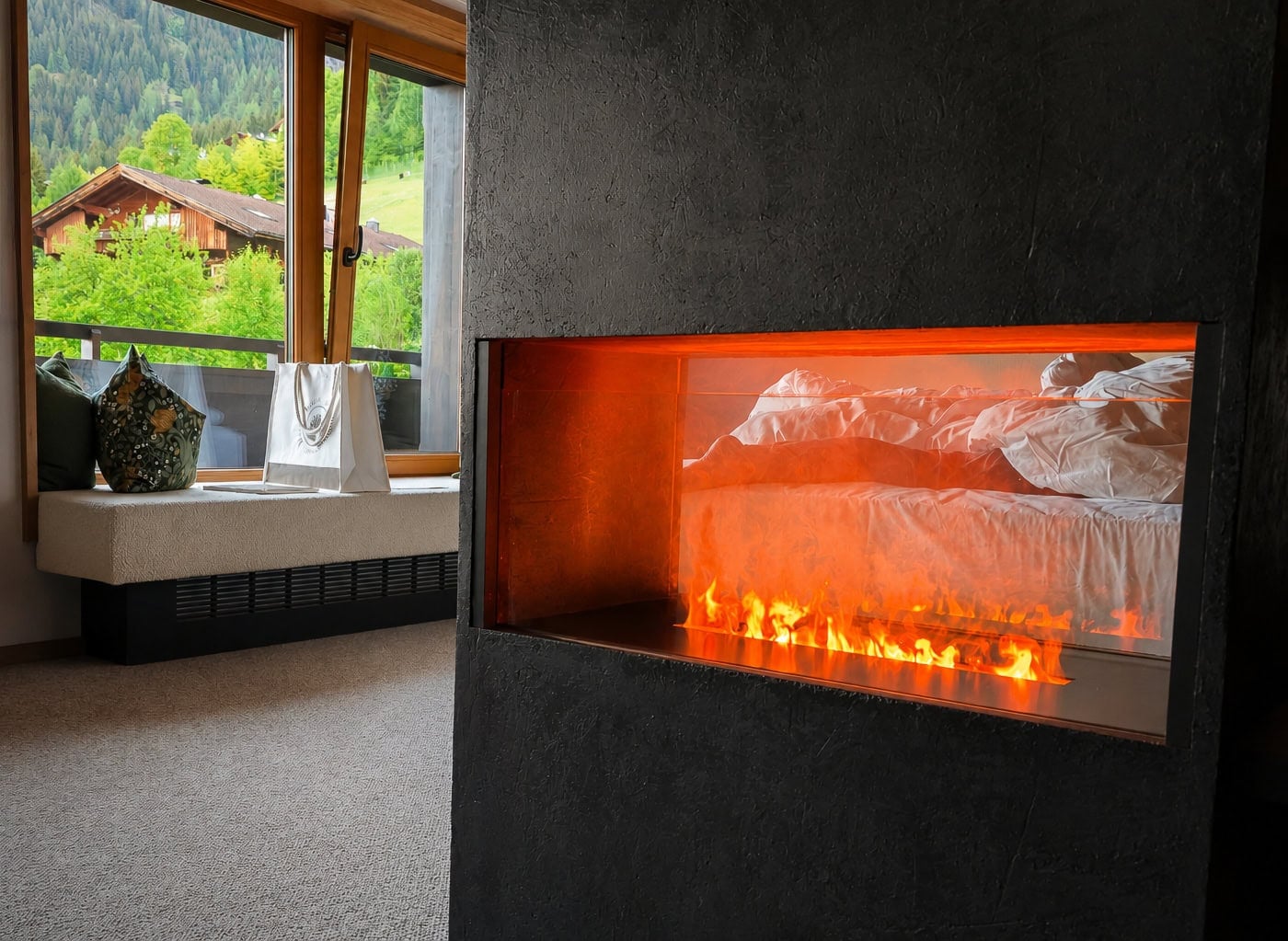
The layout was equally well considered. A double-sided fireplace separated the sleeping area from the living room, allowing one of us to sleep a little longer while the other brewed an espresso and retreated to the sofa or balcony. It is a small luxury, but anyone who travels as a couple knows its value: one person gets another hour of sleep, the other gets coffee and a mountain view, and both parties arrive at breakfast civilized.
That sense of breathing room continued into the bathroom, which was unusually spacious and anchored by a large walk-in shower. It gave us plenty of room to get ready without bumping elbows, shifting toiletries from one surface to another or conducting the sort of awkward choreography that smaller hotel bathrooms often require.
What stayed with us most was not any one amenity, but the sense that the suite had been designed by people who understood how guests actually use a room. Everything had a purpose. There was space to sleep, space to linger and enough separation for two people to move through mornings and evenings at their own pace. It managed to feel luxurious without ever becoming fussy.
The following evening, we began to understand where that attention to detail came from. Owner Johannes Duftner invited us below the hotel into a wine cellar nearly five centuries old, where he shared the story of the Böglerhof.
From Farmhouse to Five-Star Resort
A farmhouse does not become a five-star resort by accident. There are wars to survive, generations to persuade, renovations to endure and, somewhere along the way, a decision about what must change and what should never be touched.
Over an aperitif with Johannes, we learned how the Böglerhof managed all four.
He began the evening with what he considered essential to any proper Austrian gathering: a glass of Grüner Veltliner. “It’s the Austrian national grape,” he said as he poured. “A little apple, a little apricot. Very refreshing.”
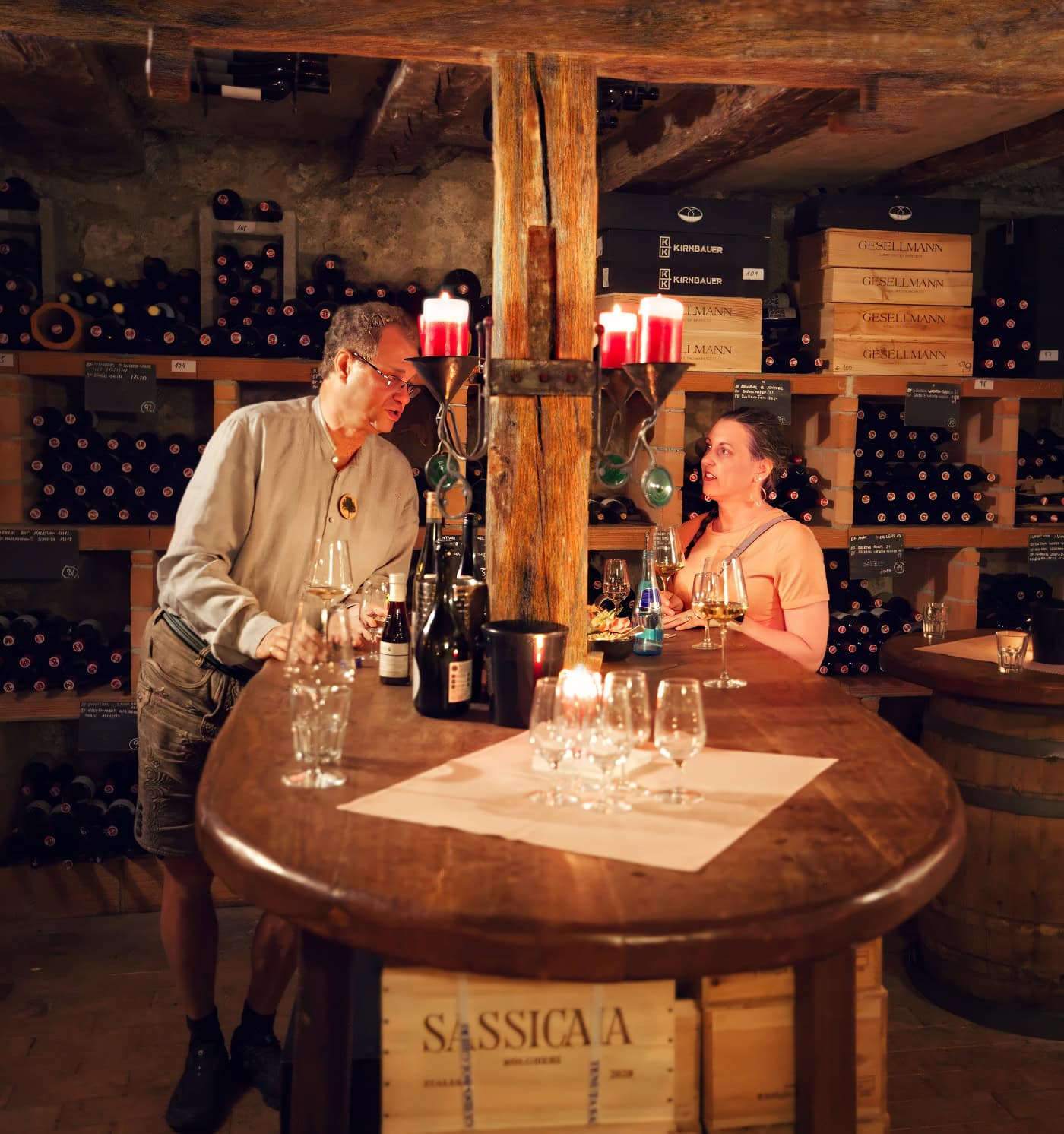
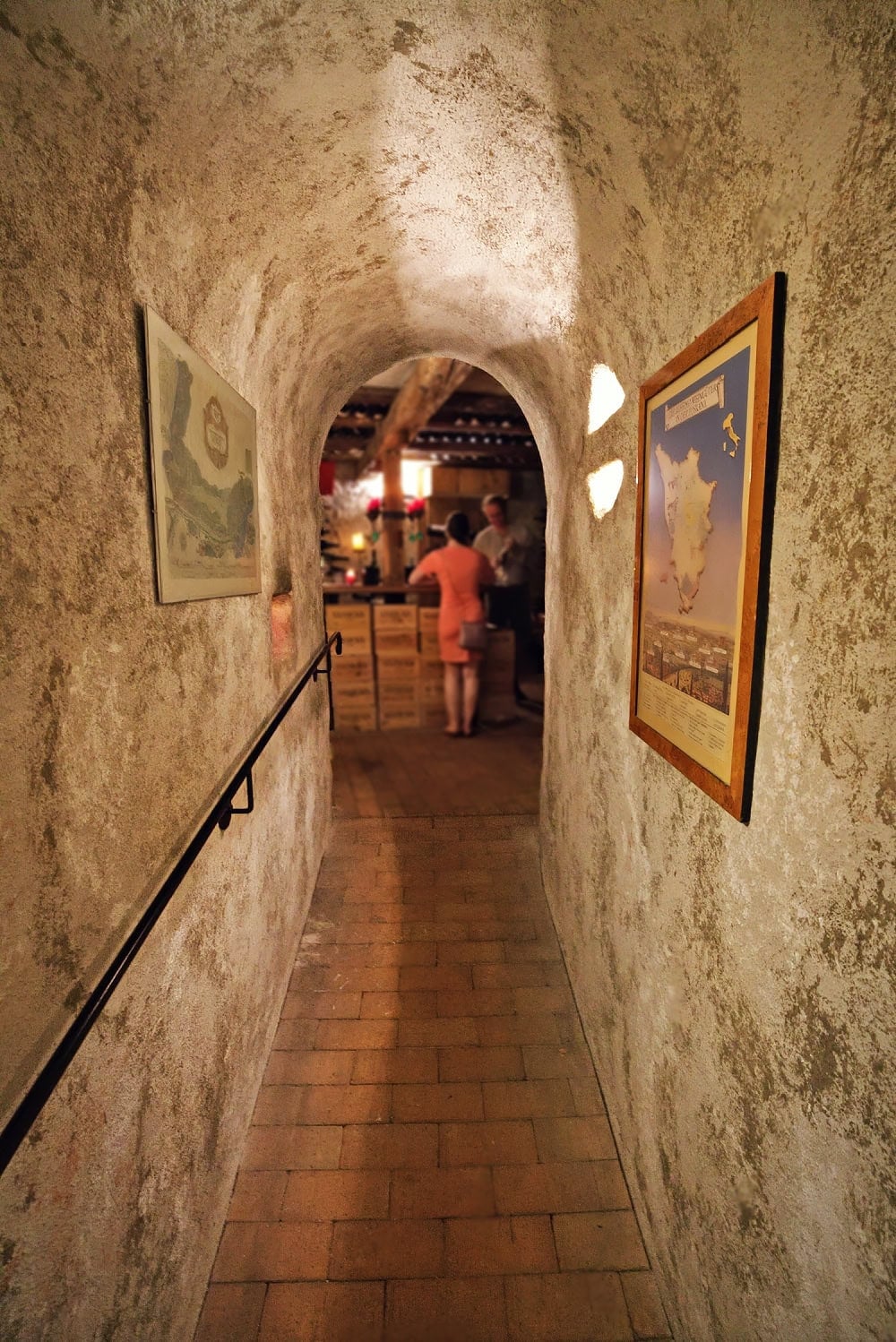
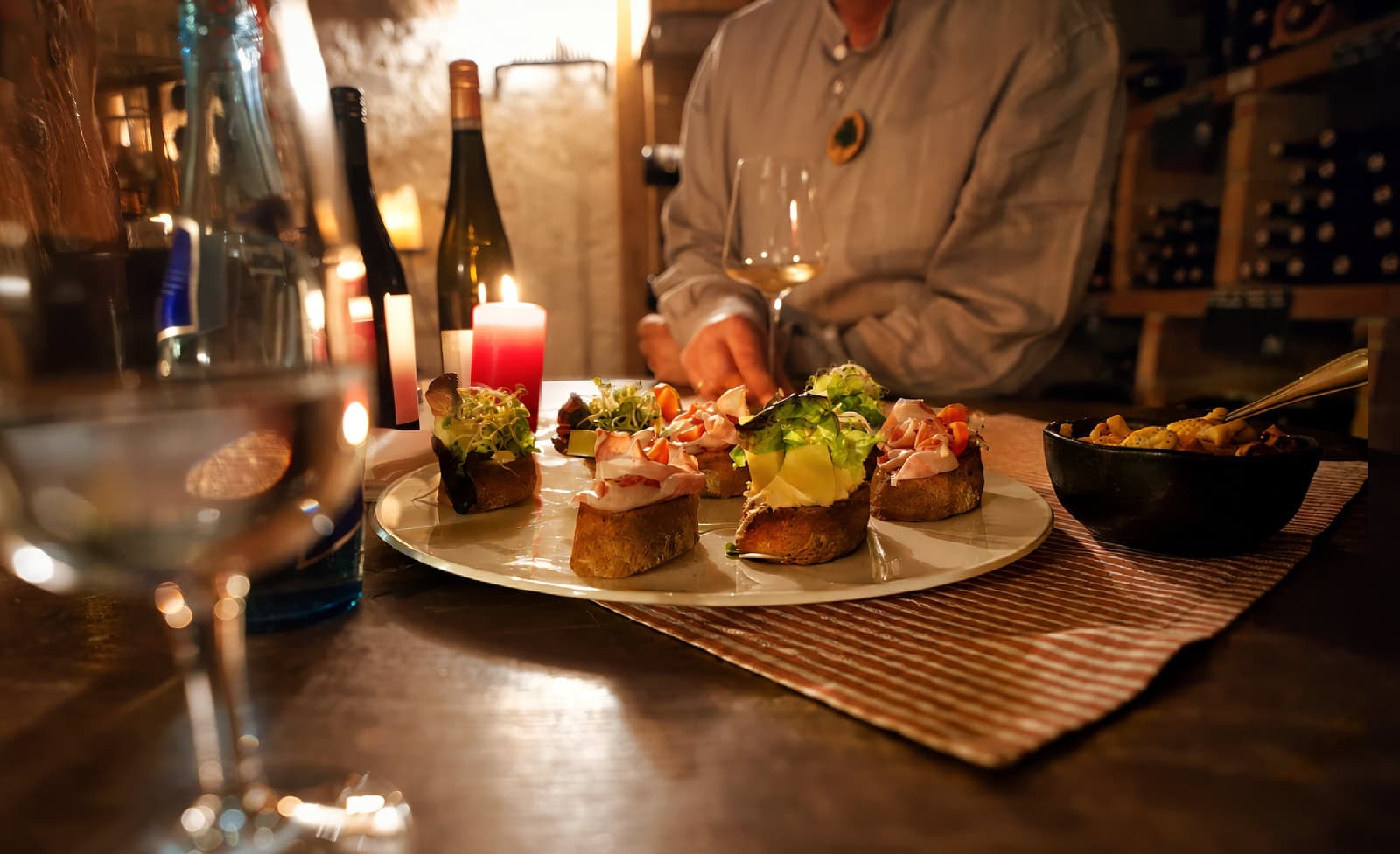
The wine came from a vintage produced especially for the Böglerhof, and Johannes presented it with the conviction of a man introducing us to a national treasure. Platters of house-made speck and local Bergkäse followed, described casually as “a little something to nibble before dinner.” It was a generous interpretation of “a little something,” but we raised no objection.
As the wine disappeared and the platter steadily emptied, Johannes began telling us how his family came to own the Böglerhof.
A Farmhouse, an Auction and a Grandfather Who Saw Trouble Coming
In the early 1930s, his grandfather, Alfons Moser, was a wine and spirits merchant in the nearby Inn Valley. After hearing Hitler speak at Munich’s Hofbräuhaus, he became convinced that war was coming. His response was neither political nor philosophical. It was practical. If Europe was about to tear itself apart, the wisest thing a man could own was land capable of feeding his family.
“The most important thing is that you have food,” Johannes told us, recounting his grandfather’s thinking.
So, in 1933, Alfons bought the Böglerhof at auction, sight unseen. At the time, it was a modest farmhouse with a couple of guest rooms and a village stube where locals came for schnitzel, something to drink and a warm place to sit.
After the war, French occupation authorities needed a local official who had not been involved with the Nazi regime. They appointed Alfons mayor of Alpbach. In that role, he helped shape one of the village’s most enduring qualities: its remarkable architectural harmony. Under his leadership, the local council adopted strict building regulations requiring new structures to follow traditional Tyrolean design.
Walk through Alpbach today and his handiwork is impossible to miss. Pitched roofs, whitewashed stone ground floors, timber façades, and flower-filled balconies repeat across the village in near-perfect rhythm. The regulations didn’t freeze Alpbach in time. They just made sure it grew up looking like it had for centuries.
Still a Family Affair
The Böglerhof has come a long way from the farmhouse purchased nearly 100 years ago. It now has five stars, roughly 80 rooms and suites, two entirely separate pool and spa experiences and a wine cellar capable of making grown adults rethink their stance on moderation.
What it does not have is a management company hiding behind the family name. Johannes runs the property with his wife, Michaela, while their children, Julia and Alexander, are also involved in the business. Julia’s partner, Hannes Margreiter, oversees the 800-label cellar as the hotel’s Diplom-Sommelier.
“We don’t want to get bigger,” he said. “We want to remember our guests’ faces when they come to breakfast.”
In 2026, more than 2,000 Austrian wine and hospitality professionals named him a joint winner of the KALK&KEG Most Innovative Sommelier Award. Johannes’s mother, Karin, still lives on the property and cares for the alpacas grazing above the hotel.
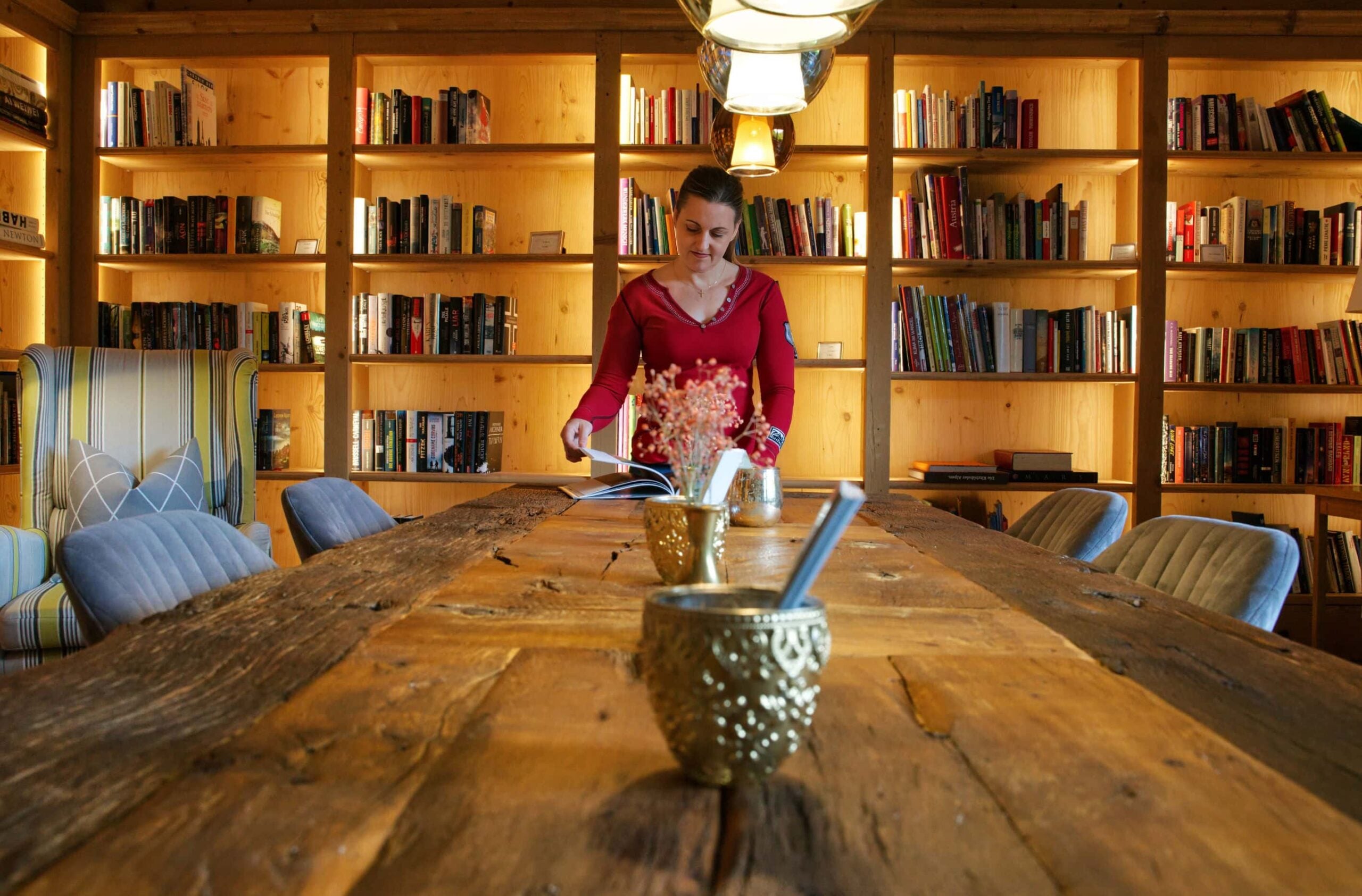
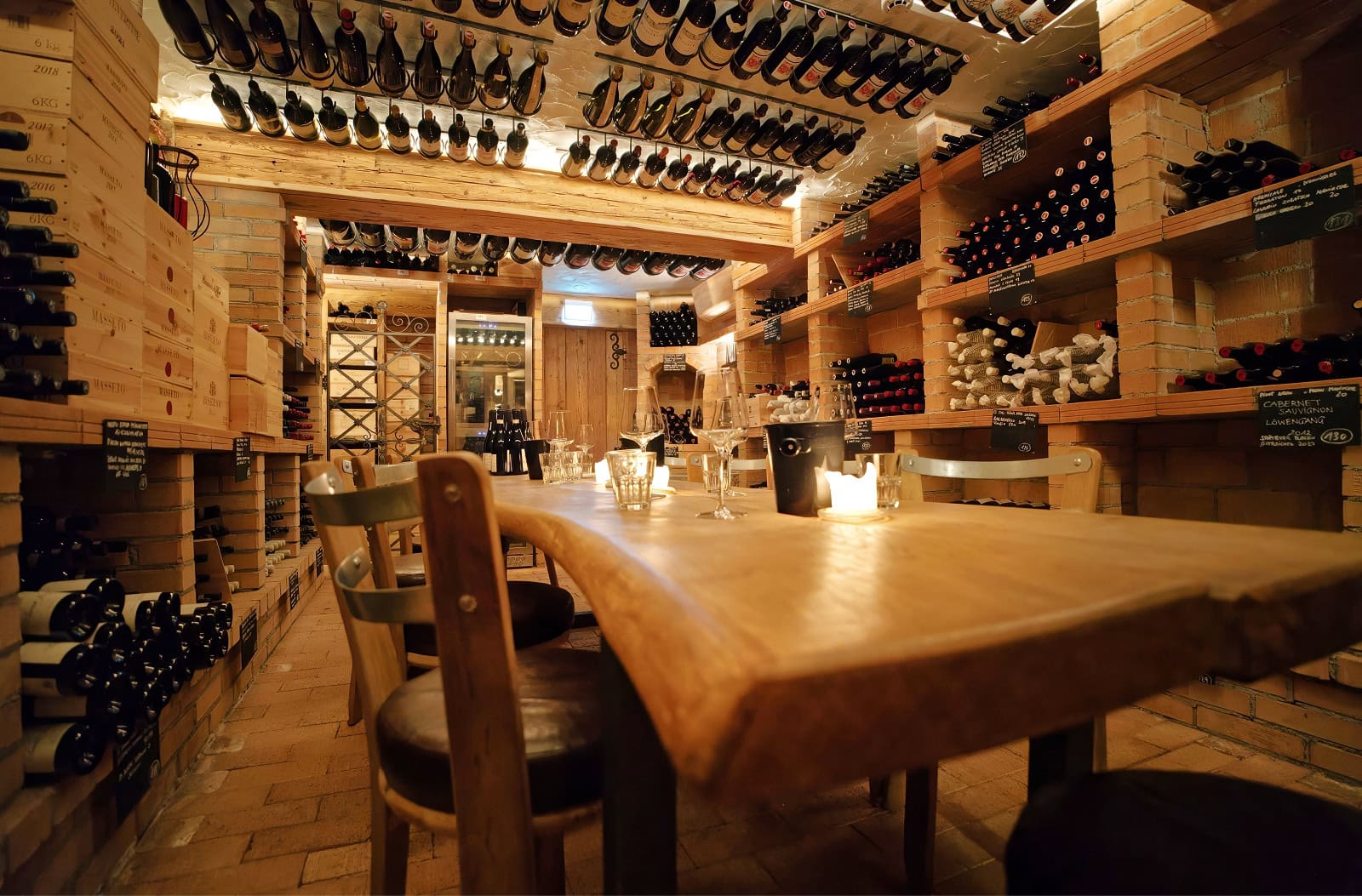
Johannes spoke proudly about how deeply the family remains involved, even in the smallest decisions, including the ones most owners would happily hand to someone else. The Böglerhof has never relied on an interior designer to dictate its look. The family chooses the materials, furnishings and finishes themselves, room by room and renovation by renovation.
“We do it all ourselves,” Johannes told us.
Michaela, he added, has been known to deliberate over a single curtain fabric for hours. Based on everything we had experienced so far, that level of care came as no surprise. What did surprise us was Johannes’s answer when we asked where he imagined the Böglerhof ten years from now.
“We don’t want to get bigger,” he said. “We want to remember our guests’ faces when they come to breakfast.”
He went on to share that more than 70 percent of the hotel’s guests are Stammgäste, regulars who return year after year. By the time we checked out, the figure did not seem remotely difficult to believe. Everywhere we went, we were greeted with the kind of personal warmth that makes guests feel less like room numbers and more like part of the hotel’s extended family — the kind of warmth that turns first-time guests into lifelong regulars.
At the Böglerhof Table & Bar
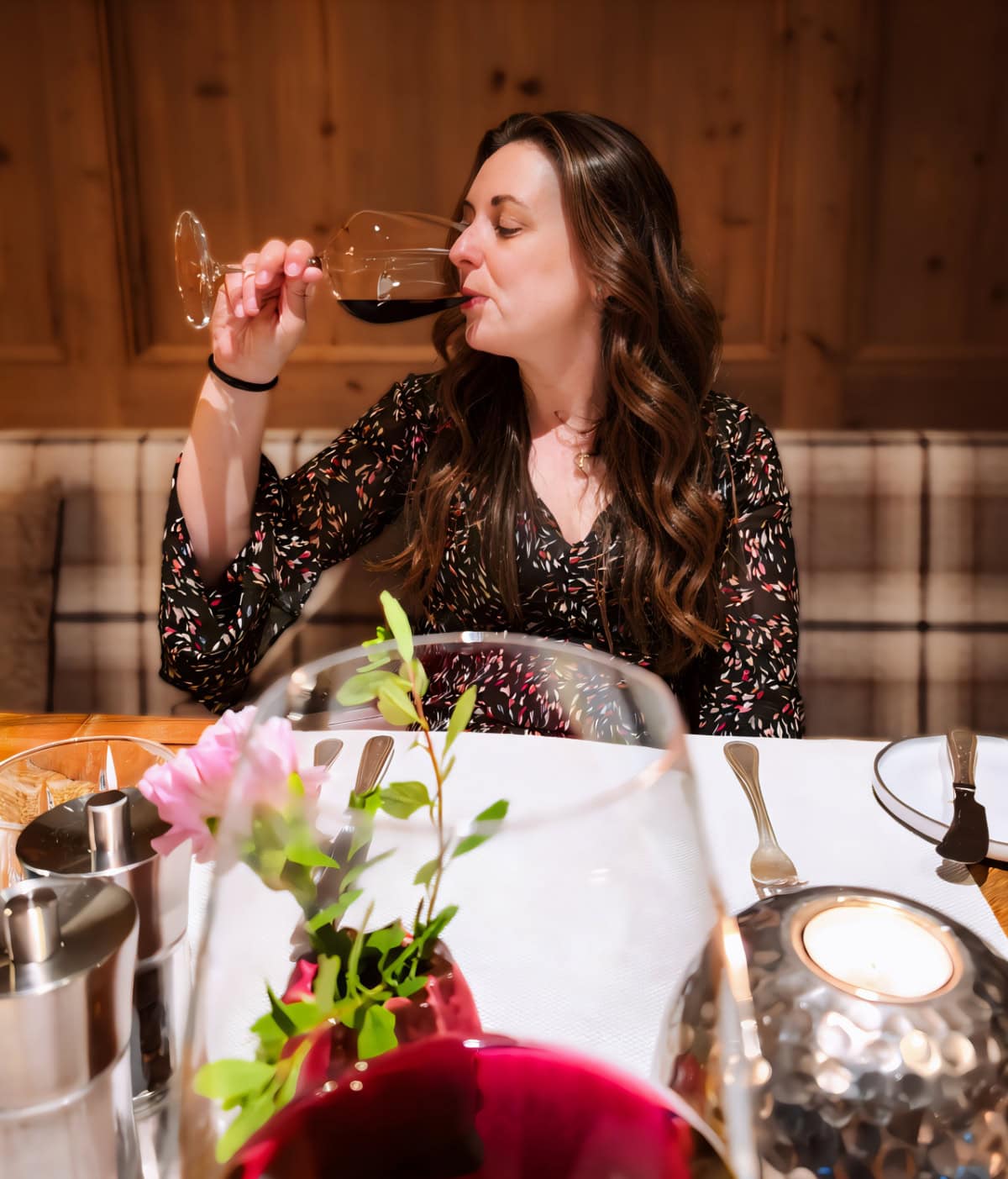
The heart, pride and warmth we encountered in the cellar carried naturally into the dining room each morning and evening. The servers greeted us as though they were genuinely pleased to see us, remembered small preferences and always seemed to have time for conversation. Nothing felt rushed. At plenty of hotels, the staff may be perfectly pleasant while clearly racing three tables ahead in their minds. At the Böglerhof, we never sensed that strain.
That same thoughtfulness reached the plate. Every dish felt like an expression of the hotel’s philosophy rather than an obligation imposed by its five-star rating. The kitchen follows a refreshingly simple rule. Whenever possible, ingredients come from farms, butchers and bakers throughout the surrounding valleys, along with wild herbs from the hotel’s own garden. The result keeps every meal rooted in Tyrol, even when a dish’s inspiration wanders beyond its borders.
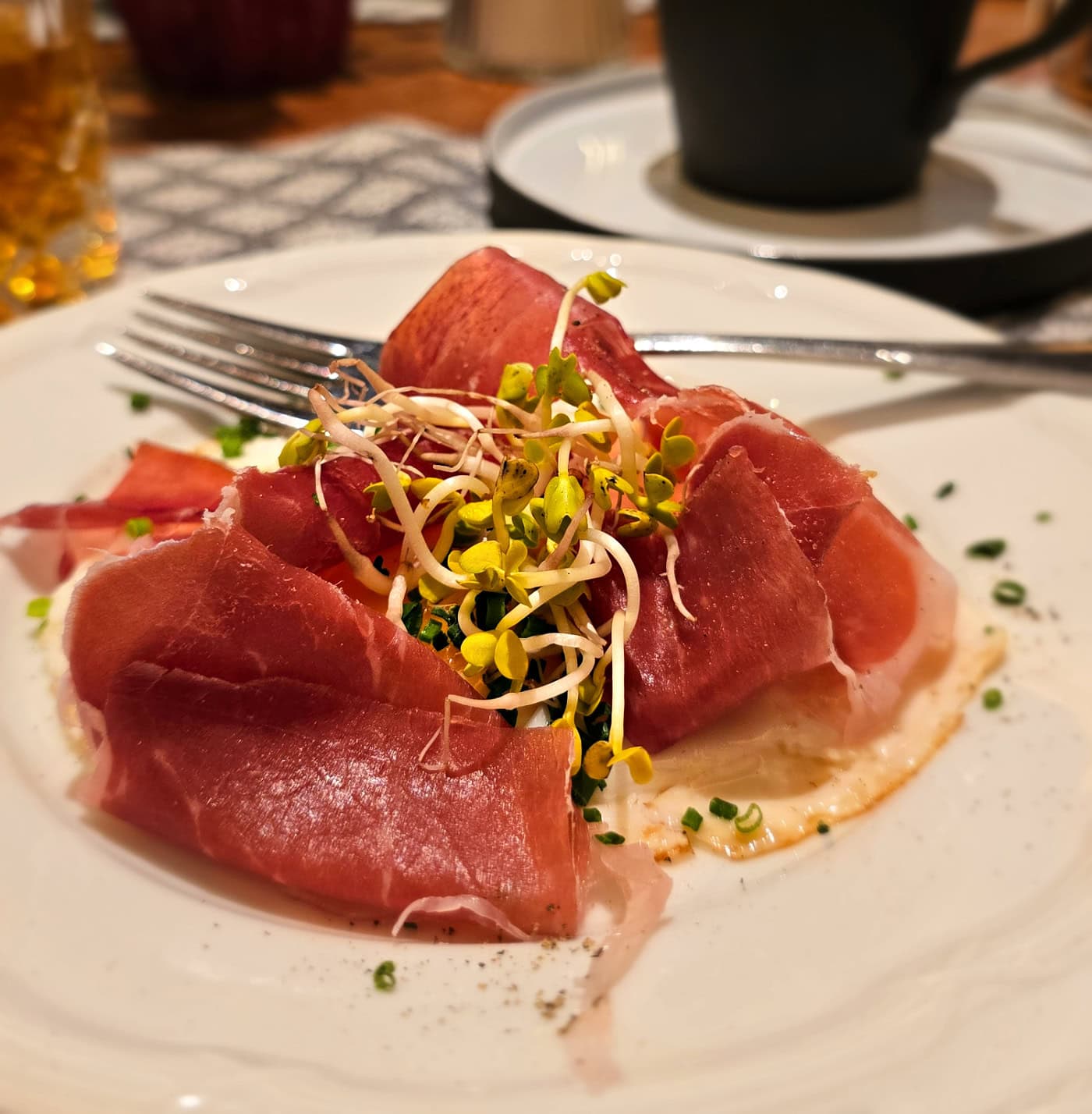
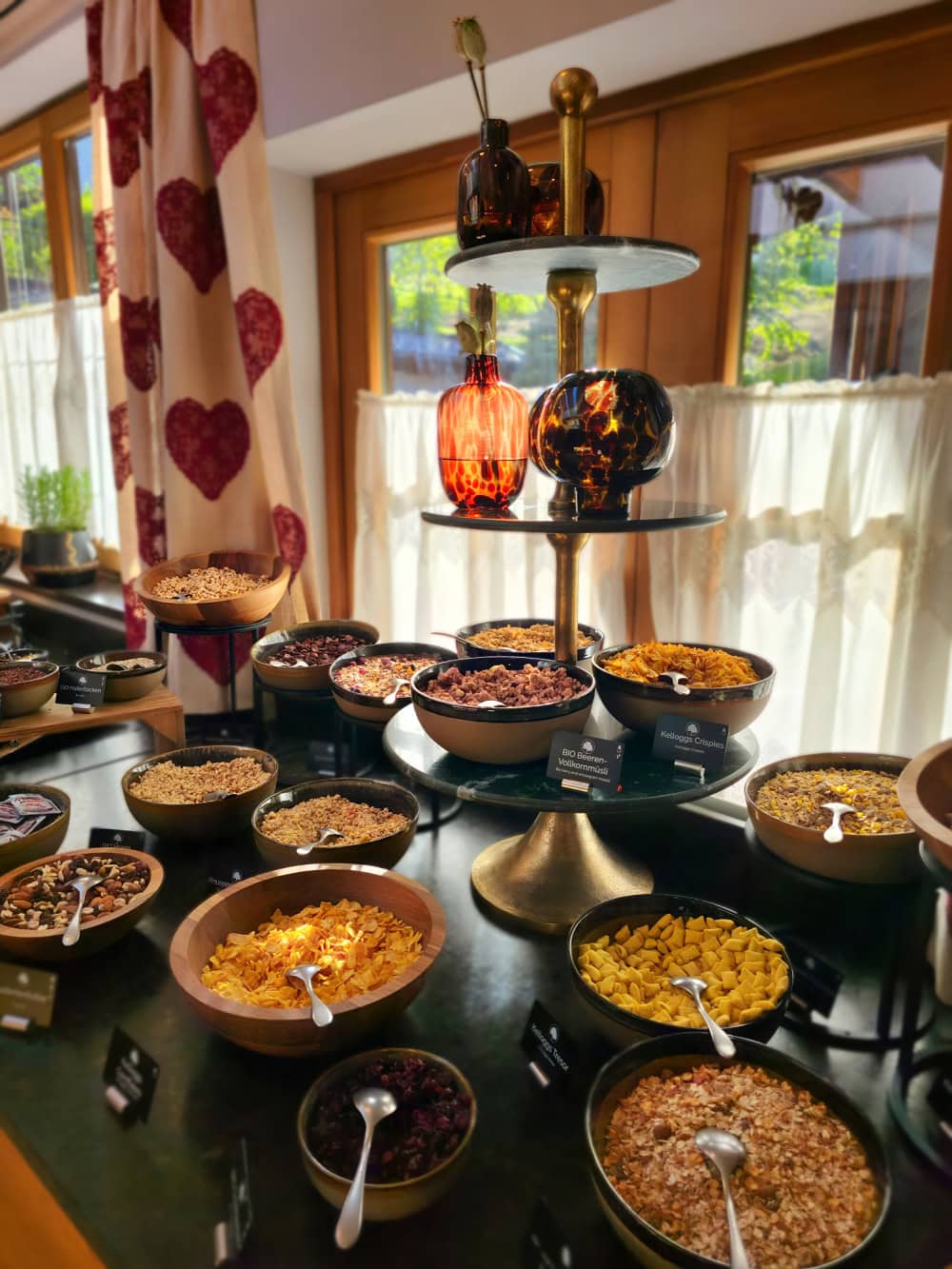
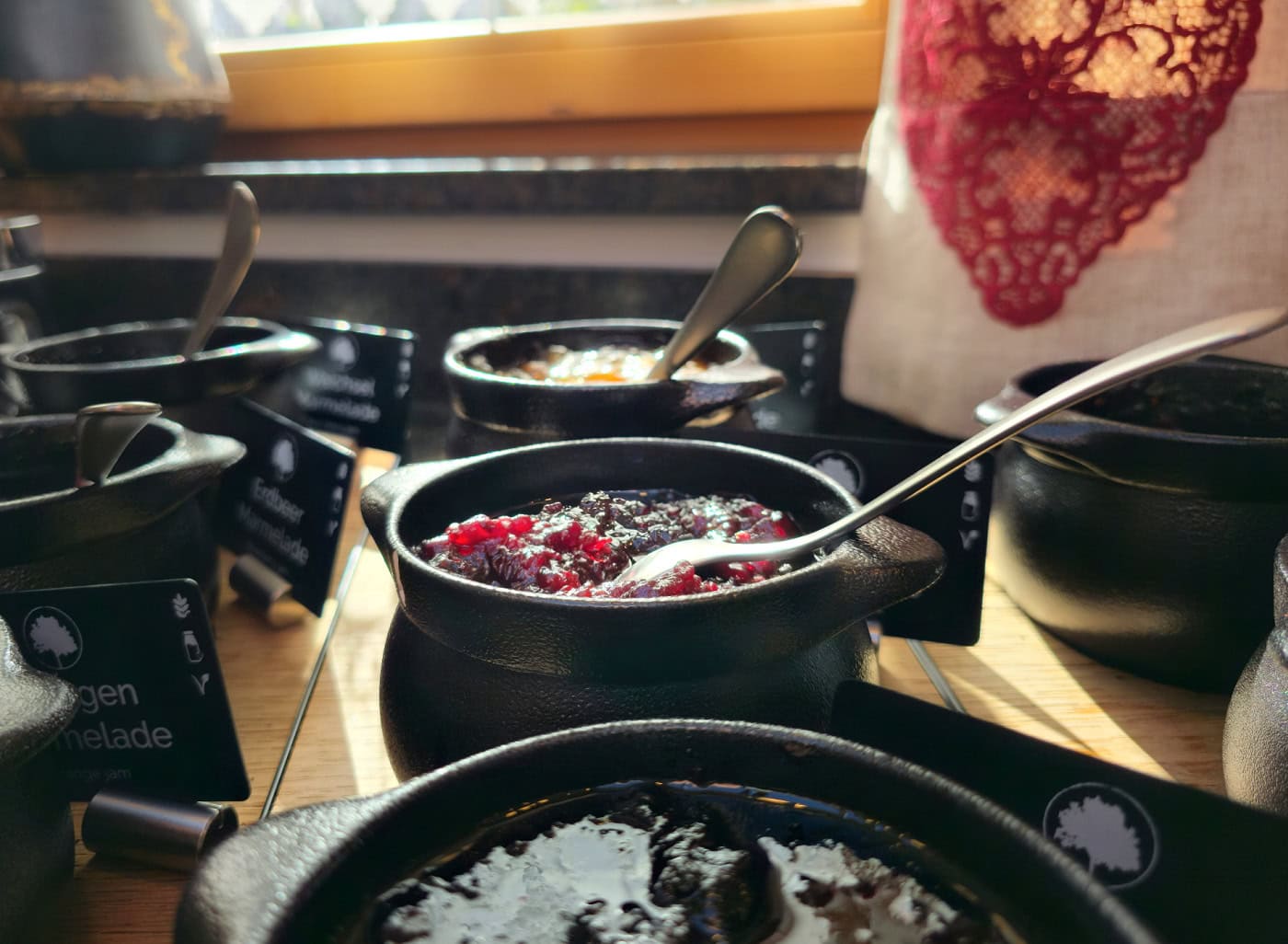
Breakfast became an event of its own. The buffet was filled with regional cheeses, breads, pastries and other temptations that sent us back for second and third rounds without the slightest guilt. Guests could also order from a breakfast menu, where we discovered one of the simplest and most satisfying dishes of the stay: two eggs fried over easy, topped with slices of speck and rosemary. It was salty, savory and completely obvious once it arrived, leaving us to wonder why we had never thought to make it at home.
The sauces were so good that bread repeatedly became our final utensil.
One morning, a young harpist played as we ate, her music drifting gently through the dining room. It was a beautiful addition, the kind of detail that makes you settle a little deeper into your chair and decide the hiking trails can wait another ten minutes.
Breakfast was also when we selected the courses for that evening’s five-course gourmet dinner. Some gourmet dinners prioritize the tweezers over the palate. Our meals at the Böglerhof never fell into that trap. Every course was beautifully composed without sacrificing layers of flavor, contrasting textures or satisfying portions. The sauces were so good that bread repeatedly became our final utensil.

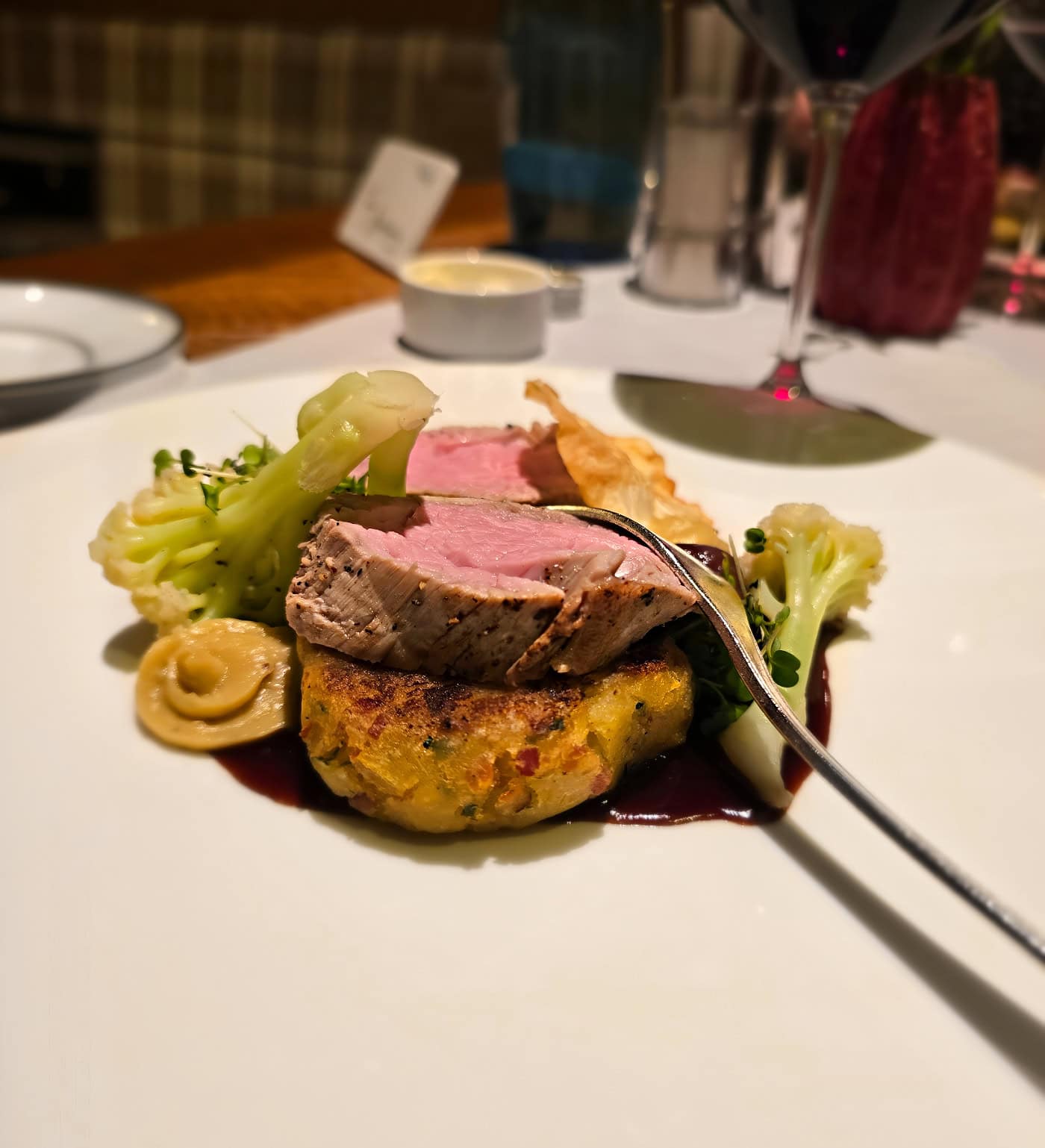
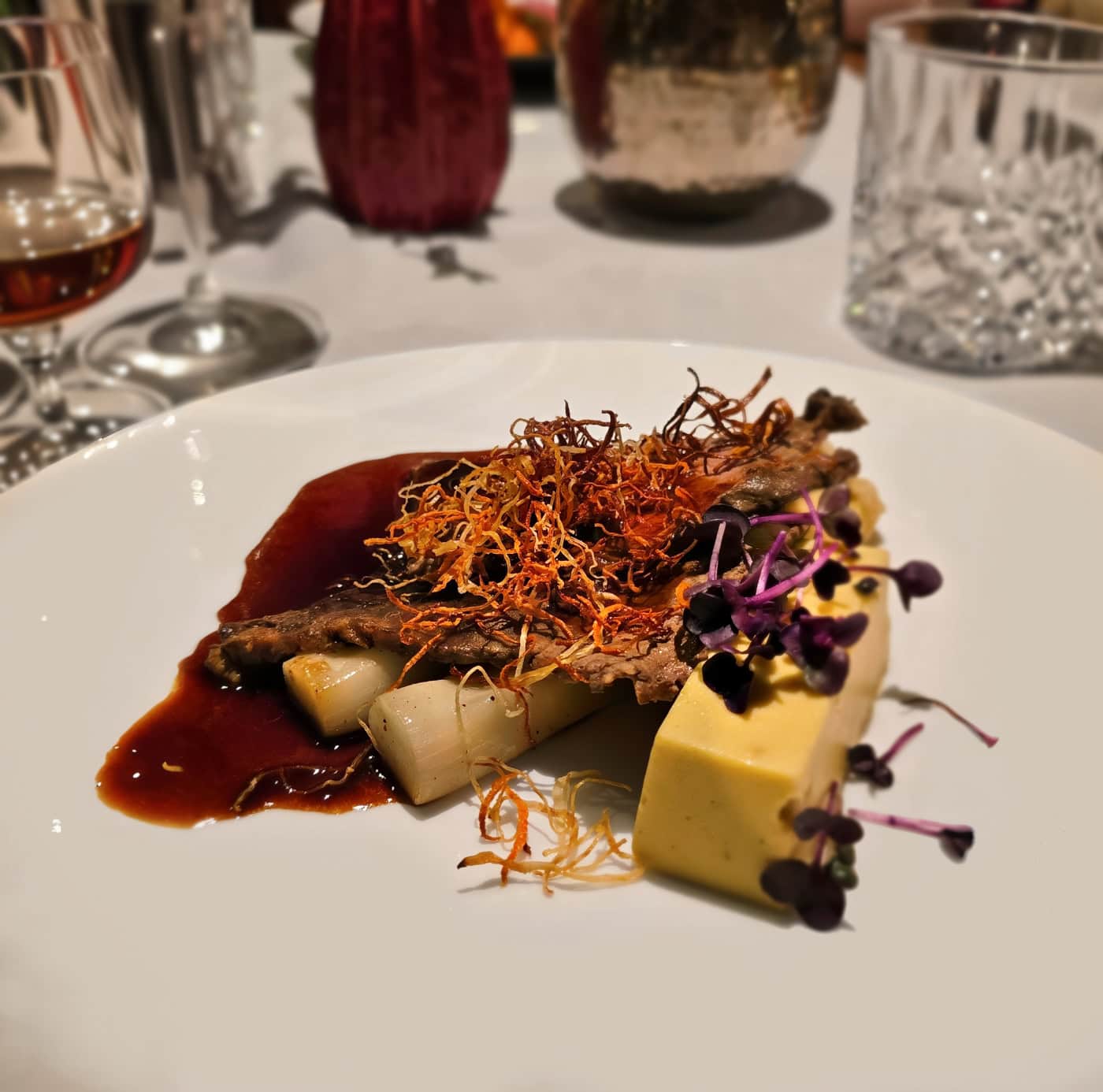
We were especially happy to see white asparagus on one evening’s menu. It is a spring ingredient we came to know and love in South Tyrol, where its short season gives it a sense of occasion. The Böglerhof paired the tender spears with thinly sliced beef, a rich jus and a crown of crisp fried leeks that added just the right amount of crunch. It was a plate built around what was fresh at that precise moment, which is exactly how seasonal food ought to work.
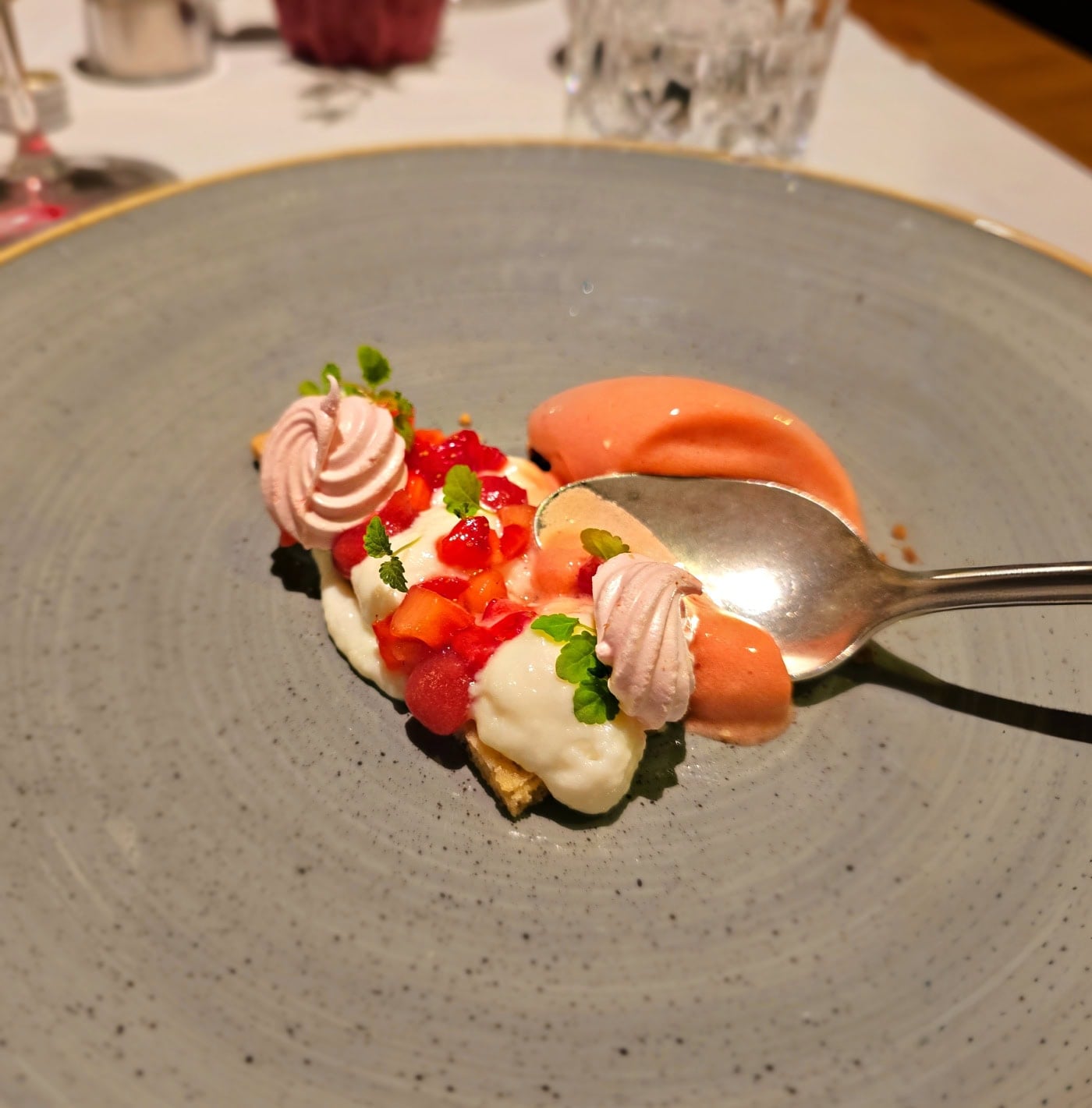
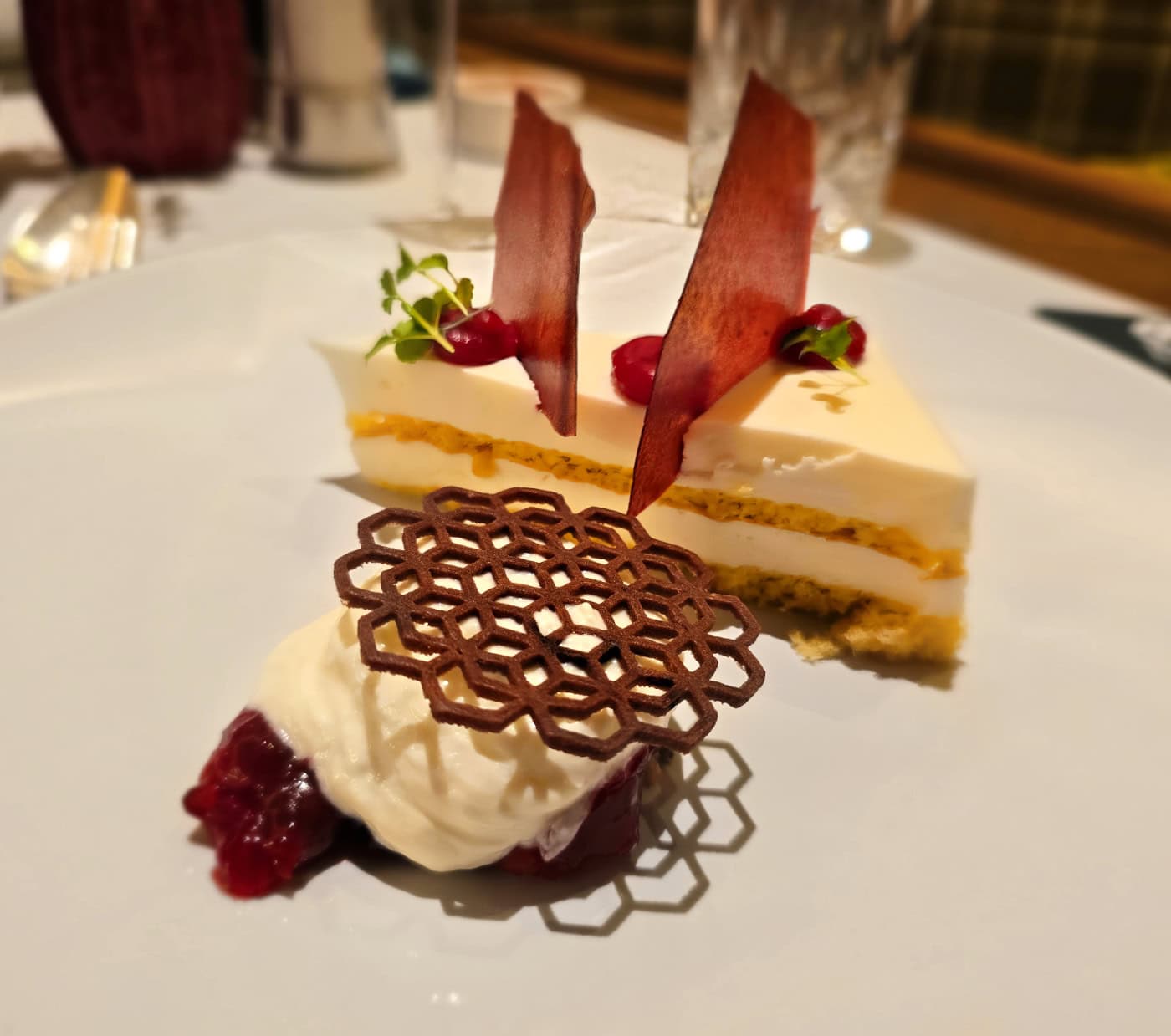
Desserts followed the same philosophy. They arrived looking almost too poised to disturb, but our spoons were not intimidated. Fresh berries, tart rhubarb, cool sorbets, light creams and crisp meringues rotated through different combinations each evening, and every one struck the same welcome balance: sweet enough to feel like a reward, light enough to leave room for an after-dinner drink.
That mattered because Bögler’s Bar was waiting.
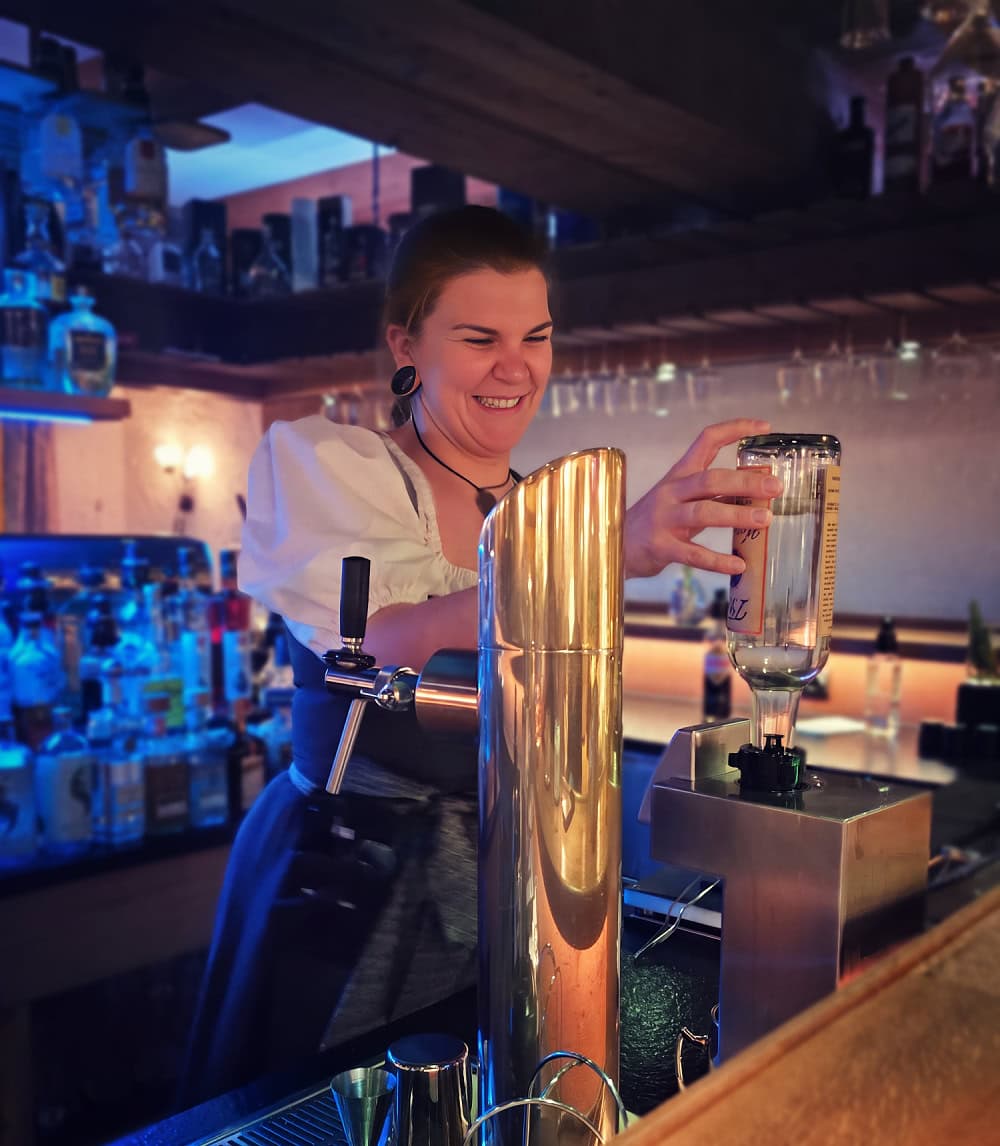
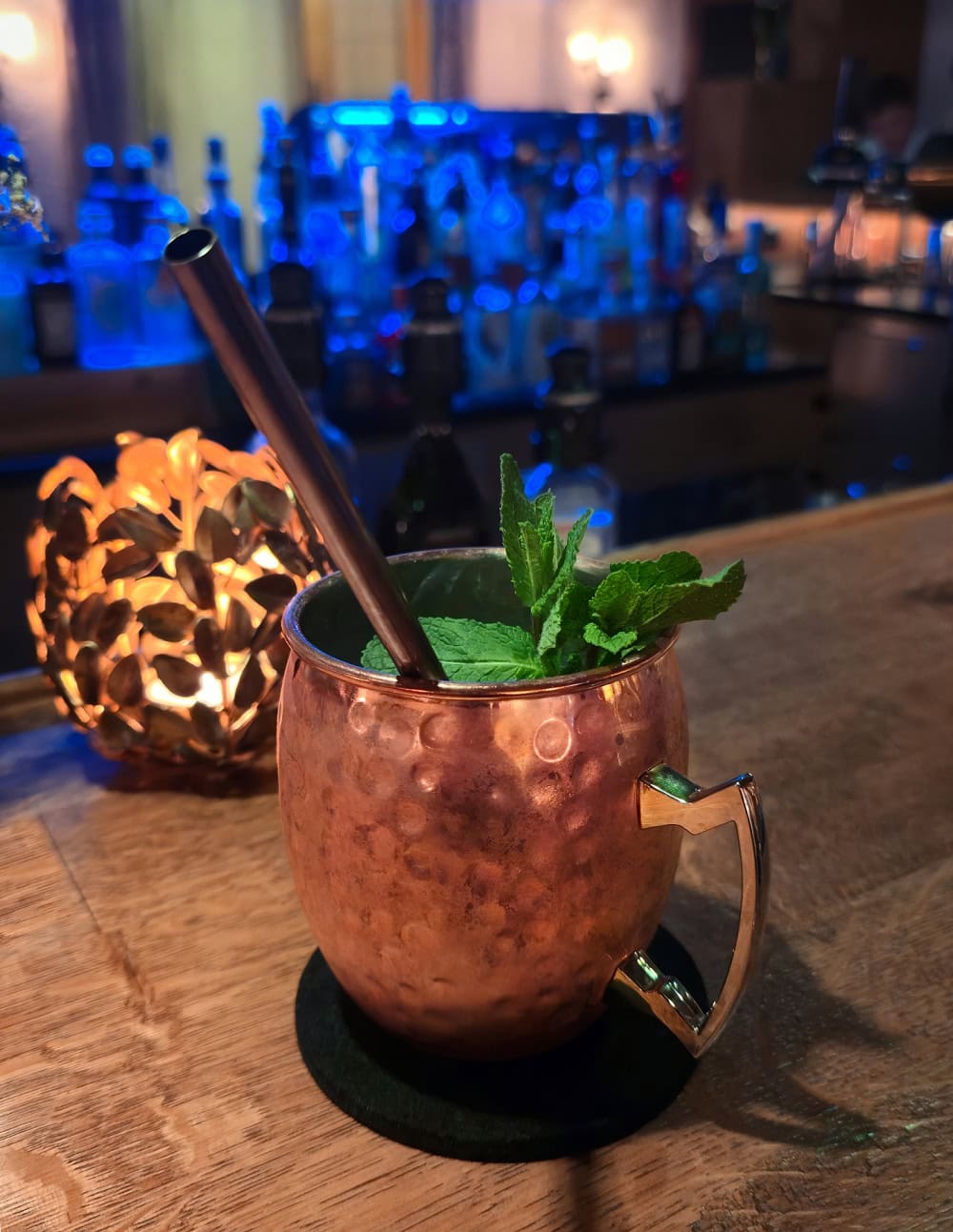
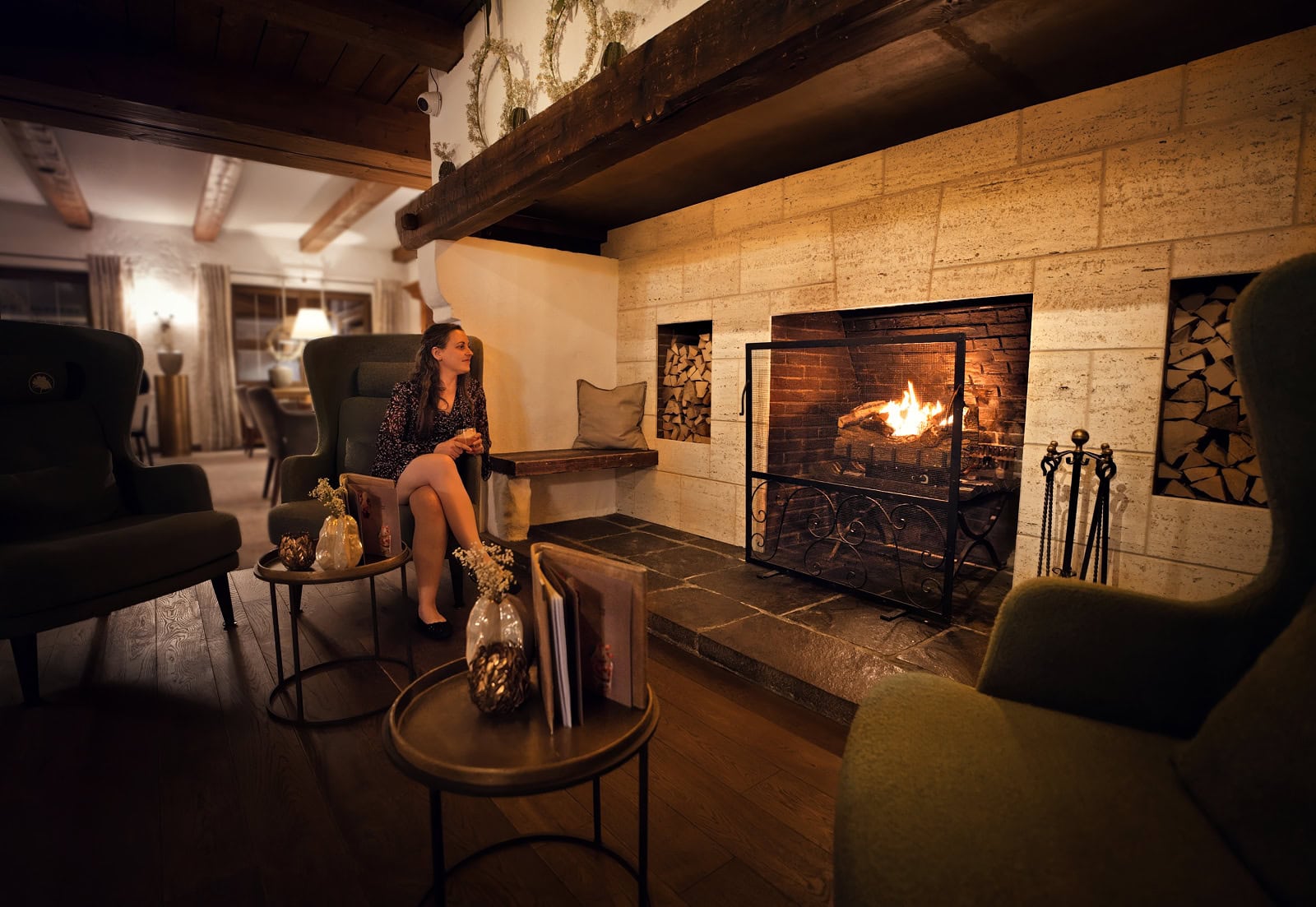
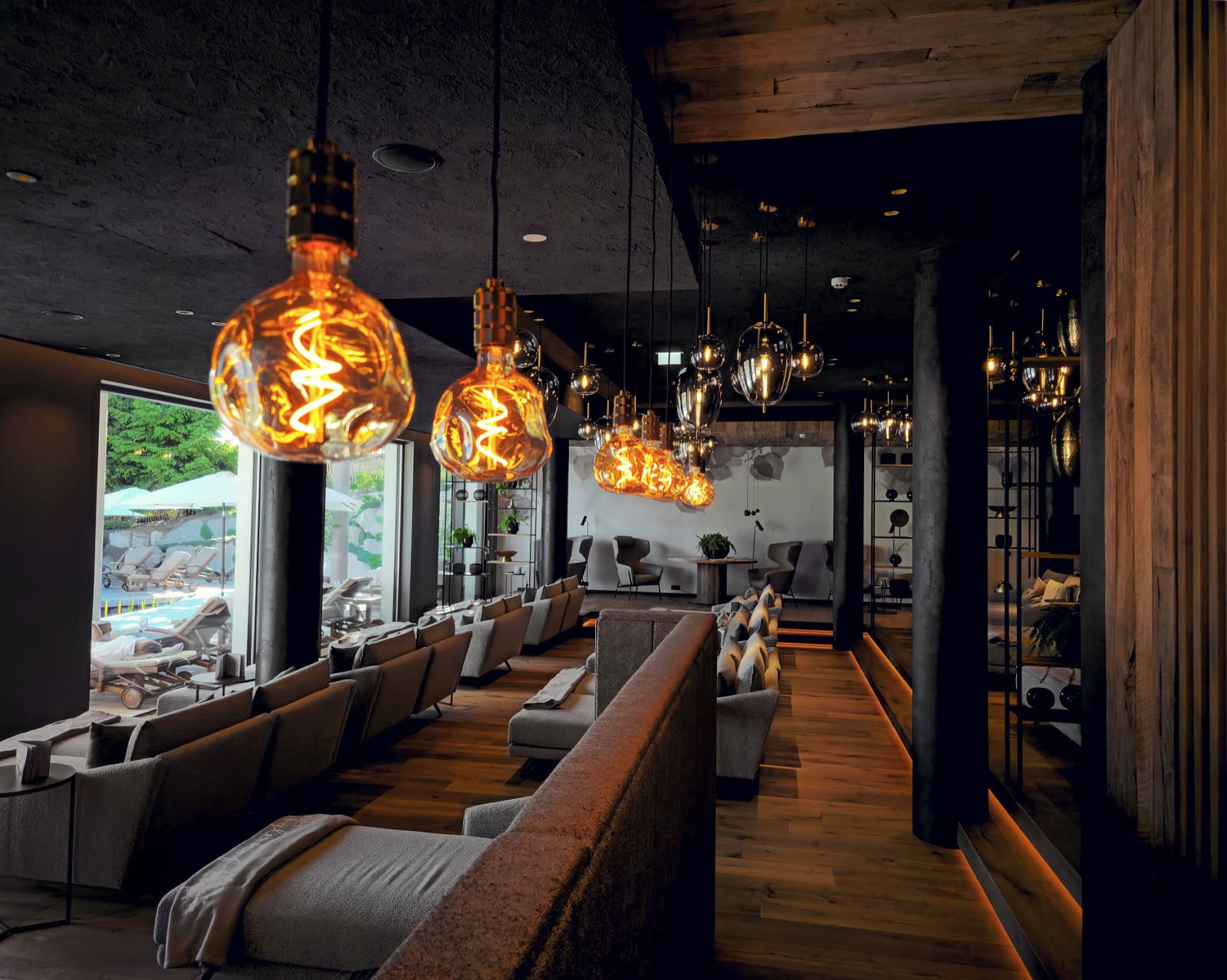
The same bar that welcomed us on the sunny terrace took on a different personality after dinner, when we settled into its cozy interior amid the glow of a fireplace. Guests drifted in for one more glass, though in our experience, it was never just one more.
Most evenings, we ended up in easy conversation with fellow travelers over drinks mixed by Elisabeth, who made a serious cocktail and proved even better company. Rather than order from the menu, we gave her free rein to dazzle us, a decision she embraced with glee. Each night, we told ourselves we should probably turn in early. Each night, she made a convincing case against it.
Two Spas, No Compromises
The Böglerhof has two completely separate wellness areas: one for families, and the pure nature.spa for guests aged 15 and older. It is the kind of arrangement that makes you wonder why more hotels do not follow suit. Children get a pool area where nobody glares at a cannonball. And adults get a place where the loudest interruption may be a church bell drifting across the valley.
We spent little time in the family spa, so we won’t pretend to offer a firsthand assessment of it. What we can say is that its existence changes the entire feel of the hotel. Rather than forcing families and adults to share the same definition of relaxation, the Böglerhof gives each group its own space.
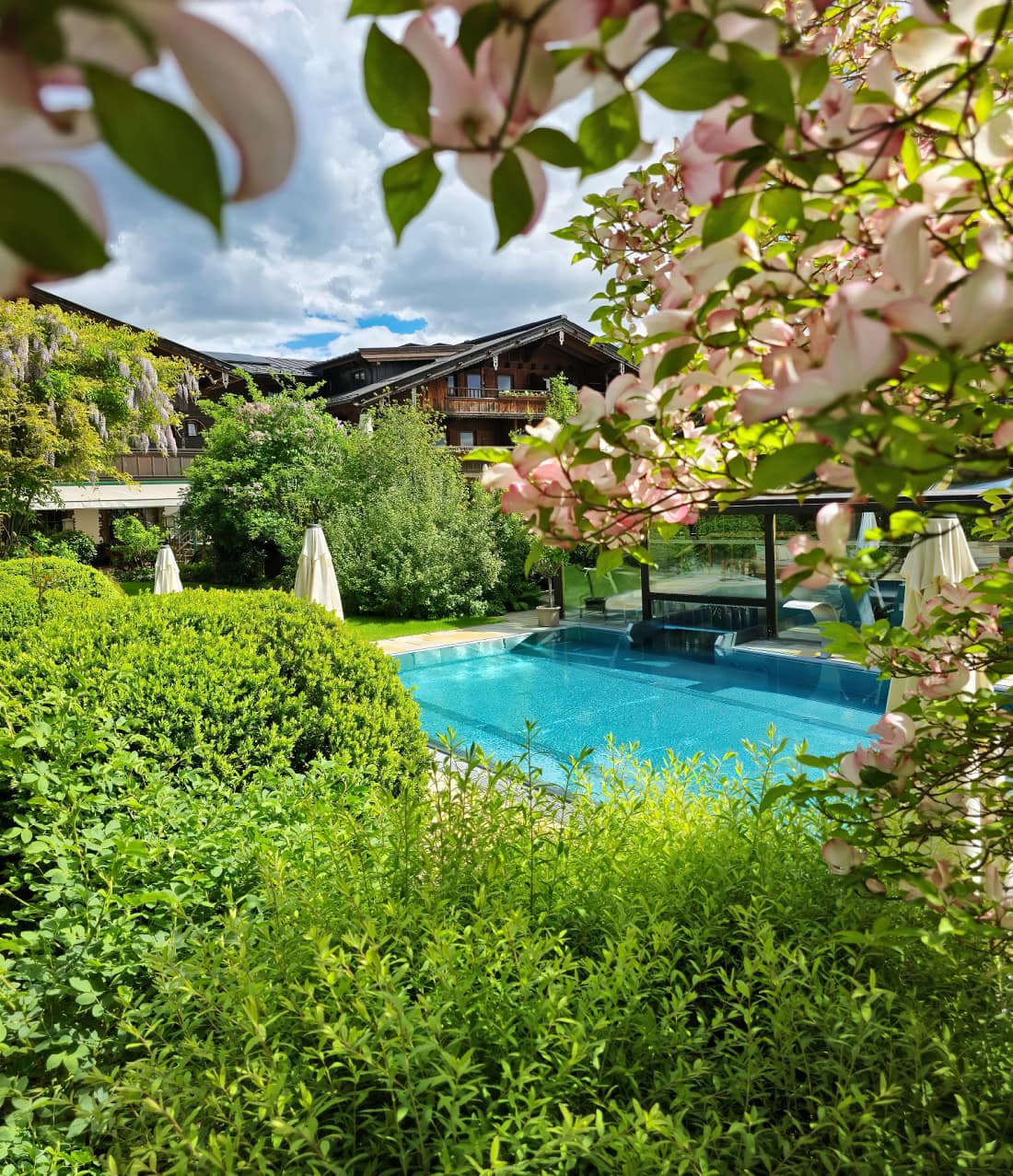
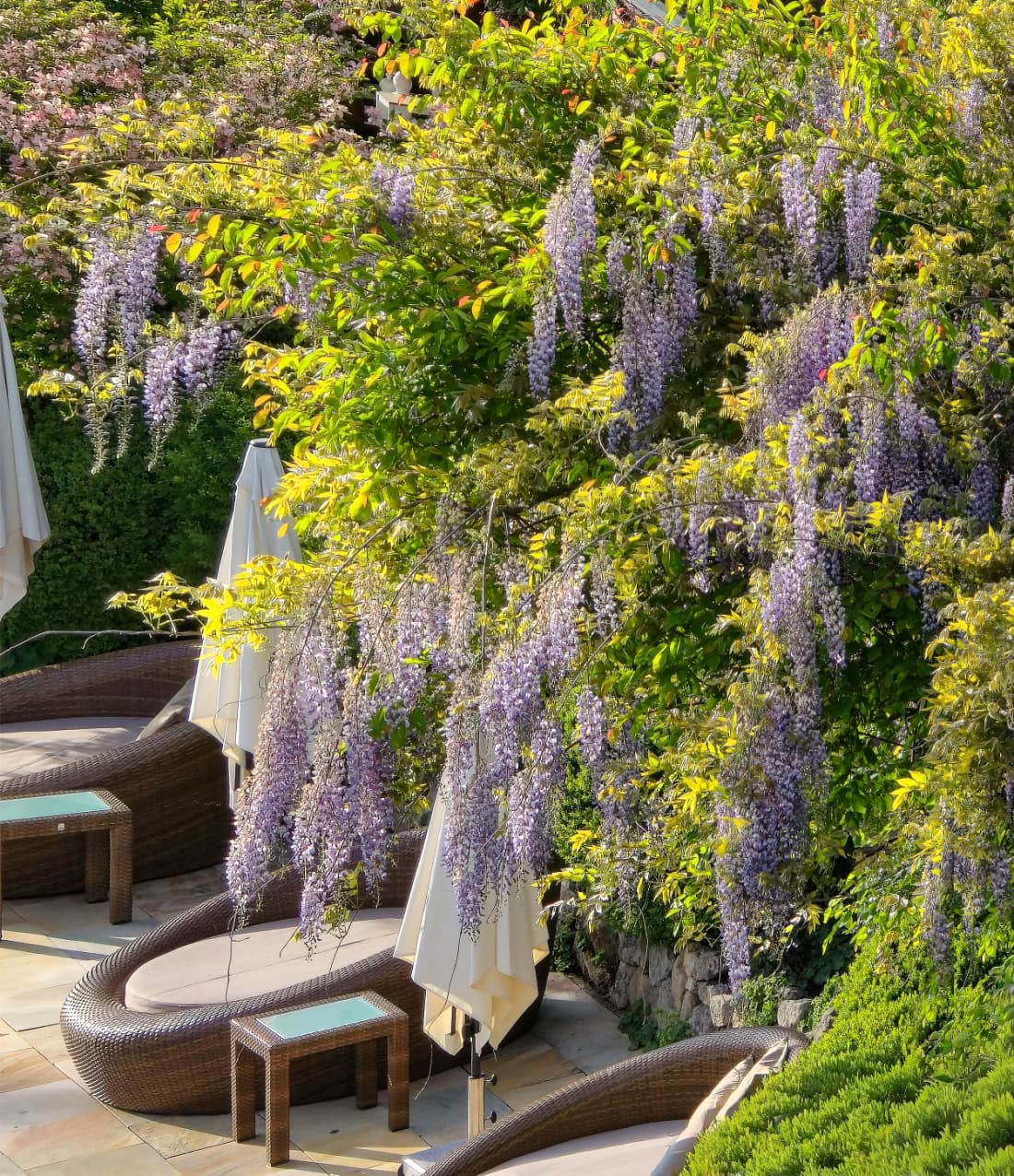
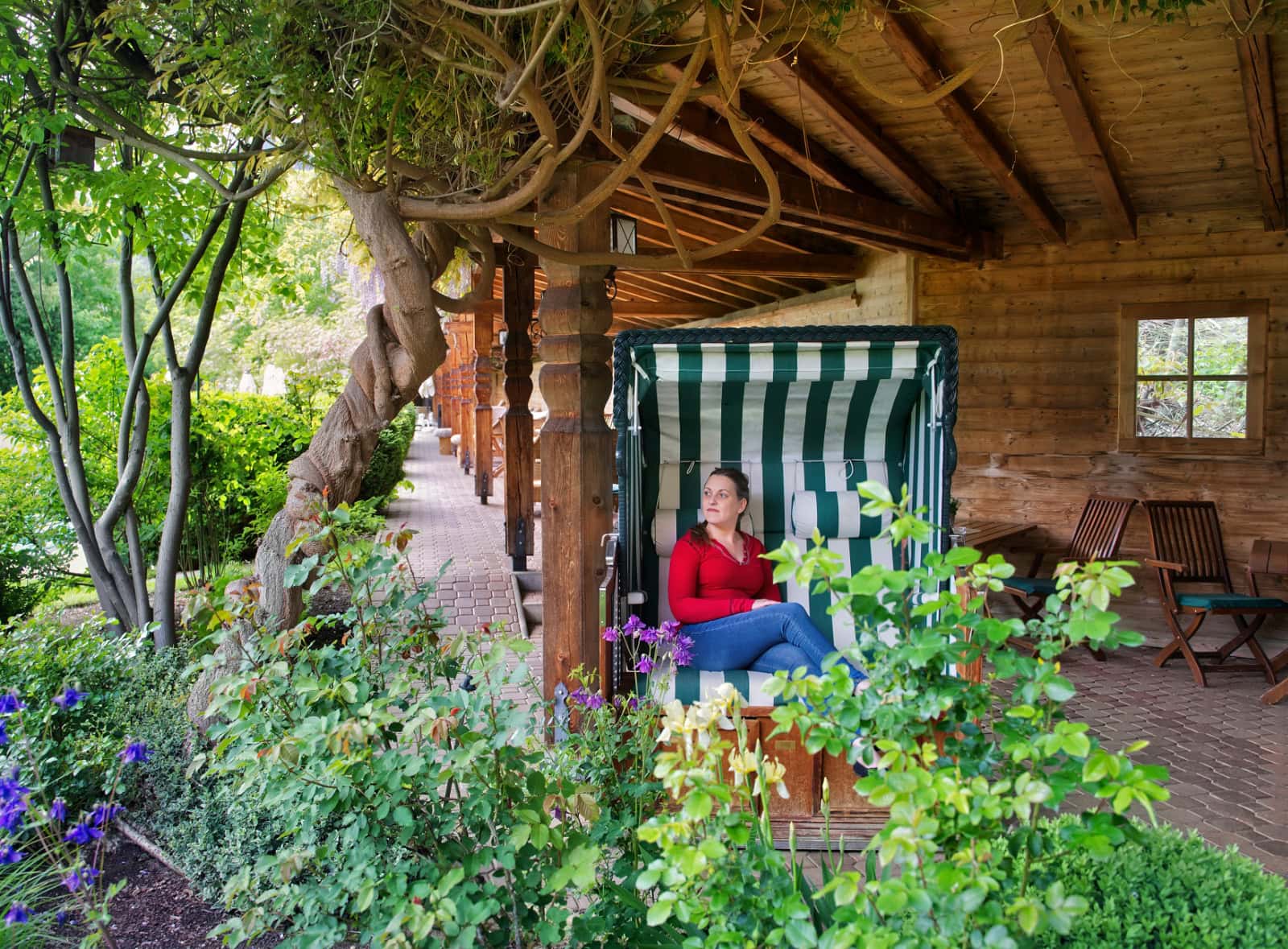
Reaching the adults-only spa did require a little education. The Böglerhof has grown over generations into a collection of interconnected buildings, stairways and corridors climbing the mountainside, and on our first attempt, finding the pool felt less like following signs and more like solving a polite Tyrolean riddle. We took a wrong turn. Then another. But by the second day, we knew exactly where we were going.
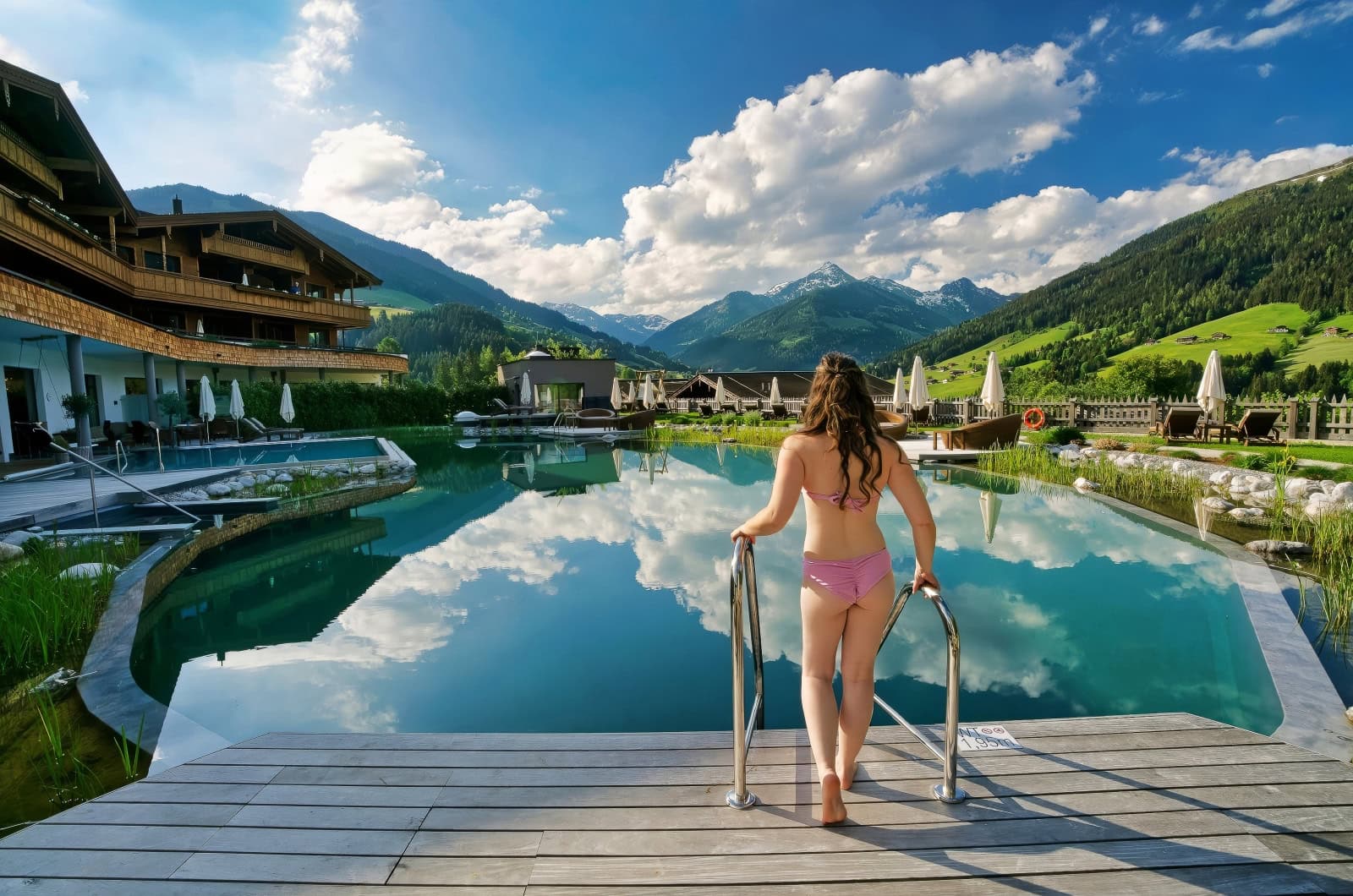
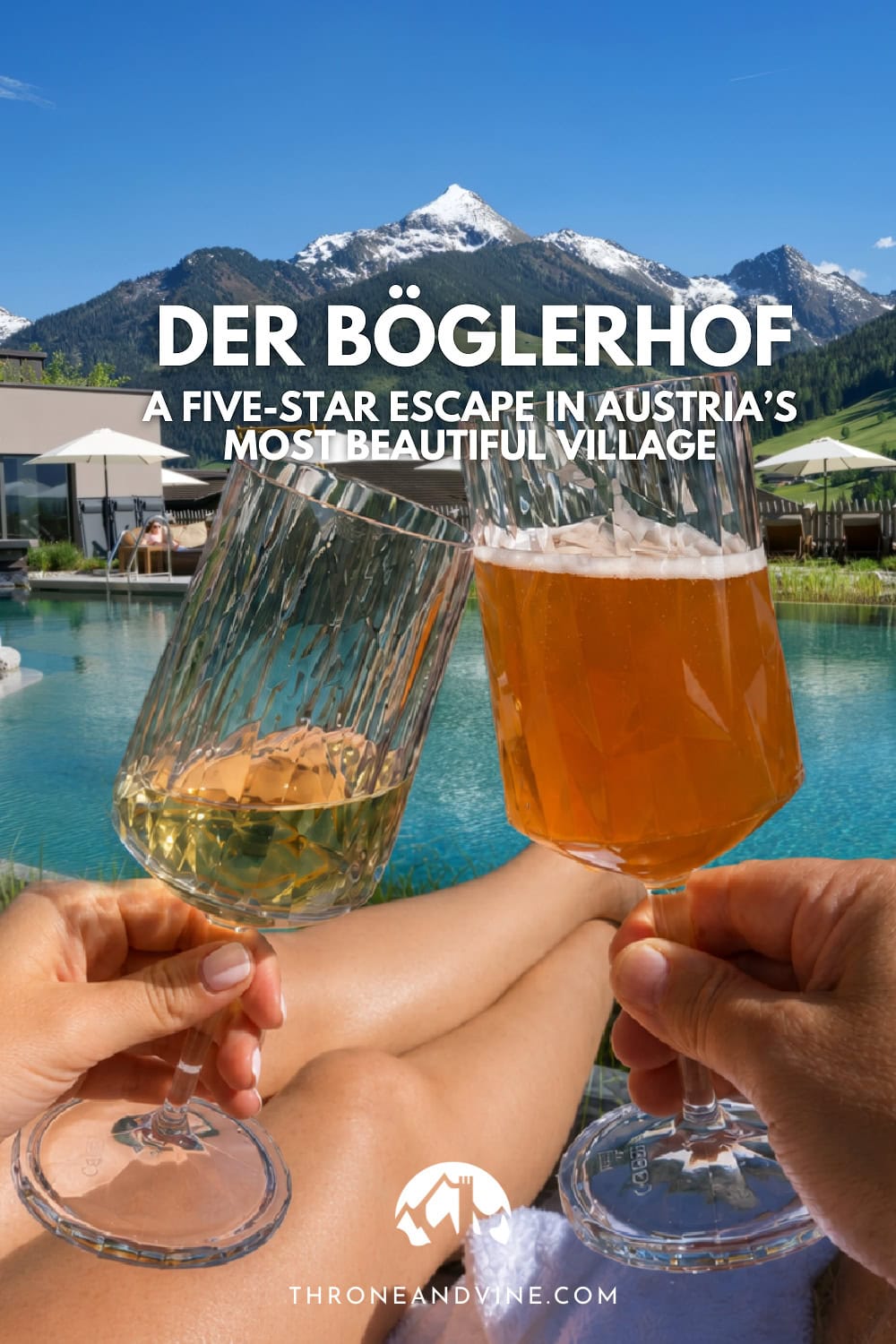
The reward was a heated pool that carried us from the inside out toward one of the best views on the property. Alpbach’s parish church tower rose above the rooftops while green slopes climbed toward distant summits still silvered by late-spring snow. The most striking was Großer Galtenberg, the highest mountain in Alpbachtal, its storybook silhouette so classically formed that it seemed the rest of the Alps had been modeled after it.
Some views simply outrank literature.
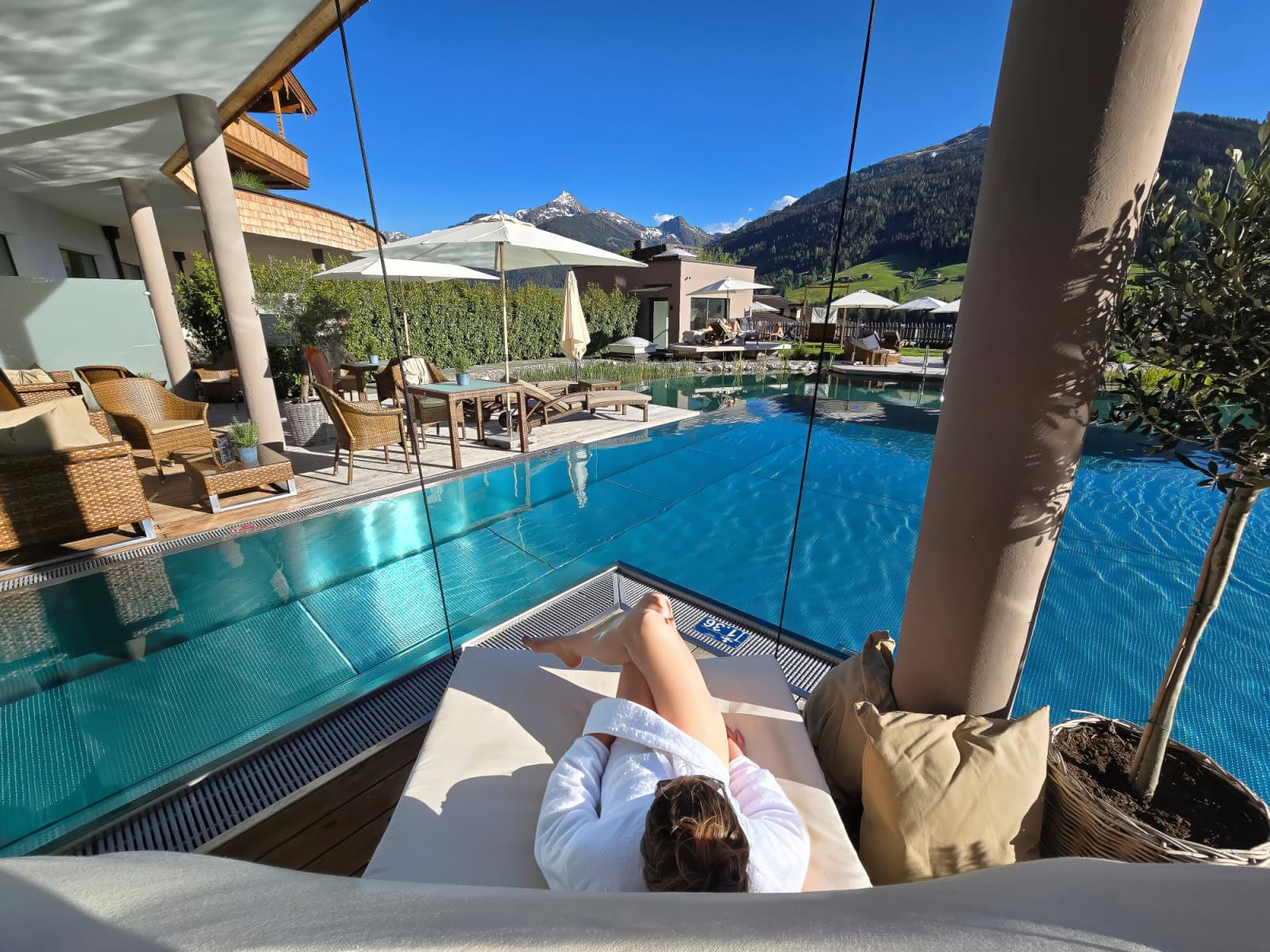
For the bold, a bracing counterpart waits beside the heated pool: a natural, unheated pool. After an hour in the warm water or stretched beneath the sun, a quick dip snapped us back to full attention better than any espresso. Our favorite place to unwind, however, sat on a sun-drenched grass terrace high above the pools, where we shared a double swing and attempted to dive into a good book. Our ambitious reading plans never stood a chance. Some views simply outrank literature.
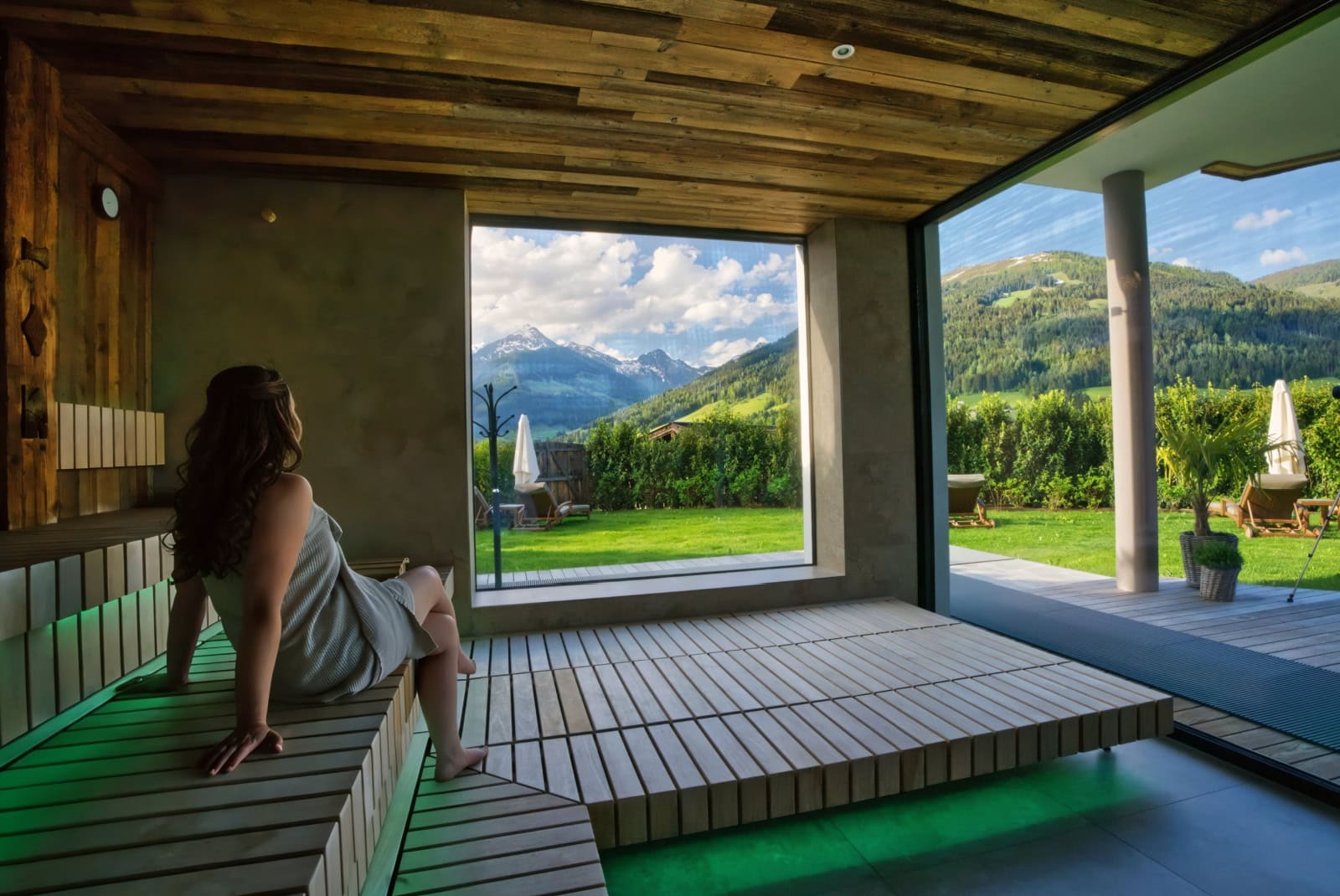
Inside the pure nature.spa, we alternated between dozing in the spacious, softly lit relaxation room and working our way through the sauna area, which offers several distinct routes to sweating out the chaos of life: a panoramic sauna with views toward the mountains, an event sauna with scheduled infusions, a gentler bio sauna for those who prefer lower temperatures, an infrared cabin for slow-heating tired muscles, and a steam bath for everything else.
Between sessions, guests can even step outside to a private lounge area centered on an outdoor fireplace — proof that the Böglerhof understands the best part of a sauna is often the cooling off.
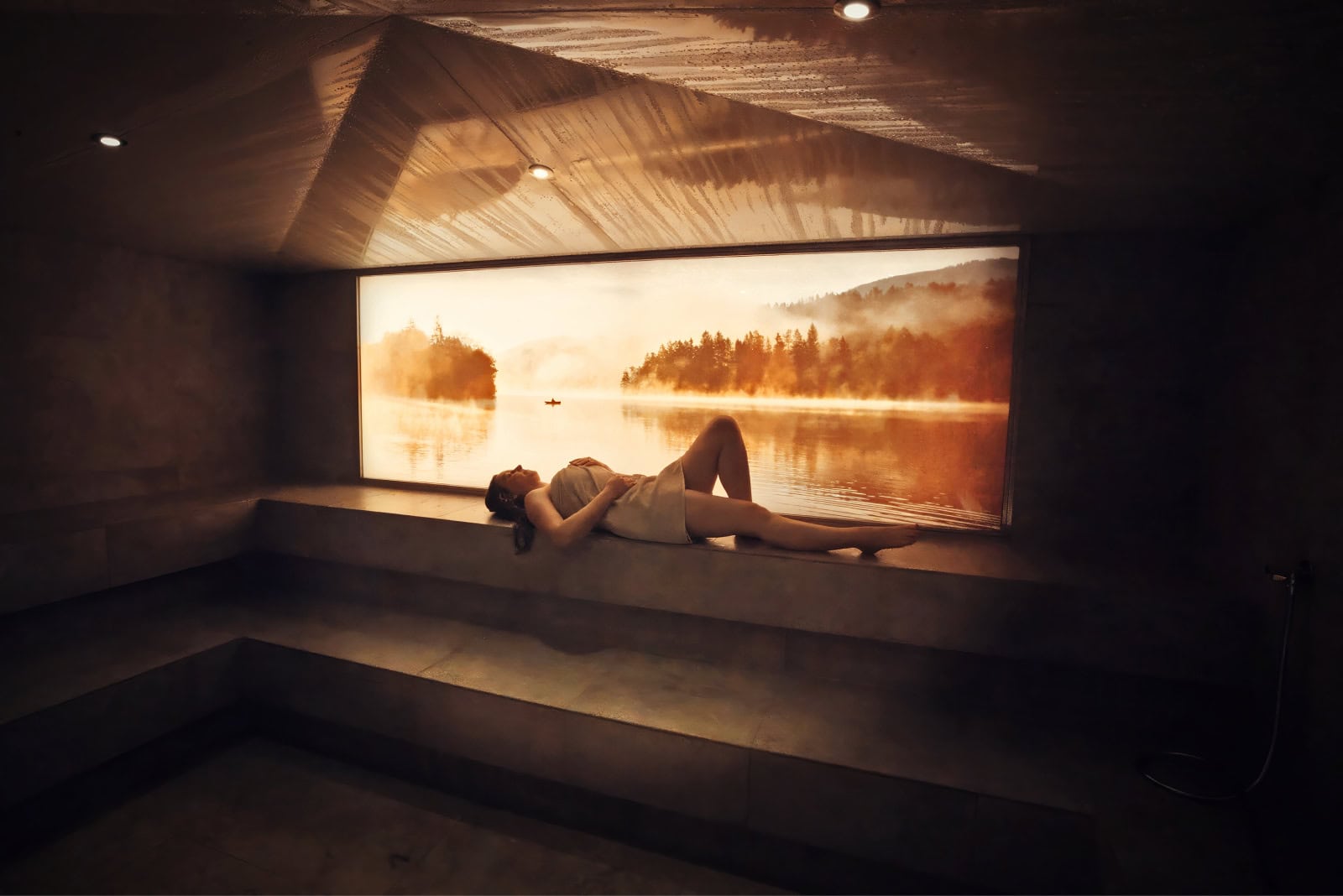
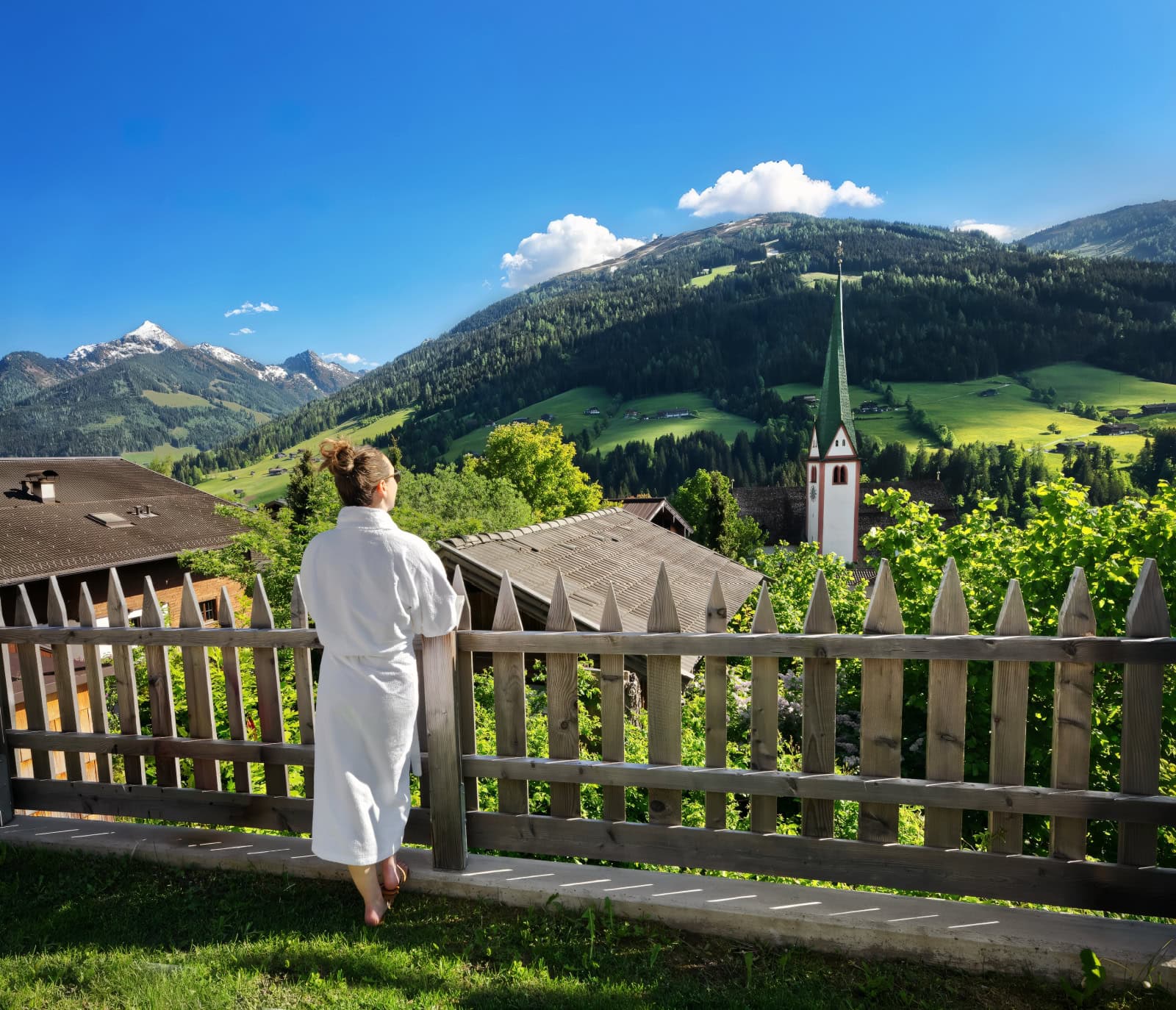
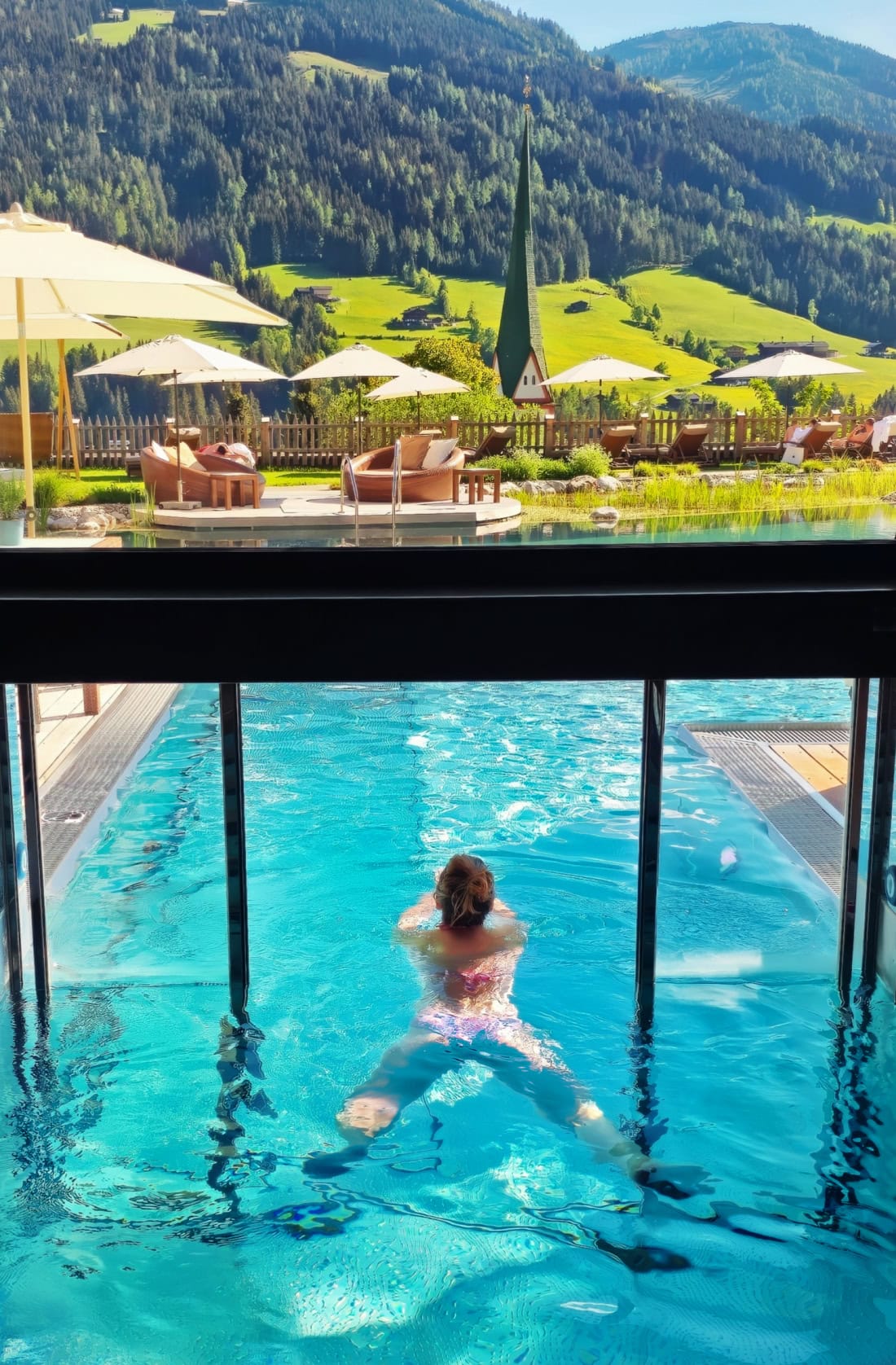
The spa earned its keep most convincingly after our first hike in Alpbachtal. We had booked full-body massages for that afternoon, a decision that seemed sensible when we made it and bordered on divine intervention by the time we returned. Our legs were tired, our shoulders were tight and every uphill step had begun submitting an invoice.
The therapists worked through the damage with just the right balance of pressure and mercy. We emerged loose-limbed, slightly dazed and deeply uninterested in doing anything more demanding than sitting poolside with a cocktail.
Into the Mountains Of Alpbachtal
The Böglerhof makes a persuasive argument for never leaving the property. Alpbachtal makes an even stronger one for putting your boots back on. The valley sits in the heart of the Kitzbühel Alps, and trails spread in practically every direction, including, as we learned on our first full day, from just above the hotel itself.
A Guided Hike to Bischofer Joch
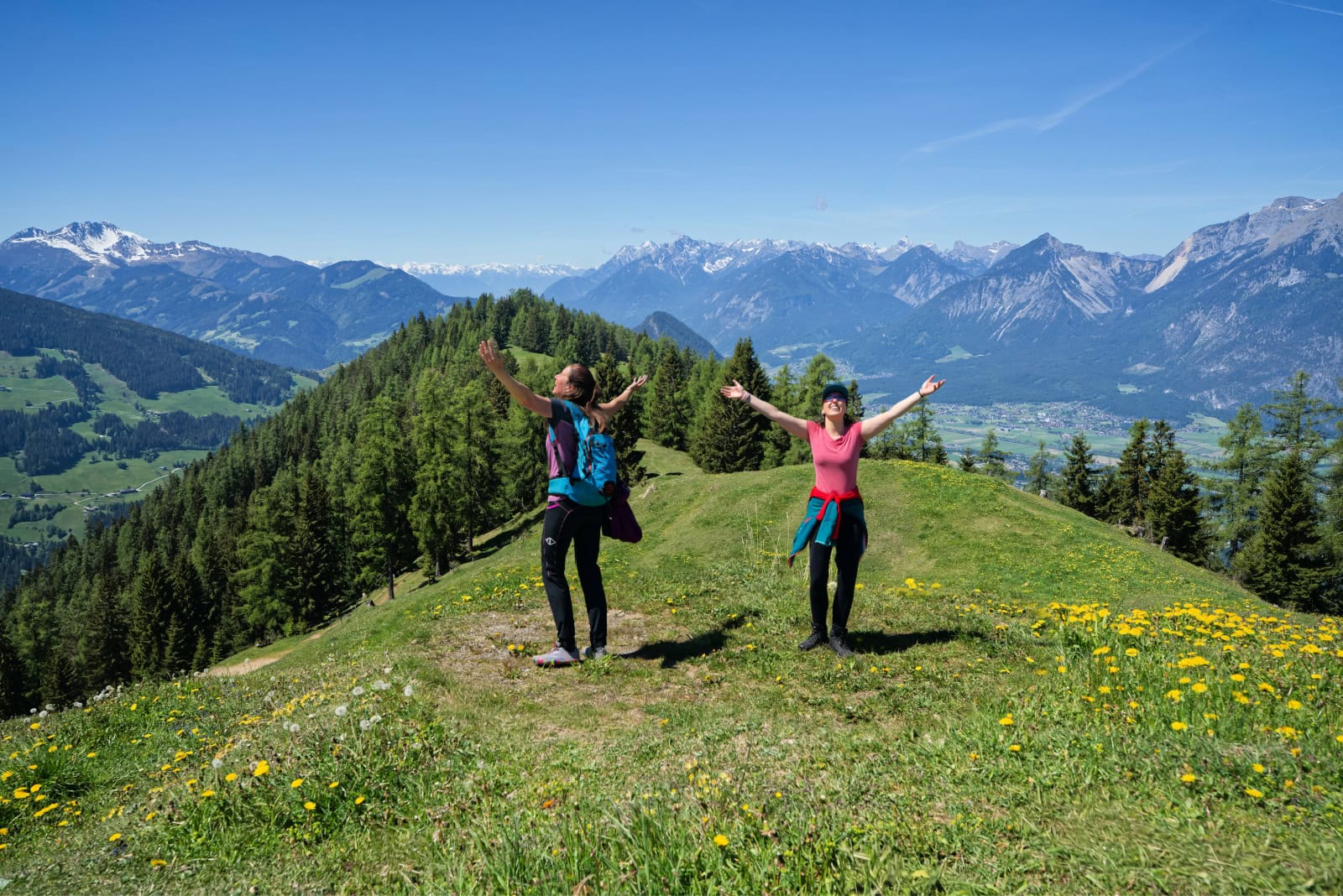
Taking advantage of the hotel’s weekly activity program, we set out with Karin, one of the Böglerhof’s hiking guides, on a half-day hike beginning at the hotel’s front door. The trail climbed through meadows bright with daisies and buttercups, passing weathered Tyrolean farmhouses before slipping beneath the trees of the Bischofer Wald, or Bishop’s Forest.
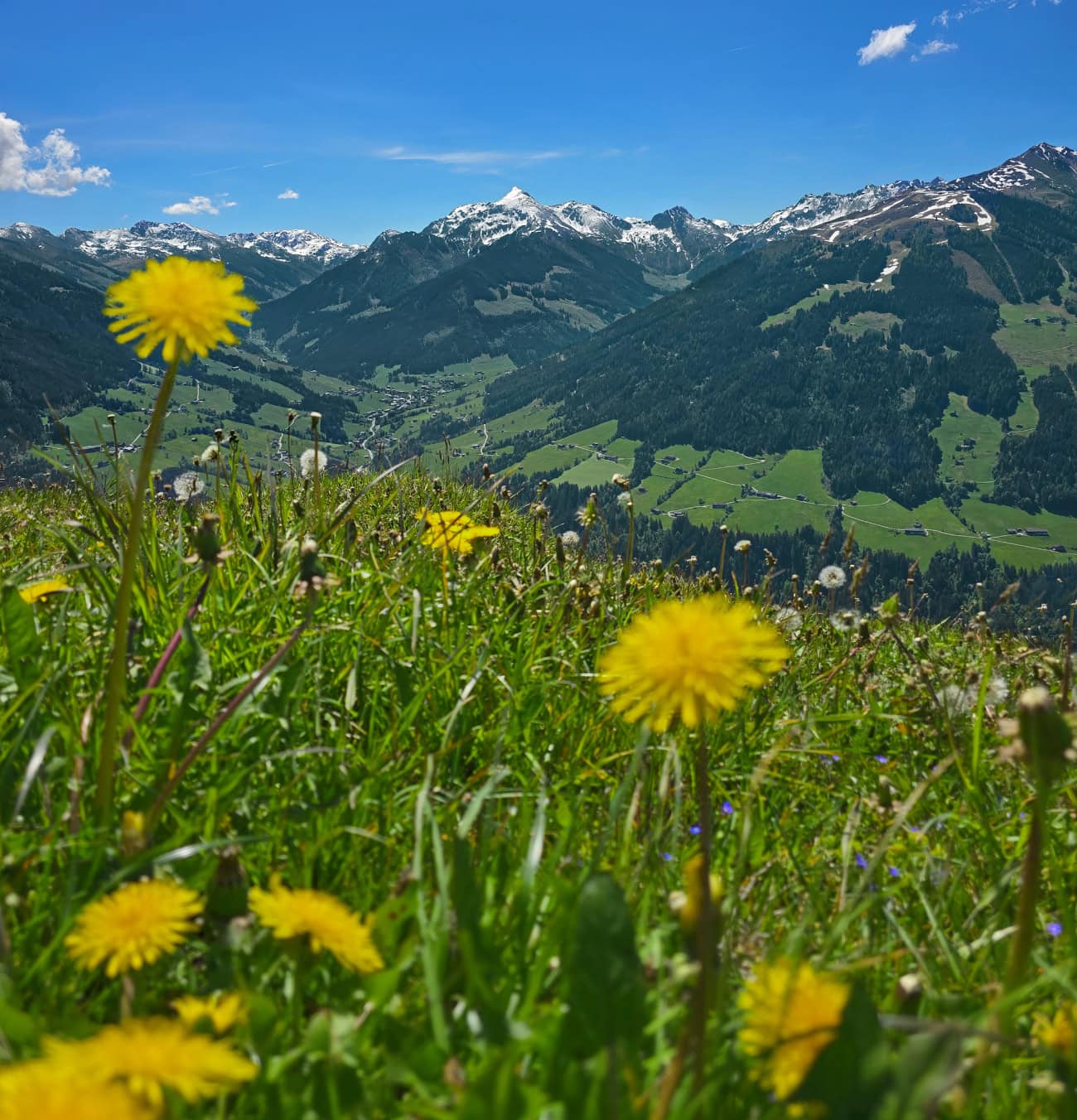
Beyond the forest, the path emerged onto the Bischofer Alm and continued toward Bischofer Joch, a high saddle beneath Gratlspitze, the distinctive triple-peaked mountain that towers over Alpbach. A small hut and beautifully kept wayside shrine marked the top, where the views opened across the surrounding summits.
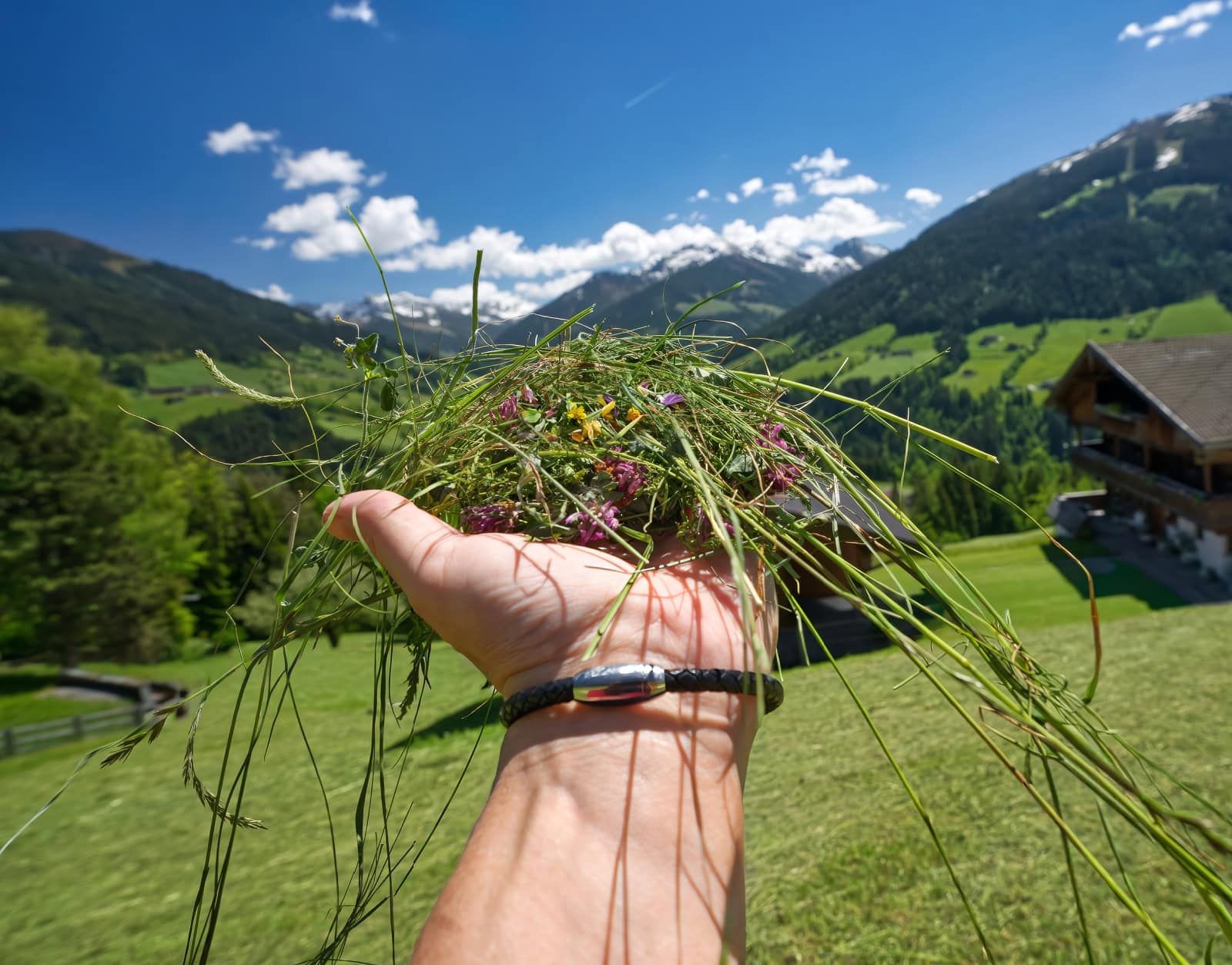
Farming families were cutting and raking the season’s first hay as we passed, releasing the same sweet, earthy perfume that had greeted us on the drive into Alpbachtal.
Karin proved that a good guide can add as much to a hike as the scenery itself. She named the peaks filling the horizon, pointed out alpine lakes tucked into the folds of the mountains and showed us Wiedersberger Horn, which we planned to tackle on our own the following day.
She also helped us understand the landscape beneath our feet. Much of the Kitzbühel Alps is formed from softer, slate-like rock that has weathered into gentle, grass-covered slopes, one reason Alpbachtal is so well suited to skiing. Gratlspitze is different. Its harder dolomite and limestone give the mountain its sharper profile and once held the silver and copper ore mined here as far back as the 15th century.
As we continued, Karin identified the larch, spruce and pine crowding the trail, showed us which plants could be eaten without an emergency-room detour and explained why the water rushing down from the mountains was safe to drink.
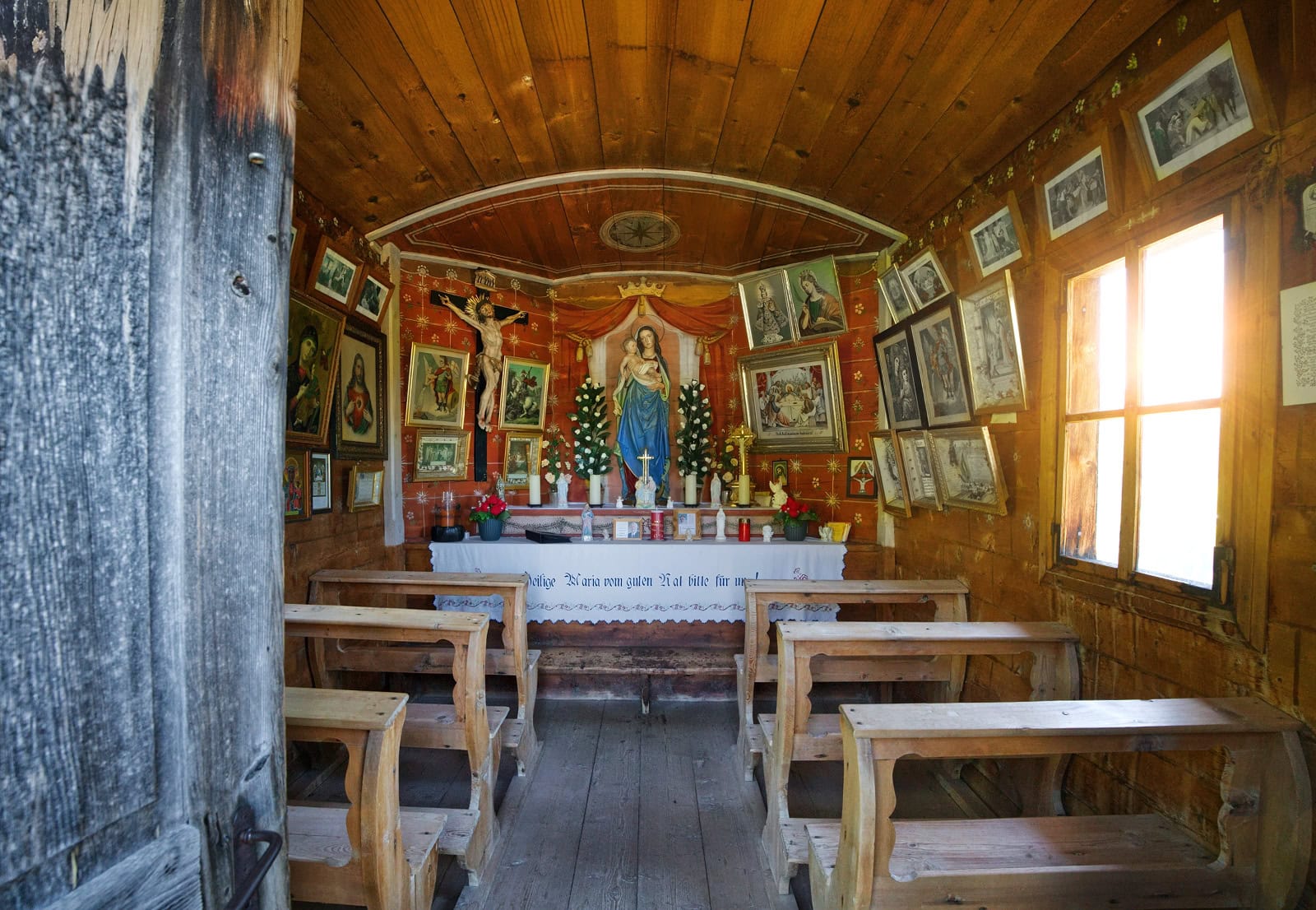
Along the way, we passed the tiny wooden Hausberg chapel perched above a farmstead. Karin explained that small chapels like it are scattered across the mountainsides. Before modern roads made these slopes easier to navigate, families living high above the valley could not always reach the parish church when winter weather closed in. Instead, they built places of worship on their own land.
Her timing could not have been better. Farming families were cutting and raking the season’s first hay as we passed, releasing the same sweet, earthy perfume that had greeted us on the drive into Alpbachtal. That led to a fascinating discussion of the region’s prized hay milk, produced by cows fed on fresh grasses and mountain herbs rather than fermented feed. By the time Karin finished explaining the tradition, the cheeses served at breakfast no longer seemed merely local. They felt like an edible expression of the meadows around us.
From up here, the Kitzbühel Alps rolled into the rugged Zillertal Alps, which rose dark and snowbound beneath a ceiling of ominous clouds.
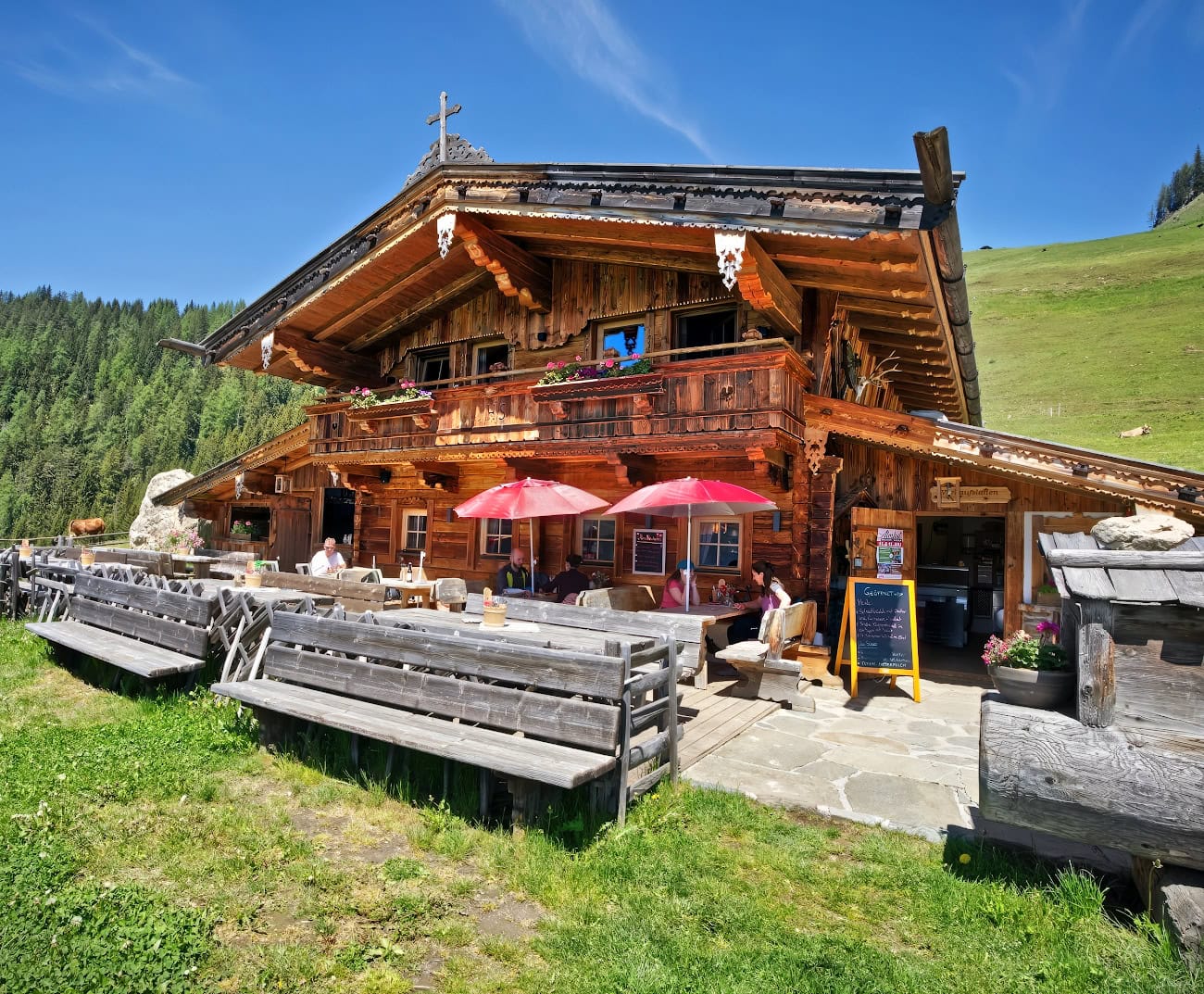
We capped the outing at the beautiful Bischofer Käsalm, a working mountain dairy with an Almausschank serving hungry and thirsty hikers. The terrace overlooked Wiedersberger Horn, cows grazed across the slopes and their bells supplied the soundtrack. It was the perfect place to linger over a cold drink and let the hike settle into our legs. Afterward, we made our way back to the hotel and into the very capable hands of the massage therapists.
Wiedersberger Horn on Our Own
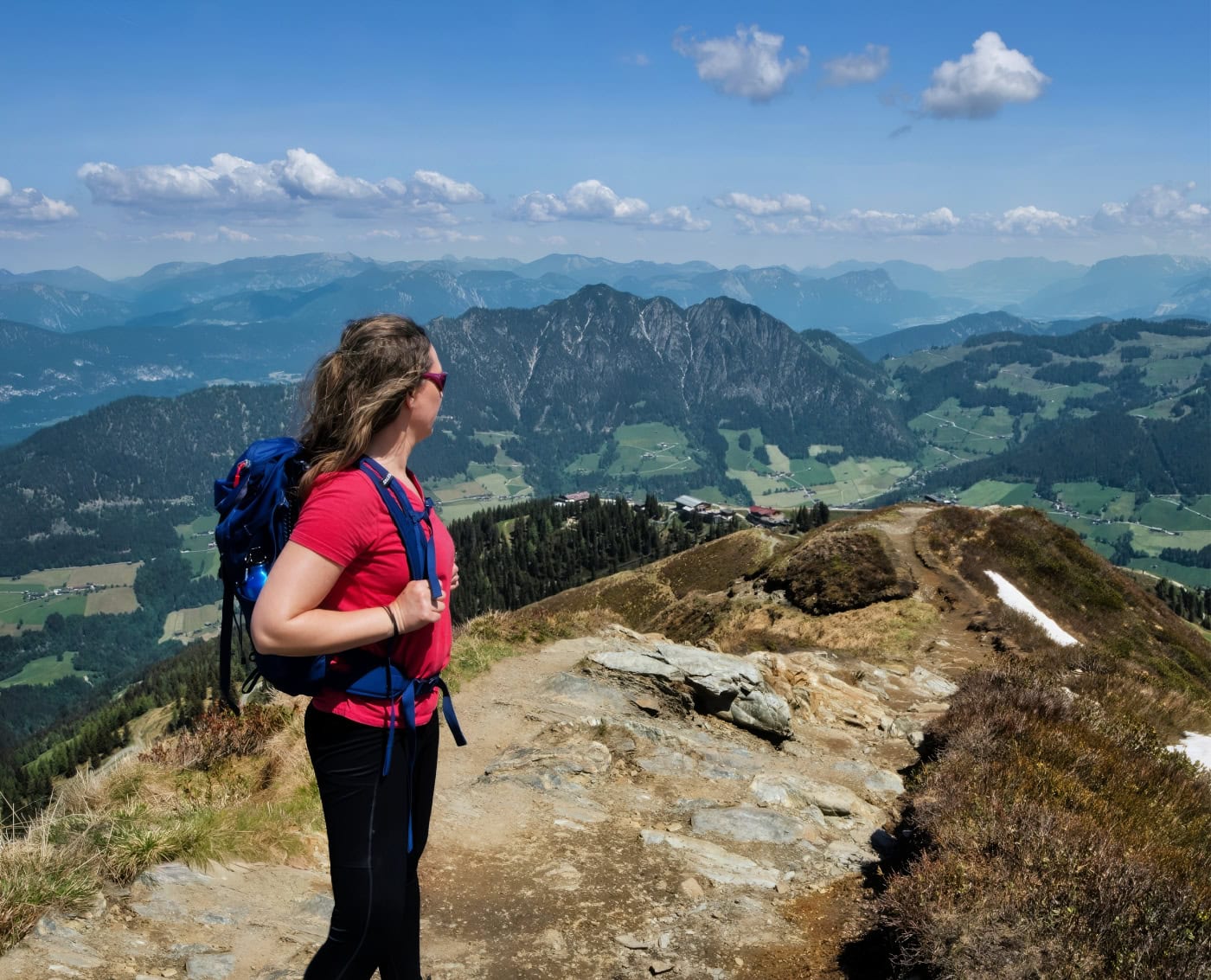
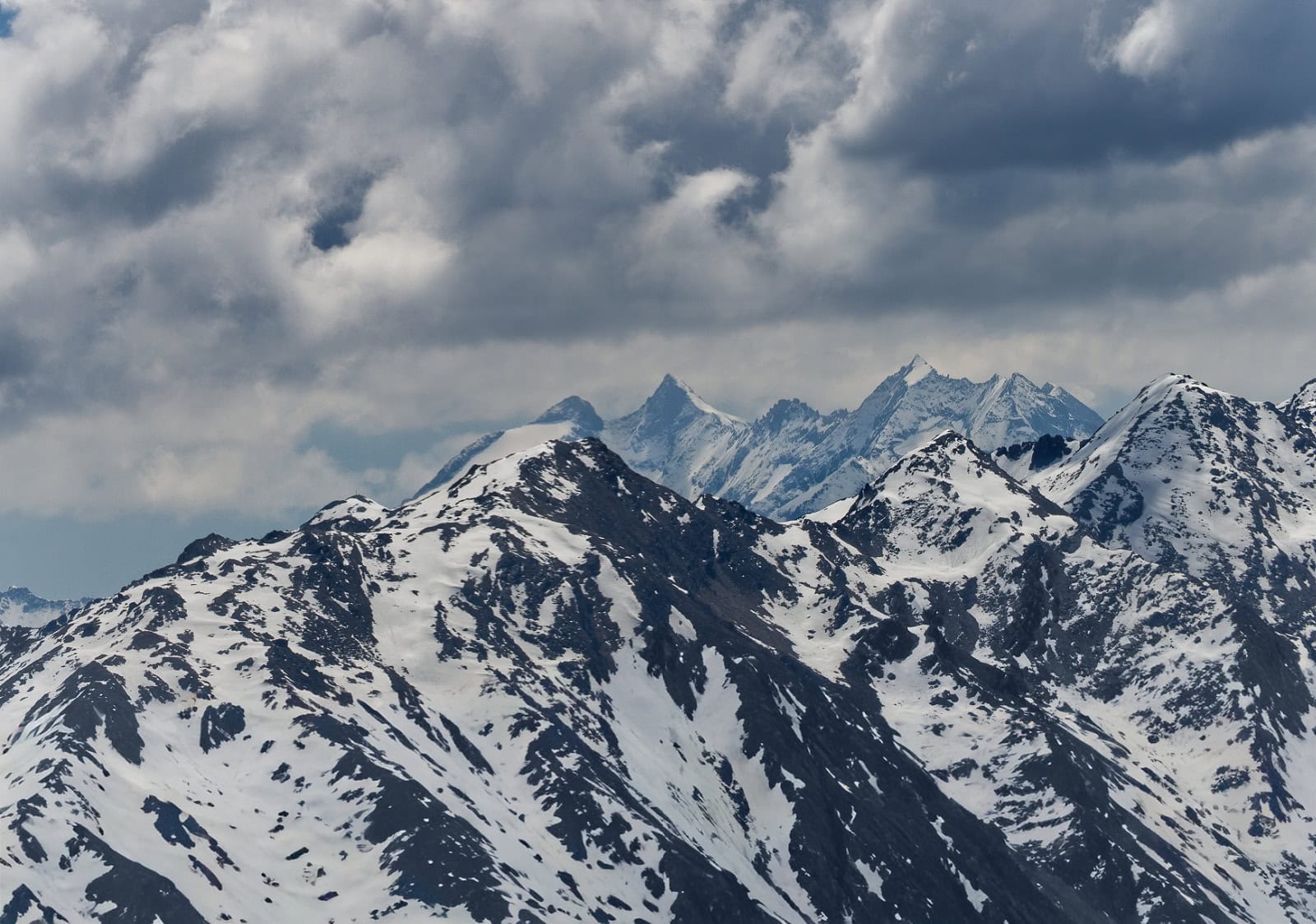
The following day, we put the Alpbachtal Card provided by the Böglerhof to work. It covered our ride on the Wiedersbergerhornbahn, carrying us high above the valley before we set off on a more demanding climb to the summit of Wiedersberger Horn.
As we gained elevation, farms shrank into patches of green, villages tightened into clusters of rooftops and snow-laced peaks slowly filled the horizon. At the summit cross, roughly 6,978 feet (2,127 meters) above sea level, the reward extended in every direction. From up here, the Kitzbühel Alps rolled into the rugged Zillertal Alps, which rose dark and snowbound beneath a ceiling of ominous clouds.
It was the perfect counterpart to our outing with Karin. The previous day had been filled with stories, explanations and details we never would have noticed on our own. This time, there was no commentary. Just the two of us, the wind and what felt like half of Tyrol spread out below.
A Day Beyond the Trails
After two days in hiking boots, we spent our third day exploring Alpbachtal at a slower pace, following an itinerary Johannes had recommended in the wine cellar. We began among the medieval lanes of Rattenberg, continued through centuries of rural life at the Museum of Tyrolean Farmhouses, strolled along Reintaler See and ended the evening visiting two very different places of worship in Alpbach.
The Medieval Town of Rattenberg
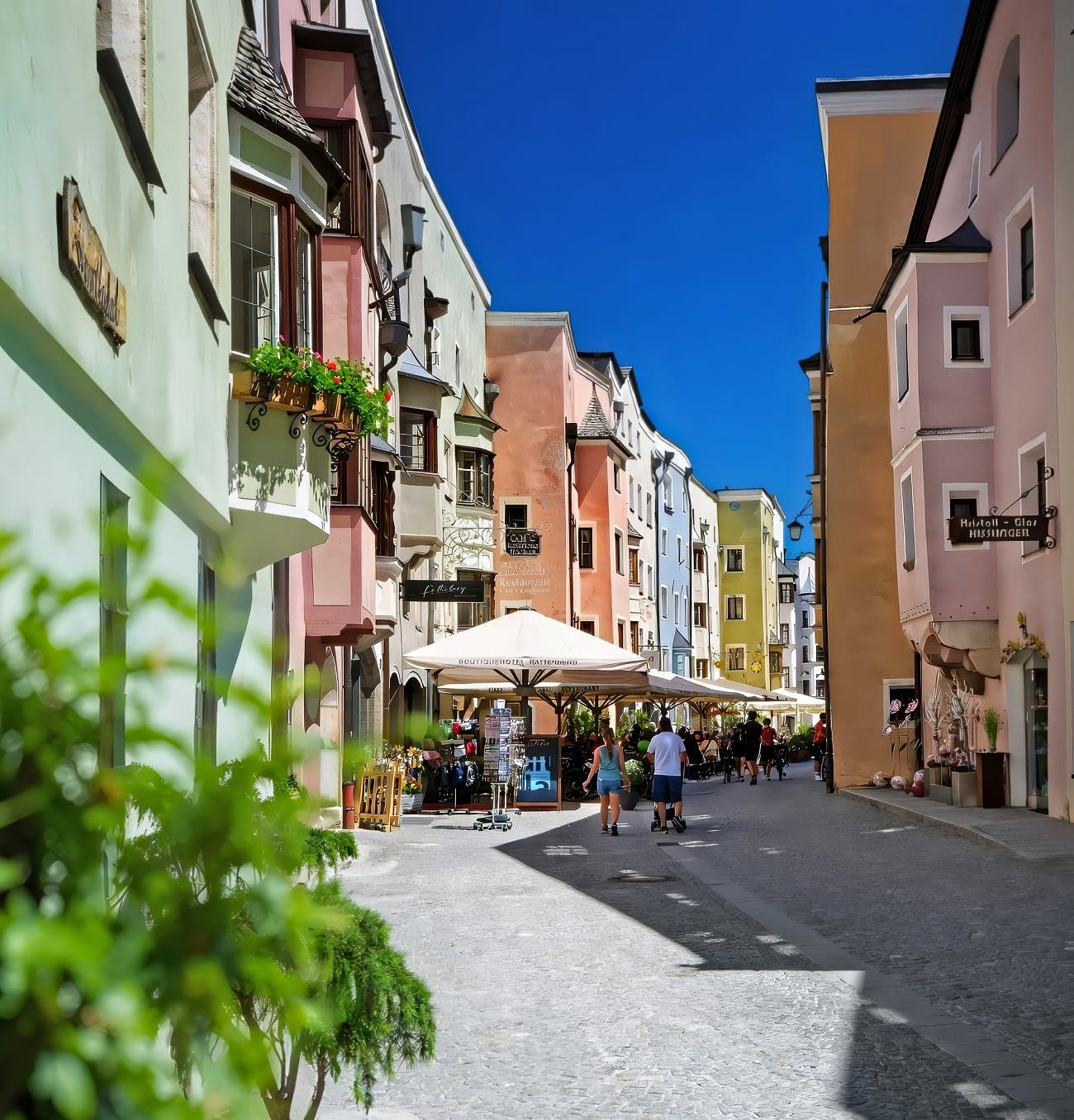
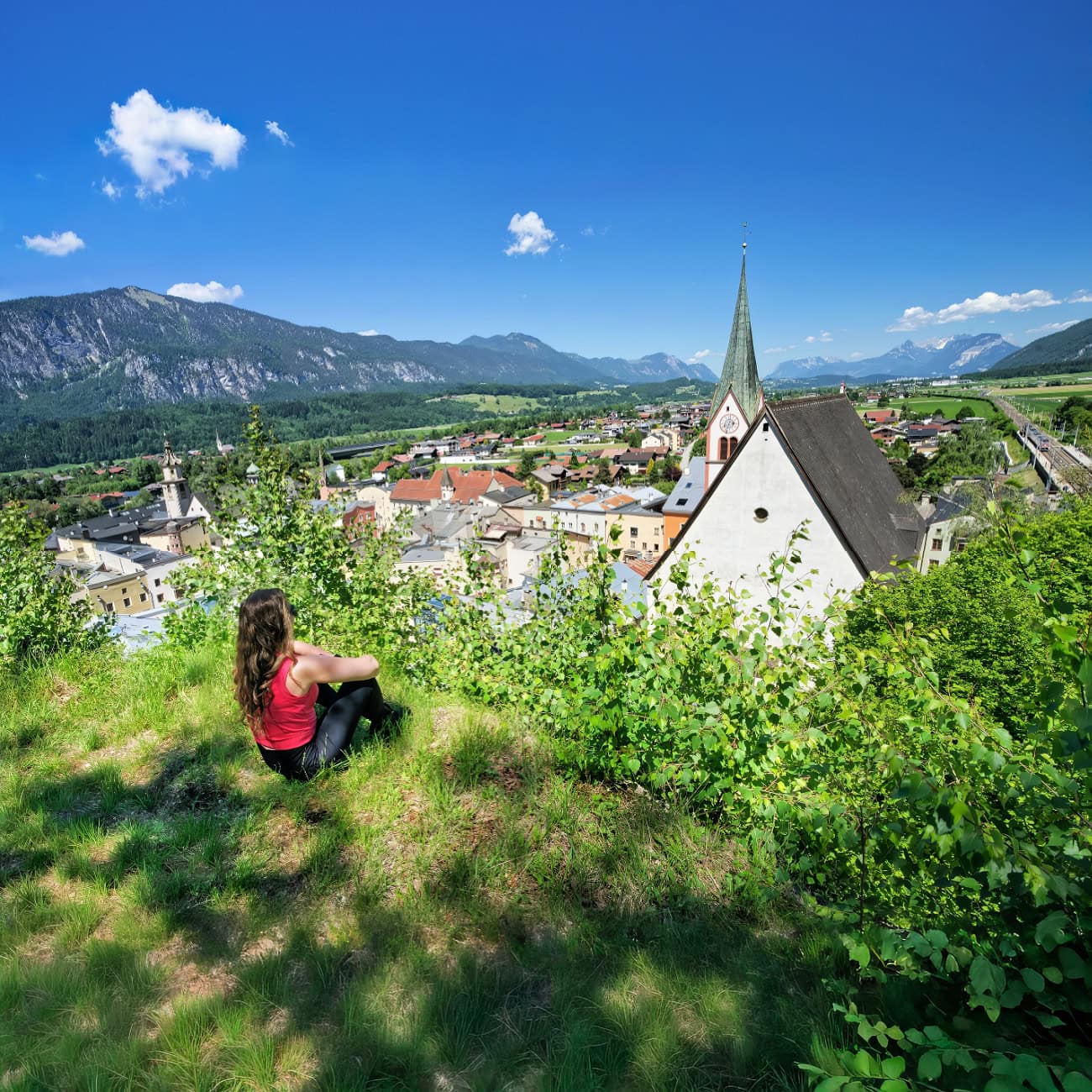
Our first stop was Rattenberg, Austria’s smallest town and one of its best-preserved medieval centers. First mentioned in 1254, it has more than 770 years of recorded history tucked between the Inn River and the steep slopes of the Schlossberg. Rattenberg is also known as Tyrol’s “glass town,” a tradition kept alive by the glassblowers, engravers and artisans working in the shops along its pedestrian streets.
We wandered beneath the colorful façades of the main street, browsed shops filled with handblown glass and stopped for lunch at Gasthaus Kanzler Biener, an inn dating to 1630. Afterward, we climbed the Schlossberg to the ruins of Rattenberg Castle, where the surviving Biener Tower bears the name of Wilhelm Biener, a Tyrolean chancellor who was beheaded there in 1651. The story goes that a messenger arrived carrying his pardon just moments after the execution. True or not, it is exactly the kind of legend old castles seem to collect.
The Museum of Tyrolean Farmhouses
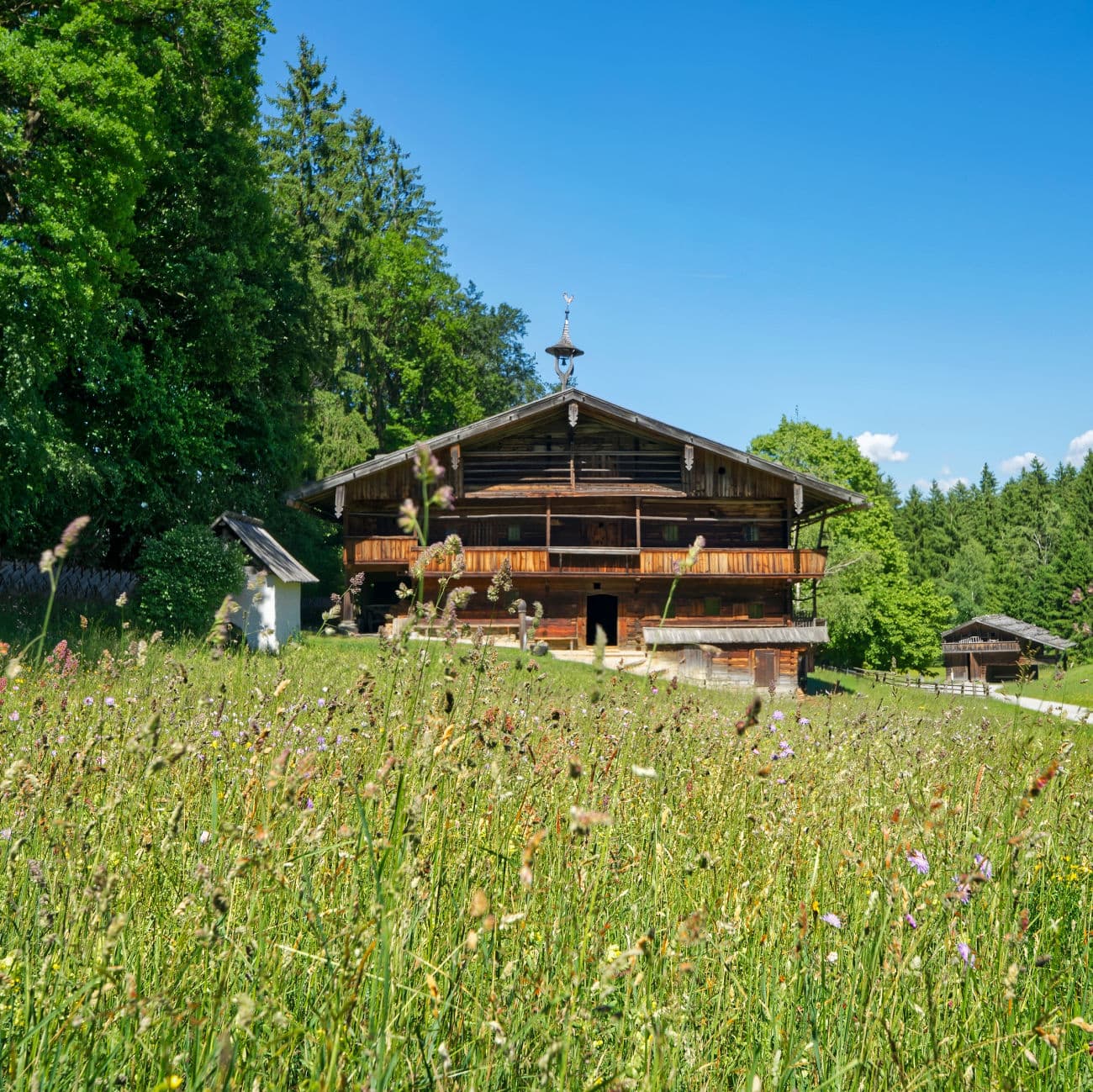
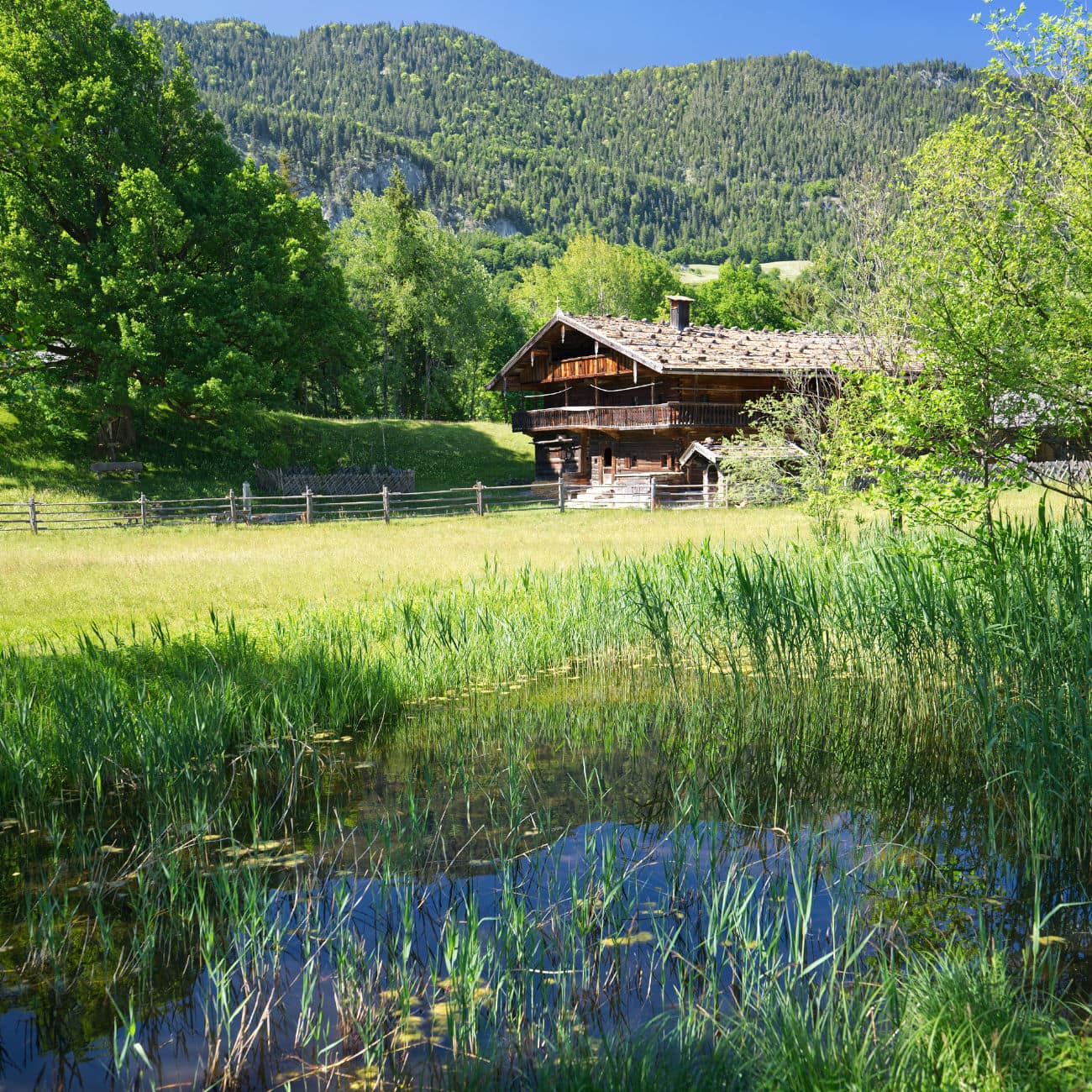
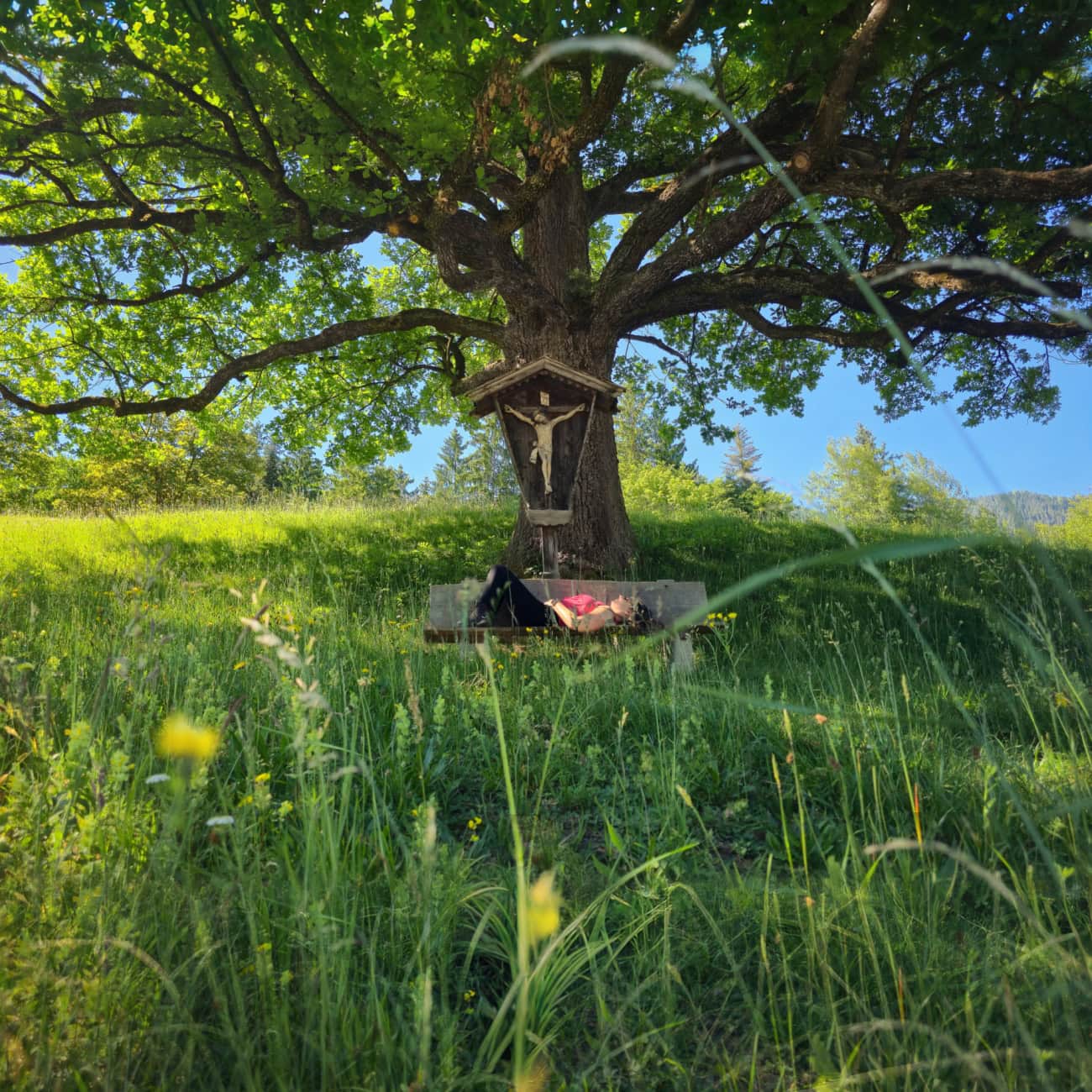
From Rattenberg, we continued to the nearby Museum of Tyrolean Farmhouses in Kramsach. Spread across 22 acres, the open-air museum brings together 14 historic farmsteads and 23 outbuildings relocated from valleys throughout North, East and South Tyrol and painstakingly reconstructed here. A walking trail winds through the hilly grounds, creating a kind of Tyrol in miniature, with weathered timber houses, barns, mills and workshops scattered beneath the mountains. It felt less like touring a museum than wandering through a collection of villages left behind by time.
We ducked through low doorways into smoke-darkened kitchens, cramped living quarters and rooms still furnished with the tools and necessities of rural life. Signs at each farm explain where it originally stood, when it was built and how its construction reflected the landscape and climate of its home valley. The oldest examples date to the late Middle Ages, including the Alter Segger farm from East Tyrol, with roots reaching back to around 1400, and the Tierstaller complex from South Tyrol, built before 1500.
A Relaxing Stroll at Reintaler See
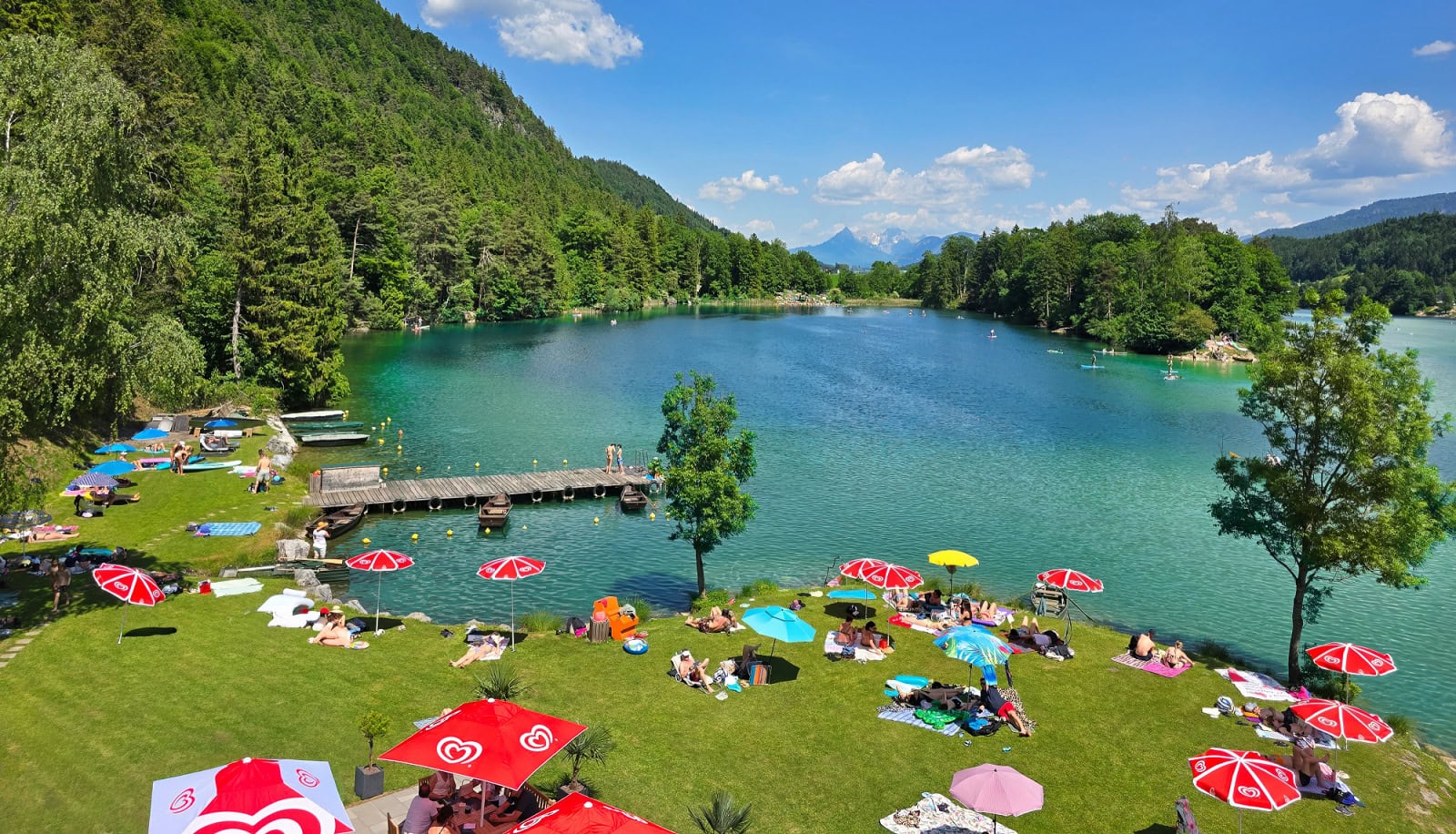
On the way back to the Böglerhof, we stopped at Reintaler See, one of Tyrol’s warmest bathing lakes. A gentle path traces the shoreline between grassy lawns, forest canopies and turquoise shallows, with the surrounding mountains rising beyond the banks. We walked from one end to the other and back, stopping often to marvel at the clarity of the water.
It was a hot afternoon, and nearly everyone in Alpbachtal seemed to have had the same idea. Sunbathers covered the lawns, people crossed the lake on paddleboards and in rowboats, and others drifted lazily on inflatable tubes. We eventually claimed a table at Restaurant Fischerstube and ordered Kaiserschmarren, because a lakeside walk in Austria is always better when it ends with a skillet of torn, sugar-dusted pancakes.
Evenings here unfold over dinner, wine and conversation before the village slips back into the sound of church bells and cowbells.
St. Oswald and the Place of Stillness
That evening, we crossed the street from the hotel to St. Oswald Parish Church, whose tower had watched over nearly every view of our stay. Having explored its historic interior earlier, we wandered through the Alpine cemetery, where candles glowed beneath wrought-iron crosses and cast shifting shadows across the graves.
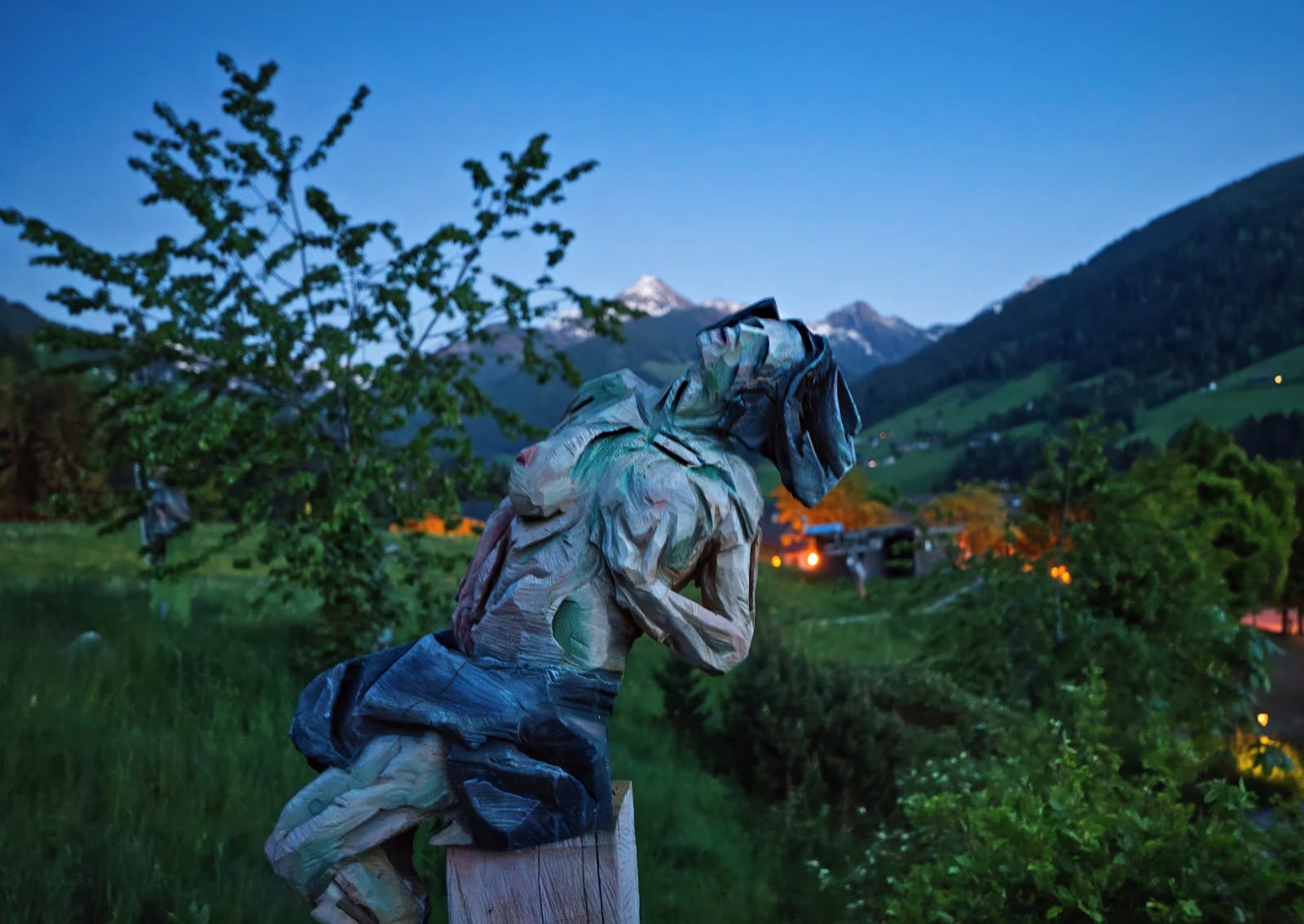
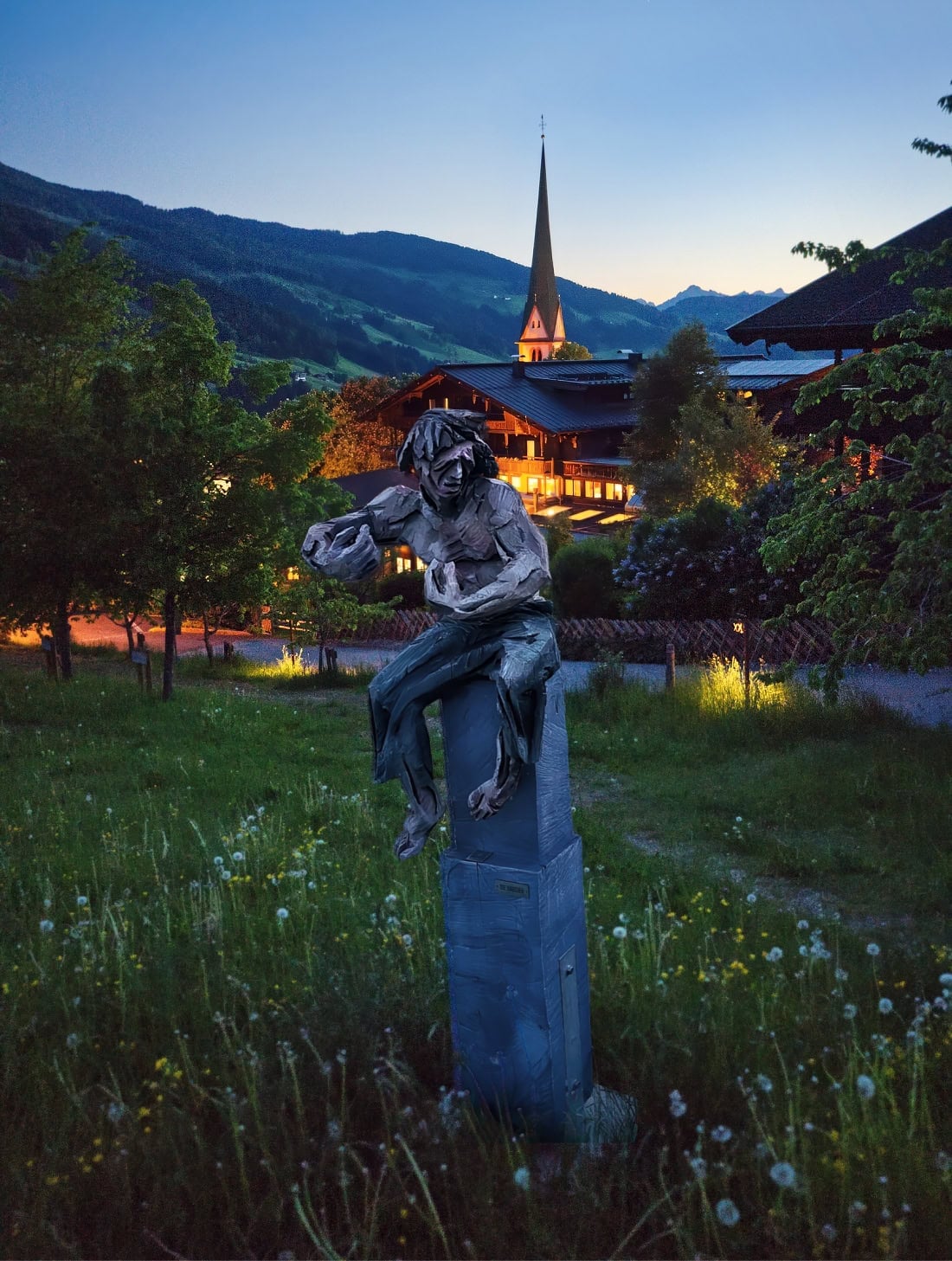
From there, we returned to the Böglerhof grounds and followed the Skulpturenweg, or Path of Sculptures. Figures representing envy, greed, pride and other human failings appeared along the way, making the short walk feel less like a decorative garden path and more like a gentle accounting of the baggage we all carry.
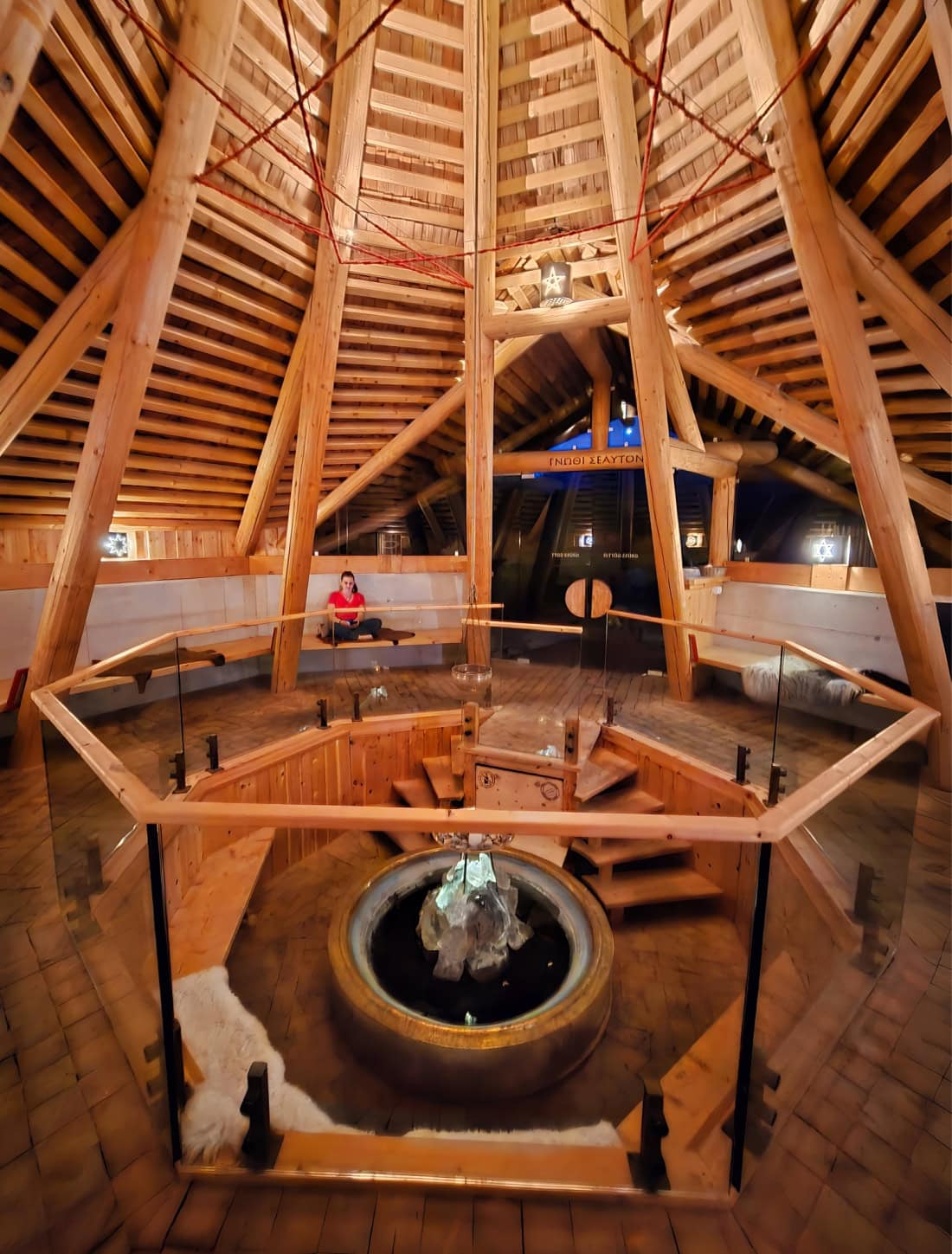
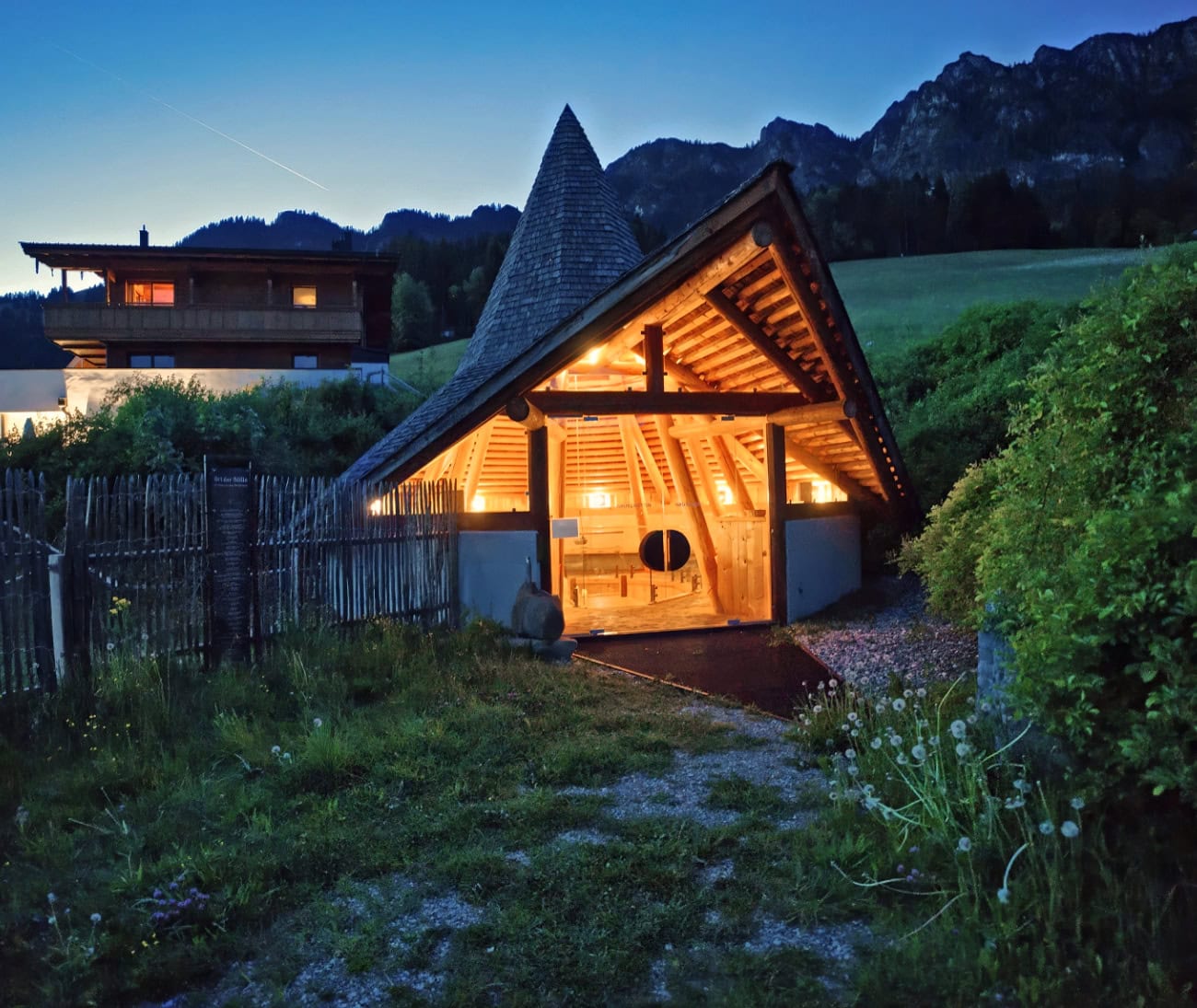
The trail ends at the Ort der Stille, or Place of Stillness, conceived by Johannes’s mother, Karin Duftner, as a “roof for all religions.” Built from wood and glass, the chapel draws its shape from the Enneagram. Nine interior pillars represent its interconnected personality types, while niches provide symbolic space for the world’s religions. At the center, spring water bubbles from a fountain as a symbol of life and divine energy, surrounded by a bowl representing femininity and receptiveness and a glass stele representing masculinity and transparency.
The scent of wood, the sound of moving water and the chapel’s warm glow create a space unlike any place of worship we have visited. We highly recommend going in the evening, when the glass walls shine from within and darkness gathers around the surrounding grounds. It was one of the most unexpected and memorable experiences of our stay.
Who Der Böglerhof Is For
The Böglerhof pulls off a rare trick: it works equally well for couples and families without asking either to compromise.
Couples have an adults-only spa substantial enough to justify the stay on its own. Families have a separate wellness area where children can splash without being treated as a disturbance. Hikers can leave the car behind and walk directly into the mountains, wine lovers have a serious Austrian cellar to explore, and travelers drawn to history will find Rattenberg, the Museum of Tyrolean Farmhouses, Innsbruck and much more within easy reach.
It is less suited to travelers looking for a village that comes alive after dark. “Alpbach is not a place for nightlife holidays,” Johannes told us. You will not find a trendy après-ski district, a row of nightclubs or a dance floor lubricated by shots until three in the morning. Evenings here unfold over dinner, wine and conversation before the village slips back into the sound of church bells and cowbells.
For some, that will be a drawback. For others, like us, it is precisely the point, which is why we’re already planning our way back.
Booking Your Stay
Ready to experience Der Böglerhof? Explore current room options, rates and availability here.
A warm thank you to the Duftner family and the whole Böglerhof staff for treating us like Stammgäste from the moment we arrived, and to Karin for one of our finest days in Alpbachtal. As always, all opinions in this review are entirely our own.
Save & Pin for Later
Grab the free guide + follow for South Tyrol + Dolomites travel tips
25 Things to Know Before Visiting the Dolomites
Join 18,000+ travelers. No spam, ever.