Resciesa unfurls above Ortisei like a sun-blasted balcony peering over Val Gardena and Val di Funes. This sprawling alp is one of the Dolomites’ great low-effort, high-reward escapes: an easy panoramic hike that trades lung-burning climbs for gentle paths, chiseled ridgelines, and sky-wide beauty in every direction.
Most of Val Gardena’s famous hikes announce themselves with a bullhorn. Seceda does it before you are off the gondola. The Sassolungo loop does it on the drive in. Resciesa, on the other hand, arrives in pieces: a funicular, a high-alpine pasture, a chapel from 1755, a solemn summit cross, and then, a roaring encounter with the Geisler (Odle) Group unlike any other.
Adolf Munkel puts you under their teeth. Seceda brings you eye-level with their bite. Resciesa lets you study the whole jaw.
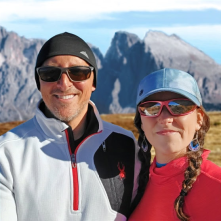
We hiked Resciesa on a sun-drunk day in early October while staying at Hotel Aquila in the heart of Ortisei. The trail was nearly ours alone. It felt like cheating your way into a grandstand view of the Dolomites.
You step into the Resciesa funicular in Ortisei, glide above the forest in a matter of minutes, and emerge high on a grassy alp where the world suddenly feels wider, quieter, and countless centuries older than whatever you left down in the valley. No heroic suffer-fest required. No knee-crushing climb from town unless you insist on earning your lunch the hard way.
Like the Bullaccia circuit, Resciesa gives you the drama of the Dolomites without the punishment ritual that usually pays for it. Here’s how to hike it end to end, including an extended trek to Malga Brogles, a lonely little hut crouched beneath the northern walls of the Geisler.
Resciesa at a Glance
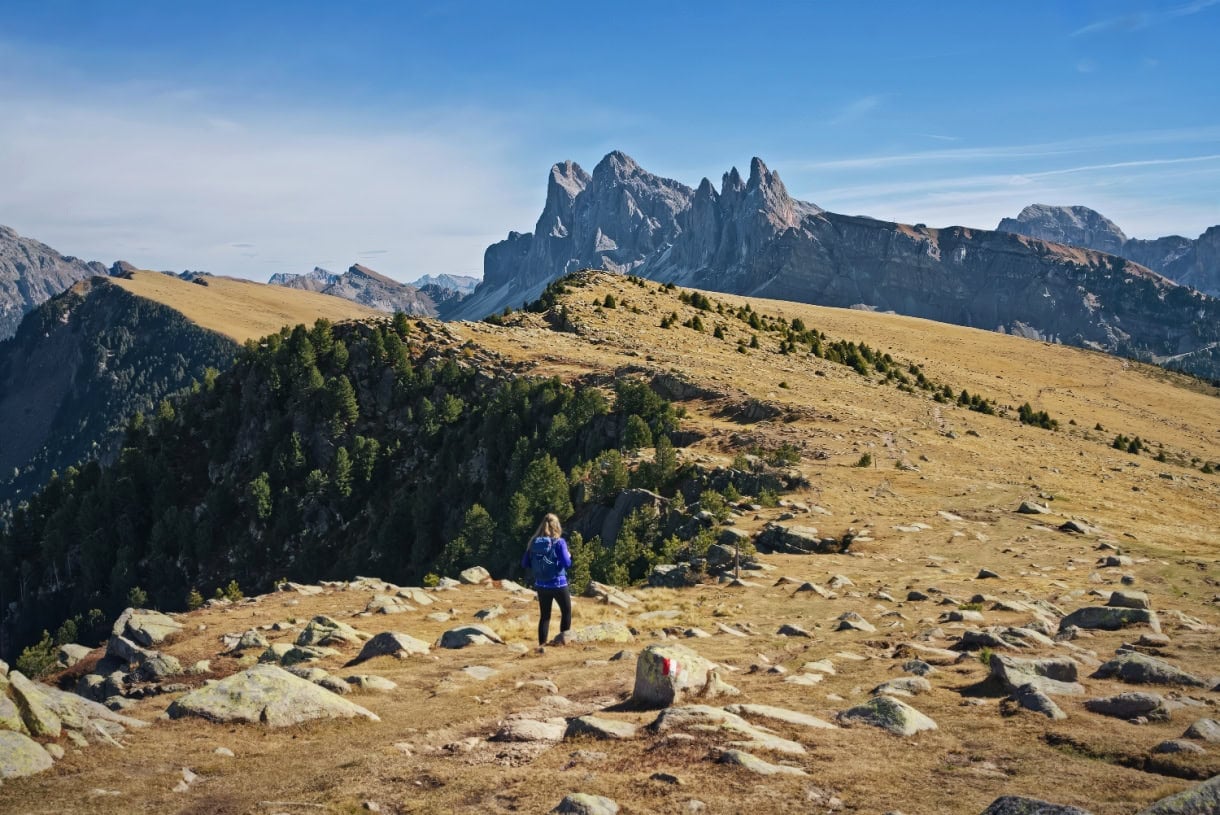
What is Resciesa: Known as Rasciesa in Italian and Raschötz in German, Resciesa is a high alp lying above Ortisei at more than 7,200 feet (2,200 meters) within the Puez-Geisler Nature Park. Stretching between the Ladin-speaking world of Val Gardena and the neighboring Val di Funes, its open pastures, forested slopes, and panoramic ridgelines make Resciesa among Val Gardena’s most rewarding easy hiking areas.
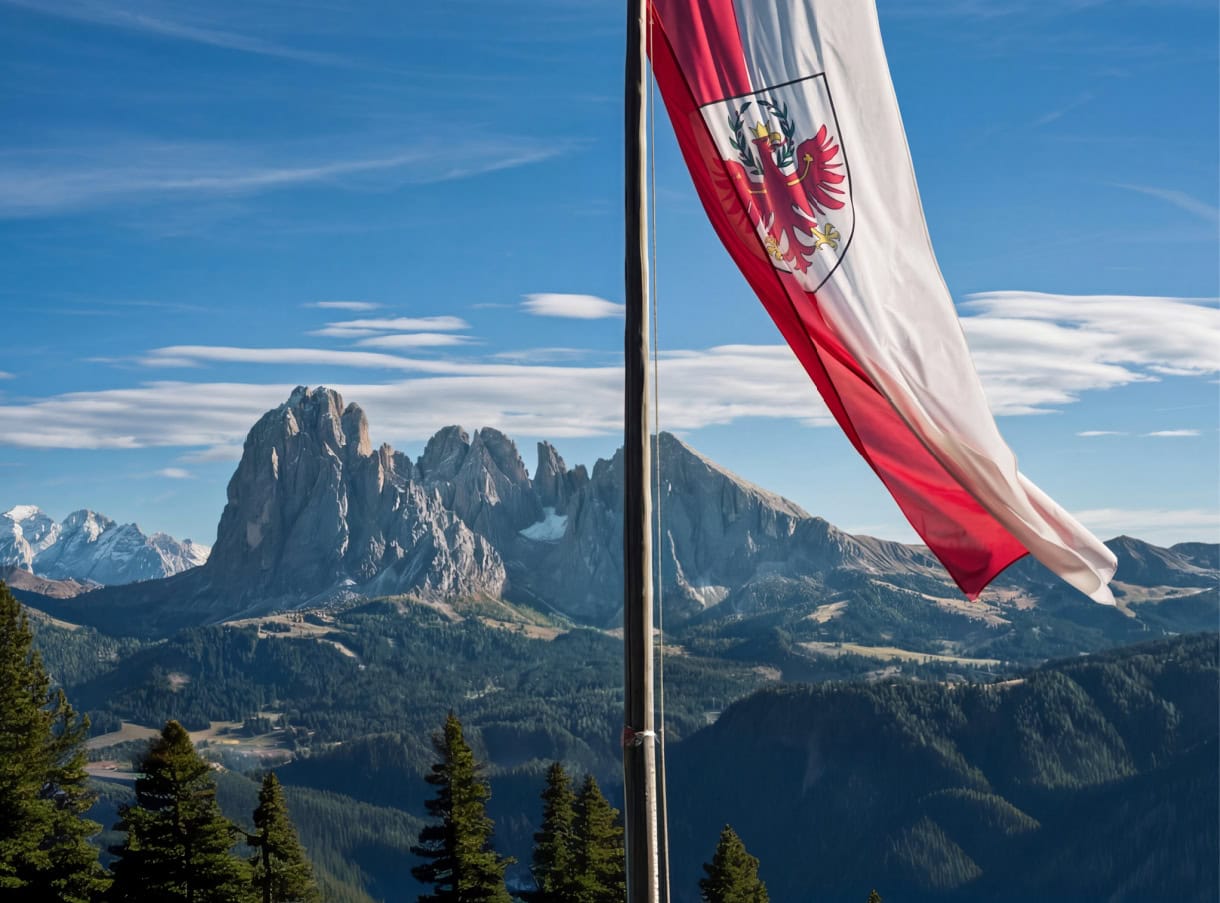
What mountains do you see hiking Resciesa: Resciesa offers one of the broadest panoramas above Ortisei. From the high alp and summit cross, you can see the Sassolungo (Langkofel) massif, the Geisler (Odle) peaks, Seceda, the Stevia Group, the Sella Group, the Schlern, and Alpe di Siusi. In clear weather, the view stretches even farther toward the Sarntal Alps, Zillertal Alps, Stubai Alps and the Ortler Alps.
What hikes are available on Resciesa: We recommend two main routes, depending on how much time and energy you want to spend on the alp:
- Classic Resciesa Circuit: This easy loop begins at the Resciesa funicular mountain station above Ortisei. It leads to the summit cross at Resciesa di Fuori, passes the Holy Cross Chapel, and returns to the funicular. The route is about 3.1 miles (5 km) with roughly 646 feet (197 m) of elevation gain. Plan on 1.5–2 hours, longer if you stop for photos or lunch.
- Resciesa to Malga Brogles: For a longer and more dramatic outing, continue toward Malga Brogles, a mountain hut tucked beneath the Geisler peaks. This extended route is about 8.1 miles (13 km) with roughly 1,066 feet (325 m) of elevation gain and takes around 4–5 hours. It is a better choice for hikers who want a more substantial half-day trek with a bigger sense of journey.
Where to eat on Resciesa: Where to eat on Resciesa: For the classic Resciesa hike, the most convenient places to eat are Malga Cason, Chalet Resciesa, near the top station; and Rifugio Resciesa, about a 20-minute walk into the hike. All work well for a drink, lunch, or a post-hike reward before heading back to Ortisei. If you extend the hike toward Malga Brogles, you can also stop there for a meal or refreshments.
Who Resciesa is best for: Resciesa is ideal for families, photographers, first-time Dolomites hikers, and mixed-ability groups who want a beautiful mountain outing without a demanding climb. It is especially convenient for anyone staying in Ortisei who wants a day to get acclimated to the elevation change before taking on more challenging hikes.
Cultural highlight: Resciesa is more than a scenic ridgetop above Ortisei — it is a centuries-old high-alpine cultural landscape divided into Rasciesa di Dentro and Rasciesa di Fuori, with documented history reaching back to the 10th century. Its name may come from the Latin res ecclesiae, meaning “property of the church,” or from an old term for horse pastures. That history still feels alive in summer and early autumn, when mountain farmers bring livestock to graze and cows and Haflinger horses wander the open meadows beneath the Dolomite peaks.
How to Get to the Resciesa Trailhead
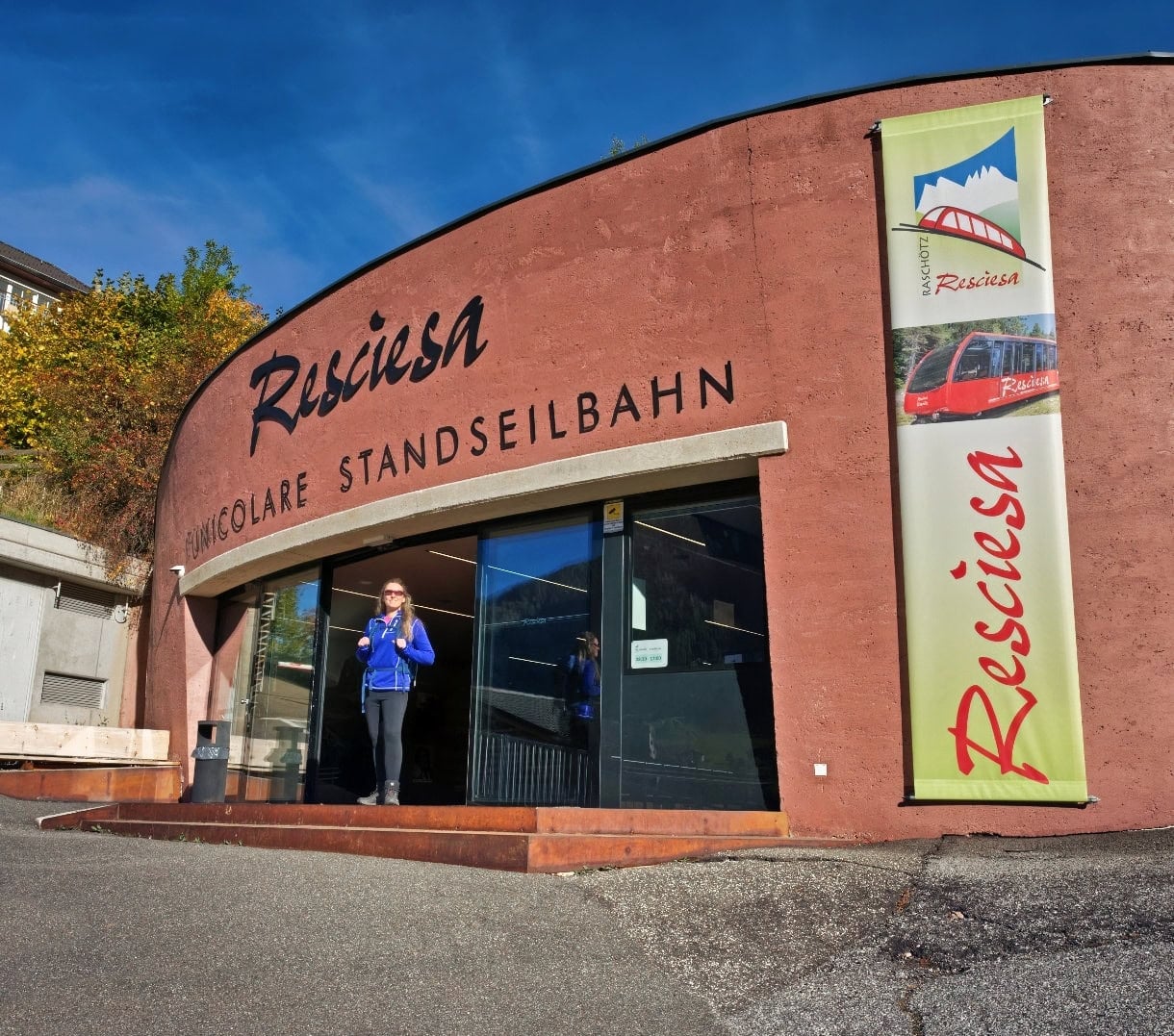
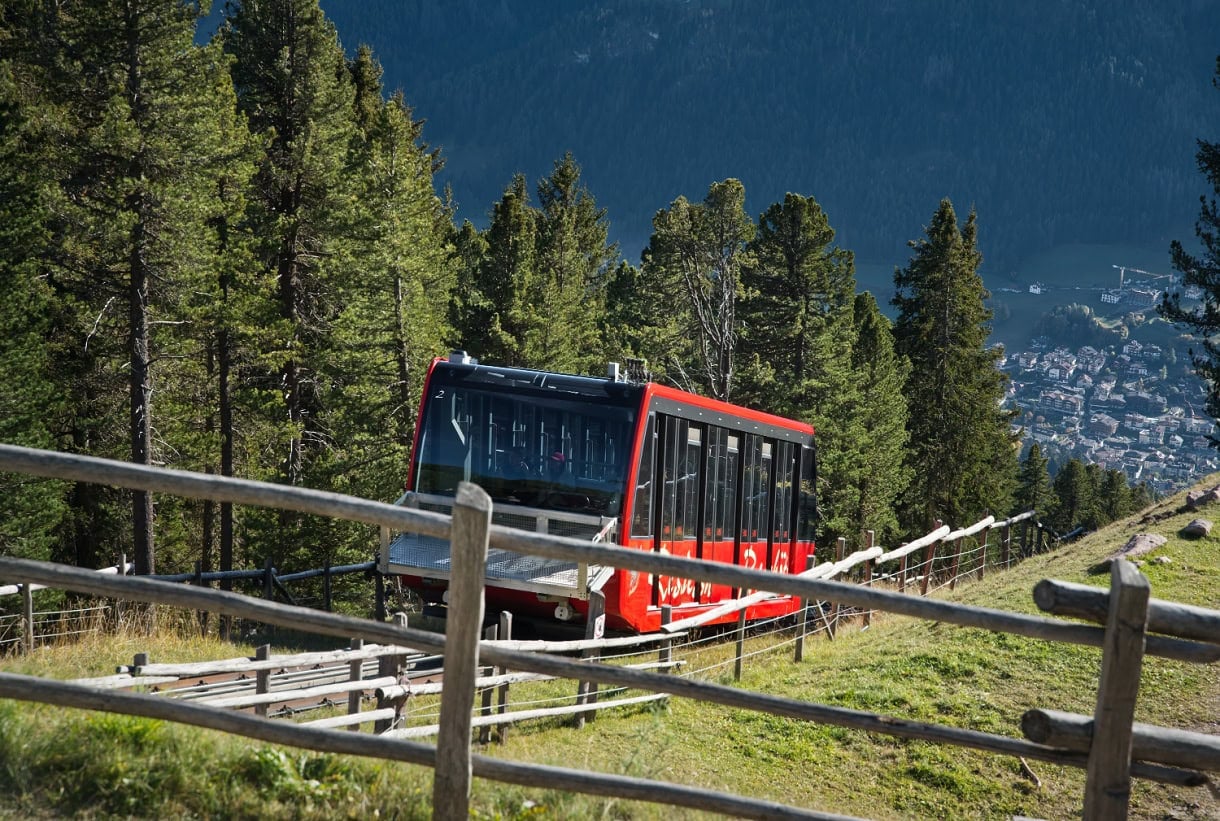
Resciesa rises directly above Ortisei, the main village in Val Gardena. The high alp sits north of town, forming a natural divide between Val Gardena to the south and Val di Funes to the north.
The easiest way to reach Resciesa is by taking the Resciesa funicular from Ortisei. The modern funicular replaced the old chairlift in 2010 and carries hikers from town to the high alp in about eight minutes. In 2026, Resciesa funicular tickets are listed at €21 one-way and €32 round trip.
If you are staying in Ortisei, you can walk to the valley station from the village center. If you arrive by car, you can use either the Seceda parking lot or the central parking area on Via Stazione, then follow signs to the funicular valley station.
📌 Good to Know: You can also hike up from Ortisei instead of taking the funicular, but for most travelers, the funicular is the better move. Save your legs for the plateau. Save your mood for the view. There is no moral victory in sweating through the forest for two hours if what you really want is a beautiful alpine walk and a plate of Schlutzkrapfen at the top.
How to Hike Resciesa
The classic Resciesa hike begins at the funicular mountain station and can be as short or as long as you want. For most, the best route is a relaxed loop that includes a couple of hut stops, the Holy Cross Chapel, and the summit cross at Resciesa di Fuori.
Segment 1: Resciesa Funicular to Rifugio Resciesa
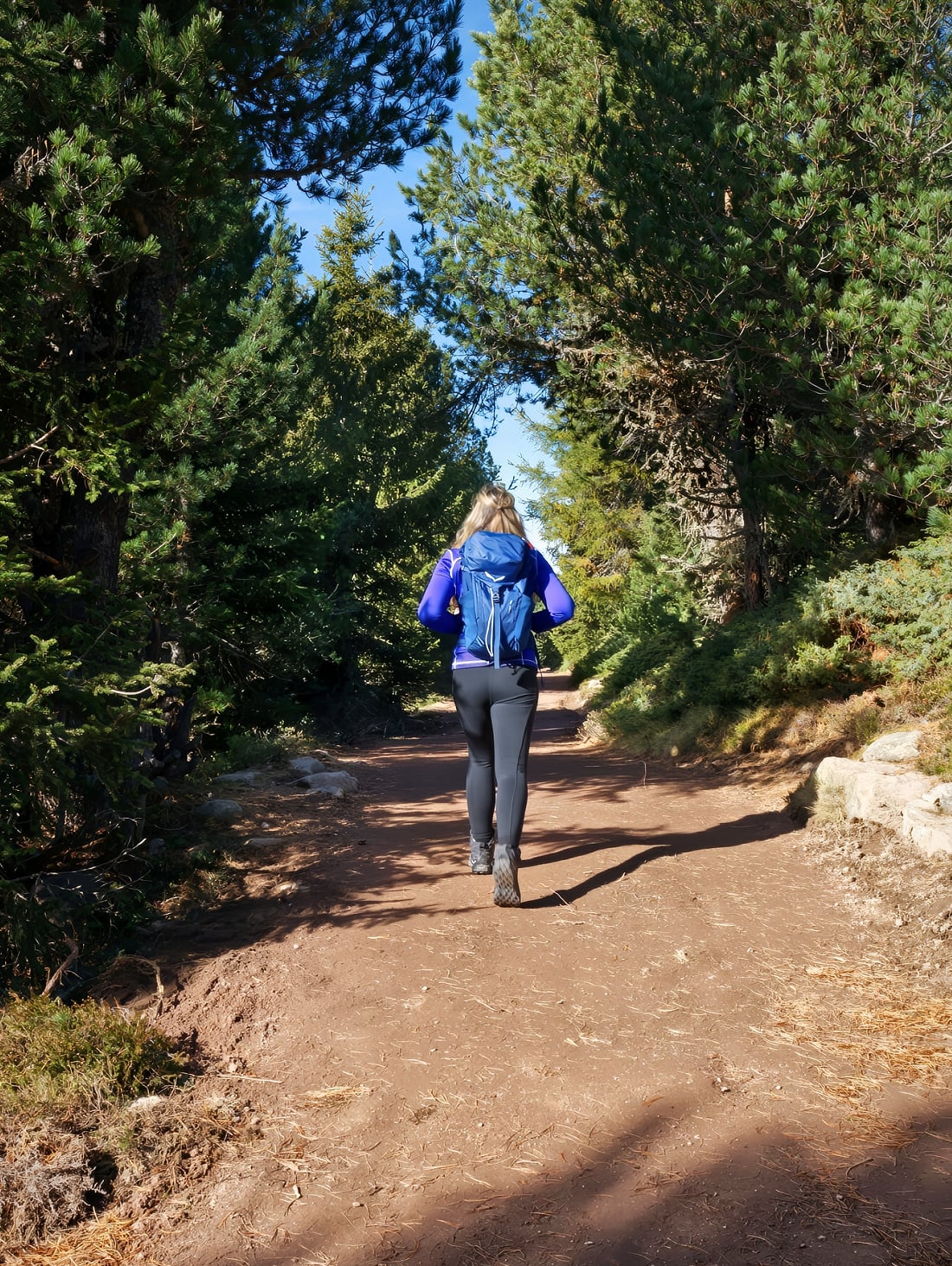
After stepping off the funicular, you are already above the tree line, standing at roughly 7,054 ft (2,150 m). From here, follow trail no. 35 toward Rifugio Resciesa (Schutzhütte Raschötz). The hut is about a 20-minute walk from the mountain station, and the route is straightforward, scenic, and family-friendly.
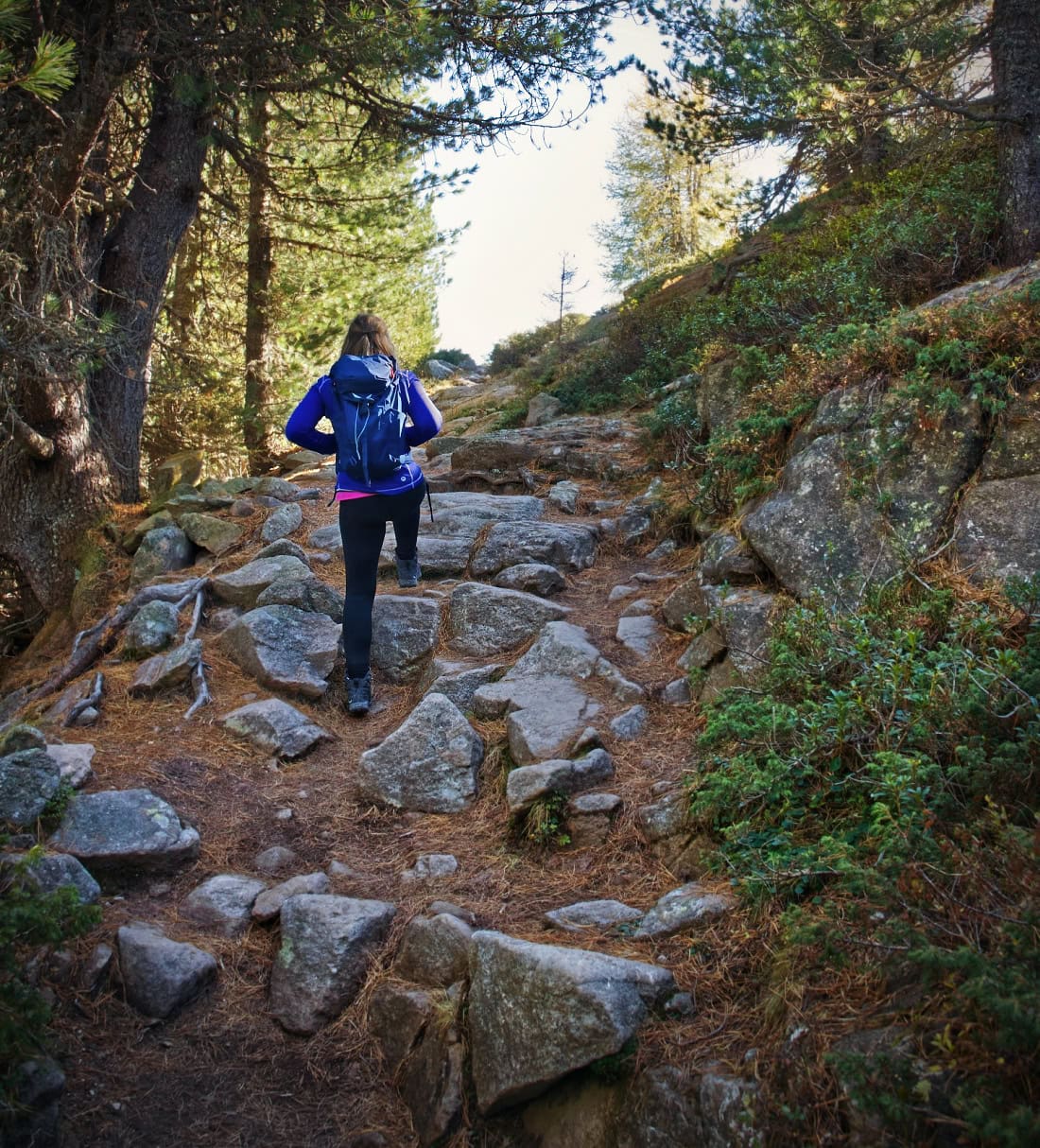
The first few minutes climb gently enough to remind you that gravity still exists, but the path soon eases into a broad traverse across meadows and patches of light forest. Benches appear at generous intervals, inviting you to take a seat and ponder the mountains, the meaning of life, or at least what you’re having for lunch.
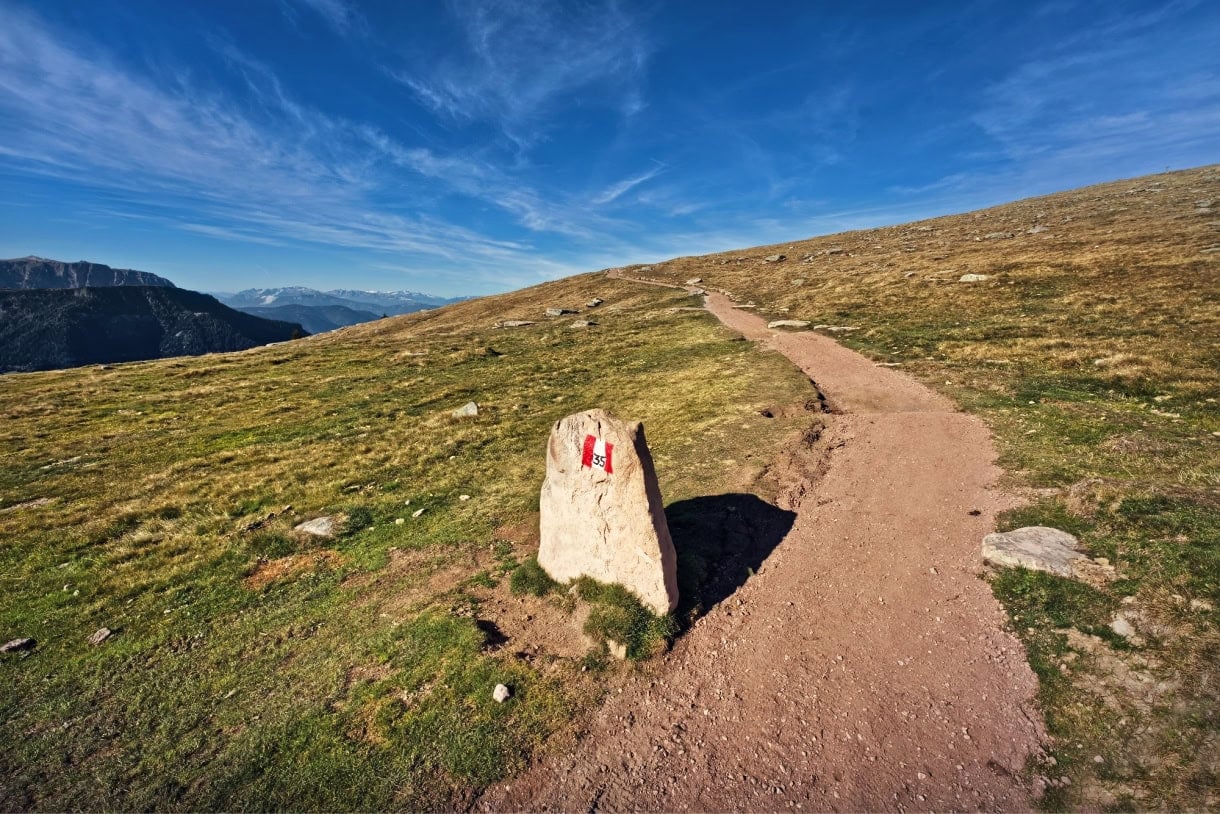
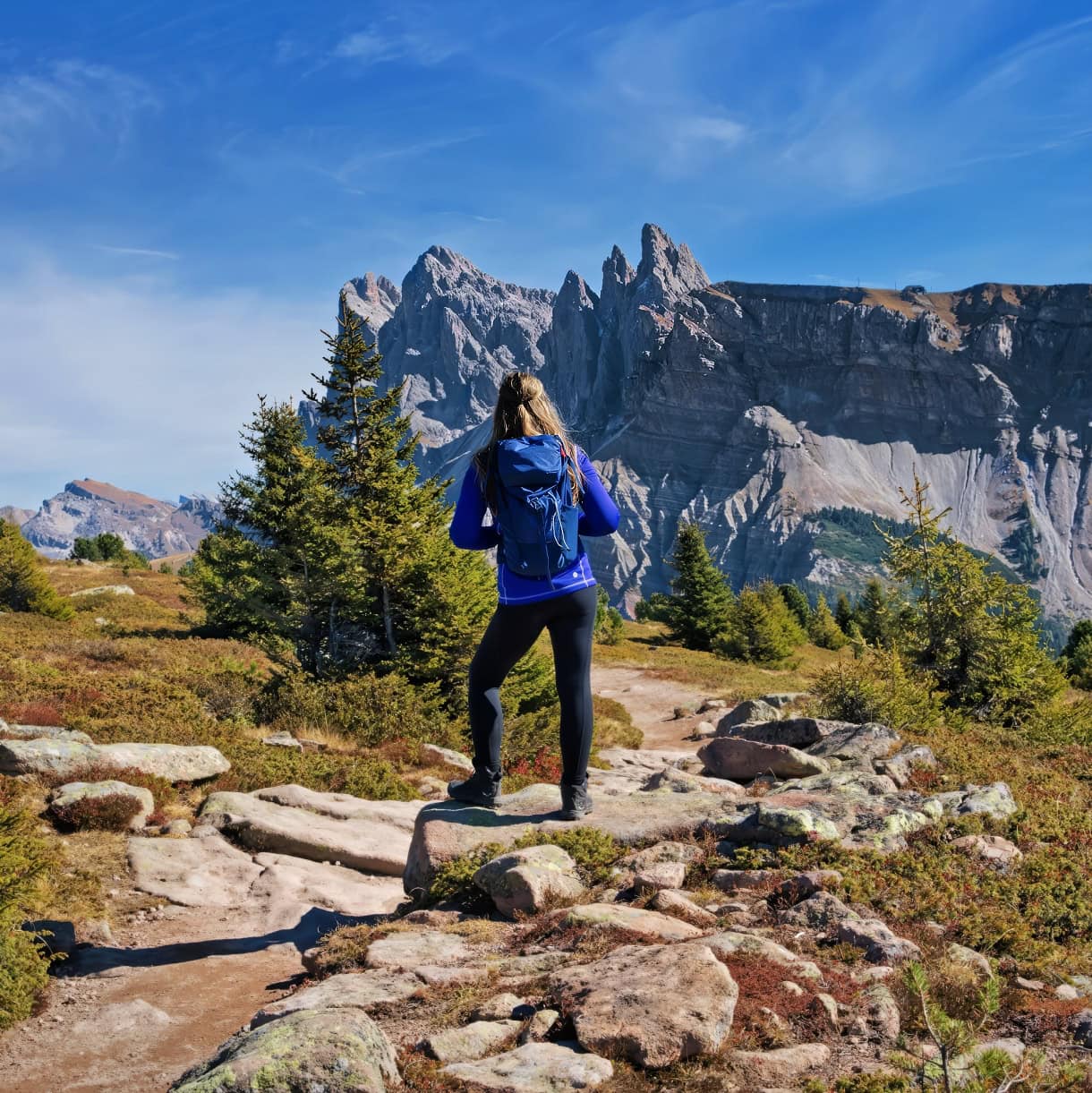
To the southeast, Sassolungo massif rises with its unmistakable profile. Behind you, the shoulder of Seceda begins to emerge with its peaks stabbing the sky. Their jagged precision makes you wonder if the mountains were carved with a knife instead of time.
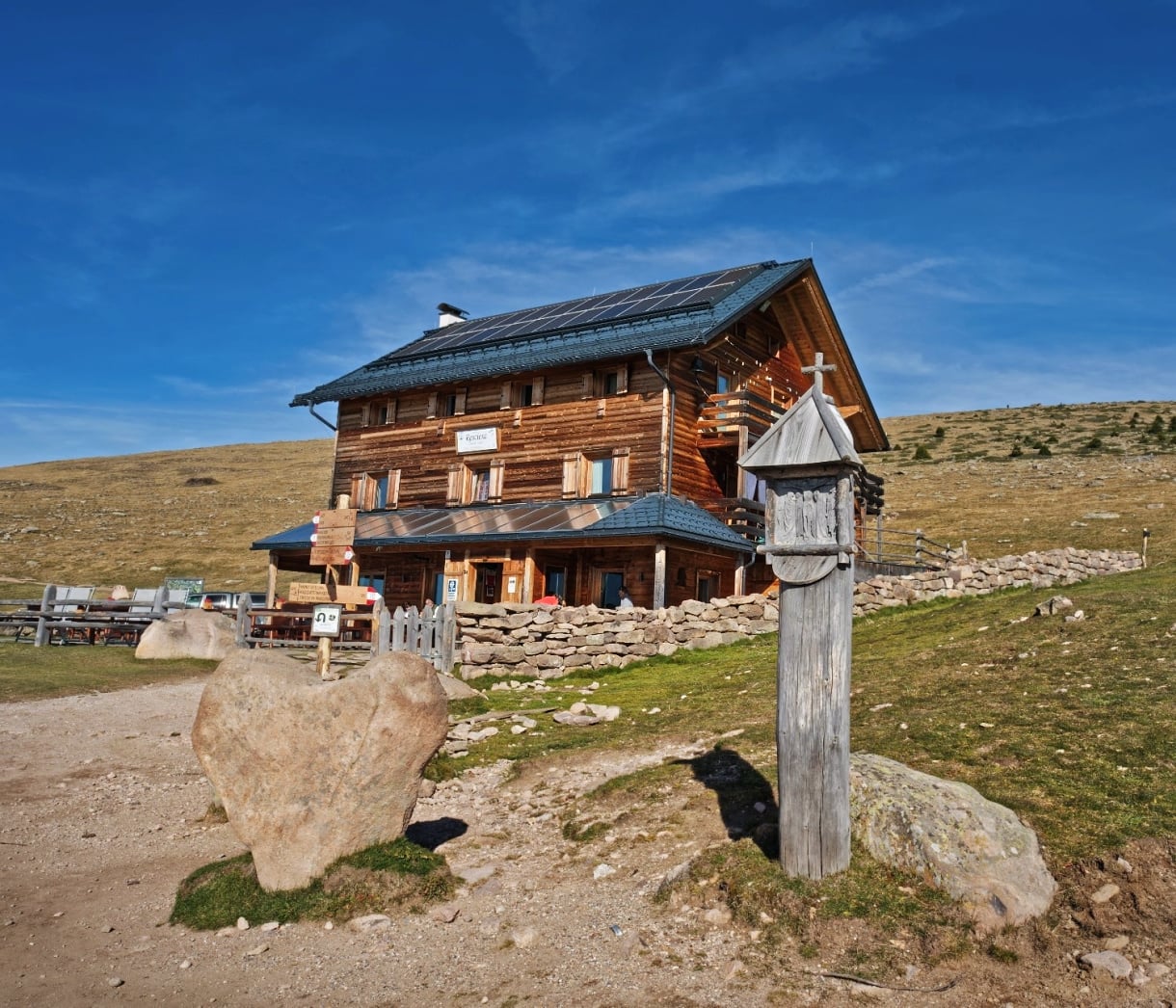
Rifugio Resciesa sits in an open meadow at about 7,103 ft (2,165 m), with a broad terrace and the kind of hearty menu that makes even a short walk feel like a justified athletic achievement. The Schlutzkrapfen and buckwheat cake here are hut specialties. We were also happy to see Augustiner beer on the menu, as Rifugio Resciesa is one of the few huts in the area pouring this Munich classic.
Segment 2: Rifugio Resciesa to Holy Cross Chapel
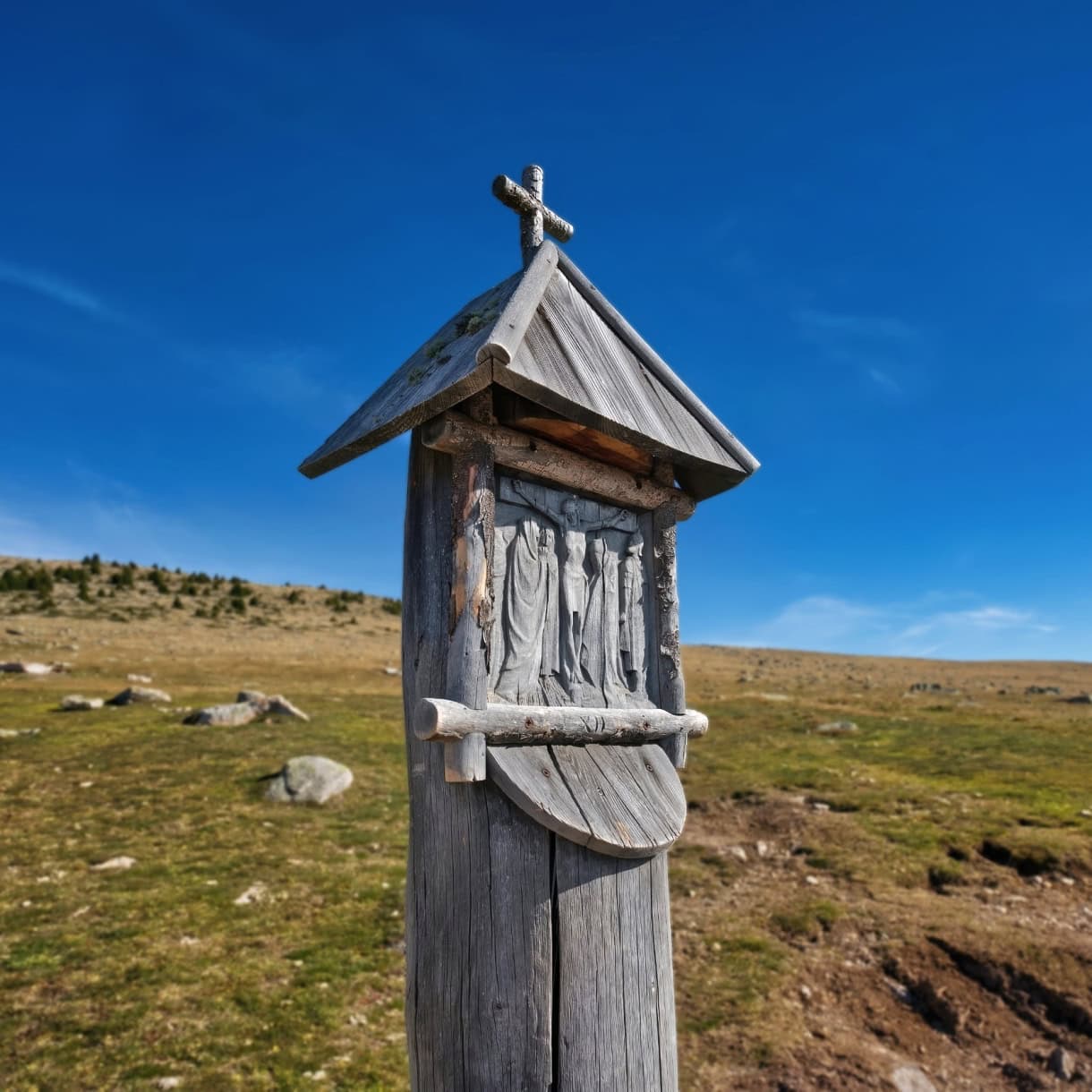
From Rifugio Resciesa, continue west toward the Holy Cross Chapel, known in German as the Heilig-Kreuz-Kapelle and in Ladin as Dlija dl Crist. The chapel is about a 20-minute walk from the hut and stands slightly below the highest point of the outer Resciesa alp.
A chapel was first built here in 1752, but it was soon destroyed by lightning and fire. The chapel you see today was built in 1755 by Jakob Christoph von Ingram of nearby Lajen, and has been restored several times over the centuries.
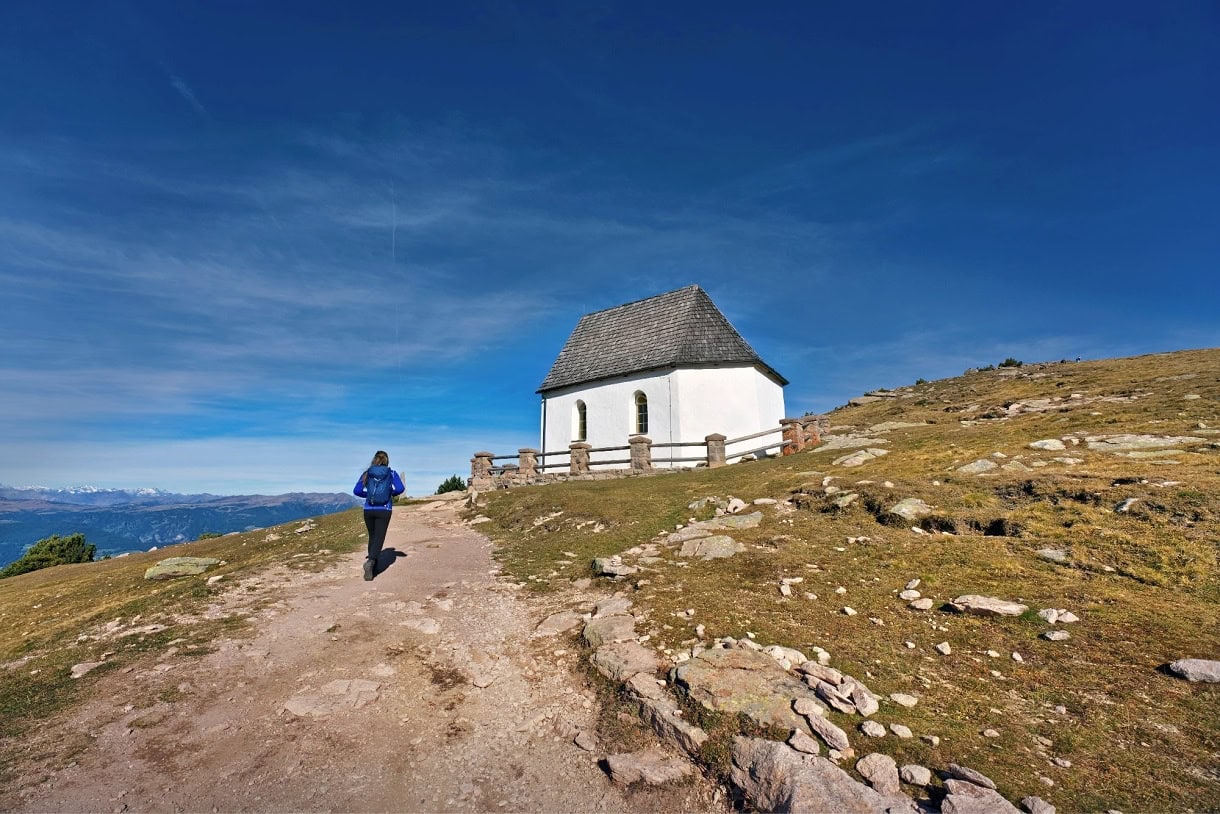
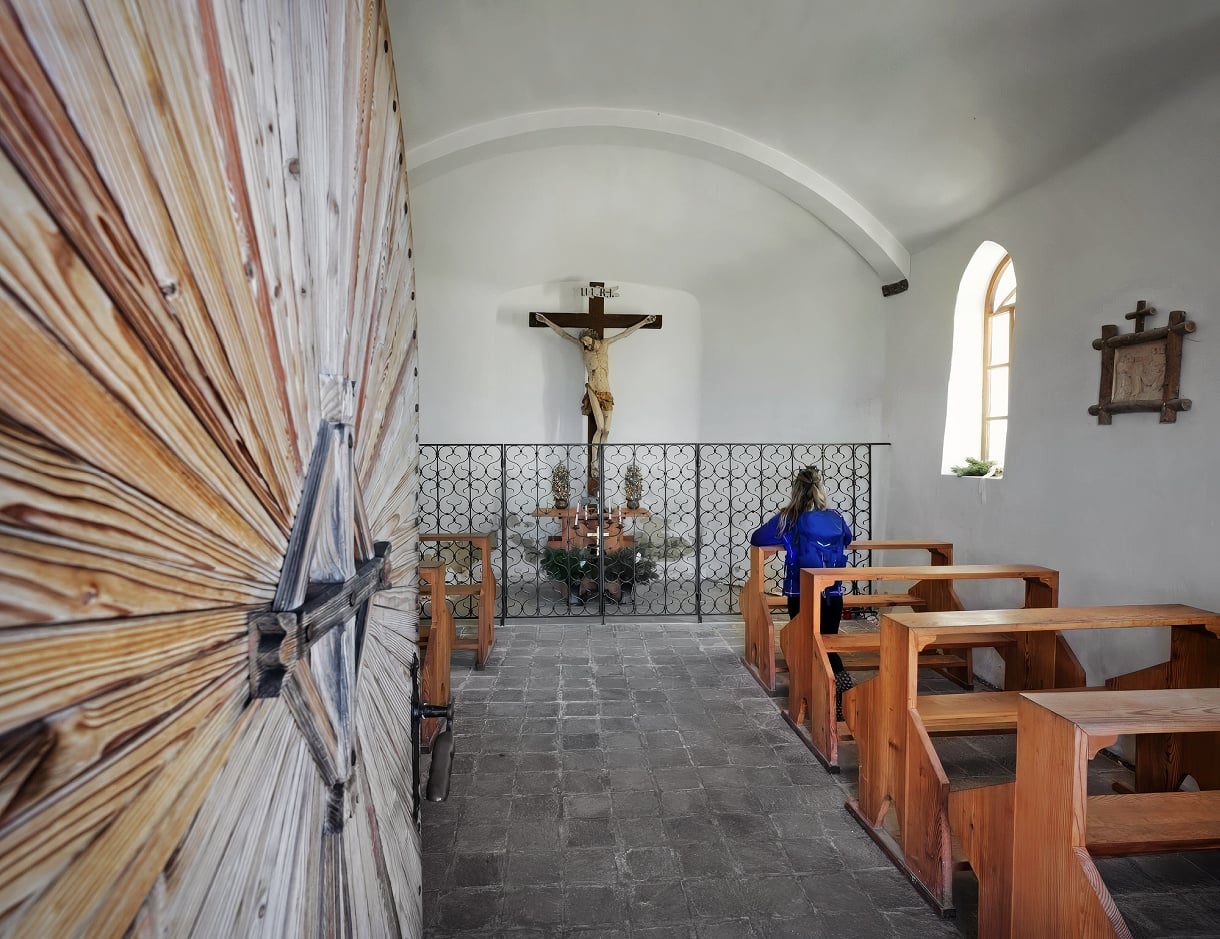
It is not a striking chapel in an architectural sense, but it does not need grandeur. The setting does the work. The chapel stands small and solitary against the vastness, with open meadow rolling around it and the mountains rising in the distance.
This is a good place to slow down. Not everything in South Tyrol needs to be conquered, photographed, captioned, and shoved into a schedule. Sometimes the better move is to sit inside a tiny chapel high above the world and let the silence still your mind.
Segment 3: Holy Cross Chapel to the Resciesa Summit Cross
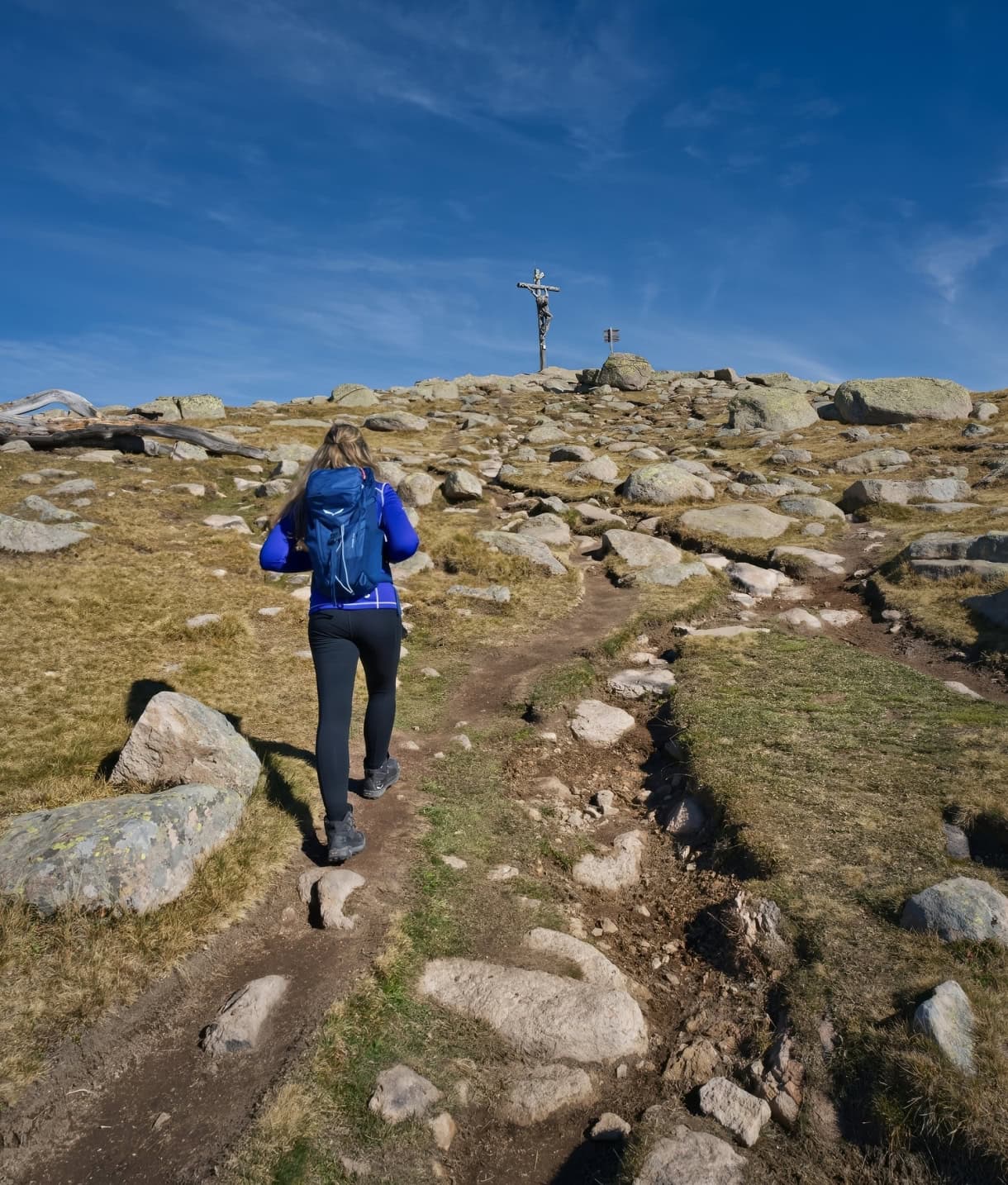
From the Holy Cross Chapel, continue toward the Resciesa summit cross at Resciesa di Fuori, the highest point of the classic Resciesa route at about 7,484 feet (2,281 meters). The path now climbs north along the outer edge of the alp, gaining elevation steadily but never brutally.
This is the stretch where Resciesa stops feeling like a meadow walk and starts feeling like a high mountain balcony. As you leave the chapel behind, the views start to widen with every step. And the pastureland gives way to boulders beneath your feet.
The summit cross itself is not an ordinary wooden marker stuck on a hilltop. The current cross was erected in 2001 and carved from Swiss stone pine by Josef Bernardi, a woodcarver from Val Gardena. It stands more than 23 feet (7 meters) high, with a carved figure of Christ measuring about 10.8 feet (3.3 meters). Its scale is deliberate. Bernardi described the size and force of the work as a response to the primal power of the surrounding mountains.
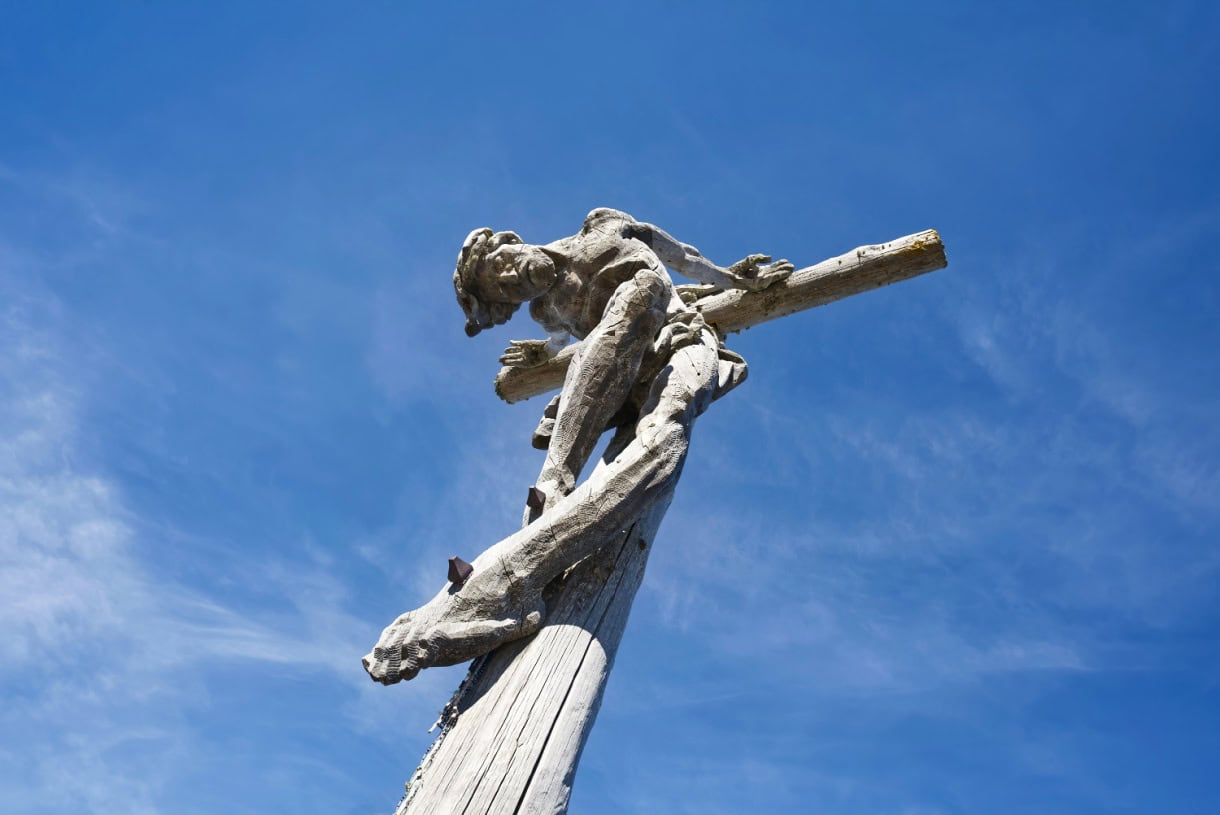
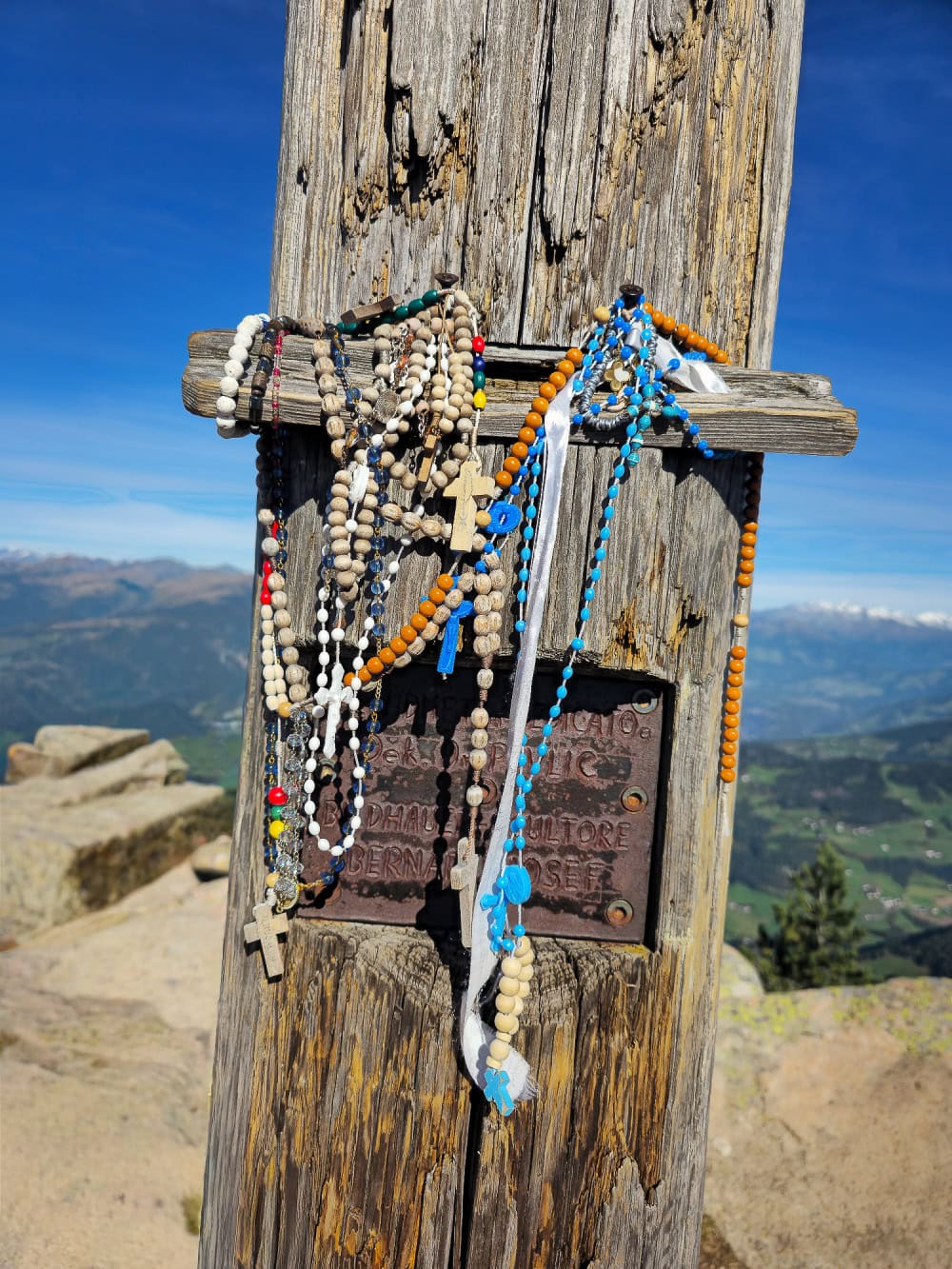
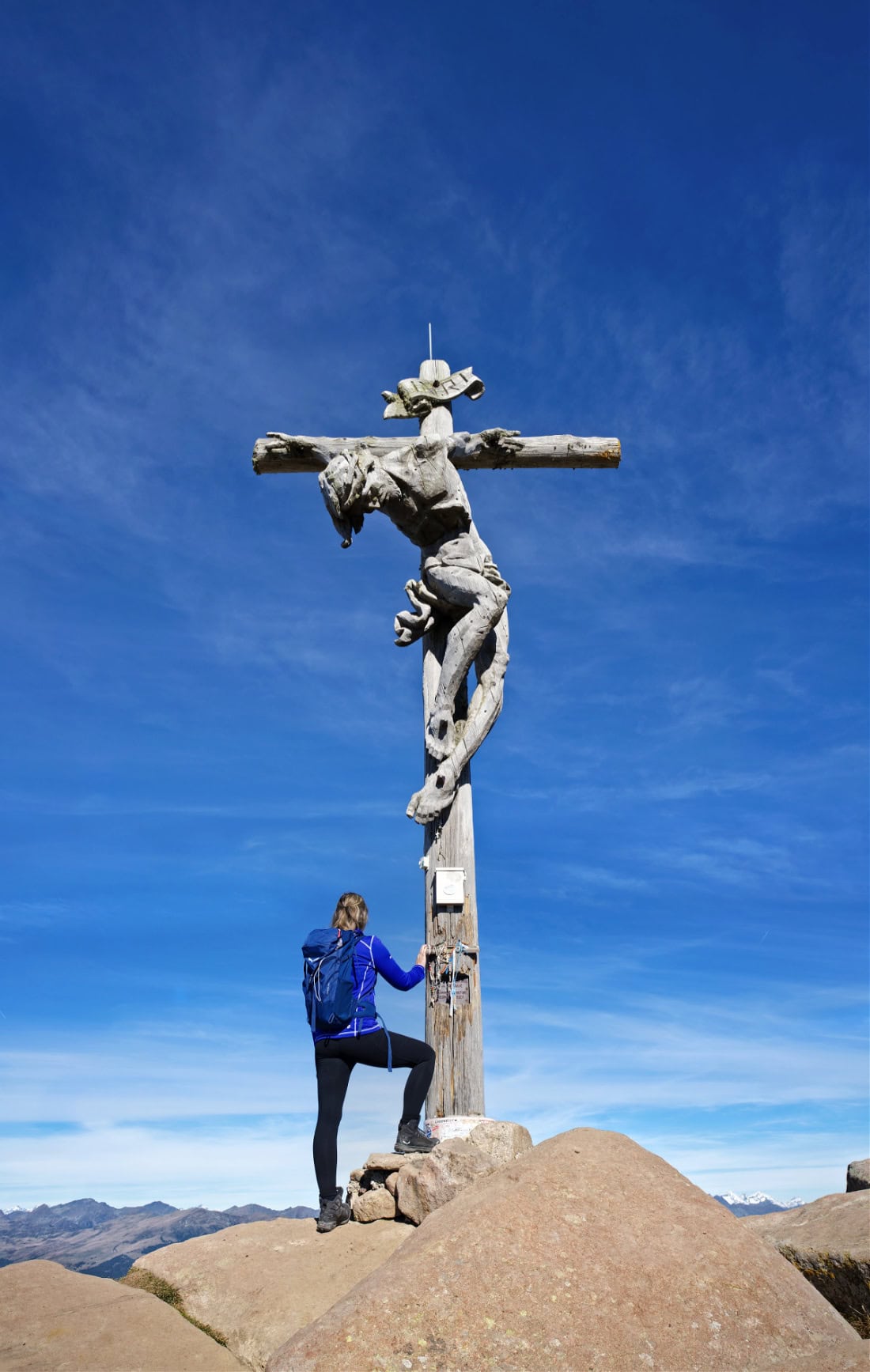
Placed above the Holy Cross Chapel, the cross naturally carries religious meaning, but it also feels like something more elemental: faith, weather, wood, suffering, and the full weight of the mountains gathered into one stark shape. We found it haunting and dramatic, with no interest in making itself pretty.
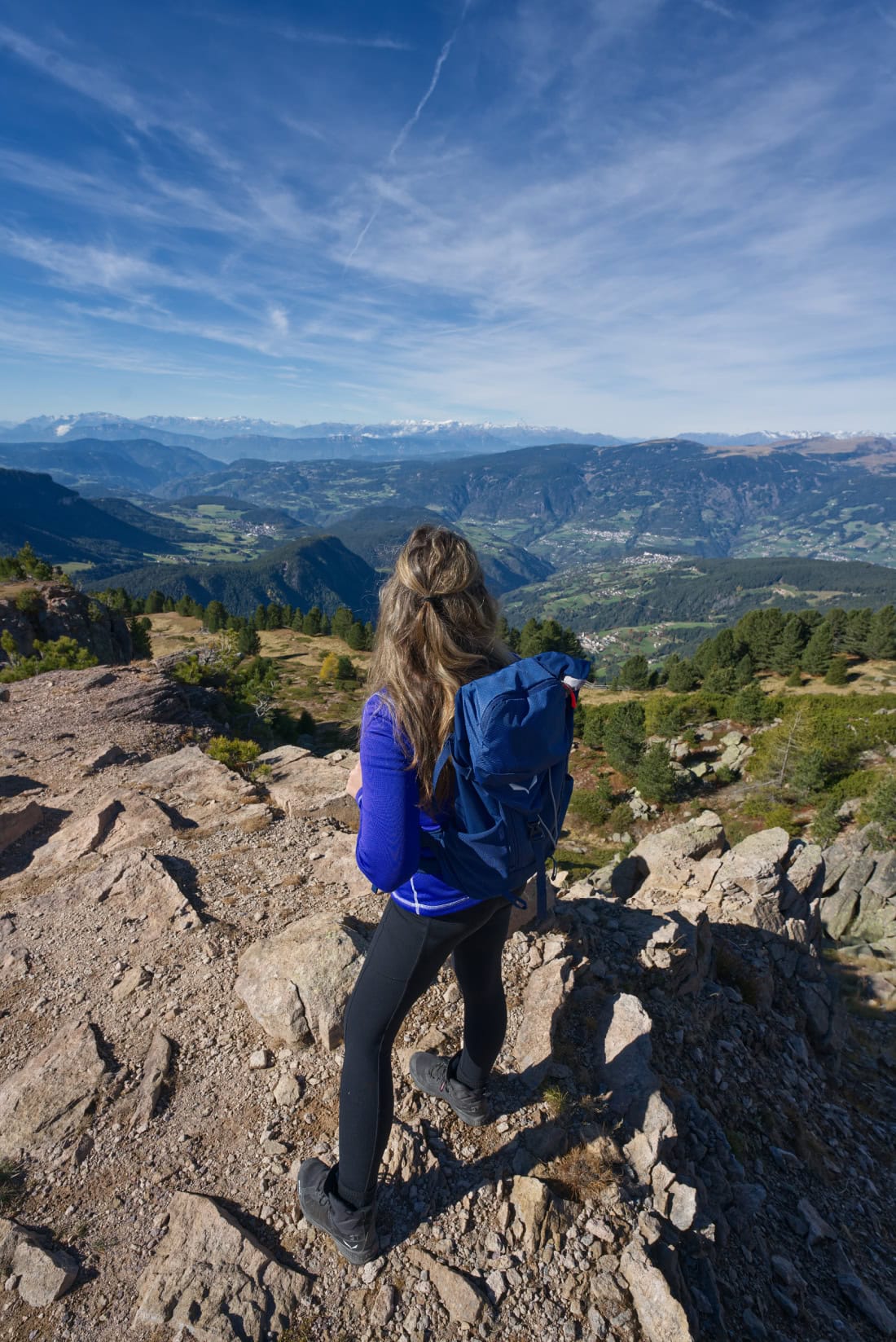
When you reach the summit cross, the panorama spills in every direction. From here, you can peer into the green belly of Val di Funes, and farther north to the snow-capped chain of the Alps cutting across the horizon.
📌 Good to Know: If you want a shorter route to the summit cross, you can skip the chapel detour and take a trail that begins next to Rifugio Resciesa. It saves around 20 minutes by providing a more direct climb to the summit.
Segment 4: Return to the Funicular
From the summit cross, follow trail no. 31, which traces the high edge of the alp. This stretch brings you closer to the Geisler peaks, while the full shoulder of Seceda comes into view across the valley. It is a fascinating profile to study, especially if you look beyond the obvious drama of the peaks.
Here, you can see the Gröden Formation, a layered archive of ancient earth: Late Permian sandstone and sedimentary rock exposed in horizontal layers of dark rust-red, brown, and pale grey. These rocks were laid down long before the Dolomites erupted skyward from them. The rare red coloring comes from iron-rich minerals oxidizing in the sediment. In other words, proof that even mountains rust when you give them enough time.
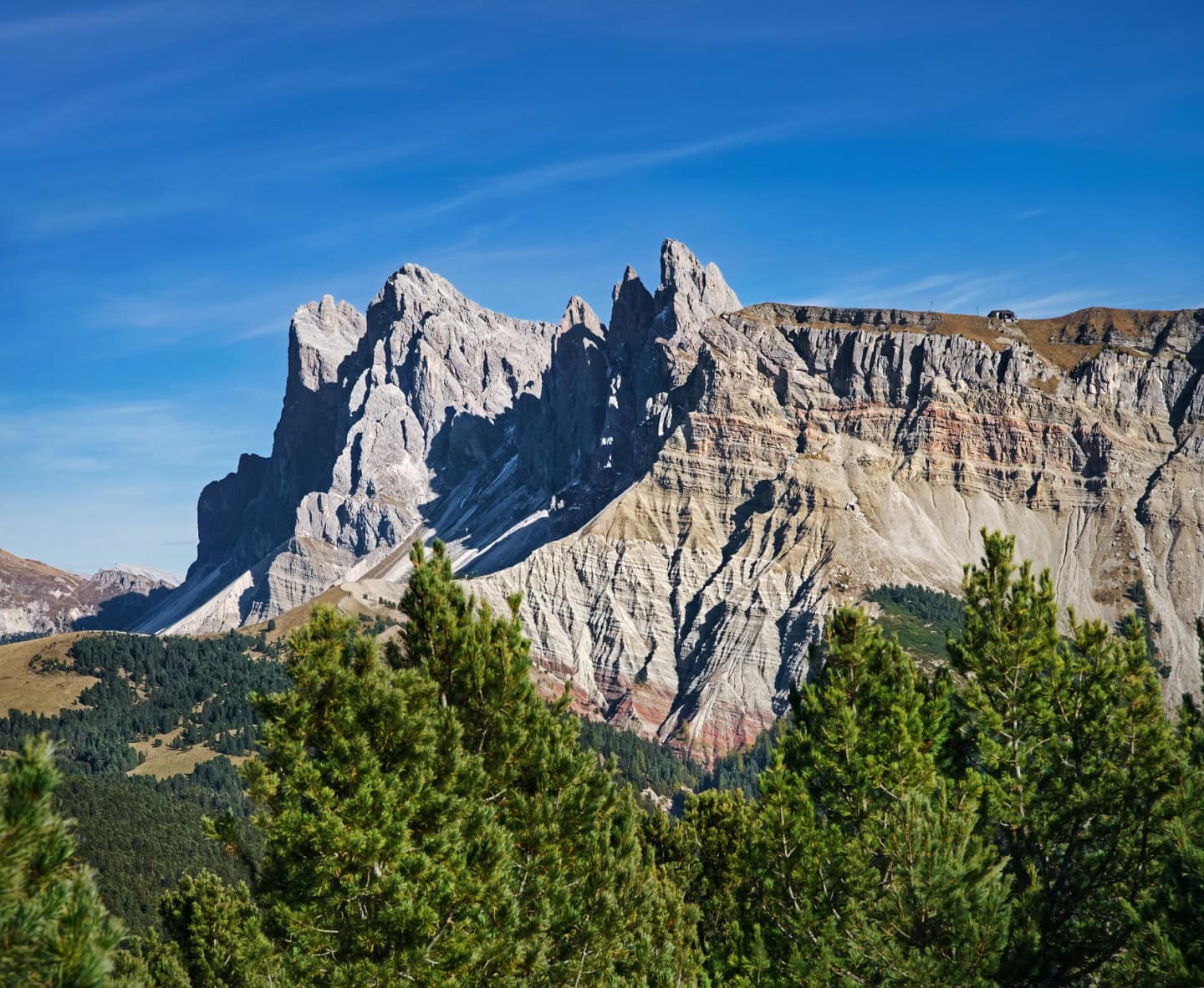
The chance to admire these stone-written scars is one of the great pleasures of hiking Resciesa. You are not just looking at pretty mountains. You are witnessing, firsthand, a geological argument that has been going on for more than 250 million years.
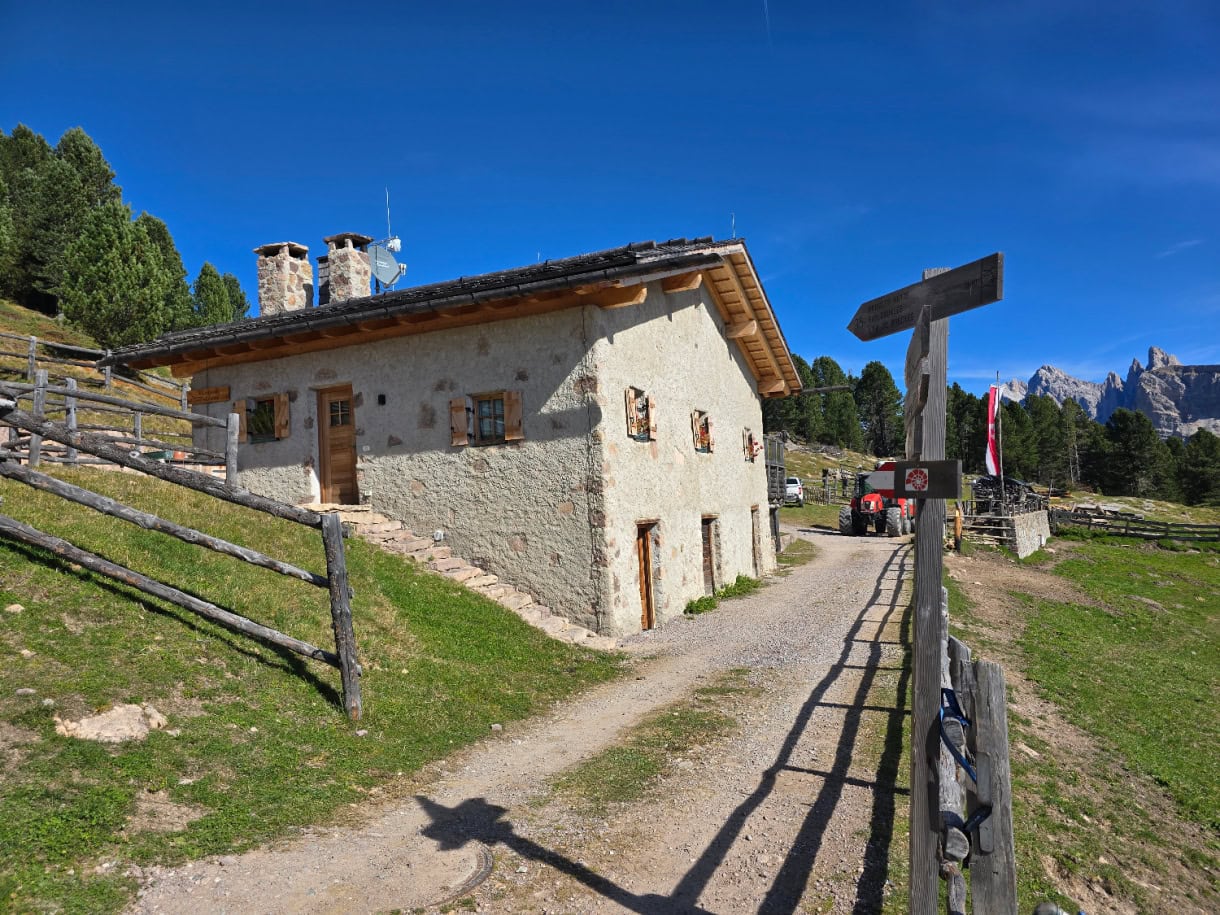
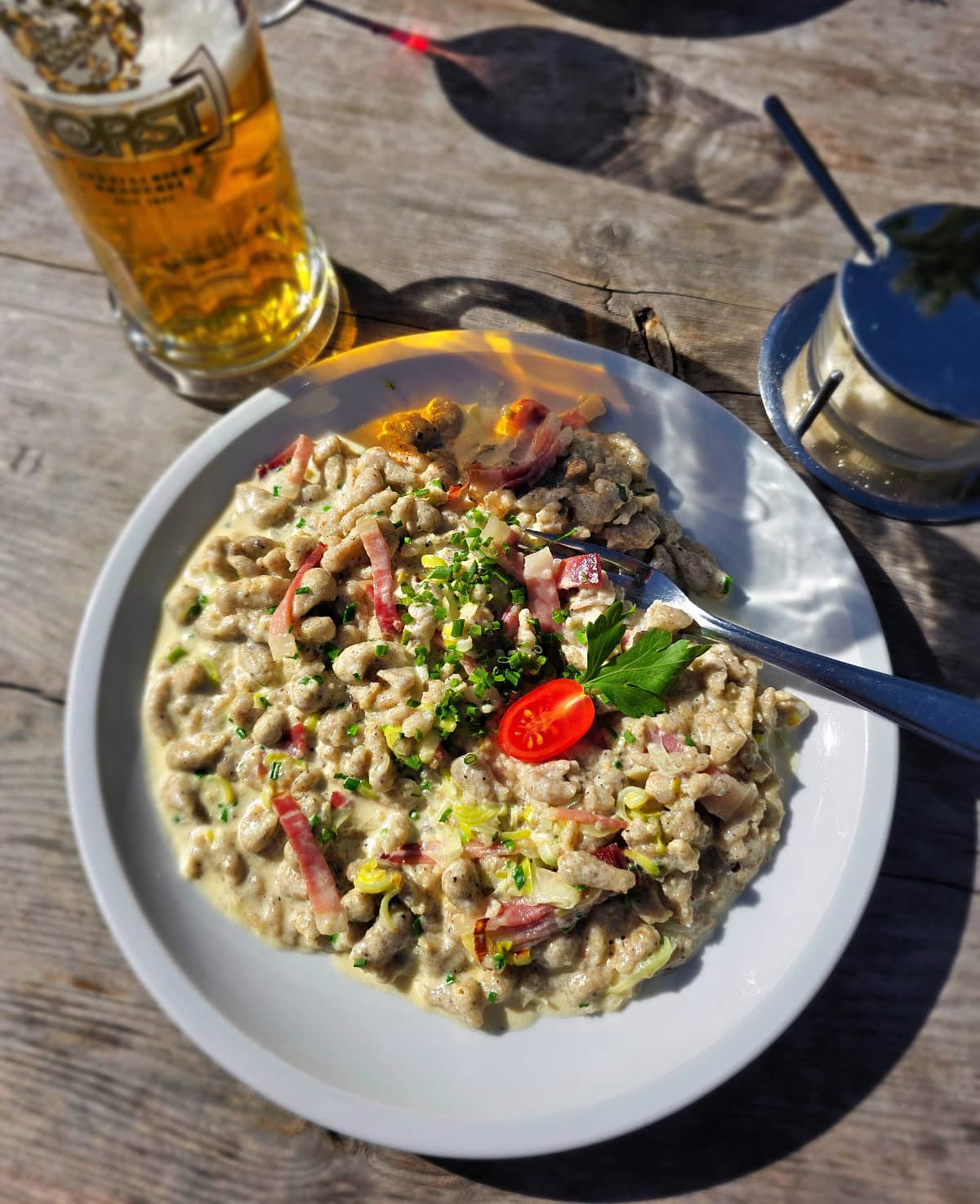
Eventually, the trail curls west and leads you through a pine forest to trail no. 10B/35, which brings you to Malga Cason. Like Rifugio Resciesa, this hut serves traditional South Tyrolean specialties and homemade products, with some ingredients coming from the farm’s own hard work. We both devoured a generous plate of herb-infused spätzle with speck, the kind of dish that makes you deeply grateful someone had the good sense to put a hut here.
After Malga Cason, follow trail no. 10B back to the Resciesa funicular mountain station. Nearby, Chalet Resciesa invites you to have another drink or a final bite on its sun terrace, which is a very South Tyrolean way of saying you may accidentally lose another hour of your life and feel excellent about it.
Optional Extension: Resciesa to Brogles Hut
If you want a longer hike, Resciesa can be extended toward Malga Brogles (Brogleshütte), a mountain hut set in a beautiful alpine clearing beneath the north-facing walls of the Geisler peaks. This turns the outing into a more substantial half-day or full-day hike, depending on your route, pace, and how long you linger at the hut.
Malga Brogles is generally open from July through September, though exact dates can vary by season, so check ahead if you are hiking near the beginning or end of the window. We hiked Resciesa in October, so we did not get the chance to rest our legs or tame our thirst here, but we did walk the route and can confirm the reward: with every step east, you cozy up a little closer to the Geisler peaks.
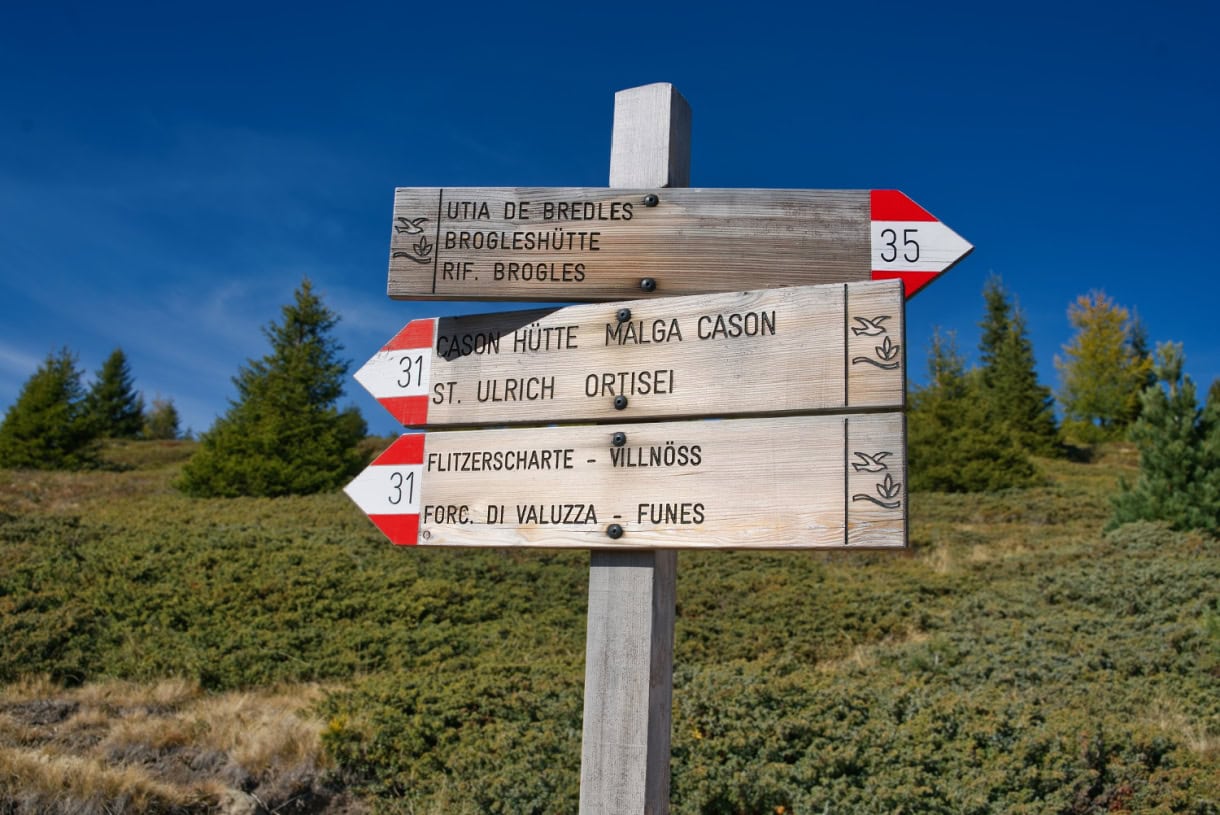
From Malga Cason, follow trail no. 35 toward Malga Brogles. The trail first dips through a stretch of Swiss pine forest, then opens onto the wide alpine meadows of Rasciesa di Dentro (Innerraschötz). Allow roughly 1.5 hours one way from Malga Cason, depending on your pace. The full route from the Resciesa funicular mountain station to Malga Brogles is about 3.1 miles (5 km) and takes just under 2 hours.
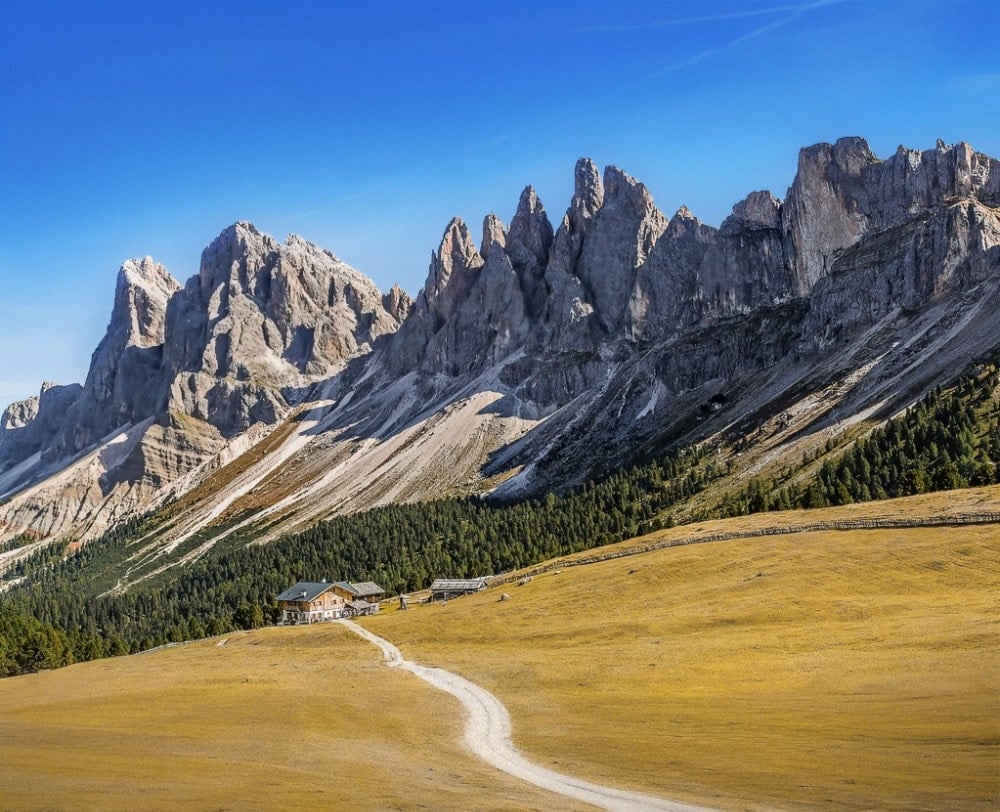
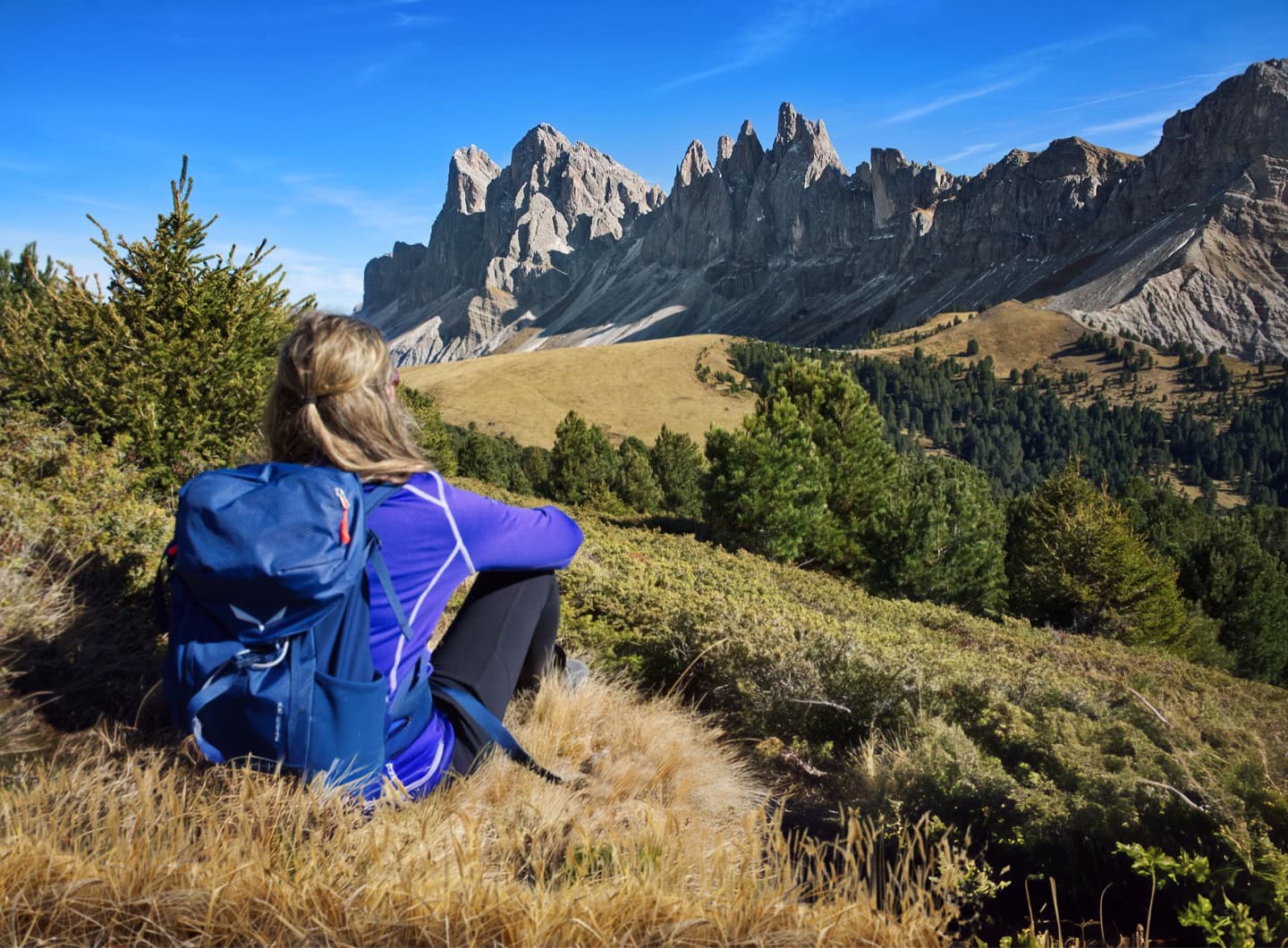
The trail eventually reaches Passo Brogles, where a short descent brings you to the hut. Malga Brogles sits in a sprawling meadow at the foot of the Geisler, with plenty of open space to let your eyes roam wild. Because we did not dine here ourselves, we cannot personally vouch for the food, but the setting alone makes it a worthwhile stop for a drink, snack, or longer lunch if the timing works.
For the simplest return, retrace your steps on trail no. 35 back toward Malga Cason and the Resciesa funicular. If you want a more demanding variation, leave trail no. 35 by turning right onto trail no. 31, a narrower, stone-embedded path.
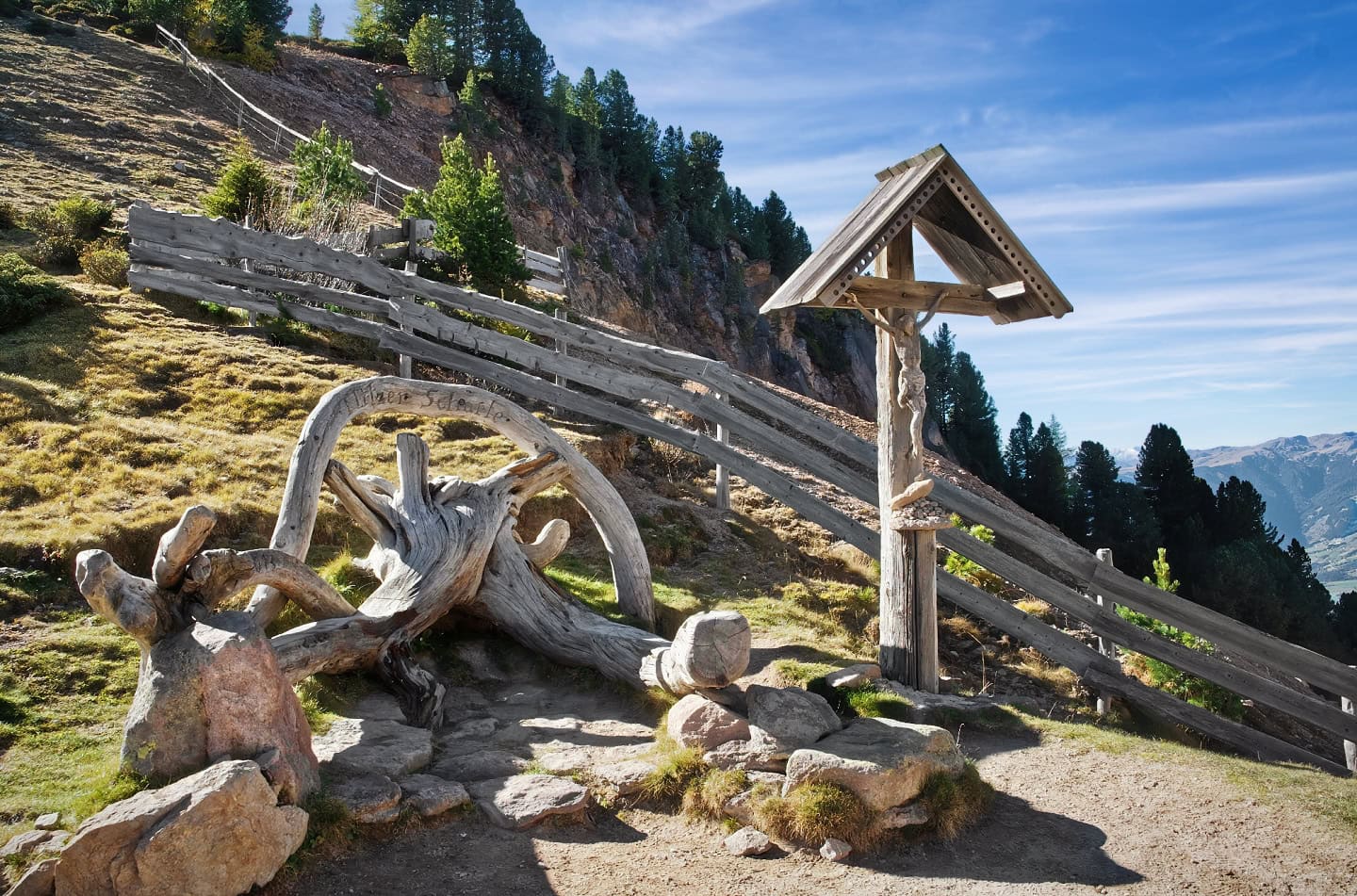
This route leads toward the Flitzer Scharte / Forcella Valuzza pass. At the pass, a rough-hewn log bench and a lonely wayside shrine stand in the chasm between stone and sky, overlooking the valley floor far below. It is one of those small, unexpected mountain moments: no crowds, no noise, just the rush of wind, and a view that locks your gaze. From here, continue on trail no. 31 back toward Malga Cason.
📌 Good to Know: Malga Brogles can also be reached as an out-and-back hike branching off from the Adolf Munkel Trail circuit in Val di Funes. This is a completely different approach than the Resciesa route, but it is a good option if you are basing your day around Val di Funes rather than Val Gardena.
Best Time to Hike Resciesa
The best time to hike Resciesa is typically from late spring through autumn, depending on snow conditions and funicular operations. For a summer-style hike, June through October is generally the most reliable window, with July and August bringing green meadows, grazing cows and horses, and the liveliest hut season. September is a sweet spot: fewer crowds, cooler air, and that golden light that makes everything feel twice as calm.
If you are visiting the Dolomites in winter, Resciesa is also a wonderful destination to consider. The high alp is well suited for winter hiking and snowshoeing, provided the trails are open and conditions are safe. In deep snow, snowshoes may be necessary, so always check the forecast, trail conditions, and funicular schedule before heading up.
Resciesa is also one of Val Gardena’s best places for tobogganing. A groomed toboggan run starts near the Resciesa funicular mountain station and descends to the middle station, where you can ride the funicular back up and repeat the run. Toboggans can typically be rented at the funicular valley station, making this an easy winter outing even if you are not traveling with gear.
Save & Pin for Later
Grab the free guide + follow for South Tyrol + Dolomites travel tips
25 Things to Know Before Visiting the Dolomites
Join 18,000+ travelers. No spam, ever.