Every October, the alpine pastures of Alpe di Siusi (Seiser Alm) erupt in sound and tradition as the Almabtrieb, the annual cattle drive, makes its thunderous descent in a roaring farewell to summer that’s part ceremony, part pilgrimage, and all party. Here’s what it’s like to witness this centuries-old celebration and how you can, too.
Of all the places for cows to graze in the Dolomites, Alpe di Siusi surely tops their culinary wishlist. Carpets of wildflowers, endless herb-kissed meadows, and crisp alpine air await their patient appetites, turning every mouthful into a feast.
And let’s not forget the views our hooved friends enjoy — mountains so dramatic they could be mistaken for nature’s own cathedrals. No doubt, if a cow could dream, it would be of standing here, chewing contentedly while the jagged Dolomites frame an endless alpine table set at more than 6,500 ft (2,000 m) above sea level.
So when we learned that the same meadows doubling as a bovine buffet turn into the stage for the Seiser Alm Almabtrieb each October, we couldn’t resist joining the spectacle.
What Exactly Is the Seiser Alm Almabtrieb?
If you’ve read our previous piece about our Almabtrieb experience in Lajen, you already know the basics. Almabtrieb is the centuries-old transhumance — the annual movement of livestock from high mountain pastures down to valley farms each autumn. It’s both practical (cows can’t overwinter on snowy ridges) and symbolic, a thanksgiving for a safe summer season on the mountain pastures.
In many villages in South Tyrol and throughout the Alps, Almabtrieb takes the form of intimate parades through cobbled squares — wreath-crowned cows led by herdsmen in traditional aprons, accompanied by whip-crackers, Schuhplattler dancers, and plenty of music. Lajen’s version, for example, is a tight-knit village affair where the community spirit swirls around you.
But on Seiser Alm, Almabtrieb isn’t compressed into a village street. It’s unleashed across Europe’s largest alpine meadow. This is Almabtrieb expanded to mythic scale.
⇒ YOU MIGHT ALSO LIKE: Discover Bullaccia: A Spellbinding Hike to the Hexenbänke
The Setting: A Stage of Stone, Sky, and Spectacle
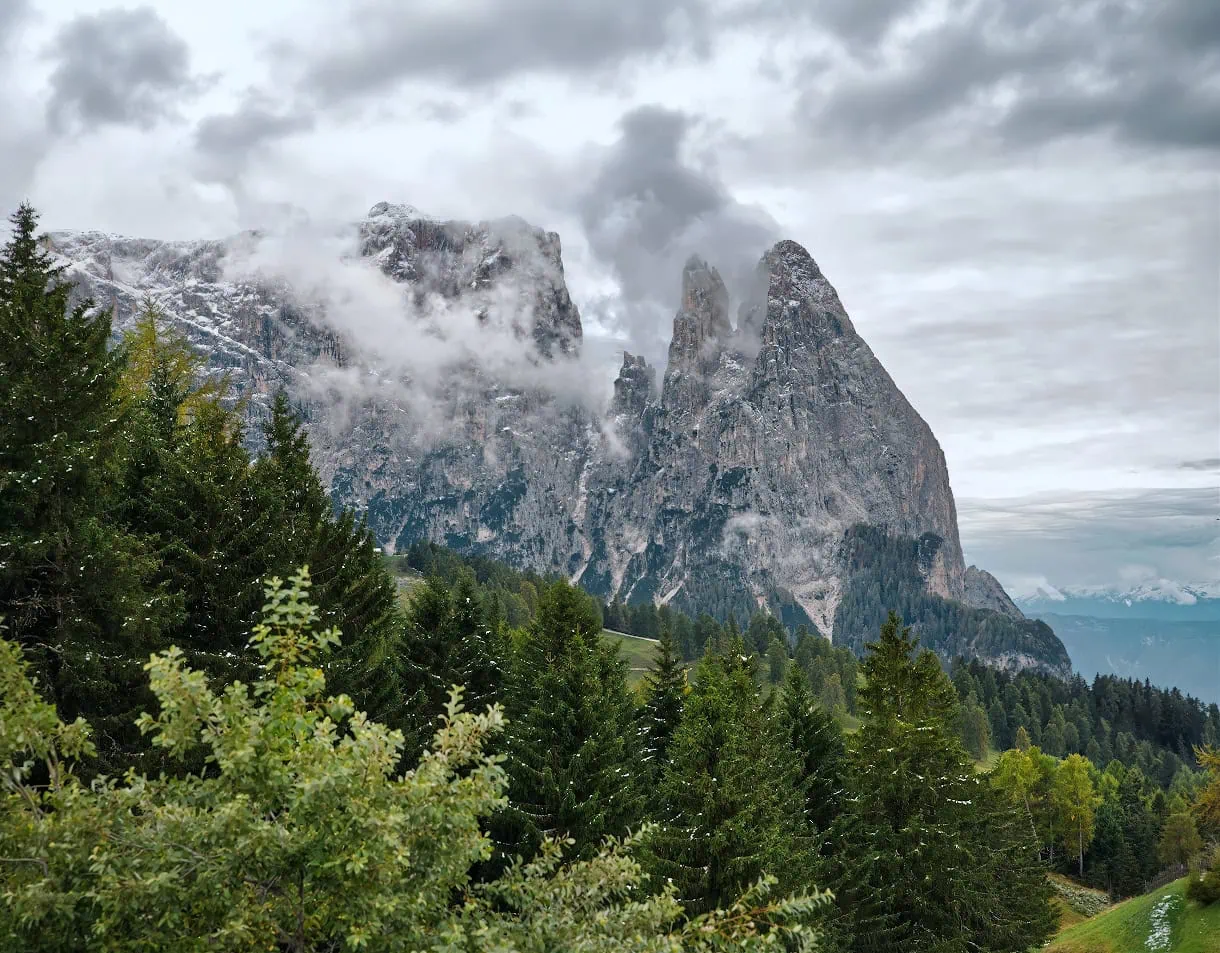
Seiser Alm isn’t just a backdrop. It’s a character in this story. Spanning more than 20 square miles (56 km²), this vast alpine stage is encircled by icons of the Dolomites: the mighty Schlern, the twin massifs of Sassolungo and Sassopiatto, and the spiky teeth of the Denti di Terrarossa. Cast your eyes further and you’ll catch the serrated ridges of Seceda and the fortress-like walls of the Sella Group rising on the horizon.
The plateau itself is a botanical wonder, home to nearly 800 species of plants that burst into color each summer. During the grazing season, around 400 cows wander its meadows — not the herds of a single ranch, but the collective lifeblood of some 80 small, family-owned mountain farms.
Centuries ago, historical records show, that number swelled to more than 1,500 cows and 600 oxen, underscoring just how vital Seiser Alm has always been to life in these mountains. When the tradition of Almabtrieb began here is not possible to pin down, but livestock have been driven up and down Alpe di Siusi by farmers since at least the 15th century.
⇒ YOU MIGHT ALSO LIKE: How to Visit Lago di Braies Without the Crowds
Morning in Compatsch: Where It All Begins
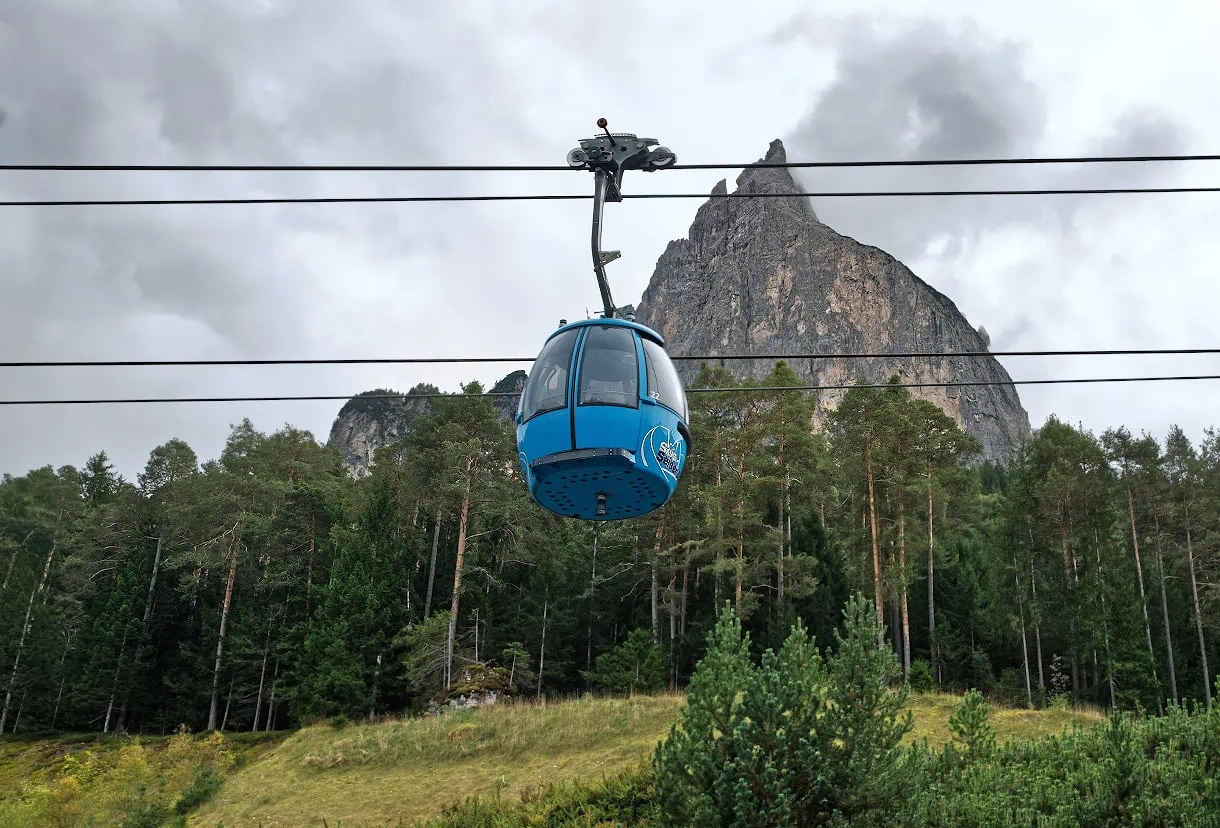
The festivities begin in Compatsch (Compaccio), a small settlement on the plateau. When we arrived at the Seiser Alm Bahn lift station around 9:00 a.m. on Almabtrieb morning, the place was already buzzing with anticipation. The cable car that whisked us up from Seis am Schlern into the heart of the action was packed with excited visitors.
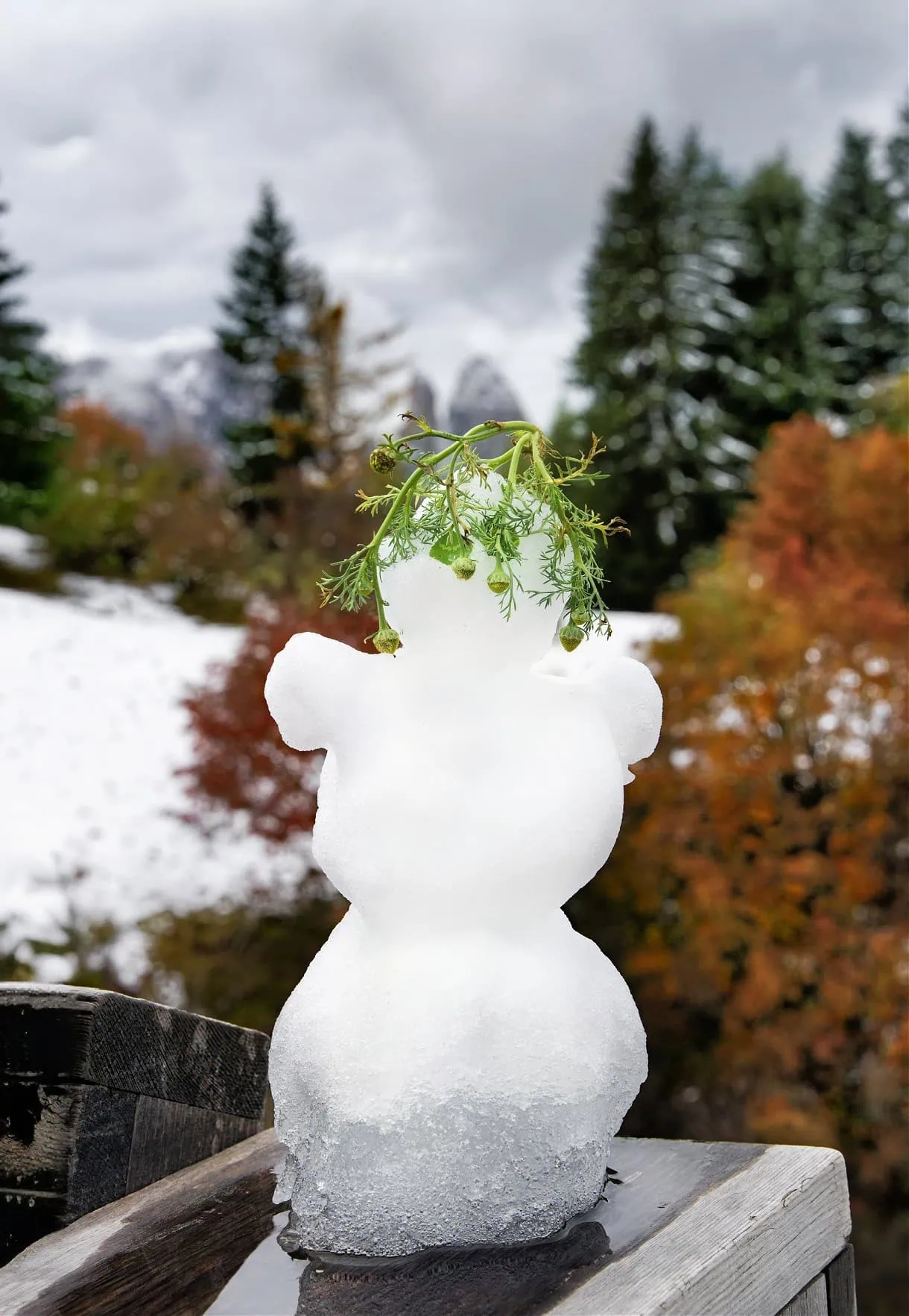
Crowds quickly began forming along the parade route, and we managed to claim a perfect spot — right in the middle of it all — with panoramic views of Sassolungo and Sassopiatto on one side and Mount Schlern on the other. A fresh dusting of snow made it feel like summer had slipped away just ahead of the cows.
Before the procession began, the murmur of the crowd mingled with the long, haunting calls of alphorns and the bright notes of San Martin de Tor, a South Tyrolean brass ensemble with a 100+ year history. We also were treated to a traditional South Tyrolean folk dance by the local Alpler Plattlergitschen group.
Discover Goaslschnöllen: Handmade Thunder in the Alps →
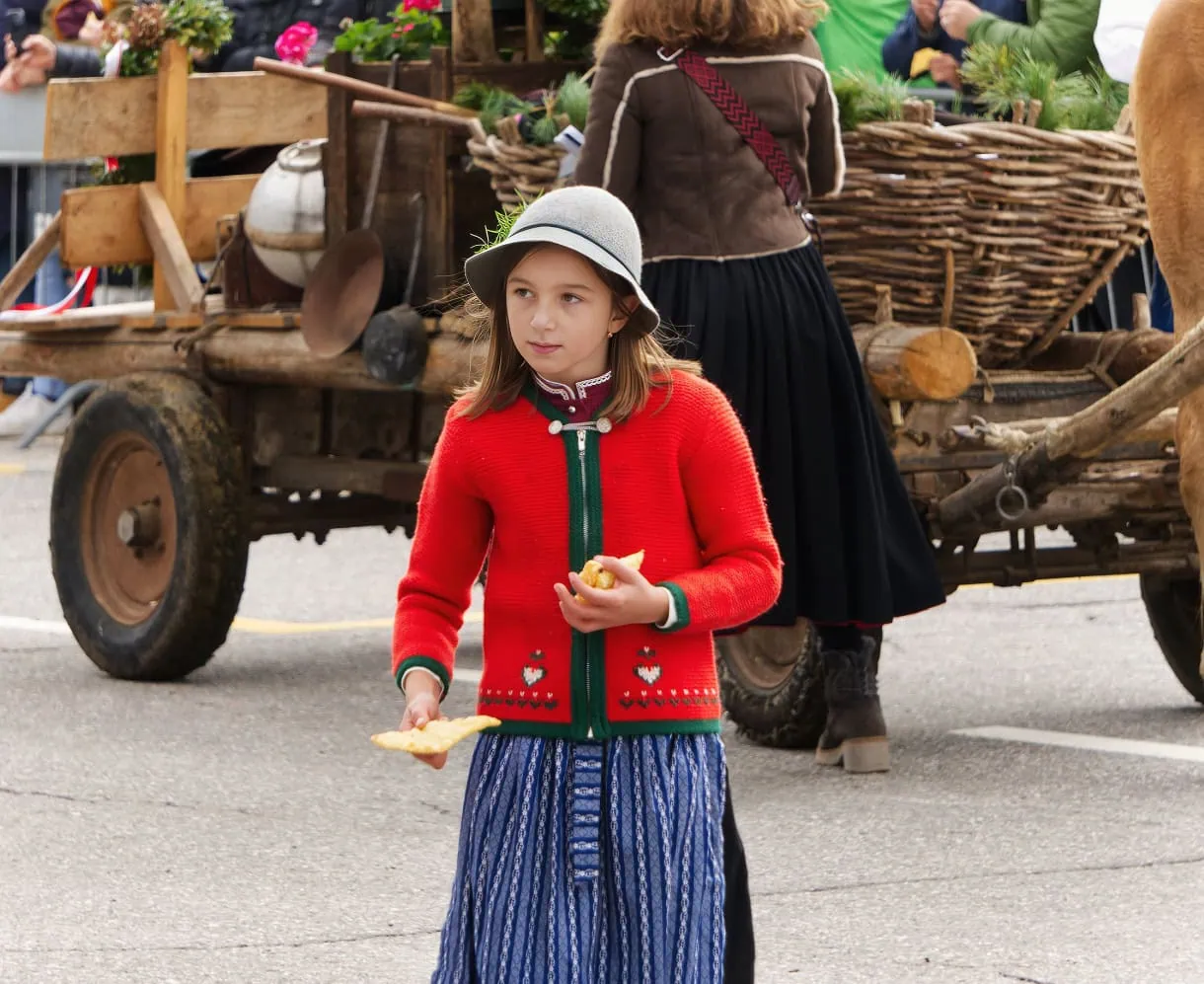
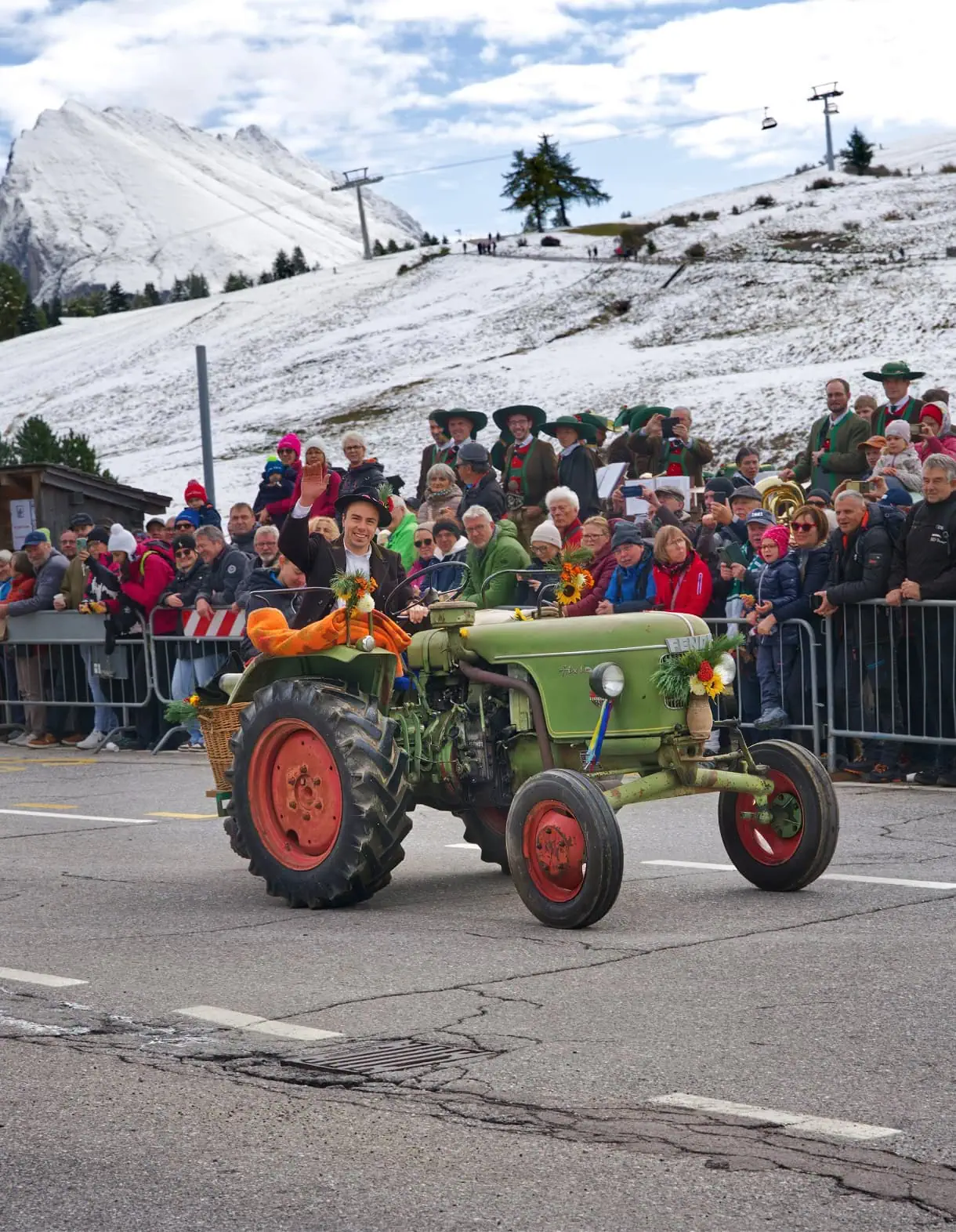
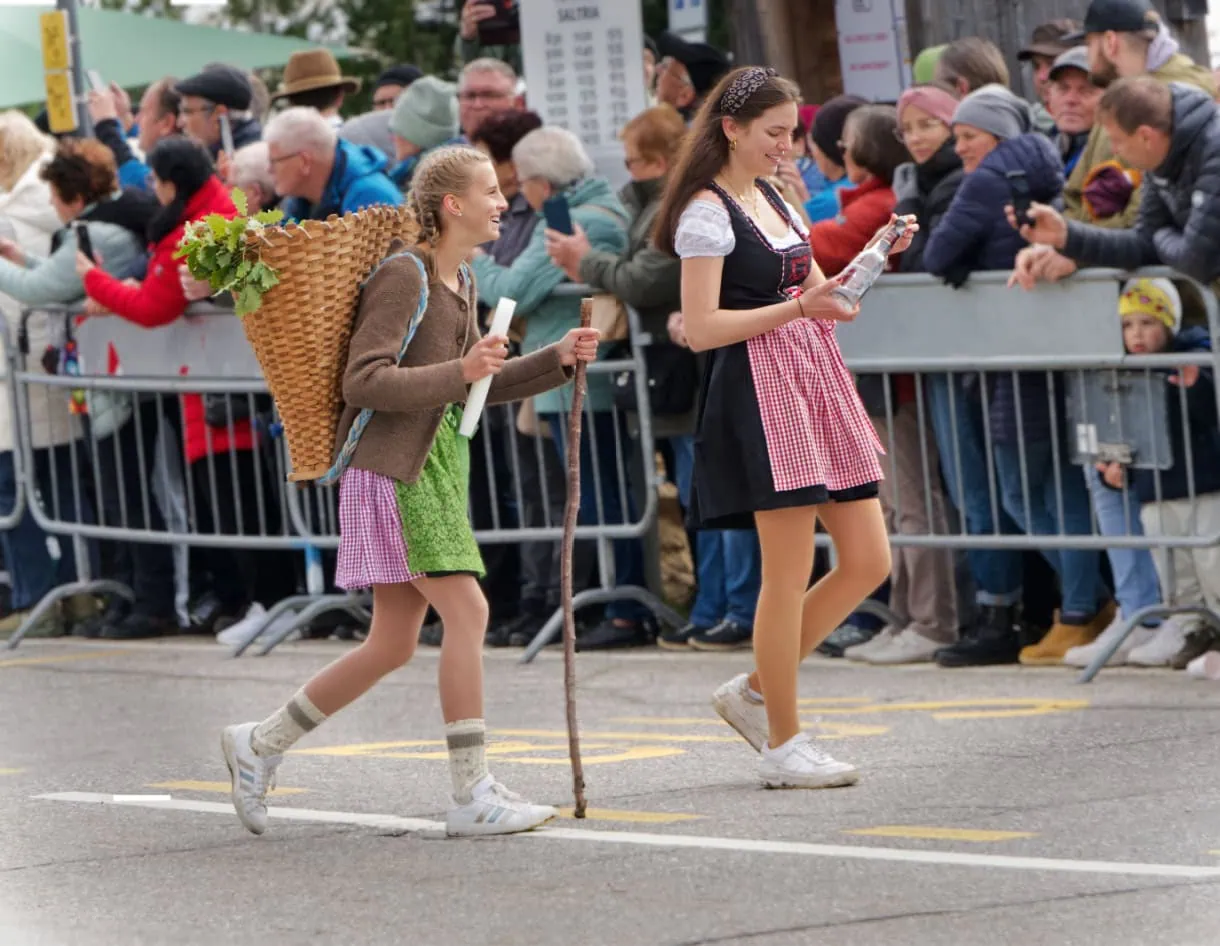
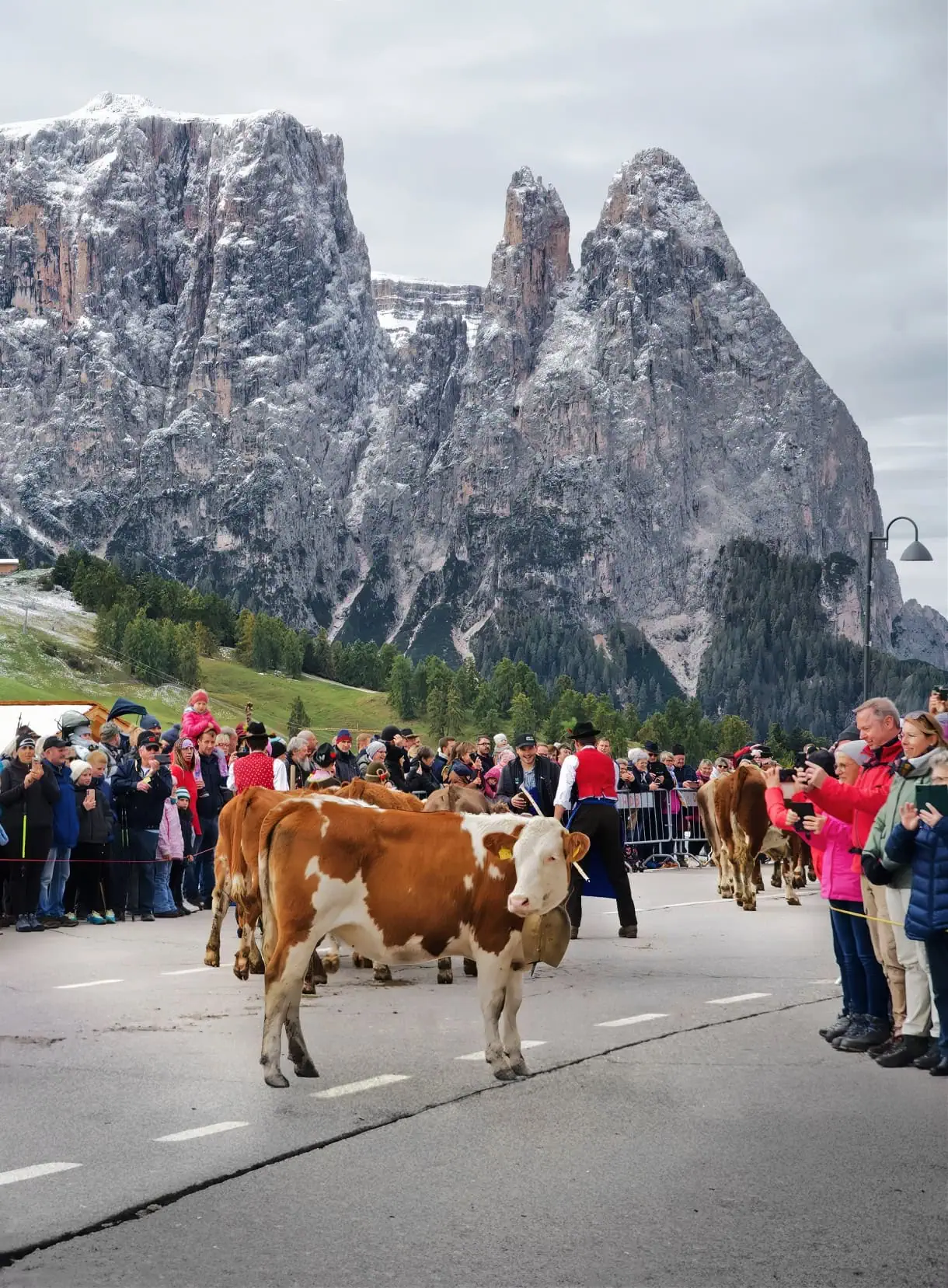
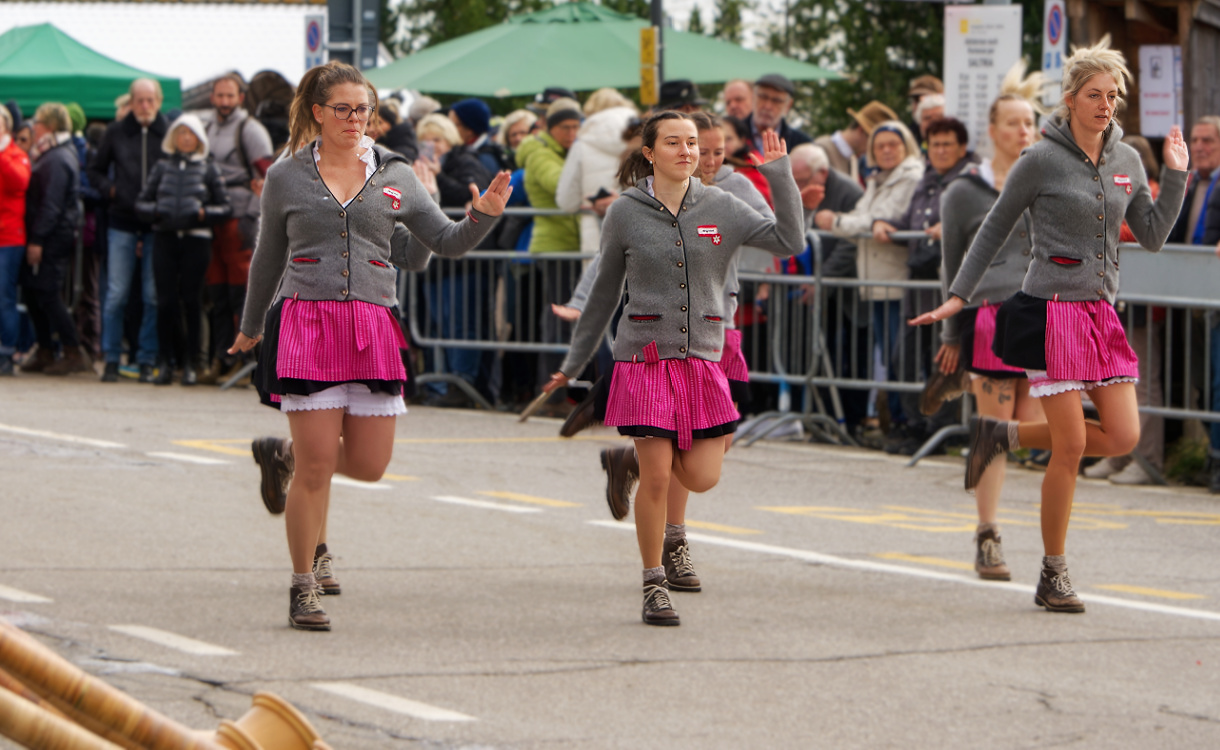
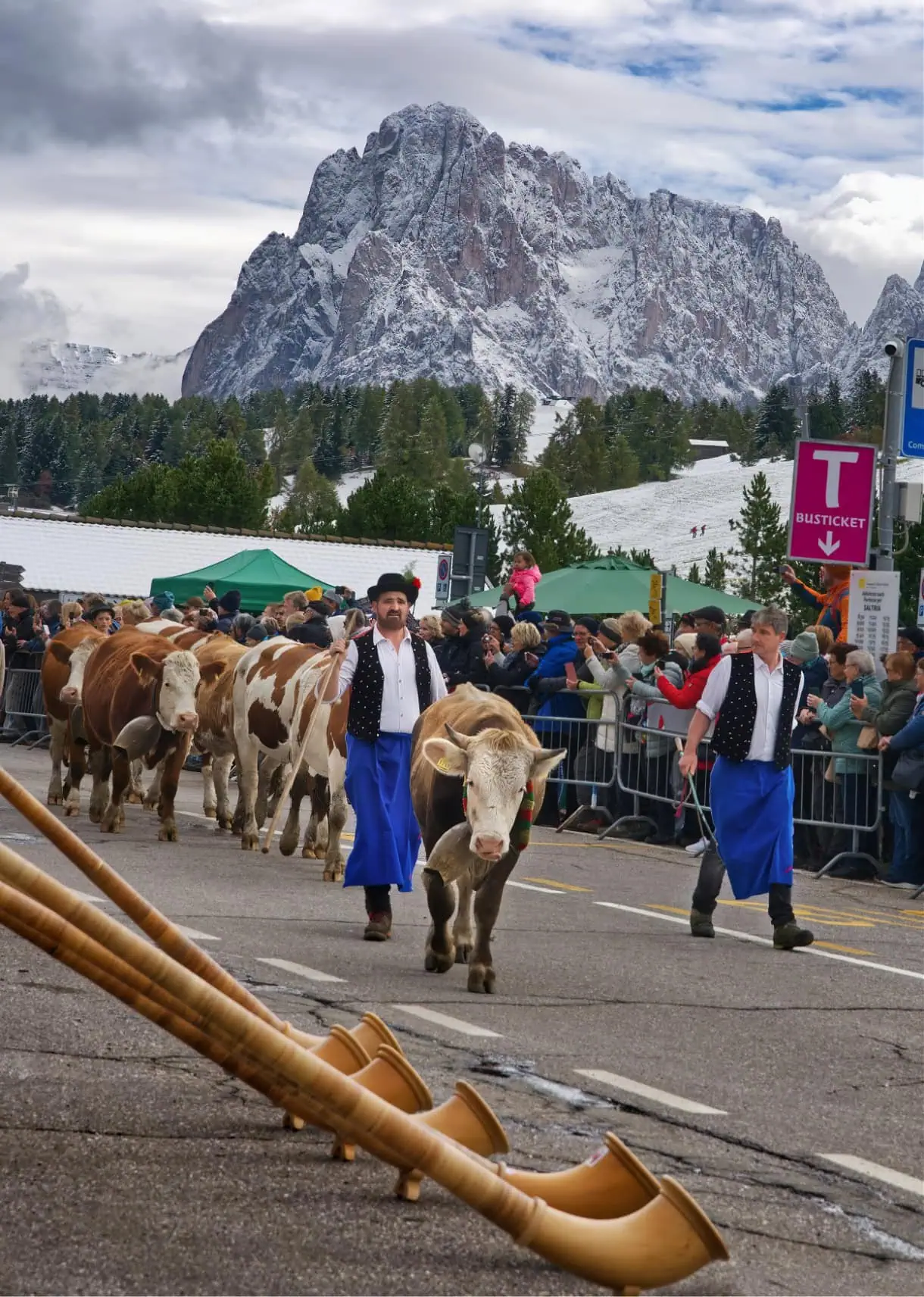
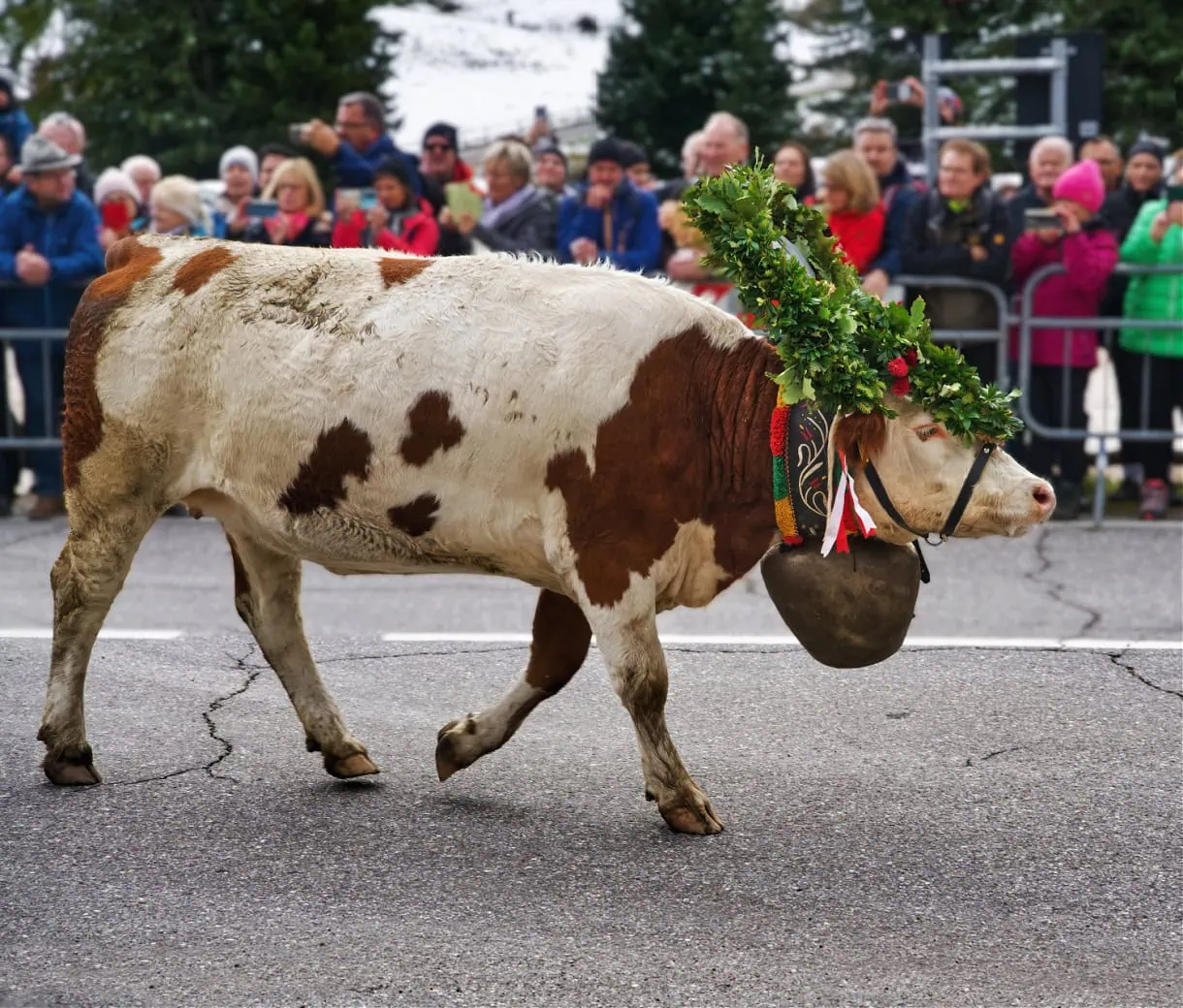
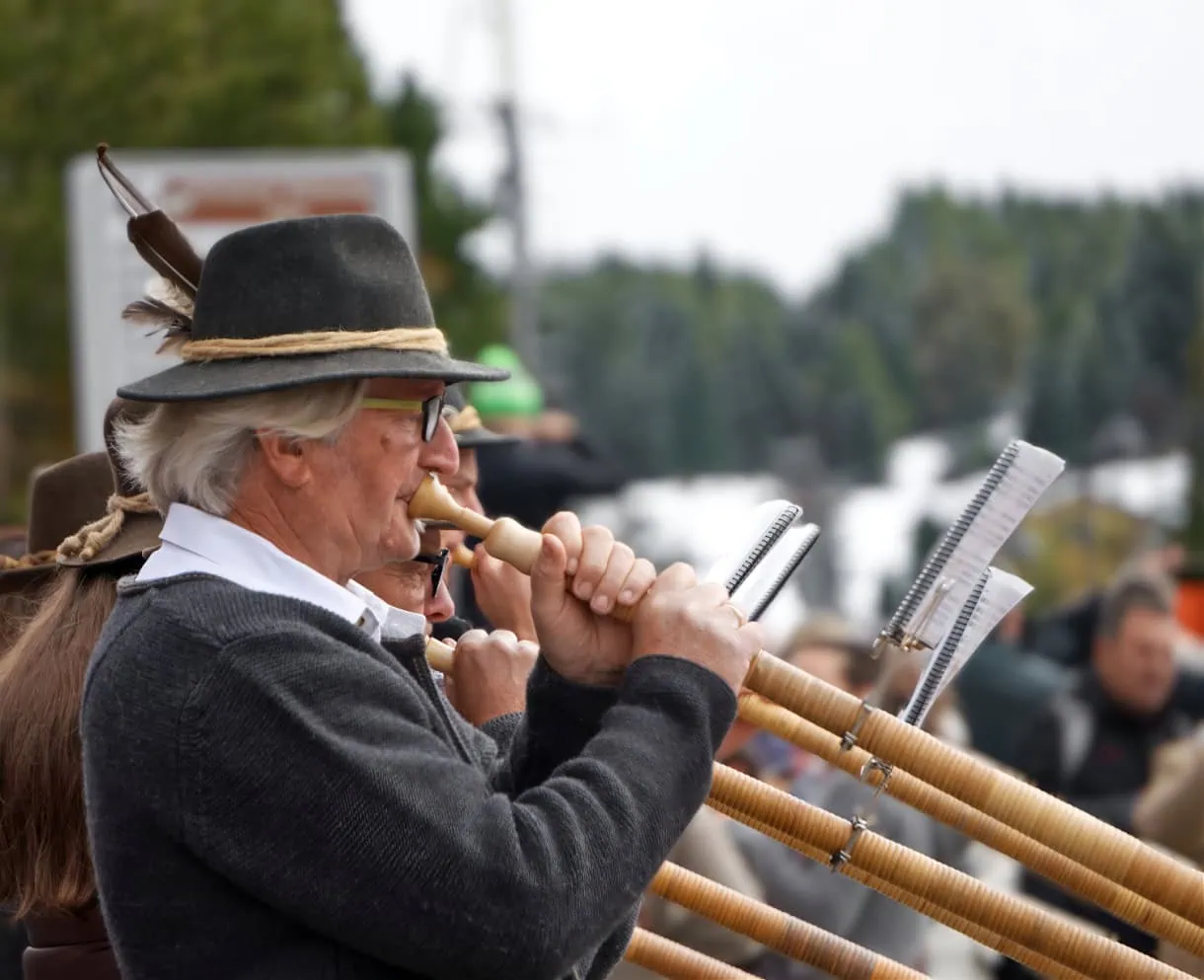
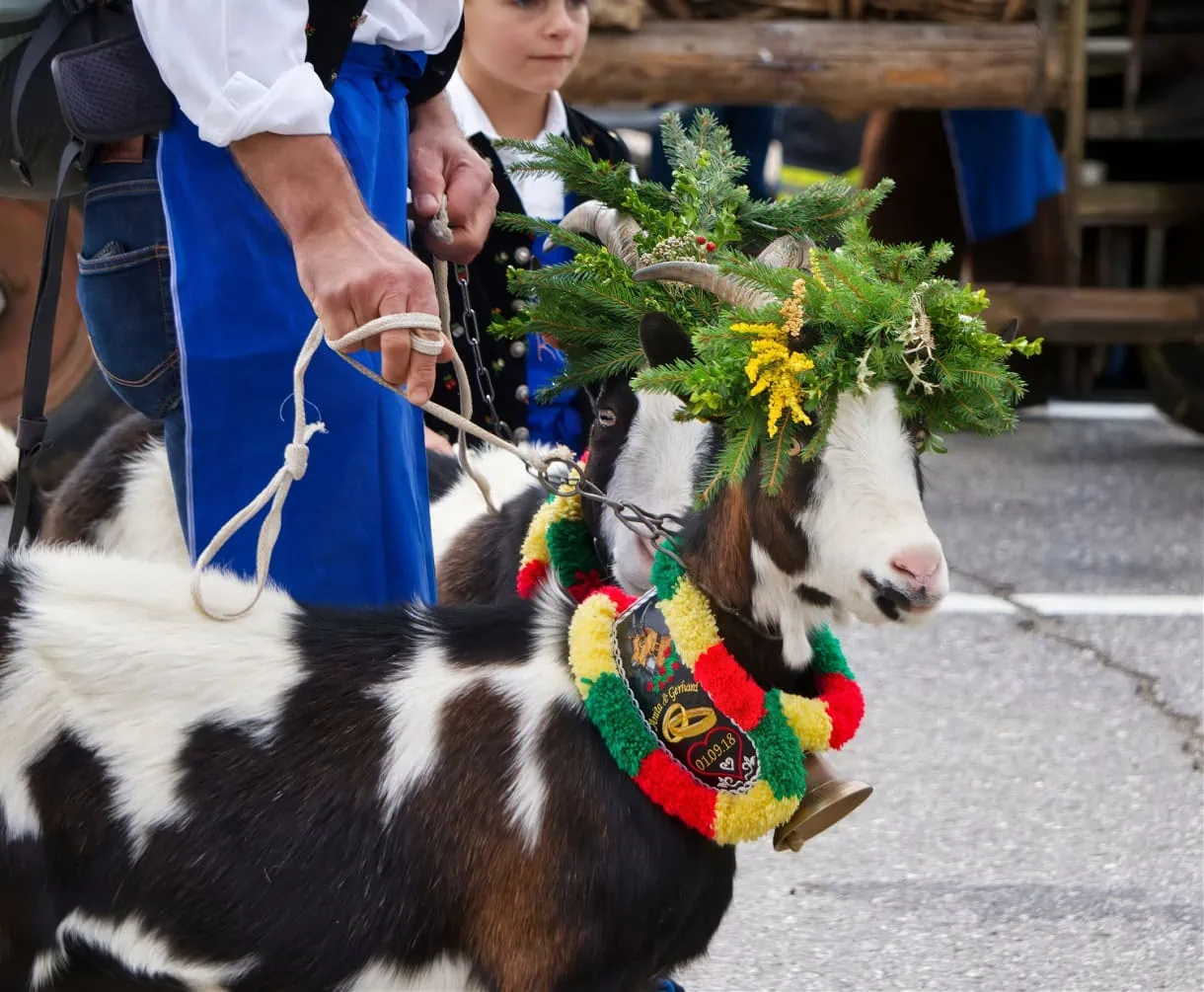
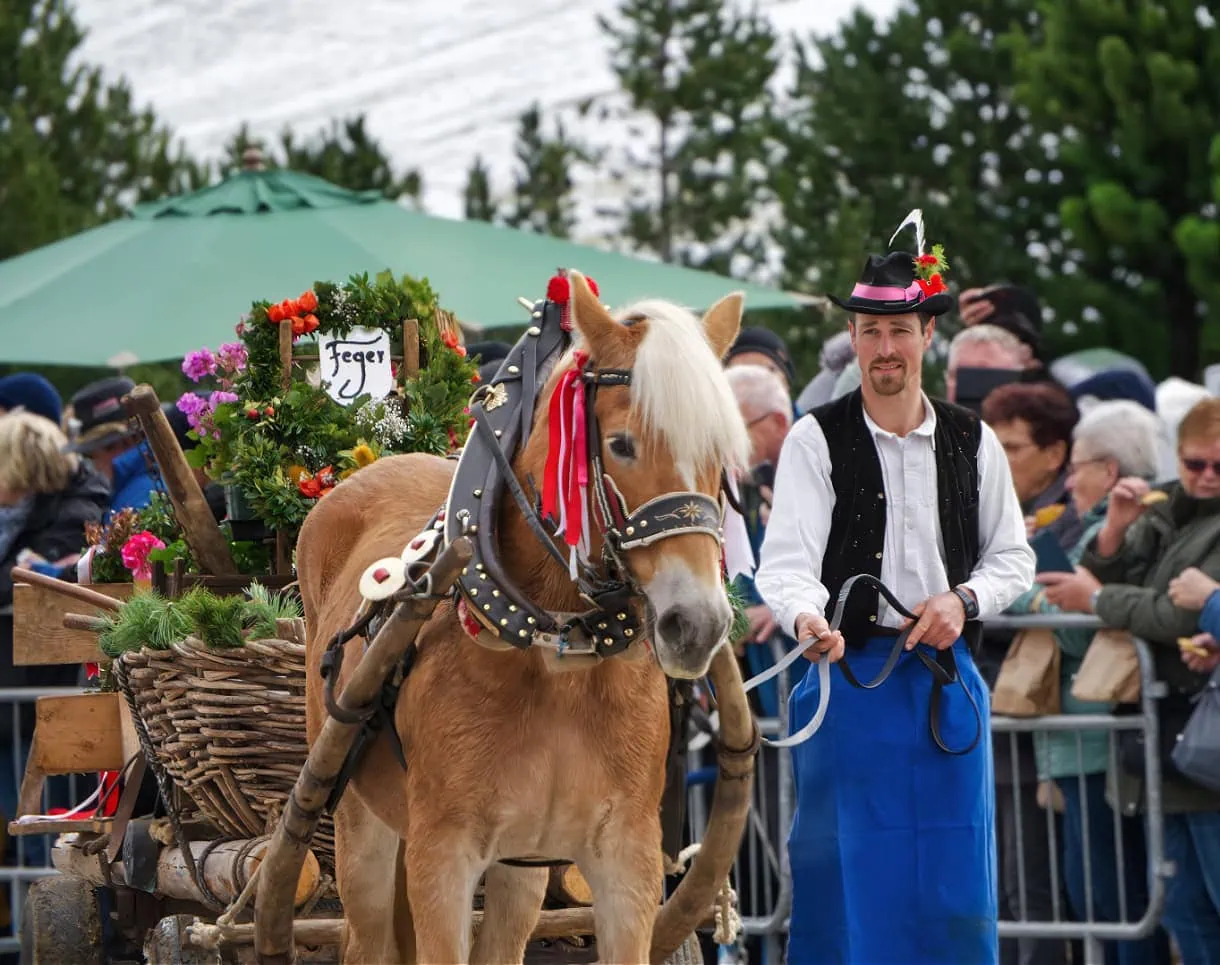
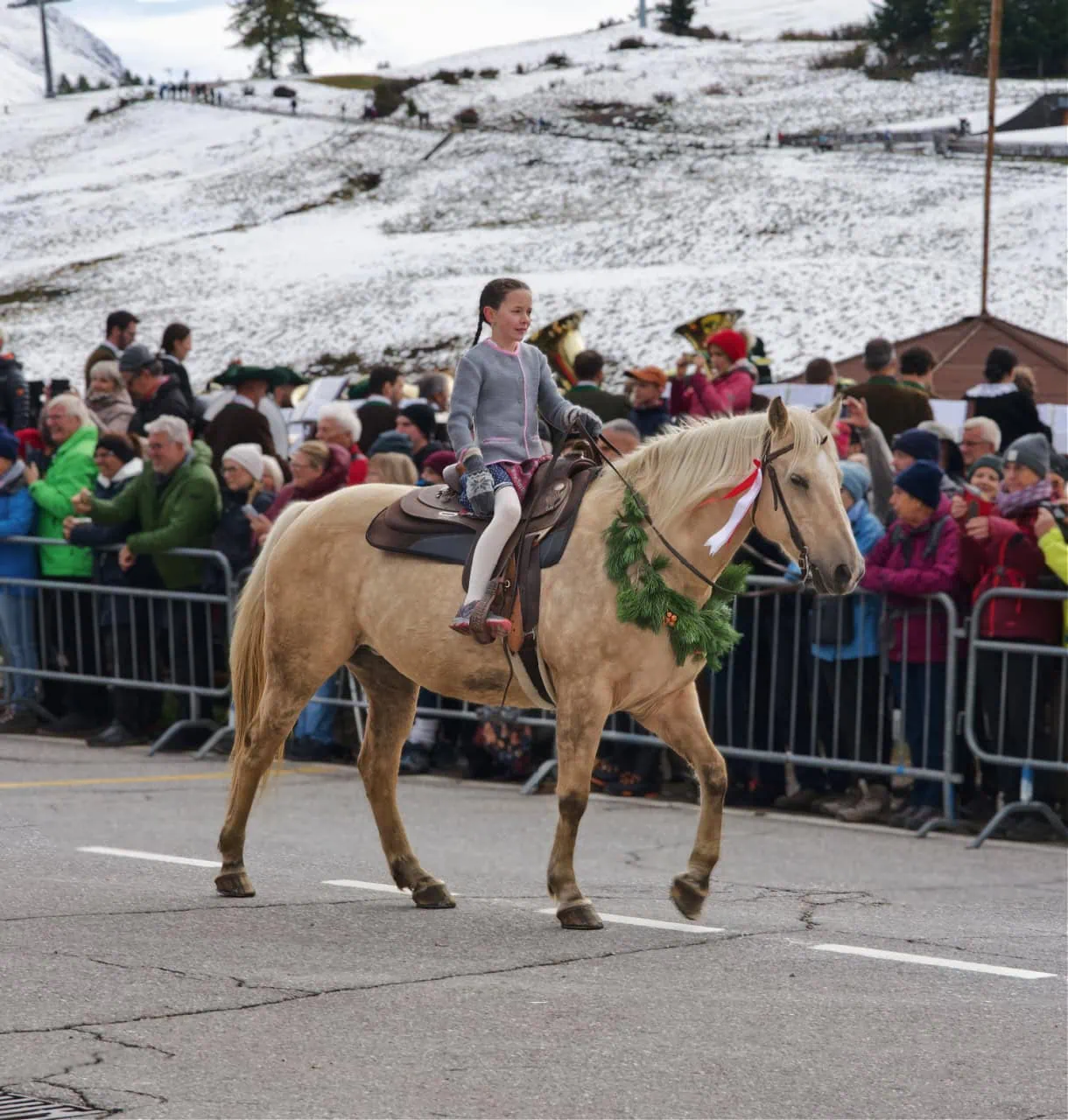
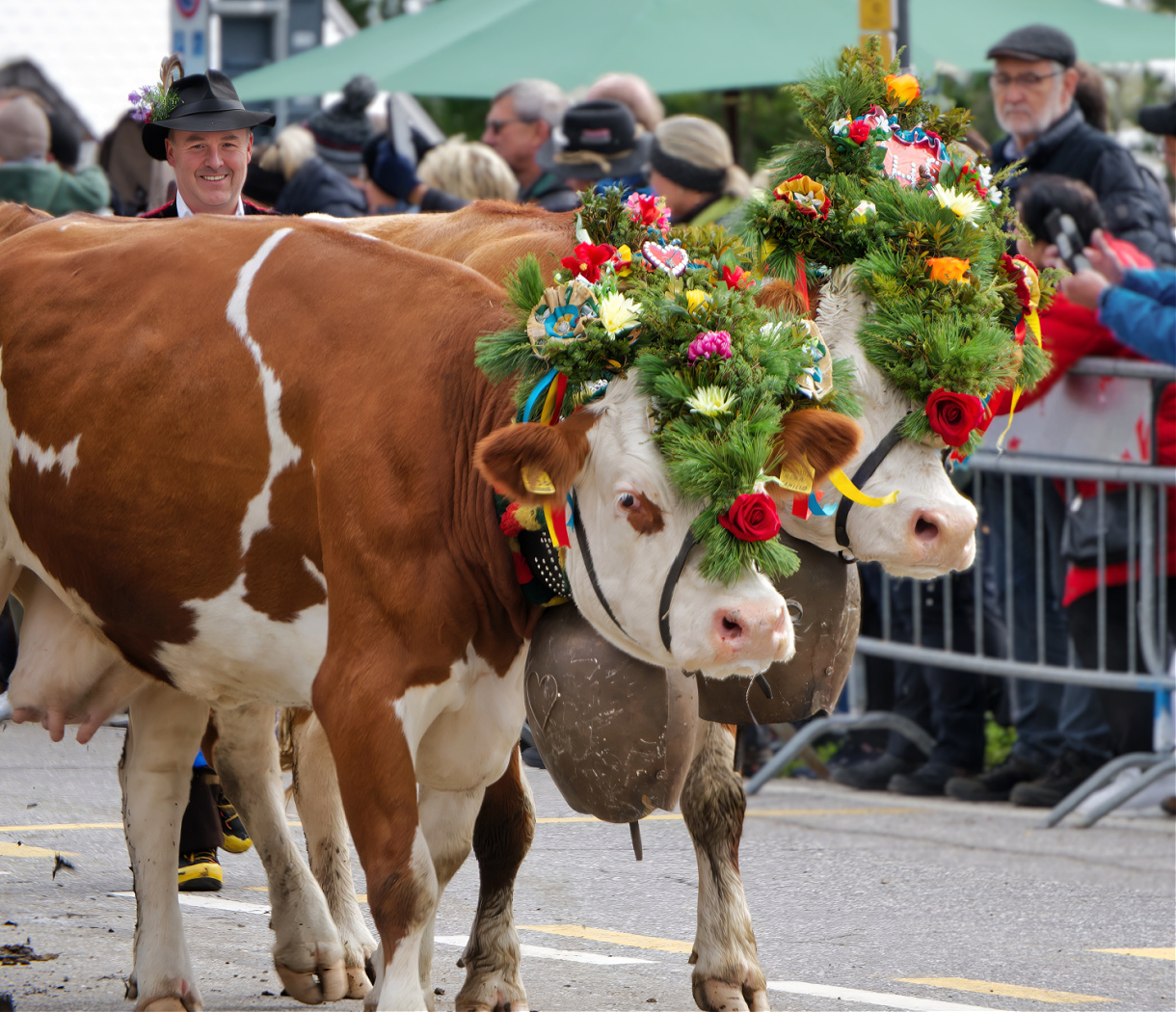
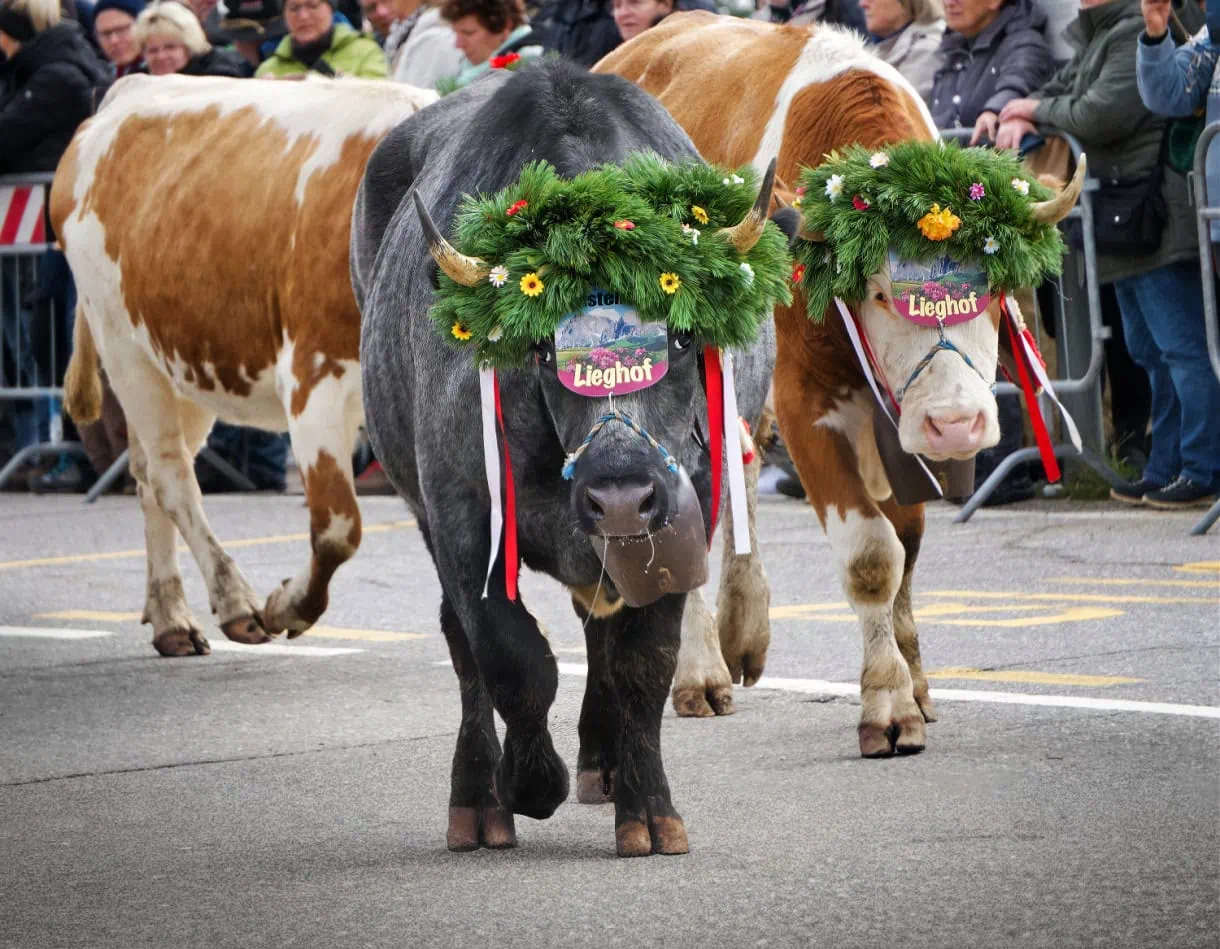
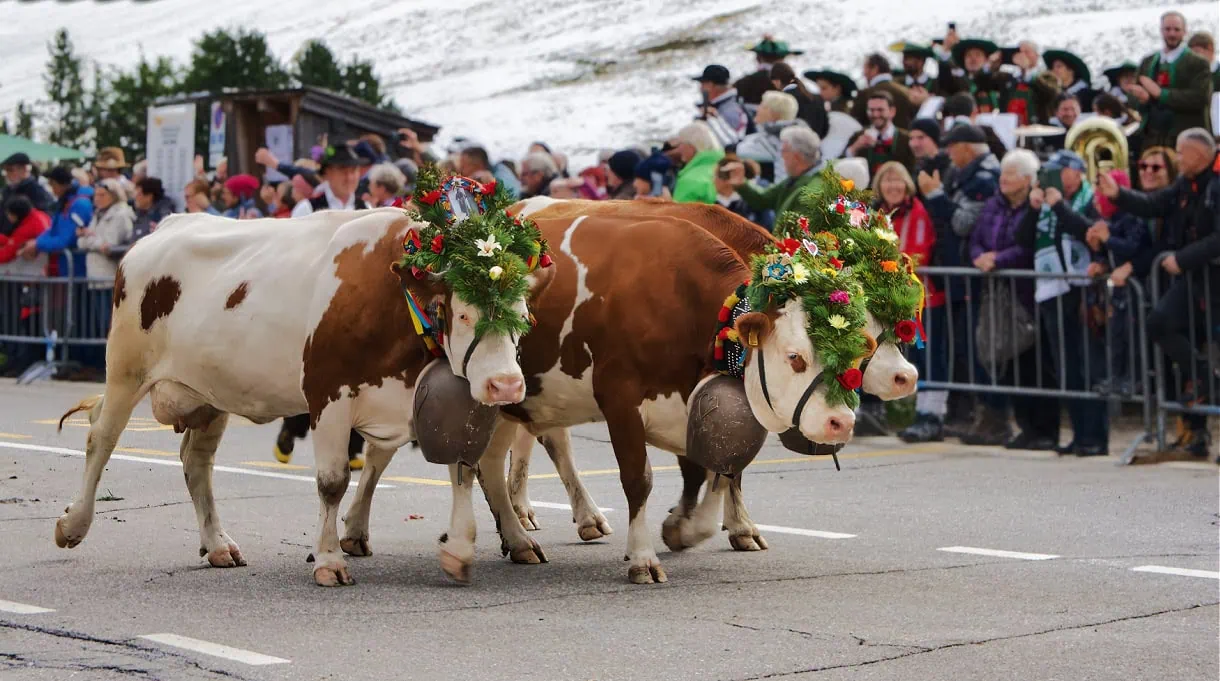
Then, around 10:30, the real show began. Bells clanged. Hooves beat against the earth. And out they came — nearly 250 animals crowned with garlands of greenery, wildflowers, and ribbons. Leading the way was the Kranzkuh, or “crown cow,” her elaborate headdress so ornate it looked like a floral chandelier come to life.
Behind her followed a metallic chorus of cowbells, their rhythmic clatter echoing off the surrounding peaks. Farm families in traditional dress joined the procession, handing out Schüttelbrot and offering generous pours of schnapps to lucky bystanders lining the route. Sadly, we didn’t score either specialty.
⇒ YOU MIGHT ALSO LIKE: Discover Krampuslauf in the Dolomites
The Descent to Castelrotto
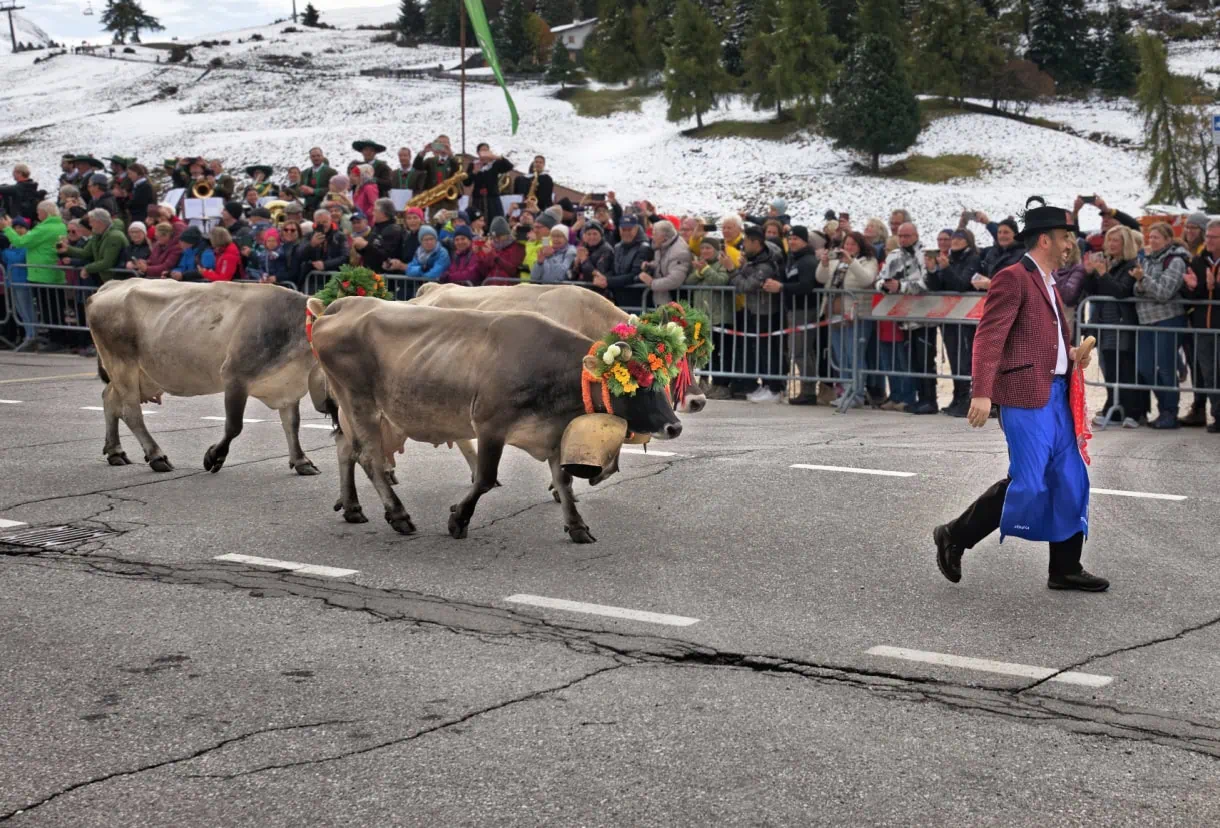
From Compatsch, the procession winds its way down the Alpe di Siusi toward Castelrotto (Kastelruth). The road is closed to traffic, giving the herders and their adorned cattle full reign of the trail. Visitors are welcome to walk alongside, but the unspoken rule is simple: the animals lead, we follow.
By early afternoon, the cows arrive in Castelrotto, and the atmosphere shifts from alpine ritual to village festival. The town square comes alive with food stalls, live music, and the steady clink of glasses raised in toast.
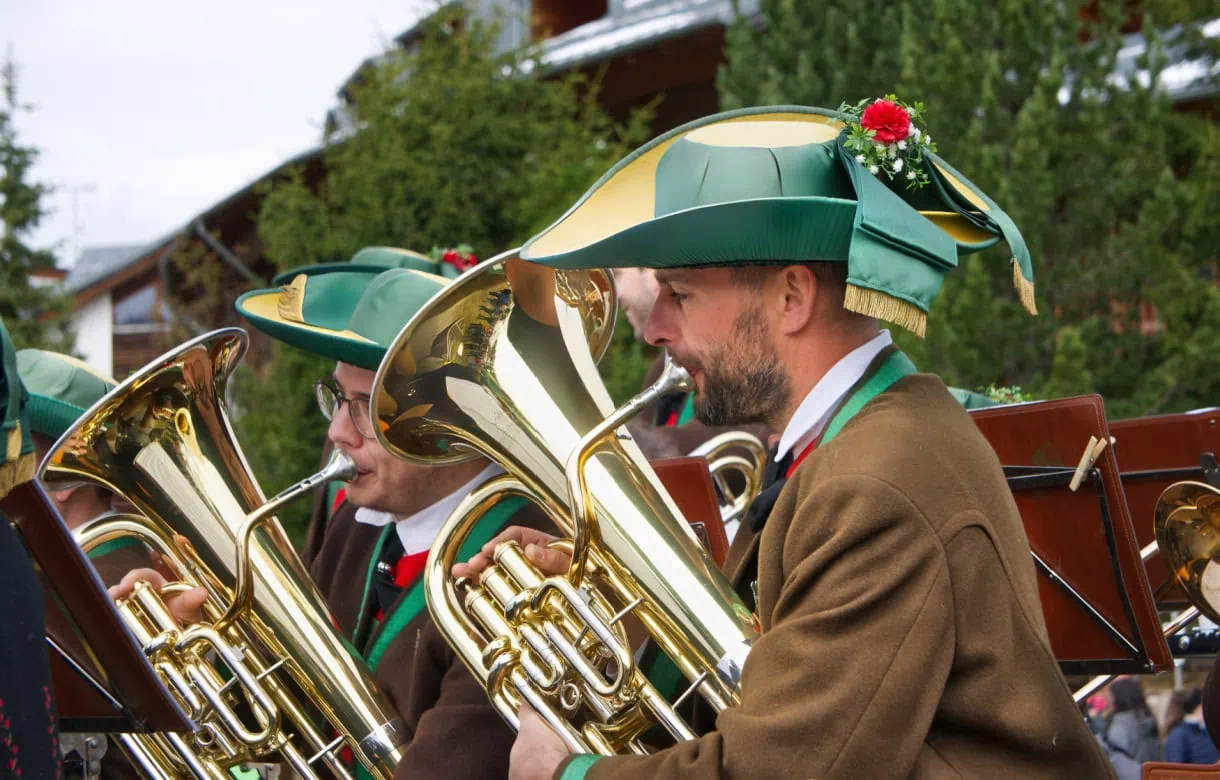
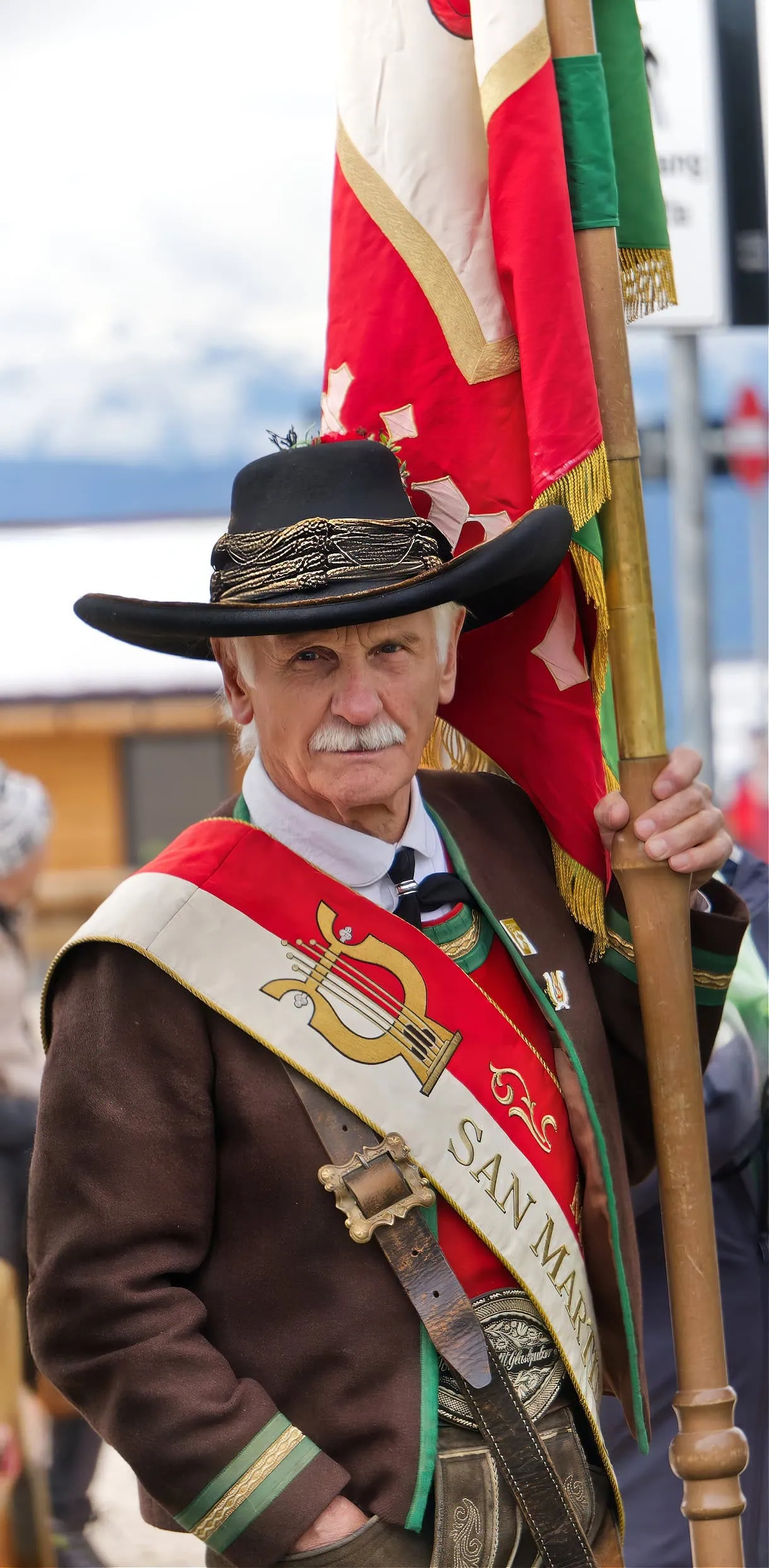
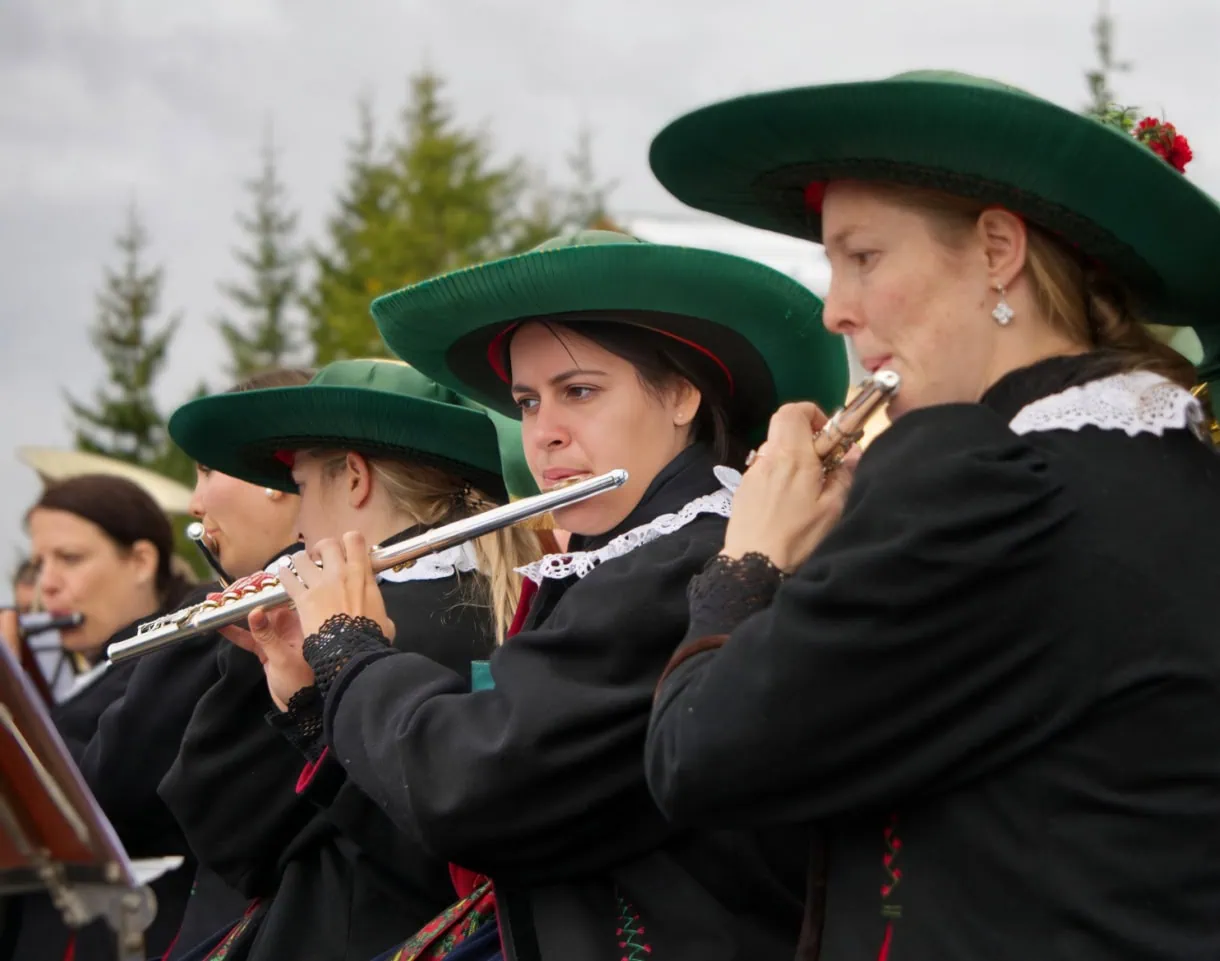
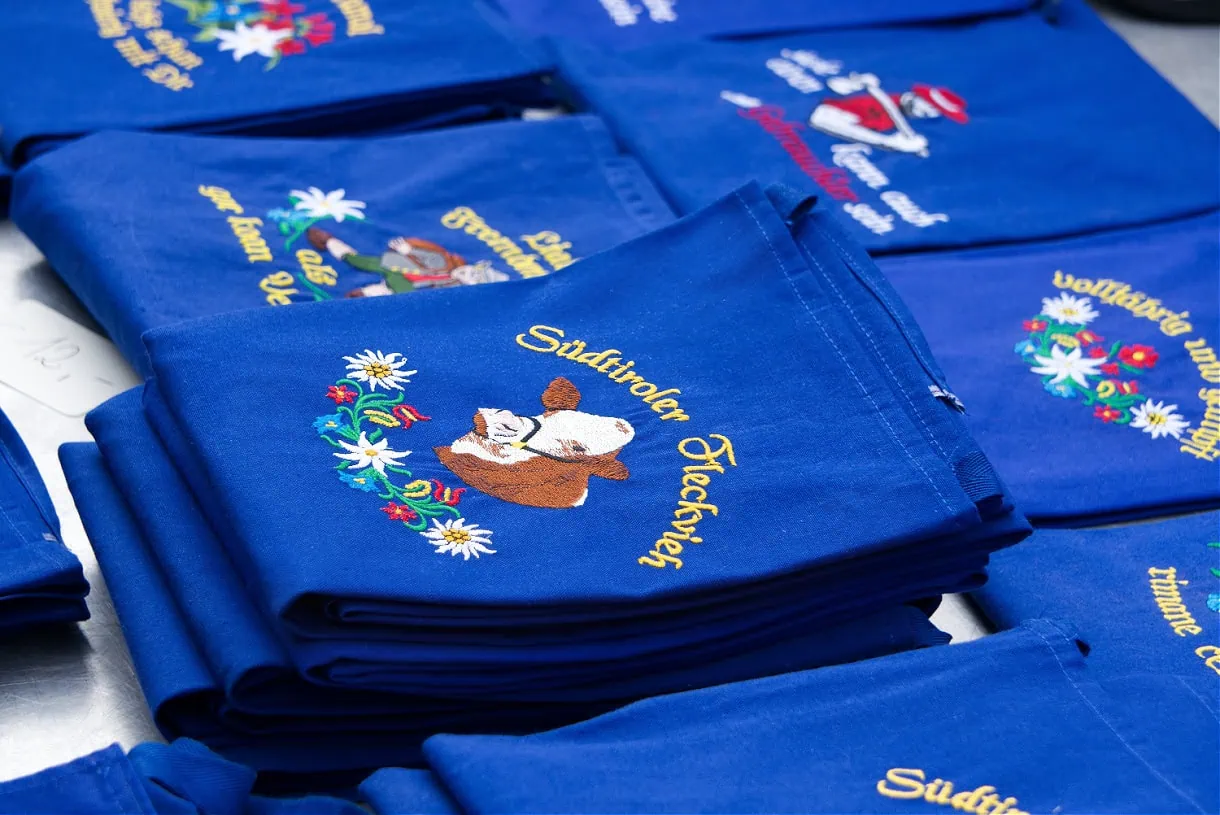
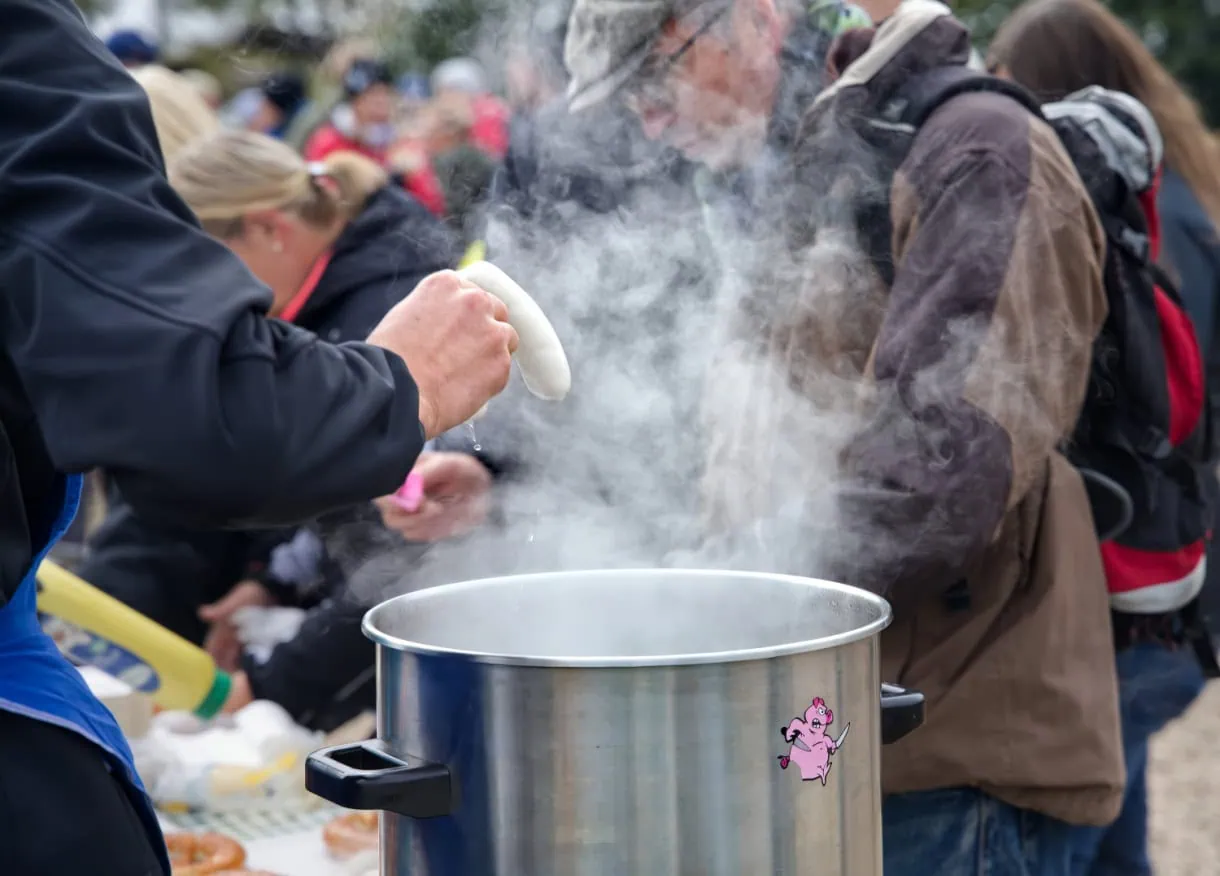
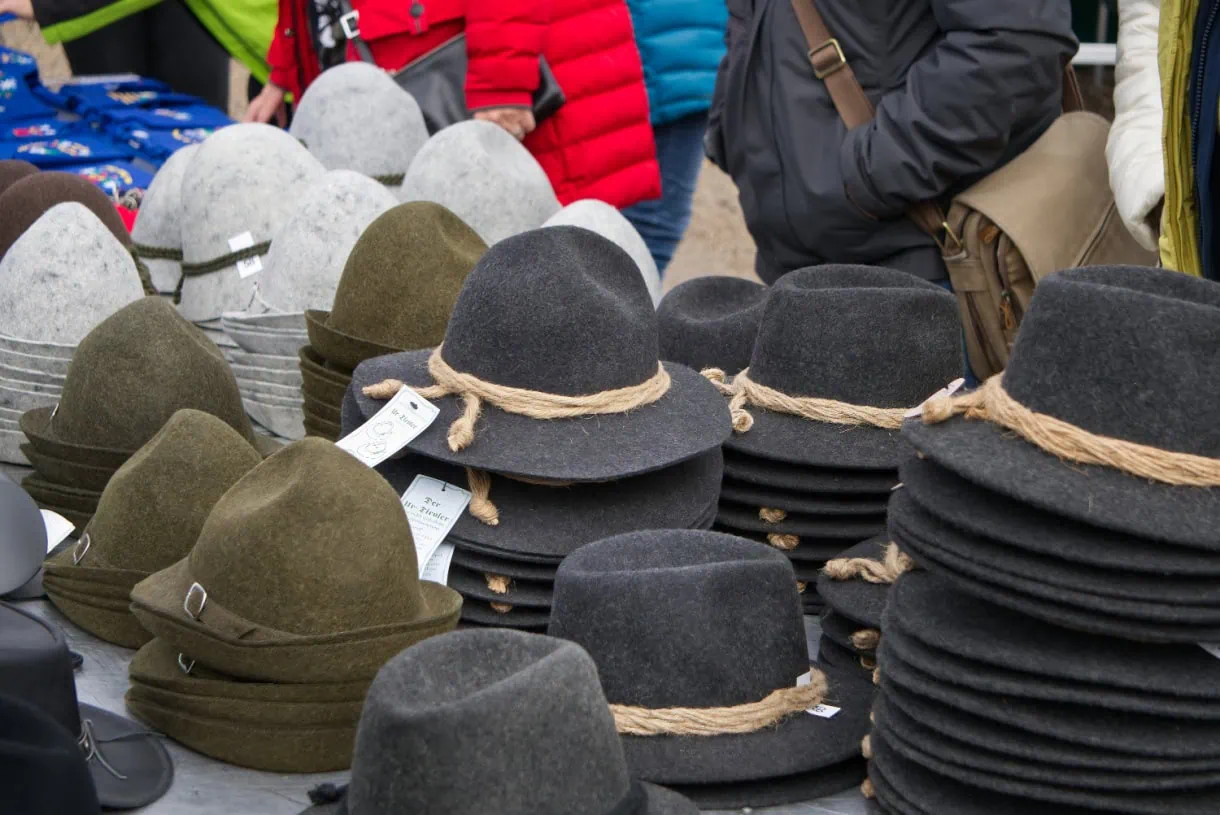
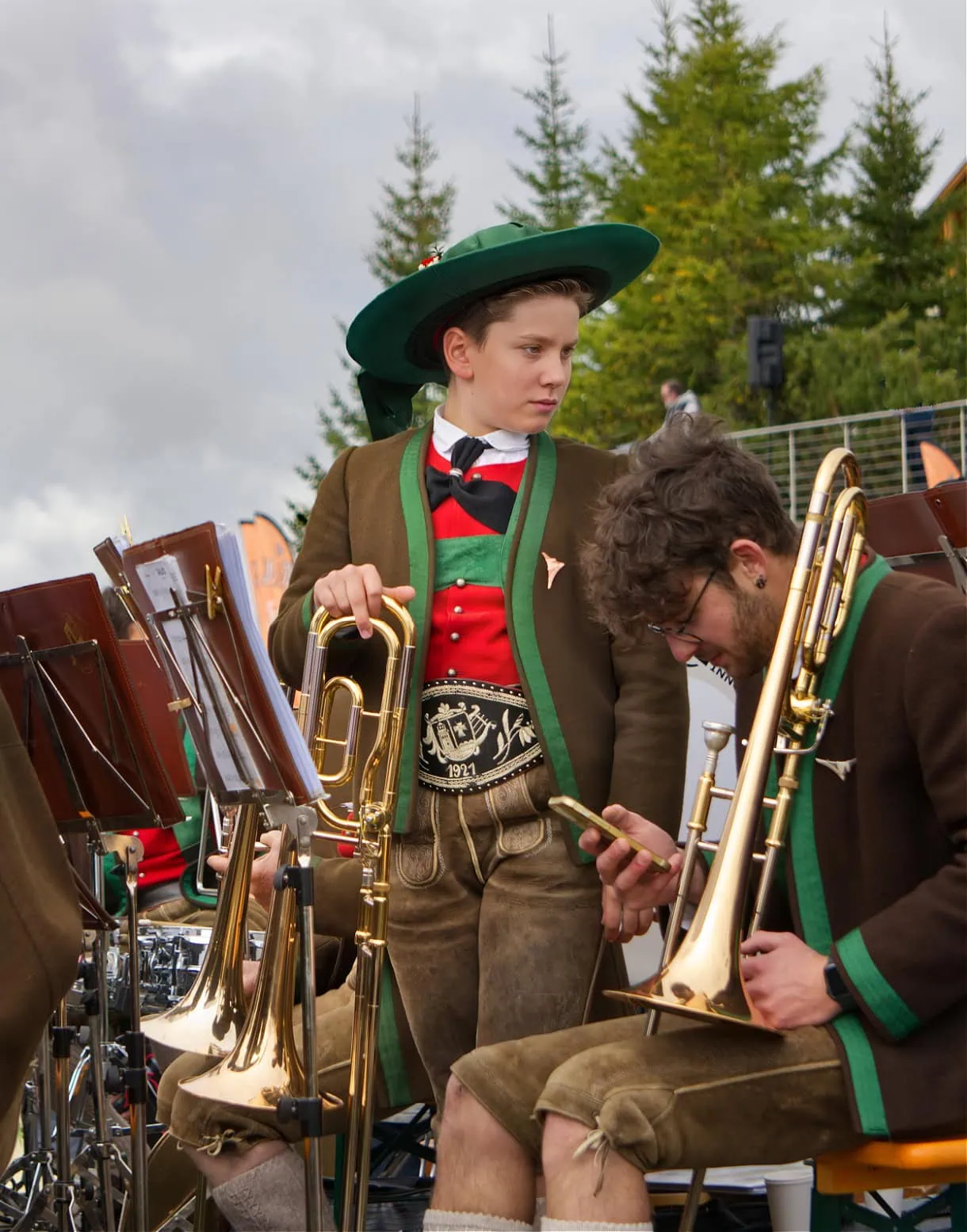
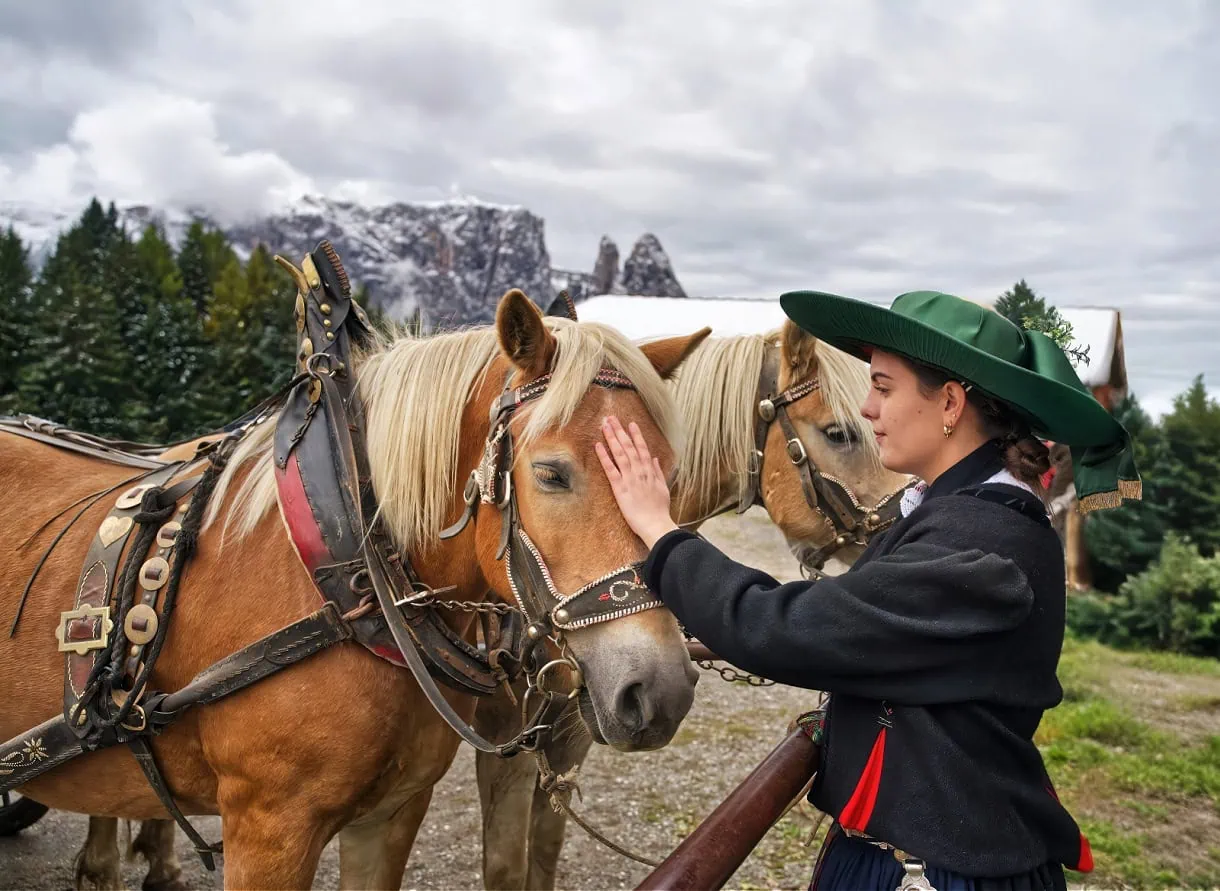
For those who prefer to stay on the plateau, Compatsch keeps the celebration going. After the procession passes, the settlement fills with its own festivities: more music, plenty of South Tyrolean food and drink, and stalls selling everything from local specialties to traditional hats and the iconic blue South Tyrolean farmer’s aprons.
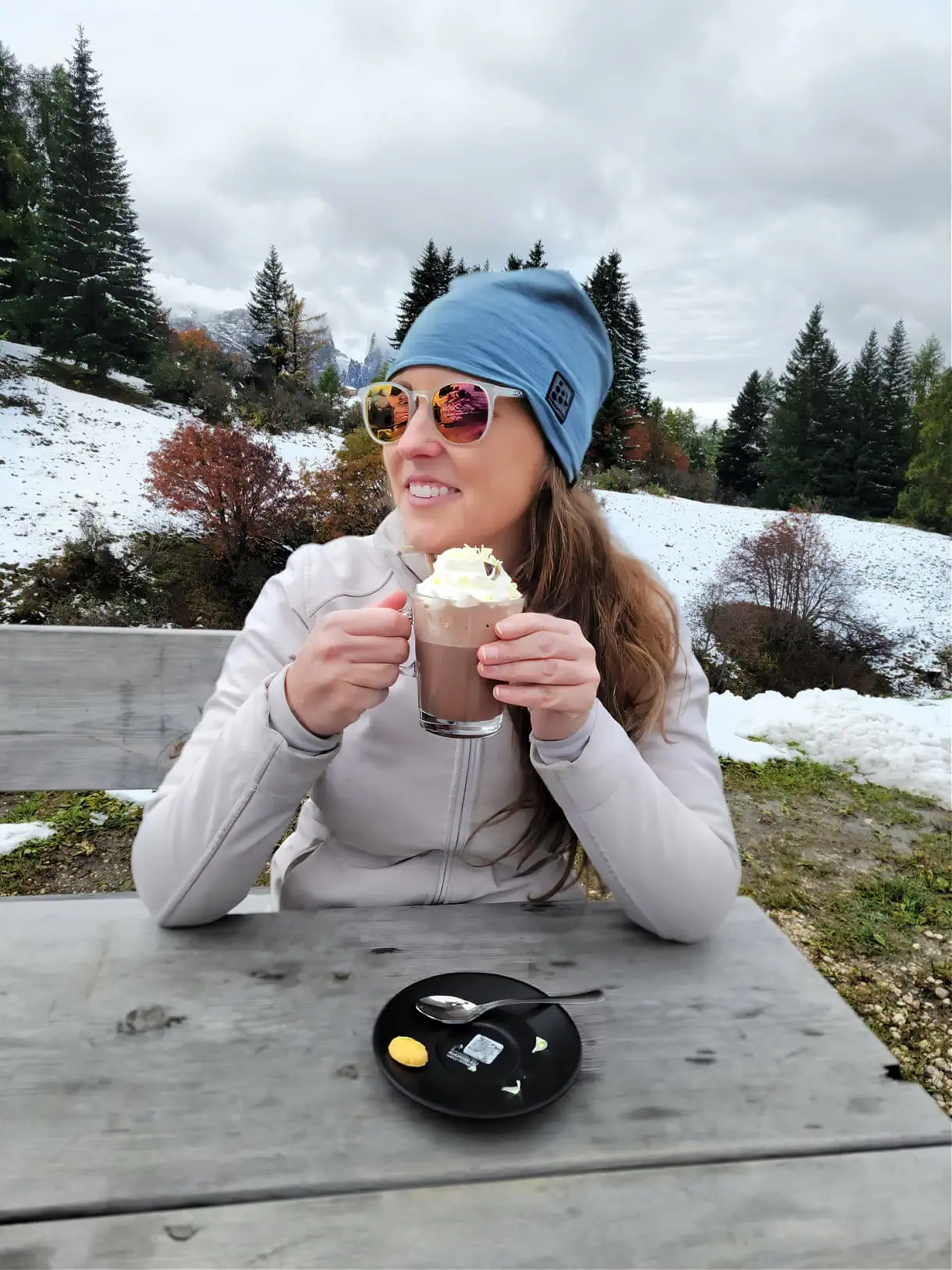
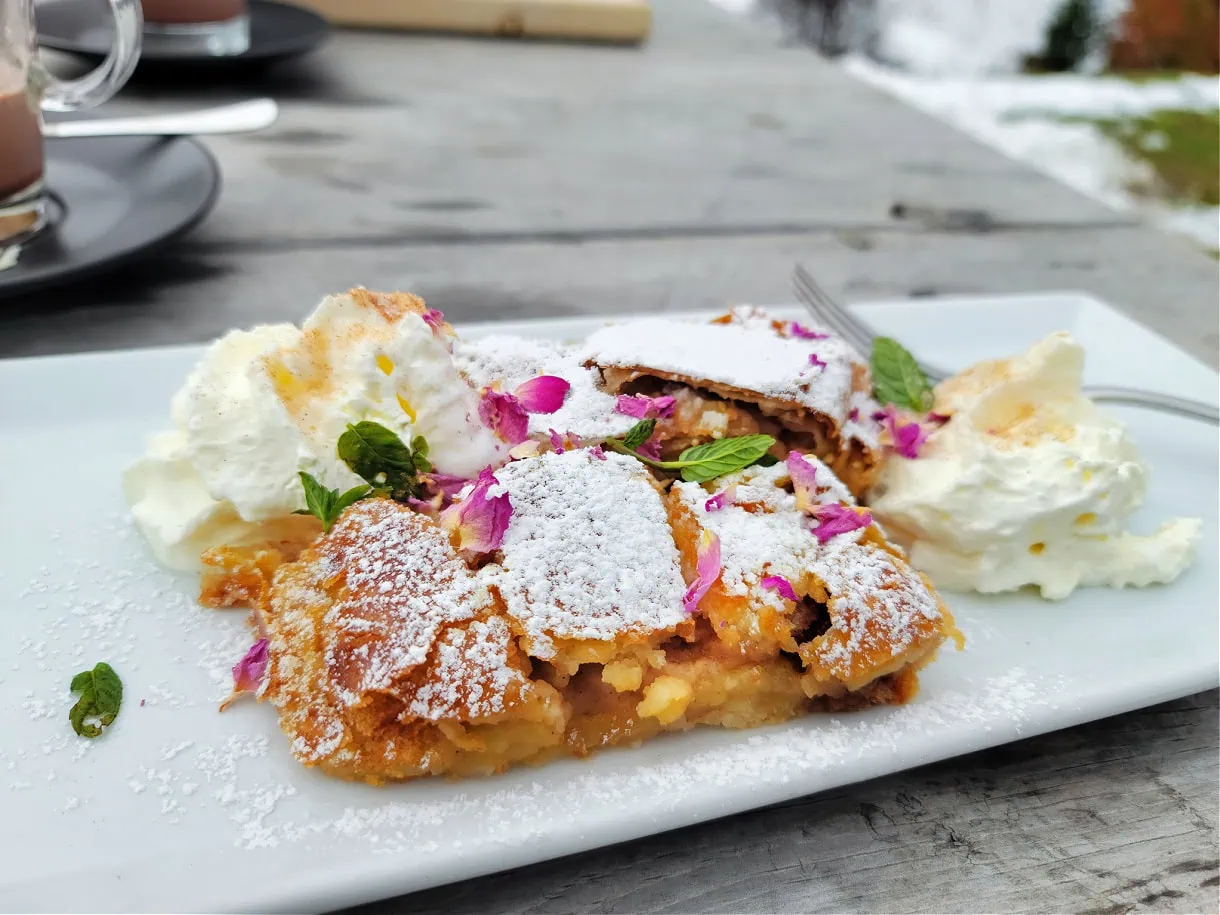
That’s the option we chose. Instead of following the herd into town, we lingered in Compatsch, soaking up the alpine music and browsing the rustic market stands. Later, we set out on a short hike to Gostner Schwaige, where steaming mugs of hot chocolate and a decadent slice of apple strudel waited for us.
⇒ YOU MIGHT ALSO LIKE: A Step-by-Step Guide to Visiting Val di Funes
How to Experience the Seiser Alm Almabtrieb Yourself
If you’re planning to attend Almabtrieb on Sesier Alm, here’s everything you need to know about when to go, how to get there, what to expect, and what to bring.
When to Go
- 2026 Date: Saturday, October 3
- The Seiser Alm Almabtrieb traditionally takes place on Rosary Saturday, the Saturday before the Harvest Festival.
- Festivities begin at 10:00 a.m. in Compatsch. The decorated animals begin gathering around 10:30 a.m. and set off toward the valley around midday. The procession is expected to reach Kastelruth at approximately 1:30 p.m.
- Celebrations continue in Compatsch and Kastelruth until approximately 4:00 p.m.
Getting There
- Take the Seiser Alm Bahn cable car from Seis am Schlern to Compatsch. Special fares are often offered on Almabtrieb day. The cable car operates from 8:00 a.m.–6:00 p.m.
- If you prefer to drive to Seiser Alm, you must reach the plateau before 9:00 a.m. Beginning in 2026, an advance online parking reservation is required for both P1 Spitzbühl and P2 Compatsch. Reservations open six days before your visit.
- Keep in mind that special traffic restrictions apply on Almabtrieb day. In particular, the road from Compatsch toward Telfen is closed to downhill traffic from 11:00 a.m.–2:00 p.m. We recommend using the cable car rather than driving on the day of the event.
What to Expect
- Morning festivities in Compatsch beginning at 10:00 a.m., with traditional music, folk performances, food and drink.
- A procession of around 250 cattle, sheep, horses and goats, along with decorated carts, setting off toward Castelrotto around midday.
- Not every animal travels all the way to Castelrotto. Some farmers leave the procession along the route to return their livestock directly to their farms.
- Festivities in Castelrotto begin at 10:00 a.m., with the animal procession expected to arrive around 1:30 p.m. In 2026, traditional South Tyrolean Muas will also be prepared over an open fire at 11:00 a.m. and 12:30 p.m., with visitors invited to taste it afterward. Muas is an old-fashion alpine comfort food made from milk, flour and butter.
- If you plan to follow the procession into Castelrotto, pay close attention to the day’s bus and road closures, as transportation is restricted while the animals descend.
What to Bring
- Layers — mountain weather changes quickly. We were very happy to have hats and gloves.
- Comfortable walking shoes if you plan to follow the procession trail.
- Cash for food and drink stalls.
- A respectful mindset — this is a community ritual, not just a photo op. Consider purchasing a keepsake or sampling a local specialty from one of the stalls as a way to support the farmers and families who make the celebration possible. It’s a small gesture of thanks for being welcomed into their tradition.
Where to Stay

Nothing beats staying on Alpe di Siusi itself if you want to focus your time on the plateau. We loved our stay at Hotel Ritsch, a rustic yet elegant gem run by the Malfertheiner family, whose warmth defines the experience. The location is ideal for exploring the meadows and offers an easy walk to Compatsch, making it a perfect base for the Almabtrieb event.
If you prefer to stay near the plateau and not on it, there are also plenty of options ranging from budget to high-end luxury in the holiday region. For example, Bad Ratzes is a great choice that places you in a gorgeous secluded setting near the lift in Seis. ⇒ Explore more Alpe di Siusi area hotels here.
⇒ READ NEXT: The Alps Alight: Discover the Christmas Markets of South Tyrol