South Tyrol’s sweet traditions are as lavish and varied as its mountain landscapes. Here, the desserts and pastries are just as dramatic and iconic as the Dolomites themselves. From orchard to oven, they reflect the soul of the region and linger in your memory long after the last bite.
If you’re the kind of traveler who thinks dessert is just what comes after the real meal, a trip to South Tyrol and the Dolomites will set you straight. Wedged between the culinary worlds of Italy and Austria, this alpine borderland doesn’t just blend flavors. It elevates them, often into something entirely its own.
When we first began exploring the region over a decade ago, we had no idea what culinary wonders waited amid the peaks and pastures. But from the very first bite, we were hooked. In mountain huts and family-run bakeries, we found recipes older than most countries. They weren’t kept alive for ego or prestige, but because they matter. Deeply.
These sweets aren’t plated for perfection or Michelin glory… though many could be. They exist to comfort, to celebrate, to bring people together around a table after a long day in the mountains. Taste your way through the Dolomites and you’ll uncover desserts born from wood stoves, wartime scarcity, and Sunday-morning traditions.
This guide is for travelers who don’t just want to see South Tyrol and the Dolomites. They want to feel them. Fork-first. From orchard-laced valleys to chestnut-covered hillsides, here are eight must-try desserts that speak the language of the land, one unforgettable bite at a time.
1. Apfelstrudel (Apple Strudel)
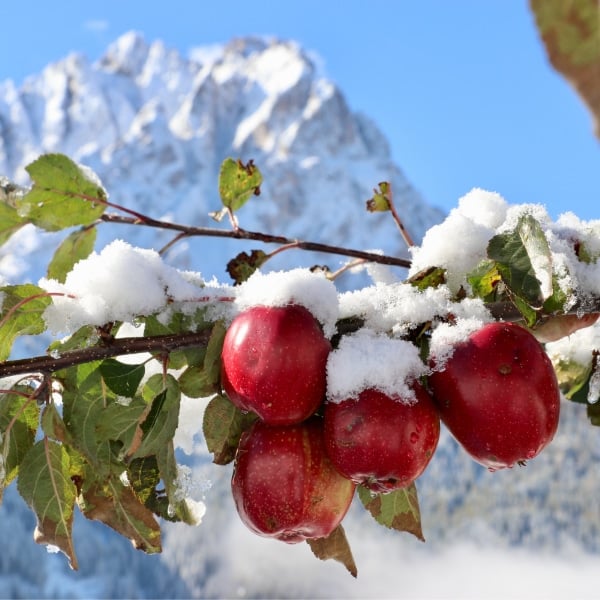
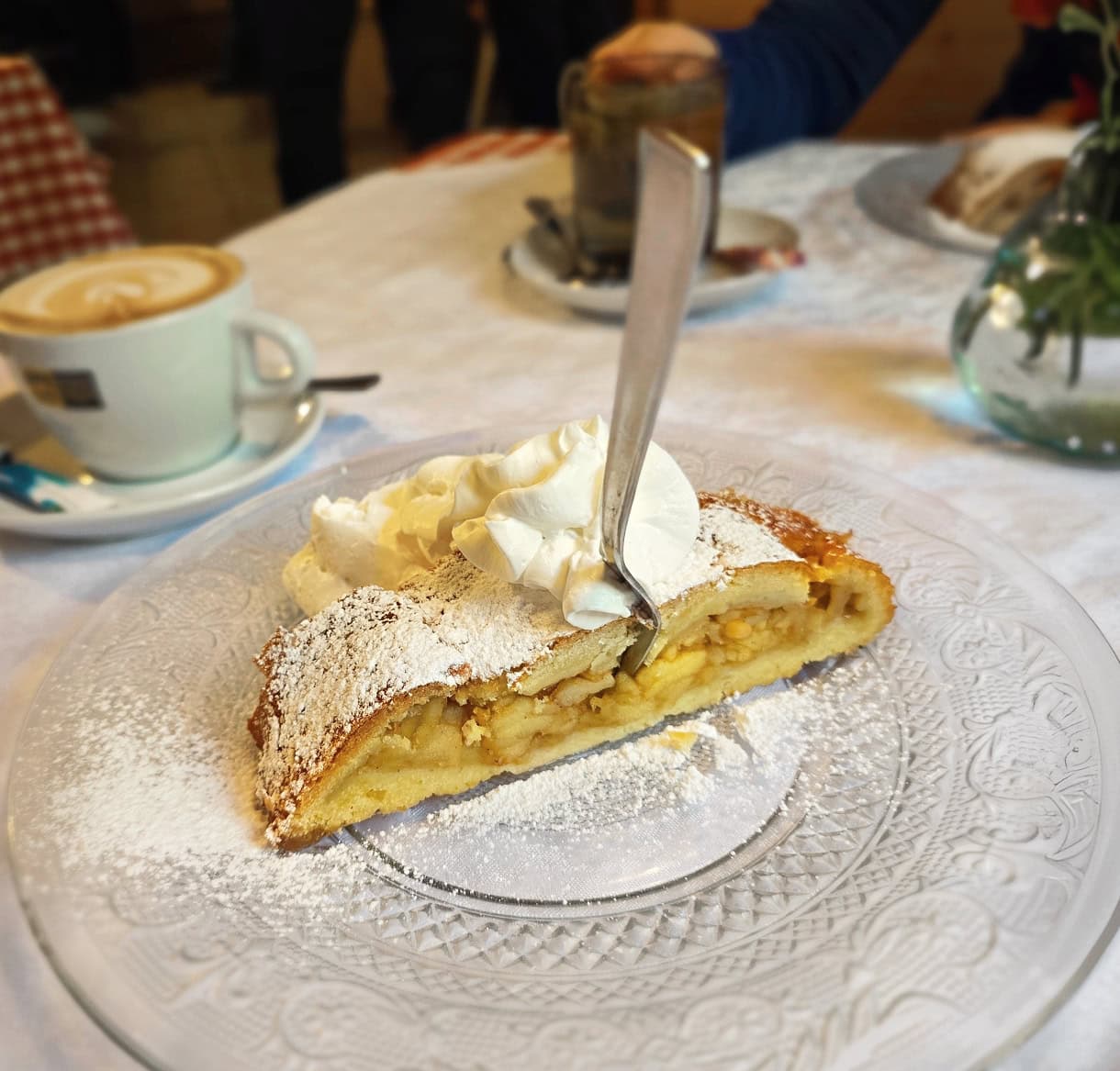
When you’re in South Tyrol, you’re in apple country. The region is often referred to as the apple basket of Europe. With over 18,000 hectares of orchards and dozens of apple varieties, it’s no surprise that Apfelstrudel reigns supreme as the region’s most beloved dessert.
But this isn’t your average apple strudel. In South Tyrol, Apfelstrudel is most often baked in a rich shortcrust pastry rather than the paper-thin pulled dough you’ll find in Vienna, giving it a slightly more cookie-like, buttery bite compared to the ultra-flaky Viennese style. The filling is a celebration of local flavor: crisp mountain apples, cinnamon, pine nuts, butter-toasted breadcrumbs for just the right texture, and often a splash of rum, vanilla sugar, and lemon zest to bring it all to life.
We’ve sampled Apfelstrudel all across the Alps, but South Tyrol’s version consistently steals the show. It’s traditionally served warm, crowned with a generous swirl of fresh whipped cream or a scoop of vanilla ice cream. Some mountain huts go even further, pouring velvety vanilla sauce around each slice until it swims in sweetness.
🍎 Good to Know: You don’t have to bite into a strudel to taste South Tyrol’s apple-rich heritage. Pick up a bottle of Apfelsaft (fresh-pressed apple juice) at a local market or trailside stand. It’s pure liquid gold from the orchard.
⇒ YOU MIGHT ALSO LIKE: The Ultimate Guide to Visiting Lago di Braies
2. Kaiserschmarrn
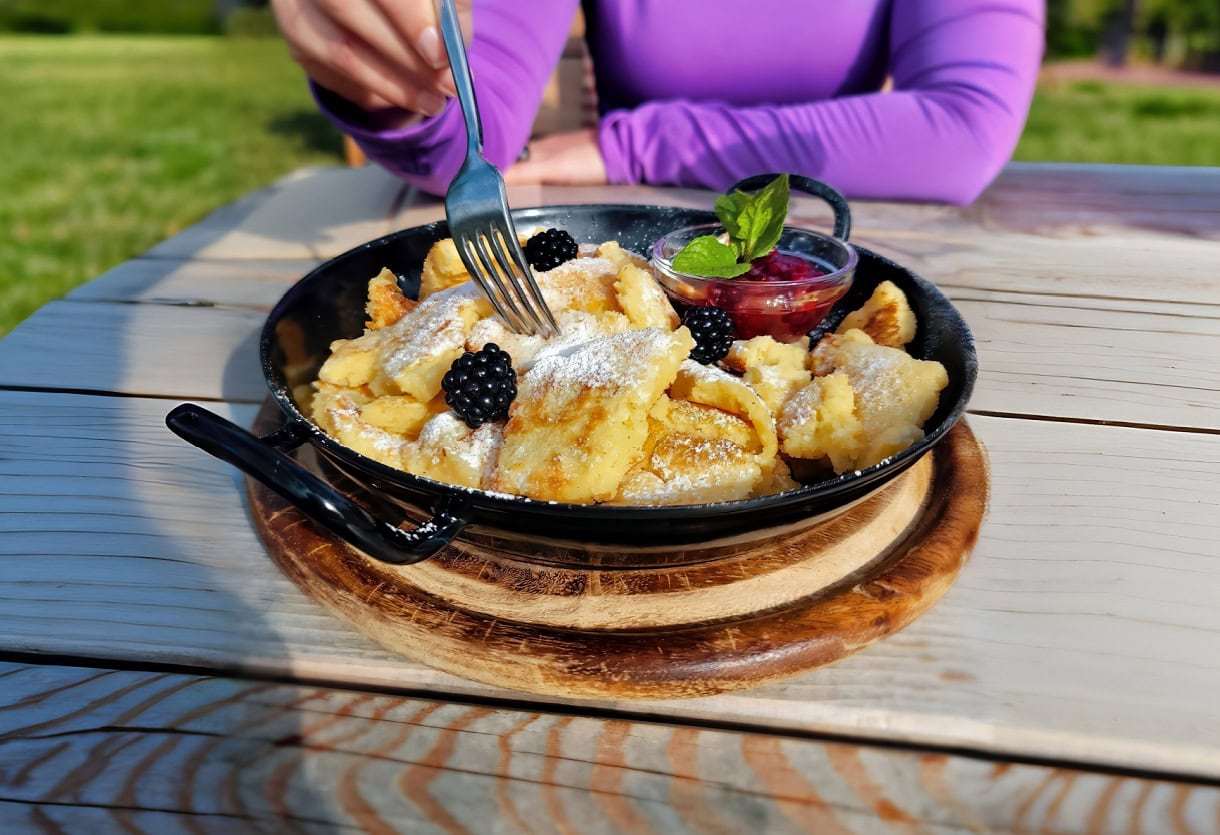
Named after Emperor Franz Joseph I of Austria, Kaiserschmarrn — literally “Emperor’s Mess” — reigns as the undisputed king of comfort desserts across South Tyrol and the Dolomites. And yes, it’s every bit as indulgent as it sounds: a fluffy, caramelized pancake torn into golden shards mid-cook, then dusted with powdered sugar and served hot with a side of compote.
Legend has it the dish was born when the emperor’s chef botched a delicate pancake — only to discover that the broken, buttery mess tasted even better than the original. This happy accident must have leapt from peak to peak all the way to Venice, because it is now a fixture on nearly every mountain hut menu.
What arrives at your table is warm, rustic, and often served still sizzling in a cast-iron skillet. One bite in, and even the most battle-hardened mountaineer might be tempted to burst into song. The only thing we’ve ever found more uplifting at a trailside tavern is a 2-for-1 drinks special.
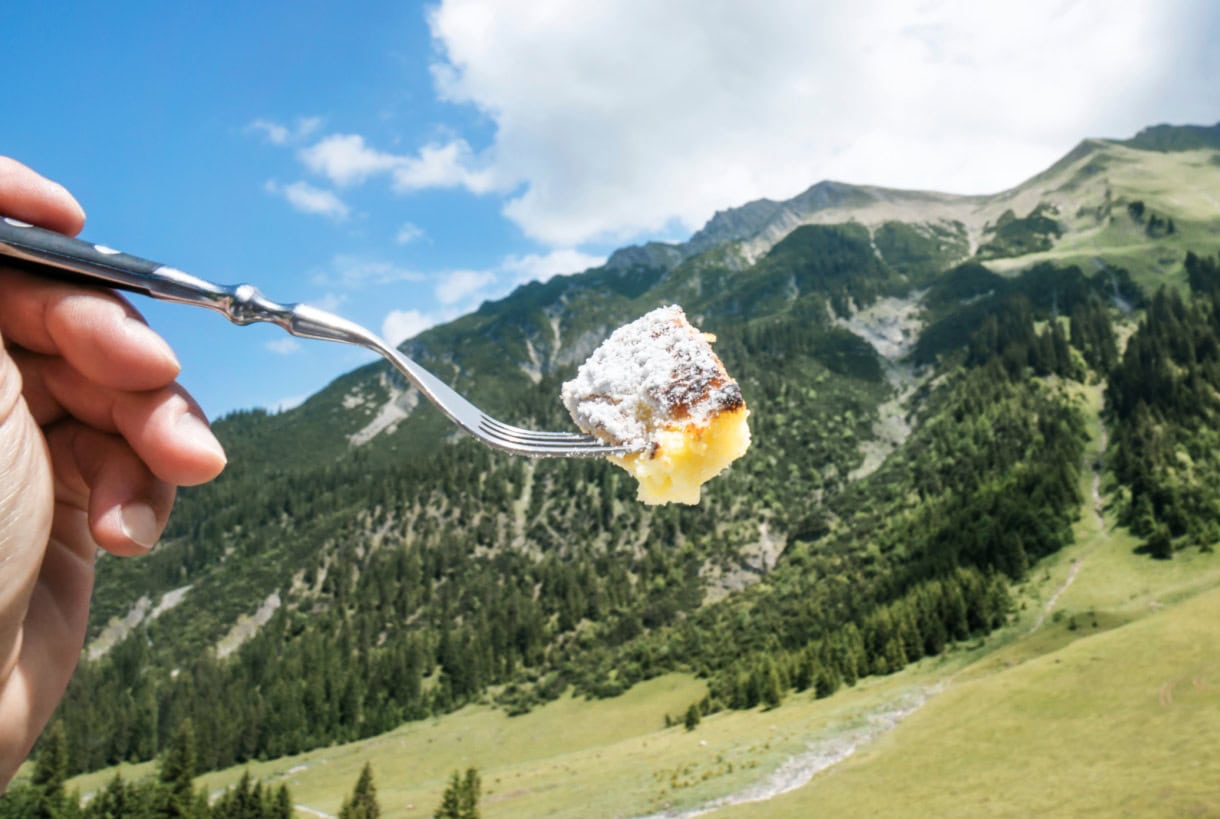
Some versions come with rum-soaked raisins in the mix, but no matter how it’s done, there’s always something tart and fruity on the side, which is usually stewed plums (Zwetschgenröster), applesauce, or a berry compote like cranberry or raspberry. That bright, tangy contrast is what cuts through the richness and keeps you going back for more.
We’ve learned that what makes Kaiserschmarrn exceptional in South Tyrol is the quality of the farm-fresh eggs and sweet local butter. You can practically taste the pasture in every bite.
🍒 Good to Know: You might think Kaiserschmarrn is a breakfast go-to, but it is eaten throughout the day and is an especially popular dish during Nachmittagsjause, which is a beloved afternoon snack tradition common in South Tyrol.
⟹ YOU MIGHT ALSO LIKE: Alpe di Siusi: The Ultimate Guide to Seiser Alm
3. Marillenknödel (Apricot Dumplings)
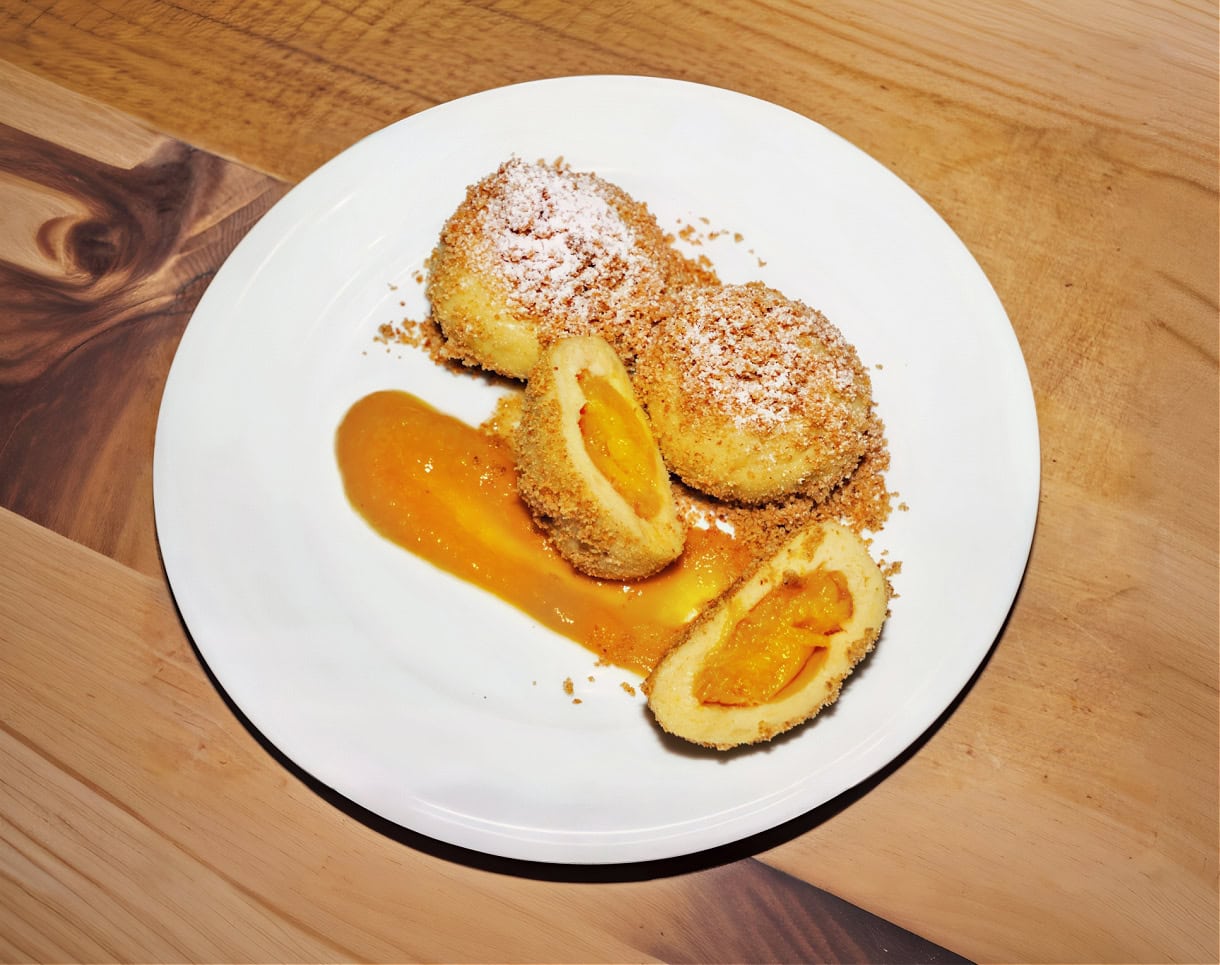
Knödel in South Tyrol go far beyond the hearty savory kind you’ll find swimming in broth or nestled beside venison. When summer arrives, they transform into something almost poetic: Marillenknödel (canederli all’albicocca), which are delicate dumplings wrapped around sun-ripened apricots.
These pillowy orbs are crafted from a soft potato or quark-based dough, gently poached until tender, then rolled in a golden blend of buttery toasted breadcrumbs, sugar, and cinnamon. One bite through the caramelized crust reveals the true magic: a warm, juicy apricot in the center, often with a sugar cube placed where the pit once was, melting into a sweet syrup that bursts in your mouth.
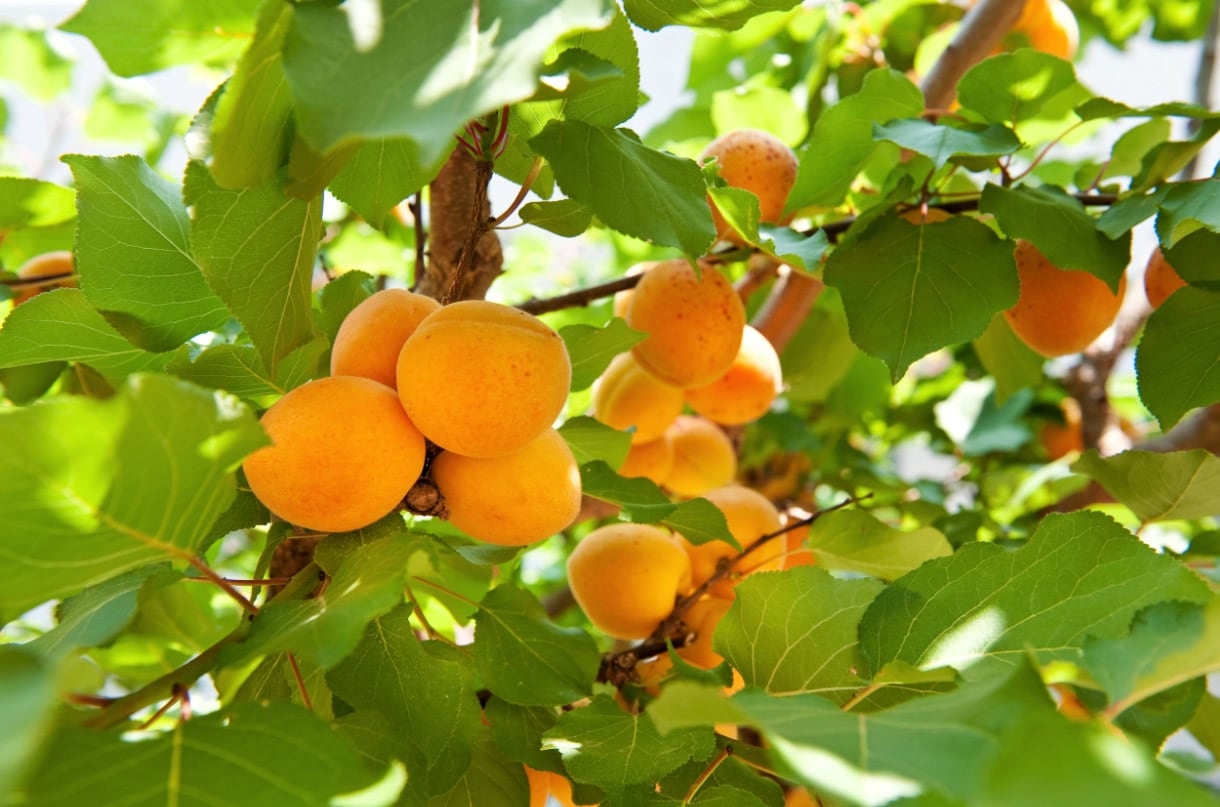
Like the region’s apples, South Tyrol’s apricots are especially prized. Grown primarily in Val Venosta (Vinschgau), the region’s high altitude, dramatic day-night temperature swings, and intense mountain sun give the fruit exceptional flavor and aroma.
While apricot is the signature version, we’ve discovered that local cooks also prepare Zwetschkenknödel (plum dumplings) and Erdbeerknödel (strawberry dumplings) depending on what’s in season. We’ve even found versions filled with jam, chocolate, or vanilla cream.
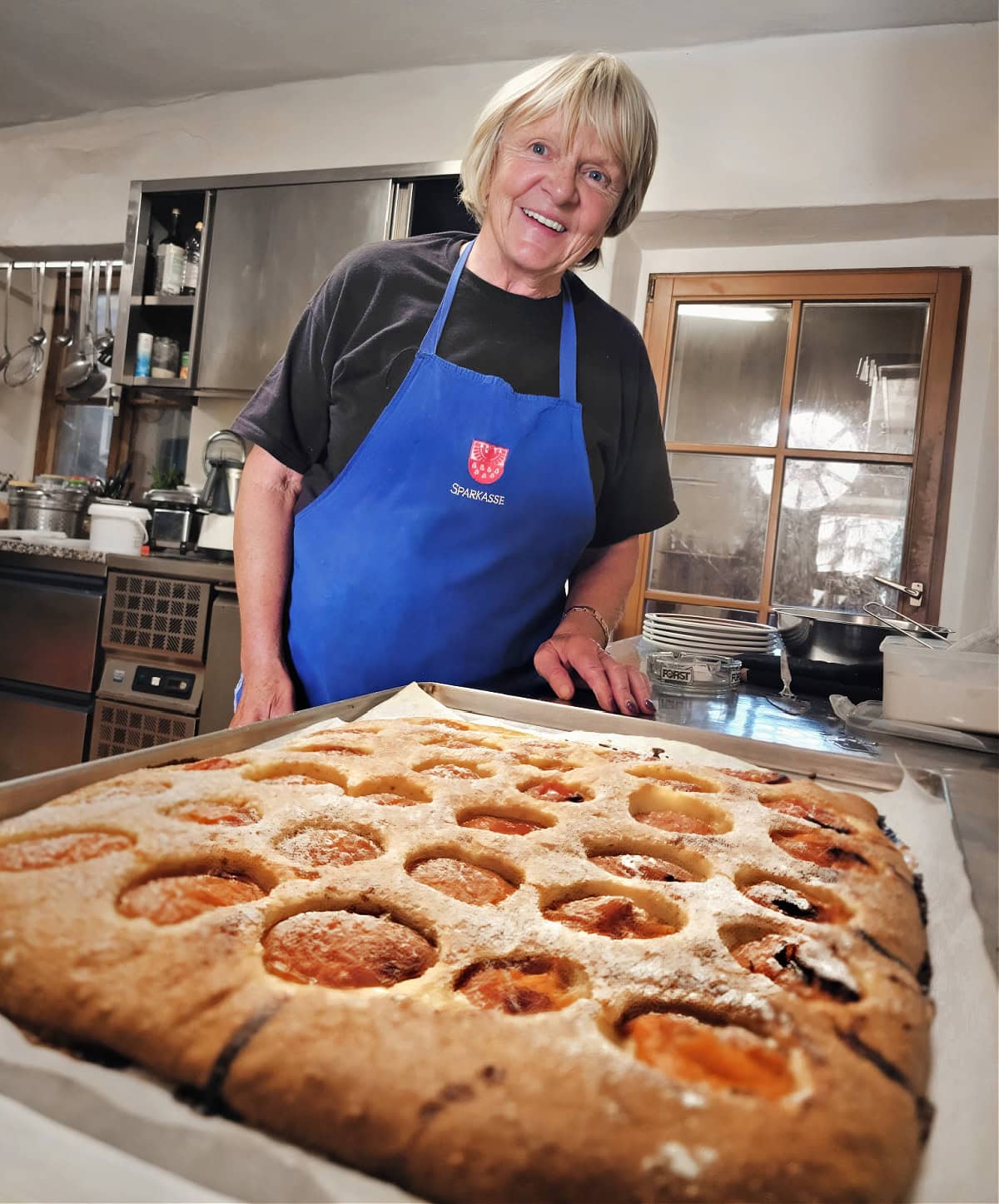
🍊 Good to Know: Apricots shine in more than just dumplings here. One of our favorite alpine treats was a slice of Aprikosenkuchen (apricot sheet cake pictured above) we enjoyed at the Sarner Skihütte before hiking to the Stone Men (Stoanernen Mandln) in Sarntal. It was bliss-filled fuel for our high mountain adventure.
⇒ YOU MIGHT ALSO LIKE: 10 Must-Try Foods of South Tyrol and the Dolomites
4. Strauben
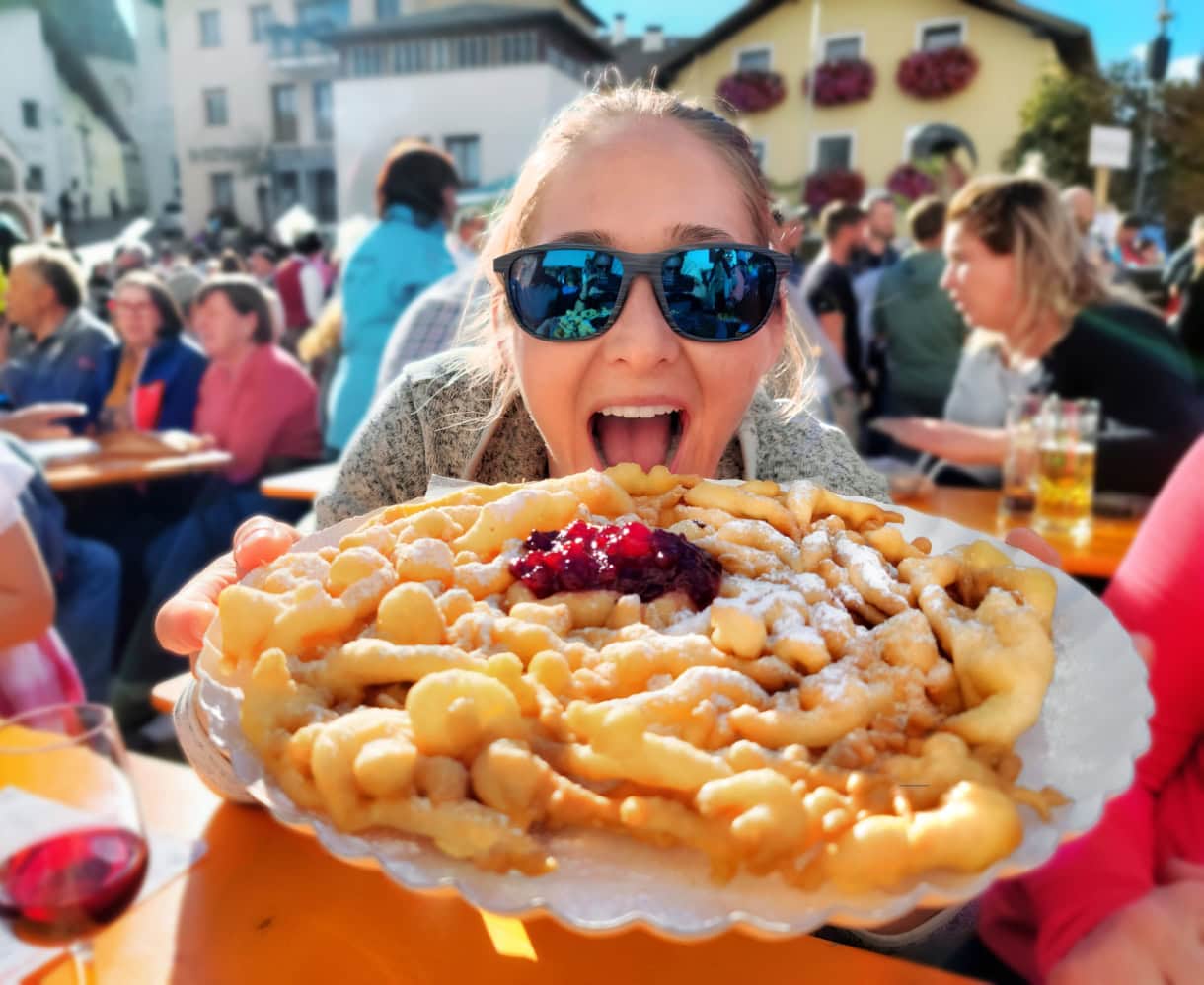
Picture a golden spiral of fried dough, still warm from the oil, dusted with powdered sugar, and served with a generous spoonful of tart lingonberry or cranberry jam. That’s Strauben, a festive favorite in South Tyrol that’s been delighting locals since the Middle Ages.
Made from a simple batter of flour, eggs, butter, and milk, Strauben are created by pouring the mixture through a funnel in a looping spiral directly into bubbling oil. The result? A crispy, lacy pastry with a tender chew at its center and a satisfying crunch on the edges.
Traditionally enjoyed at village festivals, Christmas markets, and during the Törggelen season, Strauben are more than a dessert. They’re also part spectacle. If you’re lucky enough to find a stand at an outdoor event, stop and watch the vendor swirl the batter into the pan with practiced flair. The sweet aroma alone will pull you in.
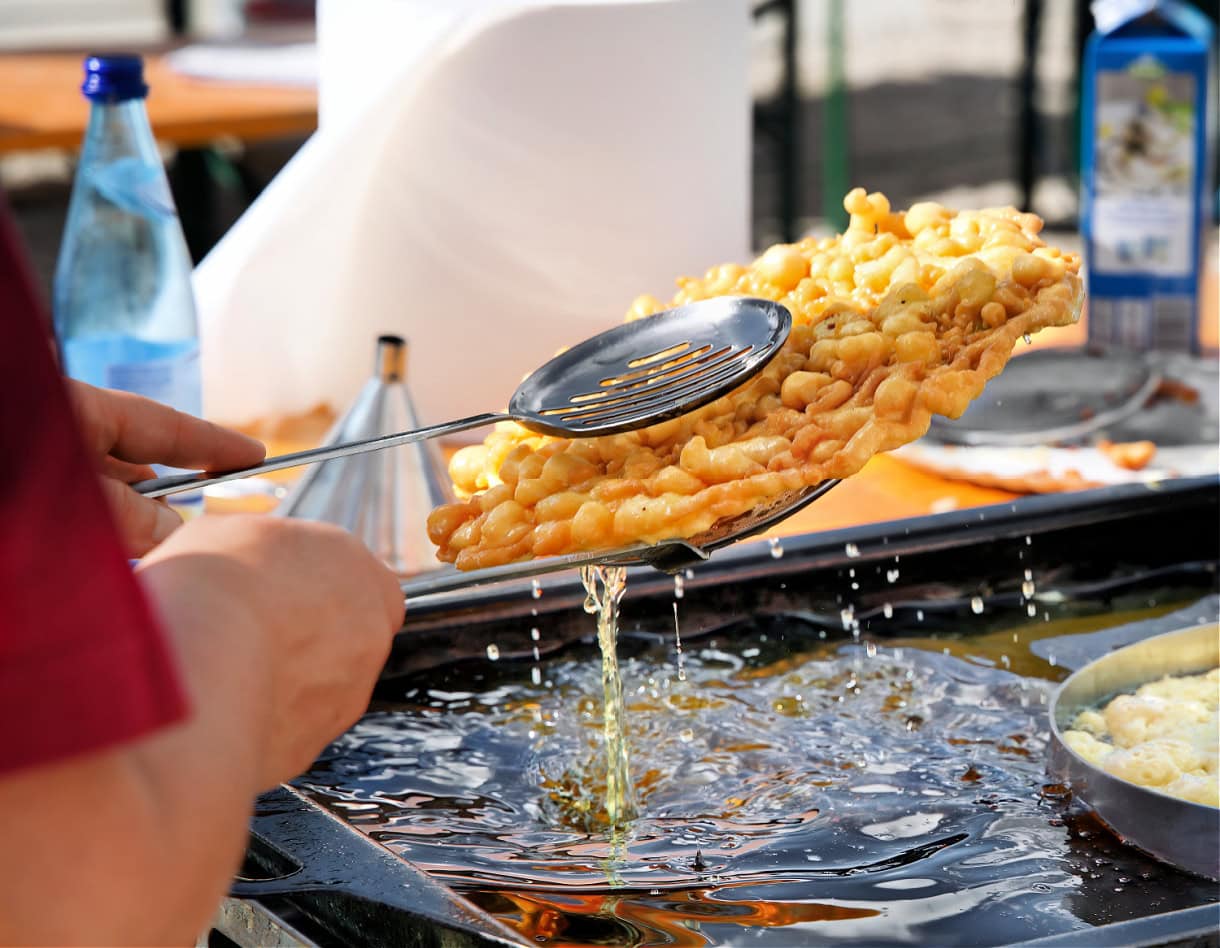
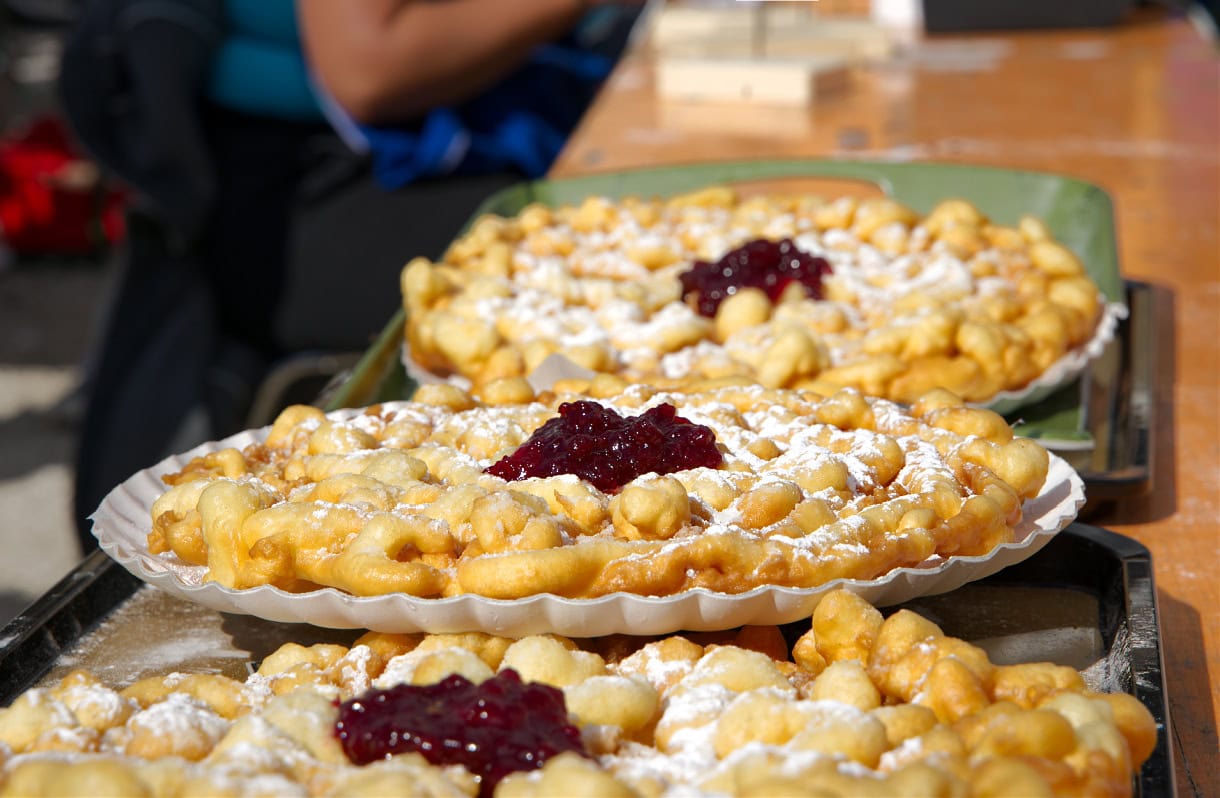
We’ve learned that Strauben is best enjoyed hot and fresh, ideally in the open air with a cup of Glühwein in hand. But be warned: the combination of the crispy sweetness with tart berry compote is addictive. If you find yourself at a festival for much of the day, you’ll be challenged to stop at just one. We always are.
🍒 Good to Know: Strauben disappear fast at busy festivals like Almabtrieb, especially on cool evenings when everyone is chasing something warm and sweet. If you spot a stand, don’t wait until later. Also, be sure to have euros in your pocket. Many village festival stands are cash-only.
⇒ READ NEXT: Dolomites Winter Guide: 11 Epic Experiences You’ll Never Forget
5. Buchteln
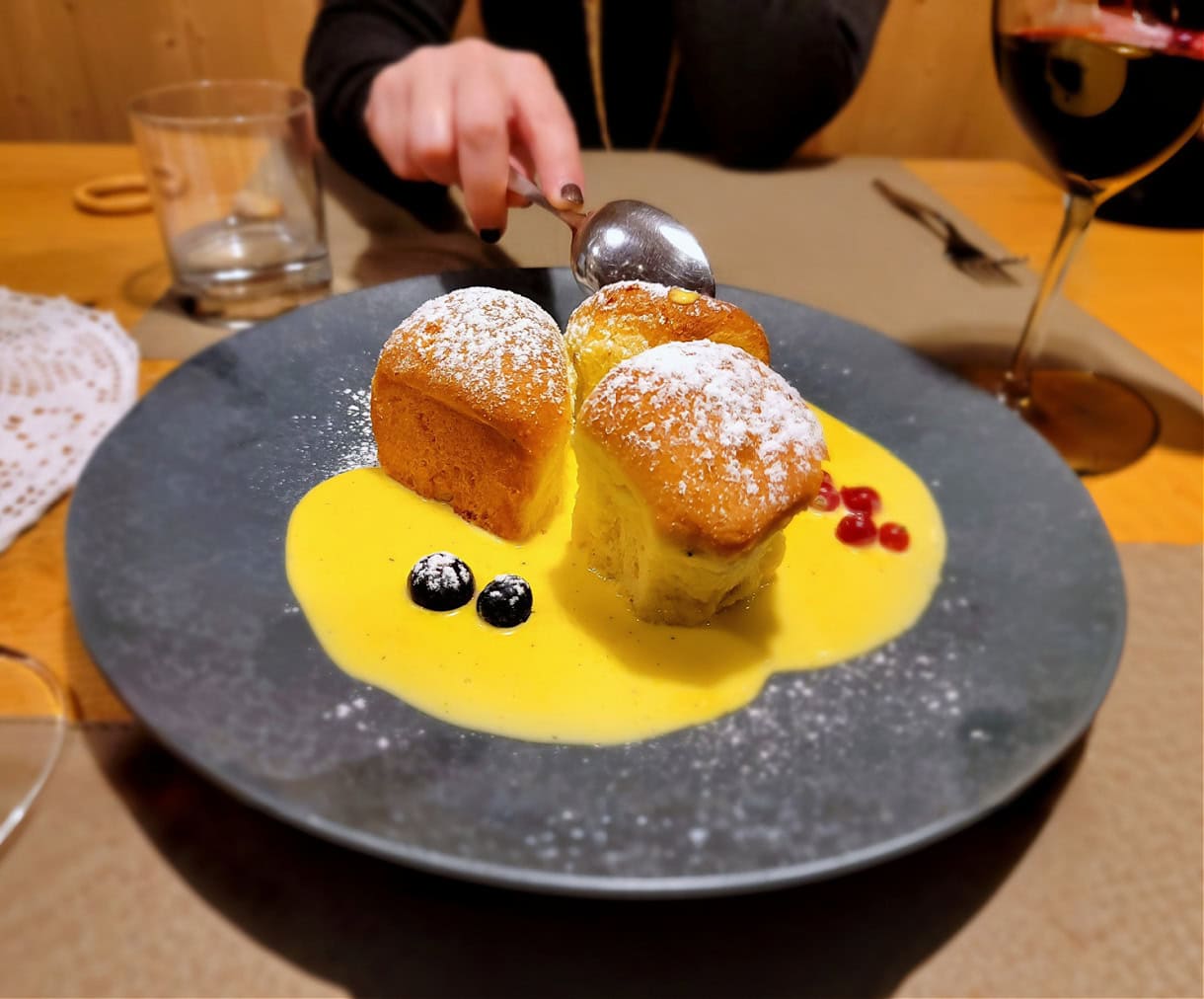
Of all the desserts in South Tyrol, Buchteln is one of our absolute favorites. Whenever we spot it on a menu, which is unfortunately not as often as we would like, we make sure to leave room. And we’re never sorry.
Buchteln are soft, oven-baked yeast buns filled with something sweet: usually plum jam (Zwetschgenmarmelade), apricot, poppy seed, or vanilla custard. They’re nestled close together in a buttered dish before baking, which keeps the sides tender while the tops bake to a golden finish. Once out of the oven, they’re brushed with melted butter, dusted with powdered sugar, and served warm with a decadent pour of creamy vanilla sauce.
What sets South Tyrolean Buchteln apart is the dough: it’s lighter than anything we’ve tried in Austria or Germany. These buns melt in your mouth. They comfort like a Grandmother’s home. And they taste like happiness, plain and simple.
🍊 Tip: For a lovely treat after a hike or ski run, pair Buchteln with a cappuccino or a hot chocolate. If you want try a version that brushes with the divine, make plans to dine at Restaurant Schönblick at Gfell Hotel. Every bite is a masterpiece.
⇒ YOU MIGHT ALSO LIKE: How to Hike Tre Cime di Lavaredo
6. Buckwheat Cake
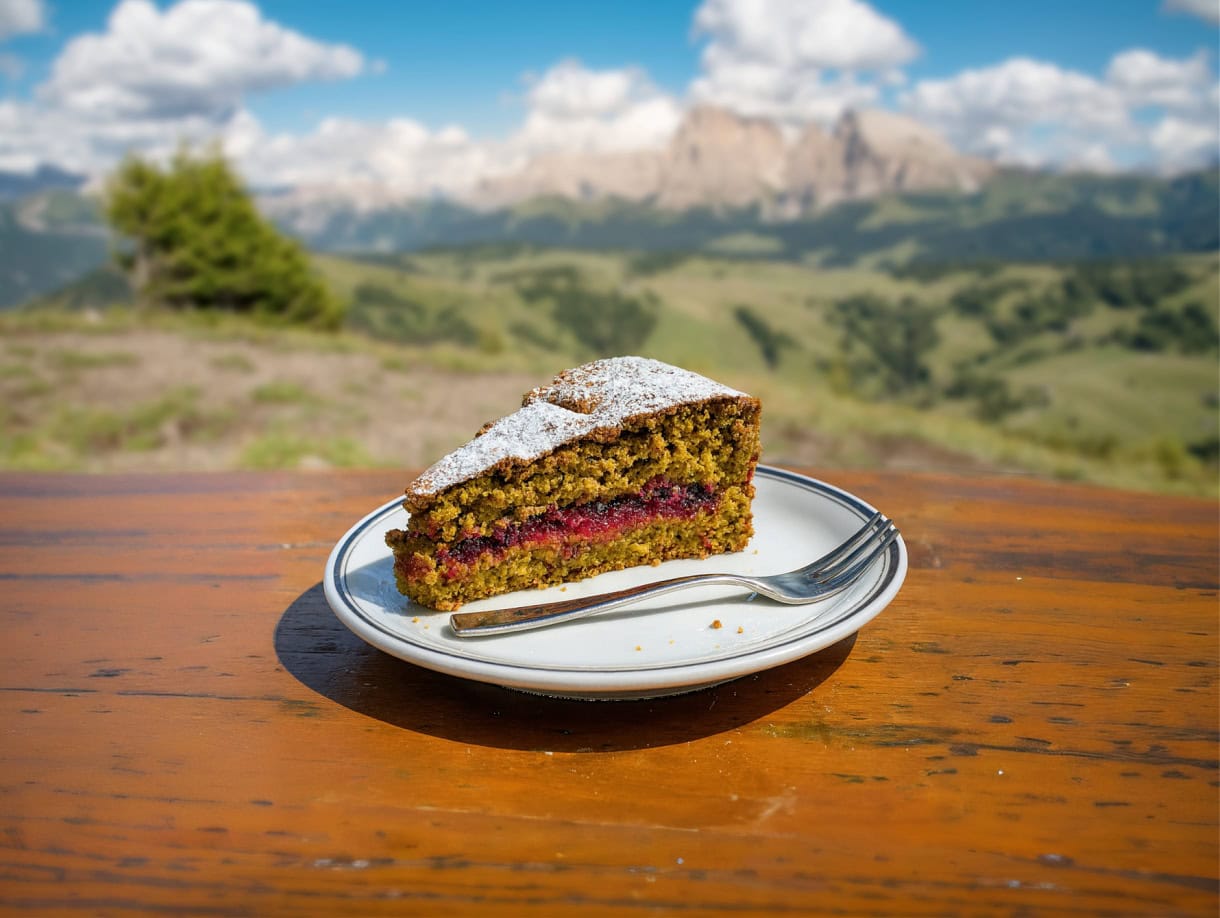
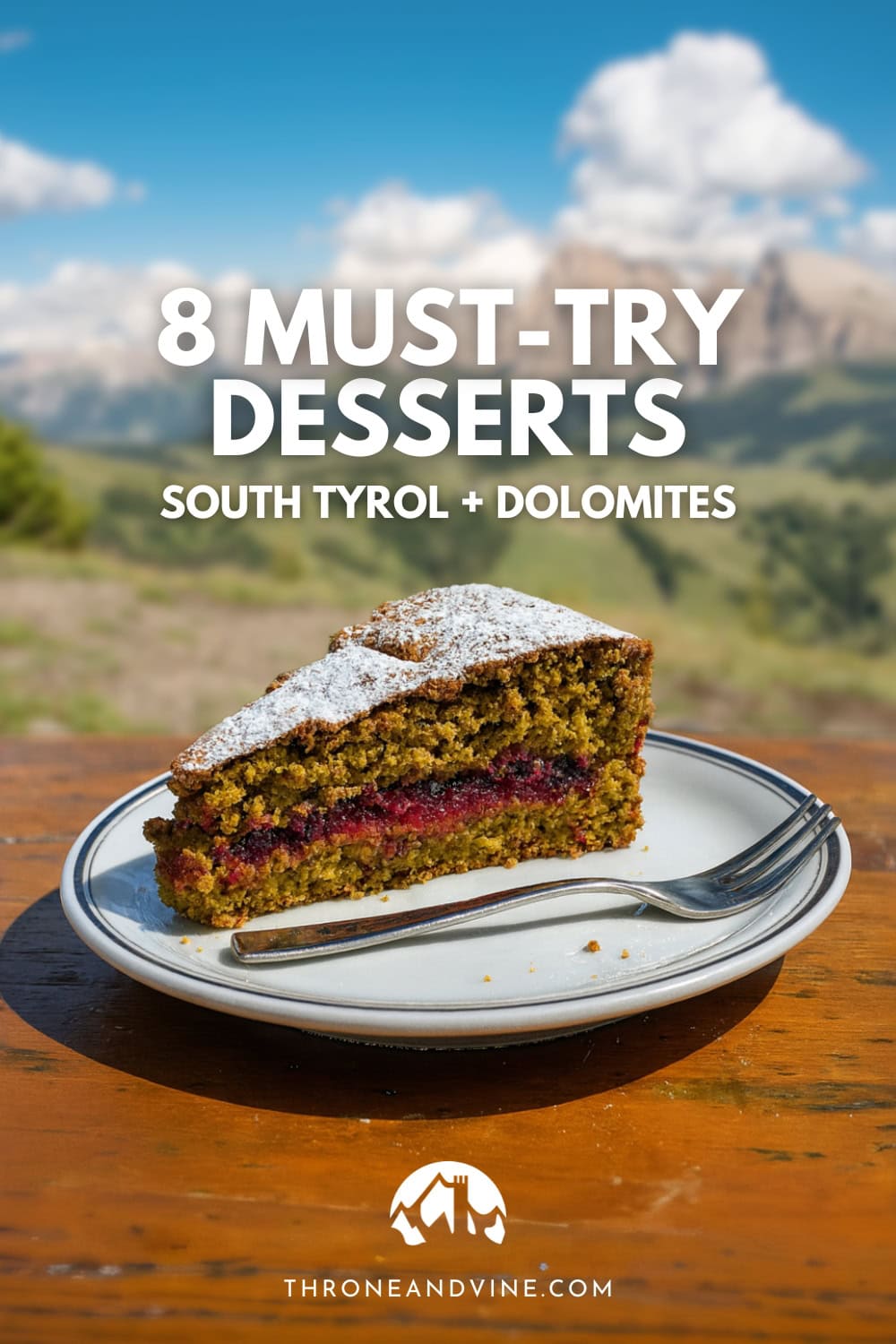
If you’re like us, the word buckwheat might once have brought to mind a wild-haired Little Rascal. But in South Tyrol, it evokes something far more delicious: a rustic slice of buckwheat cake (Buchweizenkuchen in German, torta di grano saraceno in Italian), filled with jam and tradition.
Buckwheat, locally known as Schworzplent, has long been cultivated in high-altitude valleys like Vinschgau (Val Venosta), (Pustertal) Val Pusteria, and Eisacktal (Valle Isarco), where its short growing cycle thrives in lean mountain soils. Once considered a “poor man’s grain,” it’s now a prized staple of Alpine cuisine, showing up in polenta, dumplings, and most famously, in this cake.
Made with buckwheat flour, ground nuts, and filled with tangy cranberry or red currant jam, this dessert is bold yet comforting. The texture is slightly grainy but soft, the flavor nutty and earthy, with a dusting of powdered sugar and a side of whipped cream or warm vanilla sauce.
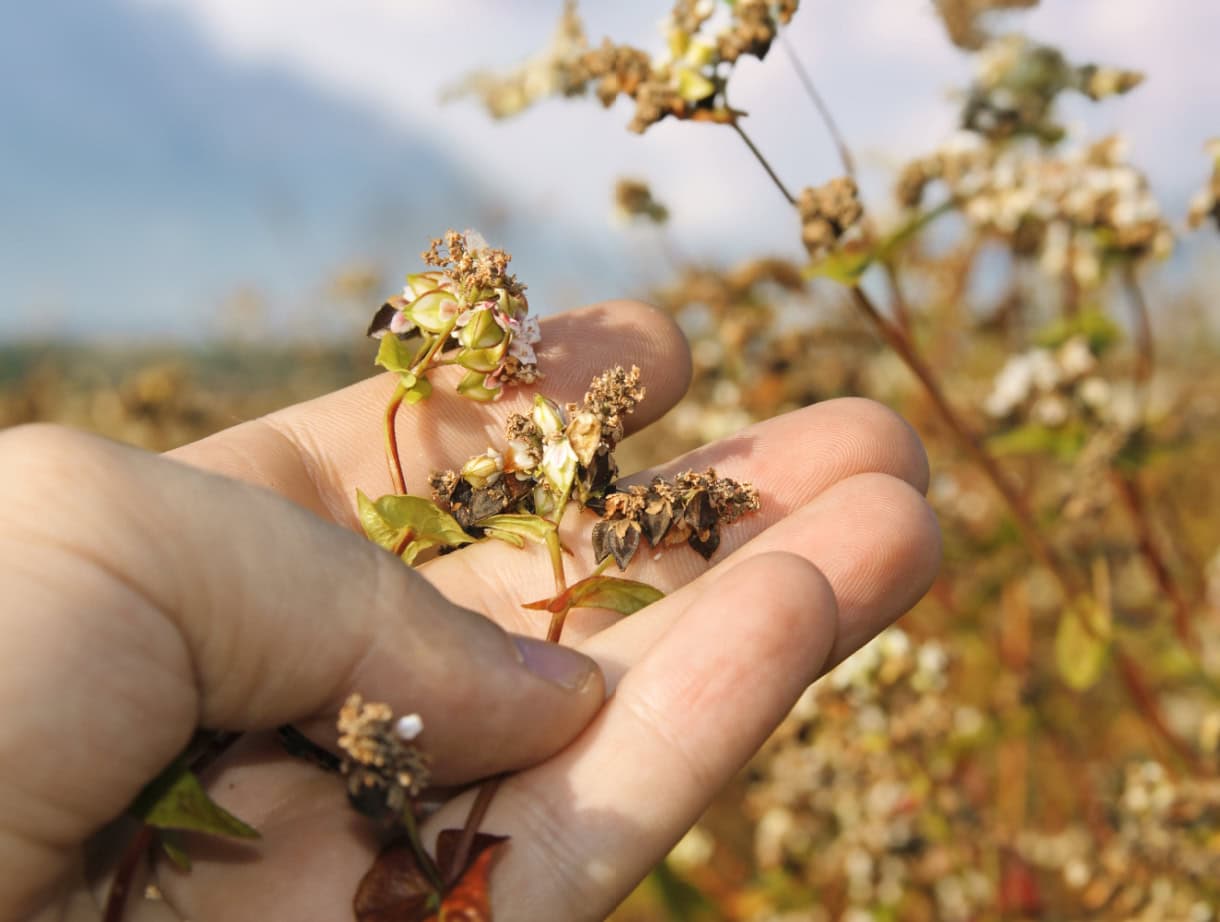
We first tried it in a Dolomites hut after a chilly autumn hike and have been hooked ever since. It’s the kind of cake that tastes like a centuries-old custom still baked fresh in mountain kitchens today… almost like history you can hold with a fork. It’s now one of our favorite flavors of South Tyrol.
If you ever spot buckwheat cake on a menu, do yourself a favor and order a slice of this South Tyrolean soul. You can enjoy it anytime: at breakfast, with an afternoon coffee, or as a not-too-sweet dessert in the afternoon or after a meal.
🌿 Good to Know: Buckwheat is not a true grain but a seed, naturally gluten-free and rich in fiber and minerals. When made with certified gluten-free baking powder, buckwheat cake is a safe and satisfying option for celiacs and anyone avoiding wheat.
⇒ YOU MIGHT ALSO LIKE: Val di Funes: The Dolomites’ Most Enchanting Valley
7. Krapfen
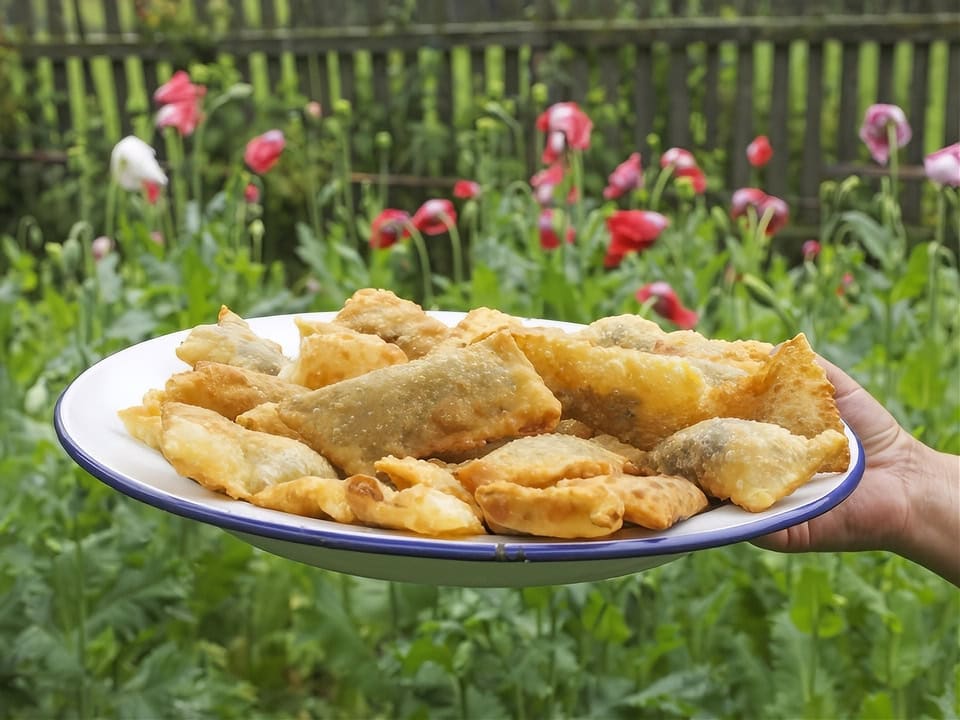
Krapfen are like the mountains of South Tyrol: no two are quite alike. You’ll find them scattered across the region in a wild variety of shapes and sizes. Some arrive round as a harvest moon, others folded like crispy envelopes of jam, and some show up as rustic little squares that crackle when you bite.
If there’s a logic to Krapfen geometry, it’s locked in the head of a South Tyrolean grandmother who never wrote it down. But one thing’s consistent: the moment your teeth hit that golden shell, you’ll know exactly what they are and you’ll love every nibble.
Made from a thin dough of rye and wheat flour, eggs, and cream, Krapfen are deep-fried until crisp and filled with everything from apricot jam to chestnut purée, cranberry, curd cheese (Schötte), or poppy seeds. They’re a must during Törggelen, where they follow the hearty Schlachtplatte as a sweet finale, and they’re found at nearly every festival, market, or mountain hut throughout the year.
One beloved variation is the Kirchtagskrapfen, traditionally baked for Kirchtag, the feast day celebrating a local church’s patron saint. These pastries, often filled with rich poppy seed paste and crafted with layered dough, are made throughout the year as different parishes celebrate on different dates.
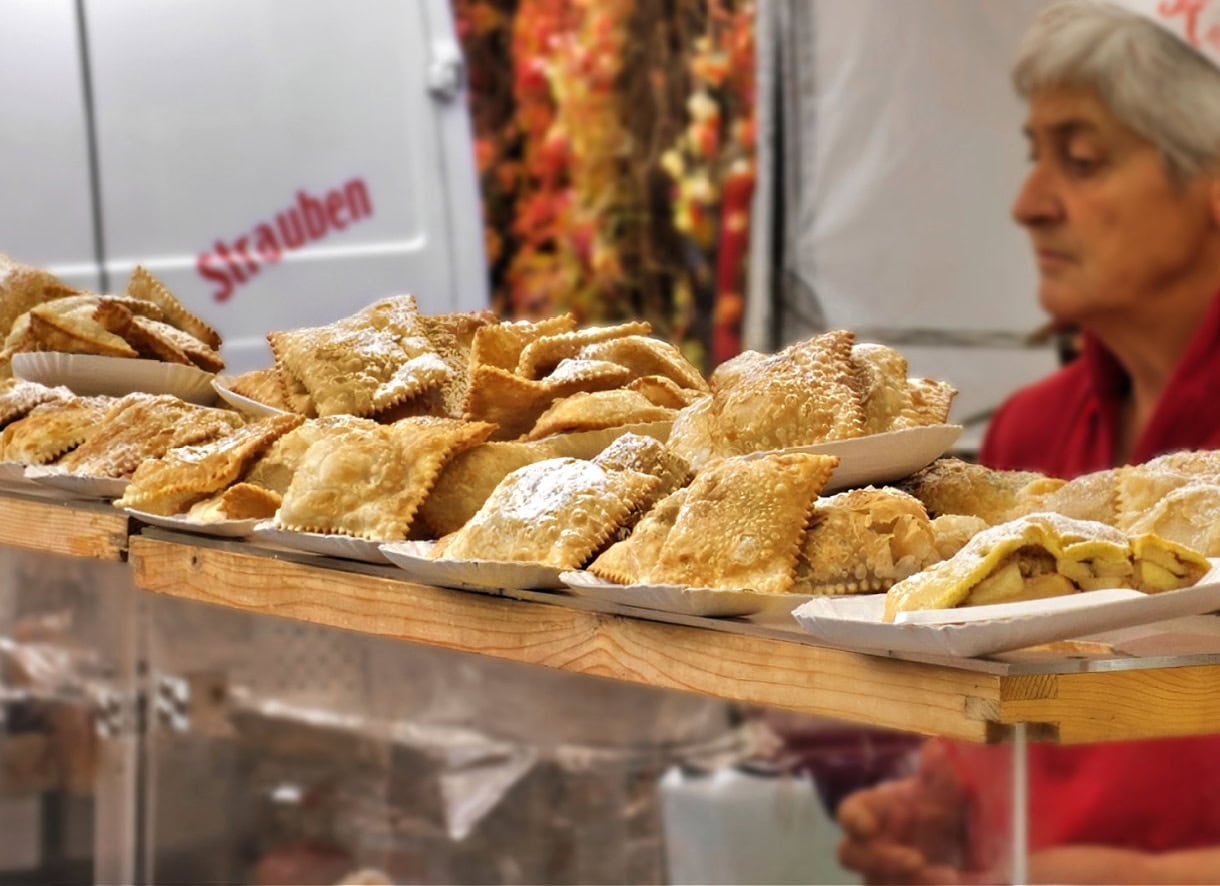
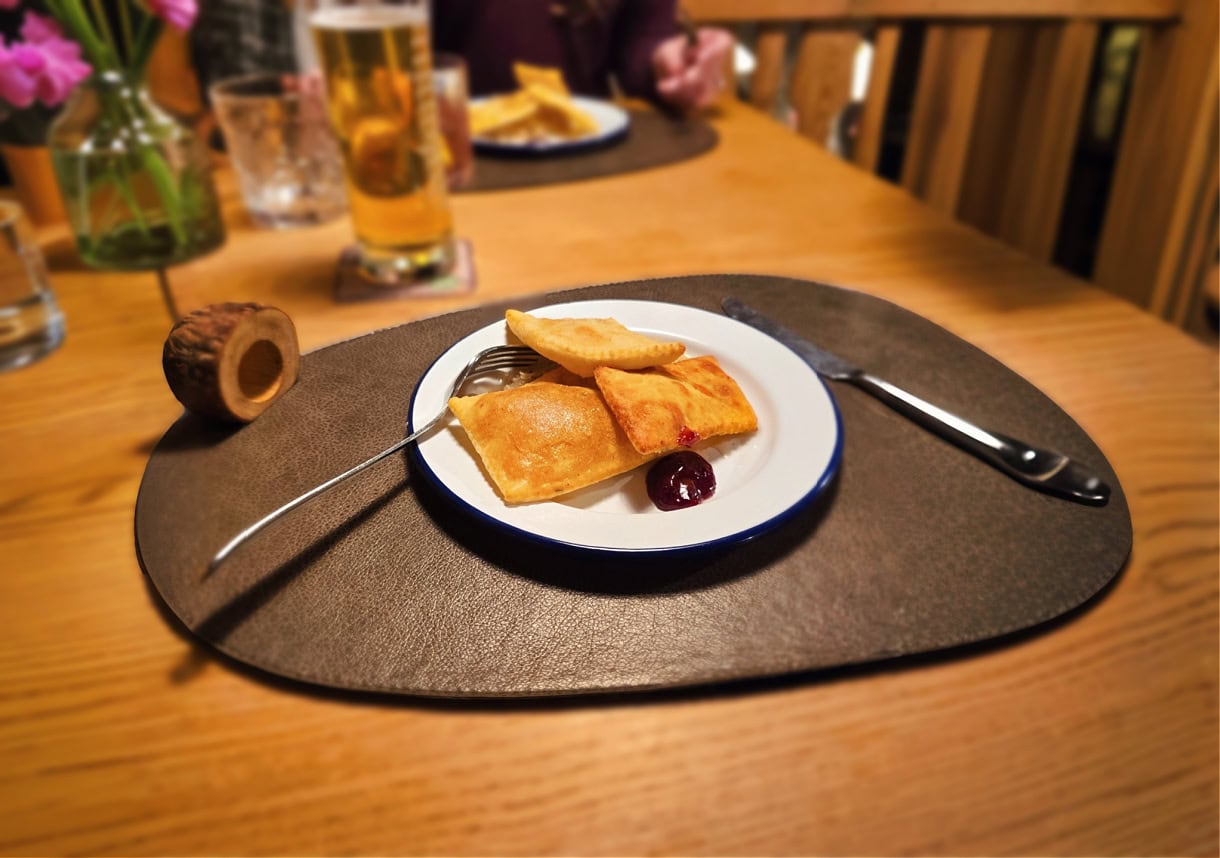
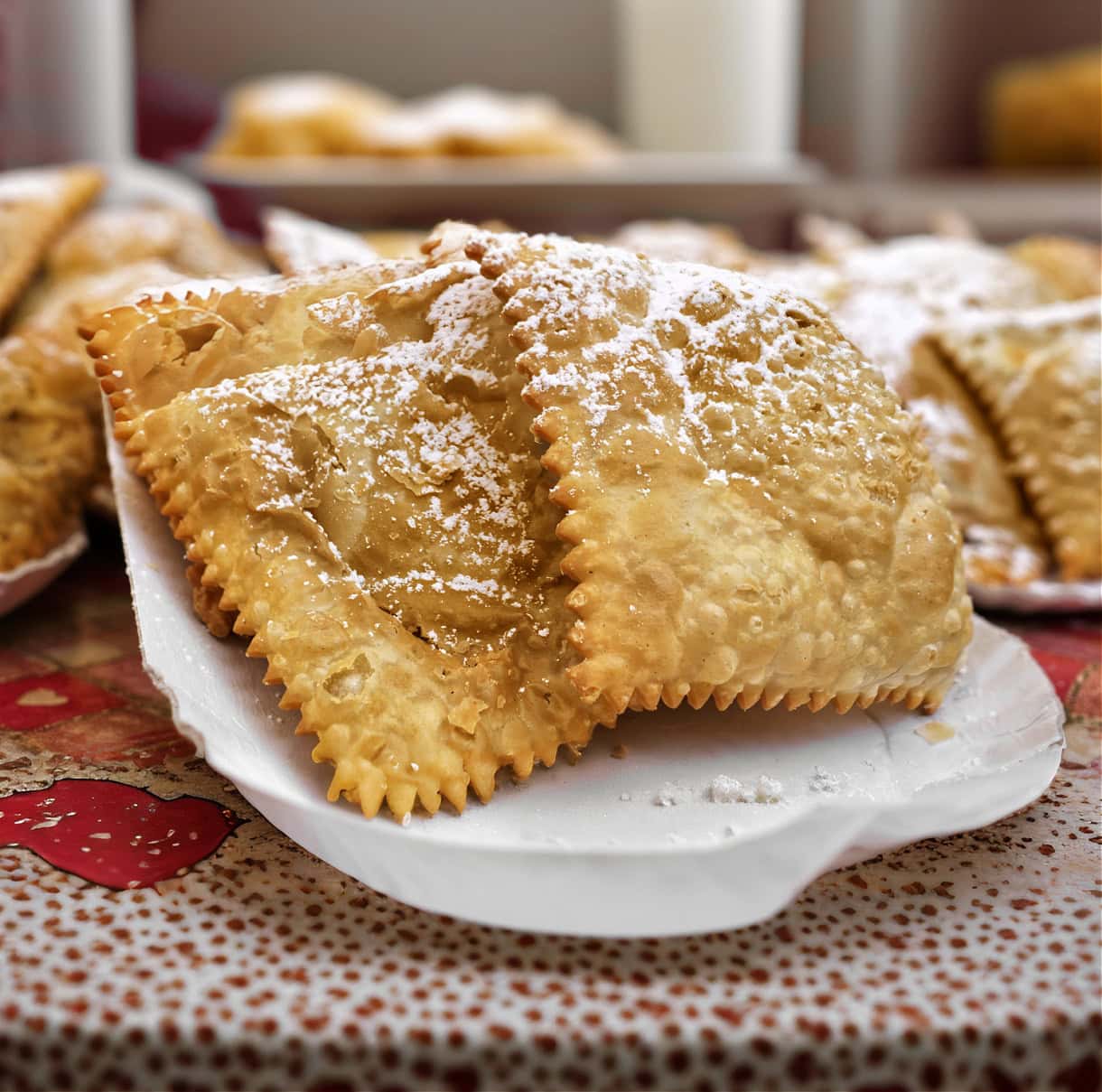
If you want to sample more Krapfen than you can reasonably… or responsibly handle, make your way to the Südtiroler Krapfenfest in September. Set in Ultental Valley (Val d’Ultimo) just west of Lana and Merano, the festival gathers farm women from across the region, each frying up their family’s closely guarded recipe.
And if that’s not enough folklore for you, stick around for Krapfenbetteln, an ancient begging ritual that still plays out in some valleys. On All Saints’ Eve, masked boys and young men wander the night, knocking on farmhouse doors, singing rhymes and verses in exchange for Krapfen. It’s part mischief, part blessing. The belief goes that any household visited by these masked-Krapfen beggars will be rewarded with abundance in the year to come.
🍒 Good to Know: Krapfen is something of an umbrella term in South Tyrol. The festival-style versions— thin, golden, and crisp — are just one expression of the tradition. Step into a bakery, and you will find an entirely different species: soft, pillowy rounds filled with jam, more akin to a breakfast treat than a rustic mountain dessert.
⇒ YOU MIGHT ALSO LIKE: The Best Hikes in the Dolomites
8. Kastanienherz (Chestnut Hearts)
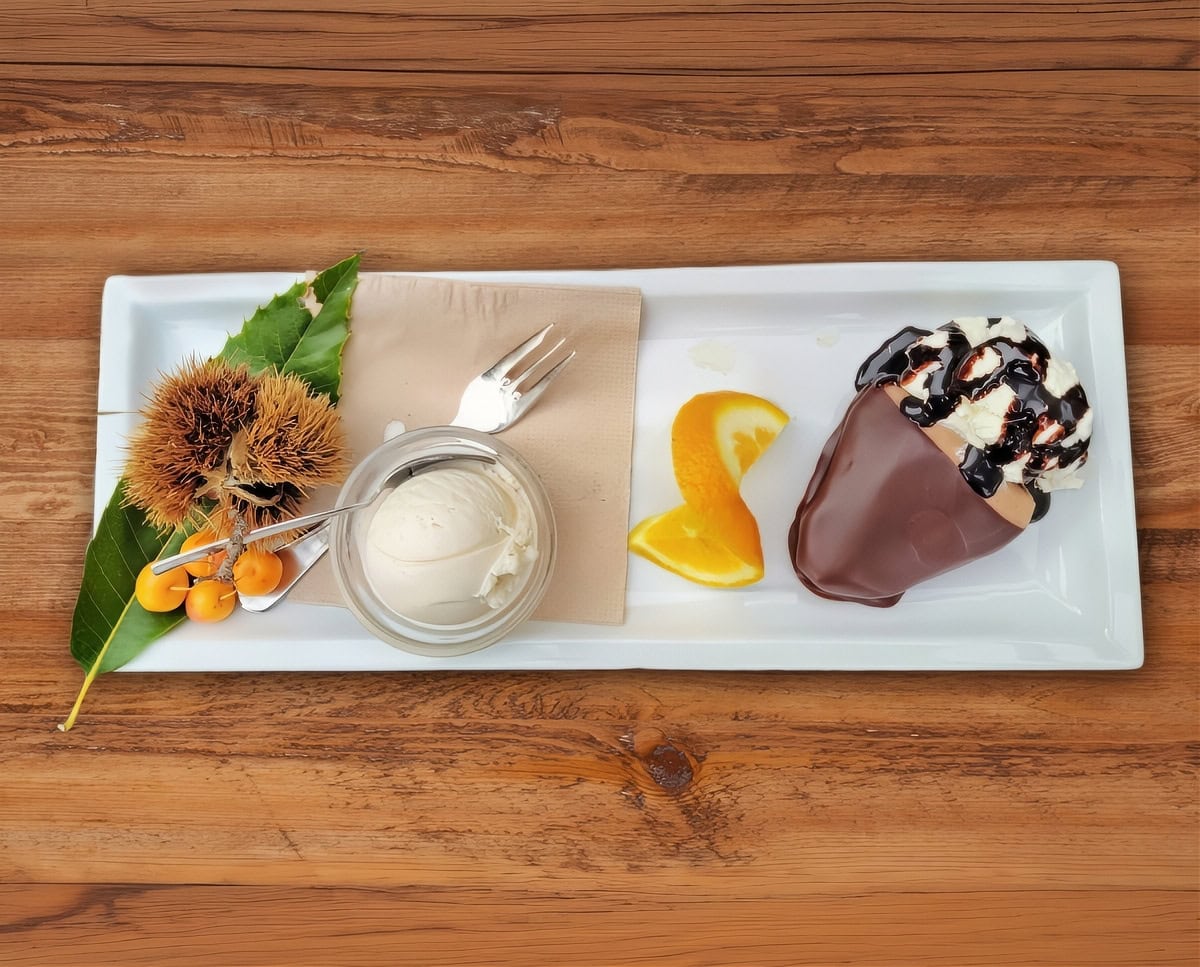
If South Tyrol had a love letter written in dessert form, it would be Kastanienherz, or Chestnut Hearts. This rich, chocolate-coated treat is a modern classic of the region: a heart of sweet chestnut purée, dipped in dark chocolate, then crowned with whipped cream and delicate “threads” of chestnut on top.
Unlike some Alpine sweets that feel centuries old, Kastanienherzen actually have a known backstory. Its origin story traces back to 1948, when Bolzano pastry chef Ivo Moschén is said to have created it for an engagement celebration. It first became a local specialty in Bolzano, then slowly spread throughout South Tyrol over the decades.
The base is wonderfully simple: chestnuts are boiled until tender, then pressed or puréed and mixed with sugar (and sometimes a splash of rum) to form a smooth, malleable dough. This is shaped into small hearts, chilled, and dipped in dark chocolate. Once the shell sets, the hearts are partially hollowed out, filled with whipped cream, and finished with fine strands of chestnut on top. The result is a dessert that manages to be nutty, bittersweet, creamy, and intensely “autumn” all at once.
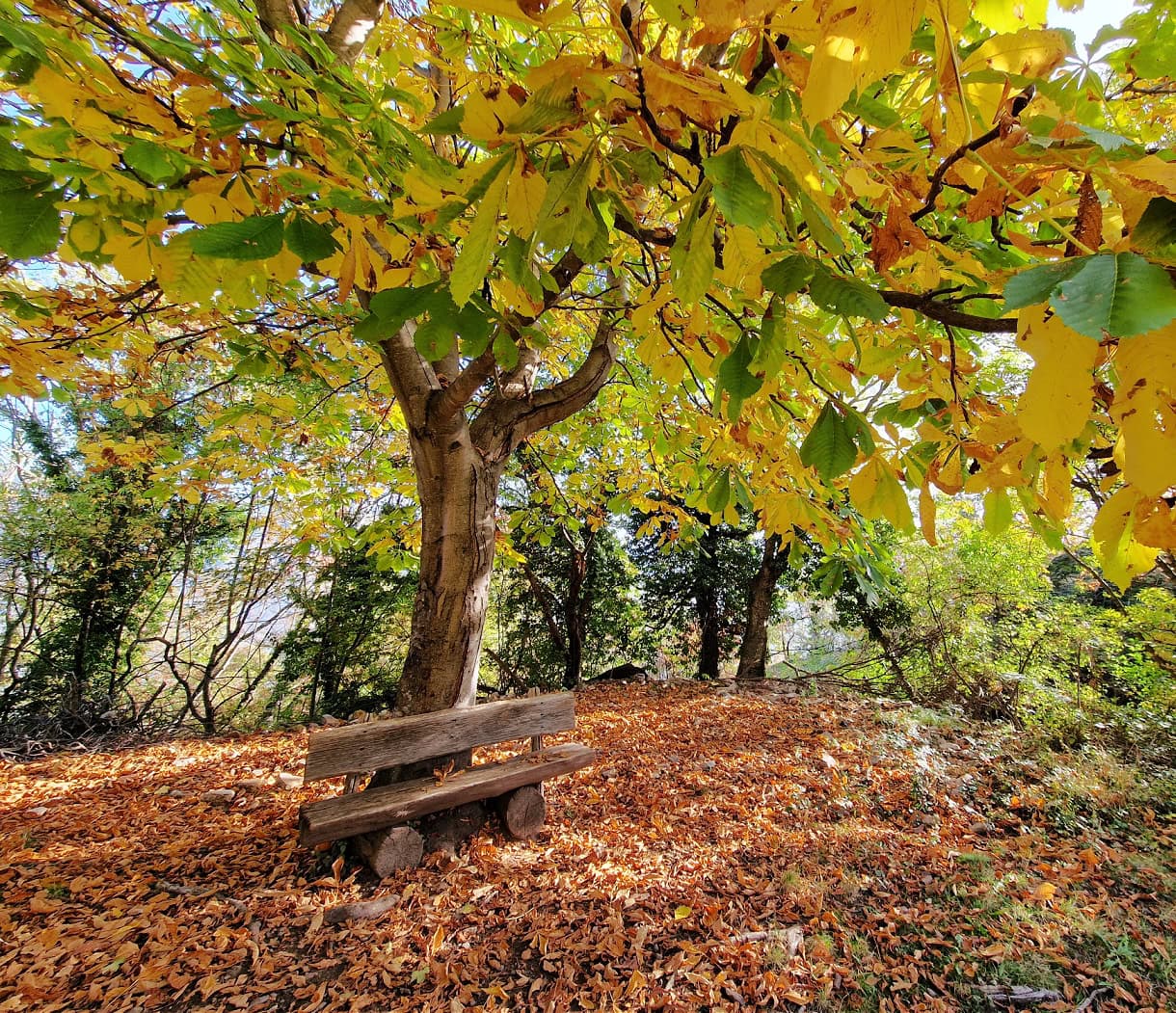
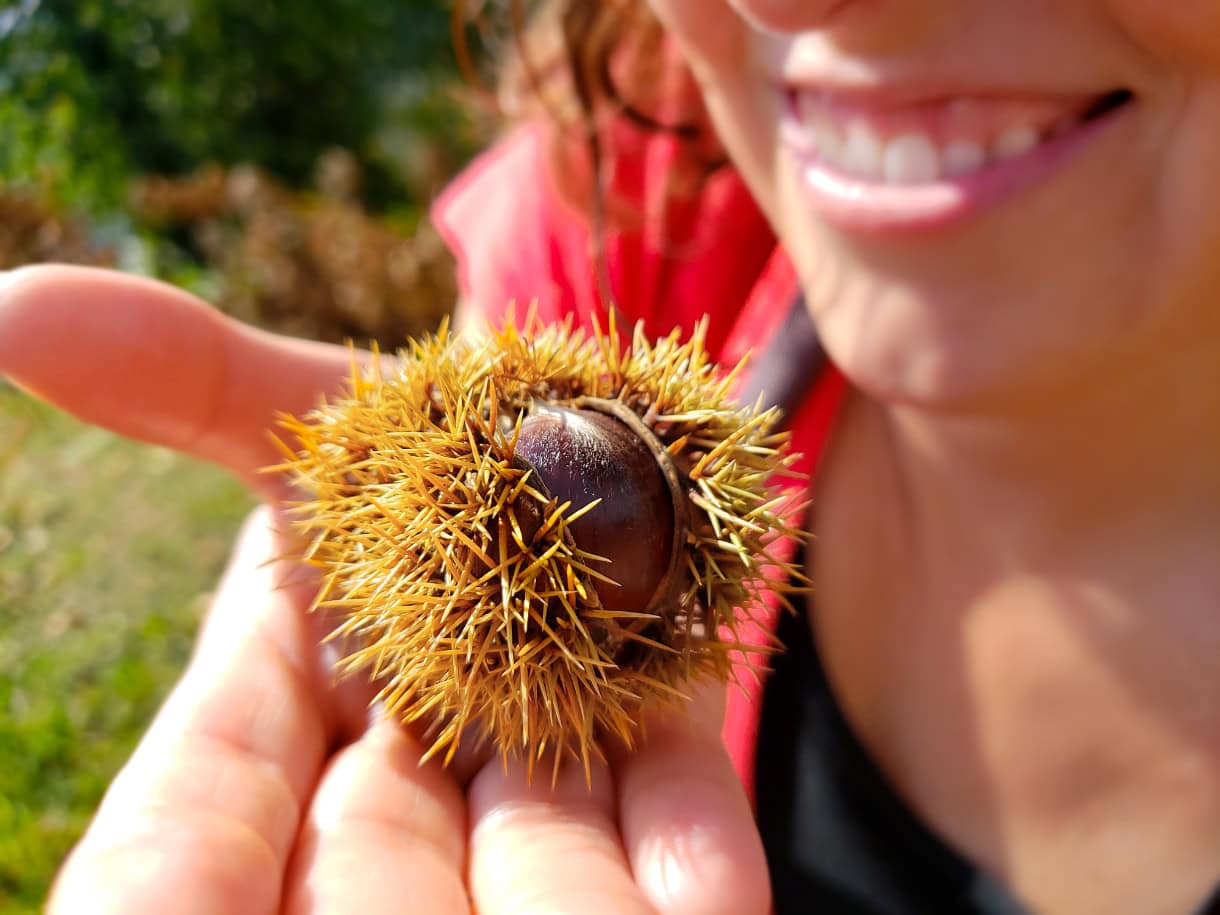
We’ve come to think of Kastanienherzen as the sweet counterpart to Törggelen: both celebrate South Tyrol’s chestnut culture, especially in Eisacktal and along the Chestnut Trail, where groves have fed locals for generations. But you’ll find it in many other areas as well. We had our first one while dining at Leitenschenke located on the Marlengo Waalweg.
🍂 Tip: If you see Kastanienherz in a pastry case or on a menu, don’t hesitate. Order one, sit somewhere cozy, and take your time. This is a dessert meant to be savored slowly, preferably with a mountain view.
Savoring the Sweet Side of the Mountains

This South Tyrol and Dolomites dessert guide only scratches the surface of what you can savor when visiting the region. From medieval recipes preserved in dusty, old monastery cookbooks to modern creations in chic patisseries, sweet offerings in the peaks and valleys are as varied as its landscapes.
Whether you’re starting your day with a warm Krapfen from a village bakery, digging into a skillet of Kaiserschmarrn after a day on the slopes, or lingering over Apfelstrudel on a sunny mountain terrace, South Tyrolean sweets are an essential part of the experience. Don’t be surprised to find some of these delights calling to you long after you’ve flown home.
🌿 Good to Know: If you’d like to bring those flavors back to your own kitchen, one book we always recommend is Alpine Flavours: Authentic Recipes from the Dolomites, the Heart of the Alps. It’s beautifully put together, with stunning photos and clear, reliable recipes that make it easy to recreate hearty mountain dishes and classic desserts at home. We use this cookbook weekly. And if you’re mountain addicts like us, you probably will too.
⇒ YOU MIGHT ALSO LIKE: Dolomites Slow Travel Guide: Experience More Awe, Less Chaos
Save & Pin for Later
Grab the free guide, then follow for weekly South Tyrol + Dolomites travel tips.
25 Things to Know Before Visiting the Dolomites
Join 18,000+ travelers. No spam, ever.