Dreaming of exploring the Alps and Dolomites? Wondering how these majestic landscapes compare to each other? Look no further. Below we share what sets the Alps and Dolomites apart and offer essential travel advice so you can wisely craft an unforgettable visit.
Two of the most common questions we get from travelers is what is the difference between the Alps and the Dolomites? And are the Dolomites part of the Alps? We had these same questions when we began exploring this magical corner of Europe more than 10 years ago. When planning a vacation confusion can arise quickly due to how the names are often interchanged or used synonymously, despite the distinct experiences each range offers.
Whether you’re seeking thrilling outdoor activities such as hiking and skiing, picturesque landscapes to mend your soul, or enriching cultural experiences, understanding the differences between these two mountain ranges can help tailor your trip to your interests.
That said, neither range is definitively better than the other. Both offer breathtaking views and an array of activities, but they do cater to different tastes and experiences. We find ourselves enjoying the Alps and Dolomites equally.
Below we untangle the relationship between these two legendary mountain landscapes, highlight what makes each one distinct, and help you decide where to focus your time — or how to experience both in a single journey.
What is the Difference Between the Alps & Dolomites?
On the most basic level, the key difference between the Alps and the Dolomites boils down to location and geology. These two factors, of course, influence everything from the landscapes and outdoor activities available to the unique cultural heritage, traditions, and even the languages of the communities tucked within these mountain ranges.
We’ll first take a look at the geographical difference between the Alps and the Dolomites, which is the most significant consideration when it comes to designing your travel plans. We’ll then highlight the geological differences between the ranges, which is quite fascinating in its own right.
The Alps: Europe’s Backbone

The Alps stretch like a continental spine across eight countries. They begin in France arcing 750 miles (1,200 km) through Switzerland, Monaco, Italy, Liechtenstein, Austria, Germany, and Slovenia.
This is Europe’s great mountain barrier. Roughly 80,000 square miles (207,000 km²) of peaks, glaciers, and valleys that have shaped trade routes, wars, and cultures for millennia. The range boasts 128 summits above 13,000 feet (4,000 m), including Mont Blanc — the highest peak in Western Europe at 15,774 feet (4,808 m).
The Alps are typically divided into three sweeping sections: the Western, Central, and Eastern Alps. Regionally, they stretch across several distinct cultural and geographic zones, including the French, Swiss, Bavarian, Austrian, Italian, and Julian Alps. Within this vast mountain system lie more than a hundred individual subranges, each with its own unique landscape, language, and legacy.

Among these, the Pennine Alps of Switzerland are arguably the most well known. This is largely due to the Matterhorn, a sharply sculpted, pyramid-shaped peak that towers at 14,692 feet (4,478 meters). Its unmistakable silhouette dominates both the skyline and the imagination, earning it status as the undisputed symbol of the Swiss Alps.
You don’t forget the Matterhorn once you’ve seen it. That’s exactly why it has become a global icon… etched into chocolate wrappers, hiking dreams, and mountaineering lore.
What is not well-known, and likely a source of confusion for some travelers, is the fact that the Dolomites are actually a subrange of the Italian Alps. This is why you may see the mountains also called the Dolomitic Alps or Dolomite Alps. Muddying the waters even more, the Dolomites fall within the Southern Limestone Alps, a subcategory of the Eastern Alps, which stretch across Austria and Slovenia.
⇒ YOU MIGHT ALSO LIKE: How to Visit the Dolomites in the Age of Mass Tourism
The Dolomites: Italy’s Sculpted Marvels

As you can see in the above map, the Alps and Dolomites occupy the same vast range. However, the Dolomites are a mere sliver of the Alps, covering roughly 350,000 acres (142,000 hectares), which constitutes less than 1% of the entire range. Despite its compact footprint the Dolomites pack one heck of a punch — both in terms of wildly diverse landscapes and cultural heritage.
Nestled within this slice of the Alps are 26 major mountain groups and over 2,000 peaks, with 18 towering nearly 10,000 feet (3,000 m) into the sky. Here, you’ll also discover a mosaic of languages and cultures even though every peak and valley of the Dolomites calls northern Italy home.
The convergence of cultures here is a head-spinning mix. But it always captivates us — offering endless surprises and delights during our visits to the Dolomites.
The opportunity to authentically experience multiple cultures in one visit is rare. It is visible in everything from the architecture to the food to the local traditions and festivities. The contrasts are most vividly observed in Bolzano, often hailed as the Gateway to the Dolomites.


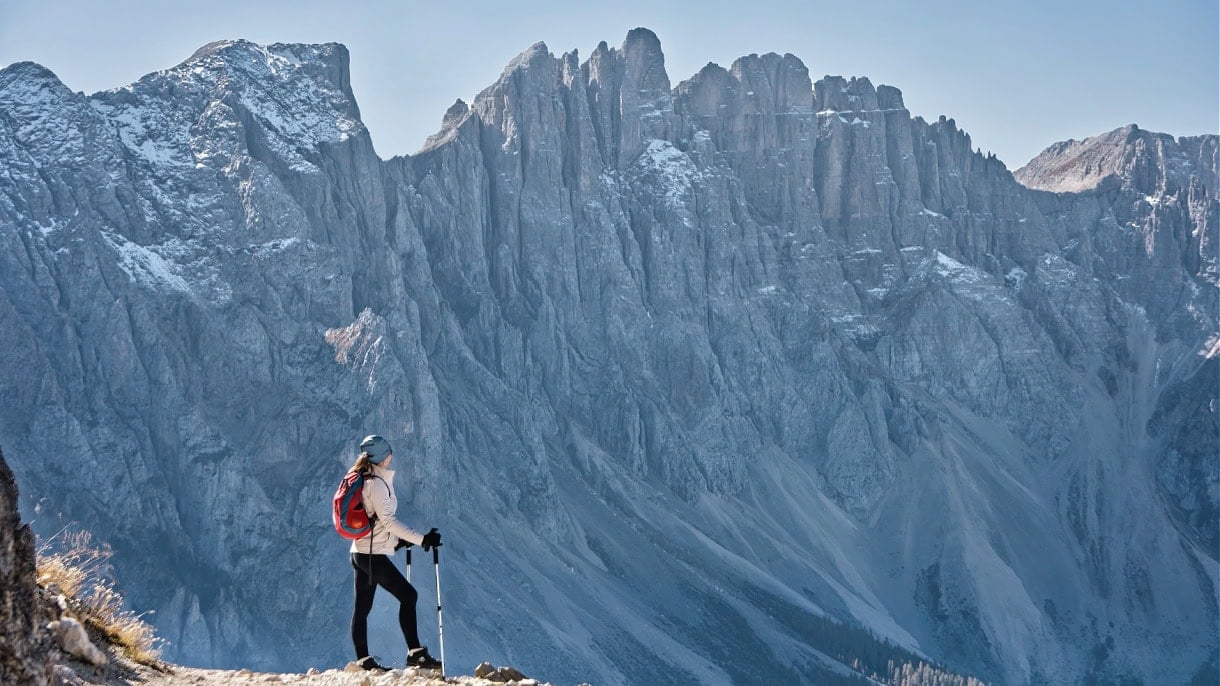
Within Italy, the Dolomites straddle the regions of Trentino-Alto Adige / Südtirol, Veneto, and Friuli-Venezia Giulia. From there, the range is subdivided into dozens of mountain groups. Among the most well-known of these are the Sexten (Sesto) Dolomites, Latemar, the Rosengarten (Catinaccio), Sassolungo (Langkofel), Prags (Braies) Dolomites and the Puez-Odle (Geisler) Group.
Each of these groups belongs to vast national parks protecting their unique alpine environments for generations to come. However, national park status is not the only measure protecting the Dolomites.
⇒ YOU MIGHT ALSO LIKE: Discover the Best Hikes in the Dolomites
A Tale of Two Very Different Stones
The geological tale of the Alps and Dolomites is as distinct as their silhouettes against the sky. The Alps are the scars of the earth’s relentless churn. Born roughly 65 million years ago, the Alps arose over a brawl between African and Eurasian tectonic plates. These continental behemoths pushed and shoved back and forth until the land buckled and rose up revealing a monstrous mix of granite and metamorphic rock such as gneiss and schist.
The Dolomites, on the other hand, are a different beast altogether. These mountains didn’t rise from collision alone. They emerged from an ancient tropical sea. During the Triassic period — roughly 250 million years ago — the land that would become the Dolomites sat at the bottom of a warm ocean.

Over time, coral reefs and marine life piled up on the seabed and slowly compressing into limestone. That limestone then underwent “dolomitization”: a natural alchemy where magnesium-rich waters seeped in, transforming the rock into something harder, lighter, and utterly unique.
The result is dolomite — a pale, magnesium-rich limestone that gives these peaks their ghostly pallor and their name (courtesy of 18th-century French geologist Déodat de Dolomieu, who first identified the mineral composition).
This geological journey — from sea to summit — explains why the Dolomites look so different from their Alpine neighbors. And why the hold UNESCO World Heritage status. While most of the Alps roll and curve, shaped by glaciers into rounded forms, the Dolomites erupt. They shatter the skyline in vertical towers, jagged spires, and improbable silhouettes that seem designed by a sculptor with no interest in subtlety.
⇒ YOU MIGHT ALSO LIKE: Driving in Italy Made Easy…Guaranteed
The Light that Sets Them Apart
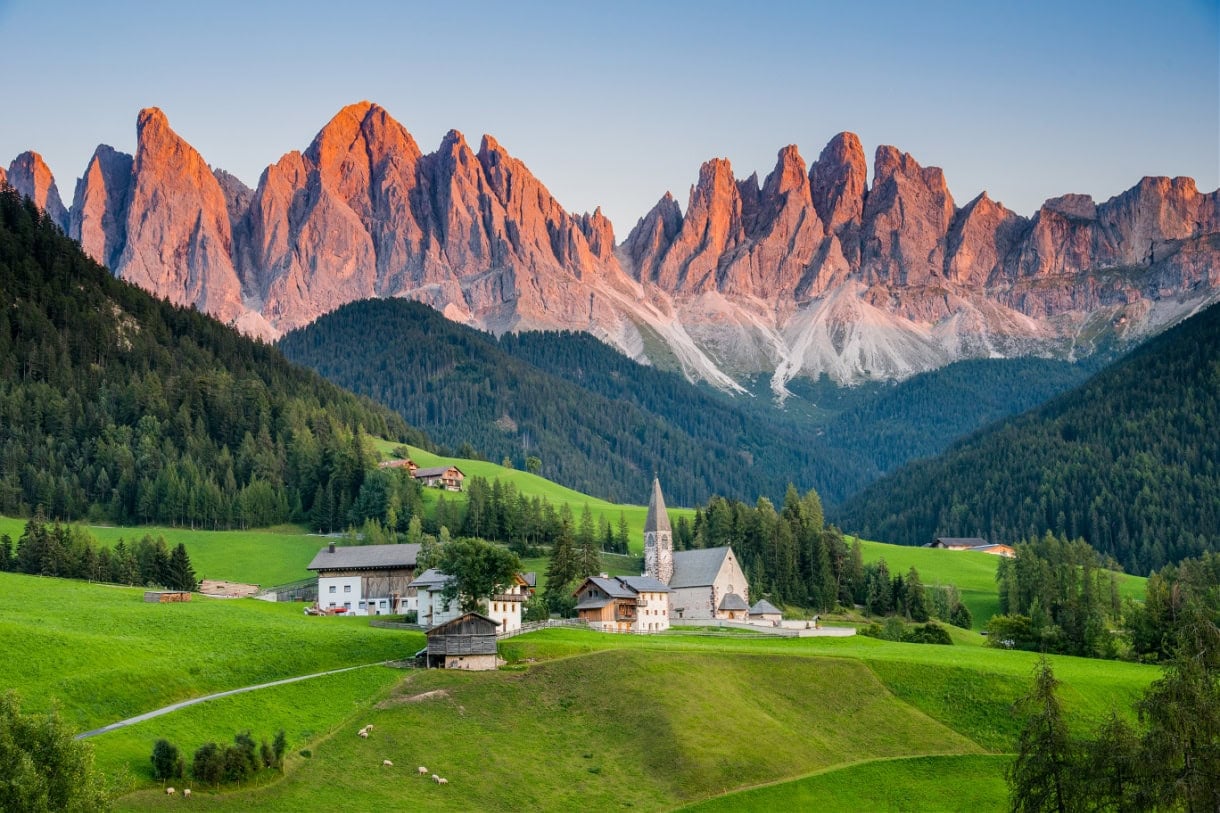
And then there’s the light.
The distinct blend of minerals in the dolomite rock imbues the mountains with a haunting pale hue, earning them the nickname “the Pale Mountains.” But there’s nothing pale about them when the sun goes down. At sunrise and sunset, the Dolomites ignite under the sun’s rays, showcasing a spellbinding display of colors from soft pink to intense fiery red.
The locals call this phenomenon enrosadira: “turning rose.” It’s the kind of light show that stops you mid-sentence. The kind that makes you understand, viscerally, why people return to these mountains year after year.
⇒ YOU MIGHT ALSO LIKE: Dolomites Winter Guide: 12 Experiences You’ll Never Forget
So… Which One Should You Visit?
This is where the question gets personal. Both the Alps and the Dolomites deliver world-class hiking, skiing, and scenery. But they cater to different desires.
Choose the Dolomites If You Want:
Dramatic, otherworldly scenery — The pale towers and vertical walls of the Dolomites create a visual intensity unmatched anywhere in the Alps. If you’re drawn to landscapes that feel almost unworldly, this is your destination.
A compact adventure — The Dolomites pack extraordinary diversity into a relatively small area. You can experience iconic peaks, alpine lakes, flower-drenched meadows, and medieval villages without covering vast distances.
Exceptional hiking infrastructure — Thousands of well-marked trails, an extensive lift network, and a legendary network of mountain huts (rifugios) make the Dolomites one of the most accessible high-alpine hiking destinations in the world.
Cultural complexity — In the Dolomites, German, Italian, and Ladin traditions weave together in a way you won’t find anywhere else. It’s visible in everything from architecture to cuisine to the three languages on every road sign.
Want the Full Dolomites Playbook?
If the Dolomites are your main event, our dedicated guide breaks down the practical details that matter most: where to base yourself, how to time your days, and how to make the most of each region without wasting hours in transit.
Explore the Dolomites GuideChoose the Broader Alps If You Want:
Glaciers and extreme altitude — The highest peaks in the Alps dwarf anything in the Dolomites. For serious mountaineering, glacier trekking, or the thrill of standing above 13,000 feet, you’ll need to venture beyond the Dolomites into ranges like the Pennine Alps (Switzerland), Mont Blanc massif (France/Italy), or the Ortler Alps (South Tyrol).
A specific national flavor — Want a purely Swiss, French, or Austrian Alpine experience? The broader Alps let you choose your cultural immersion. Each country brings its own cuisine, traditions, and mountain character.
Varied terrain in one country — Within Italy alone, the Alps stretch from the Aosta Valley near France to the Julian Alps near Slovenia. Each subrange offers distinct landscapes and fewer crowds than the Dolomites’ most famous corners.
The Best of Both Worlds: South Tyrol Delivers the Alps & Dolomites in One Visit

Here’s the secret we wish someone had told us a decade ago: You don’t have to choose between the Alps and the Dolomites.
If you want to experience both the soaring drama of the Dolomites and the classic Alpine grandeur of glacier-capped peaks, there’s one region that delivers both in a single trip: South Tyrol (also known as Südtirol or Alto Adige).
South Tyrol is Italy’s northernmost province, tucked between Austria to the north and Trentino to the south. Within its borders, the Alps and Dolomites collide in the most spectacular fashion.
Here’s what that means in practice:
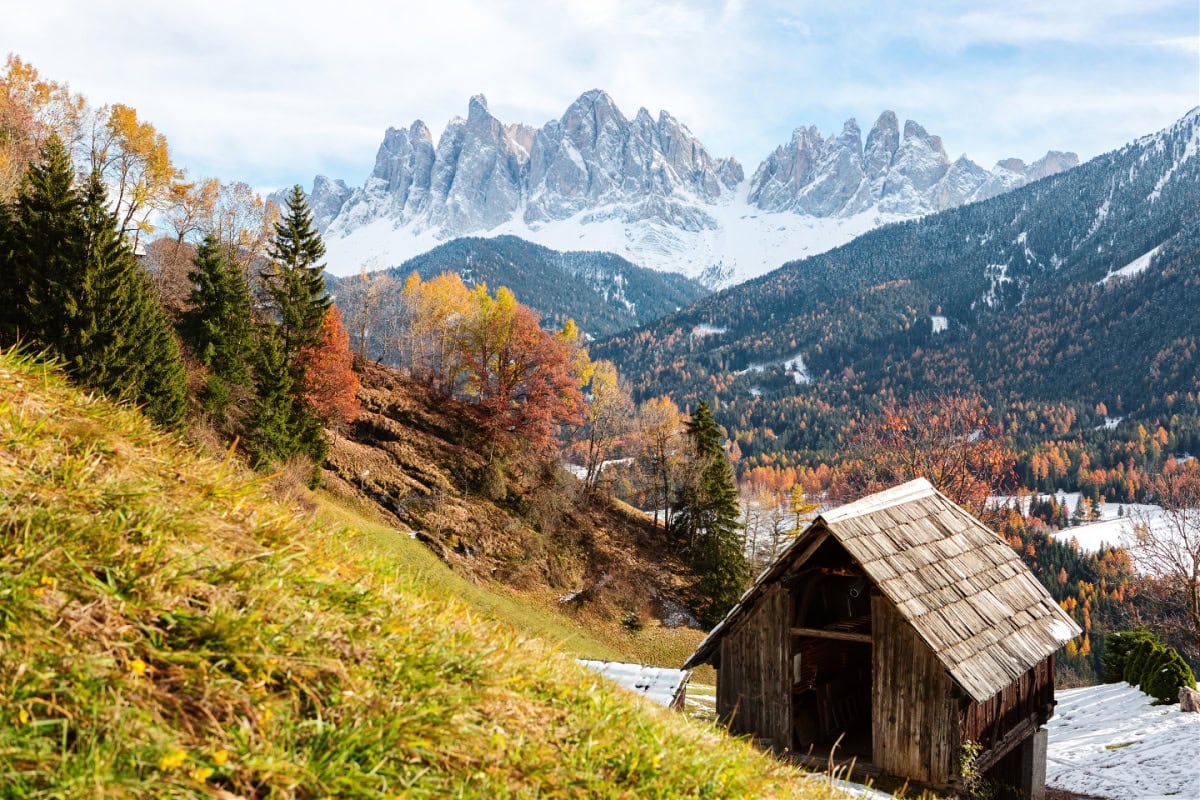


To the east, you’ll find the South Tyrolean Dolomites where you can trek the legendary paths of Tre Cime di Lavaredo, get lost in the vastness of Alpe di Siusi, feel a via ferrata rush on Sassolungo or find solitude by the crystal waters of Lago di Braies and Lago di Carezza. This is the heart of Dolomite hiking, with trails, lifts, and rifugios that make the high peaks accessible to hikers of all levels.
To the west, you’ll encounter an entirely different world: the Ortler Alps, Ötztal Alps, Zillertal Alps, and Sarntal Alps. These are classic Alpine ranges with glaciers, soaring summits (Ortler reaches 12,812 feet), and a wilder, more remote character. This is also where Ötzi the Iceman was discovered after 5,300 years frozen in a glacier.
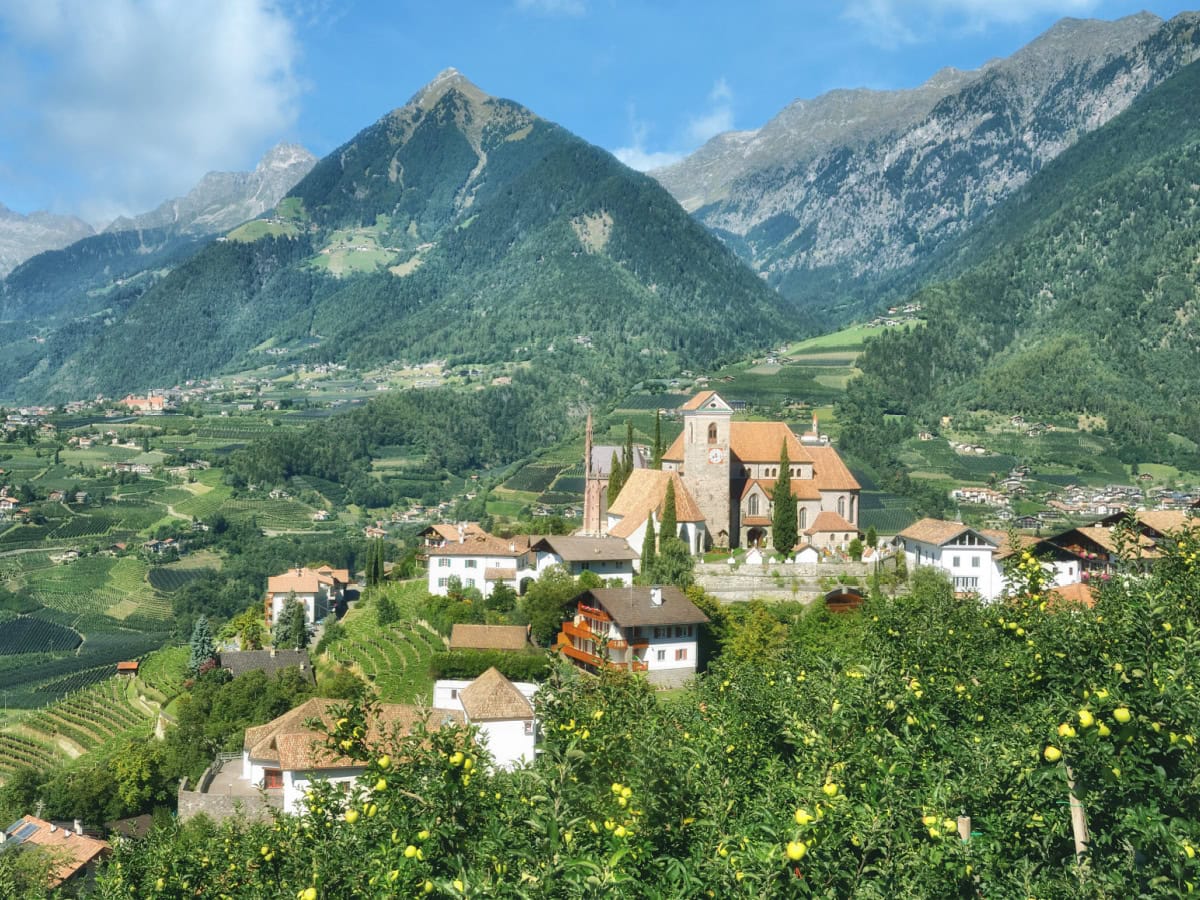
In between, you’ll find something neither “Alps” nor “Dolomites” quite captures: palm-lined promenades in Merano, castle-dotted vineyards along the Wine Road, medieval villages where time seems to have stalled, and a culinary scene that rivals anywhere in Italy.
South Tyrol is the only place we know where you can hike beneath Dolomite spires in the morning, tour a glacier in the afternoon, and end the day with a glass of Gewürztraminer overlooking terraced vineyards. It’s a place that defies easy categorization, which is exactly what makes it so rewarding to explore.
Ready to Explore Beyond the Peaks?
South Tyrol packs an entire continent into a single province: Dolomite spires, glacier-crowned summits, palm-lined promenades, and castle-dotted vineyards. Our dedicated guide helps you navigate it all — from choosing the right region to timing your visit for maximum magic.
Explore the South Tyrol GuideBoundless Adventure & Culture You Should Experience
Whether you’re drawn to the theatrical spires of the Dolomites, the glacier-crowned summits of the broader Alps, or the rare opportunity to experience both in a single journey, we’re here to help you plan a trip that matches your priorities.
Do-it-Yourself Trip Planning Guide
If you are a do-it-yourself planner, we offer a mountain of content to help you map out your trip to South Tyrol and the Dolomites. The easiest way to sort through it all and ensure you are planning your adventure effectively and saving money in the process is to download our South Tyrol + Dolomites Travel Planning Guide.
Travel Planning Services
The Alps and Dolomites are complex both geographically and culturally. It is easy to feel overwhelmed when planning your trip. Whether you want help determining the best hikes, public transport options, towns to stay in, and more, consider using our Travel Planning Services. Our services are affordable and flexible to match your needs: