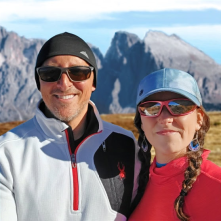
Bad Ratzes sits beyond Seis am Schlern (Siusi allo Sciliar), where forest, meadow and the Schlern massif crowd out nearly everything else. We spent three nights here in spring and discovered a South Tyrolean hotel whose greatest luxury may be something increasingly difficult to find in the Dolomites: space.
By the time the road reaches Bad Ratzes, it has run out of places to go.
Seis is behind you. The farms thin out, the houses disappear and dense spruce forest closes around the road until Bad Ratzes finally comes into view, resting in a secluded hollow beneath the Schlern. The setting feels almost secretive.
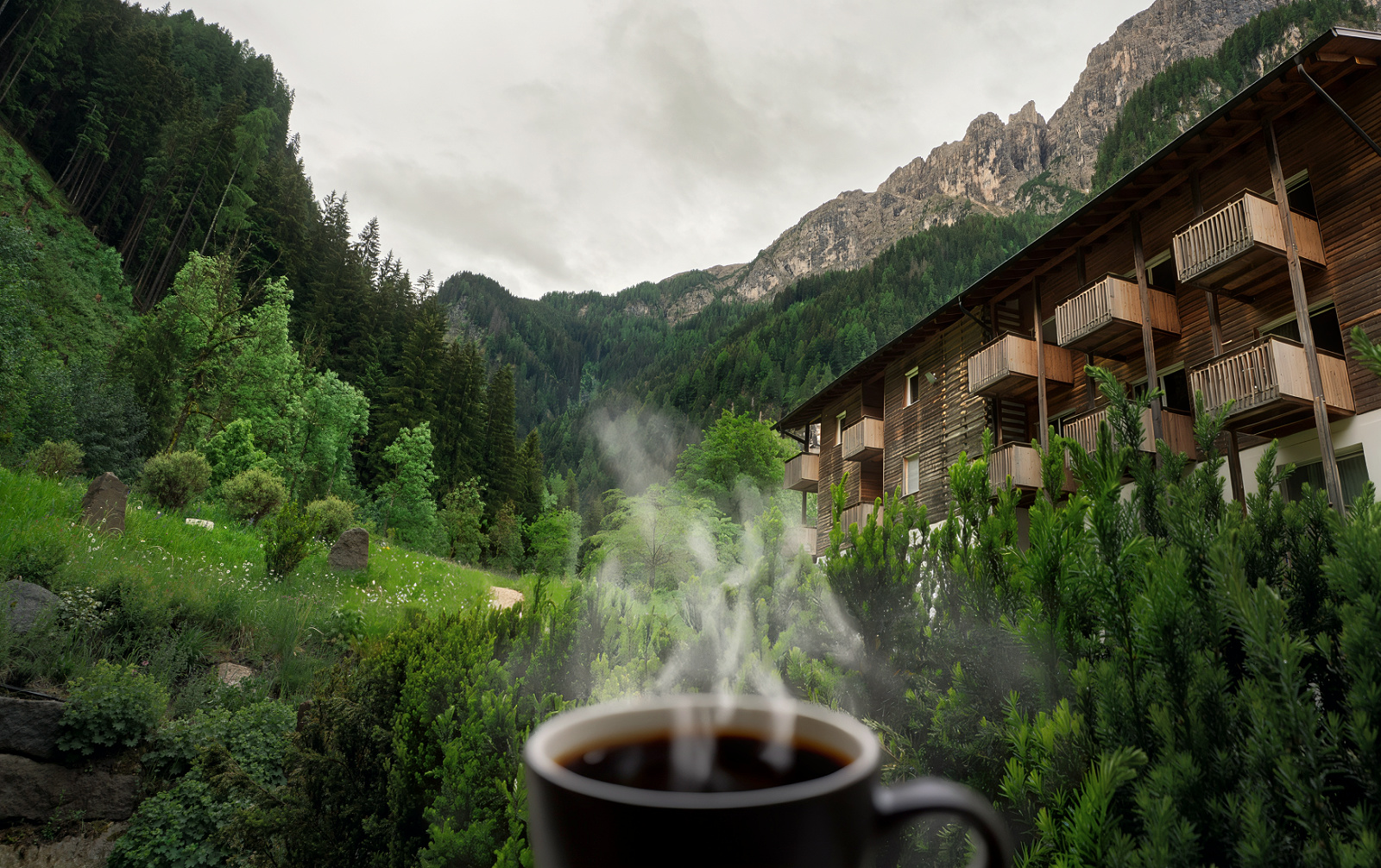
Many hotels in the Dolomites give you nature as a view. At Bad Ratzes, we realized almost immediately that nature would be part of the stay itself. The hotel does not dominate its surroundings. If anything, the wilderness of South Tyrol seems to have absorbed it. Bad Ratzes sits at the mouth of the Frötschtal, where a steep, wooded gorge cuts between the Schlern massif and the western edge of Alpe di Siusi (Seiser Alm).
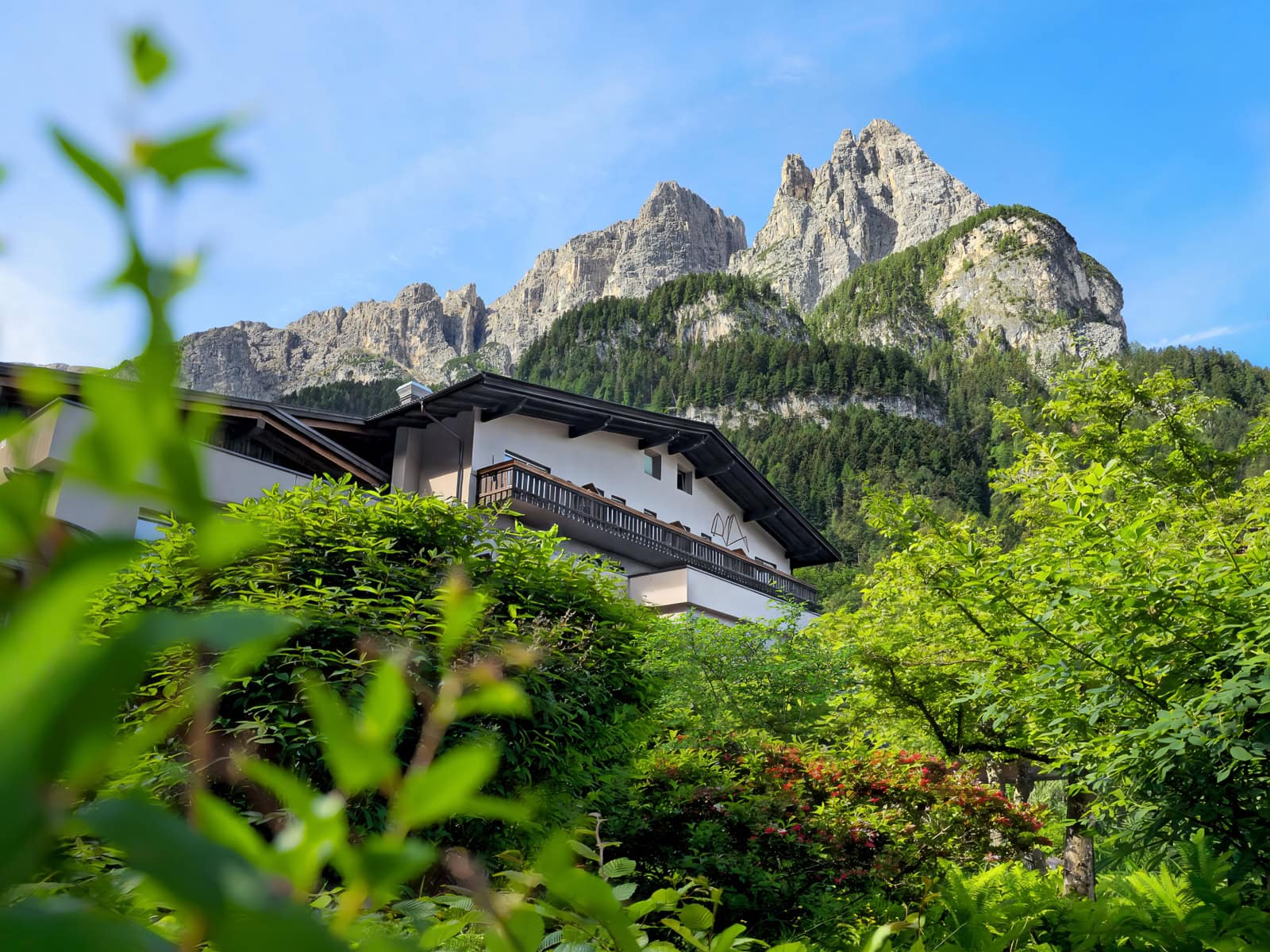
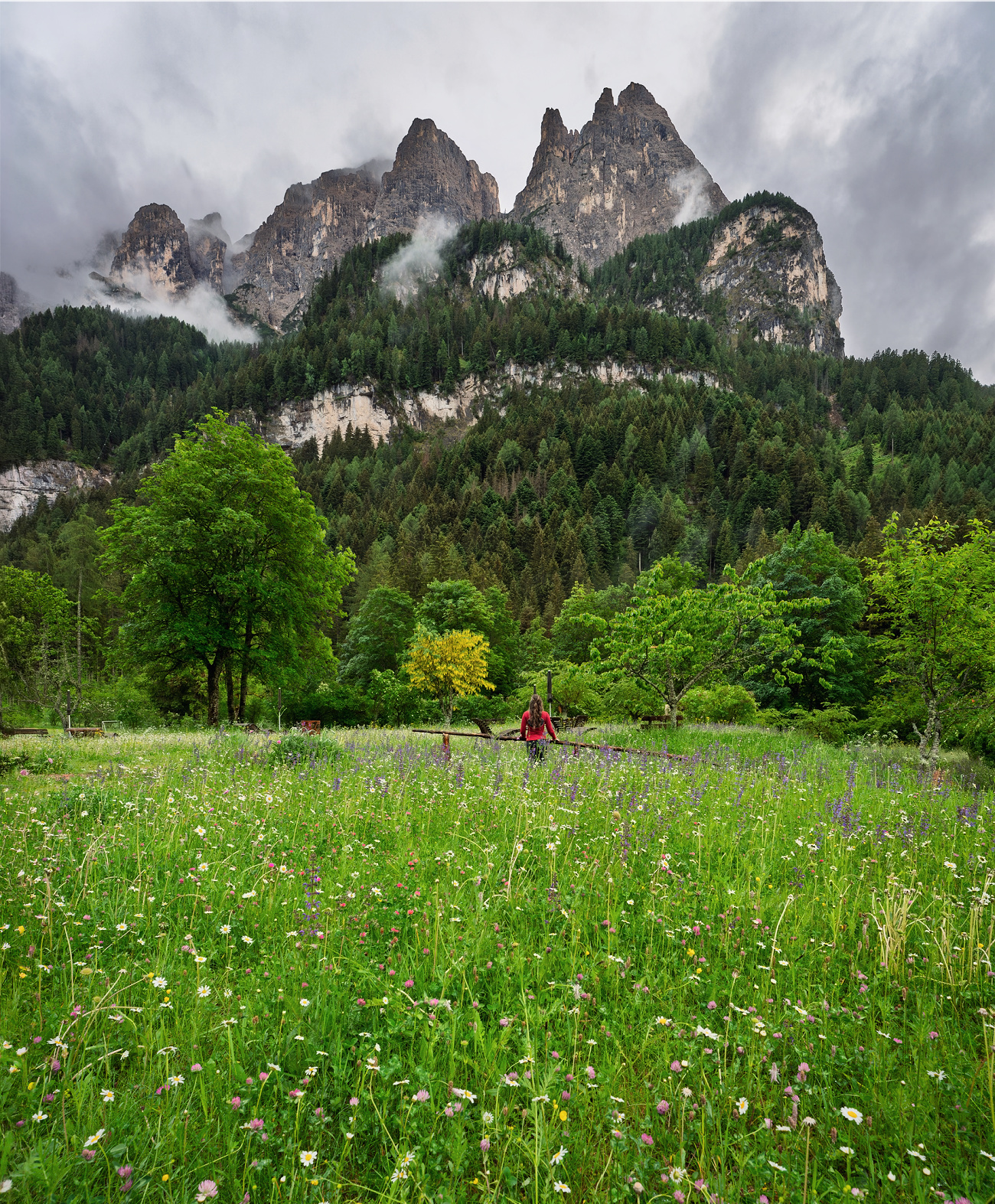
We dropped our bags, stepped onto our balcony and looked out behind the hotel. Only then did we understand how much there was to explore. A blooming mountain meadow with more wildflowers than we could begin to name stretched toward forested slopes. It was natural rather than manicured. Wild rather than wallpapered, but with just enough structure to invite us to wander.
That invitation was all we needed.
We headed outside and explored the hollow. There was no neat point where the hotel grounds seemed to end and the landscape began. Paths peeled off into the trees. Quiet places to sit appeared along the way. Beside the hotel, a stream, called Frötschbach (Rio Freddo), rushed over stone with such force that it had the voice of a river.
And above it all stood the Schlern.
Few mountains are as deeply tied to the identity of South Tyrol. Its hulking face loomed overhead like a giant keeping watch over everything below. We studied the evergreens gripping its shoulders, eager to follow the trails winding up toward the Alpe di Siusi — eager to thread our way up a mountainside that has fueled tales of witches, sudden storms, and strange happenings for centuries.
Over the next three days, we would follow those trails, surrender plenty of hours to the hotel’s spa, linger over long dinners and discover that Bad Ratzes is at its best when the world outside is allowed to set the rhythm within.
Three Centuries of Retreat Beneath the Schlern
Places with deep history always intrigue us. At Bad Ratzes, the story behind the setting is nearly as compelling as the setting itself. The hollow that pulled us outside within minutes of arriving has been drawing people here for centuries.
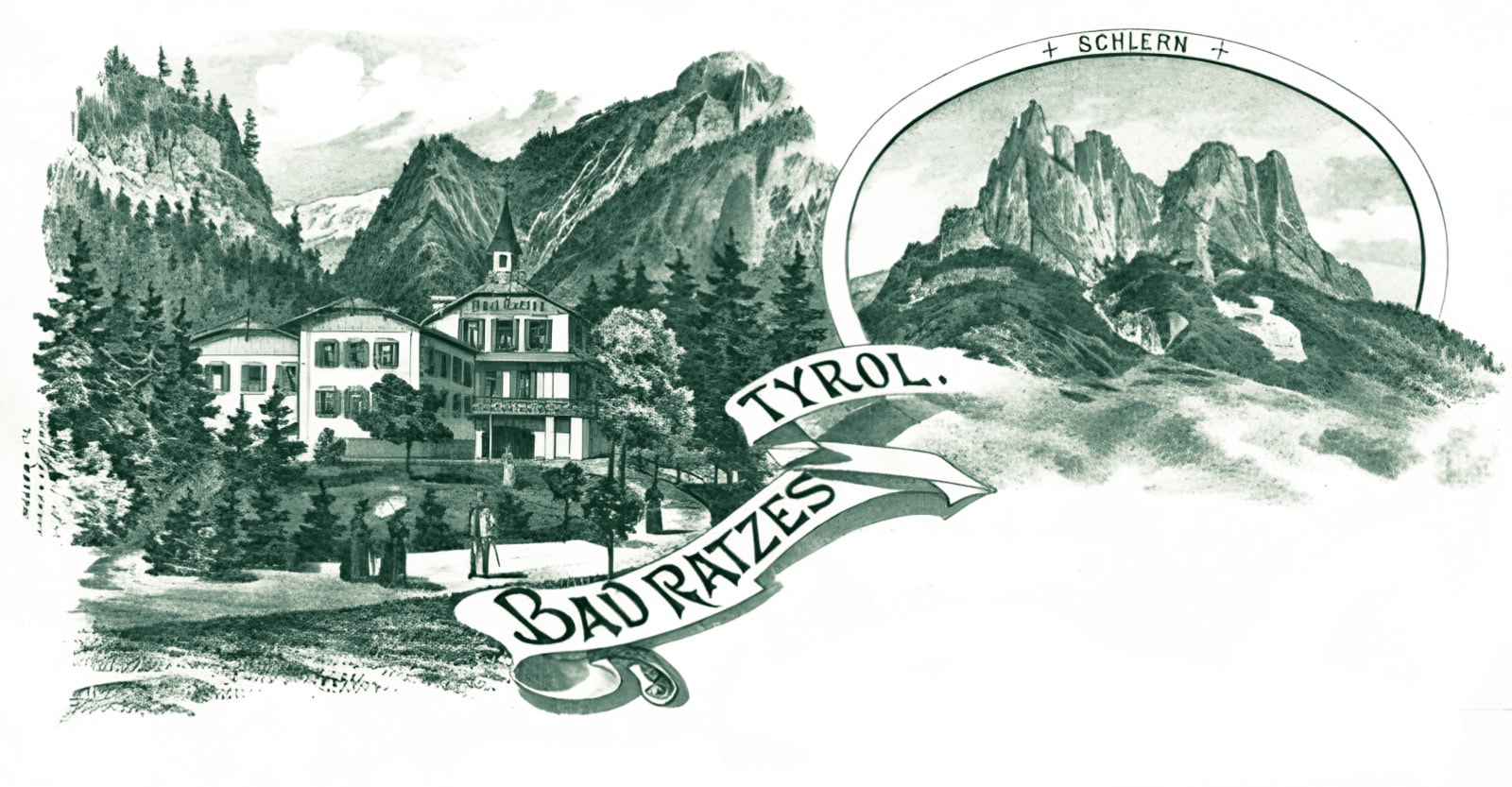
The name Ratzes appears in records as far back as 1191. Its history as a destination, however, began to take shape centuries later, when sulfurous and iron-rich springs were discovered beneath the Schlern. In 1723, permission was granted to build a Badehaus — a bathhouse — using the two mineral springs. At the time, mineral bathing was widely believed to relieve a range of ailments, turning remote springs like these into sought-after places of retreat.
Over time, the bathhouse became known as Bad Ratzes, literally the “Ratzes Bath.” By the 19th century, it had developed into a well-known mountain spa, attracting visitors from beyond the immediate region.
But the water was only part of the draw. Artists, writers, naturalists and early mountain travelers recognized something else: the surroundings were extraordinary. A rare place in the Dolomites where forest, rushing water, meadow and mountain converge.
The original bathhouse is gone today, but the springs still flow beneath the Schlern, and the landscape that captured those early visitors remains, as wild now as it was then.
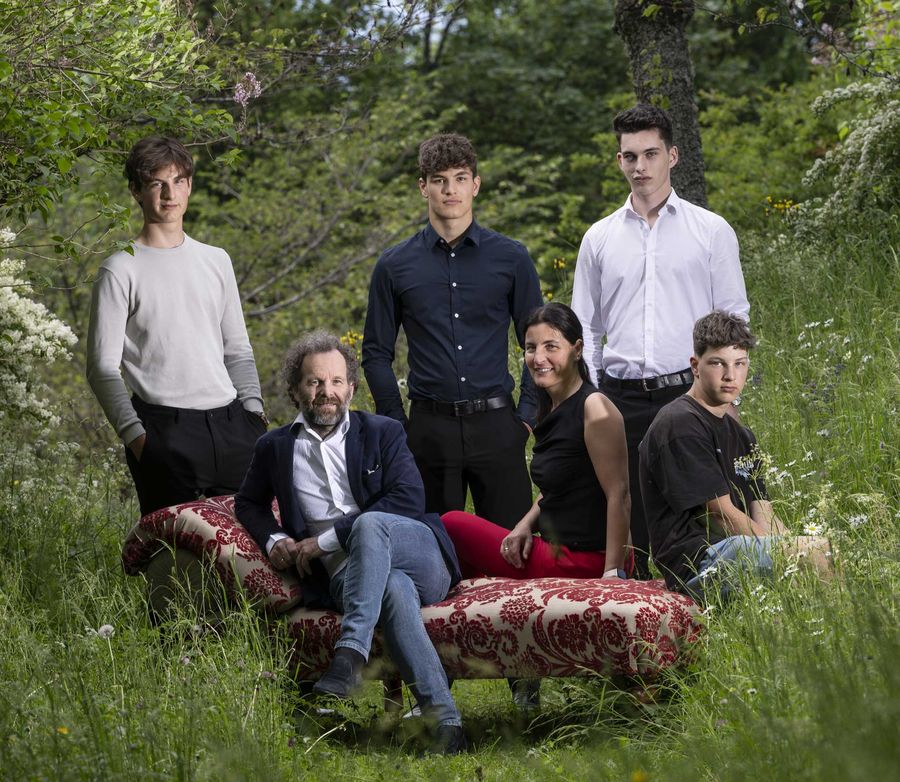
There’s another kind of continuity here — nearly a century of the same family looking after Bad Ratzes. The modern hotel has remained within the same family line since the 1930s. Sisters Eva and Waltraud Scherlin eventually devoted some 50 years to the property before Petra Mutschlechner and her husband, Michael Scherer, carried the family tradition forward.
During our stay, Petra and Michael were a regular presence around the hotel, as were members of the next generation. That visibility matters. Bad Ratzes feels like a dwelling whose family history is still being lived rather than simply displayed in old photographs. Petra and Michael have also added new layers to that history.
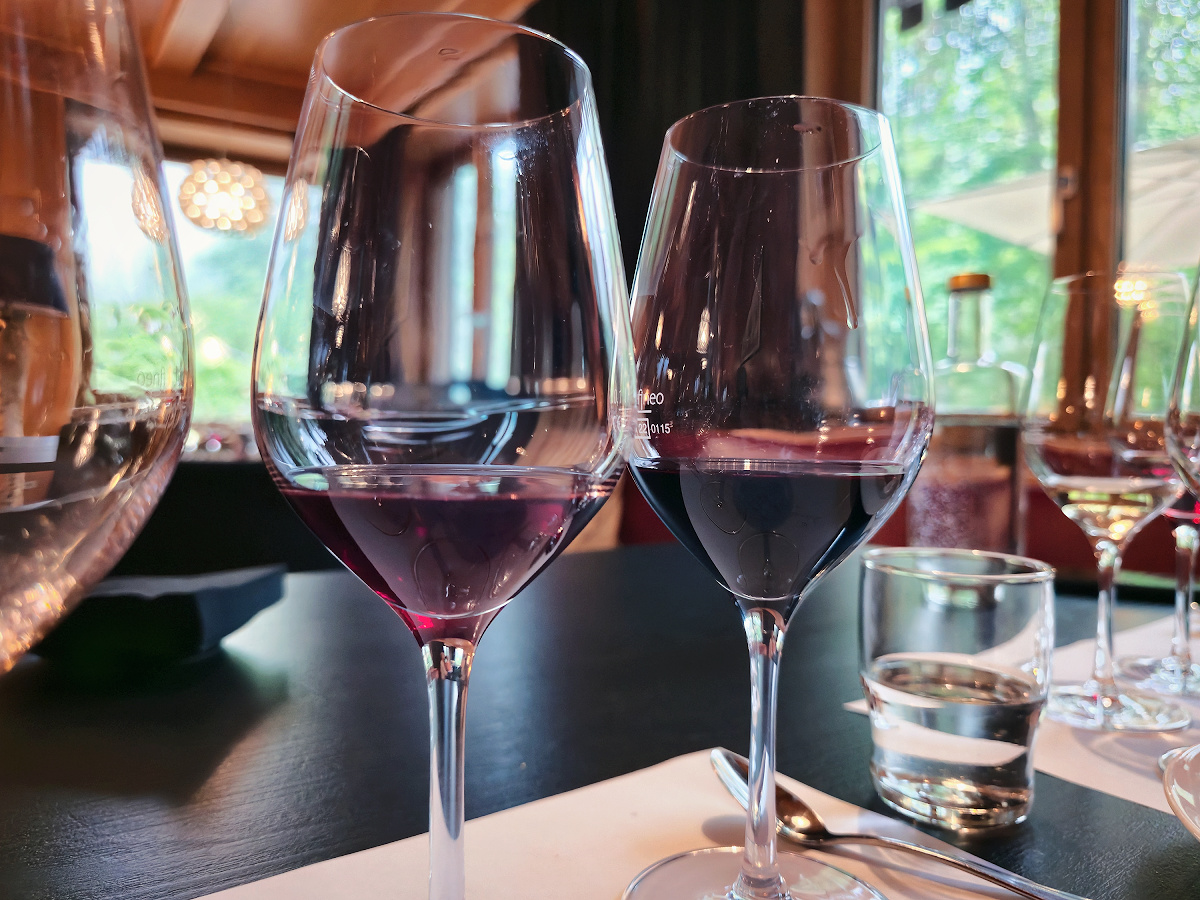
Recent renovations have brought a more contemporary character to Bad Ratzes without severing its connection to the landscape. Wood, stone, glass and generous windows echo what lies just beyond the walls, while an expanding cultural program has made music, art and wine part of the experience. Bad Ratzes hosts concerts and art exhibitions, partners with our South Tyrol wine guide Franz for guest tastings, and has become a venue for the Südtirol Jazzfestival Alto Adige.
Those additions feel particularly at home here. Artists, naturalists and curious travelers were making their way to Bad Ratzes long before Petra and Michael took the helm. Today’s concerts, tastings and gatherings continue that tradition in a different form.
Three centuries after the mineral springs first drew visitors up the mountain, people are still following the narrow road beyond Seis into the same secluded hollow. The details have changed, but the reasons remain much the same: water, wilderness, stillness and the pull of the Schlern.
Sleeping Beneath the Schlern
Bad Ratzes has a surprisingly broad range of accommodations, allowing guests to decide how much they want their room to become part of the experience. There are straightforward doubles for travelers who expect to spend most of their days hiking, exploring and at the spa, along with larger rooms and suites for those who want more space, more contemporary design or a few private indulgences of their own.
Our two-person room fell toward the simpler end of that spectrum, which suited us perfectly well. We had warm parquet flooring, plenty of room to settle in for three nights and, most importantly, a balcony that kept us connected to the stunning setting outside.
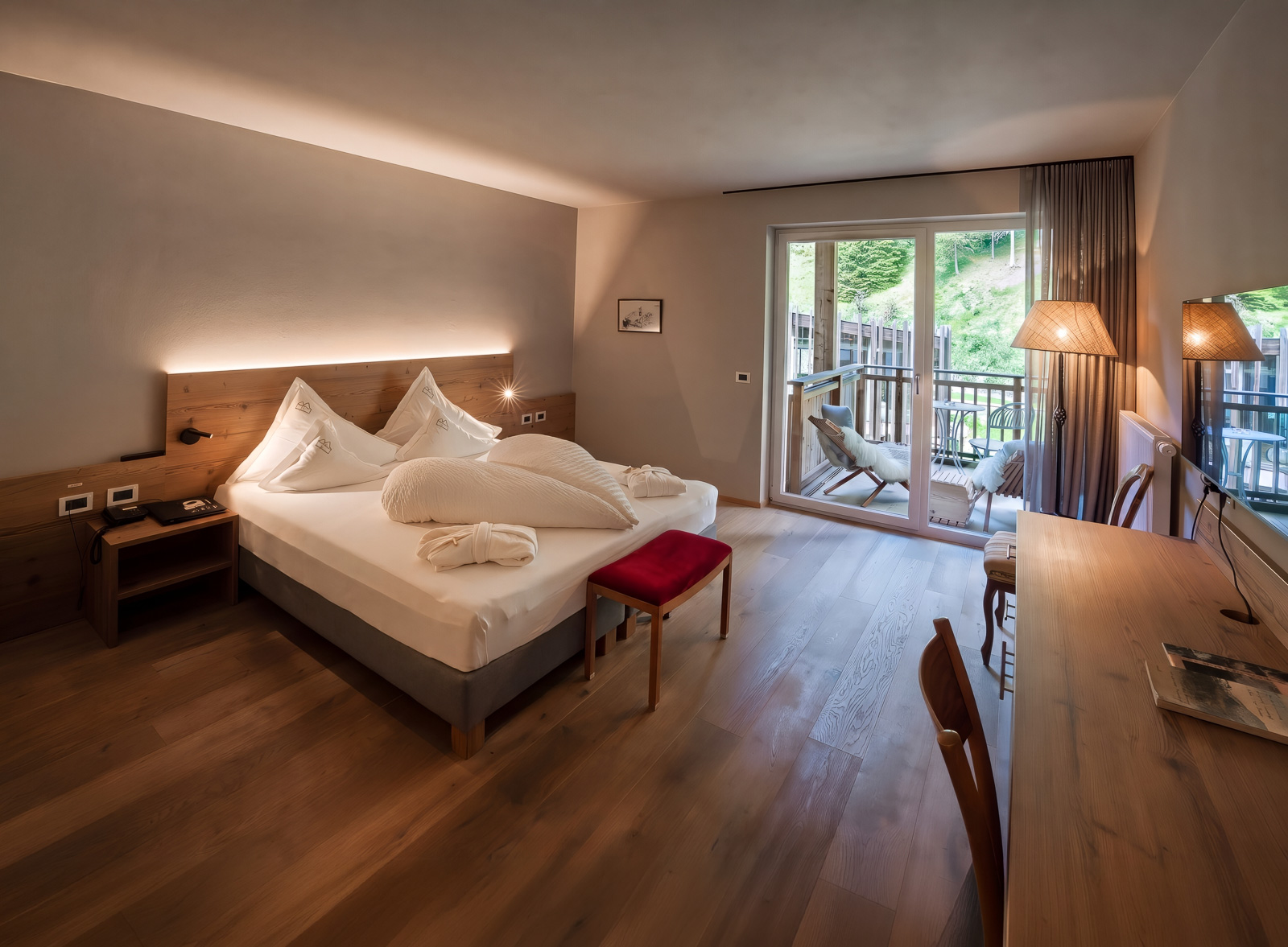
Forest filled most of the view, with the meadow opening off to one side and the newer spa and outdoor pool below. We found ourselves stepping onto the balcony often, whether to take in the fresh mountain air, listen to birds stirring in the trees or catch the murmur of the Frötschbach carrying through the hollow.
One night, spring rain arrived after dark. Rather than shut it out, we left the balcony door cracked open as we went to bed. Rain whispered through the trees while the stream murmured somewhere beyond them, the two sounds blending into the kind of natural white noise no sleep app can match. It was heavenly.
That night crystallized something we came to appreciate about staying here. The room did not need to manufacture a connection to nature with clever design tricks. Open a door and Bad Ratzes took care of the rest.
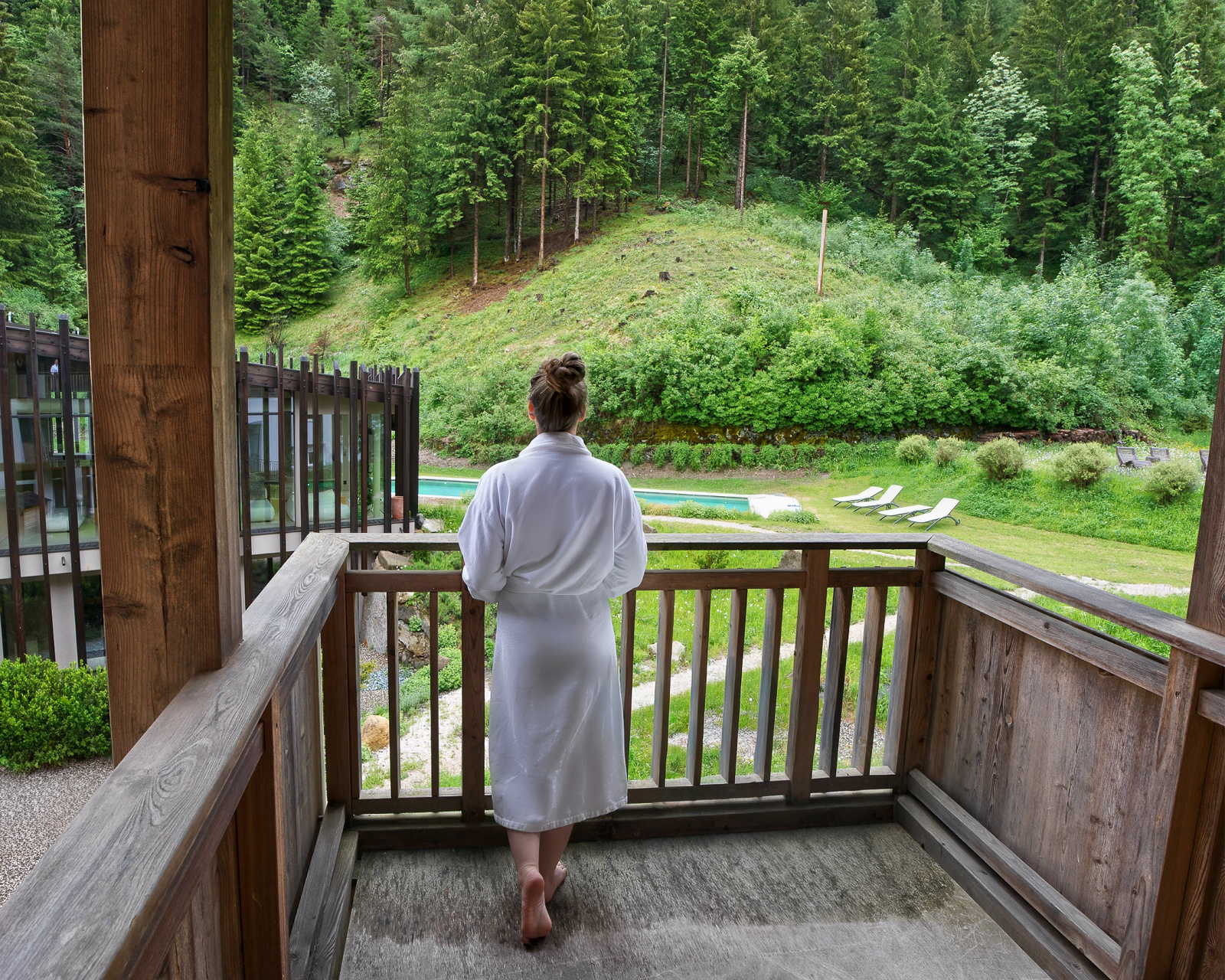
Travelers who want more from their accommodations have plenty of room to move up. The hotel’s categories progress into larger and more contemporary rooms and suites, some placing much greater emphasis on private wellness. Suite Hauenstein, for example, has its own Finnish sauna and a large balcony overlooking the Schlern, while Suite Kepf pairs a private sauna with a freestanding bathtub and spacious terrace. Suite Badl takes a slightly different approach, combining a freestanding tub with a private Hydrosoft cabin.
For families or travelers who prefer something closer to a self-contained home, Apartment Hauenstein even includes a fully equipped kitchen, two bedrooms, a traditional wood-paneled stube and a long terrace overlooking the surrounding forest and mountains.
For us, though, the equation was fairly simple. We wanted a comfortable place to sleep, a balcony we actually wanted to use and easy access to everything waiting beyond our door.
Bad Ratzes delivered all three.
Hiking Through 240 Million Years
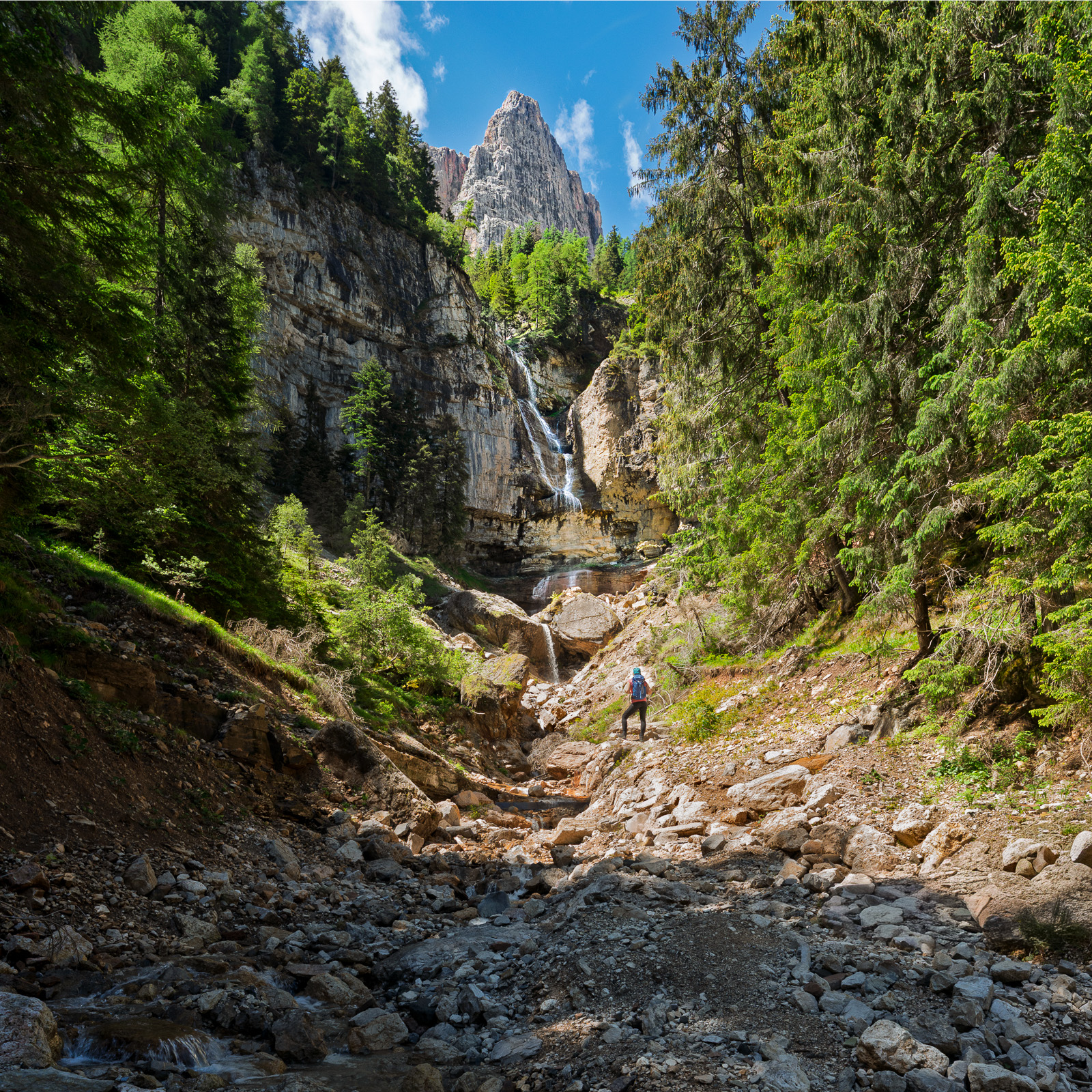
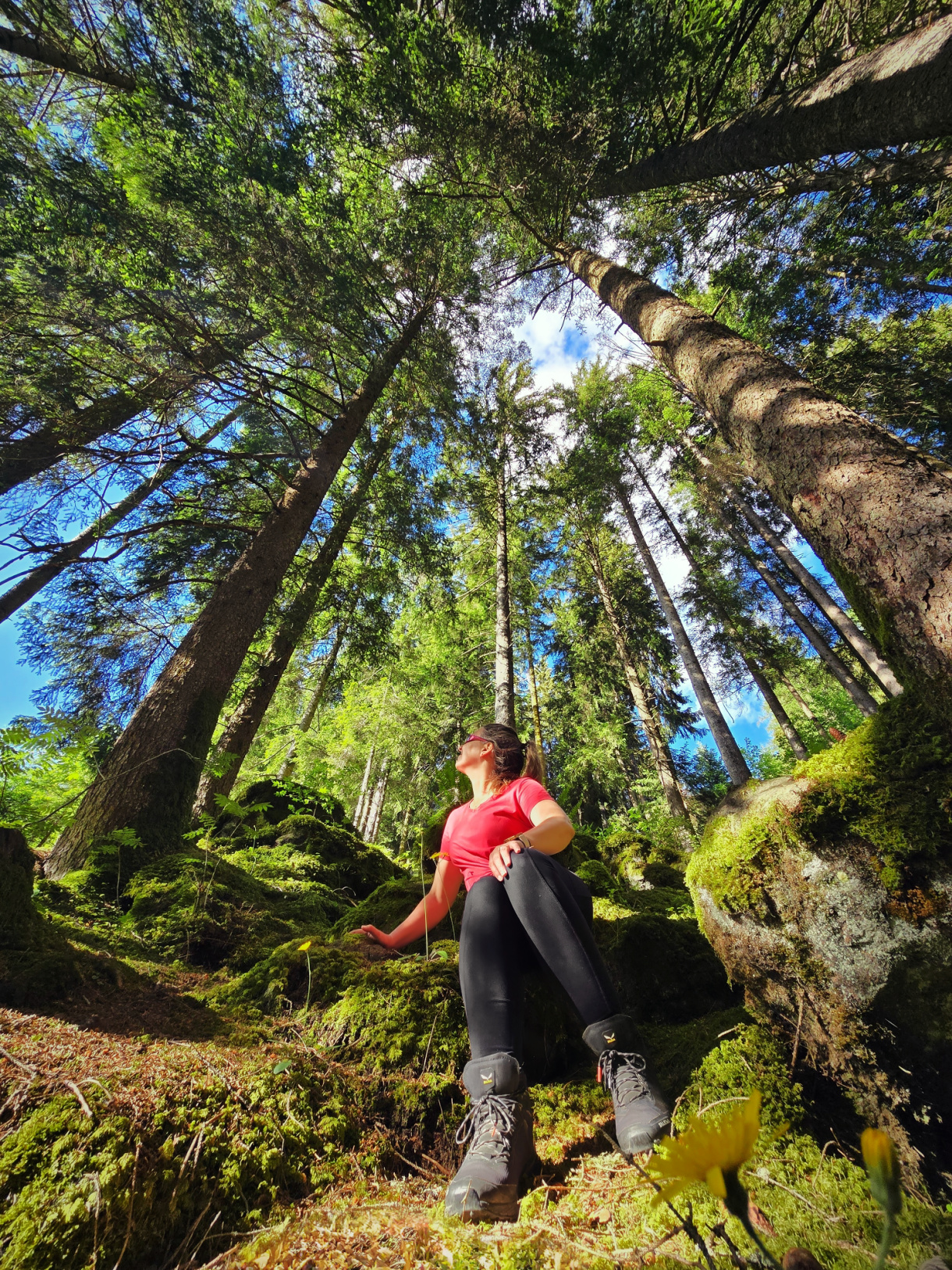
One of Bad Ratzes’ greatest luxuries requires no reservation at all. Walk out the door in hiking boots and you are already at the trailhead. The hotel sits within Schlern-Rosengarten Nature Park, one of South Tyrol’s most striking protected landscapes.
When we asked Michael which hike we should tackle from the hotel, he pointed us toward the Geologists’ Trail, a route climbing alongside the Frötschbach through the gorge toward Prossliner Schwaige on the western edge of Alpe di Siusi. He described it as an interesting hike through the geological history of the Dolomites.
That turned out to be underselling it just a bit. We told him as much when we returned.
Rain had fallen through the previous night, but morning broke clear and sunny. The forest was still wet, the Frötschbach was running hard and waterfalls seemed to appear around every bend as we hiked upward. Some spilled delicately over shelves of rock. Others came hammering down through the gorge with enough force that our jaws dropped in pure awe.
We had expected an interesting hike. We had not expected waterfalls everywhere, nor a trail that would fundamentally change the way we looked at the mountains above us.
Interpretive panels along the route explain what you are actually looking at, and this is where the hike got wonderfully strange. We already knew the Dolomites were born from an ancient tropical sea. What we had never quite appreciated was how violent that birth could be.
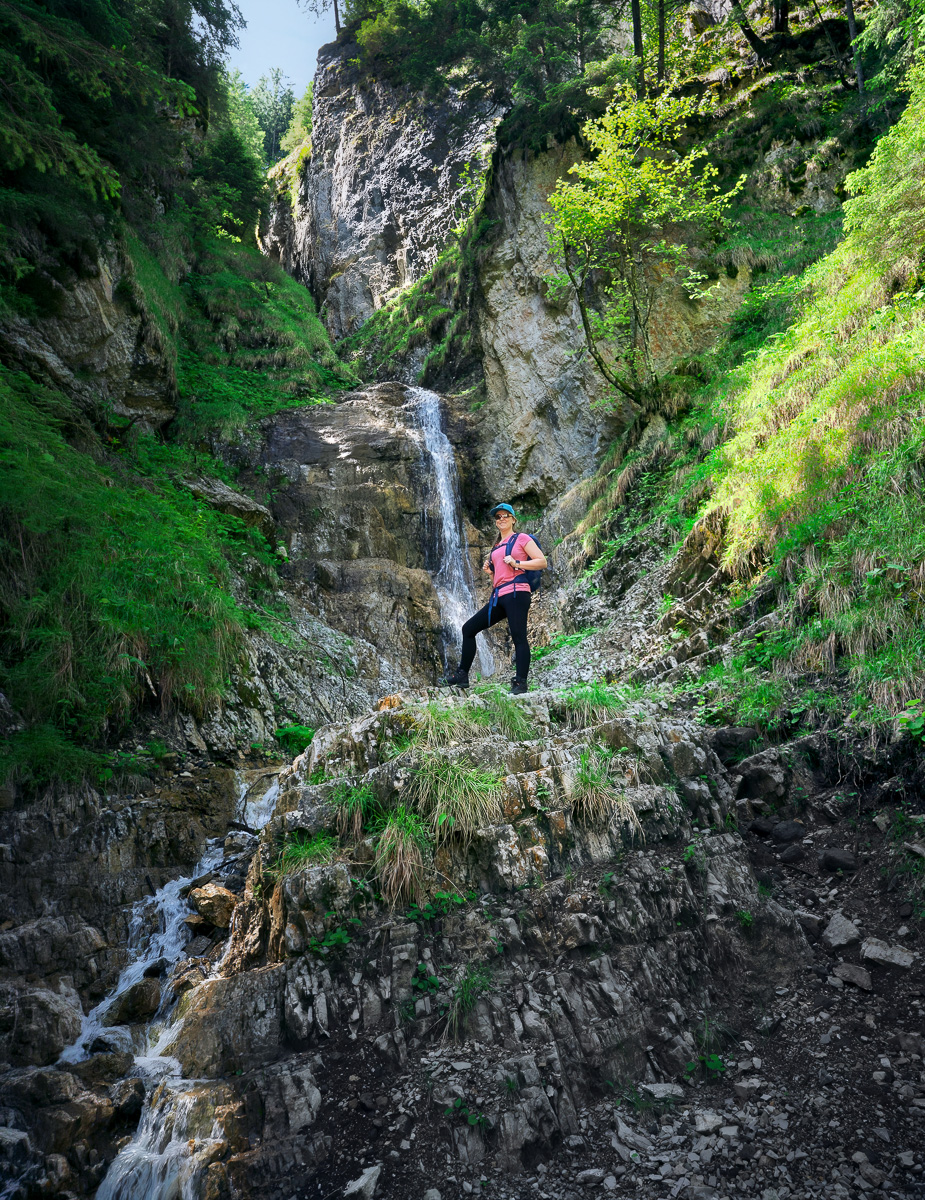
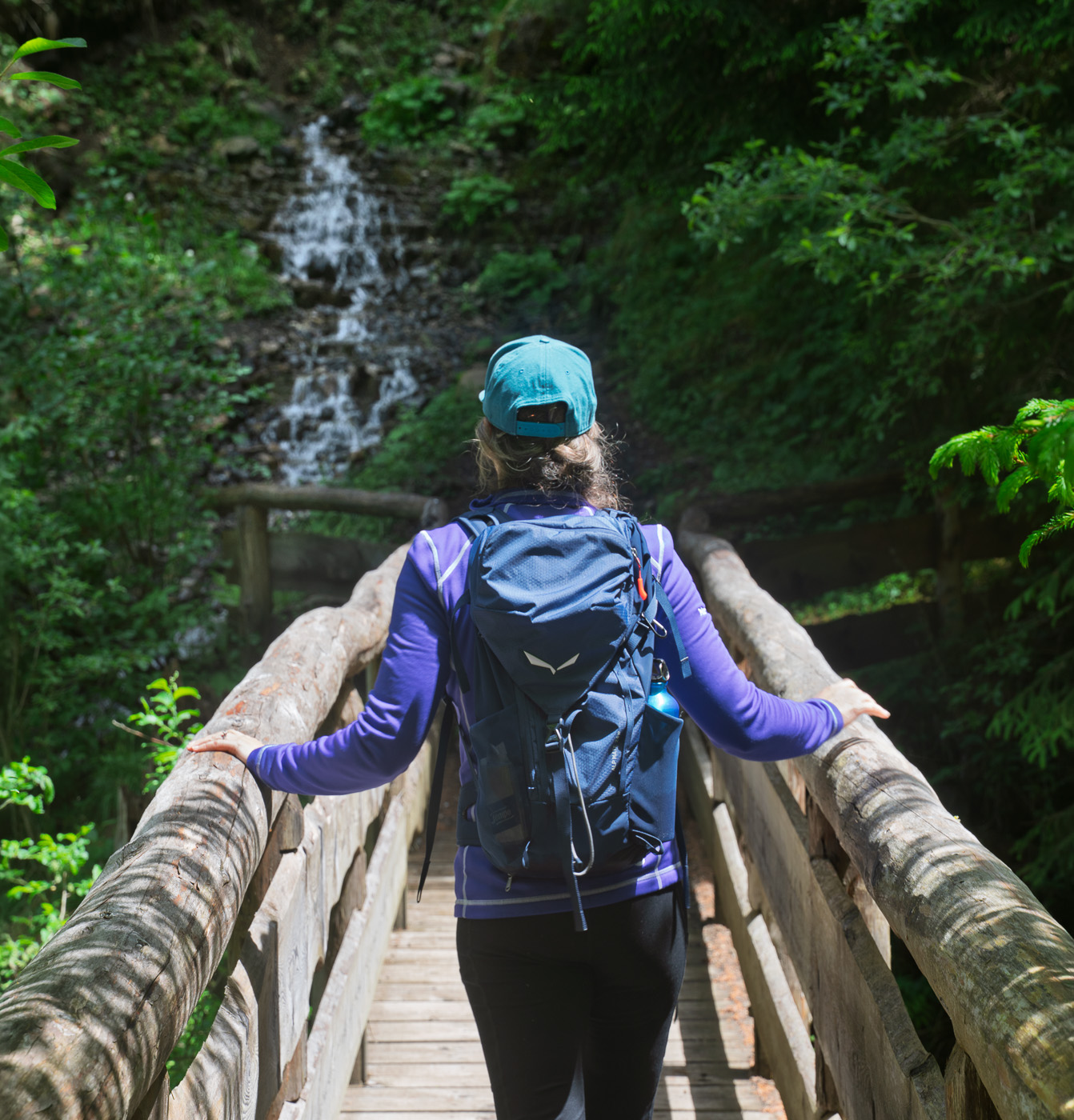
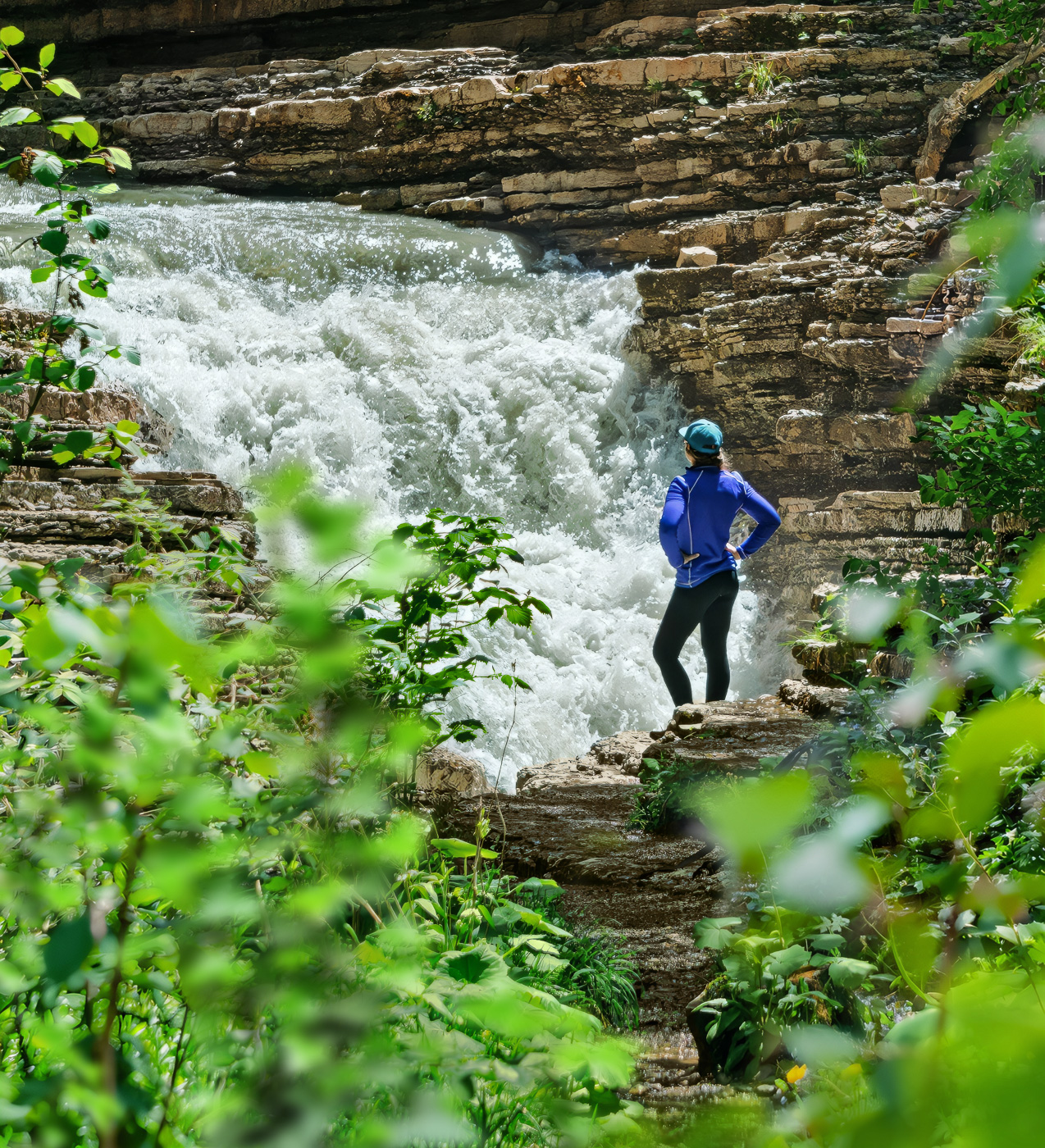
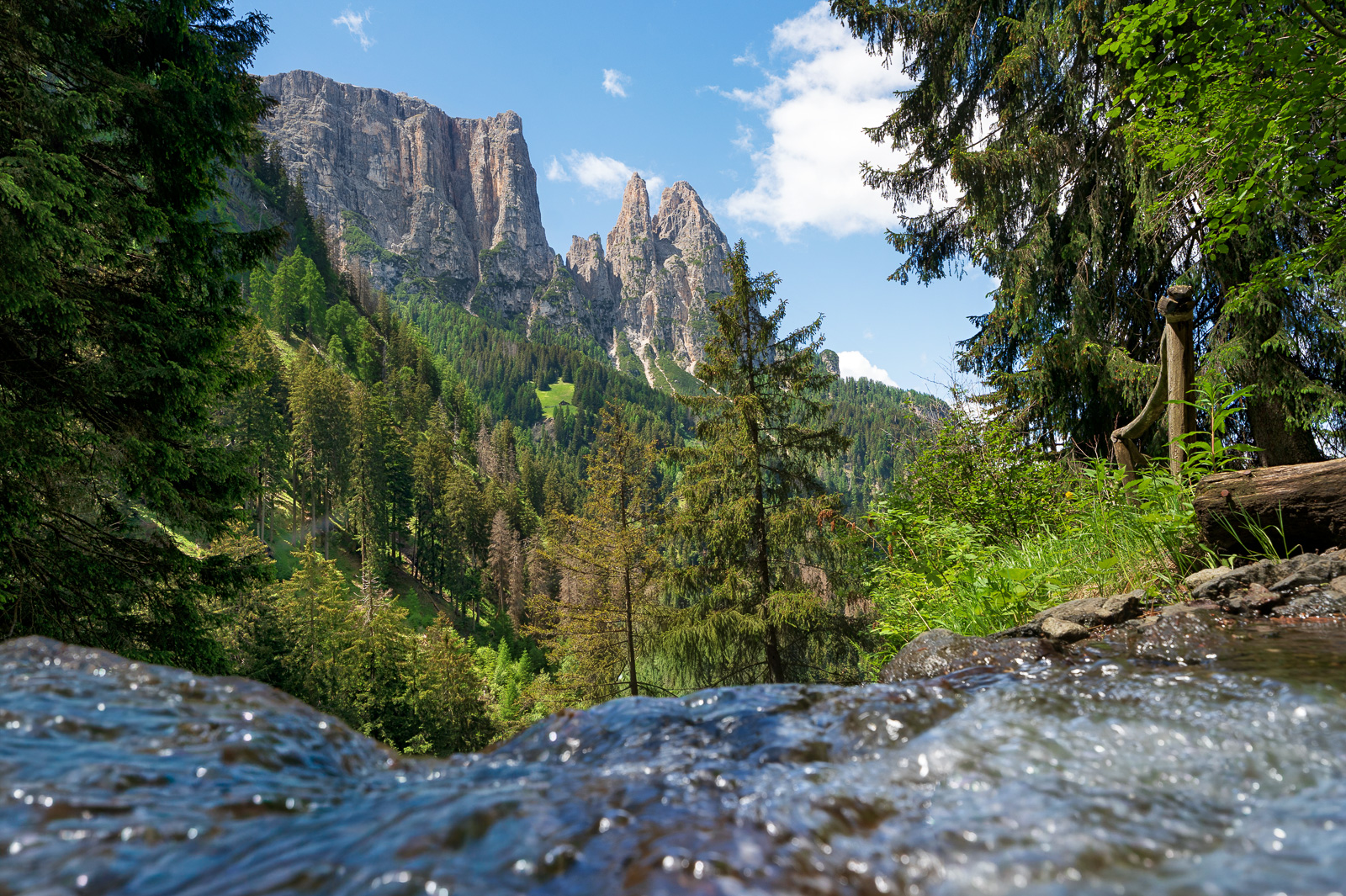
The evidence is still sitting there in the gorge: volcanic ash trapped between limestone beds, lava that erupted on the seafloor, enormous chunks of reef torn loose and sent crashing downslope in submarine landslides. Two hundred forty million years later, the crime scene is remarkably intact.
Suddenly geology stopped feeling like a tidy diagram in a museum. The mountain had been blown apart, drowned, buried and rebuilt… and we were walking straight through the wreckage. That may have been our favorite part of the hike.
Our stay at Bad Ratzes reminded us how much gets skipped on a lift when you’re rushing to the top. When hiking up from the hotel, the Dolomites reveals all of its layers. Water cuts through ancient rock. Moss grips fallen timber. Forest gives way to gorge, gorge to waterfalls, and eventually the landscape opens, with Alpe di Siusi spreading out ahead, the great Triassic reef of the Schlern rising to the south and the jagged Denti di Terrarossa stretching eastward along the plateau’s southern edge.
Waiting at the edge of the plateau was Prossliner Schwaige, a hut perfectly positioned for us to enjoy a couple of plates of Hirtenmakkaroni before making our way back down through the gorge toward Bad Ratzes. And this is where staying at the hotel becomes difficult to beat. There was no car waiting at a distant trailhead. No drive back to Seis. No logistical intermission between hiking and recovering from it. The trail simply deposited us back into the world of Bad Ratzes.
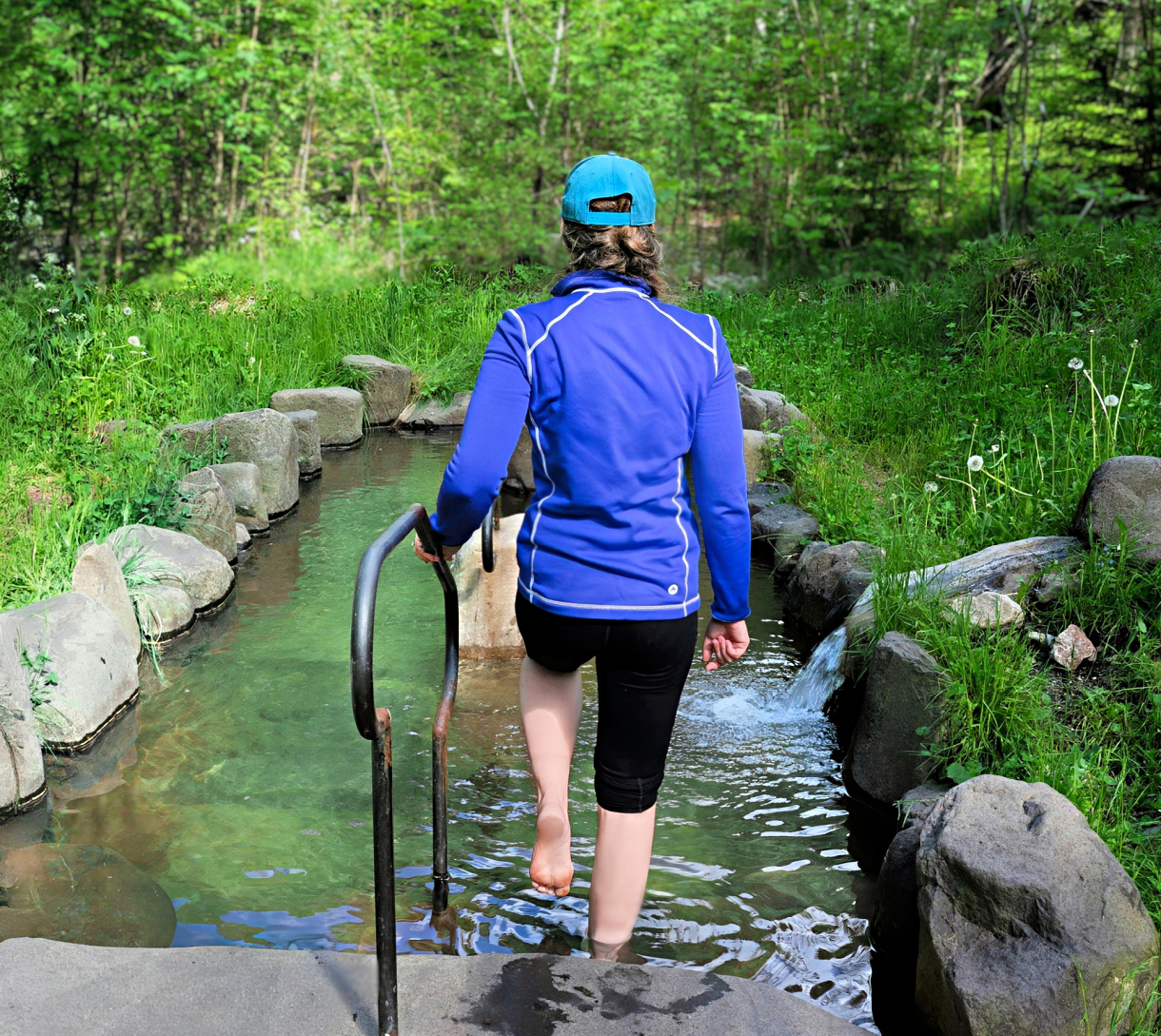
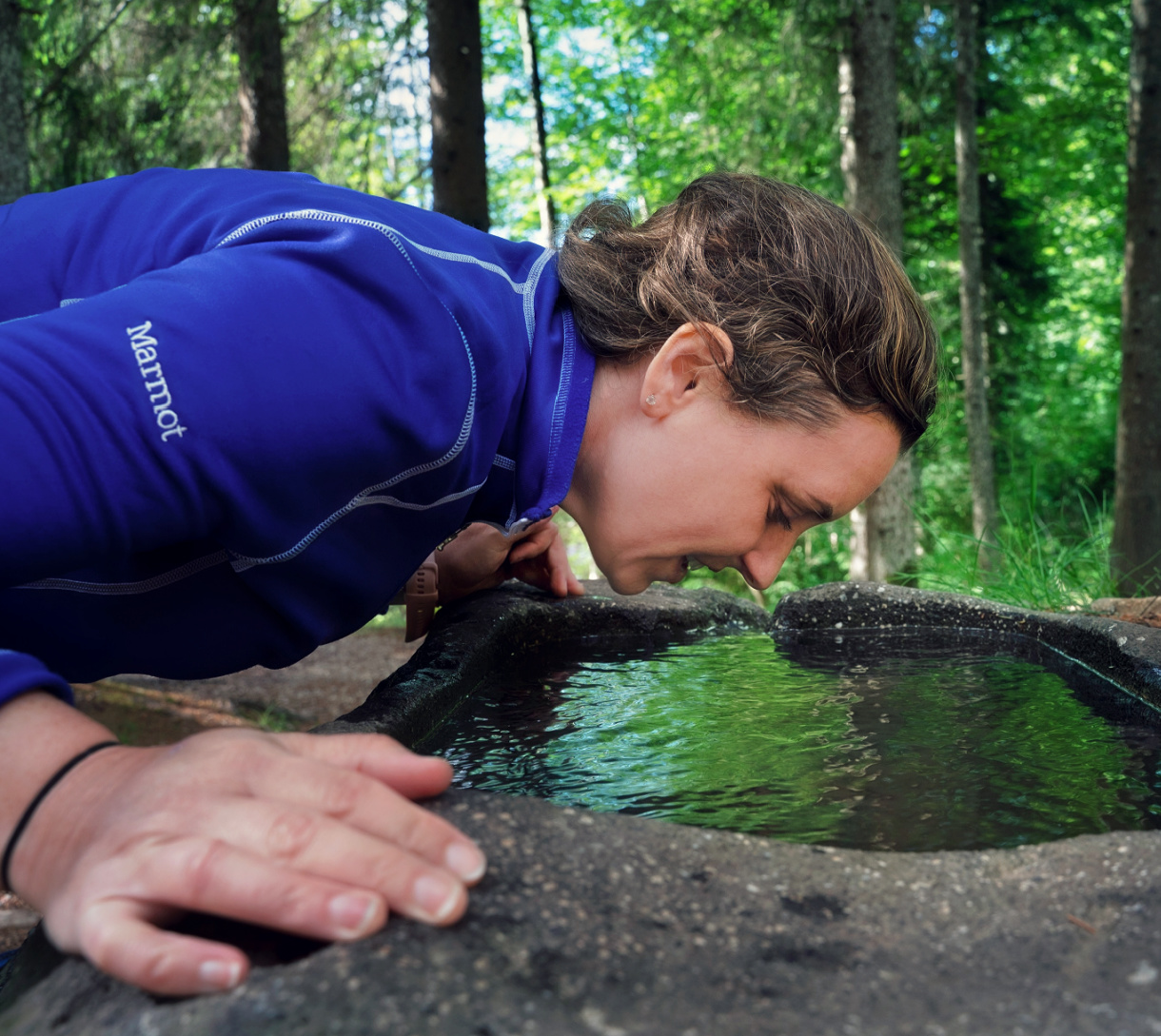
Before heading inside, we made one last detour: the Ratzes Kneipp course. Kneipp therapy comes from a 19th-century school of wellness built around cold water, circulation and the apparently timeless belief that feeling mildly miserable must somehow be good for you.
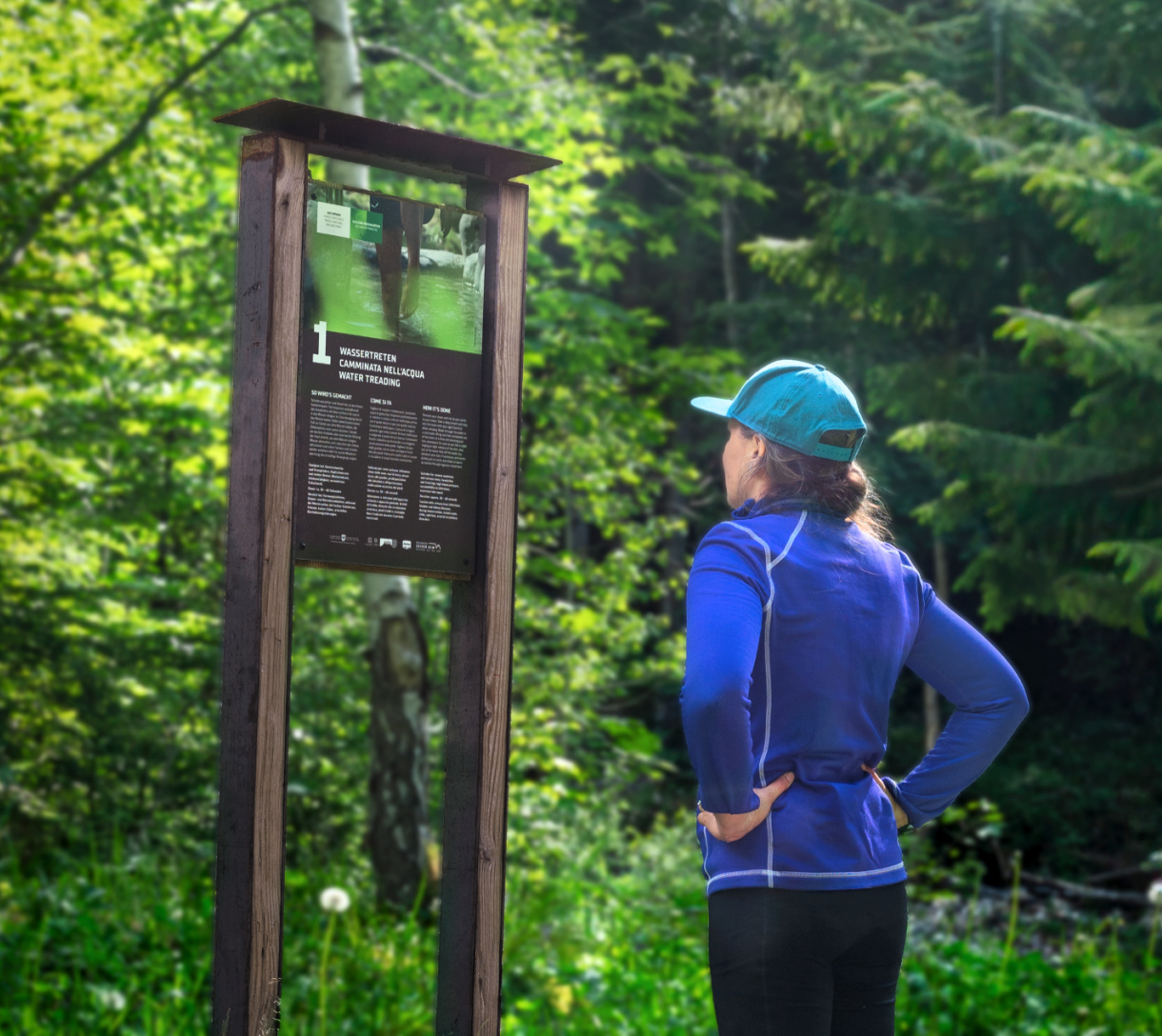
The course runs beside the stream near the hotel, with signs explaining what to do at each station. After several hours on the trail, we did what tired hikers with questionable judgment do. We tried all of them.
First came the icy water around the legs. Then the various exercises. None were especially complicated. All involved becoming colder.
Eventually we reached the face bath: a stone basin filled with mountain water and instructions asking you to lower your face into it. This is the sort of thing that sounds perfectly reasonable until your nose is three inches from the surface.
Still, we had come this far. Down went the face. Up came the adrenaline.
Spa time had officially been earned.
Where Wellness Spills Into the Wild
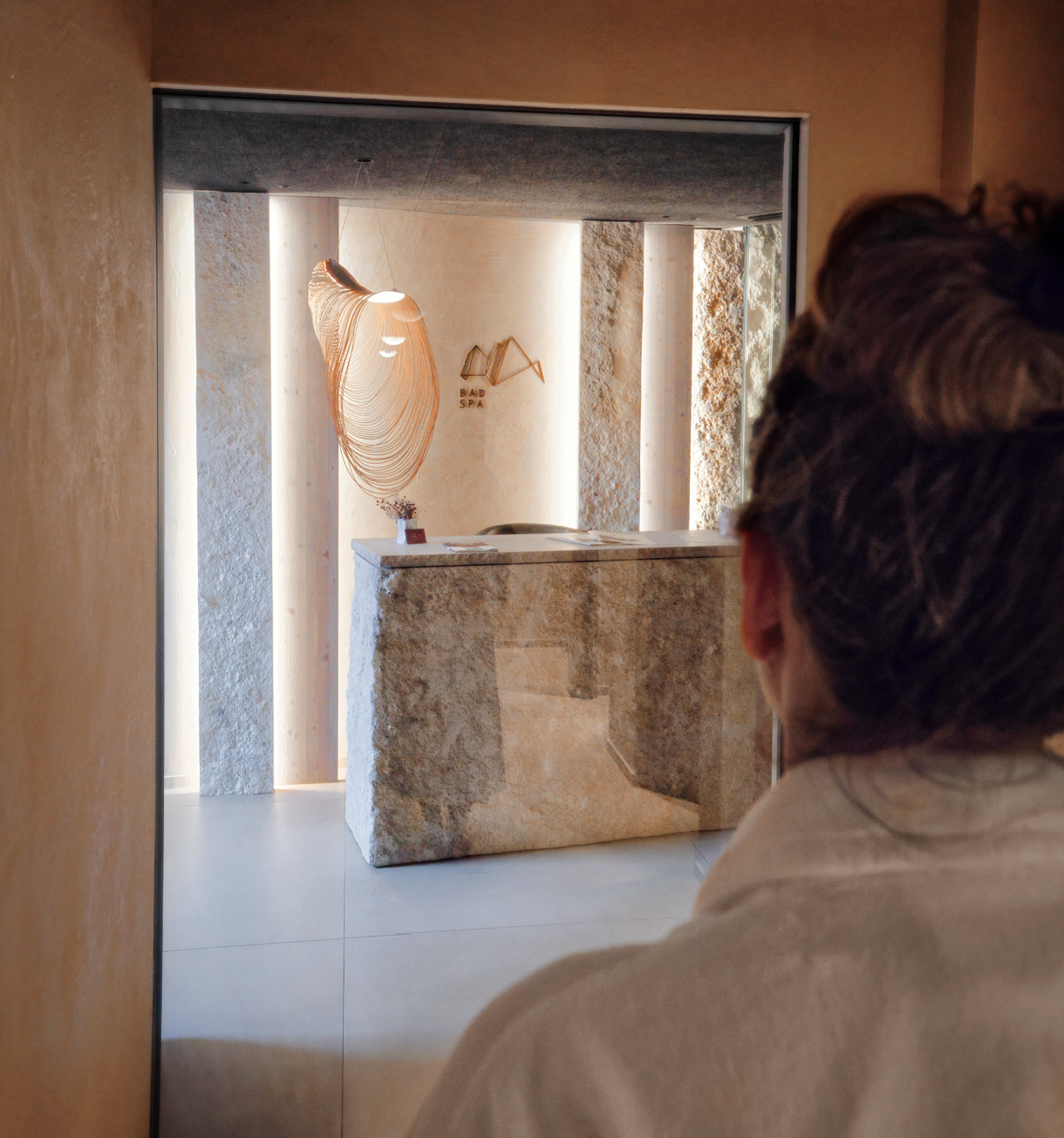
If the older parts of Bad Ratzes speak to its long history, the spa shows where the hotel is headed. Spread across two levels, it has a more contemporary feel, but remains thoughtfully connected to the natural surroundings rather than becoming a self-contained wellness cocoon — something too many hotel spas get wrong, in our experience.
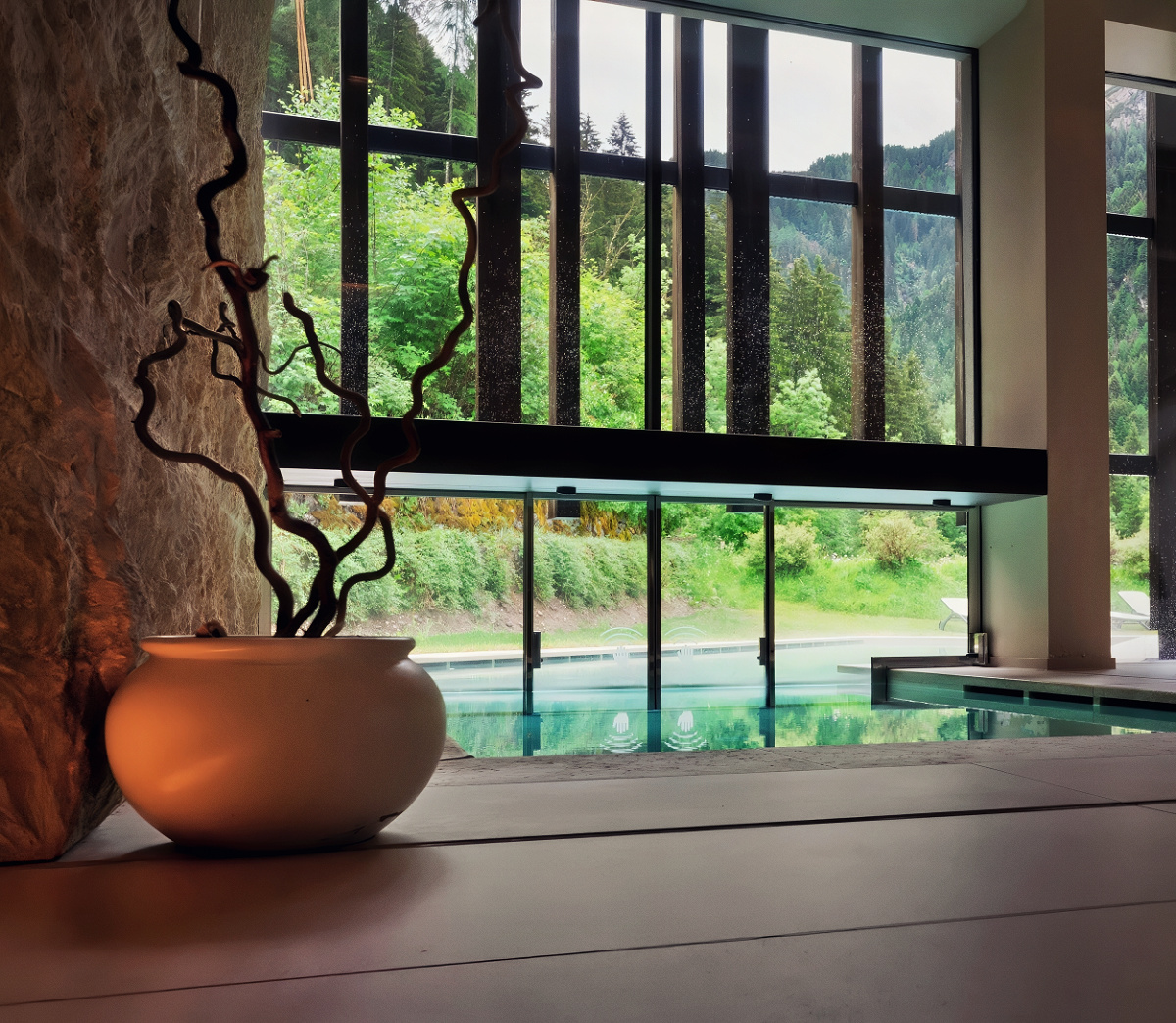
The exterior is clad in vertical larch beams that echo the trunks of the spruce, pine and fir surrounding the hotel. Inside, the pool sits behind walls of glass, allowing the forest, meadow and mountain to do most of the decorating. Rough-edged limestone adds warmth and texture, while spruce slats ripple across the ceiling in long, almost wave-like bands.
The indoor pool is large enough for an actual swim, but we were equally happy lingering at the edge, where whirlpool jets could be switched on, giving tired hiking legs a chance to reconsider some of their earlier complaints. Soft ambient lighting kept the space calm, and generous loungers gave us somewhere to disappear between dips without feeling as though we were waiting for someone else to surrender a chair.
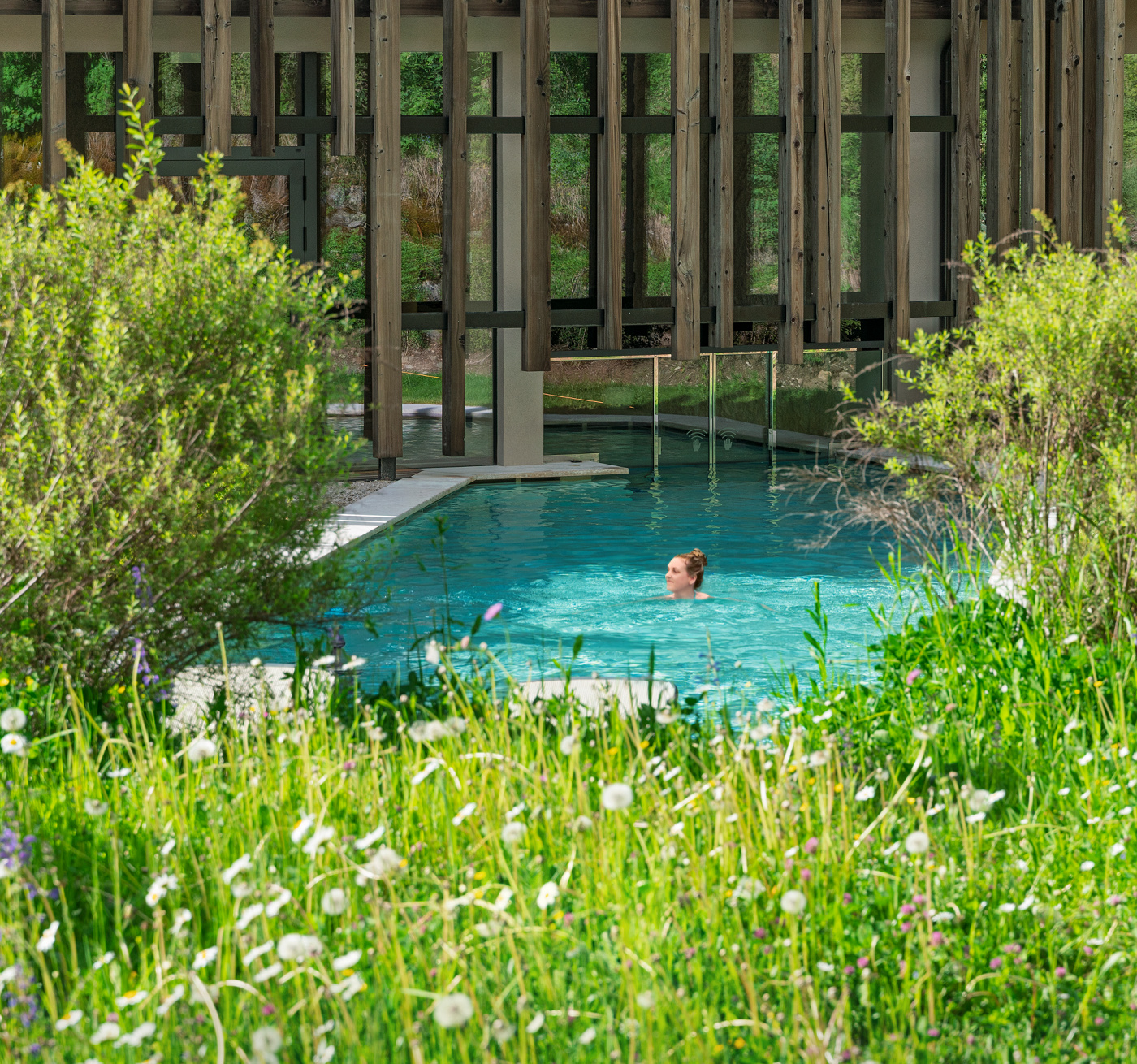
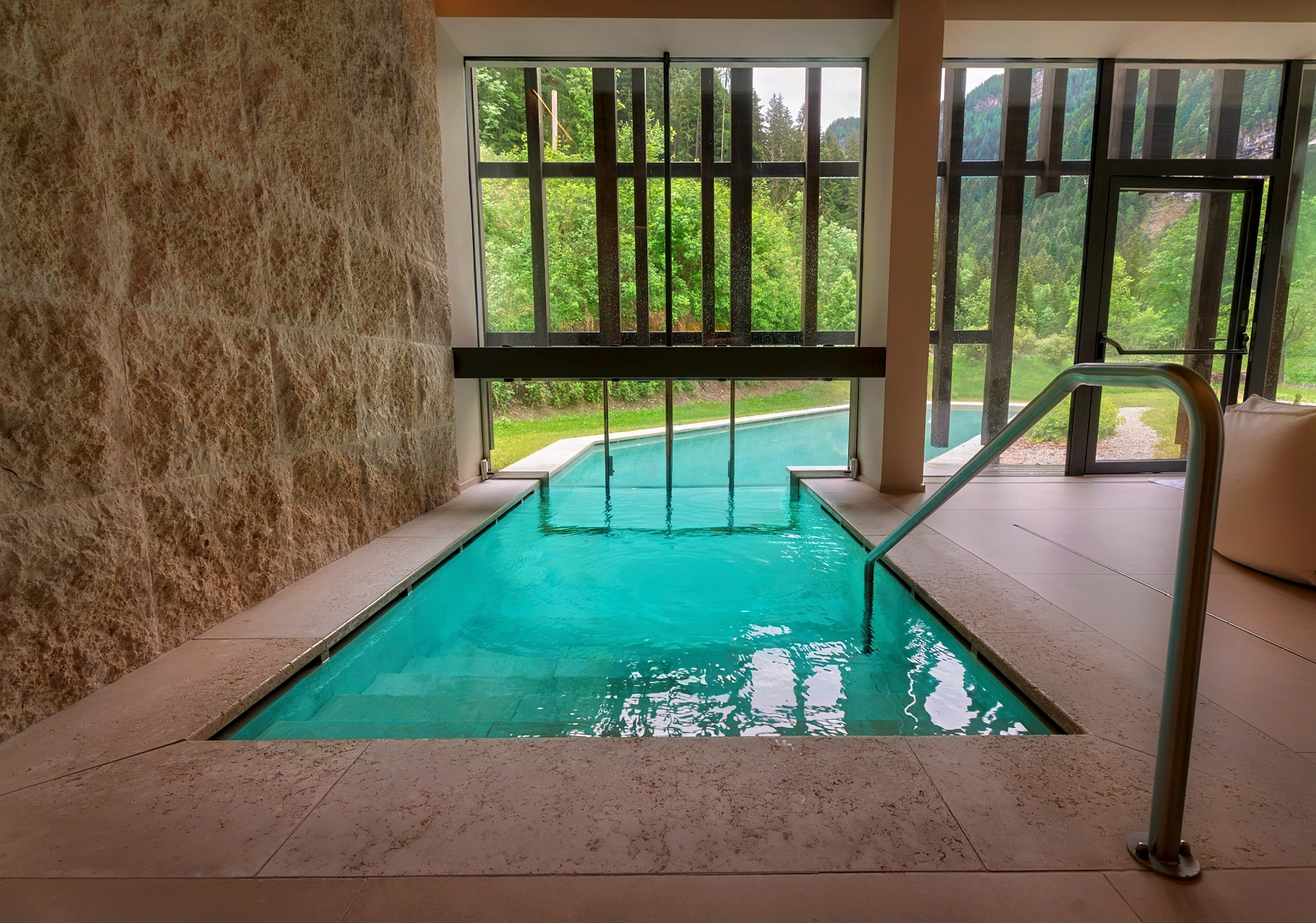
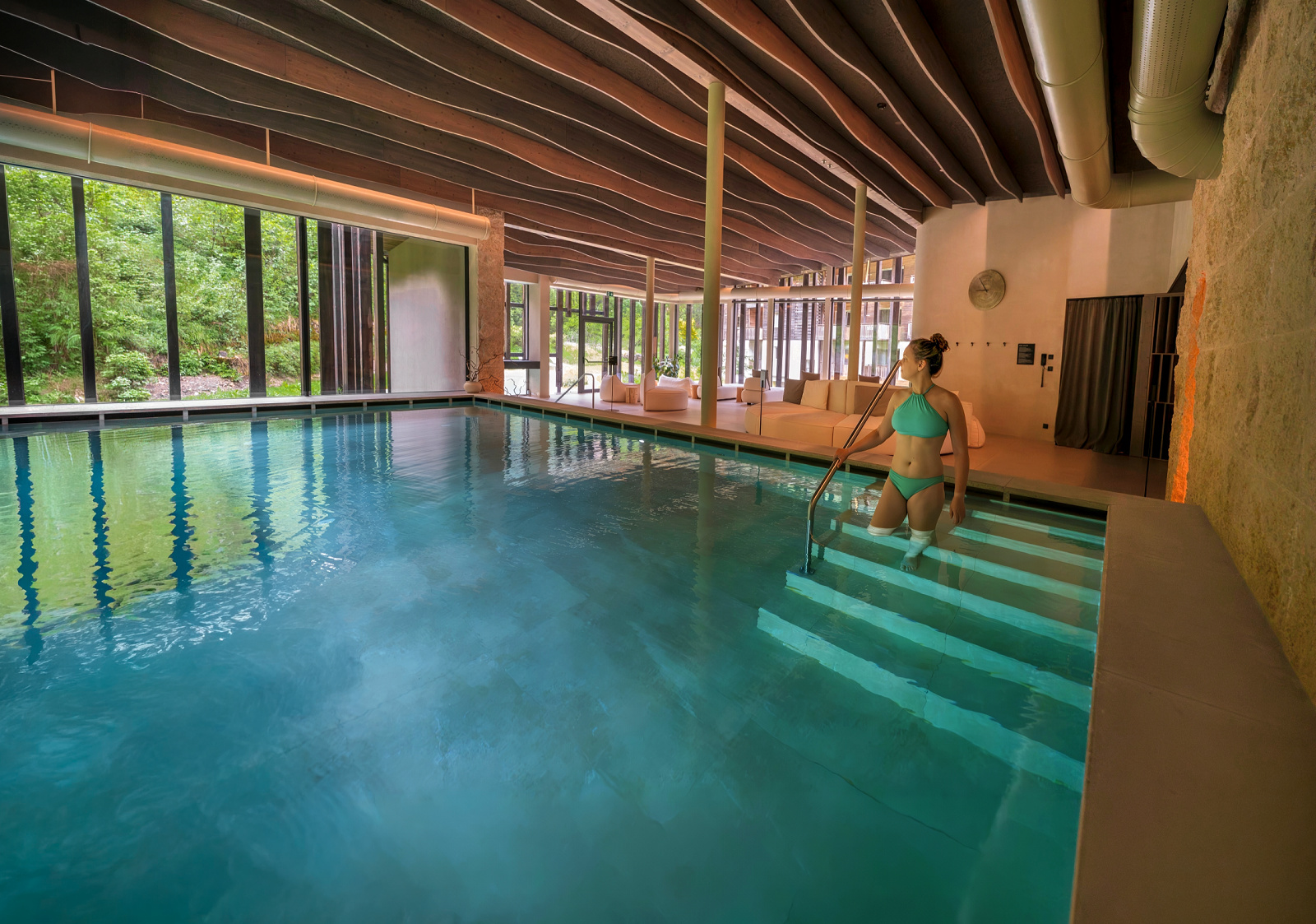
From the indoor pool, you can swim directly outside into the heated outdoor pool, where the architecture suddenly takes a back seat. Forest rises around you. The meadow spreads beyond the water. And the Schlern looms above it all, close enough to make floating on your back feel like a perfectly legitimate afternoon plan.
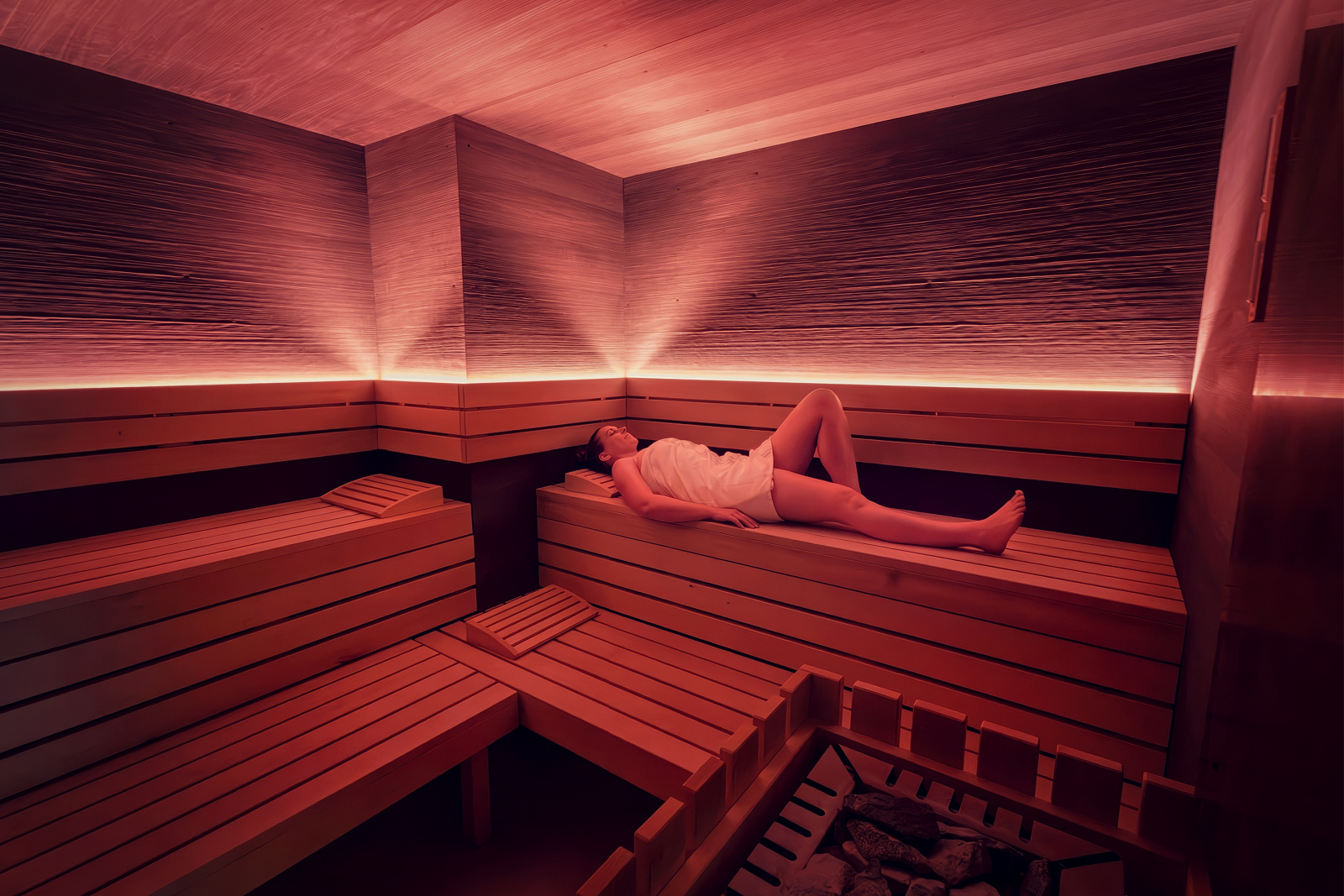
The lower level slows things down further. A Finnish sauna and gentler bio-sauna sit alongside a steam room, with a quiet room looking toward the garden and inner courtyard. Even here, pieces of the surrounding landscape find their way inside.
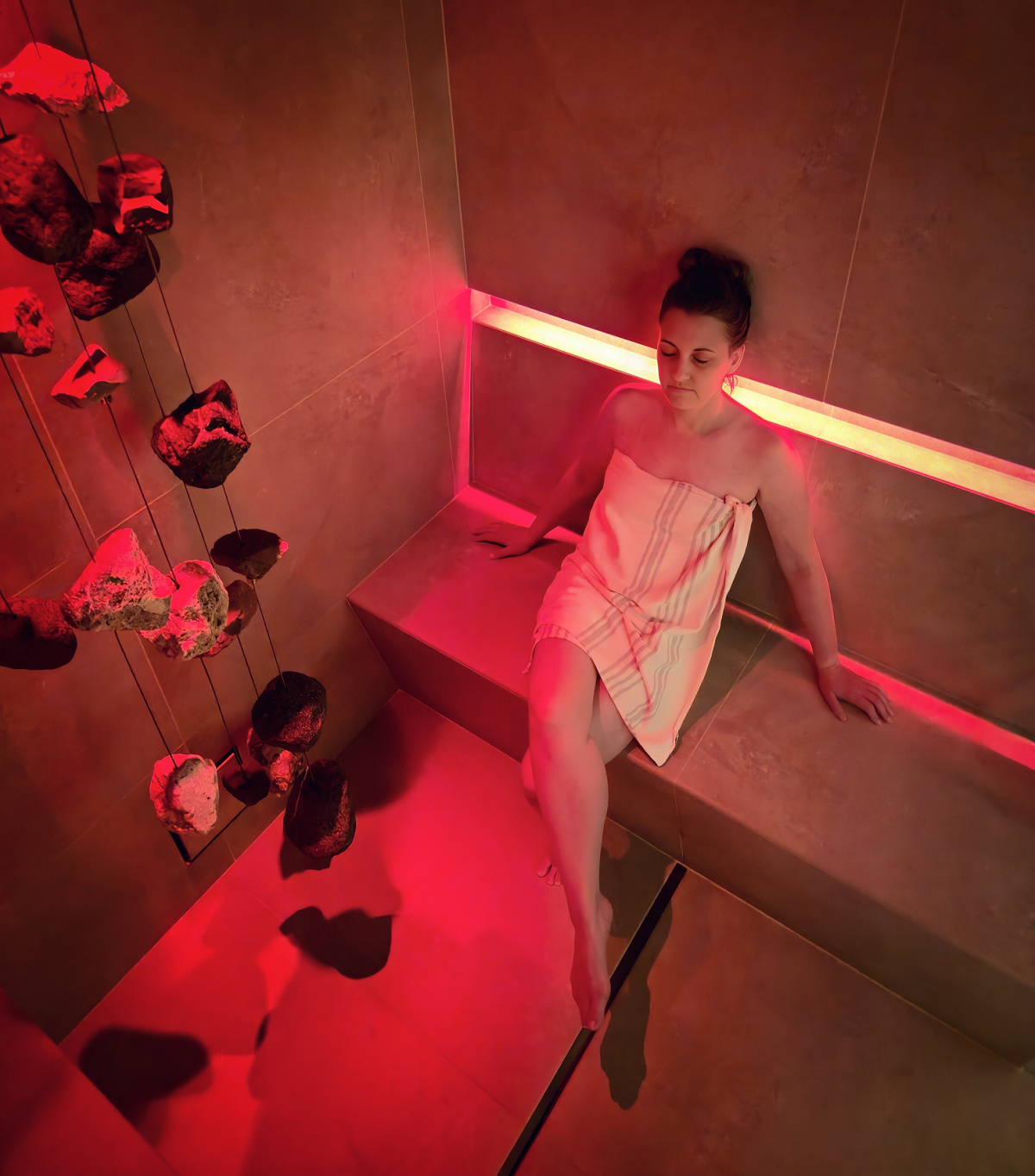
In the steam room, stones inspired by the nearby Frötschbach hang from fine steel cables in the mist, while the quiet room’s walls are infused with real lavender flowers, giving the space a soft, natural fragrance. It is one of those sensible design touches you quietly file away for the next home remodel project.
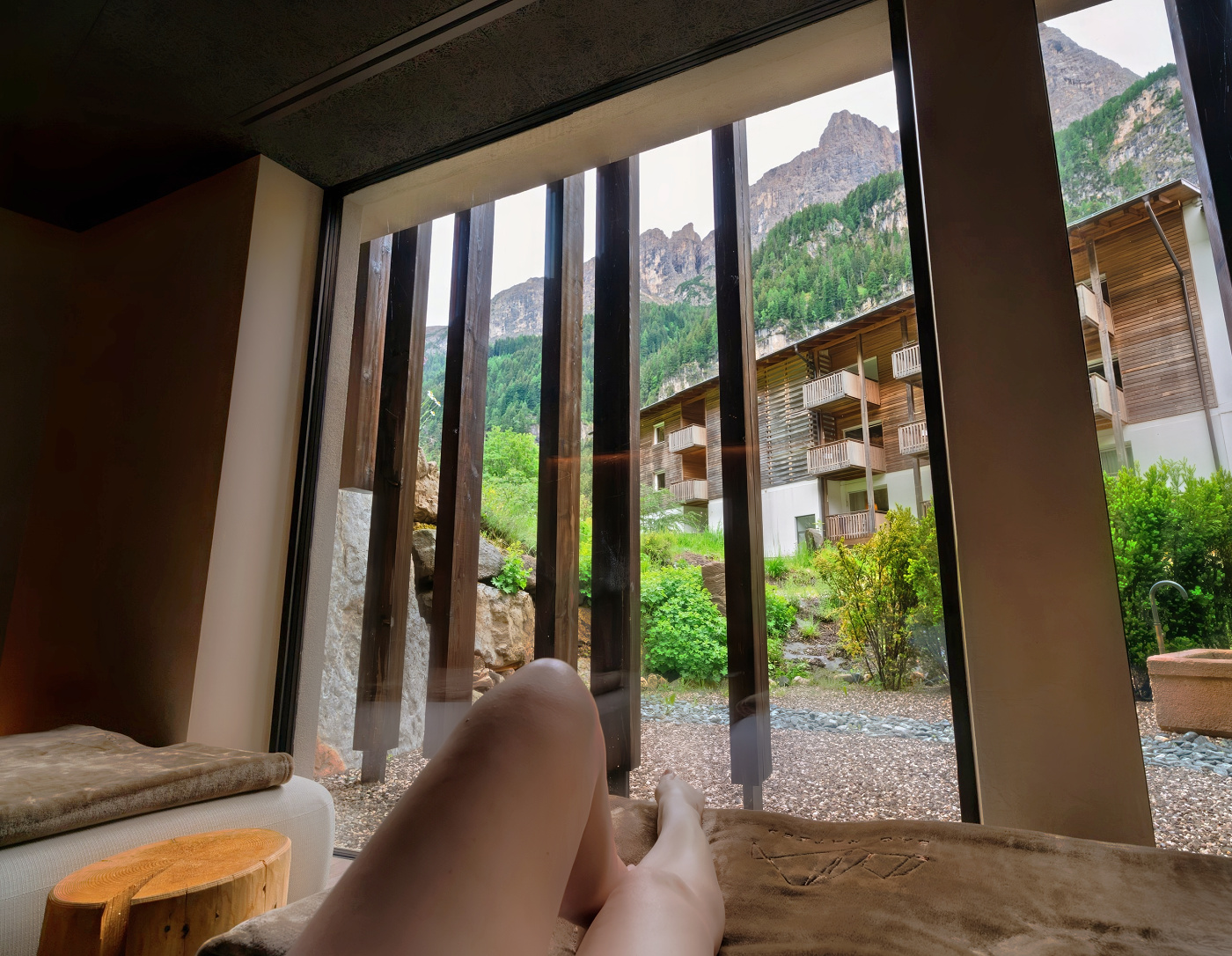
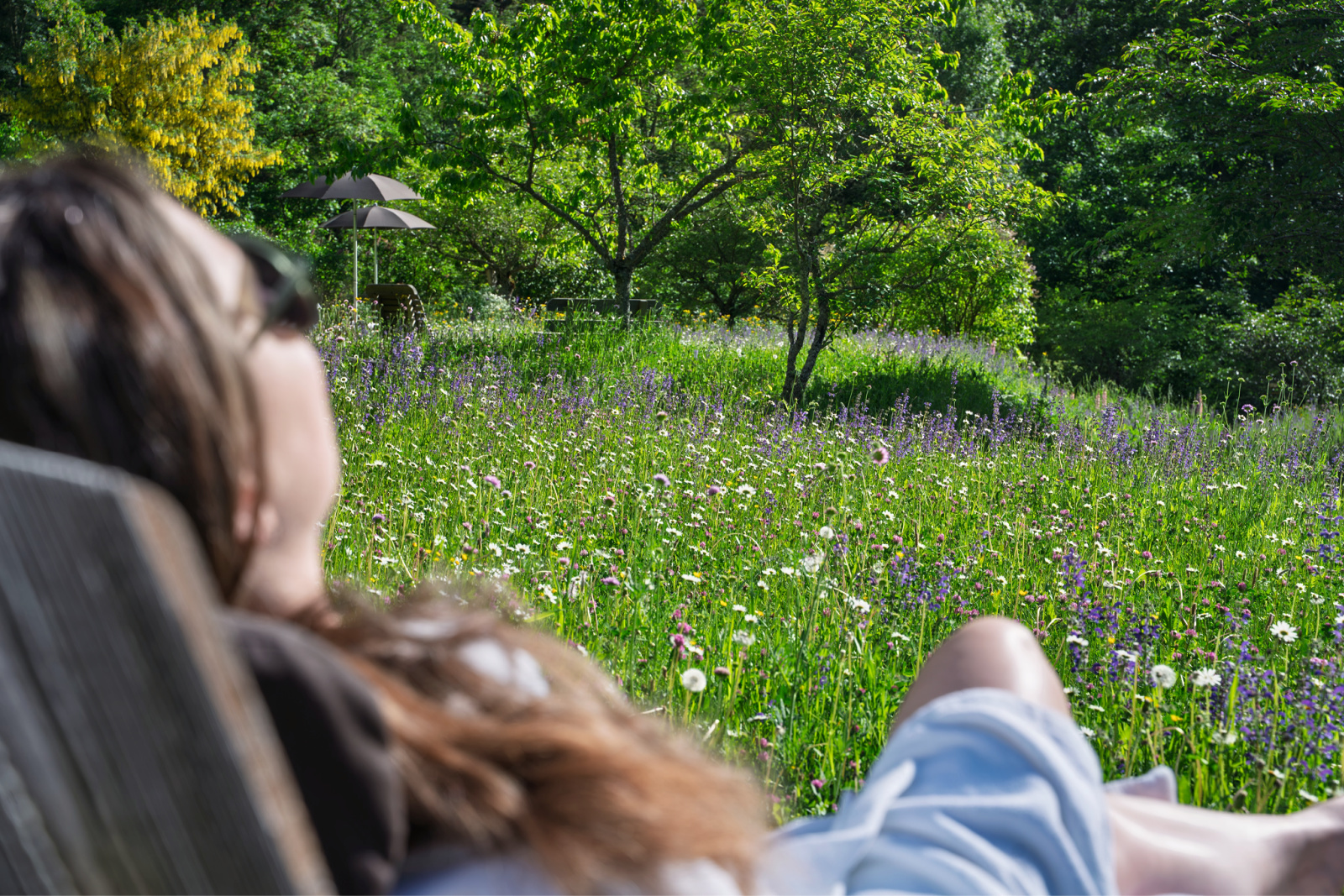
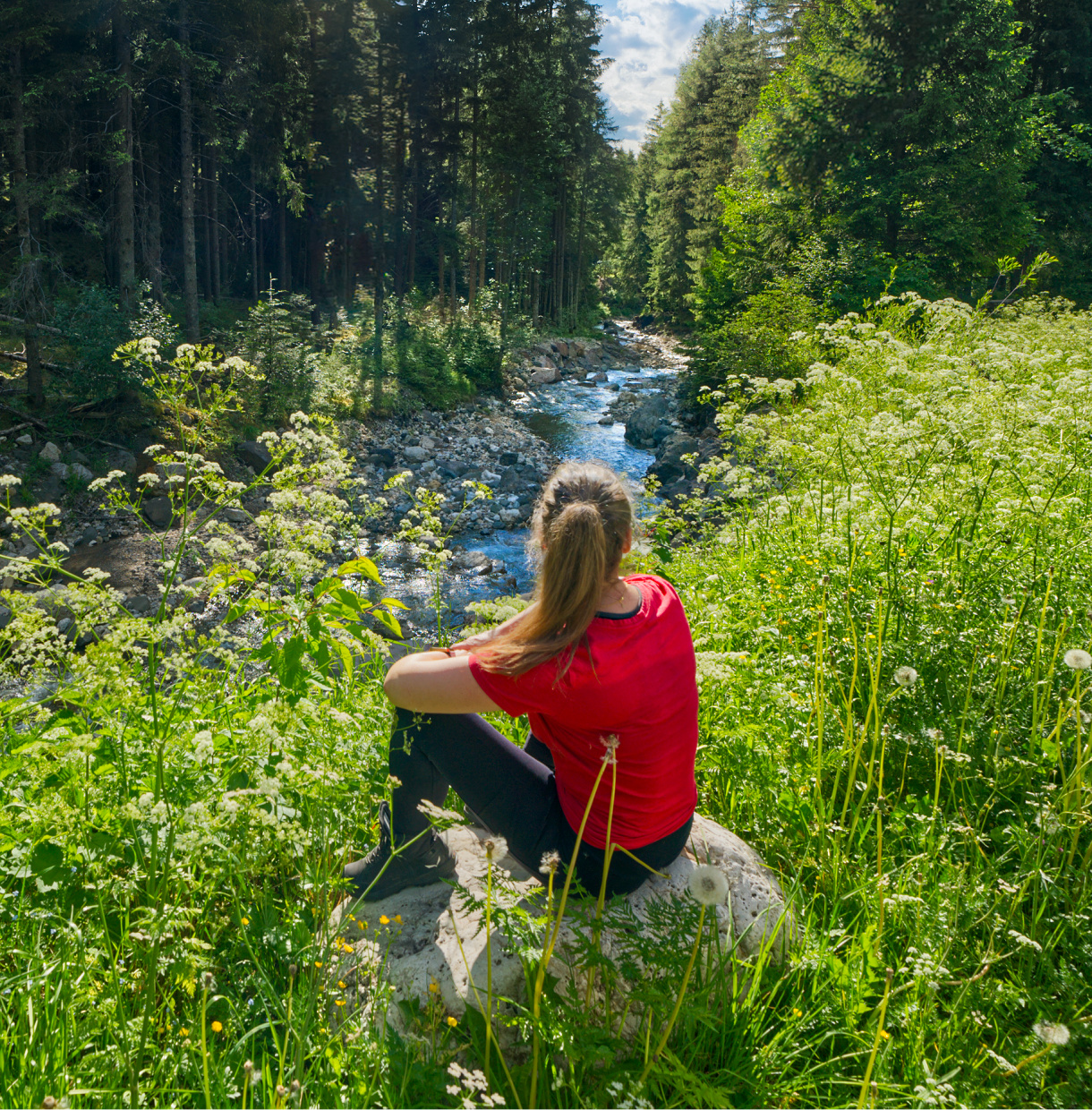
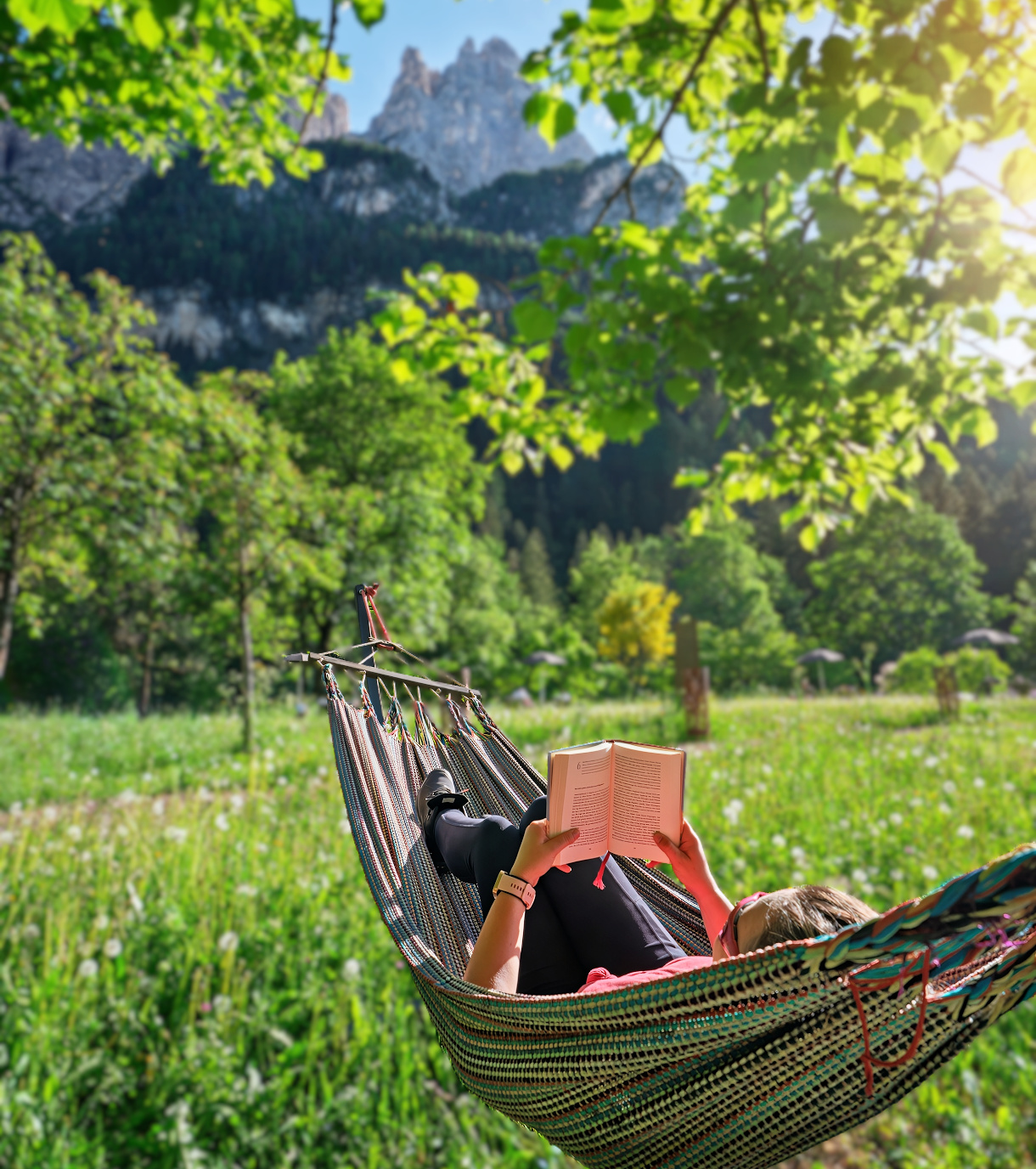
But some of our favorite wellness moments at Bad Ratzes happened after we walked straight past the spa doors. Beyond the main pool area, the hotel grounds spill into the same meadow we had been wandering since our first afternoon, with loungers and private spaces to settle in scattered through the grass.
That meadow may be Bad Ratzes’ greatest wellness asset. You are not simply looking at nature while you relax; you are lying in the middle of it. Rather than packing guests together around a pool deck, the hotel gives everyone enough room to spread out so that the only sounds you notice are rustling treetops, flowing water and whatever is busy pollinating the meadow.
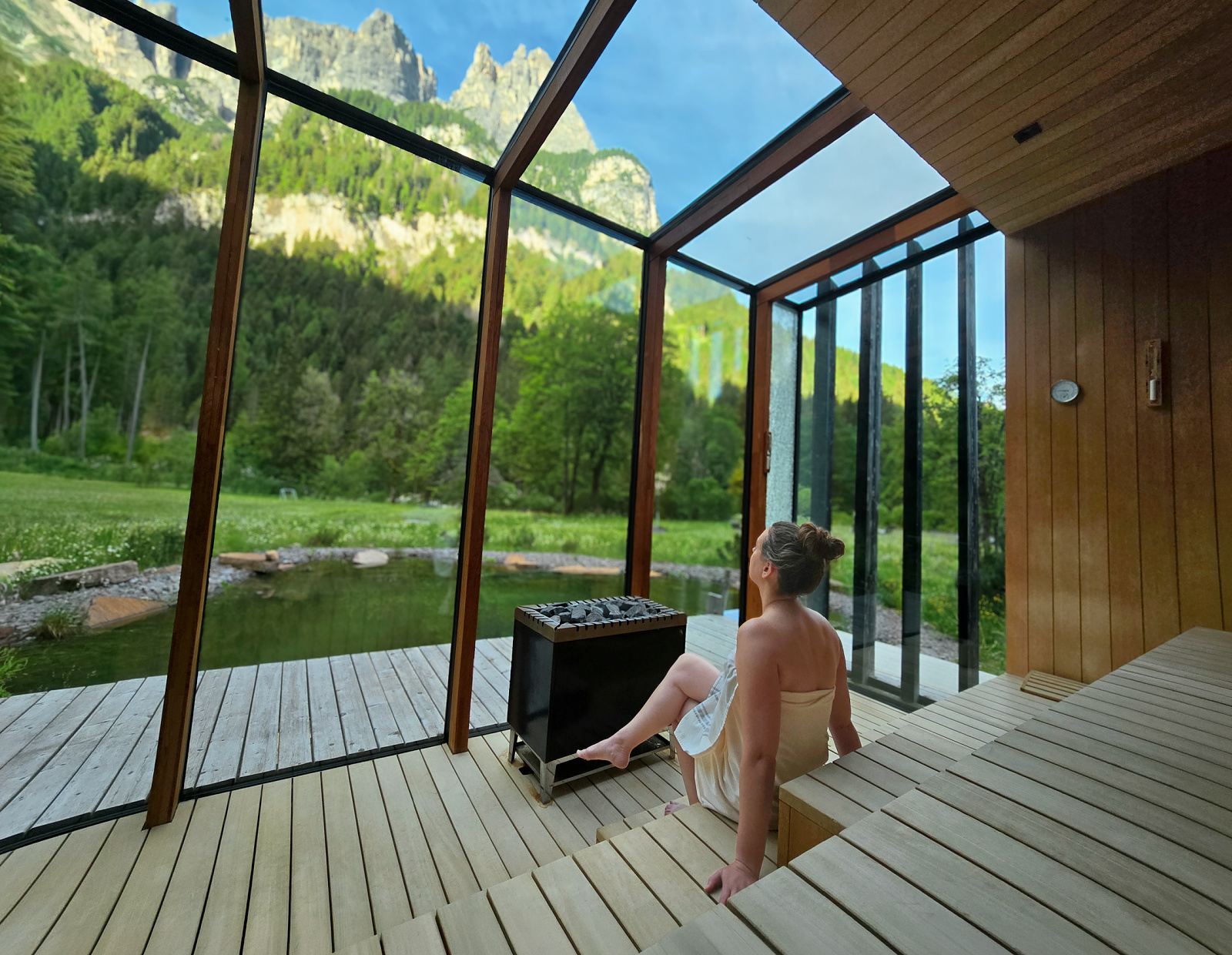
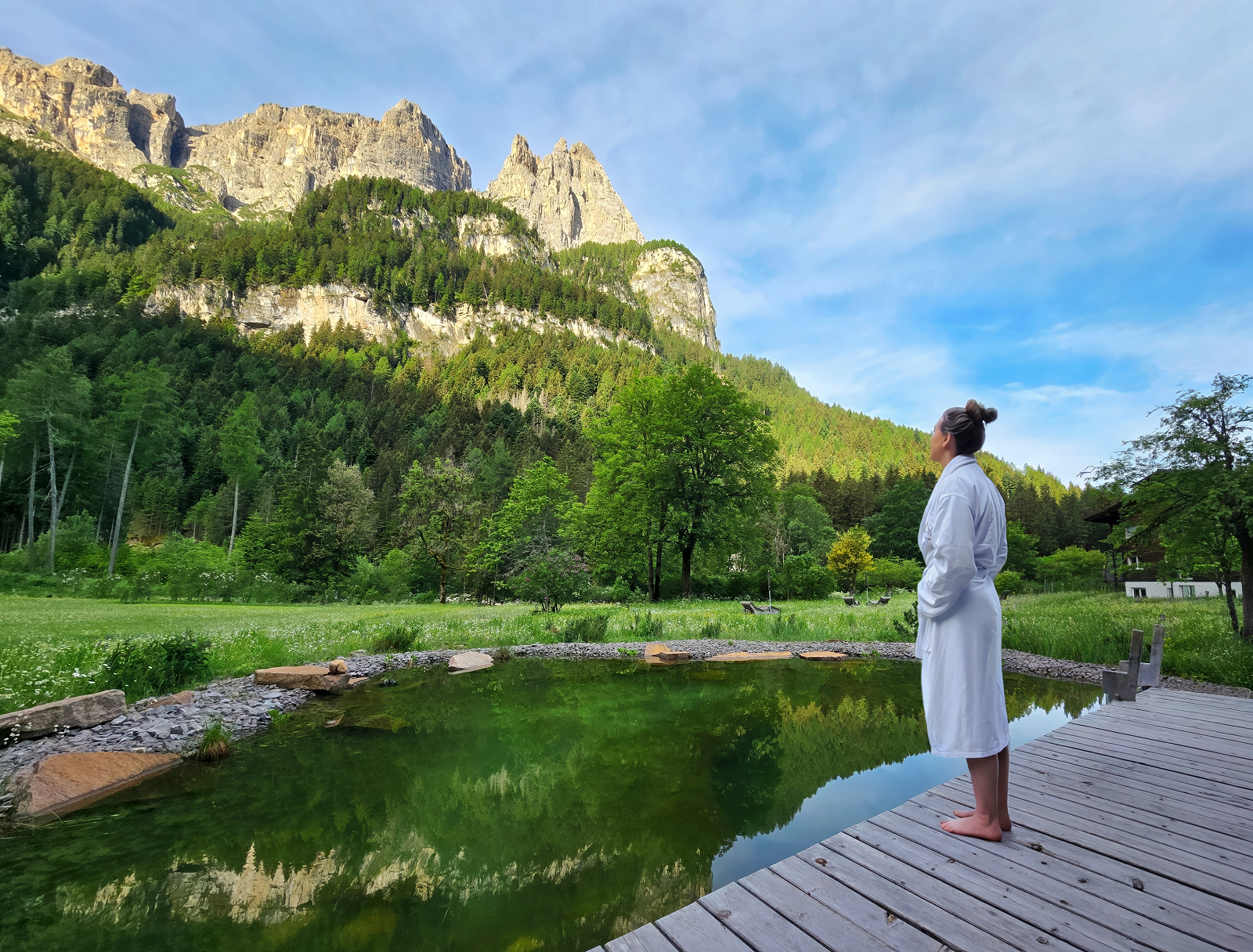
A panoramic sauna also sits in the meadow, perched above a bio-pool filled with spring water and cleaned naturally without chlorine. The pool is left unheated, so nature gets the final say on its temperature. Beside it, sheltered relaxation bunks face the Schlern, giving you a cozy place to linger outdoors when the air is a little too brisk for settling into a lounger.
Beyond simply letting the landscape do the work, Bad Ratzes also offers massages and yoga for guests who want a little more structure to their wellness time. We were happy to let the forest, meadow and mountain handle the therapy, so we skipped the treatments ourselves, but they are there for anyone who wants them.
Dining With a Side of Culture
All that hiking, swimming and surrendering to the meadow has a predictable side effect: eventually, you get hungry.
Fortunately, Bad Ratzes is the kind of hotel where returning for dinner feels like part of the day rather than an interruption to it. We stayed with full board, which suited the secluded setting particularly well. Once we came back from the trail or wandered in from the spa, there was little reason to start thinking about driving somewhere else for a meal.
Dining takes place in two separate areas of the hotel. One looks toward the mouth of the Frötschtal; the other faces the garden and meadow. Both are contemporary spaces with large windows, allowing forest, mountain and shifting daylight to remain part of the meal.
We love a wood-clad South Tyrolean Stube that looks as though it has been serving dumplings since Charlemagne as much as anyone. But there was something refreshing about eating with so much of the outdoors still in view.
Splitting the restaurant between two dining rooms helps as well. Neither space feels overly large, so meals retain some of the intimacy of a traditional Stube while trading dark timber walls for natural light and views into the surroundings.
Breakfast followed the generous South Tyrolean tradition: breads, cured meats, cheeses, fruit, pastries and eggs, with plenty of choice for fueling a morning in the mountains.
The kitchen carries that regional grounding through the rest of the day. Bad Ratzes describes its cooking as a mix of homemade South Tyrolean specialties, regional ingredients and products, alongside local and Mediterranean dishes. That was very much what we experienced. Across three days, there was enough South Tyrolean character to remind us where we were, but enough variety that dining at the hotel for nearly every meal never became predictable.
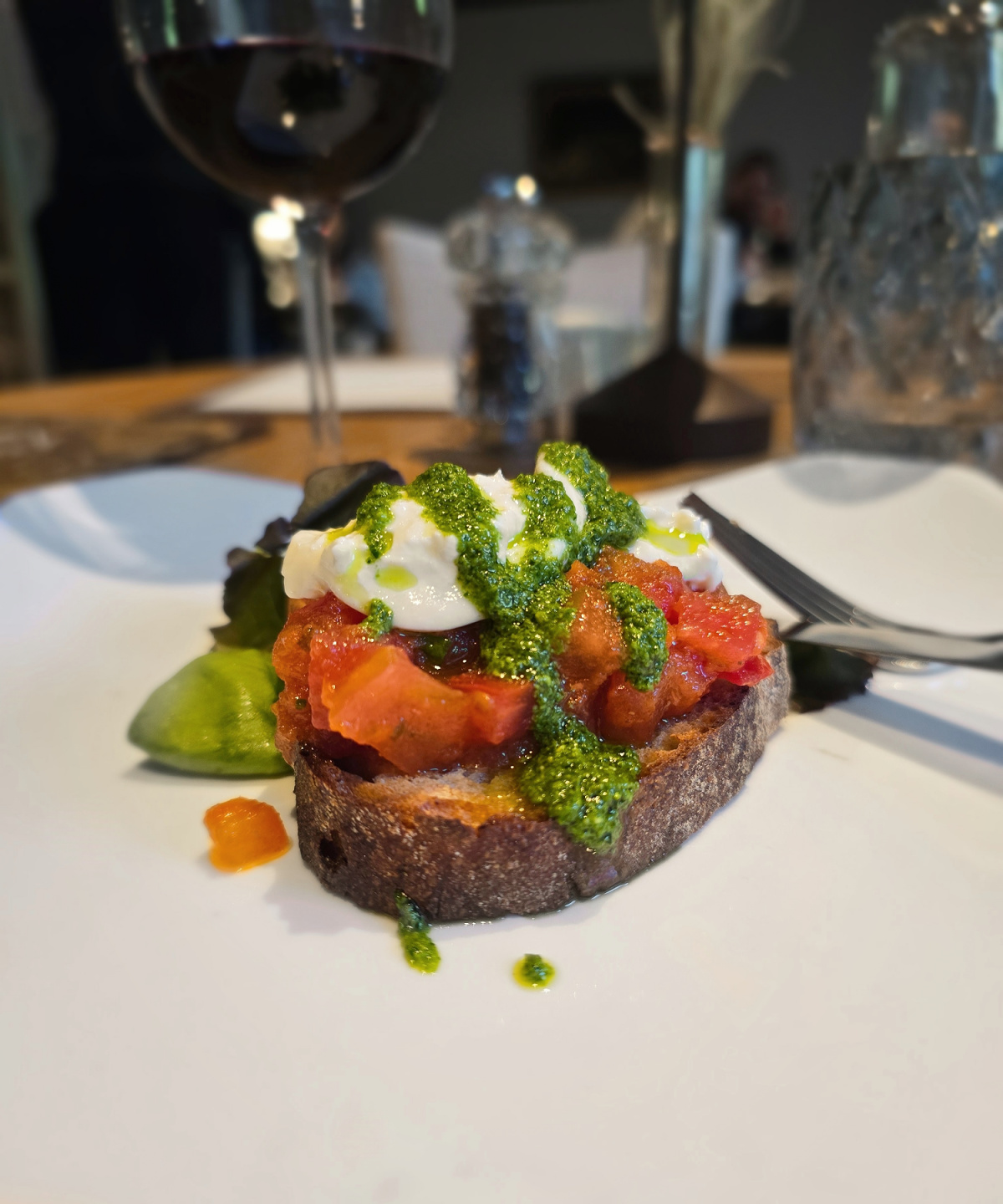
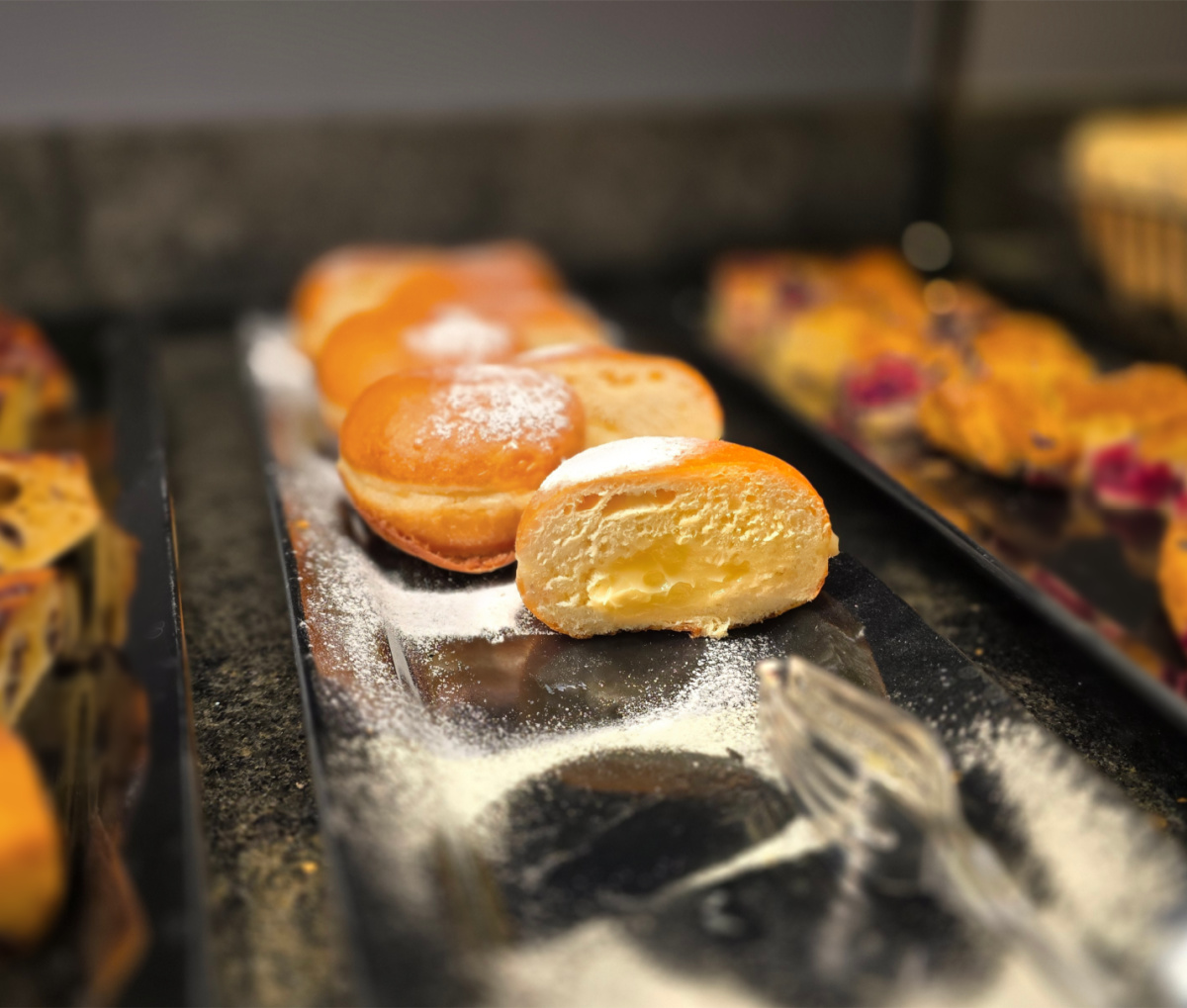
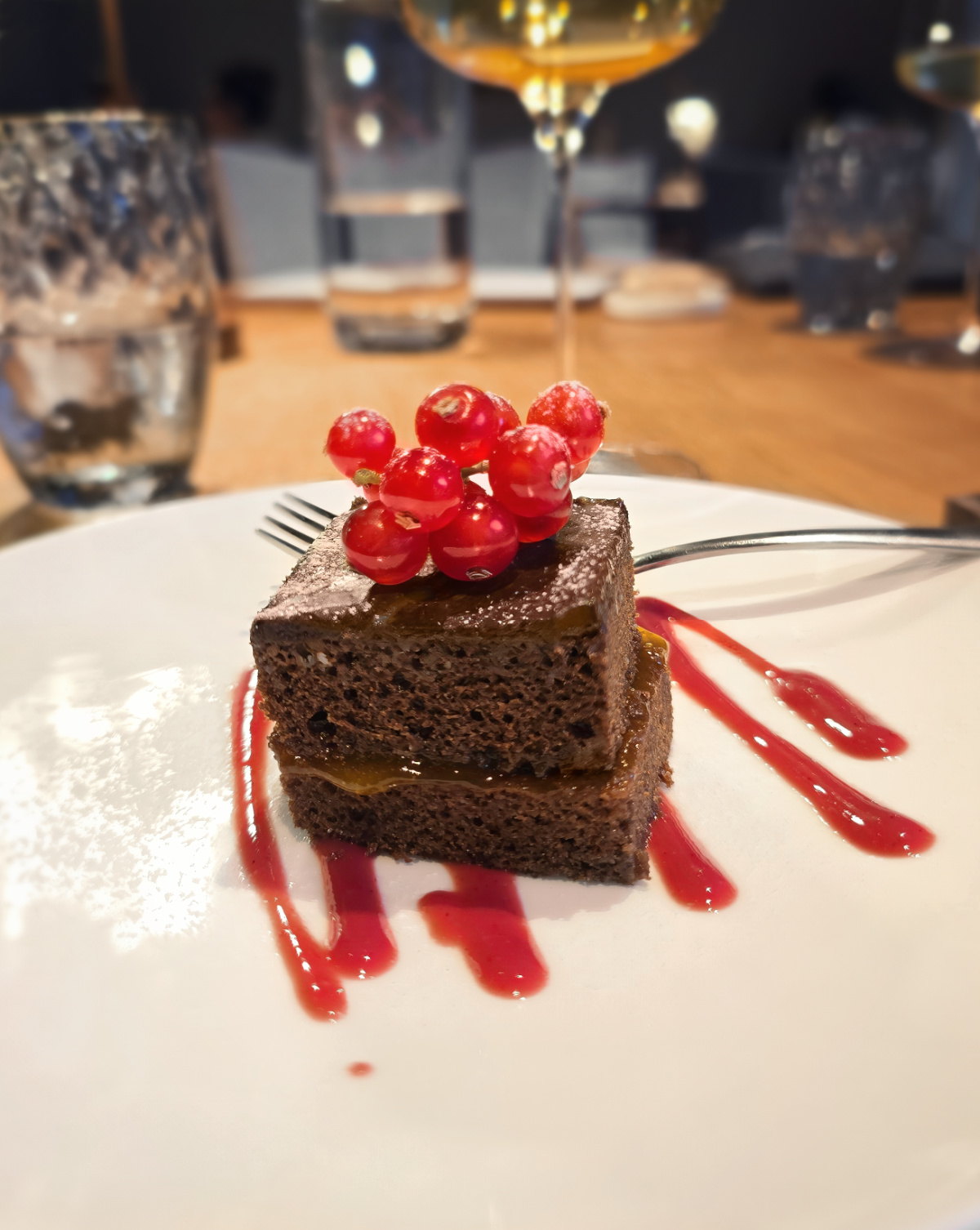
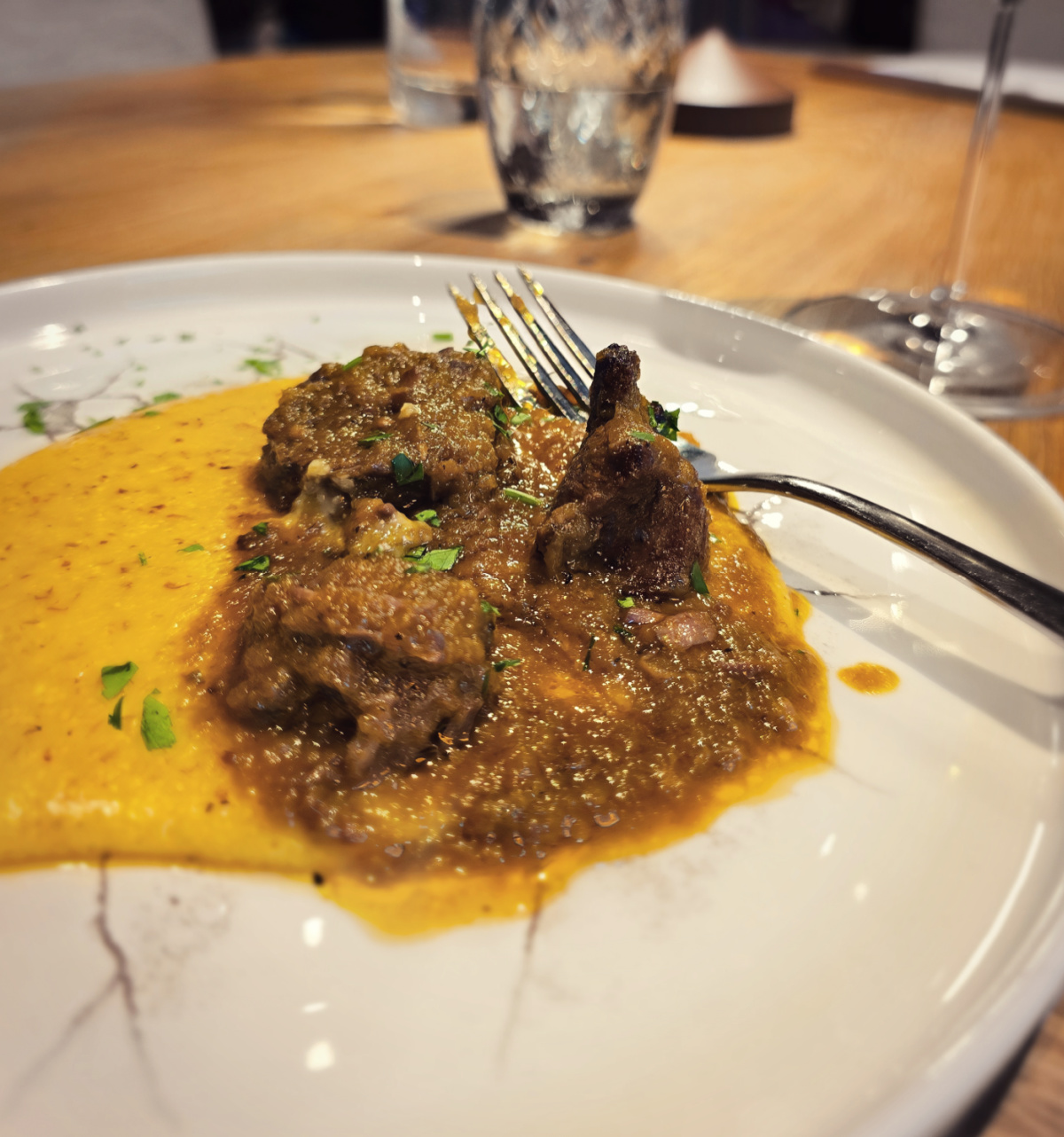
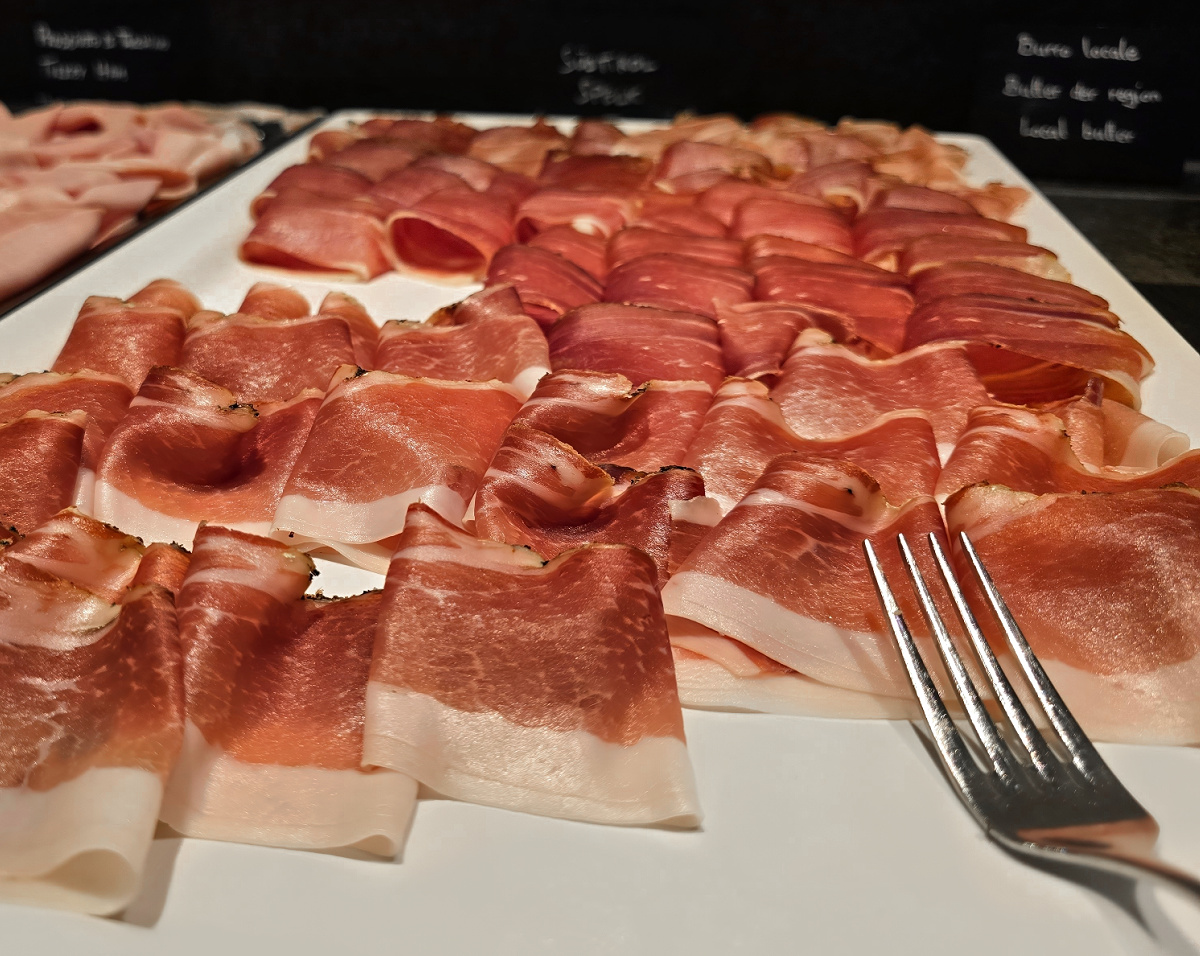
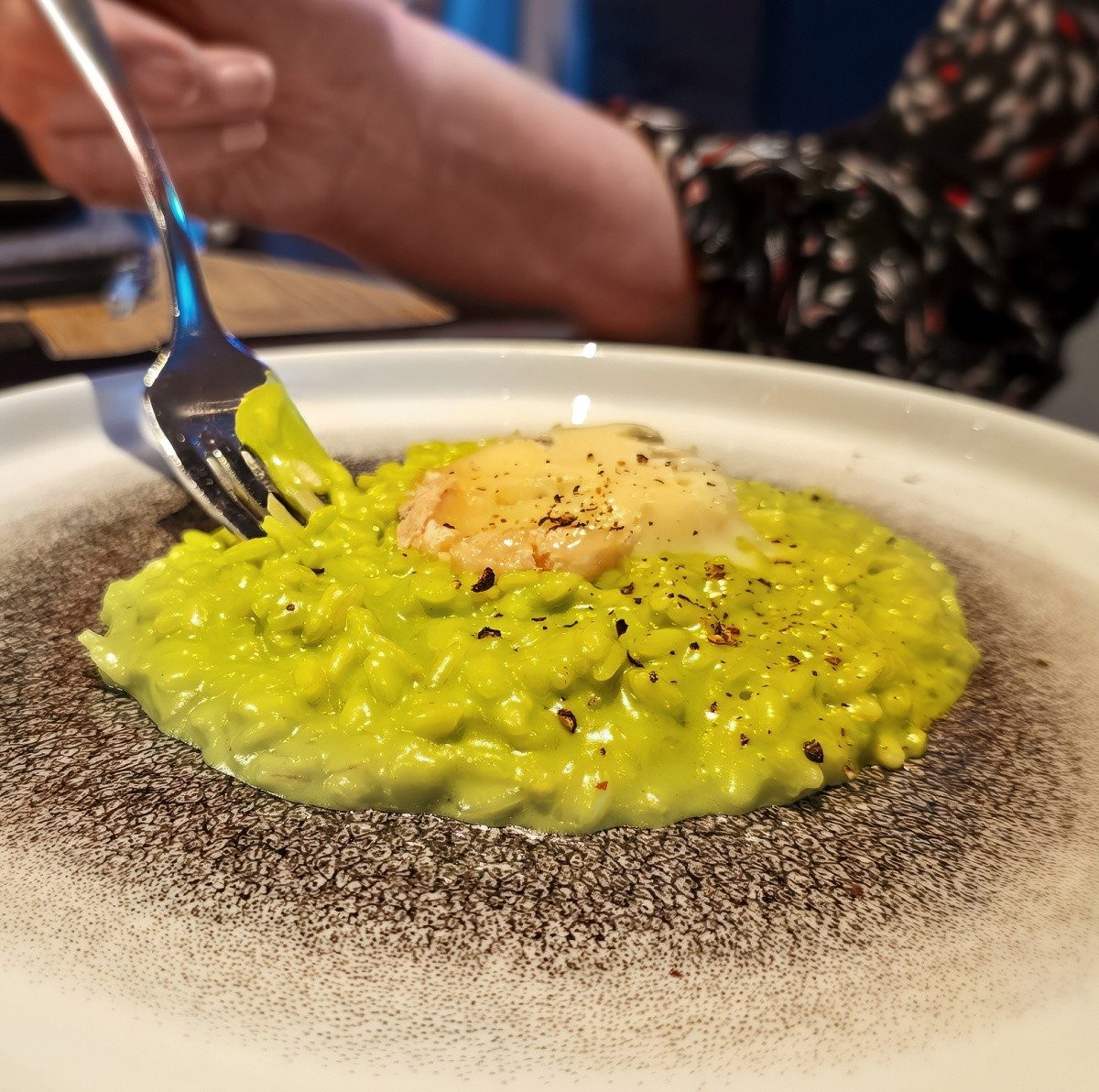

Dinner was the meal we most looked forward to. Courses arrived at a leisurely pace, giving us time to talk, pour another glass of wine and let the day wind down. Petra regularly stopped by guests’ tables to say hello and ask how their stay was going — a small gesture, but exactly the kind of personal attention that makes a family-run hotel feel genuinely family-run.
One evening, subtlety was set aside altogether. An entire roast pig became the centerpiece of dinner, laid out before guests while a chef carved portions to order. It was generous, communal and wonderfully old-school. The kind of mountain-hotel dinner that has no interest in pretending appetite is something to be embarrassed about.
We happily joined the line.
More broadly, we ate very well throughout our stay. The cooking felt grounded in South Tyrol without being confined by it, and dinner remained relaxed enough that it never became the sort of multi-course production that leaves you wondering whether you are dining or completing an assignment.
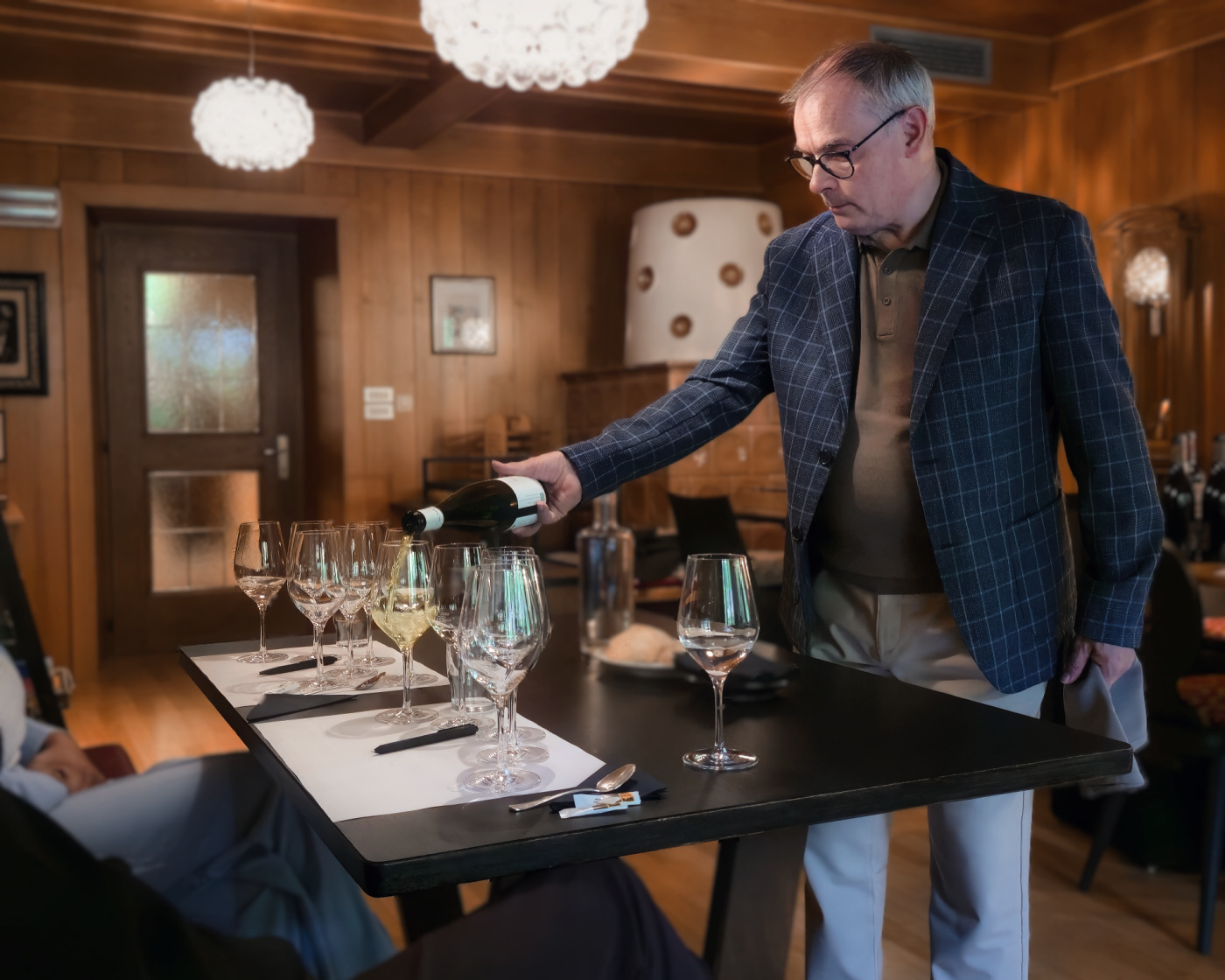
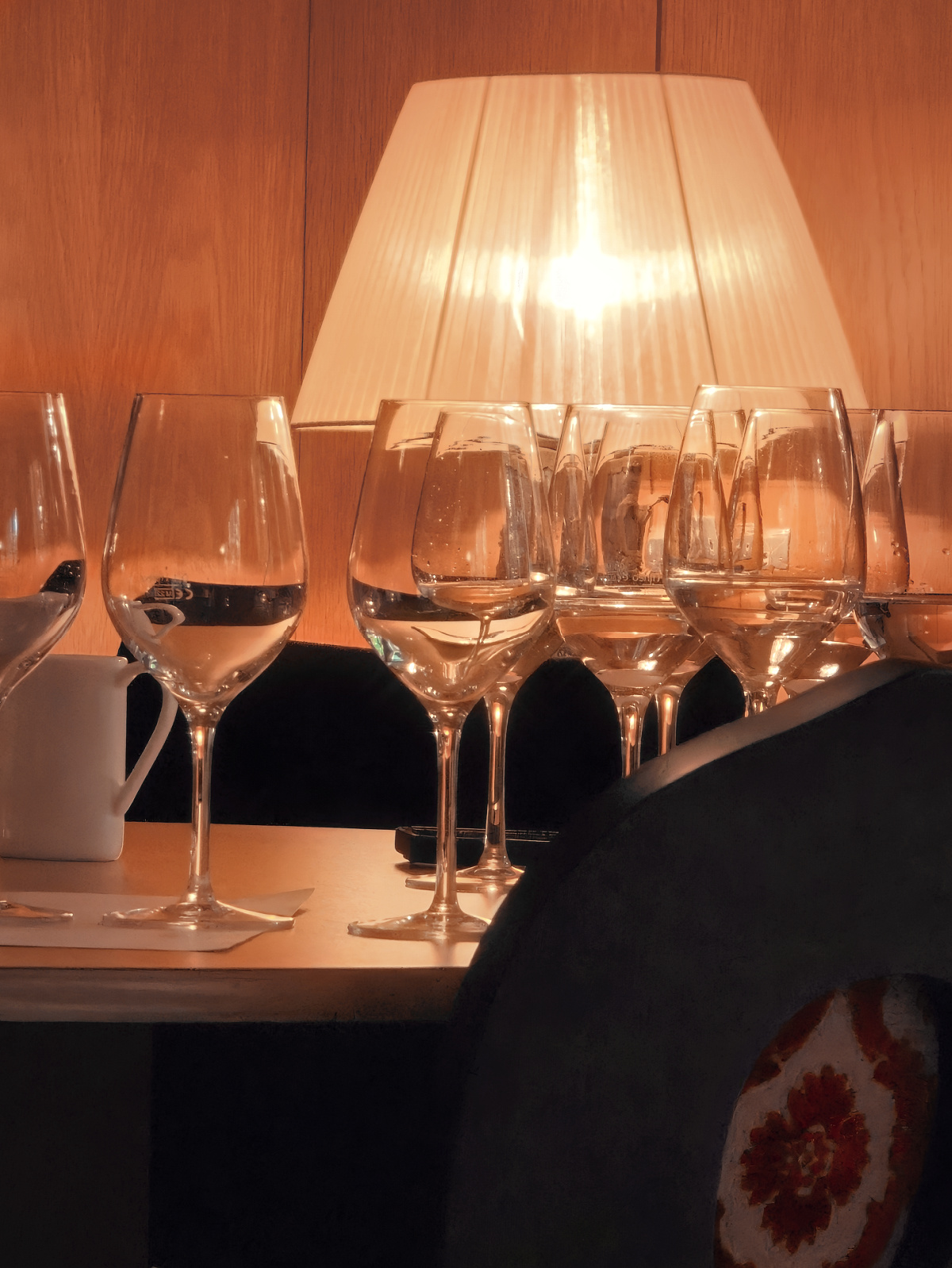
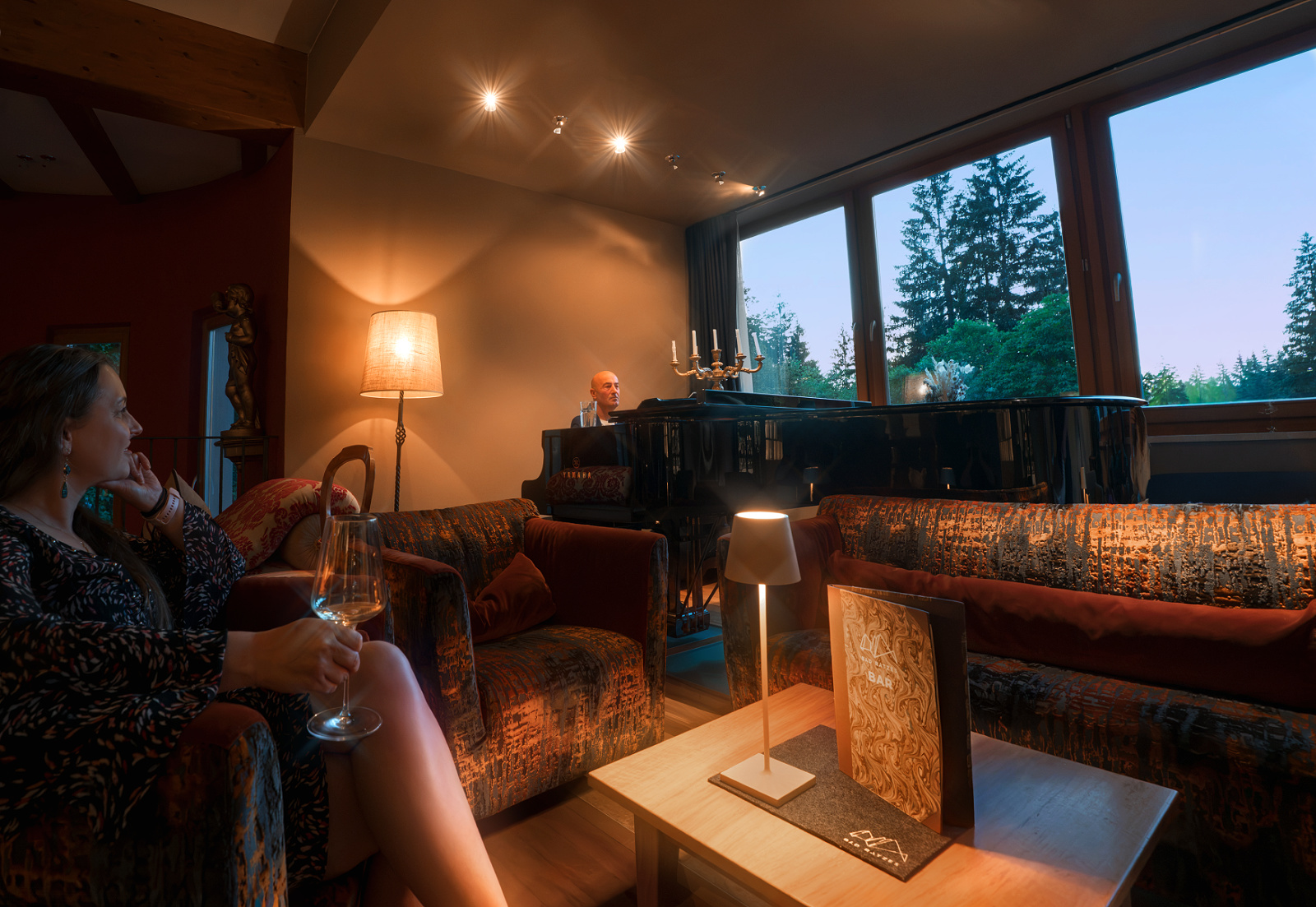
There is another advantage to eating where you sleep: the evening does not necessarily end when the plates disappear. During our stay, the bar and lounge became the natural next stop. One night, live piano music filled the room.
That was not simply an evening entertainment flourish. Music and art are woven rather deliberately into the identity of Bad Ratzes. The hotel has a long history of attracting artists, writers and curious minds. Petra’s great-grandfather, celebrated painter Eduard Burgauner, is part of that history, and some of his work still hangs at the hotel today. That cultural thread continues through concerts, readings, exhibitions and the Bad Ratzes Music & Art program, which brings visual artists and musicians into the hotel throughout the year.
What we like about the approach is that culture is not treated as something guests have to leave the property to seek out. A day here can begin on a trail beneath the Schlern, drift through the spa and meadow, linger over a wine or cheese tasting, continue through dinner and end with a pianist at the keys or an artist’s work on the walls.
✦ Good to Know: When wandering nearby Castelrotto (Kastelruth), look up. Some of the village’s most elaborate painted façades are the work of Eduard Burgauner, Petra’s great-grandfather. He reportedly wanted to turn his hometown into a work of art, and more than a century later, his frescoes still decorate many of the buildings.
Who Will Love Bad Ratzes?
Bad Ratzes is not difficult to recommend. The more useful question is whether you are the kind of traveler who will take advantage of what makes it unusual.
We would put hikers near the top of that list. Few things simplify a Dolomites stay quite like being able to walk out the door and disappear into the mountains without first negotiating a parking lot, bus timetable or gondola line. At Bad Ratzes, the landscape is not somewhere you commute to each morning. It begins outside.
The same is true for travelers drawn to wellness, particularly those who would rather alternate a sauna with an hour in a wildflower meadow than spend an entire afternoon sealed inside a spa. Couples should find plenty of places to disappear together, while families benefit from something equally valuable: enough space for everyone to find their own corner of the property.
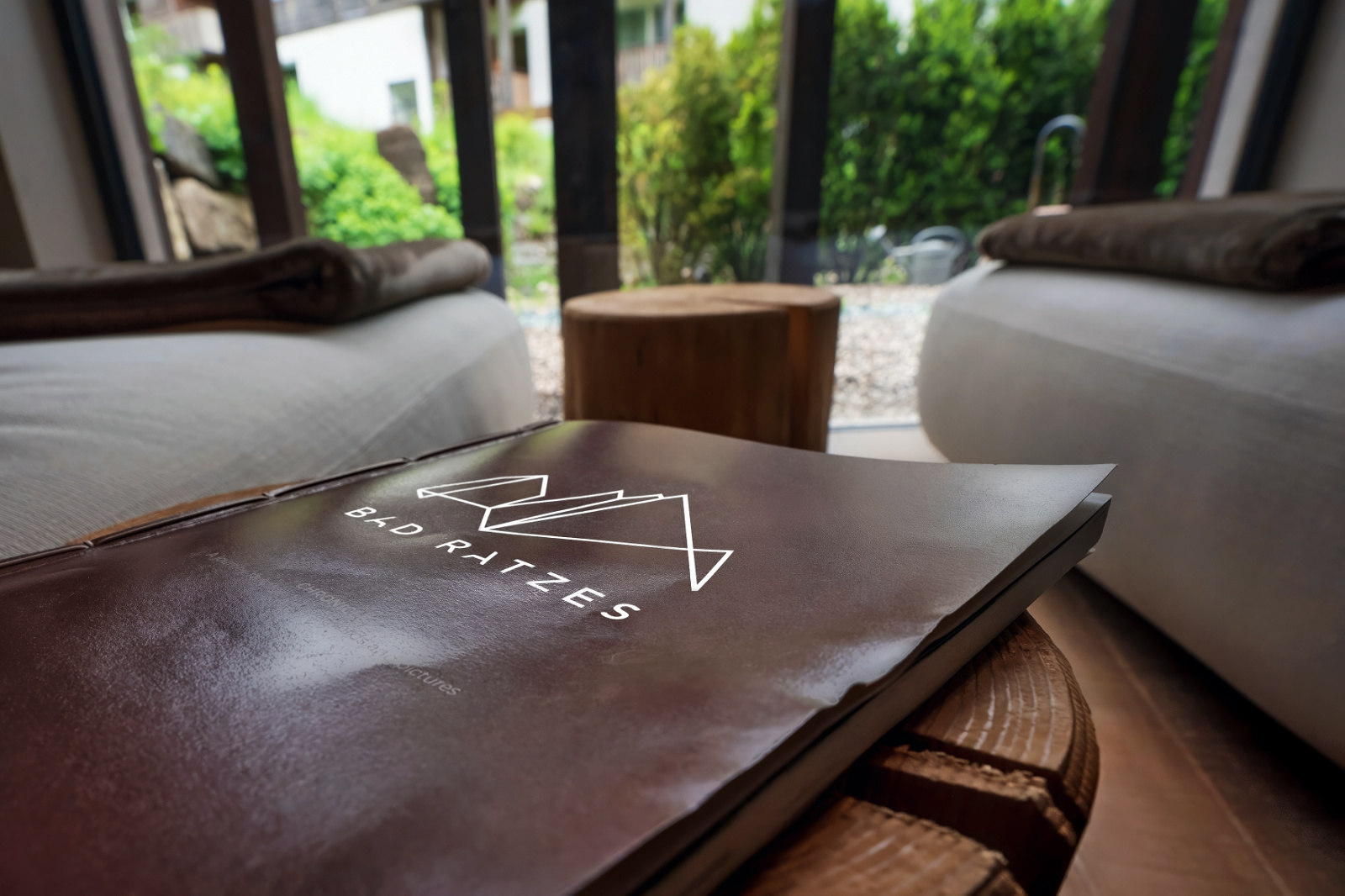
And if you are the kind of traveler who simply appreciates hotels with a point of view, Bad Ratzes certainly has one — as you’ll have gathered by now. It does not blur into the long list of polished wellness hotels scattered across the Dolomites. The setting, history and family behind it give Bad Ratzes a character distinctly its own.
What Bad Ratzes does not offer is village life outside the front door. You cannot finish dinner and wander into Ortisei for gelato. There is no pedestrian street lined with shops or bars waiting beyond the lobby. If that is an important part of how you like to experience the Dolomites, we would choose a different base.
But if your idea of a rewarding Dolomites stay involves trading evening bustle for forest, meadow and the Schlern outside your window, Bad Ratzes makes a very convincing argument for doing exactly that.
How to Book Bad Ratzes
You can book Bad Ratzes directly through the hotel, where current room categories, rates, packages and availability are listed.
Bad Ratzes is also available through Booking.com if you prefer to keep the reservation within your existing Booking.com account:
Bad Ratzes – Booking.com
It is worth spending a little time comparing room categories before reserving. The accommodations range from straightforward doubles to larger contemporary rooms, suites and apartments with private wellness features, so the best choice depends less on finding the “best” room than on deciding how much of your stay you expect to spend in it.
For most first-time visitors, we would also think carefully about how Bad Ratzes fits into the larger trip. Its secluded setting makes it a particularly good place to slow down for several nights rather than use as a frantic sightseeing base.
If you would like help deciding where to stay, how long to spend in each destination and how to connect Bad Ratzes with the rest of South Tyrol and the Dolomites, our trip planning services can build the trip around the way you actually want to travel.
A heartfelt thank you to Michael, Petra and the entire Bad Ratzes team for welcoming us so warmly and sharing the spirit of this remarkable place with us. As always, all opinions in this review are entirely our own.
Save & Pin for Later
Grab the free guide + follow for South Tyrol + Dolomites travel tips
25 Things to Know Before Visiting the Dolomites
Join 18,000+ travelers. No spam, ever.