
If you ever wanted to wake up in a place where cowbells are your alarm clock and the only traffic jam is at the intersection of morning mist and mountain peaks, Edelansitz Zimmerlehen is it. Discover why this centuries-old noble residence turned farmstead is one of South Tyrol’s most soulful stays.
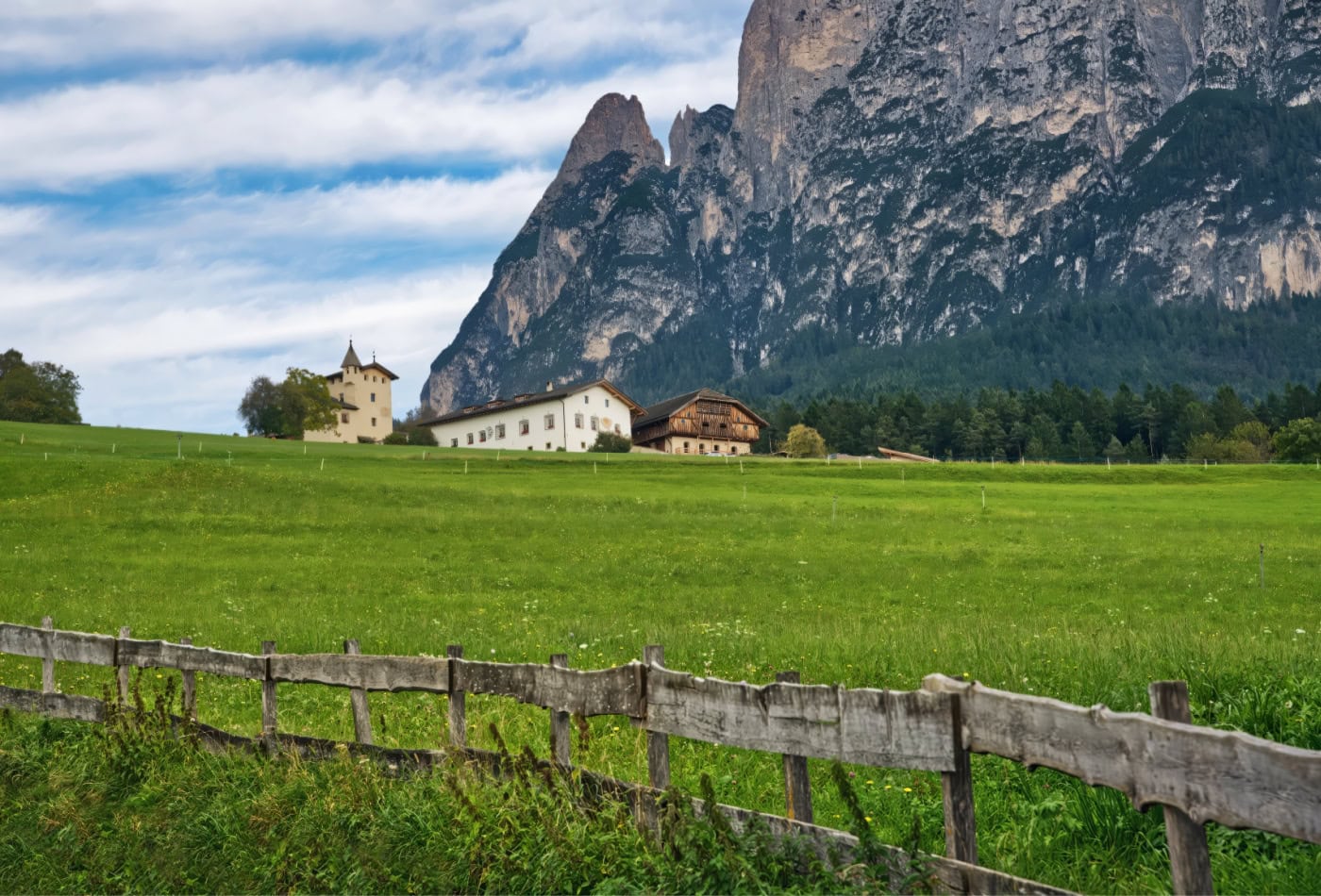
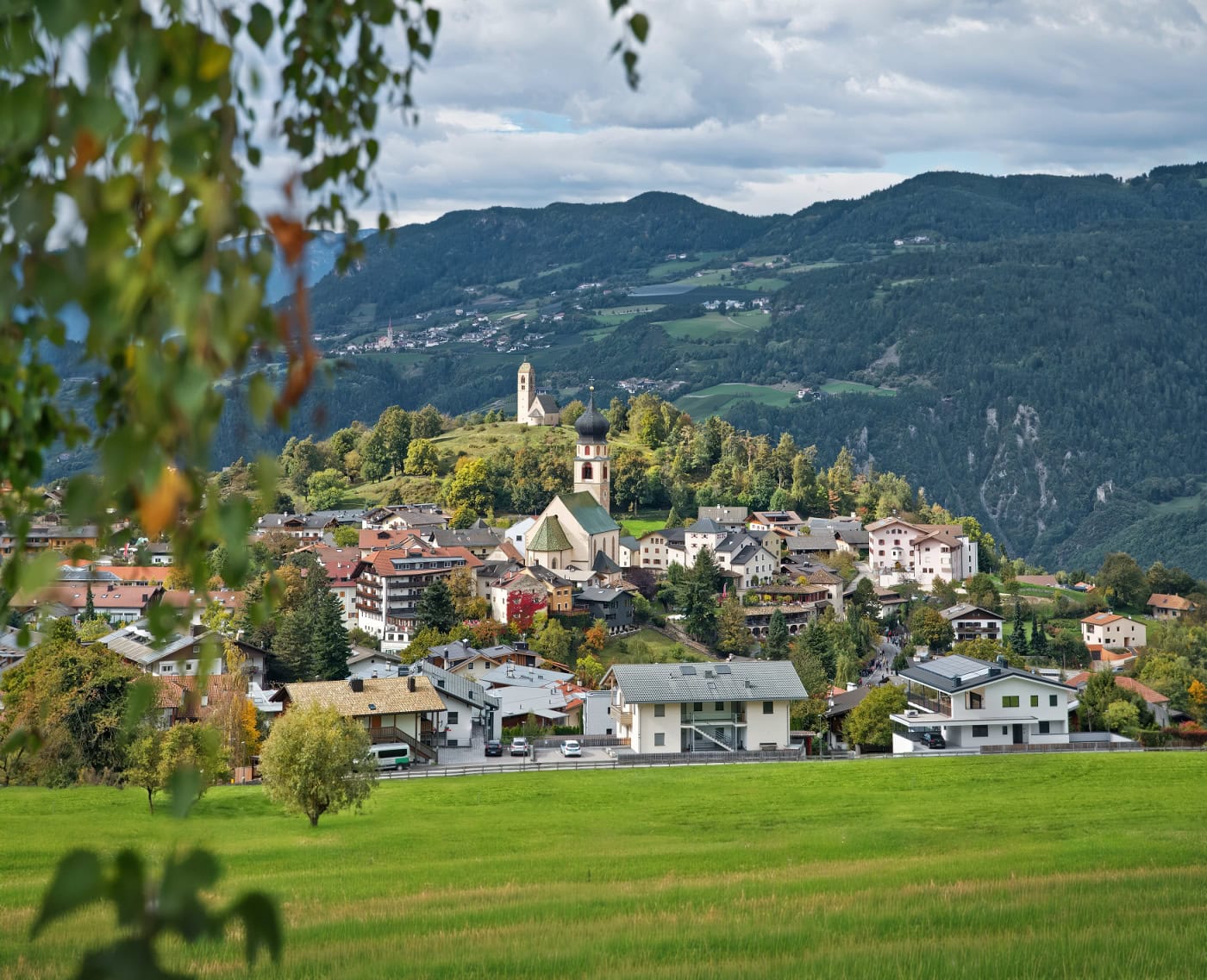
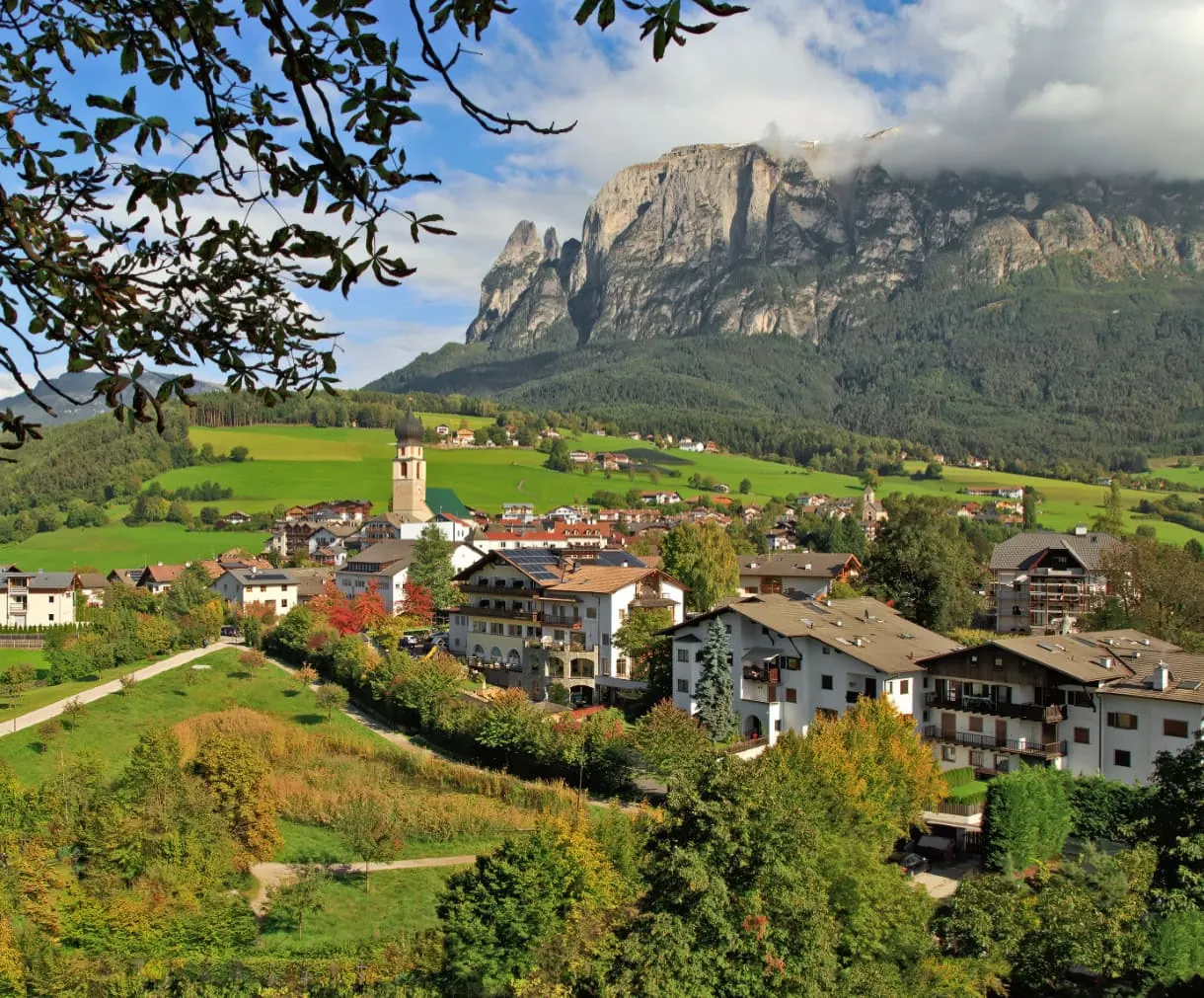
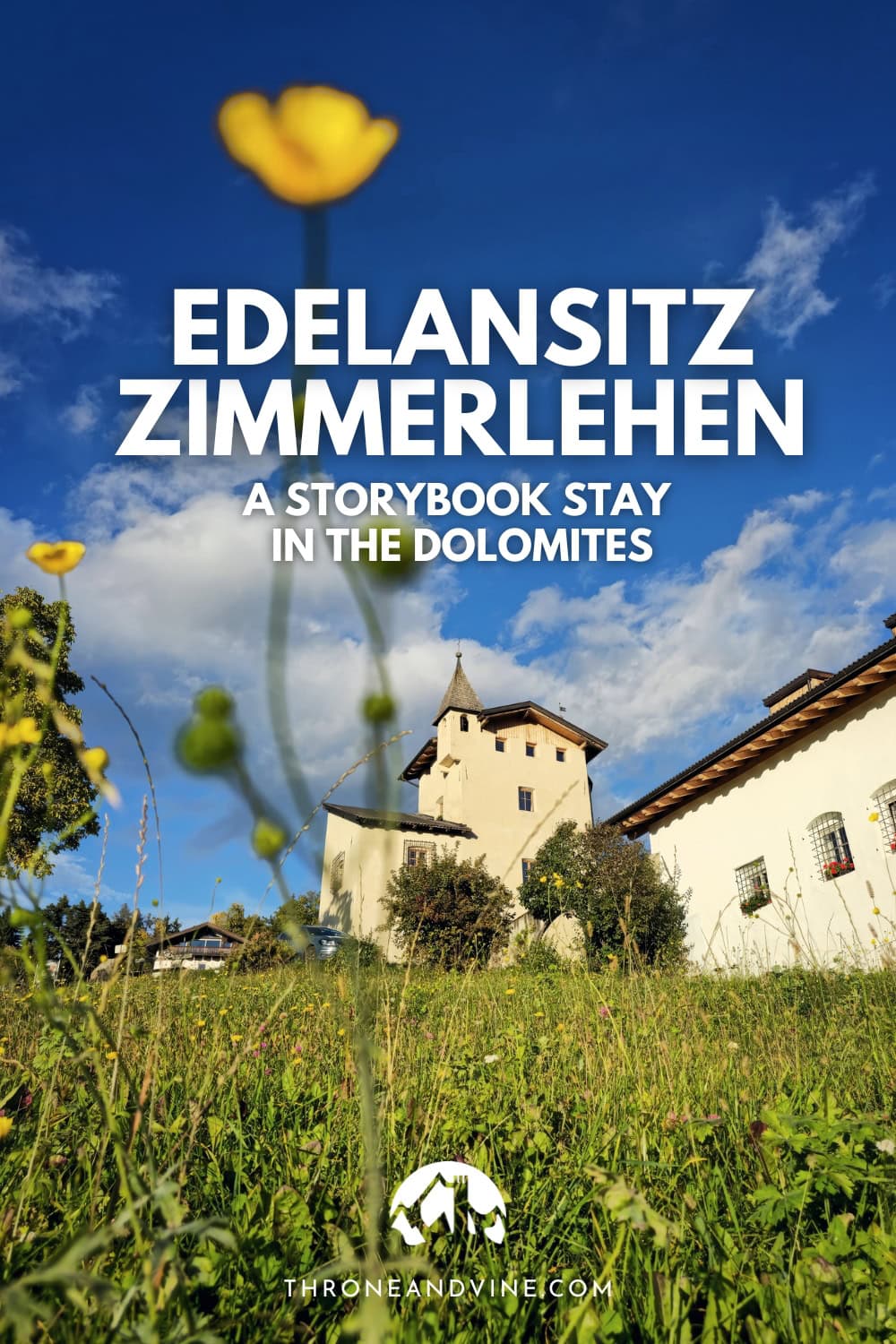
Sometimes the most meaningful stays are not found in hotels or wellness resorts, but in places that were never built for tourists. Perched high above the village of Völs am Schlern (Fiè allo Sciliar) at the foot of Mt. Schlern, Edelansitz Zimmerlehen is one of those rare places that South Tyrol does best.
Lovingly restored by the Kompatscher family, who still live and farm here, it offers a handful of guest apartments that let you live where past and present meet in weathered walls, hand-hewn beams, and hospitality rooted in generations of care.
We spent five unhurried nights here, using it as a base to explore the spellbinding trails of the Dolomites, tour medieval wonders, hike to mirror-still alpine lakes, and savor the region’s rich harvest traditions from Törggelen feasts to village festivals.
A Manor Built on Stone, Story & Soul
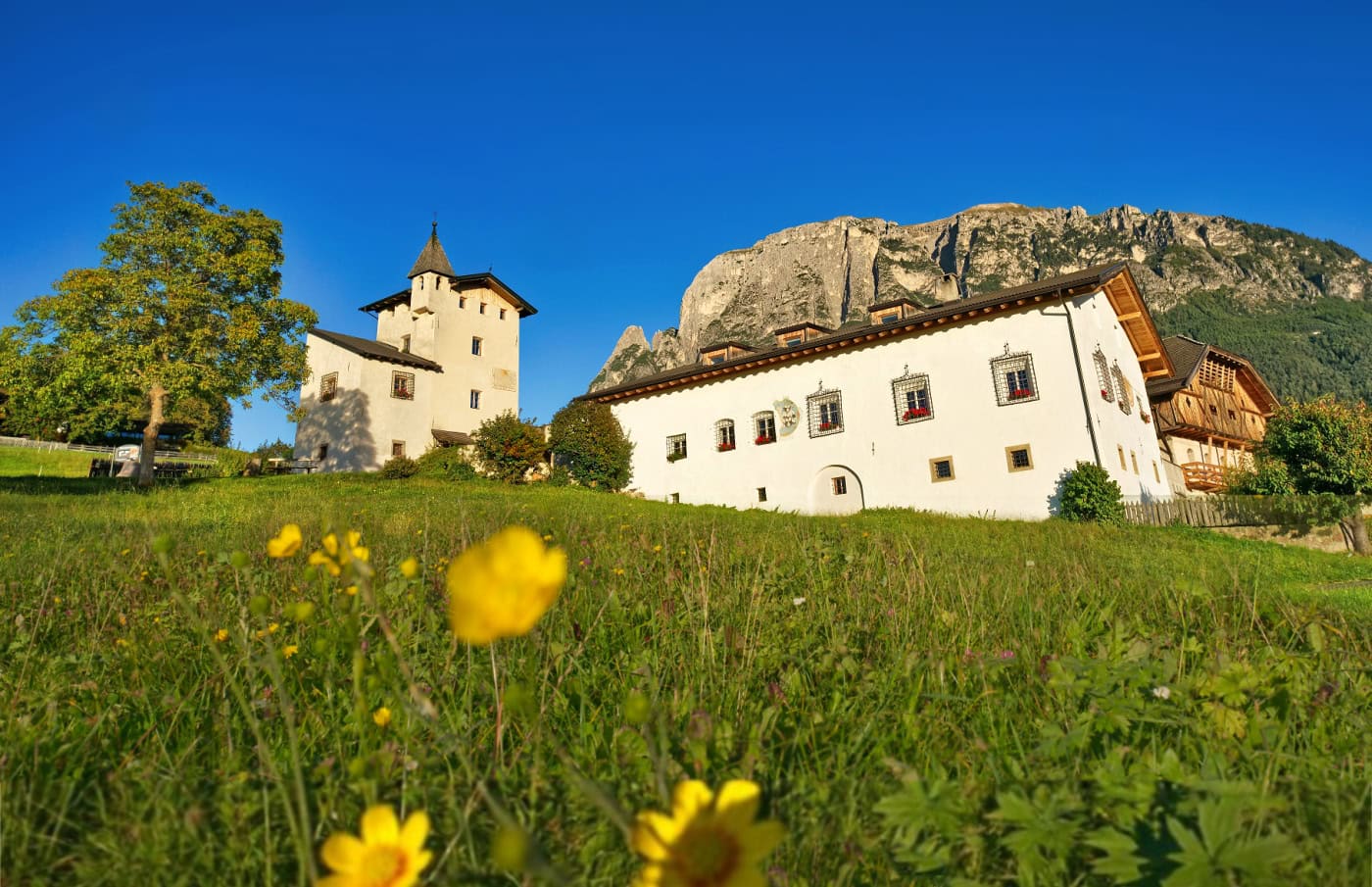
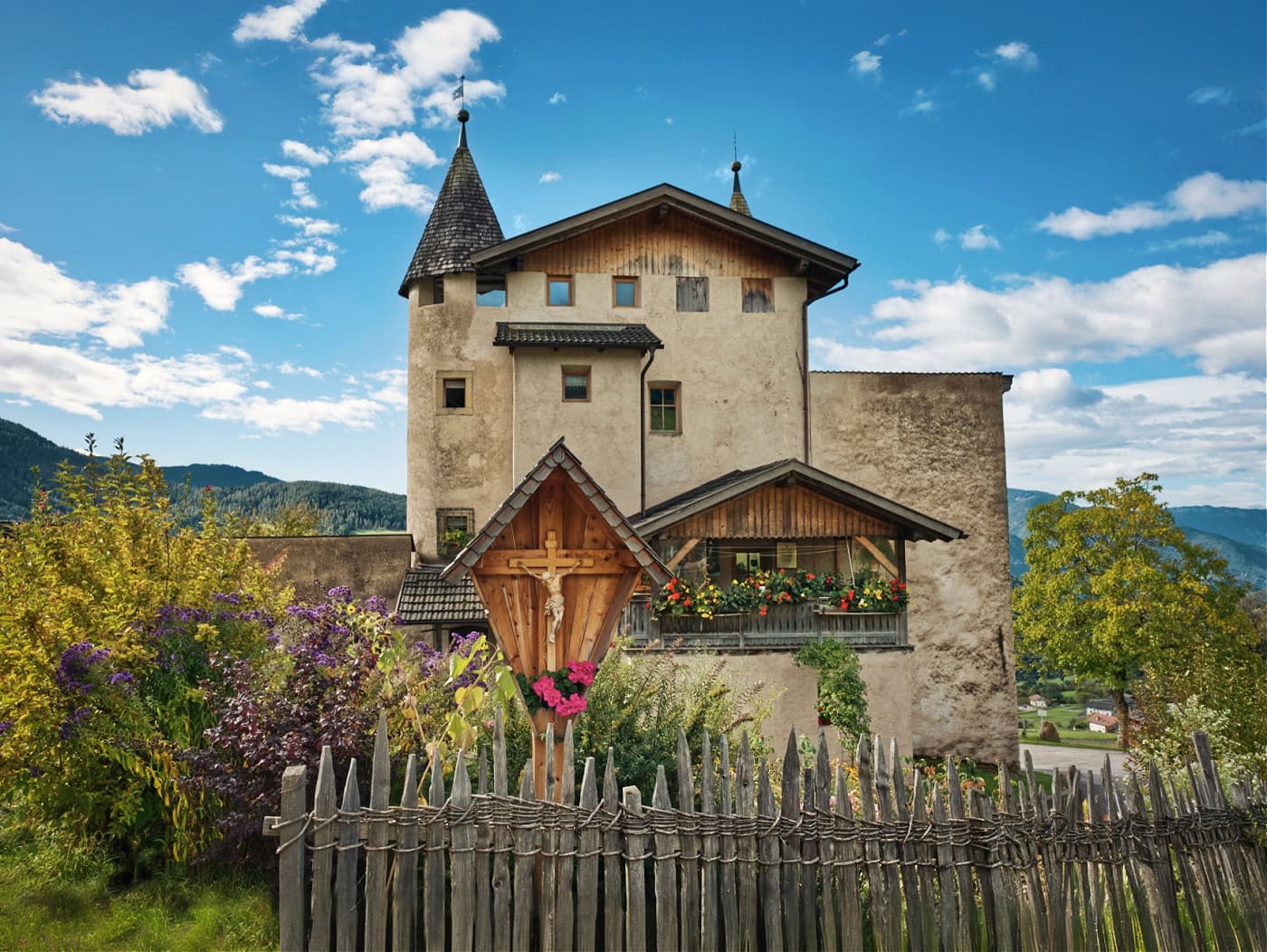
Edelansitz Zimmerlehen isn’t your average mountain farm stay. The name alone makes that clear. In South Tyrol, Edelansitz means “noble manor” — a title reserved for historic estates that once answered to kings, bishops, or both.
Today, Zimmerlehen answers to guests… and oxen. The estate — with roots stretching back to the 13th century — is home to an average of 40 to 50 head of cattle, along with a motley crew of companions including two “wild boars” — Manni and Horst — plus chickens, rabbits, and a few cats who roam the grounds like they own the place.
The estate has been in the hands of the Kompatscher family since 1906, and it shows. Over the past 100+ years, the family has lovingly restored the property, preserving its historic features while breathing new life into its purpose.
Carrying that legacy forward is Simon Kompatscher, who took the reins from his parents, Isidor and Inge, in 2022. During our visit, he personally led us on a private tour, sharing Zimmerlehen’s fascinating history as we walked the grounds where it all unfolded.
Roots Eight Centuries Deep
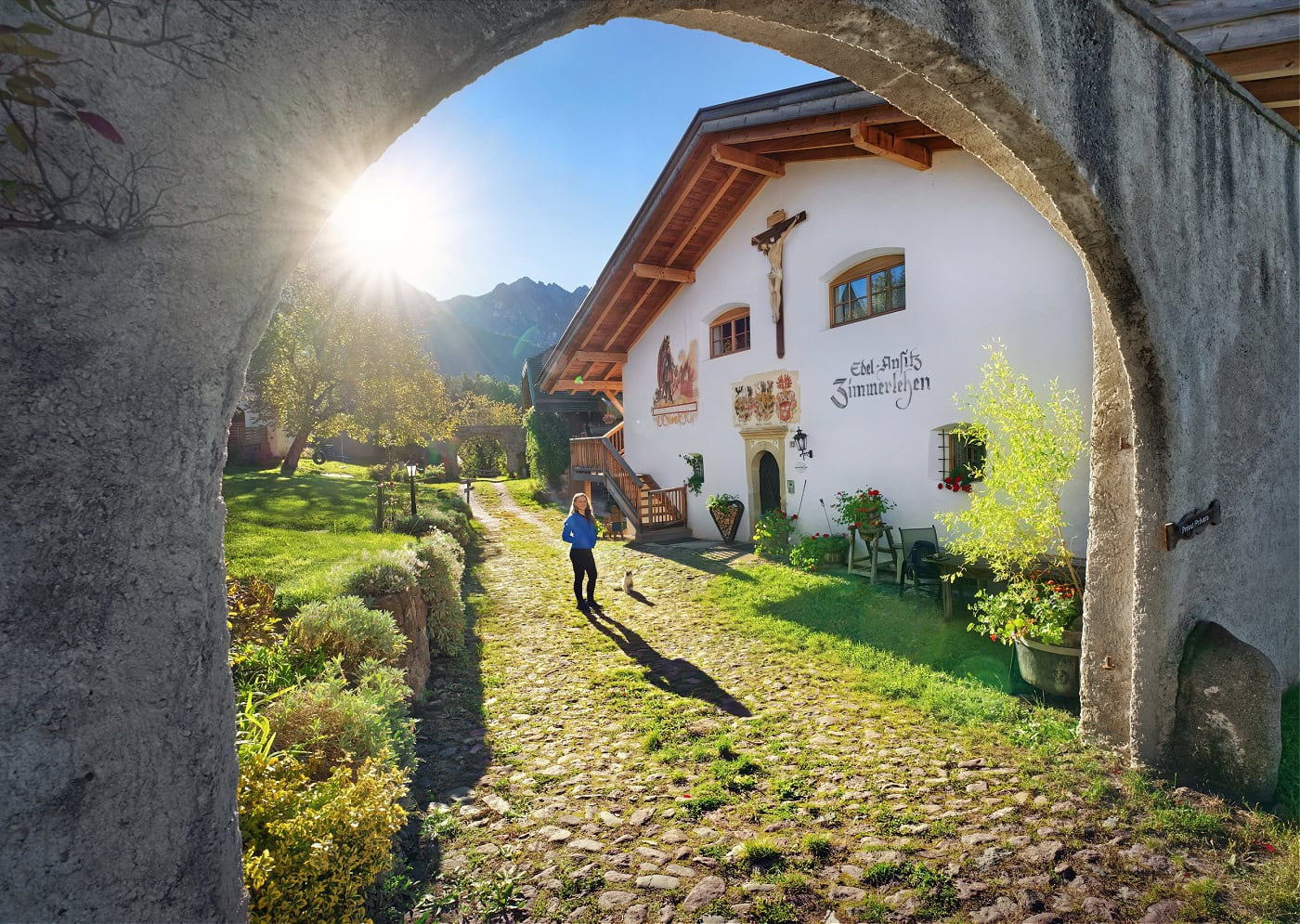
Zimmerlehen first appeared in written records in 1336, when it was granted as a feudal lease to a family with noble ties to the Lords of Völs — the founders of the formidable Prösels Castle, which we admired from across the valley, perched regally on a forested slope above the village.
In 1585, Zimmerlehen landed in the hands of someone who knew how to make an impression: Ferdinand von Küepach. He wasn’t just another noble with a name that sounds expensive. Under his ownership, Zimmerlehen underwent a transformation that gave the estate its present form, with architectural flourishes such as a chapel and artistic details that continue to define its character today… the kind of enchanted place that feels lifted from the pages of a Brothers Grimm tale.
During our tour, Simon shared one of the estate’s most unexpected footnotes: in 1594, “Peter the Lame” (Peter Schiopul) — an exiled ruler of Moldavia and great-grandson of Vlad the Impaler — sought refuge at Zimmerlehen after falling ill with malaria in Bolzano. Hoping the mountain air might restore him, he retreated to Zimmerlehen… but never left. He died that summer, leaving behind a curious and slightly macabre link between Dracula’s bloodline and this peaceful corner of South Tyrol.
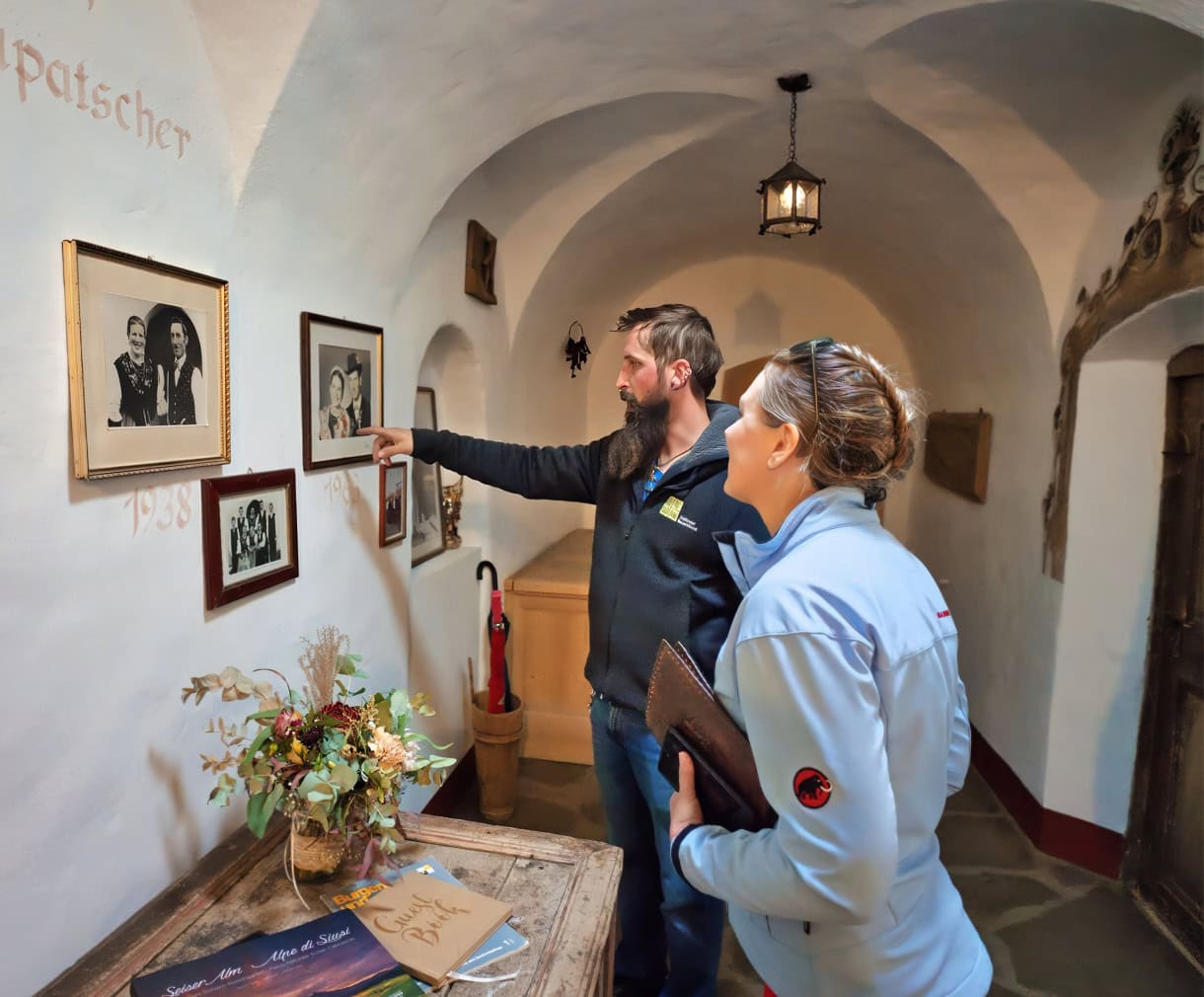
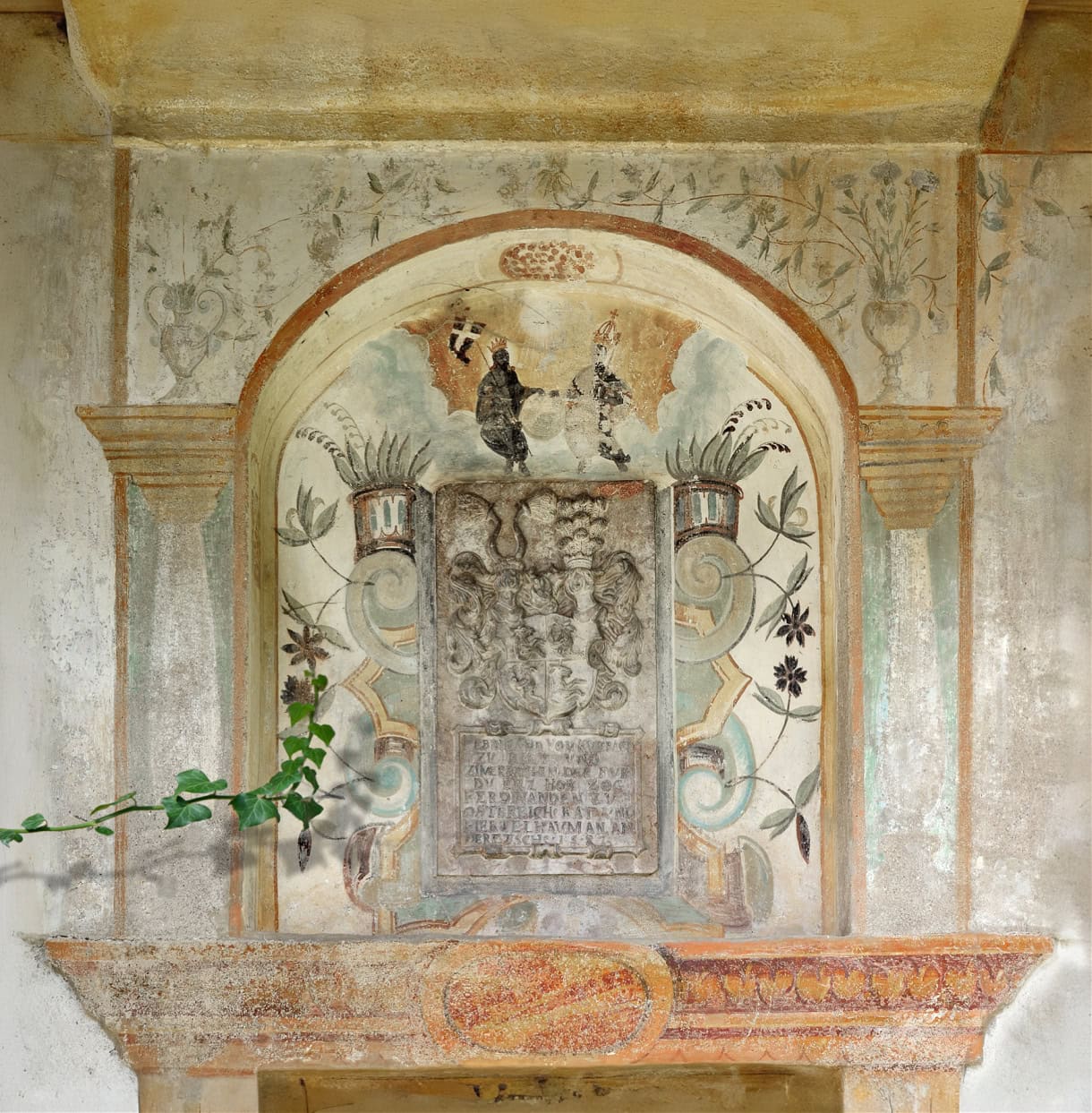
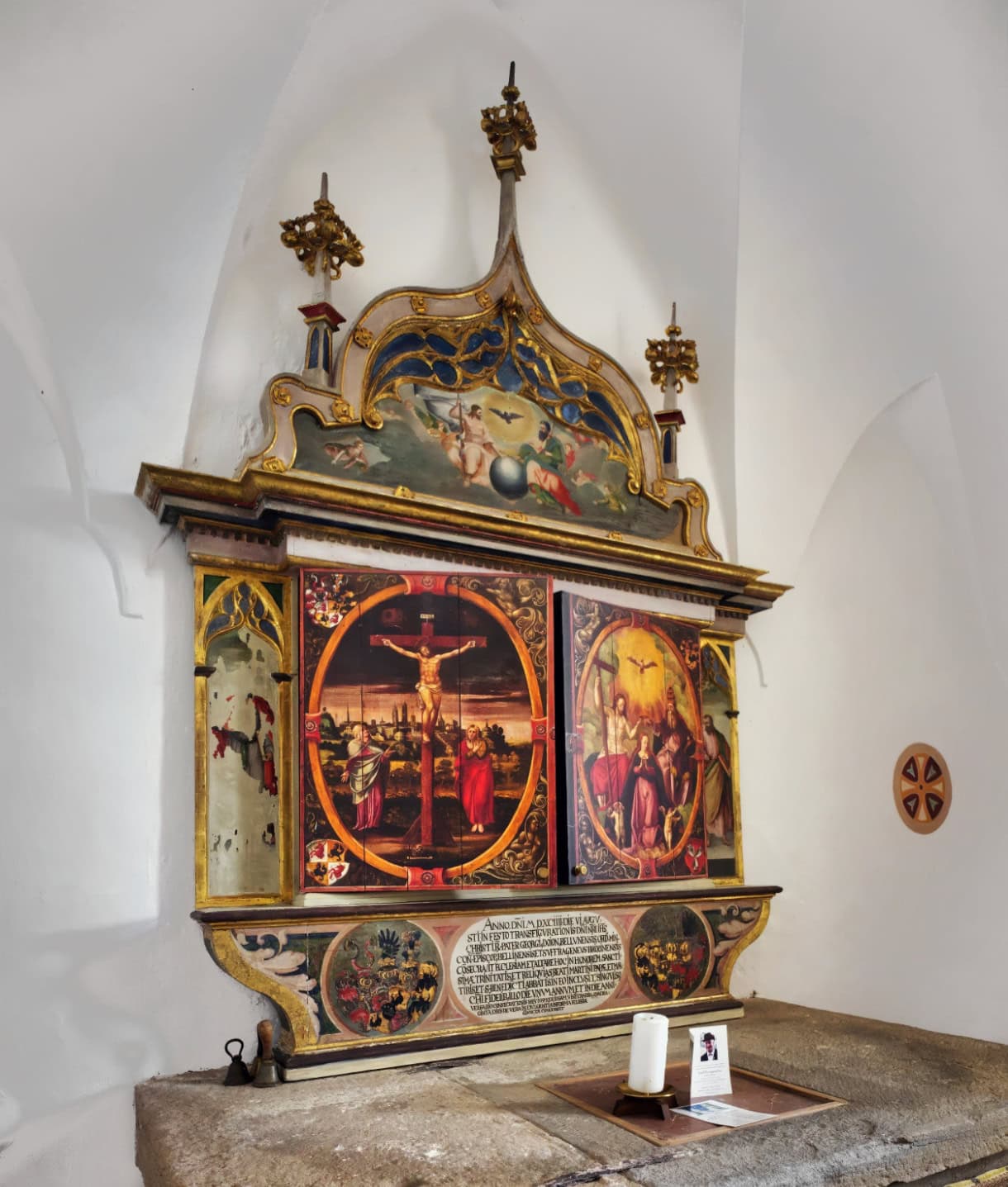
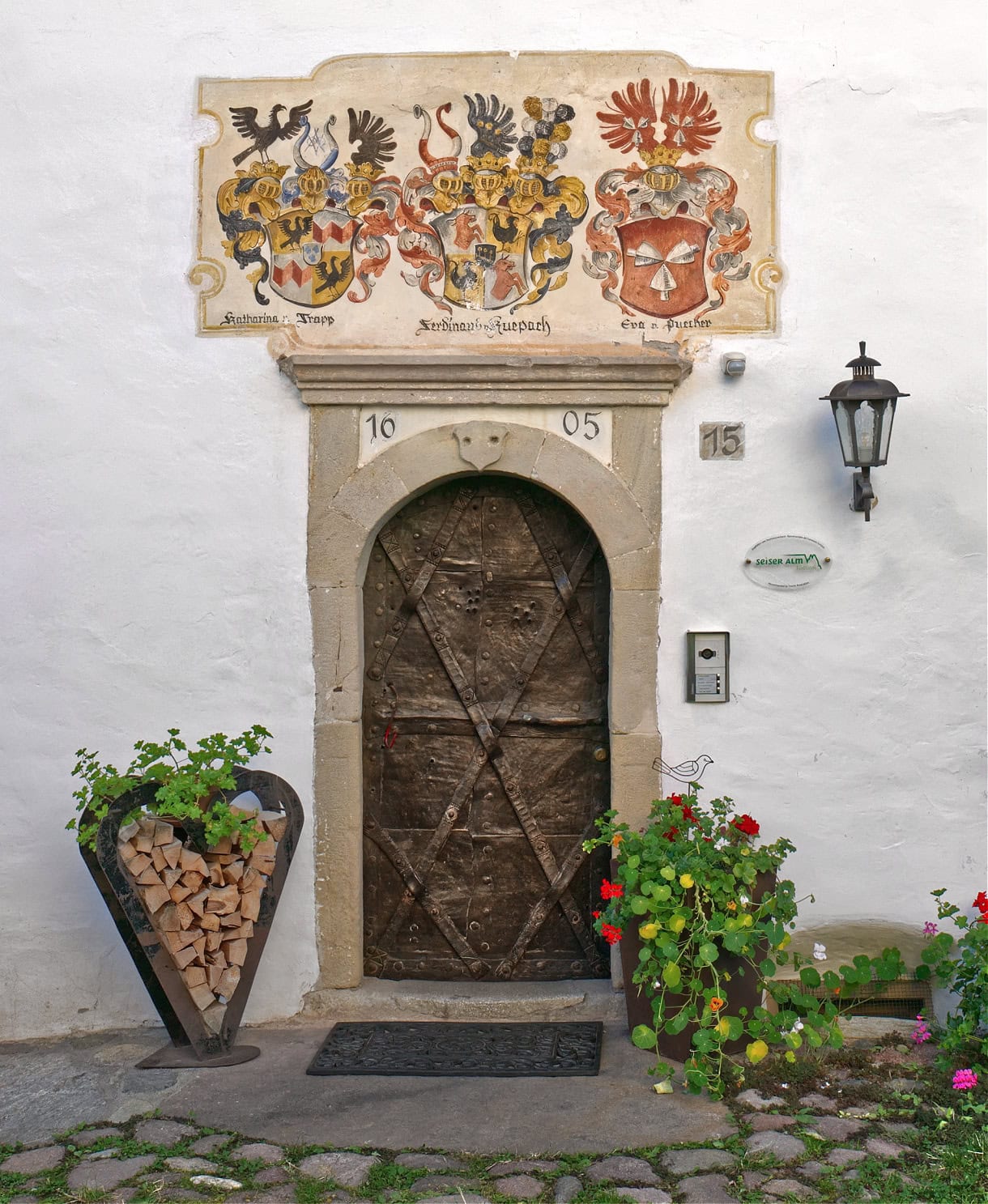
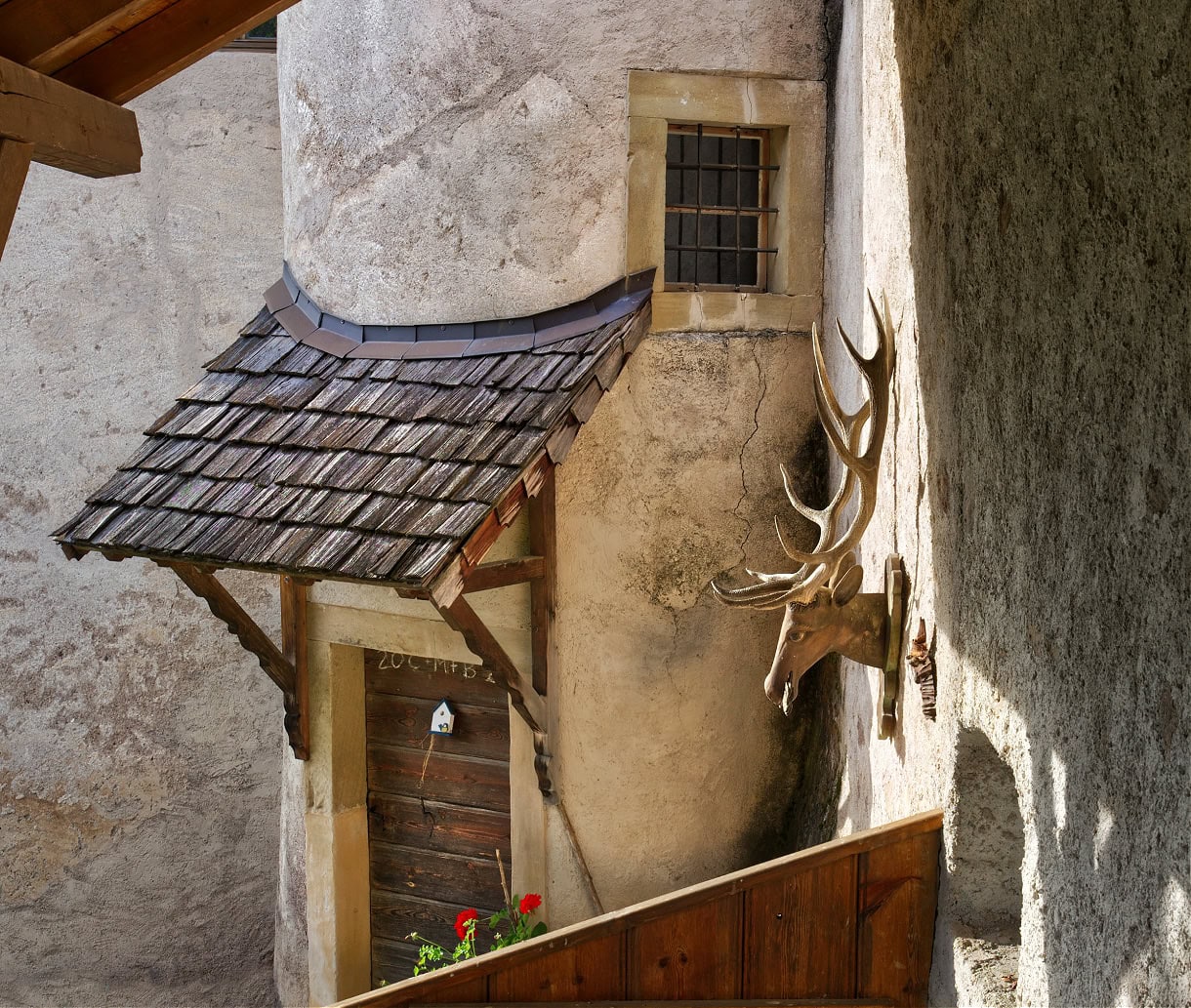
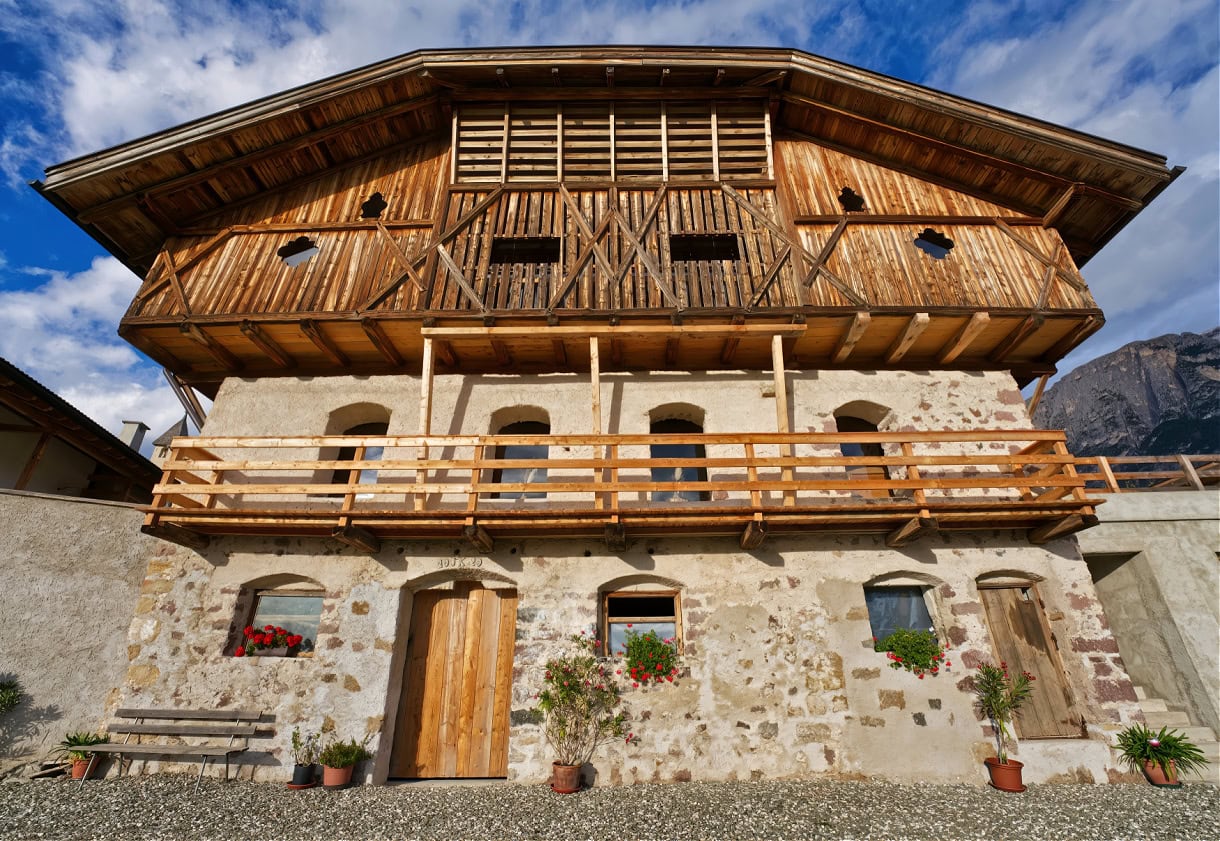
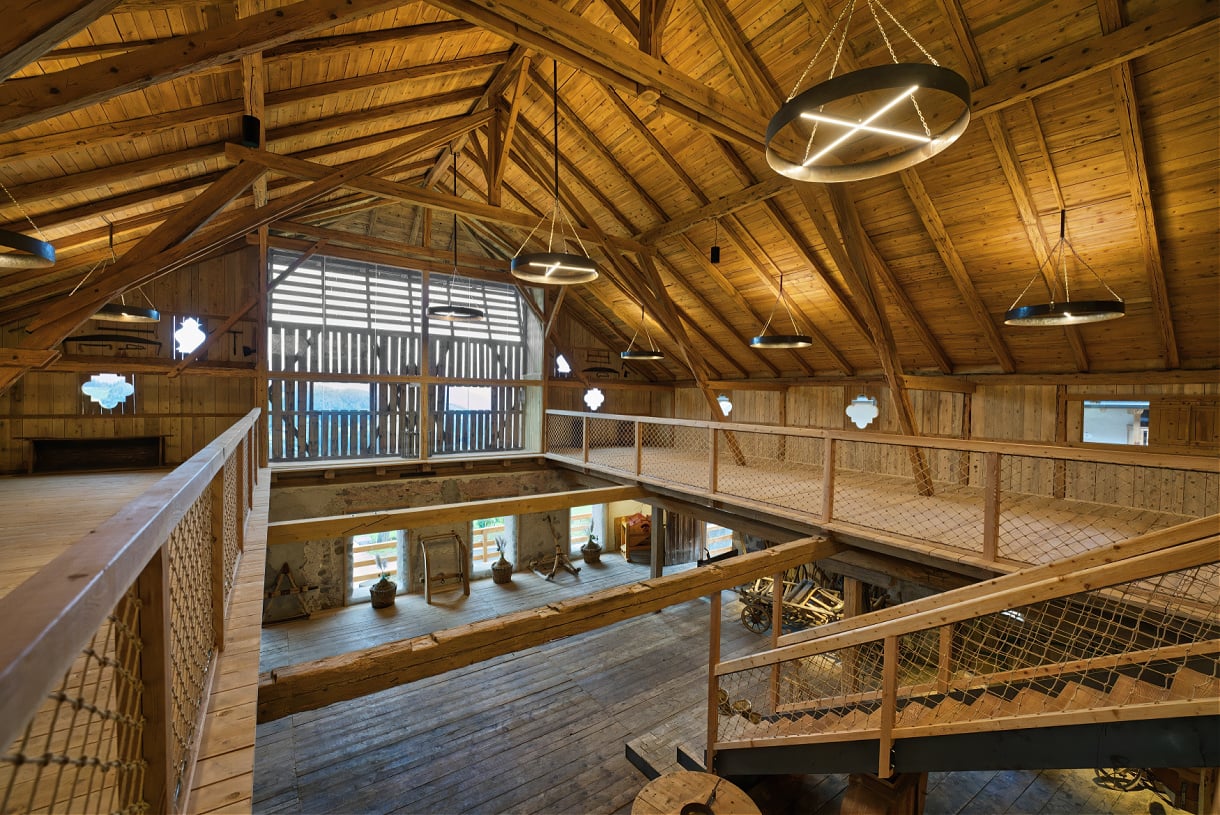
After revealing the estate’s deep past, Simon turned our attention to its future. He recently oversaw the construction of a state-of-the-art stable, designed to provide the highest standard of care for the farm’s cattle. With the herd moved into their sleek new quarters, the centuries-old barn stood empty for the first time in generations.
Rather than let it sit idle, Simon and his family reimagined the space as a farm heritage museum. Inside, its timber-framed interior tells the story of rural life in South Tyrol through vintage tools and weatherworn equipment. The barn also doubles as a charming event venue, hosting everything from weddings to birthday parties.
Wandering through the space, we could easily picture ourselves raising a glass (or three) beneath the old beams and dancing well into the night. With its warm lighting and rustic charm, the atmosphere practically begs for a celebration.
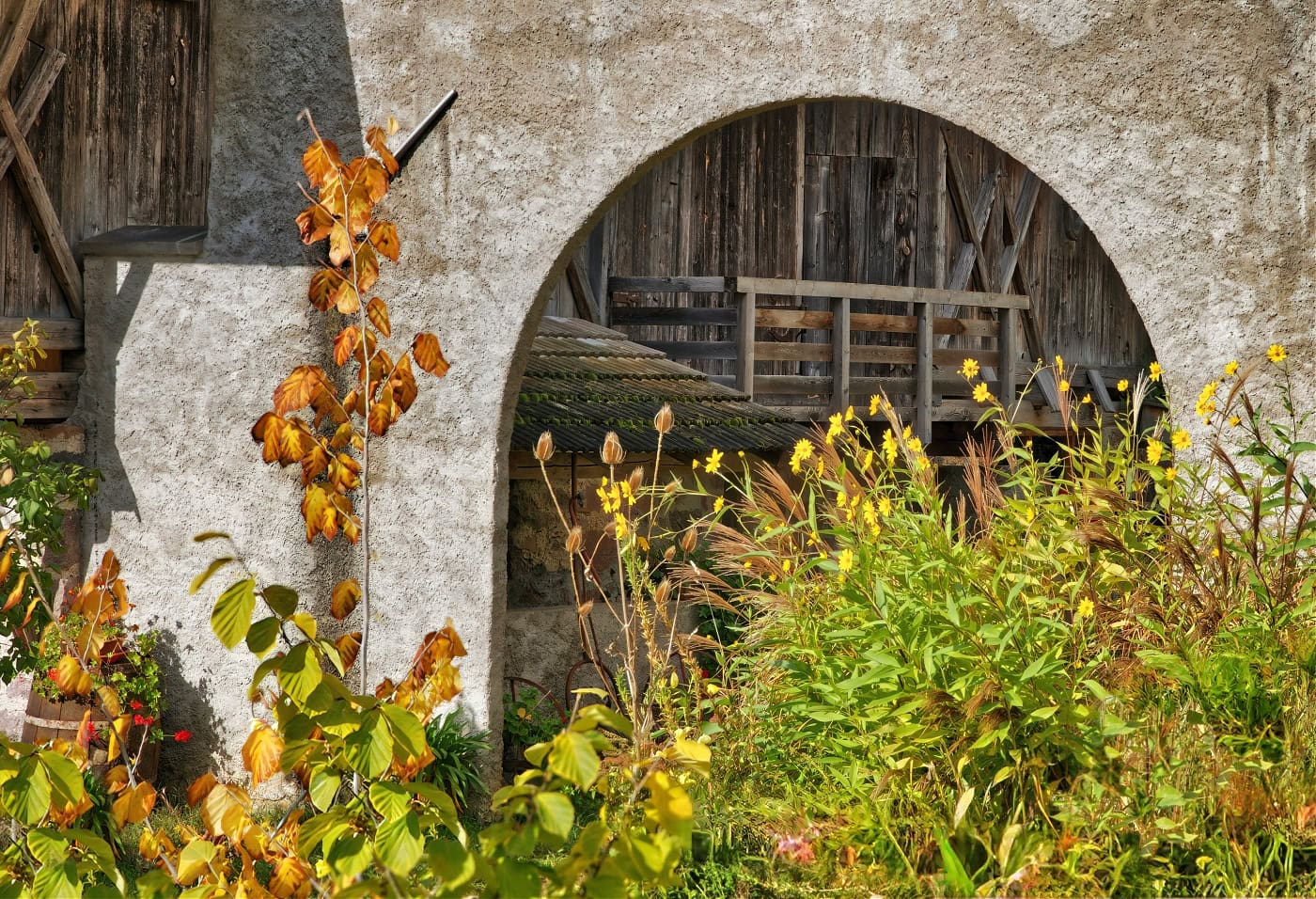
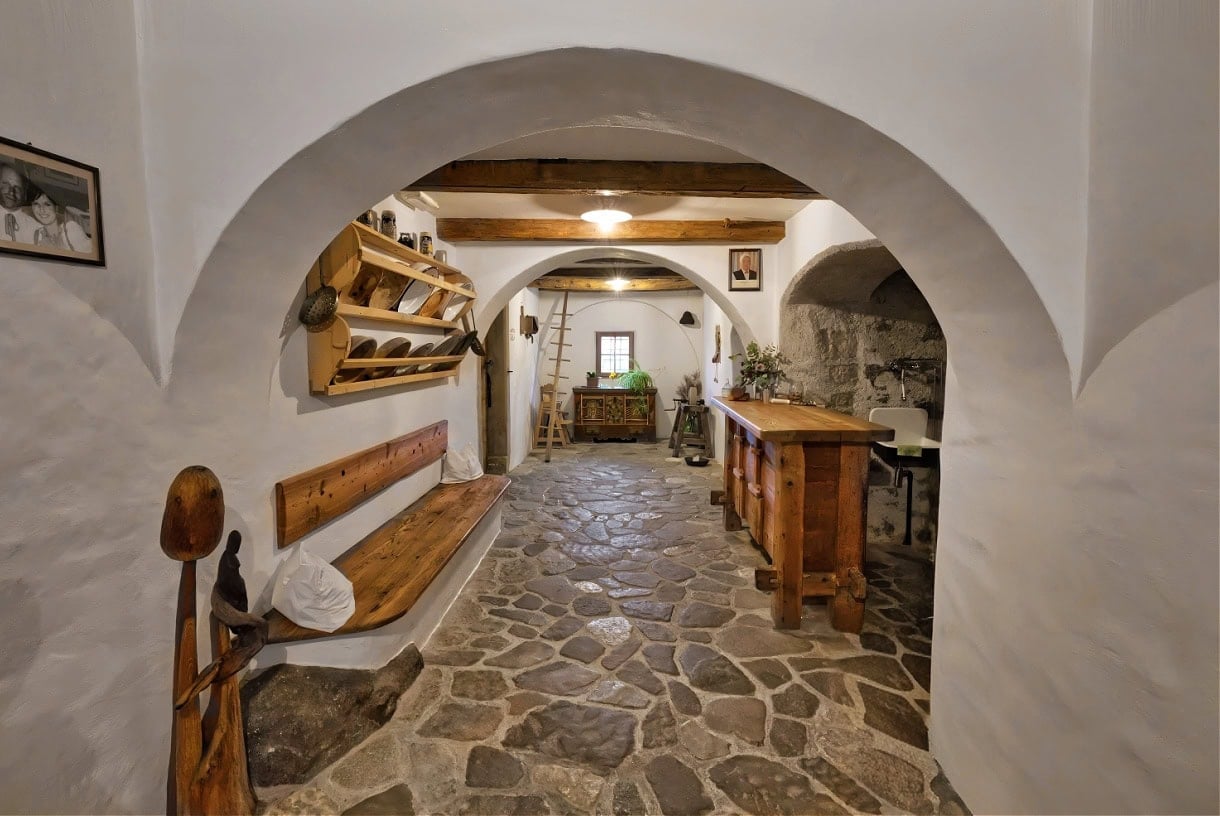
Our tour also took us inside the estate’s Hofschank — a traditional farm tavern that opens its doors during South Tyrol’s beloved Törggelen season in October and November. During that time, the Kompatchers serve classic Tyrolean fare, much of it sourced directly from the farm and gardens scattered across the property. Unfortunately, the tavern’s seasonal opening kicked off just after our stay, so we missed the chance to savor Zimmerlehen’s home-cooked specialties.
But each morning, fresh baked bread was quietly left at our door. It was the perfect companion to a slow cup of coffee while watching clouds drift above the rooftops of Völs am Schlern.
Historic Walls, Modern Comforts
Zimmerlehen’s 800+ years of history echo through each of its five thoughtfully restored apartments. No two are alike. From intimate one-bedroom retreats to spacious, family-friendly dwellings that sleep up to six, each apartment strikes the sweet balance between rustic charm and modern comfort.
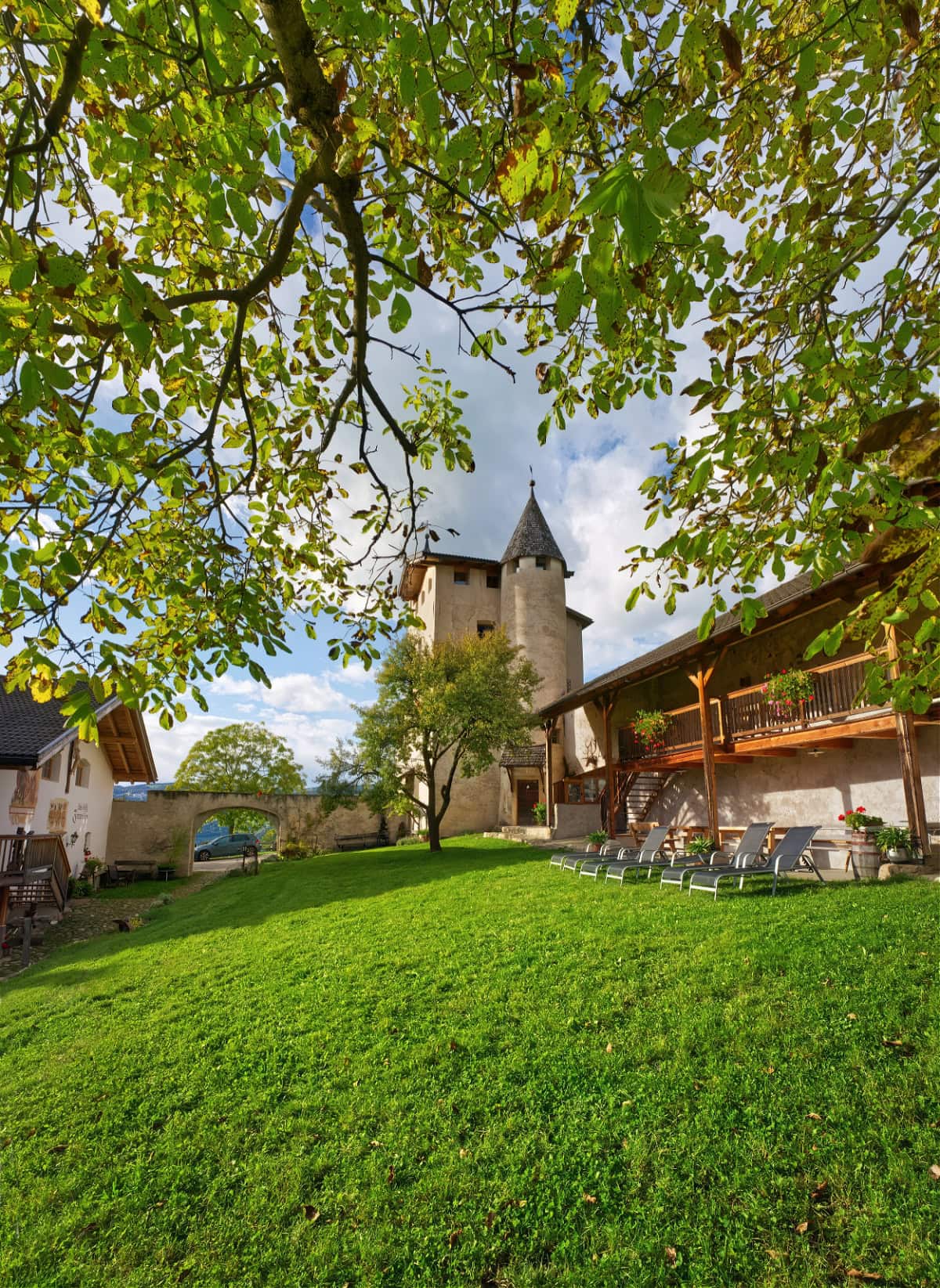
All units include Wi-Fi, smart TVs, and fully equipped kitchens, plus direct access to the courtyard, where you can stretch out on sun loungers beneath the watchful eye of the estate’s medieval tower. If you’re traveling with little ones, the on-site playground is a welcome bonus — our nephews would’ve been in heaven.
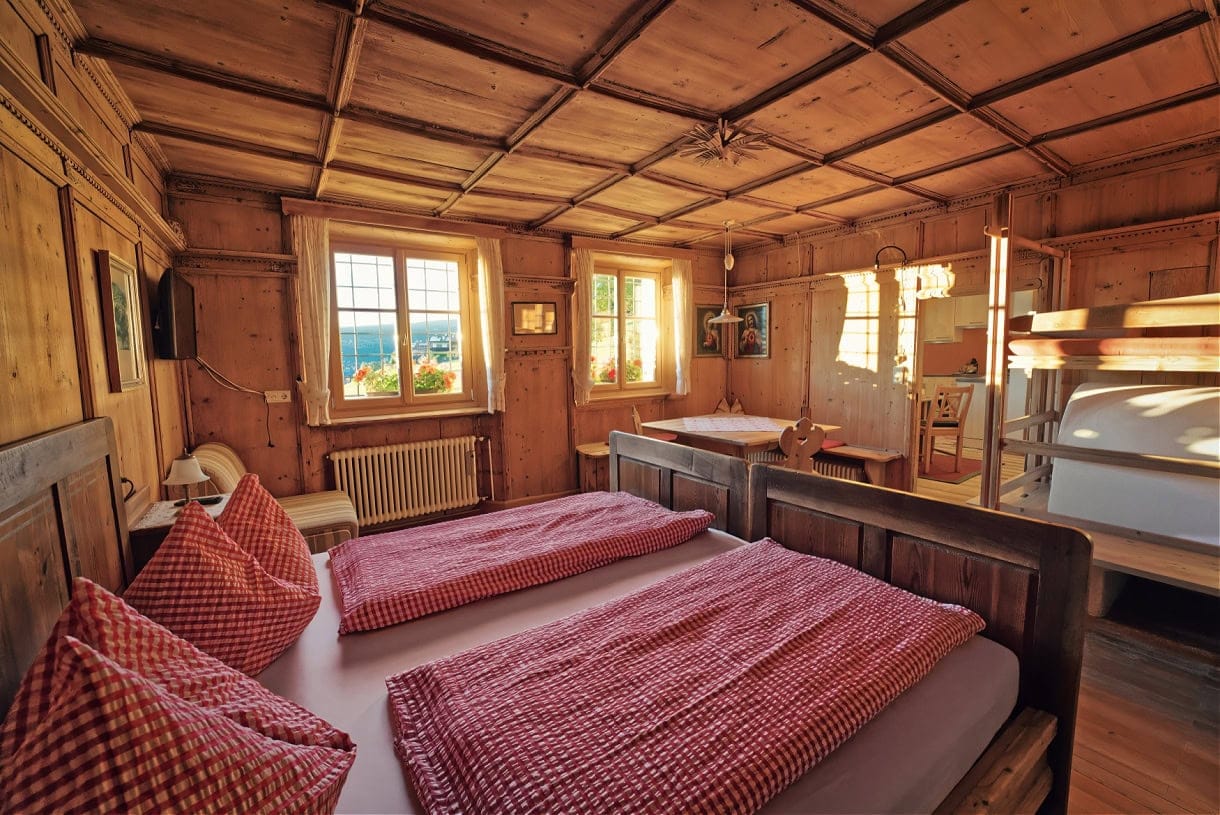
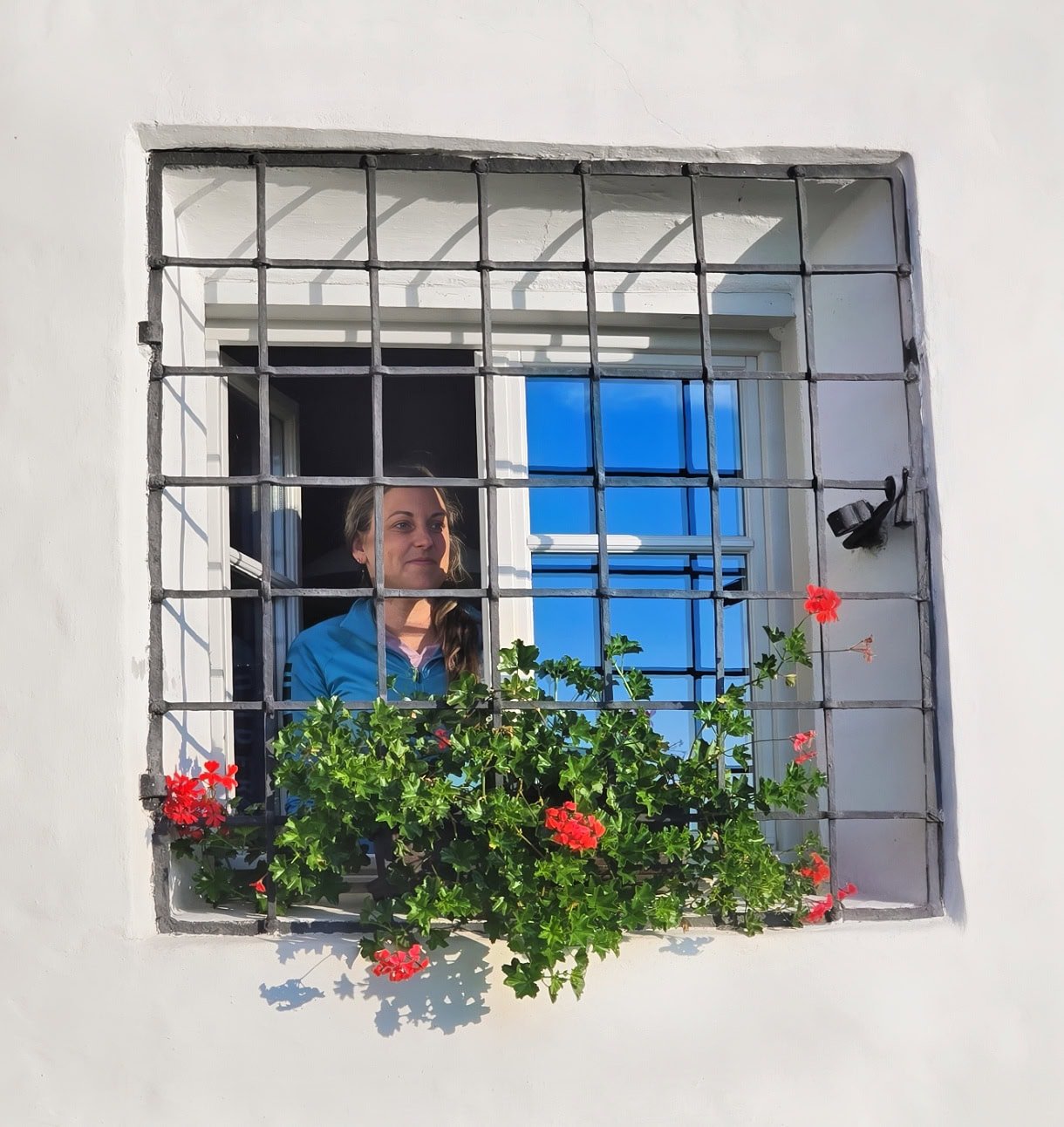
Our home for the week was the “Eva von Puecher” apartment, named after the first wife of Ferdinand von Küepach, the 16th-century nobleman mentioned earlier who transformed Zimmerlehen into the estate we see today.
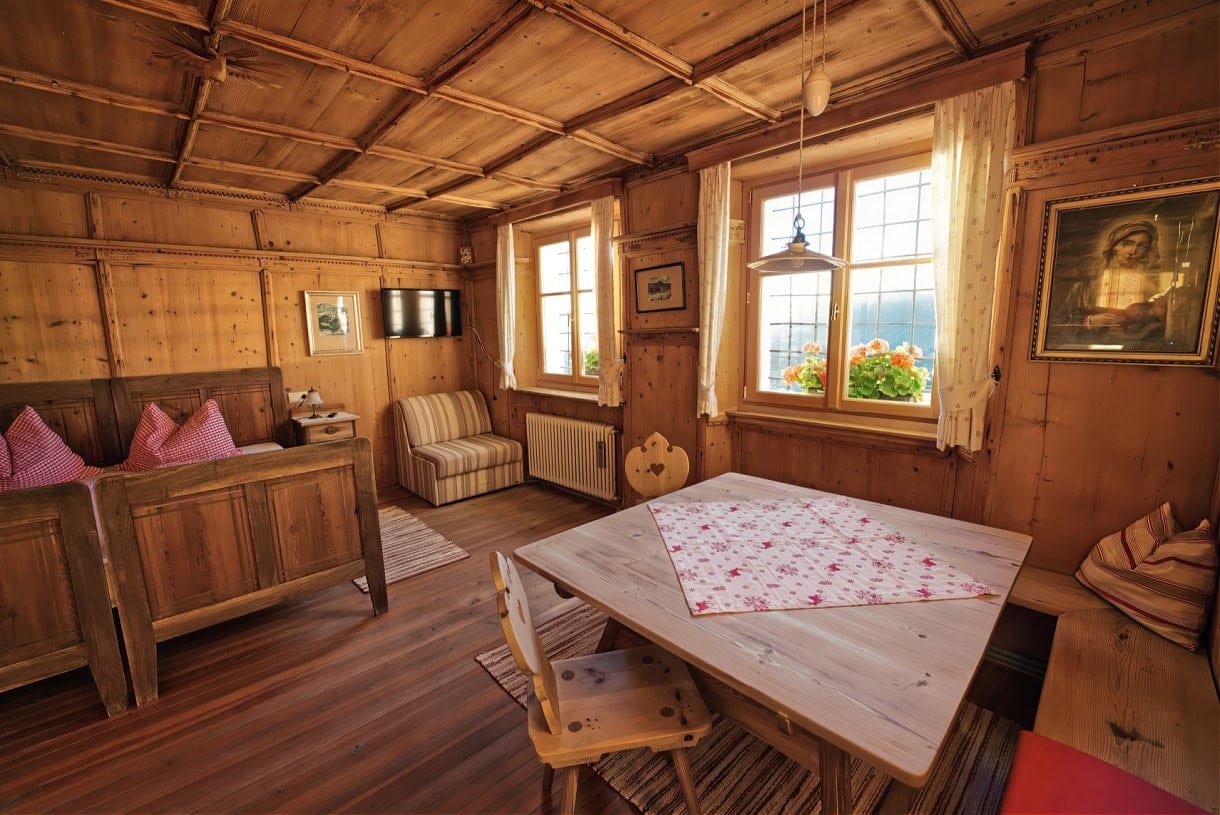
The apartment struck that rare balance of cozy and bright, with windows looking out over cow-dotted slopes tumbling down to Völs am Schlern. Our bedroom, swathed in honey-toned wood paneling, evoked the calm of a traditional Tyrolean stube. Each night was like slipping into a cabin carved from history.
Tucked in the corner was a weathered wooden table, which became our evening ritual spot to sip wine and catch up on emails. Even when our eyes were on the screen, it was impossible not to pause now and then to watch the village lights flicker to life below.
Balconies & Barnyards
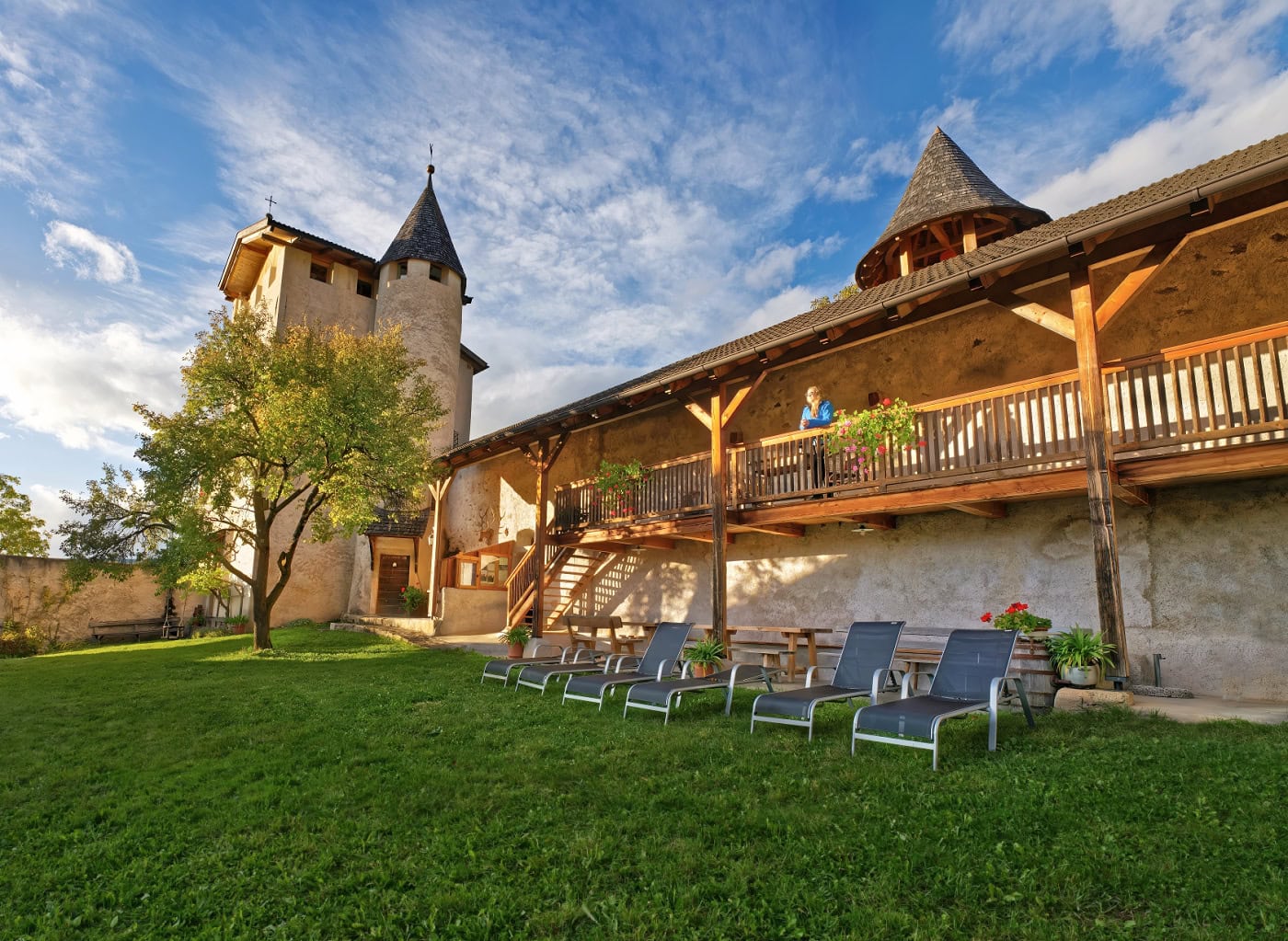
Outside of the apartment our favorite spot was the balcony along the old curtain wall, where we’d settle in each evening to watch the sun pour molten gold across the valley and light up the peaks beyond. It was an open-air front-row seat to the quiet theater of mountain life.
We also loved stumbling upon the artistic touches scattered across the property — from a rusted metal sculpture of a Tyrolean musician to a whimsical “Witch of Schlern” caught mid-flight between the trees. All around the grounds, small hand-painted signs reminded us to slow down, explore, and connect with the magic of Zimmerlehen.
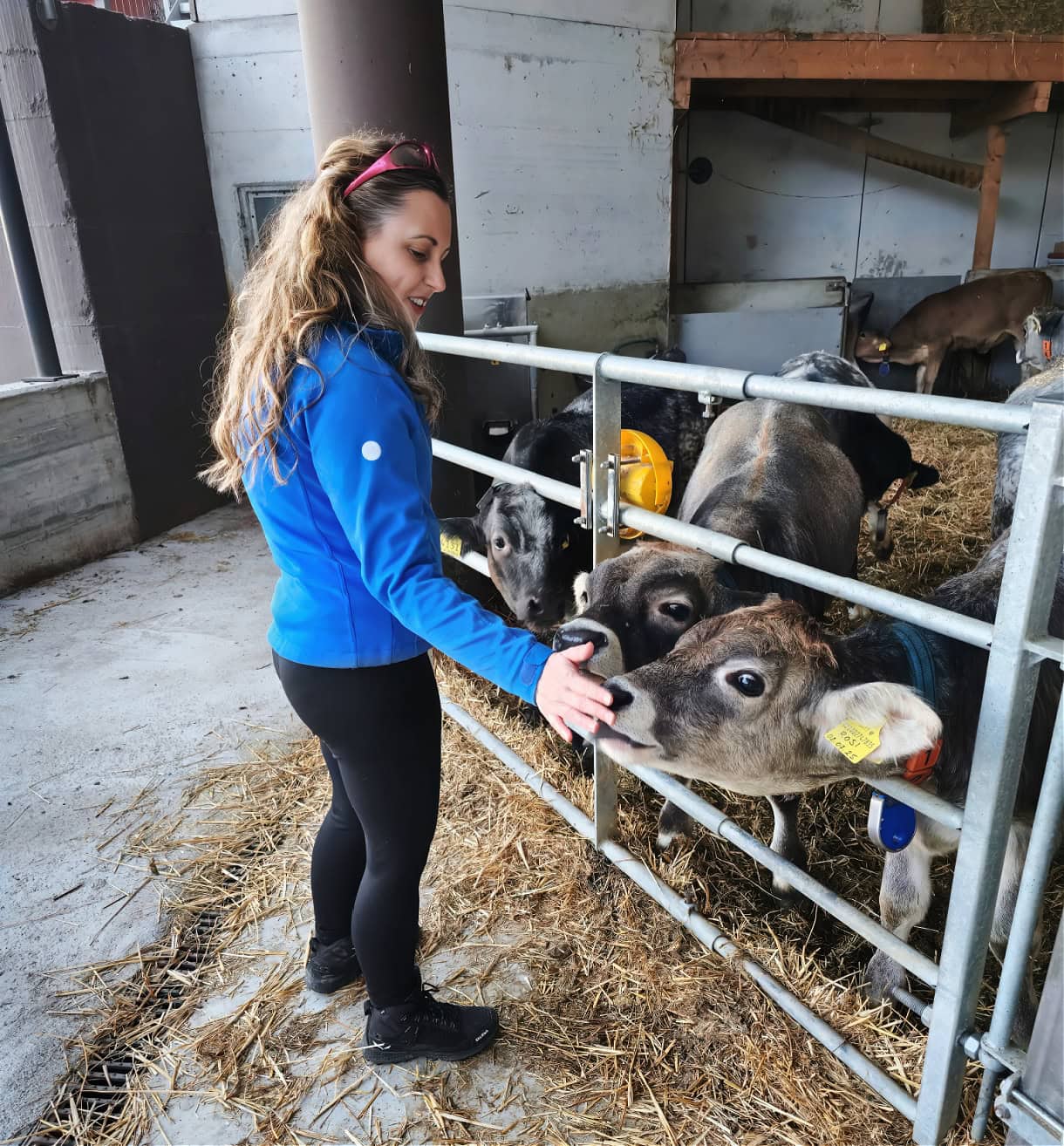
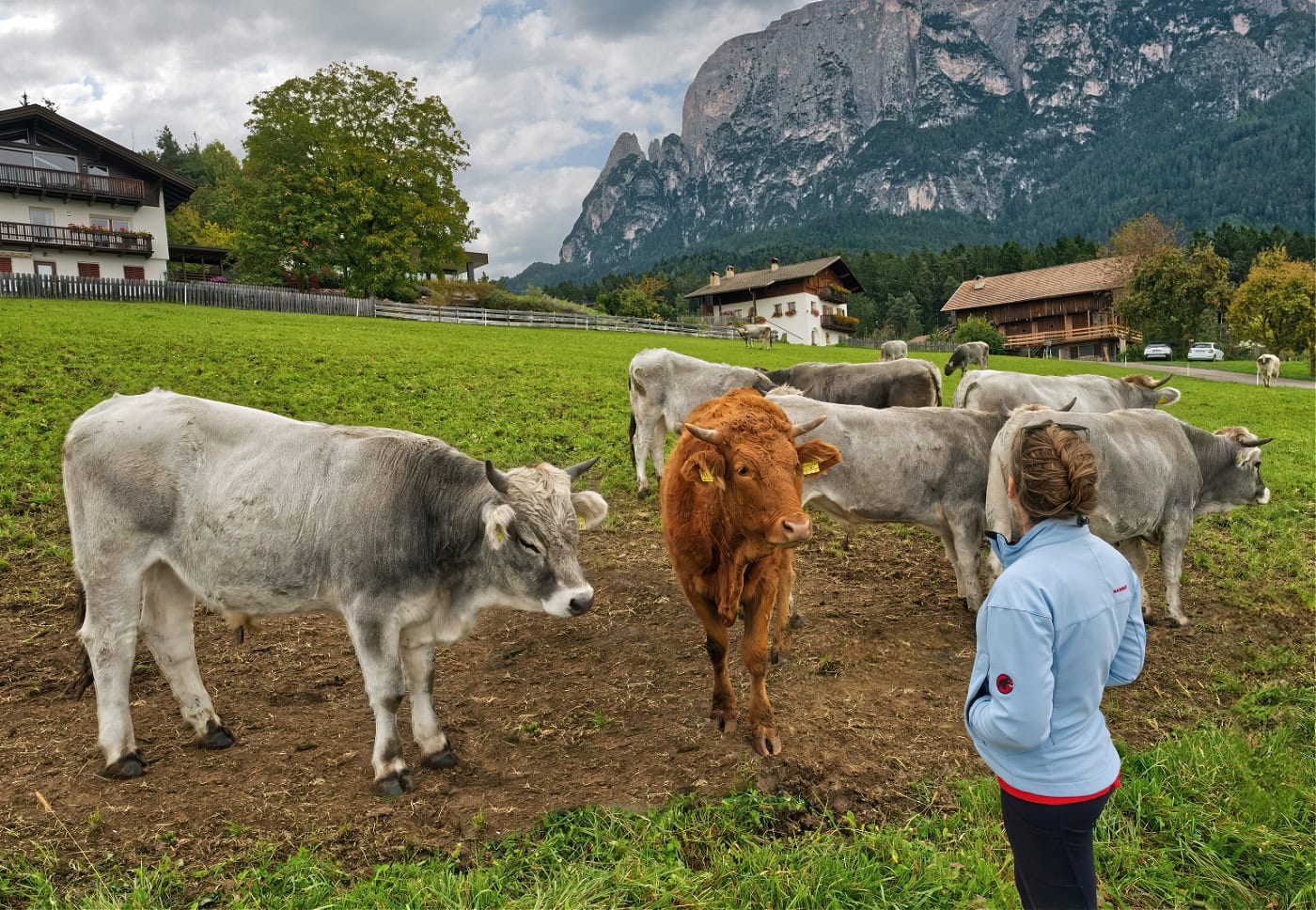
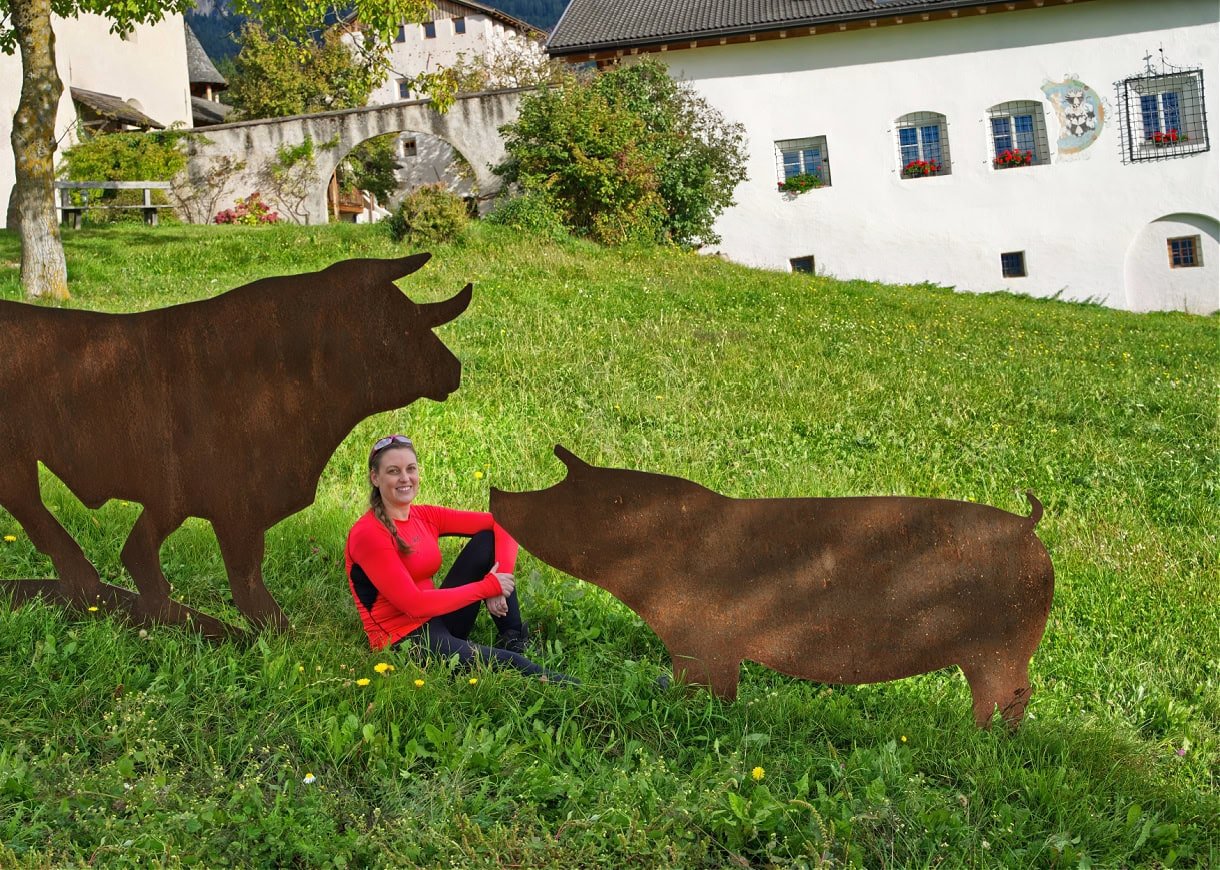
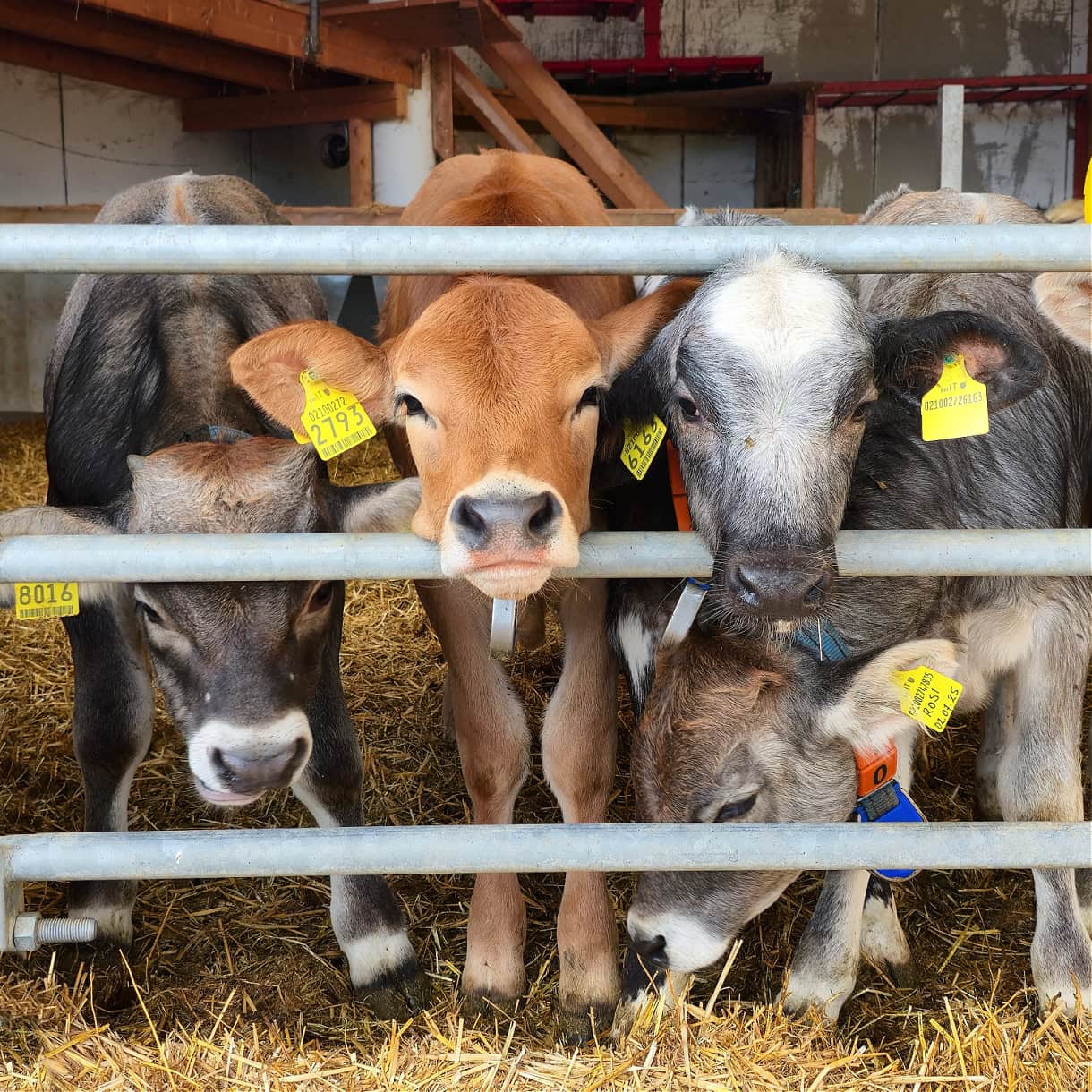
And the best way to do just that? Meet the stars of the farm. From Manni and Horst, the resident “wild boars,” to Hanni and Nanni, a pair of plump bunnies who clearly never met a blade of grass they didn’t like, the barnyard crew brought constant delight.
But the ones who truly stole the show were the young oxen, with their big, Bambi-like eyes and gentle, curious demeanor. Clearly thrilled to have an audience, they trotted over the moment we arrived, eager for attention and happily soaking up every scratch behind the ear.
From Farmstead to Trailhead
Zimmerlehen’s location, just 30 minutes from Bolzano and nestled between two iconic destinations in the Dolomites, Alpe di Siusi and the Rosengarten, makes it an ideal base for exploring some of the region’s most beautiful trails and sights.
Here are a few highlights from our five-night stay:
Lago di Fiè (Völser Weiher)
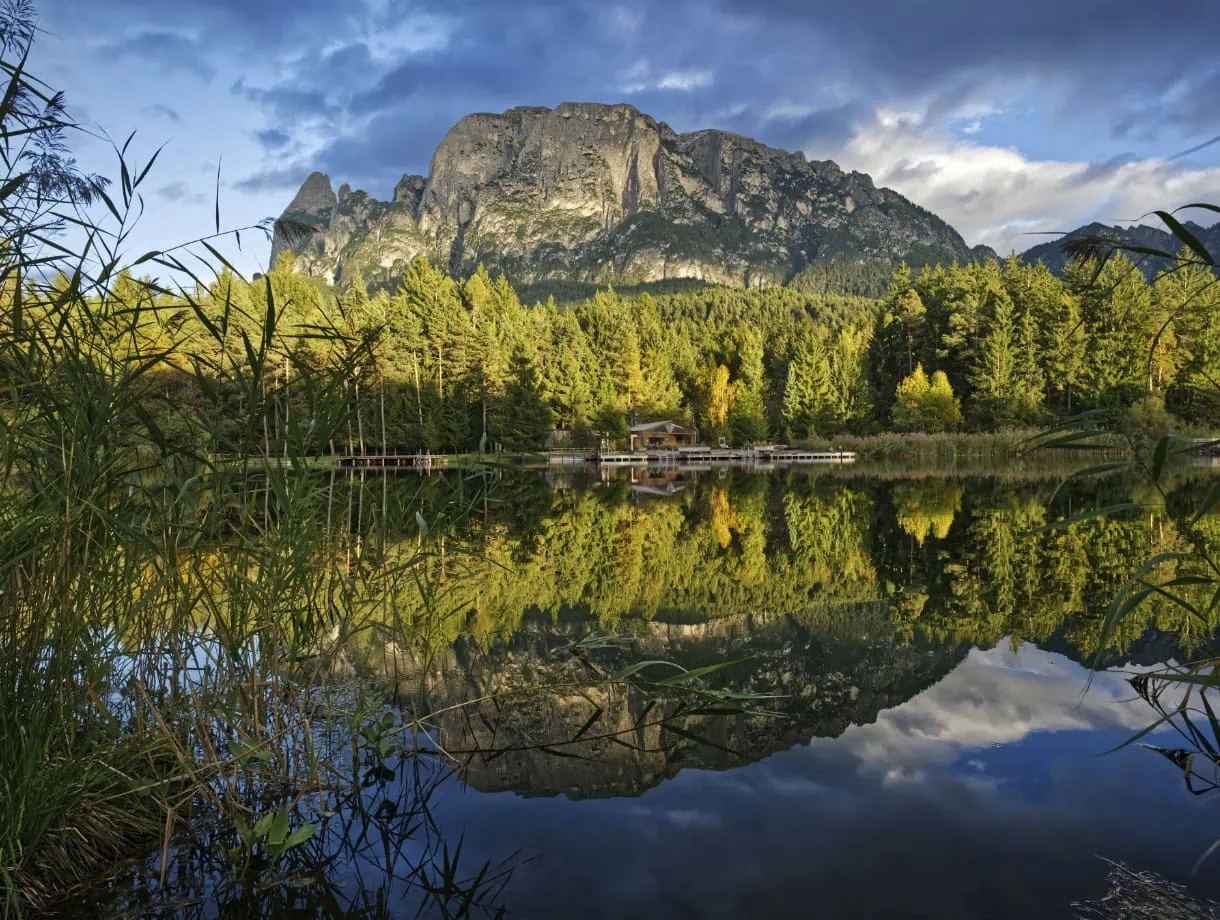
Lago di Fiè is a postcard-perfect alpine lake that is a short walk away from Zimmerlehen. An easy loop trail circles the lake that takes about an hour to walk at a relaxed pace. There’s also a shoreside restaurant offering a convenient and peaceful place to grab a bite or a drink.
We visited the lake in the early morning and late afternoon. While both times of day offered stunning views, nothing beats the spell of sunset. As the day winds down, the light softens and the face of the Schlern massif glows in hues of gold and rose. And if the lake is still, the symmetrical reflection you enjoy is mindbending.
Good to Know: Lago di Fiè is one of the few lakes in the Dolomites where swimming is allowed. You can also rent skates here and zip across the ice if you are visiting the Dolomites in winter.
Prösels Castle (Schloss Prösels)
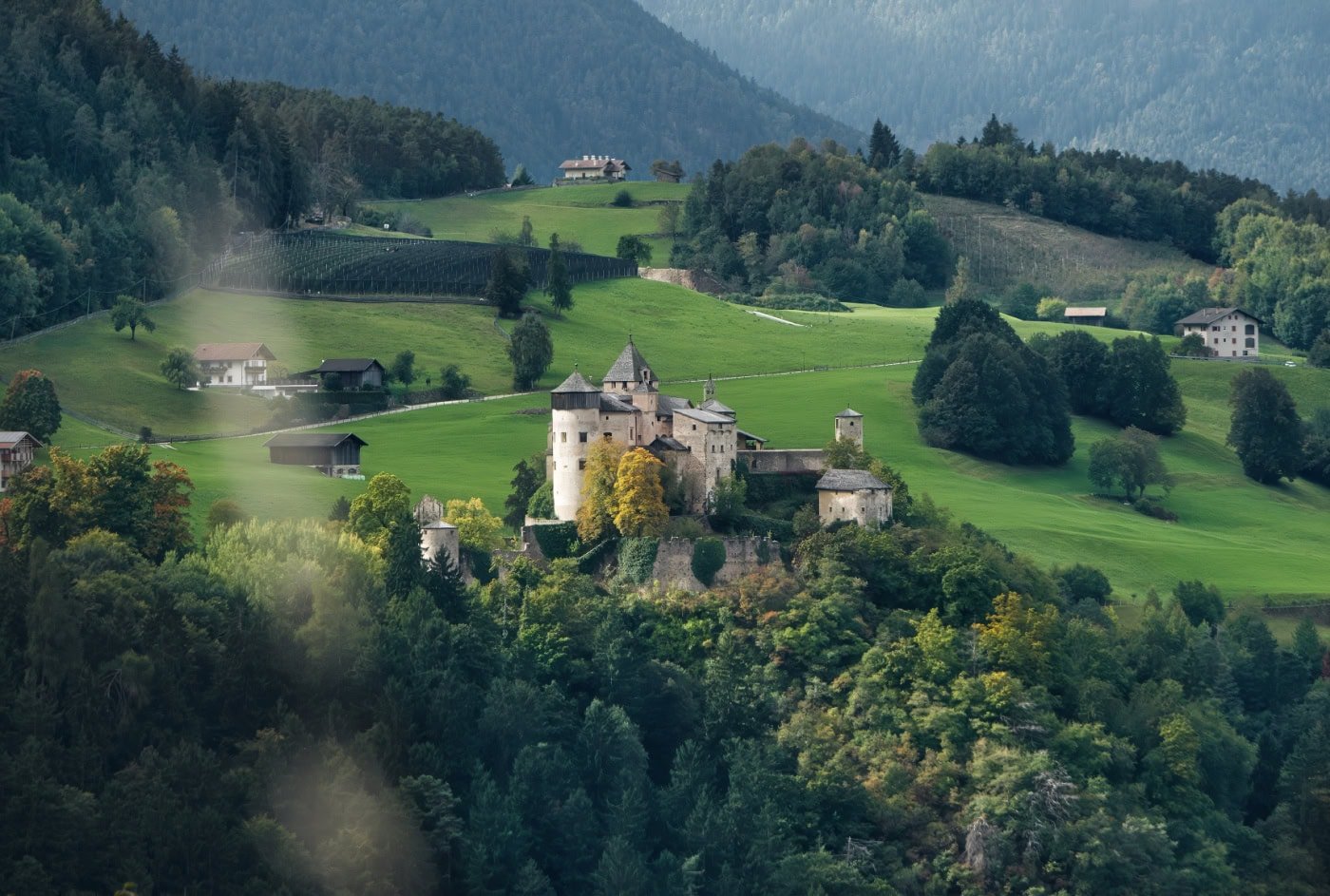
One of our favorite outings during our stay was the hike from Zimmerlehen to Prösels Castle, a route that felt like walking through a South Tyrolean storybook. The path winds through a mosaic of scenery: pastures, vineyards, mountain streams, forests, and orchards, all punctuated by poetic little farmsteads nestled into the rolling hills.
Prösels Castle itself dates back to the 13th century and played a key role in the regional power dynamics of the time. Today, it offers guided tours that reveal its long and fascinating history, complete with Gothic architecture and sweeping views. Like many of South Tyrol’s castles, it’s a fortress with presence and plenty of stories. That said, we loved the journey as much as the destination.
Tip: If you’re visiting in autumn, the apple orchards along the trail are an absolute highlight. Be sure to stop at Tasiolerhof, a gorgeous mountainside farm and one of the highest-elevation apple producers in South Tyrol. Their apples are crisp, sweet, and bursting with alpine freshness. And don’t miss their apfelsaft (apple juice), which tastes like sunshine in a glass.
The Almabtrieb: A Window into Local Tradition
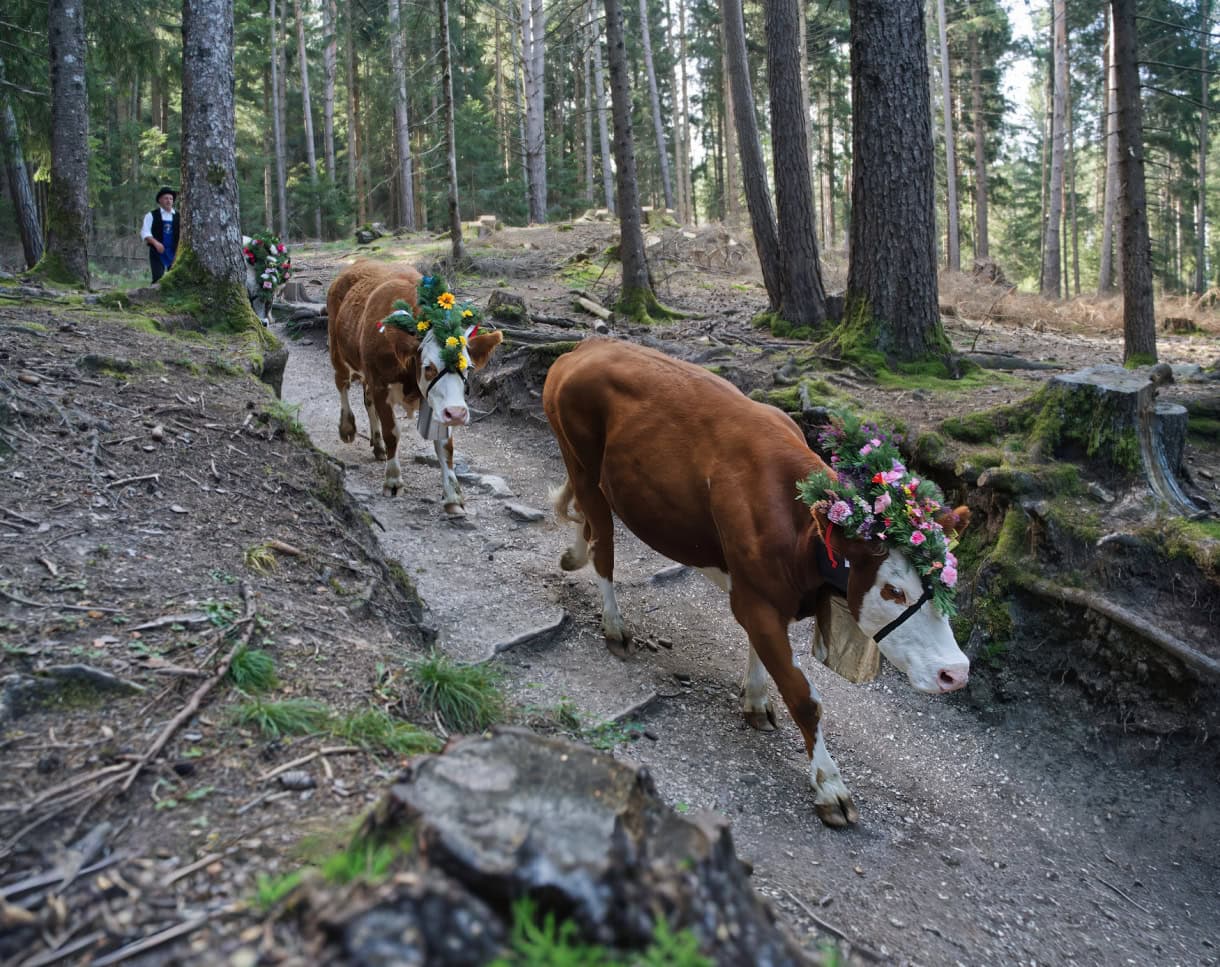
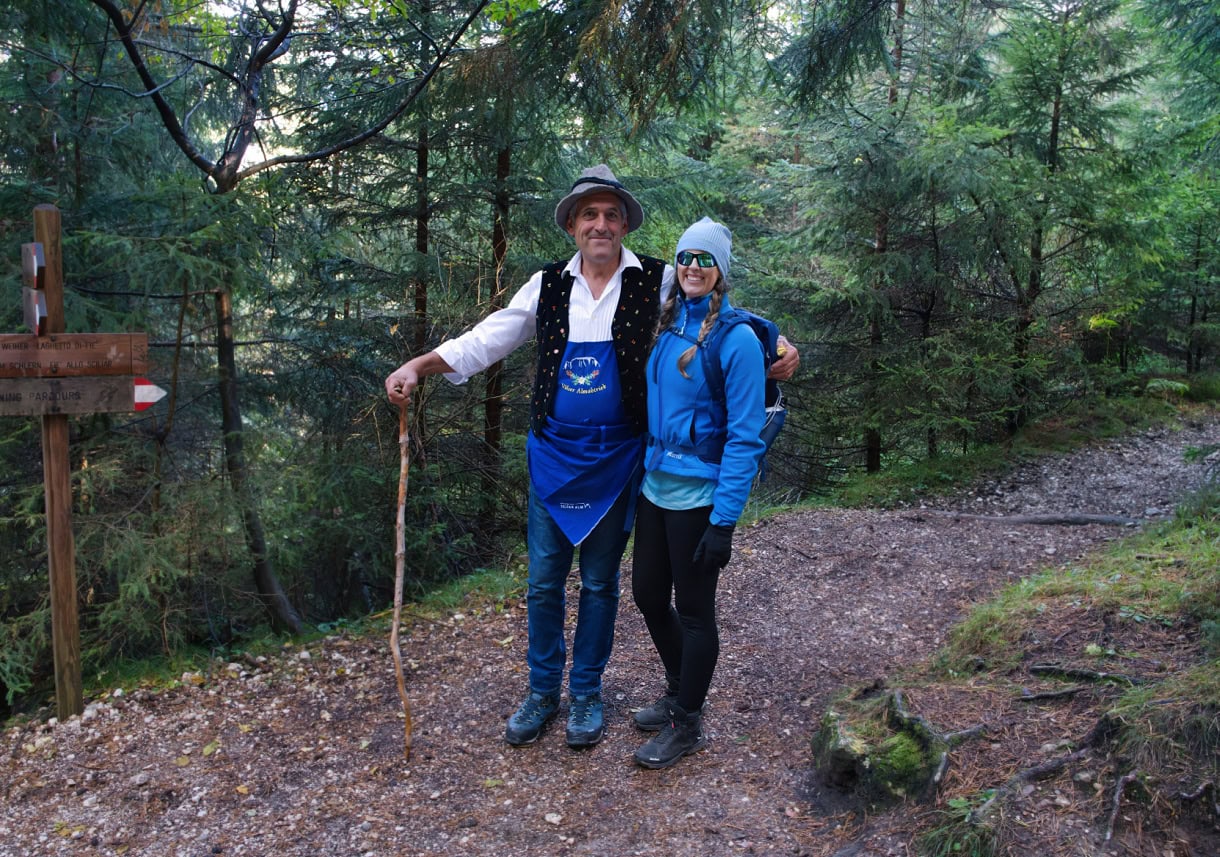
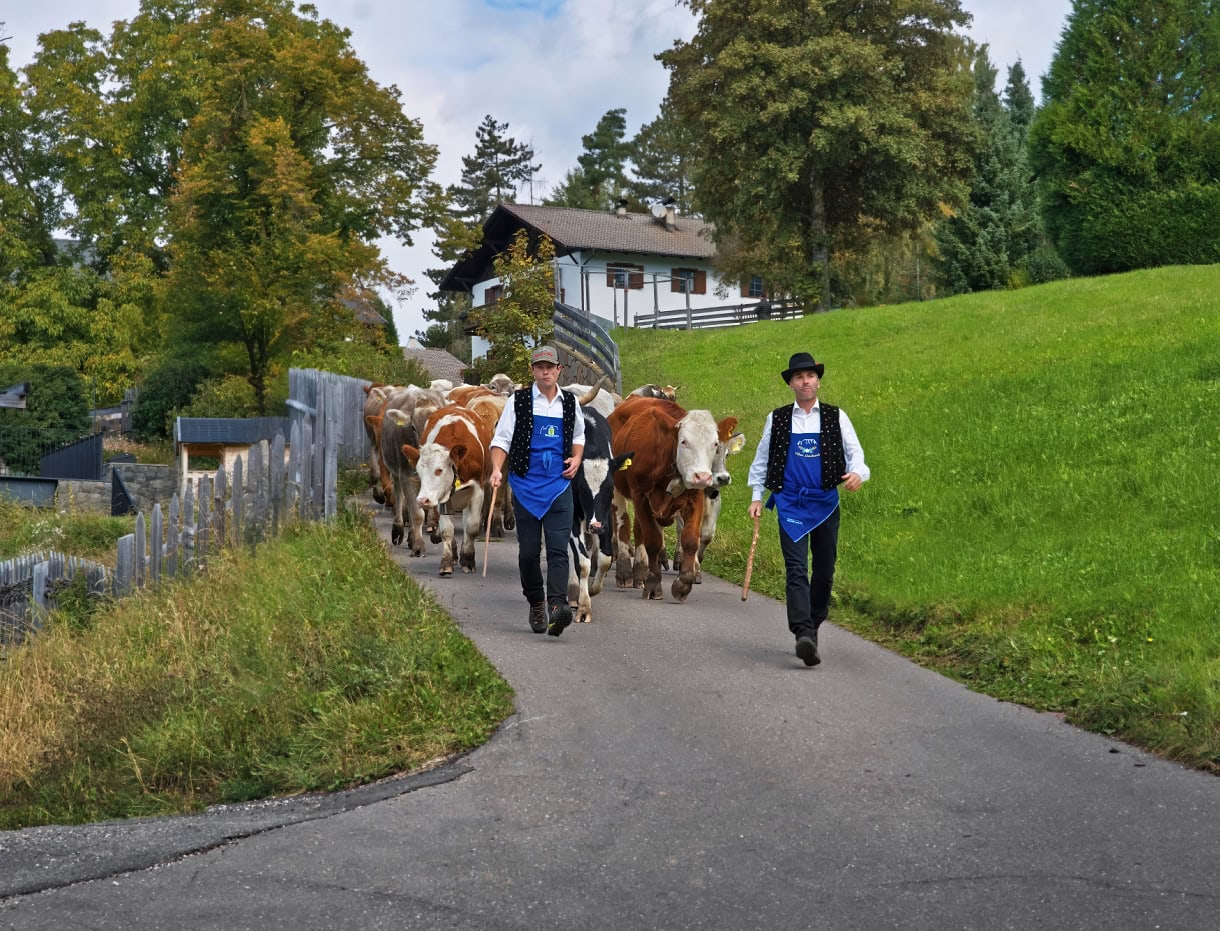
We were lucky to be in Völs am Schlern during one of South Tyrol’s most beloved and authentic traditions: the Almabtrieb, the annual cattle drive that marks the end of the alpine summer grazing season. And Zimmerlehen’s location put us at the center of it all.
We watched the cows being adorned with elaborate flower crowns and massive bells up at Tuff Alm, then later saw them wildly parade down the mountain — right past Zimmerlehen — on their way into the village. From there, we followed the celebration into the heart of Völs, where the parade unfolded in full color and sound.
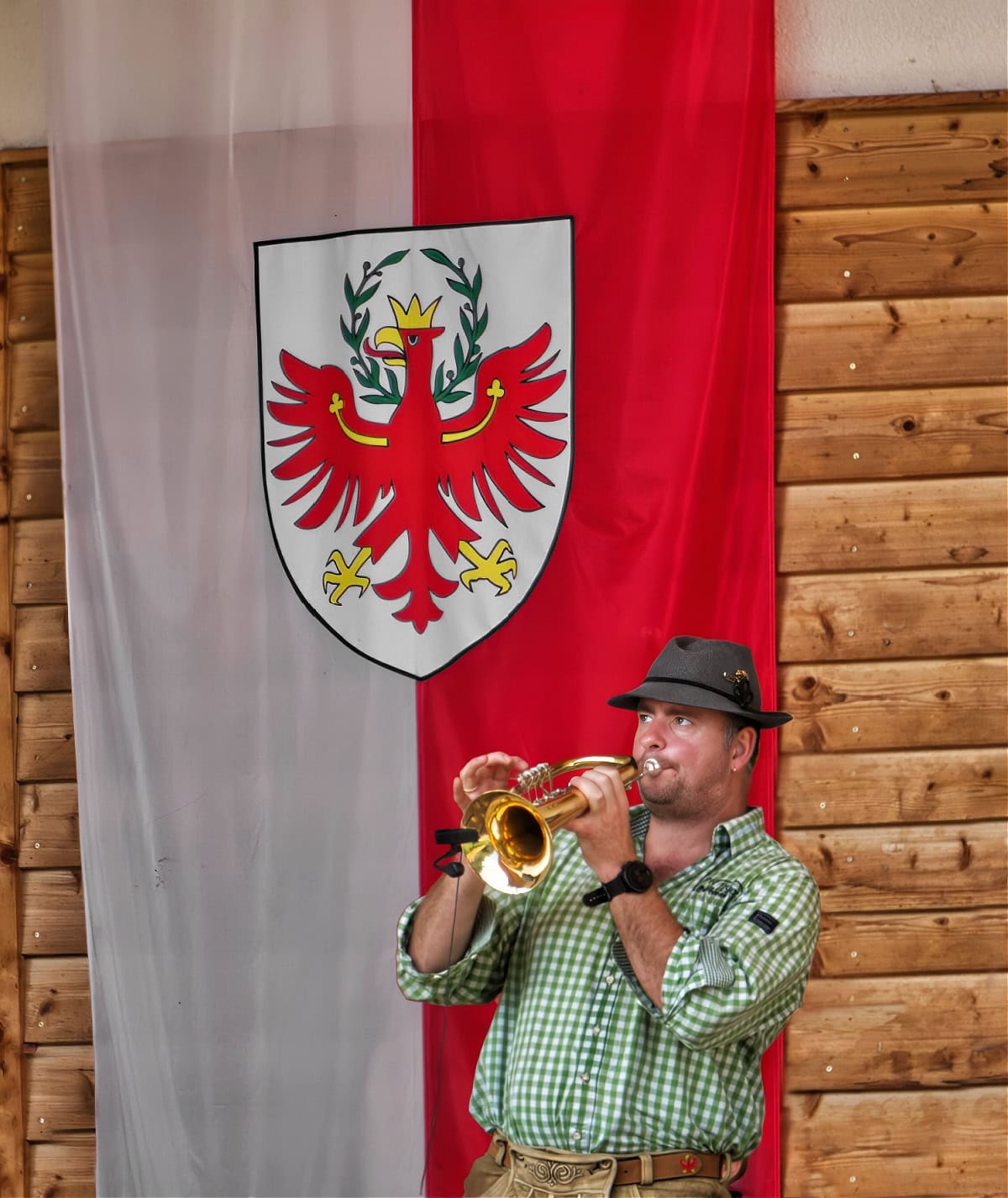
When the last ceremonial cart rolled by, we — along with locals and fellow spectators — followed it up to the village festival grounds, where the tradition continued with the blessing of the animals, a traditional brass band, and food stalls serving regional specialties and hearty farm fare.
Good to Know: Almabtrieb occurs throughout South Tyrol and the Alps. Dates vary by village and depend on weather, but most festivals are held from mid-September through early October.
Hiking the Rosengarten (Catinaccio)
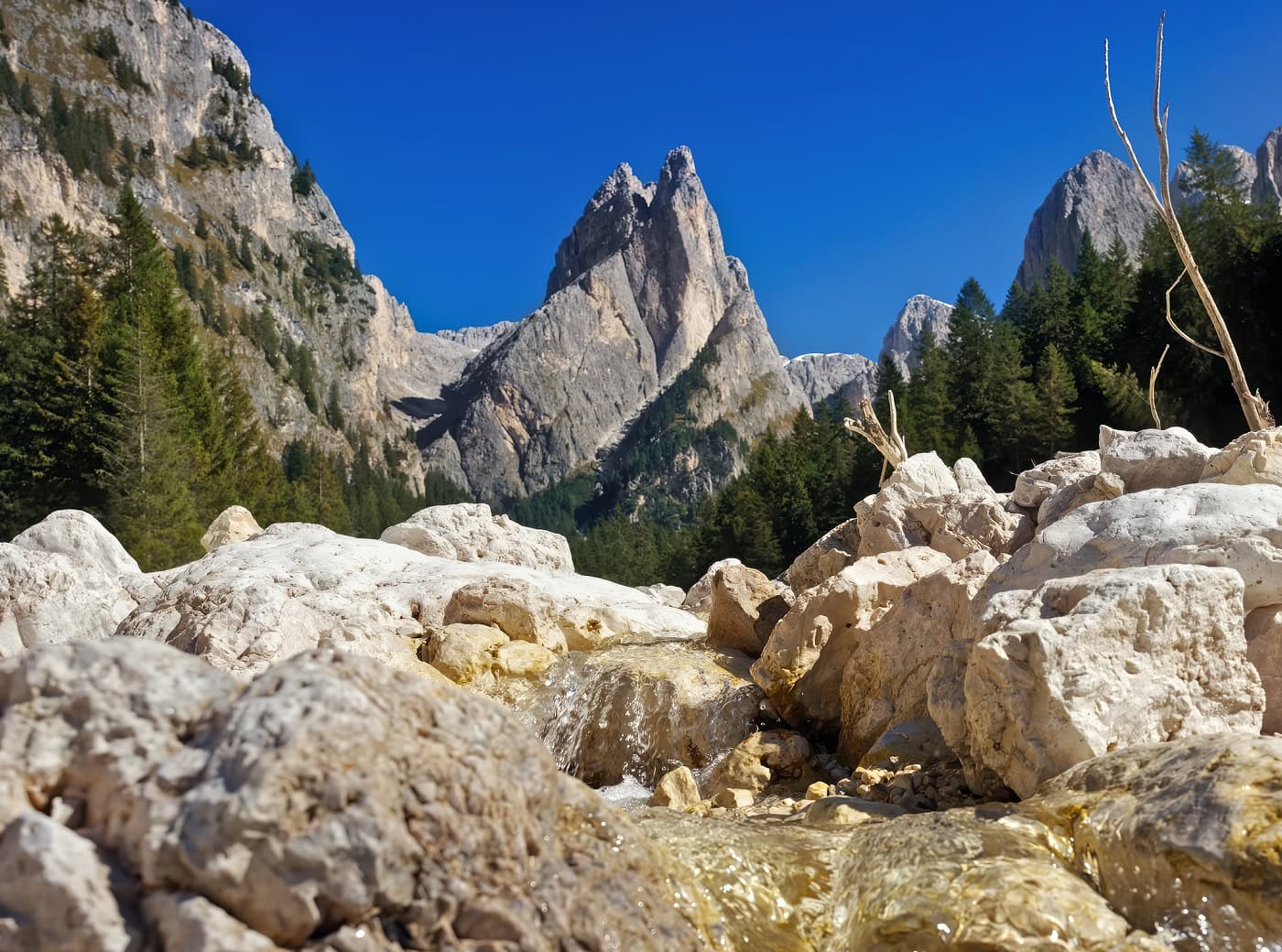
Among the most memorable hikes of our stay was the route to Rechter Leger, a tranquil alpine meadow nestled deep in the Tschamin Valley, beneath the towering Rosengarten peaks. The trailhead was just a short drive away, and the route quickly became one of the most scenic and waterfall-rich hikes we’ve ever done in the Dolomites.
We followed the rushing sound of meltwater most of the way, passing cascades that seemed to spill from every cliffside. After a gentle climb through pine forests, the trail opened into the wide meadow of Rechter Leger. It was like walking into a natural amphitheater.
We were surrounded by Dolomitic giants like Kesselkogel and Rosengartenspitze, which glowed gold in the sun. There, we enjoyed a picnic with just the mountains and babble of water for company.
Good to Know: You don’t need to pack a picnic for this hike. The lovely Tschamin Schwaige sits right at the trailhead into the Tschamin Valley. We stopped there to devour a generous helping of their famous Apfelstrudel before setting off.
Who Will Love Zimmerlehen?
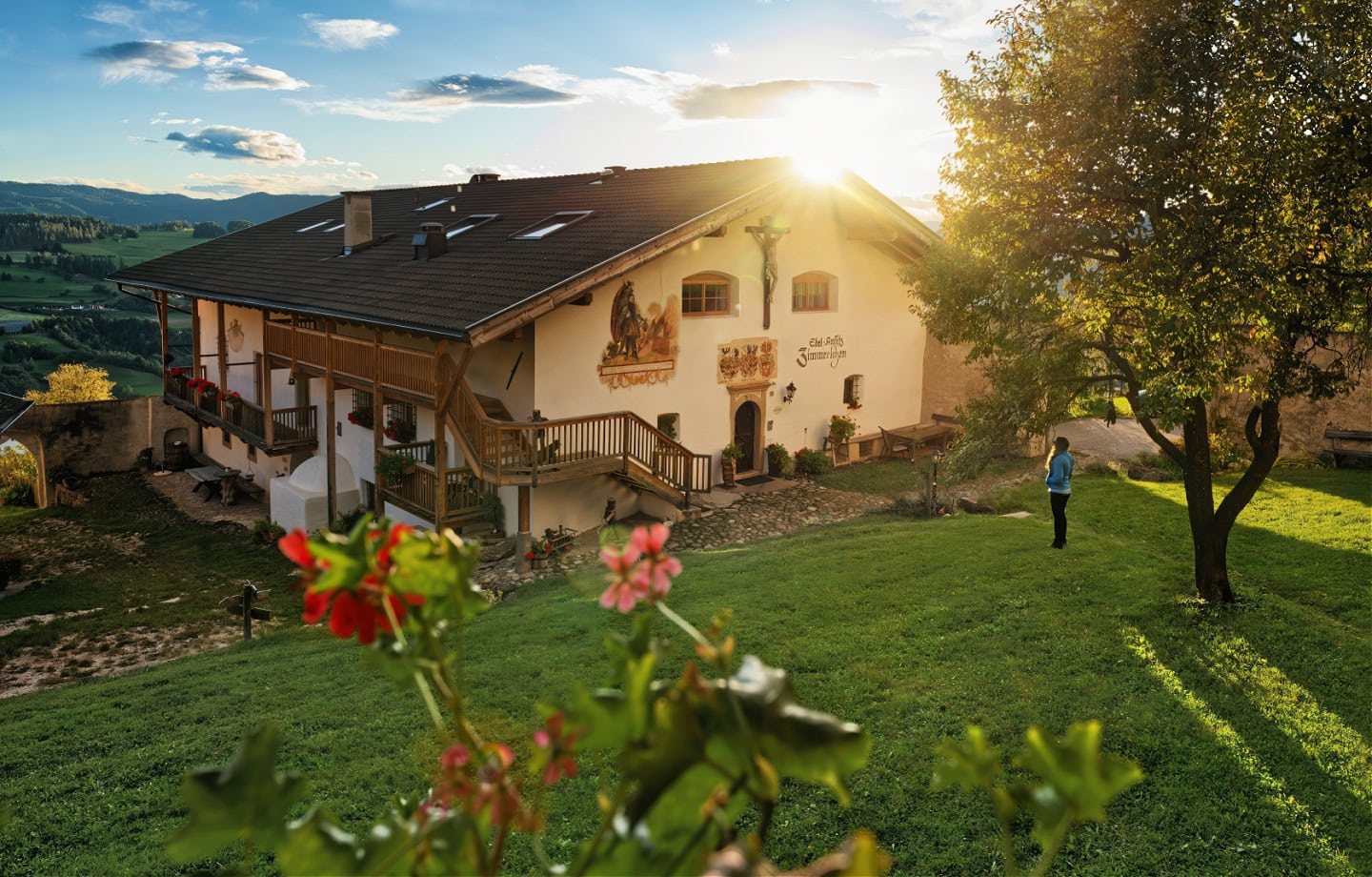
If you’re looking for sleek design, post-modern minimalism, and moment-to-moment luxury, Edelansitz Zimmerlehen isn’t your place. But if you’re searching for a genuine connection to South Tyrol’s land, culture, and rhythm of life, you’ll likely fall in love with your time here.
The Kompatscher family could have easily preserved Zimmerlehen as a museum piece trapped behind velvet ropes. Instead, they’ve kept it alive, breathing, working. And now this remarkable estate is a home you’re invited to borrow. And like all great homes, its soul isn’t just in the walls, but in the hands that maintain its heartbeat.
During our stay, we felt the rhythm of the farm settle into us. The days slowed. The noise fell away. We didn’t just sleep in a historic manor; we inhabited a different pace of life. One shaped by seasons, tradition, and community.
Leaving Zimmerlehen didn’t feel like checking out of a hotel. It felt like saying goodbye to a better way of being. And to us, that’s the highest standard any place to stay can reach.
How to Book
The best way to book a stay at Zimmerlehen is directly through their website: https://www.zimmerlehen.com. The farm typically has a minimum stay of four nights. Because of the property’s small size and popularity among German-speaking guests, availability can be limited, especially in summer and autumn so it’s best to plan ahead.
A heartfelt thank you to Simon Kompatscher and his family for their hospitality and for giving us a window into life at Zimmerlehen. As always, all opinions in this review are entirely our own.
⇒ YOU MIGHT ALSO LIKE: Dolomites Slow Travel Guide: Experience More Awe, Less Chaos
Save & Pin for Later
Grab the free guide, then follow for weekly South Tyrol + Dolomites travel tips.
25 Things to Know Before Visiting the Dolomites
Join 18,000+ travelers. No spam, ever.