
New to South Tyrol & the Dolomites? Read this first
Understand the Region. Pick a Smart Base.
Plan without overwhelm
Updated:
January 25, 2026
|
Peaks, Pastures, Pines & Palms: A Quick Orientation
If this is your first time planning a trip to South Tyrol and the Dolomites, welcome. You’re about to visit one of the most spellbinding corners of Europe… and one of the easiest places to plan wrong.
Not because it’s hard to love. Because it’s deceptively complicated. Valleys that look close can be an hour+ apart. Weather can erase your views in minutes. Lifts, huts, and trails don’t run on your schedule. And a “perfect” hotel chosen for the photo can quietly turn your trip into a daily commute.
This page is your starting point. In a few minutes, you’ll understand how South Tyrol and the Dolomites actually fit together, what kind of trip you’re planning, and what to read next so your itinerary feels smooth, realistic, and unforgettable. Not chaotic.
First, Let’s Clear Up Any Confusion
One of the most common questions we hear is: What’s the difference between South Tyrol and the Dolomites? It’s also one of the most misunderstood. South Tyrol is often assumed to be “just the Dolomites.” It isn’t. Here’s the short version:

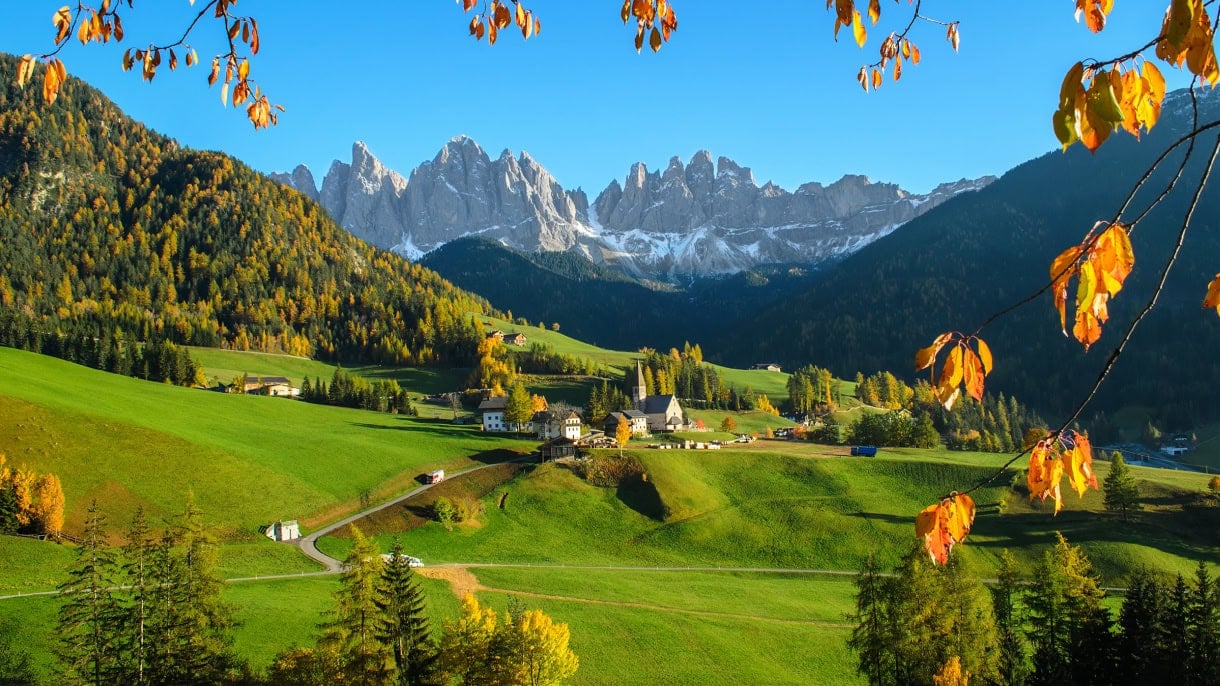

The Dolomites are a mountain range. A hulking collection of jagged, pale limestone peaks in northeastern Italy that spans several provinces, including part of South Tyrol. Designated a UNESCO World Heritage Site, they’re the landscapes you’ve likely seen on social media: Tre Cime di Lavaredo, Lago di Braies, Seceda, Alpe di Siusi, and more.
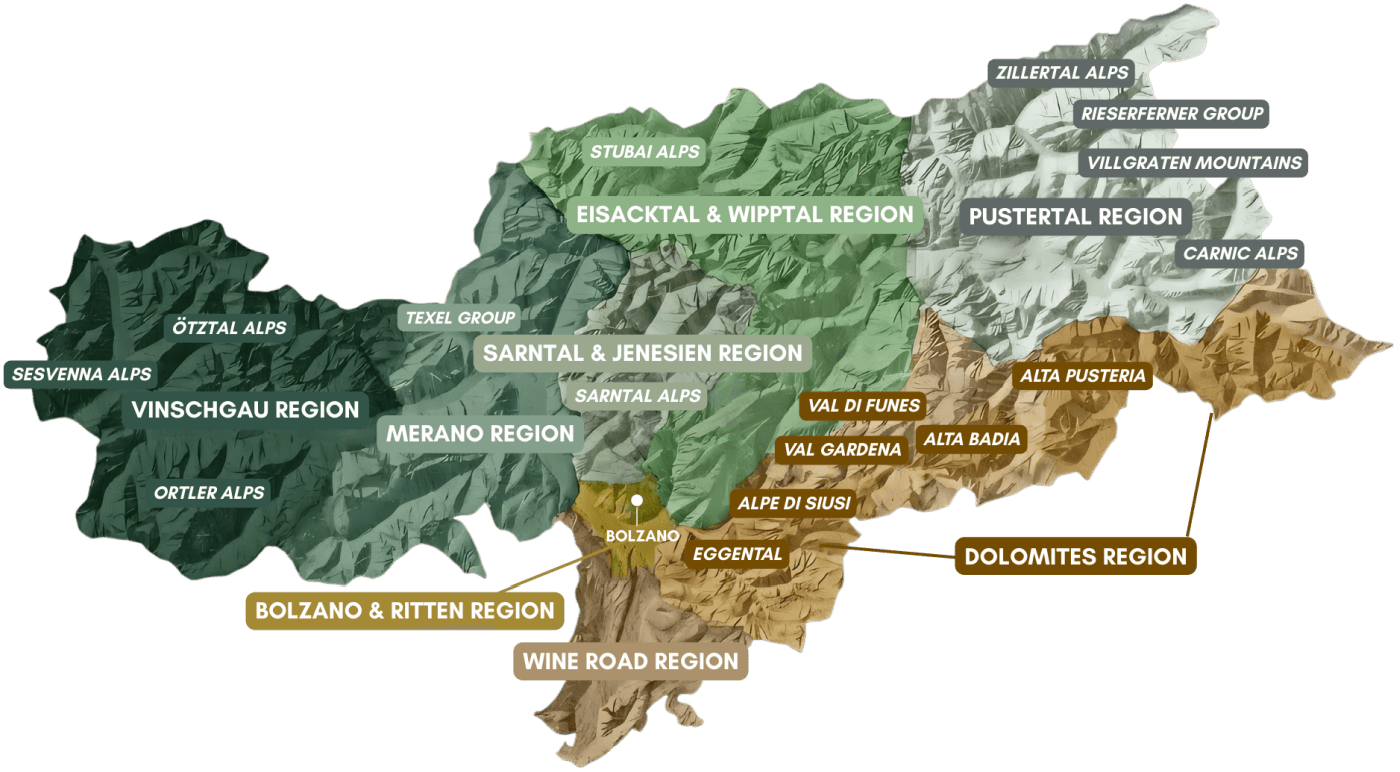
South Tyrol (also known as Alto Adige in Italian or Südtirol in German) is the northernmost province of Italy, and the region where much of the Dolomites lie. But South Tyrol is far more than just the Dolomites. It’s home to 13 mountain groups in total, with over 3,000 named peaks, including 400+ that top 10,000 feet (3,000 m). For context: the entire Dolomites range has 18 that tall.


What really sets South Tyrol apart is its extraordinary ecological diversity. Alpine and Mediterranean climates collide here in dazzling fashion. You’ll find palm trees and pine forests, vineyards and orchards, all framed by snow-draped peaks not to mention hundreds of mountain-clinging castles and churches. It’s a world of contrasts packed into one region.
Where Do You Want to Start?
Still unsure? Start with the one that sounds most like your current curiosity. Each guide will route you to the other once you’re oriented.
Tell Me More About the Dolomites
Jagged peaks, turquoise alpine lakes, legendary hikes. Enjoy sunrise summits or scenic strolls paired with soaring vistas, mountain huts, and trails that make your heart race for all the right reasons.
Dolomites Travel GuideTell Me More About South Tyrol
Snow-capped peaks meet lush wine valleys, fruit orchards, and forests. Enjoy gentle strolls or challenging hikes, all set against a backdrop of epic history — from medieval strongholds to ancient monasteries.
South Tyrol Travel Guide